The Nedbank IMC 2020 is themed ‘Marketing Works. Work It!’. The conference will explore why marketing is last on the agenda of every conference call and the first to have to tighten its belt when it comes to budget cuts. According to Dale Hefer, CEO of the Integrated Marketing Conference (IMC), the only way to get marketing back into the box seats is to show that it boosts the bottom line.
According to the organisers of the IMC, currently, intangible brand assets are worth US$57.3 trillion globally. That is a lot of rands. Yet, marketing still doesn’t sit with the grown-ups around the boardroom table. Why? ‘Now, we’re going to get sweaty by working out what it takes to develop marketing that turns up, clocks in, and gets the job done – regardless of industry, brand and budget,’ said Hefer.
The conference will take place on 19th March 2020 at the Galleria in Sandton and already has a stellar line-up of twenty influencers and marketing specialists on board. In a coup for the conference, the international keynote will be presented by Global Chief Marketing Officer for Burger King, Fernando Machado. A recognised marketer globally, Machado has a remarkable track record, having won more than 120 Lions in Cannes, 16 D&AD Yellow Pencils and a Grandy. He was also named Adweek’s Brand Genius of 2018.
Fernando Machado, Global CMO for Burger King.
Khensani Nobanda, Group Executive Marketing and Corporate Affairs for Nedbank said, ‘The 2019 conference was an enormous success. We were proud to be a part of the conference’s information sharing agenda and the industry-first streaming of the conference on Facebook meant that anyone could benefit from the thought leadership.’
The 2019 Nedbank IMC also saw the awarding of the first Nedbank IMC Bursaries and Nobandai added that she is extremely excited at awarding more bursaries in 2020. The review paper on the Nedbank IMC 2019 is available for download here.
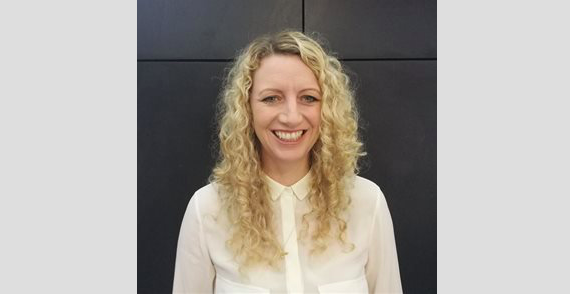
Erica Hannath, new Dentsu Aegis Network Chief Talent Development Officer for Sub-Saharan Africa region.
Dentsu Aegis Network (DAN) has appointed Erica Hannath as the chief talent development officer for Sub-Saharan Africa.
Dawn Rowlands, CEO of DAN sub-Saharan Africa said, ‘Moving people is what we do all day, every day. Moving their perceptions, feelings, memories and habits, to ensure we move the dial on our clients’ businesses. Moving people have also moved the dial in our own business quite significantly, particularly in the last two years. Many new people have ‘moved-in’, so much so that about 40% of all the people who work at Dentsu are new. All around us, the industry talk is ‘adapt or die’. The appointment of Hannath as our chief talent development officer across SSA is essential to our future growth and to guide and develop our people agenda.’
Hannath joins the group with over 20 years’ experience across multiple industries predominantly in human capital in emerging markets. She joins Dentsu Aegis Network following a successful career in both the corporate, start-up and NGO sectors.
She is a strategic operational leader, engaged in many functions of organisations, predominantly in the strategy, human capital, business transformation, customer and marketing areas. Her roles have included a senior manager position at Accenture, and she worked as part of the Global HR team for Pearson education. She also led the People team at Zoona, an African start-up based in Cape Town.
‘I am excited to be part of an organisation that continues to grow at an exciting pace. It is more critical than ever to make sure people remain at the centre of the business. I look forward to being part of this dynamic team and organisation to unleash the potential of our people across the continent as we shift the business into the future,’ said Hannath.
Workshops for graphics professionals will be held on 11 and 12 September at Gallagher Convention Centre and hosted by industry specialist Mo Jogie. Software can be a powerful tool, allowing you to unleash your creativity. Jogie will show you how to save time and create effects that will take your designs to the next level.
The Workshops will be held during the Modern Marketing expo, taking place from 11-13 September. Participants can look forward to high level, in-depth industry training for the professional covering topics for signage, screen print, wide-format print, T-shirt printing, engraving and more. Book onlinehere.
Streamline your workflows, work smarter and get the most out of your technology investments. Learn tips and tricks, explore colour accurate workflows, and create artwork that meets international standards from concept all the way through to final.
Day 1 – 11 September 10-12am: CorelDRAW! 2019 Tips and tricks High quality, curated tips for design and signage professionals.
1-3pm: Preparing your outwork for output From engraving to large format, Jogie explores all the nuances of preparing high-end output.
Day 2 – 12 September 10am-12pm: CorelDRAW! 2019 supercharged Jogie shares workflow secrets that will give you reliable on-screen proofing, access to the various resources that ship with Corel, and under-the-hood tweaks so you get the best performance from your software investment.
1-3pm: Learn how to get tasks done quickly and efficiently. From tracing, through to font management, Jogie explores the many tools that ship with CorelDRAW!
Desirée Gullan, co-founder and Executive Creative Director of G&G Digital.
Desirée Gullan’s industry roots stem from working with leading South African advertising agencies. The co-founder and Executive Creative Director of G&G Digital shares tips for creating successful campaigns and highlights 2019’s industry trends.
Early life
Gullan has worked in advertising, branding and now digital communications for over 21 years. ‘My first essay writing exercise in primary school involved learning to do a spray diagram and it blew my mind and ignited my love of writing. I knew then at about age 10 that I wanted to work in a related field. When I found out what a copywriter was, I knew that would be my path. I studied Literature and Psychology, and then copywriting at the AAA,’ said Gullan.
Her first job was working as a junior copywriter at Ogilvy, and she also worked for TBWA and later FCB Africa. She then went on her own as a creative consultant, co-founding G&G soon after meeting her business partner. ‘We have grown the business into what it is today. We have a power team and an amazing portfolio of clients who respect our passion and work,’ she said.
What do you enjoy most about working in the industry?
‘I love creative problem-solving. Clients have business needs and we help them find solutions. We strategise, write, design and produce new things from a client’s need. It’s always exciting, always challenging and always rewarding to see our ideas come to life,’ she explained.
When she started her career, it was all about the big, single-minded idea that would be executed on television, radio, print and outdoor. With the ‘spray and pray’ model, there was always a need from clients for more measurability to know if their marketing efforts were working and which ones weren’t working.
With the rise of digital came the ability to measure and draw insights from the data. ‘Today we know so much about people and their behaviour and this empowers brands to be more targeted and effective with their marketing and get better ROIs.’
2019 industry trends
Gullan mentioned that the average person is bombarded by 5000 or more ads per day, so the focus should be on personalised, highly targeted communications that talk to individuals and not target audiences.
‘We’re seeing a need for more Customer Relationship Marketing (CRM) and proactive communications and service in the B2B, B2C and B2B2C space. People (not a target market) want to know their brand understands them and talks to them, not at them,’ she added.
CRM is essential for improving customer satisfaction and building relationships with brands via: • Analysing data and insights to understand customers and potential customers. • Dramatically improving communications. • Focusing on mobile. • Hyper-individualisation so customers feel valued and appreciated because their brands understand them.
Favourite project and tip for creating successful campaigns
A good brief is an essential ingredient for good work and that has to start with the client (or with the agency extracting it from the client). Once you have all the right information and clear objectives then the creative process can begin. When Gullan is reviewing work with her team, they go through these standard review questions:
Is it on brief?
Is it on brand?
Is it a breakthrough?
‘This is a good check list to see if the work will meet the client’s brief and get them an ROI on their budget.’
Gullan have a number of incredible breakthrough campaigns, see few below:
First For Women
Harpic
St Mary’s Foundation
Keys to success
‘Don’t quit. You will make many mistakes and will be knocked back. Pick yourself up, learn from difficult challenges and keep on keeping on.’ Gullan loves this quote by Theodore Roosevelt, (and to all women readers, replace ‘man’ with ‘woman’): ‘It’s not the critic that counts, not the man who points out how the strong man stumbles, or where the doer of deeds could have done them better. The credit belongs to the man who is actually in the arena, whose face is marred by dust and sweat and blood, who strives valiantly, who errs, who comes short again and again…who at the best knows the triumph of high achievement, and who at the worst if he fails, fails while daring greatly,’ she said.
Hobbies
‘I still love writing and storytelling and always will. I’m finishing my first novel – watch this space,’ Gullan said. When Gullan isn’t not working, she does yoga and meditation daily, as it not only helps her manage stress but also makes her happy. ‘I have a Great Dane who takes me for regular walks and I love Grande cappuccinos,’ she concluded.
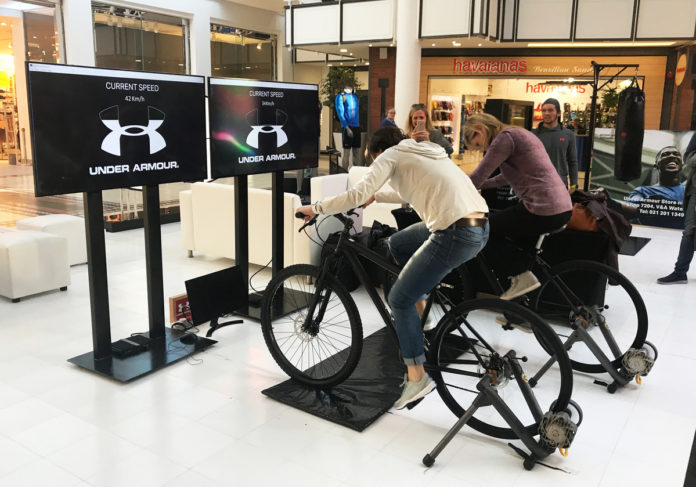
Physical challenge for Under Armour where mall-goers interacted with the brand as part of a store launch event.
According to Elan Davidson, Technical Director at Moving Tactics Digital Impact, most of their clients want them to create an innovative, creative and memorable experience for their audience. It’s all about using the event, activation or stand as an opportunity to have people interact with your brand in a way that generates intrigue and talk value after the event itself.
Do not host an uninspiring product launch or corporate event as marketing teams have the ability to create any experience they can imagine with the help of interactive digital activations.
There are five interactive digital technologies that have been used successfully by well-known brands to make their events stand out from the crowd:
1.Project yourself
Using projections to set up a venue is a unique way to make sure the venue stuns and the guests are wowed the moment they arrive. An innovative and creative animated projection experience was employed by Adidas at their Block Party in Johannesburg’s Maboneng Precinct. Edgy projections added visual stimulation to the party vibe via digital displays projected onto outdoor billboards.
For a Coca-Cola/SABCO gala launch event in Ethiopia, a portable projected hologram of Coca-Cola’s new plastic bottle was developed to spice up the event. And Distell’s Klipdrift stand at the Fine Brandy Festival used eye-catching projections that literally stopped consumers in their tracks.
2.Get physical
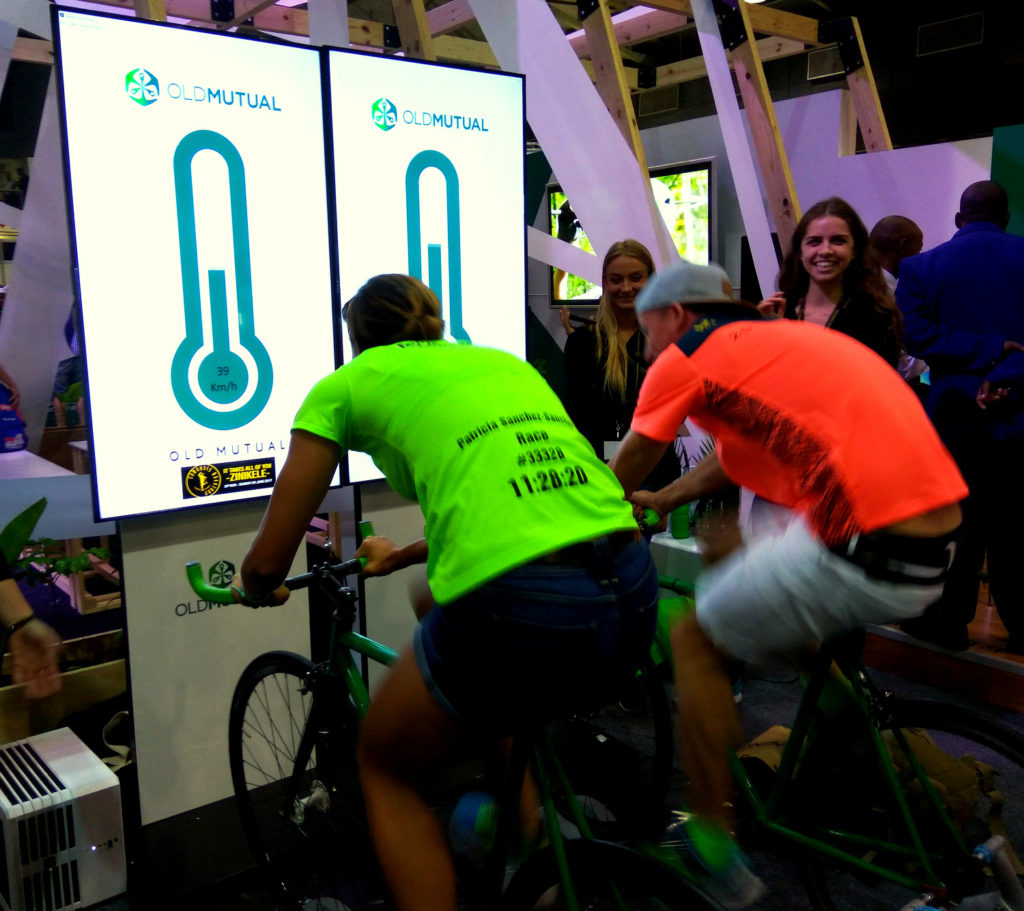
The key to a successful event is encouraging participation and a great way to do this is by getting the audience involved with the activation. Old Mutual, a title sponsor of the Two Oceans Ultra Marathon, challenged those registering for the event to test their physical prowess by participating in a one-on-one pedal power challenge. Using an integrated GARMIN sensor and live speed display, it provided a visual spectacle that encouraged spectators and participants alike.
Two Oceans Ultra Marathon sponsor Old Mutual challenging those registering for the event to test their physical prowess.
A similar physical challenge worked well for Under Armour, who wanted to encourage mall-goers to interact with their brand as part of a store launch event. Based on individual performances on Bicycle Dual and Power Punch activities, shoppers were rewarded with Under Armour discount vouchers.
3.It’s all in the touch
Having the ability to get your audience to physically interact with your product makes it memorable. Sunglass Hut let their guests experience fashion in a new, hands-on way in their VIP lounge. Fashionistas could try on the latest in sunglass trends, find their favourite sunglass look and learn more about the product using custom-made 40” touch screens. By placing their sunglasses on the recognition pad alongside the screen, a small radio-frequency identification (RFID) tag sleekly fitted onto it would prompt and play product specific information and demo videos on the screen.
Sunglass Hut also employed a customised replica Selfie Cam. The 42” touch display with built-in digital SLR camera allowed guests to take high-resolution images of themselves wearing the latest sunglass looks, which they could then share via social media. It was a fun concept and it proved to be very popular.
4. A new virtual reality
Personally experiencing a Virtual Reality (VR) activity isn’t something everyone gets to do, so when Discovery Networks hosted just such an event, it put a spin on the traditional red carpet entry. As guests arrived, each put on a VR headset with integrated stereo audio, and were then ushered through a silent, black-draped and unfurnished walkway. All the sights and sounds they experienced were created by the headset – in their virtual world, photographers’ flashes popped and journalists heckled them as they walked down a virtual red carpet in a fully immersive digital wonderland.
This might sound relatively simple but timing, scale and meticulous video editing is required to make the VR component 100% credible. We filmed the entire walking scene using a helmet camera that included six individual full-HD cameras. This is the latest technology on the market and is one of very few first-person VR filming rigs. Omni-directional microphones were also used to give consumers a fully immersive experience when walking with the VR headgear.
5.Selfies and social media
If no one knows about your event, it didn’t happen – so inspire social media shares. A successful interactive digital activation combines two winning elements: selfies and social media.
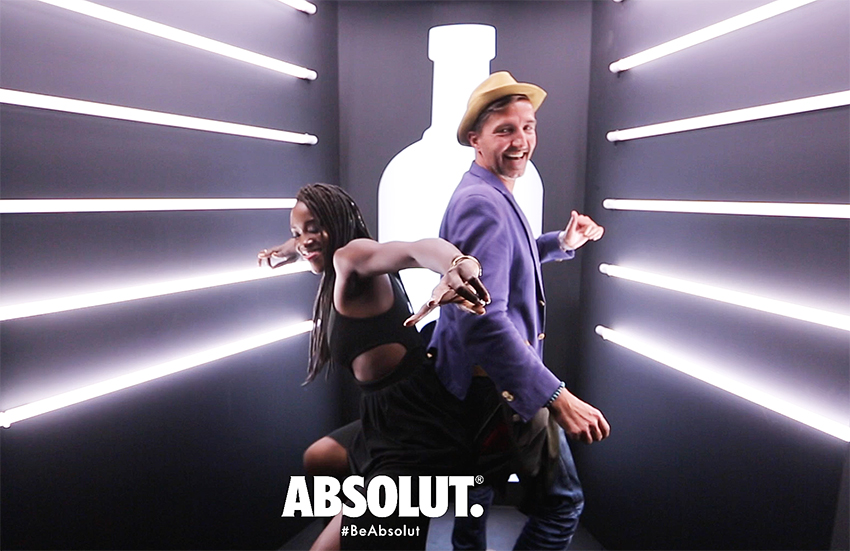
MTV Africa Music Awards event where VIP guests starring in their very own 30-second music video.
Absolut Vodka delivered on this at their MTV Africa Music Awards event where VIP guests were given the opportunity to star in their very own 30-second music video. Under the watchful eye of a professional director and cameraman, the guests were encouraged to express their best dance moves while they were recorded in HD video. The video booth and subsequent messaging process saw to it that each guest had their video clip sent to them and the shares went viral.
According to the Advertising Media Forum (AMF), the media industry in many markets stares down a barrel of uncertainty. The eco-system of publishers, broadcasters and media agencies face cash-strapped crossroads and the South African context is no different. Here, our local junctures of change are exacerbated by the need to inject growth by establishing new media agencies, despite a low funding base, rising talent pool crisis and critically, the shifting state of payment terms.
The AMF outlines a hypothetical situation: a client that spends R120 million annually has exposure of roughly R10 million per month. Based on historical payment terms, the agency will pay the media owner’s January invoice in the middle of March (45 days later). They will only receive payment for this media at the end of June.
By the time they receive the payment for January, they have incurred further debt for three more months (February, March and April). As a result, the media agency will have paid out R40 million in media, to the media owner, before the client pays them the first amount.
Potential loss of interest revenue with paying the media owner on time, and getting paid late by the client is not factored. Add to this the required VAT payments on the 25th of each month, which further impact cashflow availability. The reality is that most media owners still require payment from media agencies within the 45 days. This means that in some instances, the media agency has to ‘float’ the client’s debt with the media owner for up to 105 days.
Dire deal on start-up table
The industry faces the imperative to seed and grow 100% Black-owned media agencies. This not only requires substantial start-up capital but a system that enables these businesses to go beyond survival to a thriving future. Yet, the bottom line is that as the global economic outlook becomes increasingly gloomy, marketing procurement departments look to save money and marginalise cost.
One of the default ways to achieve this is through pushing out payment terms applied to media agencies. Clients are insisting on paying media agencies later and later, with some global clients trying to enforce payment terms of between 90 and 150 days. If not addressed systemically, this cashflow-inhibitor will prevent small and medium-sized agencies from keeping the doors open.
The maths
First one needs to understand the scenario that media agencies are faced with. Standard industry practice is for clients to pay their agencies on 30 days, after which the media agencies pay the media owners on 45 days. The interest revenue earned by the agency during the 15 days, is an essential income stream to successfully run these people-centric businesses.
Forecast for a local future
The present media buying remuneration cycle is simply not sustainable and is debilitative for a start-up or small entity. It is counterintuitive to industry growth, with the nett effect being that the only agencies able to ‘float’ such accounts are large, multinational agencies with global support. This, in turn, seriously hampers the development of 100% Black-owned media agencies.
In addition, clients don’t always pay in full and on-time, at the agreed-upon 150-day mark, which again makes it harder for non-globally-owned agencies to sustain themselves. In some cases, the media agencies will pressurise the media owners to also carry the delayed payment terms. In other words, the media agency will only pay the media owner once they receive the money from the client. This, in turn, has a massive impact on media owners as newspapers have to pay printers, radio stations must pay their DJ’s, and outdoor owners need to pay their landlords.
It’s a vicious circle when the media agency (client) is paid in a cycle that is unbalanced, impacting their payment turnaround to media owners. As a result, the only media owners who can work with such demands are the ones with deep pockets and yet again, small local media owners are compromised due to the late payment situation.
It is a zero-sum game as things currently stand, and there are no winners, especially not the media industry. The game could change for the good of all if clients and media agencies get around the table to find a solution; one based on a mindset that seeks to maintain balance and support new growth for all at the table.
Woolworths Student Portfolio Day will give about 50 students from various institutions the opportunity to meet and impress industry leaders and judges from around the world, as well as creatives attending the Loeries DStv Seminar of Creativity. Both events take place on Friday 23 August 2019 (7am to 4pm) at the Durban ICC as part of Loeries Creative Week.
Andrew Human, CEO of the Loeries, explained, ‘It’s the one day of the year when the best communications and advertising students showcase their work all in one place, and it’s become so successful that agencies are now pro-actively hiring right from the event. Woolworths will award a one-year internship to a participating student.’
The Woolworths internship will be with their in-house creative agency and will provide exposure and experience across all creative disciplines and platforms. ‘The successful candidate will be expected to display ambition, talent and enthusiasm in equal measure,’ said Kate Fordyce, head of the in-house creative agency at Woolworths.
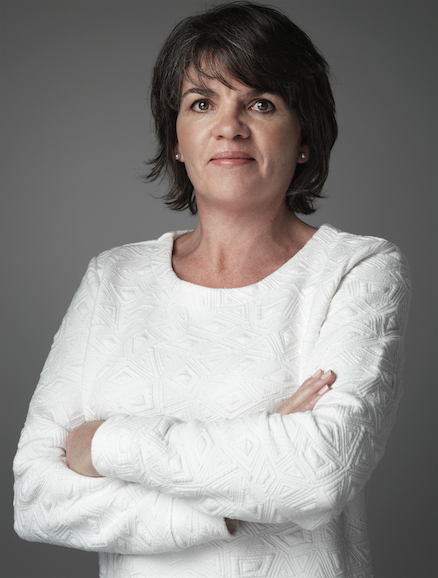
Kate Fordyce, head of the in-house creative agency at Woolworths
‘Woolworths has long recognised the importance of education to the sustainability and success of our country, our business and our people,’ said Fordyce. ‘We’re committed to doing all we can to give talented creative youngsters more opportunities to succeed in their careers, and the Student Portfolio Day at the Loeries provides an excellent and interactive platform for showcasing and promoting exceptional creative talent.’
Fordyce’s expectations of the 2019 Woolworths Student Portfolio Day at Loeries Creative Week includes ‘work that is confident, fresh and authentic, relevant to culture and zeitgeist, unexpected and memorable.’
The Loeries Africa Middle East are the only creative awards in the region to inform the global WARC Creative 100, successor to the prestigious Gunn Report. WARC collates the most important advertising awards from around the world to produce a global list that ranks the most creative companies and campaigns.
In addition to supporting the opportunity and platform for students to showcase talent through the Student Portfolio Day, Woolworths’ sponsorship aligns with their broader commitment to education, upliftment and growth, providing a specific opportunity within the creative industry, an area of particular passion for the company.
‘We seek to contribute and participate across a number of benefit dimensions, including fundraising for education, improving the health and well-being of children at school, positively impacting the education ecosystem and uplifting for growth through skills development,’ explained Fordyce.
‘We give effect to our commitment through a number of initiatives and partnerships, including the MySchoolMyVillageMyPlanet programme, Educare and Eduplant programmes, and the contribution of educator material and support through our Educational Programmes.’
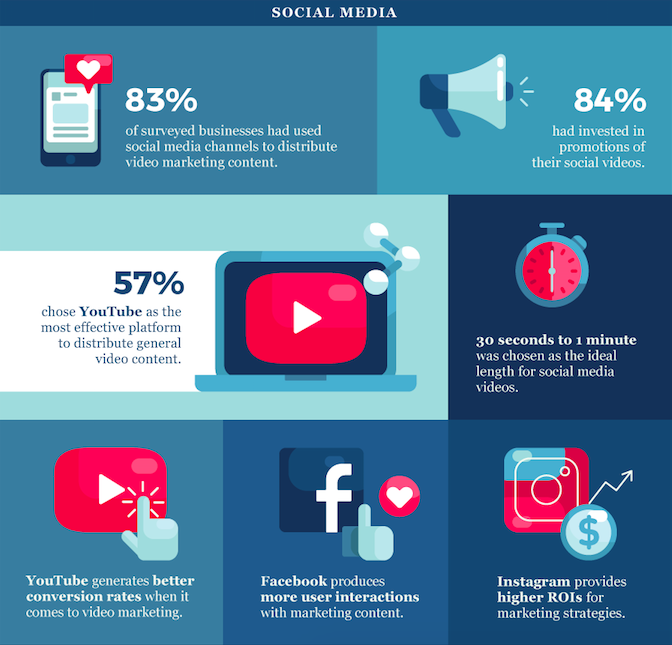
According to Yum Yum Videos, video marketing has been a reliable medium to get people’s attention and get your business’s message across for a while now. And as 2019 continues to unfold, we are getting more and more data signalling its continuing growth and relevance.
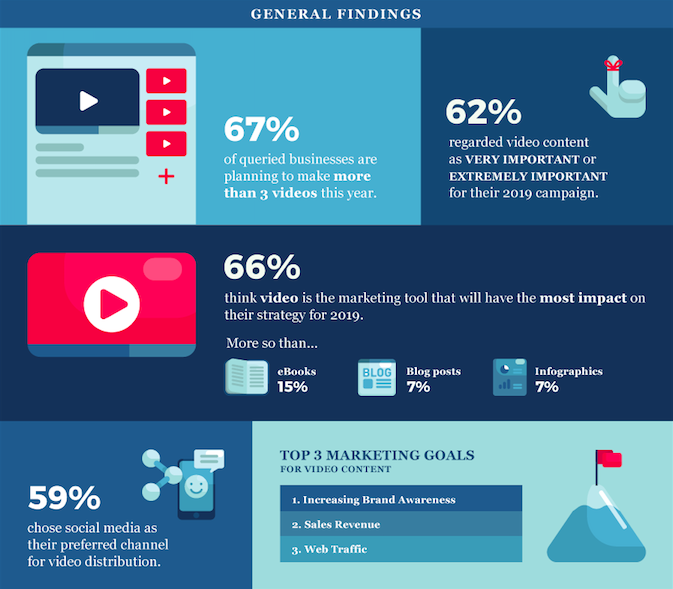
Not only are most businesses planning to invest in it this year, but they want to go big. About two thirds of business owners plan to make at least three marketing videos this year. Not surprising, given that nearly all (87%) of those who invested in video marketing previously are satisfied with their ROI.
Yum Yum Videos surveyed 167 business owners across the U.S. on their video marketing strategy for 2019, how it compared to the previous year, and some additional data on its social media performance.
Most businesses are making more than 3 videos in 2019. Among all the video marketing statistics Yum Yum got from their survey, perhaps the least surprising is that two thirds (67%) of all businesses surveyed are planning to make more than three videos this year. To get specific, 34% intend to make between three and six videos, 19% between six and ten, and 14% plan to make more than ten videos in 2019. This increase comes to support the idea that business owners, decision-makers, and marketers are clear on the relevance and importance of a sound video strategy.
Given the potential benefits businesses can get from video marketing (namely, boosts in conversions, increased sales, improved brand awareness, more social media engagement, more traffic and time spent on site), it’s hard to argue their enthusiasm.
The Yum Yum survey also addressed the confidence most companies are placing in video marketing. 66% of queried business owners think the video is the marketing tool that will have the most impact on their 2019 strategy.
And that’s not mere perception, either. Take a look at the most relevant video marketing statistics over the past year to trace the exponential growth video is experiencing across multiple industries and channels.
For instance, there are clear video marketing statistics that indicate people want to see more videos from brands – around 53% of consumers say so. YouTube is getting over 400 hours worth of video each minute. And two of the biggest social media platforms, Facebook and Instagram, have doubled down on their video-first philosophy.
In other words, the table has already been set, and most businesses are already moving to capitalise on the demands of a video-hungry audience.
Gumtree SA Digital Marketing Manager, Michael Walker, states that branding and SEO should work together. There’s no point in ranking number 1 for ‘taxi’ if everyone is typing Uber into the search bar.
SEO can be a great asset for informing and evolving brand strategy, if it’s utilised strategically. In addition, it is crucial to look at the fundamentals of your website – hosting, protocol, security, architecture, navigation and user experience. If you aren’t building on a strong foundation, the whole thing could collapse. How does the customer journey fit in and extend beyond the site? Do your pages contain multiple ways for readers to absorb the content? Infographics, images and video can go a long way when it comes to engagement. Have you tried to improve site speed? Small changes can lead to large improvements.
If you had to pinpoint the one thing in-house SEO professionals need today to have an impact, it would be a seat at the boardroom table. In 2019, it has become imperative to think bigger than clicks and links, because simply sending traffic to your site, when competitors are investing in improving their user experiences and their products, simply doesn’t cut it anymore.
‘I’m not a fan of the term optimisation, it implies that SEO professionals should focus on making the best of what they have to work with and little else. There is only so much that an SEO professional can do to create content and refine targeting; it is more important to really dig into the business to find levers for success. A great ranking won’t assist you if your brand fails to deliver on its promises offline,’ said Walker.
Once your fundamentals are firmly in place, examine your content with a critical eye. Social sharing is diminishing rapidly, as consumers prefer to send content to their contacts privately. Authoritative research and well-written content designed to build your brand’s reputation remain winners.
Andy Crestodina, the Founder of Orbit Media, points out that Google has 2000+ Mathematics PhDs on staff, ‘If you made the best page on the internet for your topic, there are 2000 Math PhDs trying to help you. If you didn’t make the best page on the internet for your topic, there are 2000 Math PhDs trying to stop you.’
Our tendency to churn out as much content as quickly as possible doesn’t always serve our business. Building the best possible page for your topic always does – make it readable, relevant and easy to absorb if you want to keep your customer on the site.
Marketing is slowly shifting its focus to the area where it packs the biggest punch: customer experience. The only formula for success is a quality product or service, combined with a solid foundation and great content. It’s time to look beyond the pages, break out of our silos and focus on the bigger picture.
Recently, President Cyril Ramaphosa declared that we should ‘unlock economic potential and create a Silicon Valley,’ at the 4IR digital economy summit. 4IR. That’s pretty cool terminology for the Fourth Industrial Revolution. Andrew Human, CEO Loeries Africa and Middle East, asks:are we on the right path to be the Silicon Valley, or the Big Apple of Africa?
What do Apple, Google and SpaceX have in common? They are all founded by immigrants. Steve Jobs is the son of Abdulfattah al Jandali, who immigrated to the United States from Syria. Sergey Brin immigrated to the United States from the Soviet Union at the age of 6. And then of course, there’s Elon Musk, who left Pretoria when he was 17.
New York City is a talent magnet. If you throw a stone, you’ll hit someone who came to town with their dreams in a suitcase. From any small town in America, if there is a kid who can play the guitar well, then that kid packed her guitar, got on a bus and headed for New York. More than America, people with a dream, and talent, from across the globe, make great effort to get themselves to New York. Waiters have dreams of appearing on Broadway, of seeing their writing in the New York Times, listing their software company and taking Wall Street by the horns. Let’s be brutally honest here, most young South Africans – black and white – would love the opportunity to work in the United States.
This is accelerated evolution. Natural selection at pace. The best people from every little pocket across the globe get concentrated in a small space. The A Team. To share ideas, to make magic, to create things that never existed. Let’s go back to those three immigrants. Apple is the world’s first Trillion Dollar Company. Google dominates the internet, yet it didn’t exist a few years ago. And Elon Musk’s SpaceX is the first commercial company sending rockets to space.
These three immigrants haven’t taken employment from anyone – they are part of the strongest economy in the world, and they have created millions of jobs. I think it would be great if Johannesburg could become the New York City of Africa. Or as President Ramaphosa suggested, a Silicon Valley.
But, I know in the creative advertising industry there are zero foreigners in leadership positions in South Africa. Zero. In comparison, every leading city in the world has a creative department made up of foreigners. New York ad agencies aren’t American. Neither are London agencies English.
A pointed example is the topic of Manuel Borde’s talk at the upcoming DStv Seminar at the Loeries in August, ‘Mom, I’m moving to the Middle East. Forget about everything you think you know about the Middle East, as we break cultural stereotypes and deep dive into a market that has been heavily influenced by creatives from all corners of the world.’ He is, in fact, rubbing it in our noses, as there are many talented South Africans working in Dubai. But how many people from Dubai are working in South Africa?
Often I hear people from the middle classes criticising people from the townships for attacking foreigners. Tut-tutting and shaking their heads at how incomprehensible this is. Is it really? We are not any different in the leafy suburbs and listed corporations. We just use BEE instead of a sharpened machete. A Kenyan rising-star won’t be hired. Neither will a Nigerian designer or a Malawian copywriter. They are worth nothing on the BEE points system. May as well hire a white male for the good they’ll do you.
Foreigners are ostracised from the corridors of business. Don’t bring your talent here. Your ideas of innovation and your start-up company. Stay where you are, that’s our policy. Closed for Business. How can we possibly have aspirations to be the next New York City, the next Silicon Valley, when we don’t have the very first thing required: a welcoming approach to foreigners?
Can we really hope to succeed as the B Team? Made up of everyone who didn’t leave the country, and with no infusion of foreign thought leadership? Let’s compare it to a sports team. What made the British Premier League successful is the fact that they have attracted the most talented players from across the globe. The same goes for cricket’s Indian Premier League. The top teams have the top players – it’s as simple as that. You cannot have a B Team and expect to beat the A Team – that is just nonsense, and we need to move beyond the closed little island we are marooned on.
I know we have a wound. I am not denying this or denying that we have a lot to fix and transform. But this scar, this scab, needs to heal. And we need to nourish it to allow new growth. From the severed and mutilated stump of the tree, we need to allow new shoots to grow. We want the next Elon Musk, Sergei Bin and Steve Jobs here. We want their ideas, their companies, and the millions of people they will employ. We want to be the A Team and open for business.