Home Blog Page 325

Advertising And Marketing Gender Diversity Survey Results Released

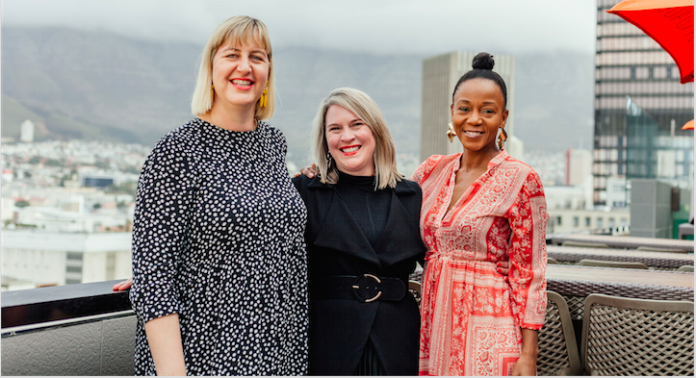
Anelde Greeff, co-director, Johannie van As, senior copywriter and director and new director Pride Maunatlala, SheSays Cape Town.

Last year SheSays Cape Town announced their partnership with Kantar to conduct the first-ever gender diversity survey in South Africa’s advertising and marketing sector.

The full report, which looks at the major trends and offers insights from over 40 industry leaders as well as actionable advice to agencies on improving gender diversity and inclusivity status quo, was created in collaboration with M&C Saatchi Group South Africa. It is available to download here.

The aim of the survey was to engage the local agencies, media houses, digital agencies and related companies to get an accurate and current reading on the gender split across agencies. SheSays worked with the IAB, ACA and AMF to distribute the survey to their member agencies. One representative from each agency completed the survey, anonymously revealing gender numbers by rank and department. Results were aggregated by Kantar to keep participants anonymous.

A core group of 35 agencies participated in this inaugural survey, with M&C Saatchi Abel, Grey and Joe Public amongst those who got involved and showed their support for the initiative.

Mike Abel, Founding Partner and Chief Executive Officer, M&C Saatchi Abel said, ‘The results of the SheSays Gender Representation Survey and the much-needed conversation around diversity and inclusivity in the workplace comes at an important time in our country. We can’t ignore the increase in gender-based violence taking place throughout society; and all industries, ours included, need to play their part. We need to not only look internally to ensure real gender representation and respect across the spectrum is being addressed in the workplace, but we also need to look externally at the messages being sent, whether through the work we do or by what we say, to ensure that diversity, and gender representation, isn’t just a tick box exercise on an inclusivity agenda, but rather is the foundation of all inclusive and fair future business growth.’

The results show a strong female representation within the advertising and creative industry as a whole with 61% of roles fulfilled by women. However, it revealed clusters of male-dominated fields, predominantly at the Director/C-Suite levels and within Tech/IT departments: only 39% of senior creative roles (CCO/ECD/CD) and 43% of art director positions are held by women.

Neo Mashigo, Chief Creative Officer, M&C Saatchi Group South Africa, said, ‘It’s initiatives like the SheSays Gender Representation Survey that keep us as an industry accountable and ensure we continue to have the real – and difficult – conversations. While the results show that we are on the right track – M&C Saatchi Group South Africa for instance is made up of over 60% female – the results also show that there is a lot of work still to be done, work that I know will also be pivotal to my agenda as the chairperson of the Creative Circle.’

When it comes to digital design and UX, 73% of men hold positions as design directors/leads and the same percentage of men fulfil roles as UX designers. Just 22% of women hold positions in the business design sphere, encompassing UX architecture and interaction design. We also see a strong paradox in terms of female-dominated research positions versus a largely male-dominated business analytics field.

‘This is an incredible achievement by SheSays Cape Town, and all survey participants, to set the benchmark for our current understanding of our industry’s representation across multiple roles and areas of access and expertise. This is our starting point for progress and a call to action for full industry participation,’ said IAB SA CEO Paula Hulley.

The survey represented 72 agency roles and provided an opportunity to include non-traditional gender identification within each field, although no related data was recorded from the agencies that participated.

‘Since starting the Cape Town chapter two years ago, it was always a dream to base our activism on true data – not anecdotal evidence. We want to thank all the agencies who took part in this survey, and hope many more can play their part in 2021 to help widen the net. The goal is for it to become a resource and reference point for industry. As pioneers in the female empowerment space globally, SheSays is all about helping more women get to the top. In future, we will focus more broadly on inclusivity, and help drive this conversation forward,’ said SheSays director Anelde Greeff. 

SHESAYS
capetown@weareshesays.com
weareshesays.com

How To Counter The Cons Of Working From Home

Image credit: Djurdjica Boskovic.

According to Kevin Gibson, account director at Vizeum South Africa (a division of  Dentsu Aegis Network) now that Lockdown Level 2 is well underway in South Africa, agency employees have had the opportunity to experience a long period of Working From Home (WFH). This was a concept previously relegated to freelancers and those who work with remote/overseas companies and thought to be impossible on an agency-wide scale.

For the most part, this is a transition that has been coming for some time (particularly overseas where widespread changes are being adopted), and Covid-19 has not only accelerated this change but helped shift mindsets into being more willing and ready to completely shift ways of working.

Kevin Gibson, account director at Vizeum South Africa.

The transition has certainly come with a number of challenges – varying degrees of access to the internet, load-shedding, rowdy children, remote server access and the ever-present cries of ‘let me know when you can see my screen’ or ‘sorry I had the mute button on’.

By now, many people in the industry have now reached some degree of comfort in this revised way of working, and as we start to see the end of the Covid tunnel (but for now, keep wearing those masks and washing those hands), the question is whether we should fully return to work or remain at home if you are able.

There’s likely no clear answer, as it will depend on how your agency is set up, ease of access at home and so on – but it’s worth looking at some pros and cons:

Virtual meetings

Pros:

  • Saves on travel time.
  • Easier for more people to attend (don’t need to find a boardroom).
  • Include people from different cities/countries.
  • Can be arranged at short notice.

Cons:

  • Reduced social interaction (the pre-meeting chats) and face-to-face contact.
  • Potentially less focus (need to be disciplined to avoid distractions such as checking emails).

How to counter the cons: introduce virtual meeting etiquette such as inviting attendees to switch on their cameras. They’ll be more inclined to be present in the moment when they cannot visibly multi-task or be distracted (a virtual version of saying ‘phones off the table’ in a meeting). Other tools such as the raised hand button neatly ensures that all voices are heard, and all opinions shared.

Working from Home

Pros:

  • Improved productivity (many have found they have fewer distractions, take more necessary breaks when needed, and can get more done in a day).
  • Time-saver (travelling to/from work and getting yourself ‘people-ready’ in the morning).
  • A more relaxed environment (screaming children or noisy neighbours aside).
  • Flexible hours and the opportunity to work and live anywhere.

Cons:

  • Access to facilities (screens, coffee machines, printers and scanners etc.)
  • Less interaction with colleagues and team building as well as getting to know new people.
  • Cost of internet (if you’ve had to increase this to have sufficient access).
  • Ability to ‘switch off’ (some folks struggle to close their laptops and call it a day, after hours).
  • Effects of load-shedding more prominent (most won’t have home generators so either end up cut off or need to switch to mobile, while many offices have access to emergency power).

How to counter the cons: encourage teams to schedule regular virtual social events or ‘water cooler chats’, a regular slot where people can drop in just to chat, catch up and vent. Set up a workspace at home (even just a tiny desk area) and use that as a demarcated work zone, stepping away for a break as needed. Don’t let load shedding become an excuse not to get work done – if you have office access and times of scheduled outages then you can plan to be at work – making use of back-up power.

Ultimately, a hybrid approach may be the best bet for the future – where you either work some days in the office and others at home, or shift the working hours to avoid ‘drive-time’ with some element of working at home to start/finish the day.

Aside from the personal benefits of time-saving and so on, it can also allow companies to save on costs by downscaling premises (if you don’t have everyone in the office at once then some element of desk-sharing or hot-desks could be introduced), reducing parking rentals (shared parking), reduced need for large-scale social events (can be done remotely e.g. pub quiz nights). Agencies will also find that their talent pool expands, as clients become more used to the idea of remote working, and they can look outside of only hiring local talent.

VIZEUM AFRICA 
+27115079000 
www.vizeum.com


Five Key Principles Of Leading A Creative Agency

Implementing A Data Strategy Requires Strategic Marketing Decisions And More
Quinton Luck, Managing Director at Arc South Africa

Quinton Luck, Managing Director Saatchi & Saatchi South Africa, shares five valuable principles that have worked well for him in leading the agency. As someone who has been a member of the National Sea Rescue Institute (NSRI), he likens leading a company to correctly launching a boat.

I was selected to be part of the trainee Coxswain programme – a process that took about a year, with the end goal being taking responsibility for my own rescue craft and fully-manned crew, to perform whatever rescue was necessary. One of the core tasks was launch training, where you had to show your ability to work through the entire process, from crew briefing to launching a rescue vessel into the water. With your Station Commander and crew watching your every move, it was known to be a daunting task.

1. Choose the right team

The exercise started with crew selection. I was told to choose five crew in a room of about 12 very eager volunteers, all keen to get some boat time. My first selection was someone I could rely on to be second-in-command; someone who could perform all my duties if something happened to me during the exercise. This person needed to be a strong advisor, assisting me in making key decisions, as well as someone the rest of the crew trusted. The second was the comms guy, a person who knew how to work the radio and GPS and keep the smooth flow of communication between the vessel and base throughout the exercise – thus freeing me up to focus on more important aspects.

My third and fourth crew members needed to be competent swimmers who I could confidently put into the water – no matter what the conditions – to get the patient safely back into the vessel. My final selection was someone who knew the ins and outs of the vessel and equipment – a Jack of all trades – and who could tackle any task without second-guessing me and get it done. I knew that this person would be taking on the all-important task of driving the tractor and launching us into the surf, a task that required ultimate precision.

I knew that everyone in that room really wanted sea time, but the goal was to successfully accomplish the exercise – not be popular. Surround yourself with the right people, as they’ll ensure that the vision, processes and decisions you make are correctly implemented. Ensure that they have a wide range of essential skills, because they will be the ones to drive changes on a daily basis. Without them, you won’t succeed. 

2. Understand your environment

With the crew chosen, the next step was to plan the route. Weather, currents, waves, wind and tides all had to be considered, so gathering all the necessary information was key. Here I used my second in command, discussing the information we had gathered before making final decisions. Part of the consideration was to ensure we were able to navigate without any use of technology.

I had seen first-hand, during previous training sessions, where the GPS had failed and we were left having to navigate blind. Ocean conditions can change quicker than you think and I needed to ensure we were best prepared before heading out. 

You cannot make correct decisions without gathering all the information. All too often I have worked under new leadership, who arrive and make sweeping changes within their first few weeks, without taking the time to understand the internal dynamics, the people, their skillsets and the culture. Just because a company may not be doing well financially, doesn’t mean everything must change.

3. Take your time

When you have a station commander scrutinising your every move and decision, the clock ticks faster than usual. For this reason, I started to rush the launch. I fell into the trap of believing that the quicker I did it, the better I would look to my peers. Instead, I found myself missing important steps along the way.

I did not check to see if we had the correct number of blankets on board or ensure the pontoons were sufficiently inflated. These oversights became clear when I was quietly pulled aside by my superior and reminded, ‘The extra five minutes you take now, will save you in the long run’. I took a deep breath and started from the top. I had one chance to do this right and I did not care if it took me the whole morning, I was not returning back to land for anything.

Rush the process and you will find yourself alone. What I thought would take me six months actually took 18. Everyone across the business needed time to understand my vision and only then could they adapt.

4. Maintain a macro view

It was time for the tractor to pull the vessel out of the shed, unhook itself from the trailer, turn 180 degrees and re-hook itself from the front. During this procedure, the crew struggled to re-attach the tractor to the trailer. I immediately moved in to inspect and help. Instead of advising on possible solutions, I took it upon myself to find tools and fix the problem.

Whilst hammering away at the bolt that wouldn’t budge, again I heard a quiet voice in my ear, ‘Why are you doing this yourself when you have a team of people standing around who could be doing this for you?’ Only then did I realise that, while being so focused on this one issue, everything else that needed to be done had ground to a halt.

Your job is not to fix the problem, but to steer everyone in the right direction. Always be front and centre, with a clear view across the entire agency. Keep a macro view and leave the detail for your leadership team.

5. Take complete ownership

There we were: the vessel lined up facing the ocean; the tractor in position and in gear, ready to run us into the oncoming waves; and all crew on board, holding on tight, waiting for my command. This was the most dangerous part of the entire exercise, as so many things could go wrong. It was the moment I had to take complete charge of the situation and be 100% clear in my commands. I was definitely not going to be the one to damage this R800,000 vessel!

I ran through all safety checks in my head and gave the command. We moved swiftly forward with the roar of the tractor engine behind us. At exactly the right time, I signalled to apply the tractor brakes so the vessel could slide off the trailer safely into the water. I ran through each crew’s responsibilities and we were given the go-ahead to exit the bay and commence with the exercise. The launch was complete – but the journey had only just begun.

Take complete ownership but always be open to feedback. Being a leader is not an exact science, it is about having the ability to take control while recognising and accepting that some decisions can be wrong. Consult regularly with your leadership team and stay connected with your staff. Don’t blame others for your mistakes. You chose the team, so you take the responsibility. 

As time has passed, I have really begun to see these five principles as essential leadership skills and, for this reason, I believe they can be used to help solve any challenge – no matter what company or industry you are in.

SAATCHI & SAATCHI SOUTH AFRICA 
quinton.luck@publicis.co.za
+27 (0) 73 817 7581
https://www.saatchi.co.za 

Penquin Announces Grafton Everest Account

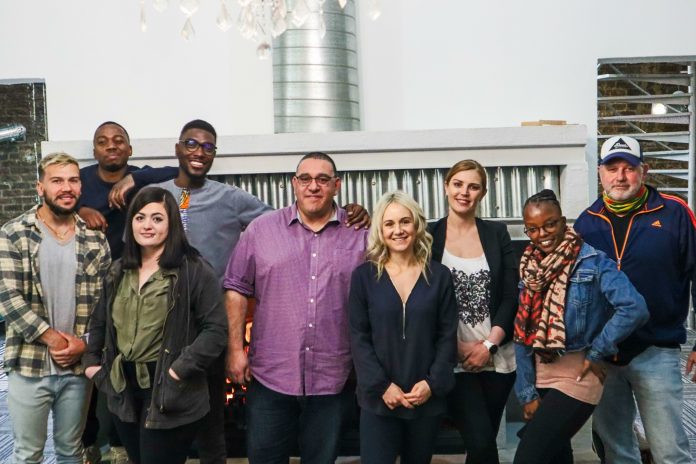
Grafton Everest team.

The Penquin team will be responsible for lounge brand Grafton Everest’s strategic direction, digital campaign buying, social media accounts, creative elements, and all production needs. Grafton Everest is one of the brands within the Bravo Group.

‘The agency’s team hugely impressed us with their understanding of the Grafton Everest brand and the vision they saw for it going forward. It is great to work with a team who is as passionate as we are for lounge furniture and, I have no doubt, we have a winning partnership,’ said Amy Whittam, Marketing Executive at the Bravo Group.

‘Pitching in person gave us the winning edge,’ commented Ryan Nofal, acting MD at Penquin, when asked what their biggest differentiator was from the other agencies. ‘Being in the same room as the brand’s team enabled us to start forming a relationship between the brand and the agency. We welcome Grafton Everest to the Penquin family with excitement. The team is ready to take the brand to new heights.’

PENQUIN
+27118791900
penquin.co.za

Primedia Outdoor Brings Checkers’ Billboard Nursery To Life

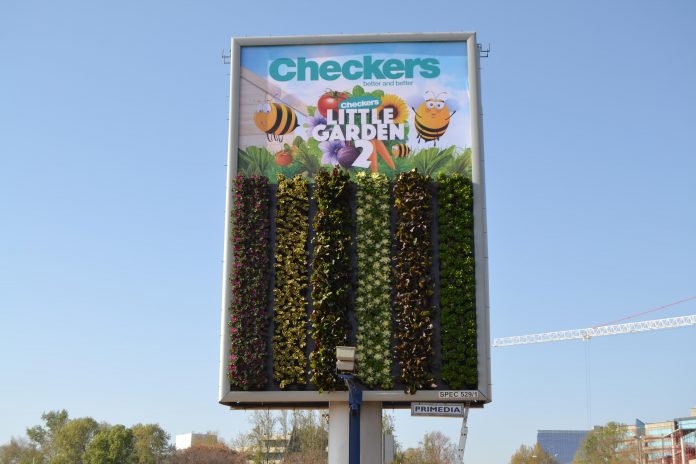
Checkers’ 7.5m x 5m spectacular billboard is located within Sandown High School on Rivonia Road, one of the busiest arterials into the Sandton CBD, thereby targeting daily commuters including students being dropped off at the school.

Checkers partnered with Primedia Outdoor to create a billboard nursery after announcing the return of their hugely successful Little Garden collectable promotion. The launch of the promotion and the unveiling of the billboard took place on 24 August 2020, just ahead of spring.

The billboard is the temporary home of six different plant types: kale (purple), pelargonium, spinach, kale (variegated), bok choy, and flatleaf parsley. The carefully selected plants used for this innovative billboard campaign have been planted in the actual flex face, making up two thirds of the creative area and are maintained by an irrigation system that distributes water to the roots of the plants when needed.

The Little Garden initiative encourages children and adults to get outside and spend some quality time together, tending to their seedlings and learning to grow their own fresh herbs, veggies and flowers. Each seedling kit includes a small biodegradable pot, a soil pod, seed paper and a pop-out nametag.

‘Little Garden was a hit when we first launched it two years ago, and our customers have repeatedly asked us to bring it back. Gardening is a great activity for young and old, especially now that people are spending so much more time at home,’ said Willie Peters, General Manager: Marketing at Checkers.

Peter Lindstrom, Sales Executive at Primedia Outdoor, said, ‘Large static OOH formats encourage innovation and at Primedia Outdoor, we continuously strive to bring innovative concepts to life. We are constantly finding new ways of thinking to go above and beyond customer expectations. We are extremely pleased with the roll-out of this campaign as it illustrates how traditional OOH can be rethought to create unique and memorable campaigns.’

PRIMEDIA OUTDOOR
+27114751419 
jorja@primeoutdoor.co.za
www.primediaoutdoor.co.za

Kantar Announces 30 Most Valuable South African Brands

Kantar’s BrandZ™ Top 30 Most Valuable South African Brands Ranking is commissioned by WPP, and the valuation behind it was conducted by brand equity research experts Kantar. The methodology mirrors that used to calculate the annual BrandZ Top 100 Most Valuable Global Brands ranking, which is now in its 15th year.

First National Bank (FNB) has been named as South Africa’s most valuable brand for the first time in the ranking. In difficult global and local conditions, First National Bank outperformed its rivals with a brand value of $2.8 billion in the third BrandZ ranking of South African born most valuable brands. Its commitment to innovation to make it easy for customers to manage their lives drives a broad remit that includes a multi-feature banking app, as well as facilities to book flights, buy insurance and manage car registrations and ownership. Standard Bank took the No.2 spot with a brand value of $2.75 billion, with beer brand Castle at No.3, at $2.72 billion. 

Flavoured beer brand Flying Fish is the highest new entry in the ranking at No.28 with a brand value of $333 million. Insurance group Hollard, with a brand value of $285 million, is the other newcomer, making it into the ranking at No.30. 

The cumulative value of the Top 30 brands in 2020 is $29.7 billion, down 20% from 2019. As in other regions, South African brands have been heavily impacted by the coronavirus pandemic. This global crisis came on the back of the ongoing macroeconomic challenges faced by the country as its government debt was downgraded to junk status.

These external factors have compounded the pre-pandemic tendency for many major South African brands to grow through business expansion rather than innovation to enhance the brand experience. This has led to low brand equity, especially in comparison with leading brands in other countries where BrandZ undertakes valuation rankings. As a result, they are vulnerable in the currently difficult climate, which has highlighted that brand building will be key to recovery. 

BrandZ analysis reinforces this. The world’s largest brand equity platform shows that, over 16 years, strong brands have continued to recover faster following economic shocks. Globally, the BrandZ strong brands portfolio has consistently outperformed the market, including the S&P 500 and MSCI World Index. These findings validate the vital role of marketing and brand-building investment to support business recovery. 

Brands bucking the trend in South Africa include retail and pharmacy chain Clicks (up five places to No.24), which is the best performer in the 2020 ranking, having increased its value by 10% to $407 million. It expanded both its overall retail network and the number of in-store outlets to increase accessibility and convenience for consumers, which also helped to drive a 31.2% rise in pharmacy sales in the weeks prior to lockdown.

BrandZ analysis also shows that consumer expectations of brands to act more responsibly have tripled in the last 10 years, and that 9% of a brand’s equity (a key element in the calculation of brand value) is now driven by corporate reputation. Brands with a clearly defined purpose to benefit communities and society are becoming increasingly important to consumers as a result of the coronavirus pandemic – 90% of South Africans believe that brands should talk about how they can be helpful in the new everyday life. Meeting this consumer need has the potential to drive long-term growth for brands in South Africa. Brands in the Global Top 100 Most Valuable Brands ranking with a high purpose score grew 175% in value between 2006 and 2018, compared to 70% for those with a low score. 

In South Africa, premium retailer Woolworths (no. 9, $959 million) was identified as the country’s most responsible brand. Its ‘good business journey’, in which it commits to caring for the environment, people and communities with activities such as responsible and sustainable sourcing initiatives, has contributed to Woolworths being recognised in the Dow Jones Sustainability Index and the FTSE4Good Emerging Index Series. 

Capitec Bank (No.12, up from No.17 in 2019 at $840 million) performed best against the ‘purpose’ measure in the ranking, indexing 128 (against an average of 100). The brand has focused on meeting consumers’ needs with initiatives such as using WhatsApp for easy communication, Sunday opening, and the practical, ‘human-centric’ financial advice available on its website. 

Supermarket chain Pick n Pay, which rose three places in the ranking to No.17 with a brand value of $672 million, is another company that has actively demonstrated social responsibility, uniting with other partners on the Feed the Nation campaign to provide meals for vulnerable people. During the pandemic, it has partnered with an on-demand beverage delivery service to provide grocery essentials via a contactless system. 

Charles Foster, CEO, Africa and Middle East, Insights Division, Kantar said, ‘On a macro level, this has been a difficult year for South Africa, with a global pandemic being only one of the headwinds brands have had to contend with. But in a country with a history of resilience and an ability to look to the future, we are seeing great examples of brands – driven by consumer expectations – redefining themselves, in recognition that the current climate calls for them to clearly determine their contribution to society. This investment in brand building is critical to address the equity deficit that many brands currently face, and it will pay dividends in a world where brands are increasingly expected to deliver social benefits that go above and beyond product functionality.’

The BrandZ Top 30 Most Valuable South African Brands 2020

Rank 2020

Brand

Category

Brand Value 2020 (USD mil)

1

First National Bank

Banks

2,795

2

Standard Bank

Banks

2,745

3

Castle

Beer

2,724

4

Vodacom

Telecom Providers

2,552

5

Nando’s

Fast Food

1,997

6

MTN

Telecom Providers

1,882

7

Absa

Banks

1,123

8

Discovery

Insurance

1,091

9

Woolworths

Retail

959

10

DStv

Entertainment

892


David Roth, CEO of The Store WPP, EMEA and Asia and Chairman of BrandZ said, ‘The importance of being a strong brand has been tested to the limit by the global pandemic and proved an imperative company asset. As brands around the world shoulder their responsibility to continue to meet consumer need, however much that has changed, it is a timely reminder of how and why to invest in brand building for the short and long-term. With South Africa’s additional challenges thrown into the mix, South African brands that do this will be in the best position for recovery – and will also be our headline stars in the next few years.’

Other key findings of the BrandZ Top 30 Most Valuable South African Brands 2020 include:

• Fair pricing: Clicks is also seen by consumers to price fairly, indexing 131 on this scale (where 100 is the average). This is increasingly critical for most South Africans, who have become more price and promotion conscious as the direct impact of economic uncertainty on household income grows. Seventy-six percent of consumers now say they pay more attention to prices and 42% will visit multiple stores to ensure they get best value.

• Difference pays: in a market where price and value are very important, difference is a critical component that enables brands to charge a premium. Difference provides consumers with a reason to choose a given brand, justifies the price asked and reinforces the buying decision post purchase. Woolworths, which indexes 207 for ‘difference’, takes top spot on this measure and also scores highest for ‘worth more than it costs’ where it scores 130. Woolworths was also No. 1 and No. 8 respectively for retail and fashion in the recent global Kantar CX+ retail study that evaluates exceptional customer experience.

• BrandZ 2020 Special Awards: brands awarded for high-performing scores against the other critical factors that underpin their brand value include: Capitec Bank for Brand Purpose, Nando’s for Communications, Woolworths for Brand Experience, Clicks for Brand Love, and Woolworths for Responsibility.

• Financial services dominate:banks and insurance companies take nearly half the Top 30, accounting for 42.9% of the total value of the Top 30, with the Banks contributing 30.3% and the Insurance giants 12.6%. Telecom Providers at 16.9% and Beer brands at 12.9% sit between the two financial sectors.

View the full report here.

KANTAR 
kantar.com

BrandQuantum Multilanguage Offering Meets Needs Of Growing Global User Base

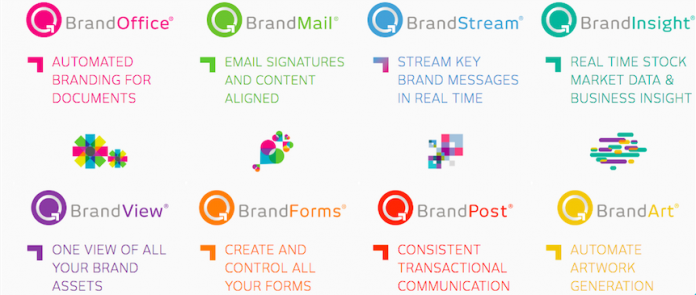
The Multilanguage ribbon is now available in over 60 languages including Afrikaans, Mandarin, Arabic and German across BrandQuantum’s full offering including BrandMail and BrandOffice.

According to Paula Sartini, founder and CEO at BrandQuantum, ‘As our user base of customers has expanded globally, we needed to adapt the ribbon to meet the various language needs of our users. To achieve this we have introduced a Multilanguage ribbon option, which means that our BrandQuantum users can use our solutions in the language of their choice.’

‘We have seen an increased uptake of BrandMail and BrandOffice internationally with users across the US and Europe using our solutions to deliver consistent branding across all company documents, presentations and emails,’ added Sartini. ‘In engaging with one of our customers, we learned that they had a large staff contingency that was Chinese and would benefit from the solution being available in their home language.’

BRANDQUANTUM
www.brandquantum.com

Relativ Media Announces Uber As Driver-Partner

Relativ Media is rolling out a new offering that will see it branding qualifying Uber driver-partner vehicles at various locations across South Africa. 

According to Uber South Africa, the company has over one million active riders and has over 13,000 active independent drivers. Andrew Cooper, group sales director at Relativ Media said, ‘Transit advertising creates meaningful connections with consumers as they move throughout their day in the real world. Transit ads have a unique scale of reach that cuts through the clutter with street-level engagement.’

Relativ Media’s initial offering, using Uber as the technological application for their new means of advertising, will include partially wrapping — or, in a world-first — wrapping the entire vehicle in a clients’ branding for UberX, Uber XL and Uber Van.

Relativ Media said that its deal with Uber opens new opportunities and value for both its new and existing clients. Cooper said that there are benefits of transit advertising, particularly in cities that don’t allow for much outdoor advertising. These include Cape Town, Durban, East London and Port Elizabeth. ‘Clients can now roll out campaigns and be seen by audiences in areas which may not have previously been an option for them.’

‘Other beneficiaries of the deal between the two companies and probably the most meaningful include the Uber driver-partners themselves. This offering is a focused effort by Uber to unlock further earning opportunities for their independent drivers, especially during these difficult times. A large percentage of the advertising revenue will go to the drivers,’ said Cooper. ‘We now have the widest network of large format iconic digital screens in South Africa and will continue to grow this network in appropriate areas.’

Sijadu Mzozoyana, CEO of Relativ Media, said, ‘In a pandemic environment like the one we are in now, it made sense to work with a trusted brand like Uber that looks to uplift the wellbeing of everyone in its community, especially drivers. A significant percentage of revenue generated off this platform goes to drivers who use the Uber app and it is incredibly meaningful in the context of Covid-19.’

RELATIV MEDIA 
+27832357509
info@relativmedia.co.za
relativmedia.co.za

Grey Africa Conceptualises Hollard Life’s Abantu Bazothini Campaign

Hollard Life’s first collaboration with Grey is their new TV commercial (TVC) and 360 degree brand campaign, ‘Abantu bazothini’, a Zulu phrase that translates as ‘What will people say’. This comes after Hollard Life recently appointed Grey Africa as its new advertising agency.

Grey is also the agency for Hollard Insure, which focuses on corporate and commercial insurance, while agency VMLY&R has the account for Hollard Group and Hollard Partner Solutions.

‘We knew that Grey was the agency for us after our very first meeting,’ sayid Heidi Brauer, Chief Marketing and Customer Officer for Hollard. ‘Of course the high calibre and creativity of their previous work speaks for itself. However, for us at Hollard, it is about more than just great credentials. We love the energy and spirit of the Grey team, and we could see that they had really listened to us and had devoted a lot of time to think about the nuances of our brand. Creativity is a hard journey, so we wanted an agency that could work closely with us and grow with us. Relationships are everything in business, and great work takes time and commitment. We are thrilled to have Grey partner with us on this journey.’

The Hollard Life TVC tells the story of an old man who has left a video message for his widow, in which he emphasises that he wants a dignified burial but not a lavish funeral, as he wants her to benefit from his life insurance policy and be well looked after for the rest of her life. The entire TVC is delivered in Zulu, with English subtitles.

‘With this campaign, Hollard wanted to reposition what the life insurance business is all about,’ explained Fran Luckin, Chief Creative Officer at Grey Africa. ‘We wanted to start shifting South African’s mindsets about funeral and life cover and get them to think more about life insurance and less about funeral policies.’

Farhaana Baartman, Head of Marketing and Customer for Hollard Life, elaborated, ‘Funerals are an important element of many South African cultures, but the important question people should be asking themselves is, ‘What is the legacy I will leave behind for my loved ones?’.  Part of this legacy is life insurance to ensure that one’s family is well looked after. As Hollard celebrates our 40-year milestone, we want South Africa to start seeing Hollard Life as more than just a funeral business, but as a life insurance partner that can help you leave a worthy legacy.’

The director of the Hollard Life commercial was Justice Mukhali of Bomb Commercials, who is well known for his authentic storytelling. Luckin noted, ‘Mukhali really brought his heart and soul into the production and had some lovely insights, suggesting some changes to our original script that really made the story more relatable. He has a way of connecting with the human spirit and unpacking the real nuances behind the many issues that South Africans face.’

GREY JHB
www.grey.co.za

Entry Deadline Extended For Assegai Awards

The deadline for the DMASA Assegai Integrated Marketing Awards has been extended to midnight on 11 September 2020.

The Assegai Awards, organised by Direct Marketing Association of South Africa (DMASA) acknowledge the talented elite whose integrated marketing campaigns deliver exceptional results. 

Campaigns need to have run between January 2019 and August 2020. For all Assegai Awards enquiries, email the team at: info@assegaiawards.co.za. Entry instructions can be found here. 

There are 40 diverse categories in this year’s awards. Entrants are welcome to enter as many categories as they like.

ASSEGAI AWARDS
info@assegaiawards.co.za
assegaiawards.co.za
This is Modern Marketing