Home Blog Page 326

Tracking Is An Essential Part Of Any Online Business

According to Ad Operations Lead at OLE Connect Cape Town, Daniel Schmidt,  there are ways to get smarter about your tracking that can be implemented with the objective of real growth.

Remarketing and retargeting are popular buzzwords in the industry, but the truth about remarketing campaigns is that most are simply inefficient. We have all seen the ad that follows you around the web, consistently prompting you to learn more about a product you have already purchased.

Why implement tracking?

It is important to measure the results of any media buying operation and a Facebook campaign is no different. Your ads may get hundreds of clicks in a day, but if driving revenue is a key objective, your real interest should be the conversions – sales, leads, sign-ups and other commercially viable interactions.

When people interact with your brand, they can either do so on Facebook, or they can click through to your landing pages. If they interact with your ad on Facebook, it is quite straightforward to measure results and those metrics will be readily available in the Ads Manager engine. If they click through to your site or app, then measurement becomes a bit more complicated because two different digital properties are required to communicate – this is where tracking comes in.

For websites, you’ll need to track your users’ interactions with Facebook Pixel, and for interactions taking place within an app, it is best to implement a software development kit (SDK) and configure app events. Your business needs event tracking in order to measure the things that really matter to you.

Conversion objective

Many businesses moved online in the wake of the coronavirus pandemic and the subsequent economic shutdown. In order to stop the spread of Covid-19, we needed to stay home. Of course this didn’t stop the demand for consumer products and many businesses migrated from brick-and-mortar to e-commerce. South Africa has seen an explosion in online sales since March 2020, and these sales need to be tracked for businesses to justify their media spend and ROI.

That is why tracking is an essential part of any online business and the value of tracking is now more important than ever. As more businesses make the migration online, competition for consumer attention will continue to spike, plus an economic downturn means there are fewer actual shoppers in the market – making the need for smarter tracking key to survival.

It’s not all doom and gloom though. Facebook’s conversion objective makes it slightly easier to set up campaigns that work for your business, and once the pixel is implemented, tracking with Events Manager is also a lot more simple with less code required.

Building audience segments

Retargeting on Facebook is no longer just for people who have visited your site. You can use Facebook Pixel to help you get smarter in the following ways:

  • Communicating to people who have been on specific pages.
  • Communicating to people who have taken specific actions.
  • Communicating to people who have an overlap of two previous functions.
  • Add and update items in a catalogue.
  • Track users across devices and compile cross-device conversion reports.

All the same principles apply to Instagram

Facebook advertising can be served across Instagram, Messenger and the Audience Network, giving your campaign a lot more inventory. A good mix of these channels should be implemented with campaign structures that suit your business objectives and bid strategies that allow machine-learning to find the users who are ready to transact.

OLE CONNECT 
oleconnect.com

Takalani Sesame’s 20 Year Milestone Celebrated With Catchy Tune

Sanlam’s creative agency, King James Group, invited Mafikizolo to create a campaign that comprises of a song, music video and dance challenge in true Takalani style and that helps children to count to 20.

Two decades since they first burst onto our screens, the Muppets from Takalani Sesame have gone on to win the hearts and minds of millions of children all over SA – from Strandfontein to Sandton. With their most recent birthday collaboration however, they’re about to earn some serious street cred too. The song, ’20 Years and Counting’ is as catchy as it is cute.

Graeme McCree, King James Creative Director said, ’Song is such a great medium through which to communicate. Through this catchy tune, we got to celebrate 20 years, sneak in some financial literacy and have tons of fun along the way.’

Kate White, Senior Copywriter, explained, ‘Initially we had planned to shoot Mafikizolo collaborating with the Muppets in the making of the song – brainstorming, sitting alongside one another by a piano, that kind of thing. But to ensure social distancing at all times, we ended up shooting the Muppets and singers separately, without it looking that way.’

As one of the first shoots produced after the nationwide lockdown, the set itself was restricted to less than 50 people at all times. Still, the opportunity for all involved to be somewhat together again with others created a wonderful atmosphere on set. ‘Everyone was so happy to be there,’ said McCree. ‘There was a real feeling of joy and camaraderie.’

Mafikizolo’s Theo Kgosinkwe and Nhlanhla Nciza were only too happy to get in on the festivities. ‘I’ve always loved how the show has made education seem cool,’ said Nciza, ‘Although I wish Takalani had been around when I was younger, my eight-year-old son loves to watch. I’m so excited for him to see our music video and song. He’ll see me grooving with some of his real heroes.’

A parent himself, Kgosinkew concurred, ‘We’re honoured and excited to be celebrating this incredible show – not just as performers, but as parents too. We can’t wait for more people to hear it, and for all to sing along with us when they do. 

‘We’re delighted with the song, and so proud of the contribution that Takalani Sesame has made to education in South Africa,’ said Mariska Oosthuizen, Sanlam’s Head of Brand.   ‘Education is central to this. Learning to count is a fundamental part of numeracy, and singing is one of the most effective ways to help children learn and remember. This song is not only fun to sing along to, but another opportunity for us to help lay the building blocks for future generations to learn, earn and contribute towards the sustainability of our country.’ 

Since unveiling the video on the Expresso Morning Show, the song has been met with positive reactions all round. Listed on Spotify too, its message of inspiring smarter, stronger, kinder children (for a brighter world) is one the team hopes will ring out loud and clear.

KING JAMES GROUP
+27112150000
enquiries@kingjames.co.za
kingjames.co.za

JCDecaux Africa Launches Citilites Amplified Media Offering

JCDecaux Africa’s Citilites Amplified is a range of flexible Out of Home advertising media solutions. It features tailored bespoke networks aimed to address specific campaign objectives, such as promoting social engagement or extending brand recall for a TV campaign.

To address the changing market needs, JCDecaux analysed Citilites. With a clear aim in mind, the company adapted and enhance their media offering to deliver better value and efficacy. JCDecaux wanted to understand high demand trading audiences by looking into a host of lifestyle attributes and needs and, more importantly, their purchase and consumption habits, interests and behaviours. Through deep and rich consumer insights, JCDecaux is better positioned to guide and improve media selection and consumer targeting.

JCDecaux wanted to get a deep understanding of a host of environments, such as catchment areas relating to key shopping districts and places of convergence. Deep analysis of key points of interest and points of purchase. In addition to studying mobility to understand travel patterns associated with a broad range of activities, from the daily commute to work or dropping the kids off at school to a host of leisure activities.

After months of work, JCDecaux Africa announced their new media offering to the market, Citilites Amplified. The aim is to build Out of Home advertising networks, which enable relevant and contextual campaigns to a host of industry verticals. Hyper-targeting advertising within relevant contextual environments can help build brand equity, improve ad recall, and deliver better relevancy to address lower funnel sales objectives, such as improved purchase consideration and enhancing brand action or appraisal.

To highlight the flexibility of the Citilites networks, understanding which key POIs and POP are of importance to an over the counter (OTC) brand who want to target families. JCDecaux can offer advertising media solutions in proximity to clinics, creches, schools, recreation centres or places of worship. Looking at a different vertical, namely a short-term motor insurance brand, wanting to target middle-to-upper income consumers.

Citilites Amplified networks can target office and business parks, golf courses, new and used car dealerships to ensure top-of-mind during the purchase exploration and decision-making period, enabling us to build customer-centric networks, relevant to a host of brands and advertisers, around a highly sought-after consumer segment.

There are two turnkey media offerings, the first, Citi Reach, is optimised around maximising reach, nationally or regionally, positioned to address TV and radio coverage goals, with higher frequency and at a lower average cost, simplifying the media procurement for strategists and planners.

JCDecaux’s second range of networks, Citi Places, are lifestyle-focused, centred around a host of points of interest and points of purchase, enabling advertising messaging to be delivered in contextually relevant locations.

As an example, from a contextual perspective for an alcohol brand, the Citi Slicker network is located near 110 restaurants, 65 bars, 39 bottle stores, 48 hotels, highlighting the communication opportunity to deliver relevant advertising messaging in proximity to points of purchase and points of consumption.

Reviewing the same network for a banking or investment brand, Citi Slicker targets an affluent audience located in key catchment areas including 116 office or business parks, 328 banks or financial institutions and eight golf courses, reaching 13.37% of LSM 8–10 adults in Gauteng, and delivering over 6.2 million impressions with an average frequency of 13.

JCDECAUX AFRICA
+27115141400 
wandile.setlhodi@jcdecaux.com
www.jcdecauxafrica.com

AMF Goes Beyond Data And Delves Into Human Truths As Insights

The Advertising Media Forum (AMF) states that while internet penetration continues to grow, TV remains the number one channel for reach in terms of mass media in South Africa.

The advertising industry has certainly grown over the past two decades – seeing the changes in technology and the way consumers consume media in general, fragmentation upon fragmentation. What has separated some brands from others, is how they looked a little beyond industry data i.e. media consumption habits, demographic segmentation etc. and dared to peer into human truths as they relate to their business’ vertical/category.

Hope for the future of advertising

The impact of Covid-19 has been, and continues to be, felt far and wide and now more than ever, the need for relevance and utility is paramount. The advertising industry helps drive social narratives through storytelling when brands launch campaigns, and it is critical that the campaigns launched (not only during this period but also going forward) be based on fundamental human truths turned into insights.

Our collective responsibility is in injecting hope to the country and to help businesses to connect to people in a more authentic way than ever before. Industry data will remain important in guiding media and creative approaches to campaigns based on business objectives, however, the next step is finding the human truth to speak to and the challenge is incumbent upon all to find these.

Human truths as insights

Advertising campaigns that used human truths as insights into creatives transcended campaign periods and moved on to become South African colloquialisms as well. Without going into chronological order, here are a few examples of some old campaigns that did this well.

The first of them is the Telkom Ad titled ‘Molo Mhlobowam’, a Xhosa term that translates as ‘hello my friend’. The advert is based in the rural areas, with the protagonist shouting his lungs out greeting his friend every morning. The human truth here is in African anthropology i.e. how black people are organised spatially in rural areas and in how we greet each other by shouting from a distance. The way that Telkom employed this insight and responded by showing how their product alleviates an existing behaviour was brilliant.

Another one is an ad by DSTV compact titled ‘#Nicelifeproblems’ which was a booming colloquial phrase in the South African urban milieu. The ad shows a group of guys who waited to watch a soccer game that was evidently only being shown on DSTV channels which they clearly did not have, so they resorted to performing for Sipho (the DSTV compact owner) to convince him to let them watch the game at his house.

What made this ad brilliant, is in how it used the insight about black hymnody. Black people anthropologically use hymnody to make peace with life’s circumstances but in this instance, they used it to change theirs and get to watch the game. This resonated well with Sipho who subsequently agreed to let them watch the game with him, even asking for a repeat of the song.

ADVERTISING MEDIA FORUM 
amf.org.za

Sunday Times Announces 2020 Gen Next Award Winners

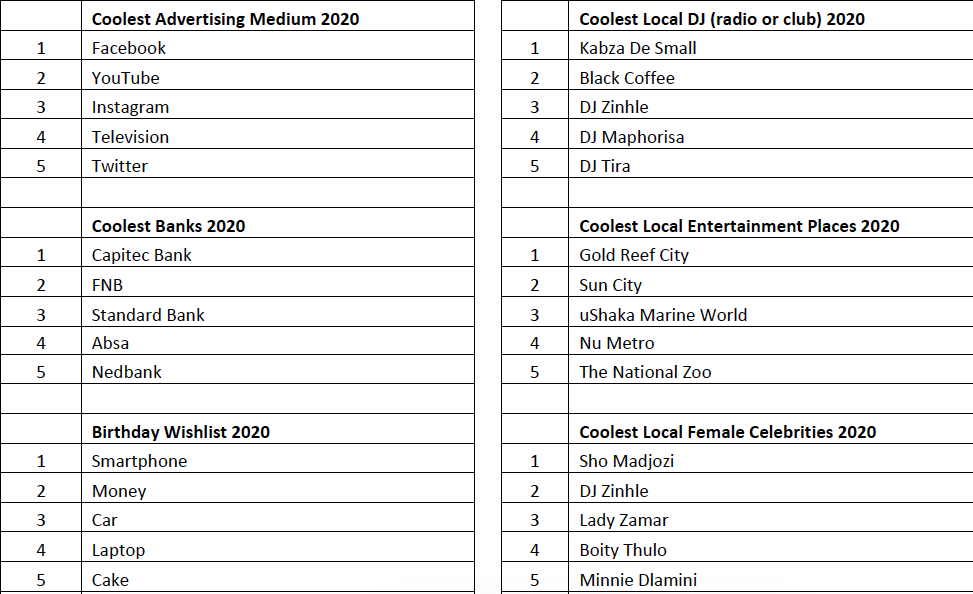
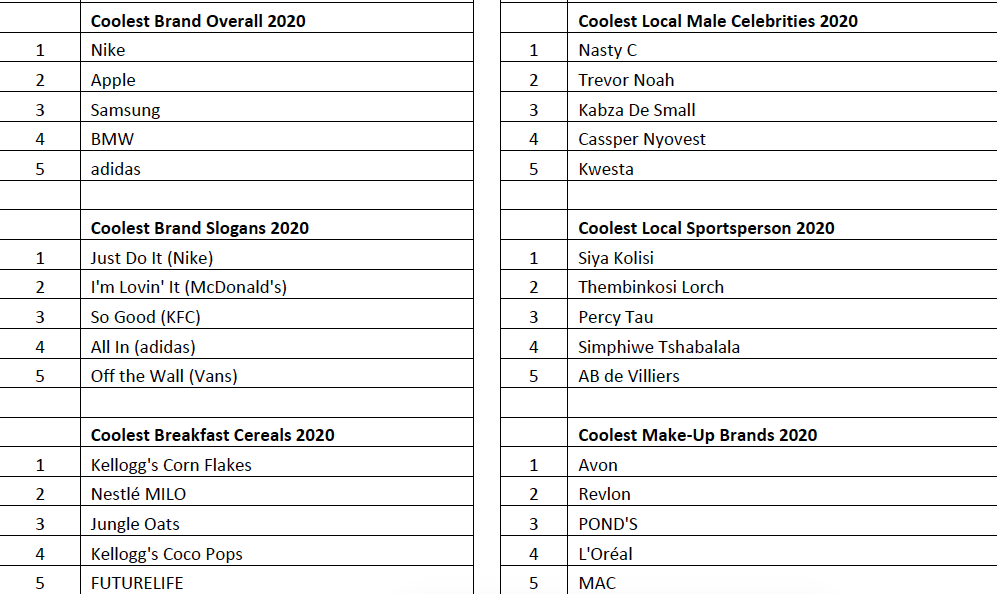
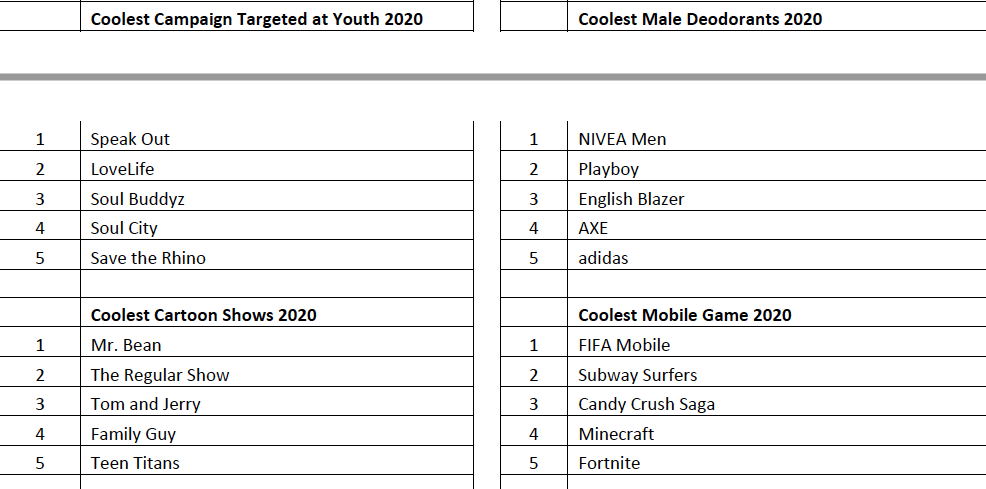
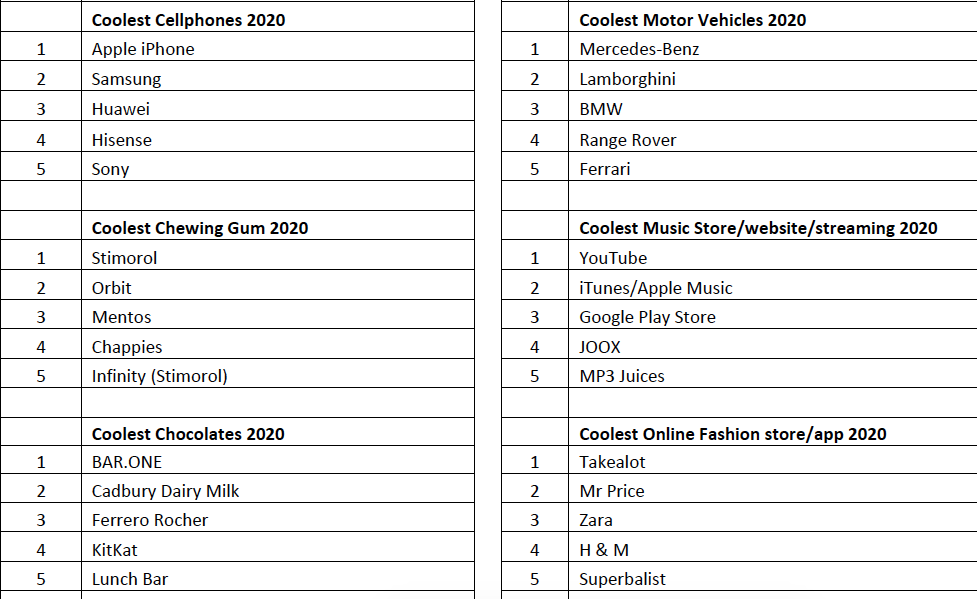
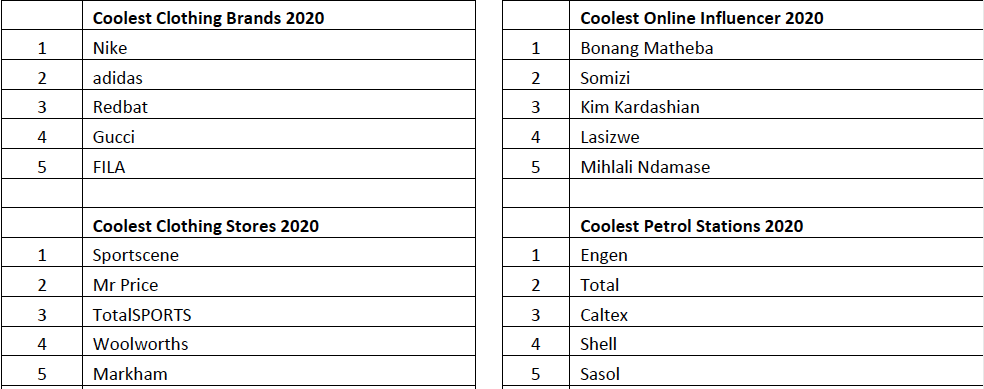
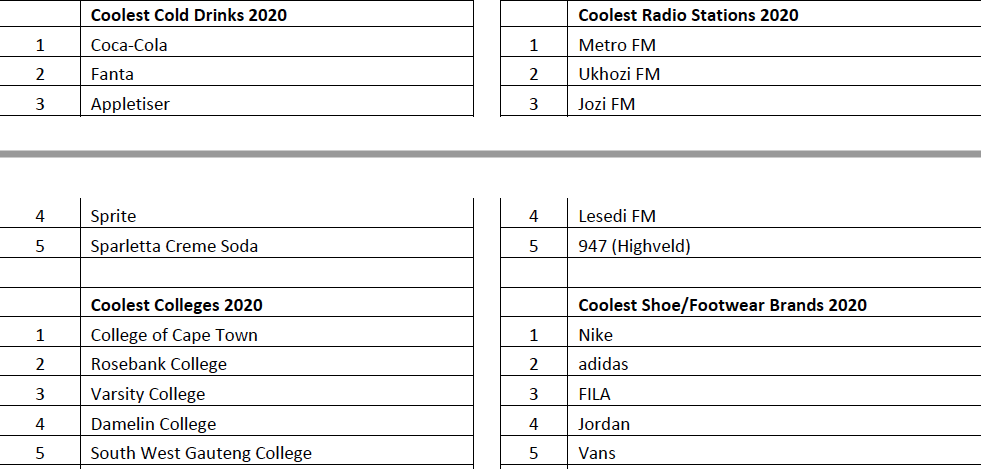
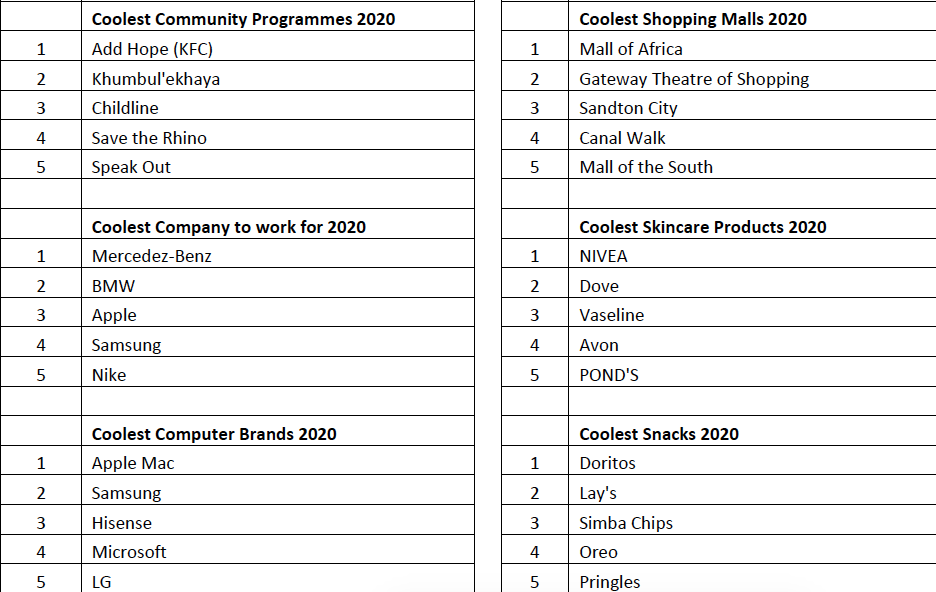
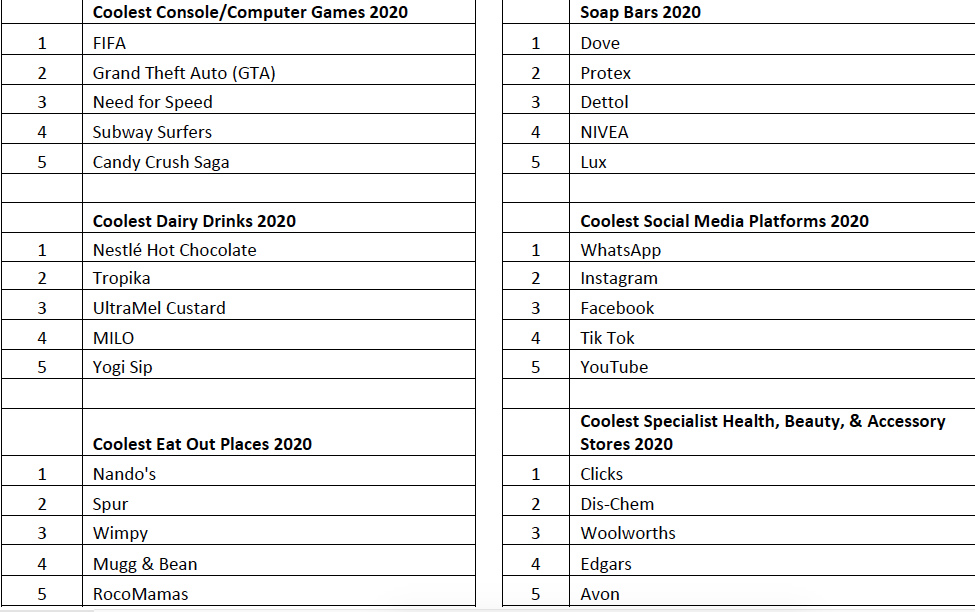
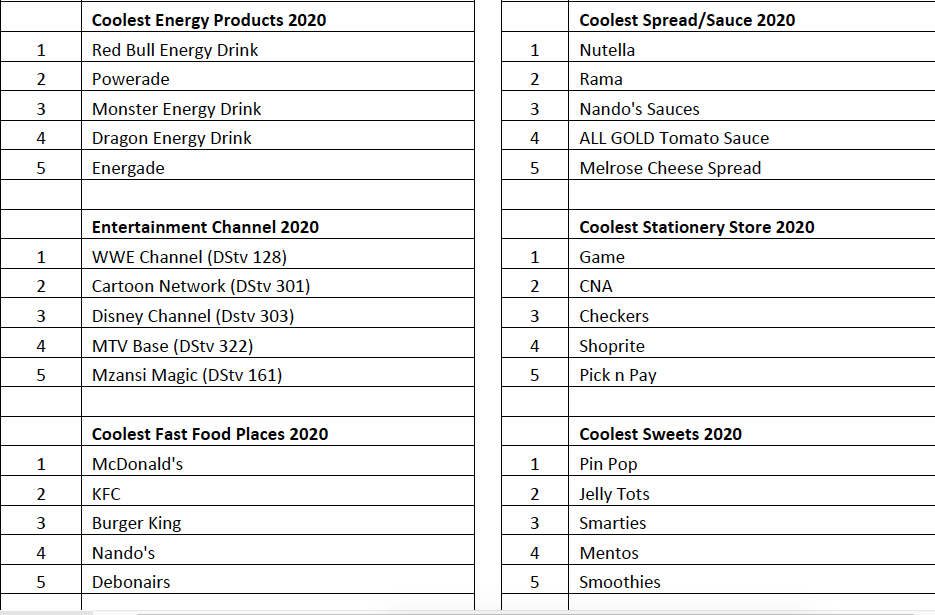
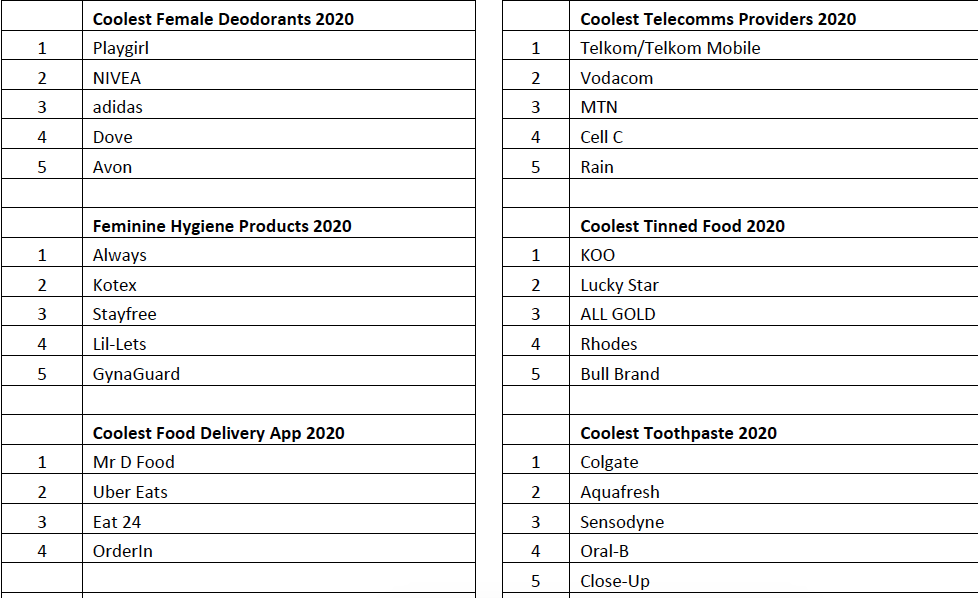
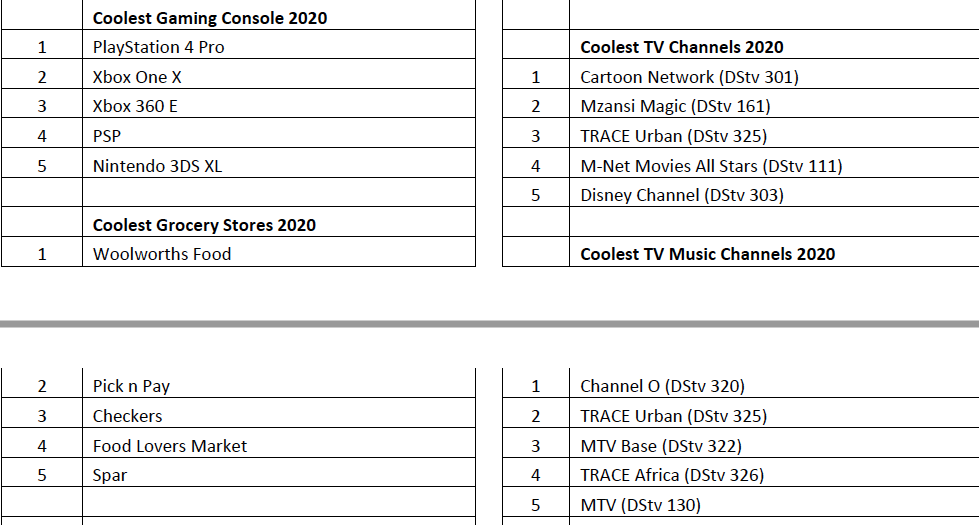
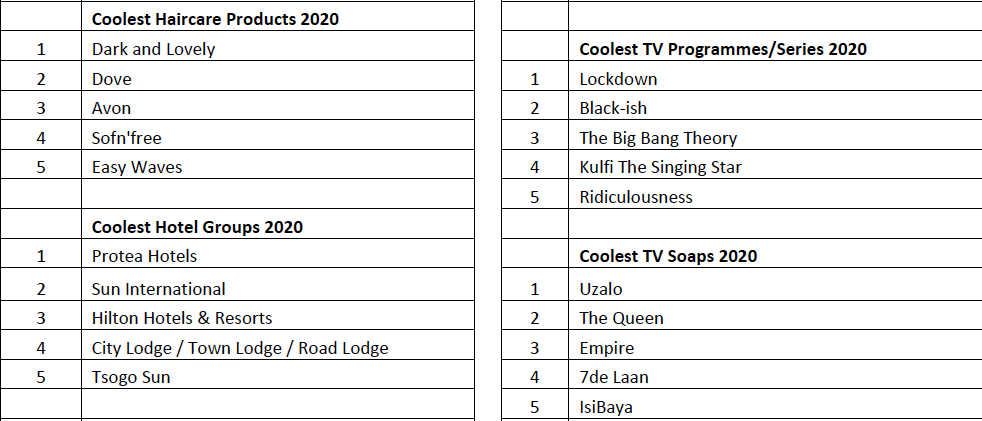
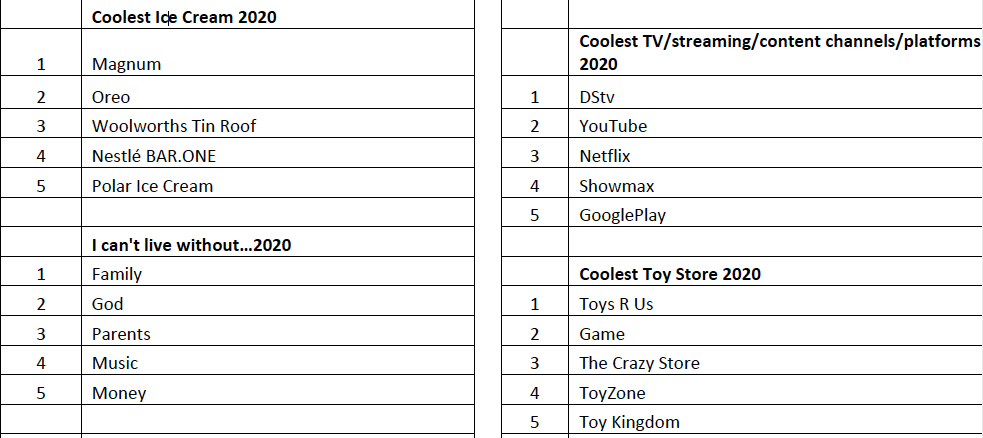
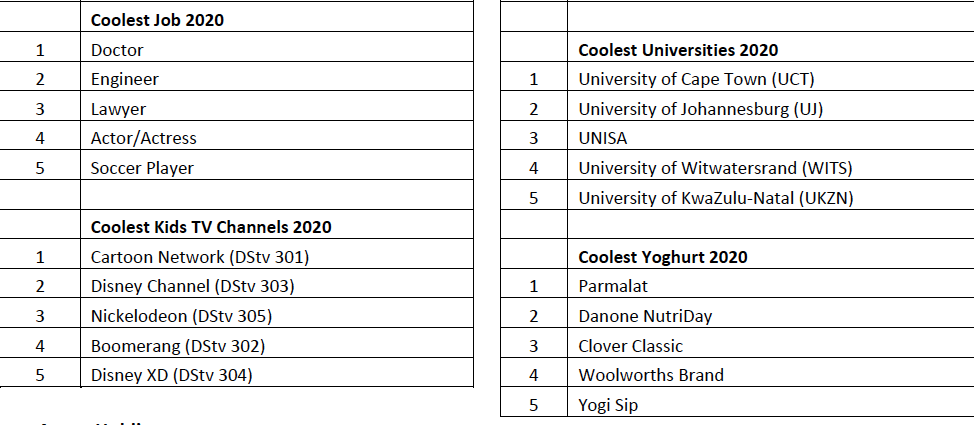
The 16th annual Sunday Times Gen Next Awards took place online on 21 August 2020. Winners across 71 categories were celebrated based on the outcome of research conducted by Yellowwood.

The Sunday Times Gen Next survey has established itself as the leading barometer of what South African youths find on-trend and aspirational, and delivers insights that are valued by brand managers, advertising and marketing professionals. The survey had previously been limited to South African youths between the ages of 8 and 23. More than six thousand youths and young professionals across the country were polled during the 2020 survey period, which concluded ahead of the national Covid-19 lockdown.

‘What began as a typical year for the annual Gen Next survey, was turned upside down when shortly after our in-field research was conducted, South Africa went into lockdown. Having analysed these results in a whole new context, we found that many of the insights and brand preferences were only deepened by the pandemic,’ said Refilwe Maluleke, Managing Director of Yellowwood.

Eben Gewers, Head of Advertising Sales and Trade Marketing at Arena Holdings – which owns Sunday Times Gen Next – believes this year’s results will be a key metric of pre-Covid youth preferences and attitudes towards brands. ‘Covid-19 is undoubtedly going to have a dramatic effect on numerous areas of life in the short and long terms. Things are going to change and capturing a ‘before and after’ snapshot of youth brand preferences will provide huge benefit to the South African advertising and marketing industry about how priorities and perspectives may shift in the face of huge socio-economic upheaval.’

Sunday Times Gen Next winners in 2020 include: Always, Apple, Avon, BAR.ONE, Capitec Bank, Cartoon Network (DStv 301), Channel O (DStv 320), Clicks, Coca-Cola, Colgate, College of Cape Town, Dark and Lovely, Doritos, Dove, DStv, Engen, Facebook, FIFA, Game, Gold Reef City, Kellogg’s Corn Flakes, KFC’s Add Hope, KOO, Lockdown, Magnum, Mall of Africa, McDonald’s, Mercedes-Benz, Metro FM, Mr. Bean, Mr D Food, Nando’s, Nestlé Hot Chocolate, Nike, NIVEA, NIVEA Men, Nutella, Parmalat, Pin Pop, Playgirl, PlayStation 4 Pro, Protea Hotels, Red Bull Energy Drink, Speak Out, Sportscene, Stimorol, Takealot, Telkom/Telkom Mobile, Toys R Us, University of Cape Town (UCT), Uzalo, WhatsApp, Woolworths Food, WWE Channel (DStv 128) and YouTube.

See the full list of winners below

Watch the awards show here 

SUNDAY TIMES GEN NEXT AWARDS
arenaevents.africa/events/sunday-times-gen-next

Fuel Forecourt Retailers Can Survive Disruption By Embracing Data-Driven Innovation

Nishal Nair, Managing Director within the Resources Practice at Accenture in Africa.

According to Nishal Nair, Managing Director within the Resources Practice at Accenture in Africa, fuel forecourt retailers or convenience shops are highly vulnerable to disruption. Although their operations have always provided a convenience-driven competitive advantage, they now have a lot more to grapple with.

South African consumers are more tech-savvy and time-strapped, demanding greater relevance and convenience from service providers, all within a tighter economy and rising fuel costs. Consumers are feeling the pinch, the competition for share of wallet at fuel stations has never been so heated.

A threat and an opportunity

Although disruption in this arena is inescapable, it is proving to be both a threat and an opportunity. Over 85% of South African companies are vulnerable to future disruption versus 70% globally, yet the majority of local companies are making a conservative play – competing in their traditional business channels, using traditional approaches.

According to a recent study at Accenture; (Fore)Courting the Consumer – the Road to Data-Driven Innovation for Fuel Retailers, the South African convenience retail sector was valued at R35 billion in 2017, commanding 10% of the total market retail spend.

Since then, a new era of competitiveness has been steadily on the rise. This is attributed to new technologies such as analytics, the Internet of Things (IoT), artificial intelligence (AI), and automation, as well as access to enormous volumes of data and exciting ways of engaging with consumers and partners. Success in this new era will depend on a retailer’s understanding of market dynamics and individual consumers’ needs, and their ability to innovate rapidly and continuously to deliver solutions to meet those changing needs. Furthermore, it will gear them up for the inevitable radical change that will, in the long term, occur in the auto and transport sectors as electric vehicles are more broadly adopted.

Forces impacting forecourt retailers

With accelerating technological change, consumers’ entire living patterns are evolving. To remain relevant to the maturing digital consumer, fuel retailers need to dramatically re-invent the forecourt experience. New competitors are already making headway in this sector and forecourt retailers need to move quickly to fill emerging gaps.

Today’s consumers can continuously re-evaluate their options, choosing a provider that is most relevant to them in the moment. They are demanding greater convenience, health and wellness geared options, and hyper-relevance over loyalty to drive their choices. Loyalty programmes are no longer enough to provide a compelling experience that reaches beyond filling the tank.

In South Africa, fuel is largely regulated, which prohibits fuel retailers from discounting fuel prices. They thus rely on partnerships to create attractive forecourt ecosystems to remain competitive. The shift to support brands with greater relevance is already impacting the bottom lines of companies across South Africa. In the study, Accenture finds that lack of relevance drove 66% of switching of brands among South African consumers, putting R438 billion in potential revenue at risk.

In addition, new competitors have taken advantage of the average consumer’s need to be provided with the 5Cs convenience of forecourt retailers (namely provision of access to coffee, chips, chocolate, cigarettes and cooldrink). E-commerce players such as Uber Eats can now deliver most of the 5Cs to consumers’ doorsteps with just a few swipes. Their strategy is data driven. These innovations are available to forecourt retailers right now, but are just not being harvested well to create insights and drive services.

Building the right data assets will be essential. Forecourts have an opportunity to use in-store customer data to discover new ways to improve the customer experience online and offline, as well as drive up sales.

Why innovation matters and how SA forecourts measure up

Accenture conducted interviews with 100 South African C-suite executives from 16 industries to understand how their businesses are preparing for and are positioned to deal with disruption through innovation. The responses of the forecourt retailers are a cause for concern:
• 76% expect their industry to be disrupted by new innovations at some point within the next three years, especially from new competitors and technologies.
• 60% concede that their companies are not prepared for disruption.
• Only 23% are very satisfied that their company’s innovation efforts will position them well to overcome future disruption.

We have determined that when companies face disruption, they typically make cautious moves. They become defensive and raise barriers to entry instead of extending themselves outwards; they rely on what’s worked for them in the past instead of seeking deep change on the inside; and they tend to double down on efficiencies rather than committing to real innovation for growth.

Our research shows that over 73% of forecourt retailers in South Africa continue to compete in their legacy businesses using mostly traditional approaches or have just started transforming their legacy business into new business. While these are instinctual and understandable choices, unfortunately they don’t work because they keep companies in survival mode and away from actually shaping their future. So, the reality is that playing safe amid disruption is very risky. The good news is that investment in innovation is growing and more companies are planning to allocate a bigger share of financial investments to innovation. However, only 5% of them aim to invest more than 50% in the next five years.

The Accenture Innovation Maturity Index

The recently launched Accenture Innovation Maturity Index framework helps companies measure their innovation readiness against defined characteristics, evaluating the extent to which companies innovate and release value. Typically, high growth companies or the disruptors take a distinct approach to unlock trapped value with innovation by building deliberate structures to innovate and adopting seven practices that lead to organisational change.

Forecourt retailers lag behind other retail companies on the index, scoring 53 points out of 100. Only a small group of South African companies are referred to as Innovation Champions – 7% of the sample – averaged 68 points, eight points lower than the 76-point average of Global Innovation Champions. Forecourt retailers also trail the rest of the market in both building innovation structures and implementing innovation practices.

In order for forecourts to catch up to champion companies, they need to adopt certain characteristics as detailed in the study. They should pursue wise pivots – innovating to unlock value in new businesses while revitalising their core business, allowing a steady process of change from the old, to the now and into the new. They must prioritise formal innovation structures to support their innovation execution and embed seven innovation practices highlighted in the report throughout their business.

ACCENTURE SOUTH AFRICA
accenture.com/za-en


Ogilvy Appoints New Group CEO

Enver Groenewald, new Group CEO of Ogilvy South Africa.

Enver Groenewald has been appointed as the new Group CEO of Ogilvy South Africa, with effect from 1 October 2020.

Groenewald has deep expertise in multiple sectors, having worked in consulting, advisory and operations roles across FMCG, financial services, marketing, media and the public sector. He has experience in more than 25 markets across Africa, including most SADC countries as well as Kenya, Ethiopia, Ghana, Nigeria and Côte d’Ivoire.

Groenewald joins the agency from Unilever, where he has been Africa Director and served on their Africa Leadership Team for the past five years. As the incoming CEO, Groenewald will continue to drive Ogilvy’s commitment to transformation, which is embedded in the agency’s business objectives and agency culture.

‘Groenewald is a highly experienced, widely networked business leader with a 20-year career in senior and executive management in blue-chip South African and global organisations,’ said Paul O’Donnell, Chief Executive, Europe, Middle-East and Africa, and Executive Partner for The Ogilvy Group. ‘His breadth and depth of experience across industries will further strengthen our team’s ability to drive growth for our clients’ businesses. And, as a majority black-owned agency reflecting the aspirations of the country, he will continue driving Ogilvy SA’s transformation objectives of advancing black talent in operations and management.’

‘I’m thrilled to be back at Ogilvy,’ said Groenewald. ‘While my leadership approach is very focused on consultation and collaboration, my business philosophy is based on creating economic and social benefit through Purpose, People and Creativity. I can’t think of a better place than Ogilvy where these three elements intersect so powerfully. And, I am very excited to work alongside the group’s depth and breadth of industry talent as well as with the leading brands that Ogilvy helps grow.’

OGILVY 
www.ogilvy.co.za

MetropolitanRepublic Gets Hearts Beating With Flora Through-The-Line Campaign

Flora had always had a heart health narrative that spoke to an older market who were concerned about developing or already had heart and cholesterol problems. As a result, Flora was losing relevance with the broader LSM A market, and wanted to, going forward, take a proactive approach to heart health, as opposed to a reactive one.

MetropolitanRepublic’s response was to remind people why their hearts are so important and why they should protect them. Encapsulated by the new pay-off line – ‘Whatever your heart beats for, protect it with Flora’ – the proposition aims to solve the growth challenge put to agencies who pitched for the business last year.

Art Director at MetropolitanRepublic, Sheldon Ford said, ‘Our hearts don’t just beat. They beat for love, happiness, success, family, work and play, ultimately guiding us to what we need, not just want, and giving us a reason for being. This reason for being is different in each and every one of us. Some love the simple things like the morning sun on their skin. Some love adventure and building empires. We need to protect our passions, our being, what makes us who we are and protect our hearts.’ 

‘So, if our heart is our everything, why is it that we take our hearts for granted? Why do we go about our days, yet fail to see the value in every heartbeat?’ asked Jess McTeer, Copywriter at MetropolitanRepublic. ‘This is where Flora comes in, it helps protect what allows us to love and what allows us to live: our heart.’

The campaign has a strong above-the-line focus with two brand TV commercials (TVC’s) and six unique spots to talk to different groups of people – or tribes – loosely defined by common passion points.

There’s also a substantial influencer campaign with appearances by Itumeleng Baloyi, Lesego Semenya, Mpoomy Ledwaba, Zaakirah Khalek, Martin Headger, Angie Batis Durrant, Ashleigh Knox, Robbie Coetzee, Ketishnie Naiker and Luyanda. Five chefs have also contributed nearly a dozen recipes which are being shared online. Mario Nicolettis from production house Ministry of Illusion (MOI) directed all the work.

Both client and agency are exceptionally proud of the brand’s repositioning journey, which is the result of a mutually respectful partnership between the Flora brand team and MetropolitanRepublic that was ignited during the pitch process; cultivated during the re-imagination of the core brand strategy; and bedded down through consumer research and insight generation.

‘When advertisers are asked what they would like to create a campaign for, margarine doesn’t generally come up on top. But MetropolitanRepublic looks at every product and every brand as if it is gold and Flora has that status in the margarine category,’ said McTeer. ‘We were over the moon when we were awarded the account, and the honour of being selected only grew with every interaction we had with the Flora brand team.’

‘They are the ‘Unicorn Client’: not only incredibly trusting in our ability as an agency, but there every step of the way – well, virtually, thanks to lockdown. Even though they were in Durban, while we were shooting in Joburg, they were ‘on set’ via zoom from first call to final wrap, demonstrating their dedication to their brand and their excitement to be a part of every moment of Flora’s repositioning journey,’ she said. 

‘I believe that the secret sauce is in the way in which both agency and client have walked this journey together. There is just such a fantastic chemistry that has developed through this project that we feel nothing can stop us,’ added Flora’s Brand Manager, Keegan Eichstadt. ‘Kudos, too, have to go to MOI for landing a fantastic TVC and digital healthy food recipe videos, as well as Shaun Jacobs and Adam Howard for creating an audio thread throughout the campaign.’

For Eichstadt, it was particularly exciting to see that the creative was not limited to ‘the big idea’, but included key practical FMCG applications from packaging design, to point-of-sale design and digital execution. 

‘Notable was MetropolitanRepublic’s insistence that the digital strategy, creative and execution was fully aligned and integrated with the core idea and through-the-line plans and creative. For me, this was a departure from my previous experiences, particularly in that the translation of the big idea into a packaging concept was unexpected and unique.’ 

METROPOLITAN REPUBLIC
info@metropolitanrepublic.com
metropolitanrepublic.com

Adobe Creative Cloud 2020 Workshop Reveals Convenient Video Editing Apps

Modern Marketing LIVE and Mo Jogie, Design and Strategy Director at MSD, hosted the online Adobe Creative Cloud 2020 Power Half Hour online on 20 August. The session focused on how users can bring their ideas to life with Adobe applications for video editing, visual effects, animation and more.

Adobe Premiere Rush

Premiere Pro works seamlessly with other apps and services, including Photoshop, After Effects, Adobe Audition and Adobe Stock. Open a Motion Graphics template from After Effects, customise one from Adobe Stock or integrate with hundreds of third-party extensions. Premiere Pro comes with Premiere Rush, a new all-in-one app that works across all devices. Film and edit on your phone, then share to social from your device or desktop, or open Rush files in Premiere Pro to take them even further.

Automated tools powered by Adobe Sensei save time so users can focus on their story. Integrated workflows let you polish your work without leaving your timeline and allow you to edit footage in any format, from 8K to virtual reality. Native file support, lightweight proxy workflows and faster ProRes HDR let you work the way you want with your media, even on mobile workstations.

Adobe After Effects

Adobe After Effects is a digital visual effects, motion graphics, and compositing application developed by Adobe Systems and used in the post-production process of film making, video games and television production. Among other things, After Effects can be used for keying, tracking, compositing and animation. 

You can Animate titles, credits and lower thirds. Start from scratch or with presets available right from the app. From spin to swipe to slide — your text is on the move. It allows you to combine videos and images to create anything you can imagine. Choose exciting effects from hundreds of options, remove unwanted objects or people and create VR videos to drop your audience right into the action.

Shape Repeater

You can draw a shape multiple times or duplicate the shape automatically. The Repeater path operation lets you multiply a shape and transform its properties to achieve different results. You’ll use the Repeater path operation to duplicate a shape that was created in Adobe Illustrator and then pasted into the path property of a shape layer in the project file.

MODERN MARKETING
+27114501650
modernmarketing.co.za/live

This is Modern Marketing