Home Blog Page 323

Learn How To Do Your Own Promotional Product Branding In-House

Meet the experts to assist you with the ultimate all in one branding solution to grow your offering and add value to your business. Join session featuring Uprint Digital Direct for an interactive Q&A session and live demonstrations on the ultimate solution to brand in-house: the A4 CMYW Uprint printer.

The printer offers an all in one printing solution without the need for multi-press machines, such as a pen press, mug press, plate press or cap press.

The printer includes:

– PrintPro software.
– Chemicals: 1 litre activator.
– 1 litre Nitro X.
– 1 litre PPX.
– 1 litre XXX.
– 3mm rubber mat.
– Spray gun.
– Black magnetic pads.
– Handheld press.
– Silicone pad.
– 100 sheets yellow paper.
– 100 sheets Marine A+B paper.

Uprint’s patented chemicals will allow you to brand extremely durable logos onto difficult surfaces like stainless steel, aluminium, glass, the inside of ceramic mugs, coated wood, all plastic surfaces, cell phone covers and many more. Brand more products than any other technology and add value to your existing business. The hand held press allows you to brand on any part of a cap, bag, sports ball, shoes and any other material that can’t fit in a standard heat press and cap press.

Date: 22 September
Time: 11am

Register here for your free seat. Seats are limited.

UPRINT DIGITAL DIRECT
+27315620580
www.uprintsa.co.za

Female-Founded Creative Agency Launches

Cosmopolitan South Africa’s former editor-in-chief, Holly Meadows, and fashion director, Cleopatra Marcopoulos, have announced the launch of Mood creative agency.

The agency specialises in delivering bespoke content solutions and considered partnerships to authentically engage brands with their audiences. Meadows, Founder of Mood said, ‘In a world where 99.9% of advertising agencies are founded by men, and considering women wield more than 70% of the world’s consumer purchasing power, we are best positioned to help brands cut through the clutter and capture their target market with content that matters.’

Mood works with brands to ideate creative solutions for content with cultural relevance. They offer 360 degree consulting from brand identity to next level launch campaigns and develop omni-channel content marketing strategies to tell an authentic story. Offering multimedia design, branding, copywriting, art direction, styling, photography and videography, they execute events, activations and brand experiences that immerse, change perception and make an impact.

MOOD 
holly@itsamood.co.za
itsamood.co.za

Seven Trends To Realign Brand Fundamentals

Marcel Rossouw, Group Director for Fjord Johannesburg.

Marcel Rossouw, Group Director for Fjord Johannesburg, part of Accenture Interactive, states that the pandemic has accelerated our adoption and collaboration with technology. The new normal looks more like the never normal and presents exciting opportunities for brands to embrace innovation using design thinking and technology. 

Trend 1: The many faces of growth

A fundamental reset button has been pressed by the pandemic and placed purpose at the centre of the lens. Capitalism is facing a mid-life crisis and organisations must start reassessing corporate purpose and recalibrate how they see their role in the world around them. Although profit is critical for companies to remain sustainable, we are looking at what the other things beyond profit are, the innovation between meaning and matrix, and how you might measure that.

In South Africa, we saw how Coca-Cola South Africa realised they needed to shift their brand priorities. They partnered with Pepco, a not-for-profit recycling company, and successfully drove in-country recycling of plastic bottles up from 14% in 2005 to 65%. Put this against the backdrop of a R250 million a year recycling industry, that also provides an income for over 64,000 people. It places our country ahead of the EU and the US in plastic bottle recycling. This provides a powerful example of the new types of value.

Trend 2: Money changers

As digital currencies come into being, our mental model of what money does and how we perceive money, changes. Covid-19 has accelerated societies into becoming cashless and has shifted how we view money. These tectonic shifts create numerous opportunities for a host of new products and players. In 2019 we saw the launch of three new digital banks in South Africa alone.

In Tanzania, mobile money users were previously required to send a long string of 40-digit codes to send money to another user. A certain company saw this as an opportunity to differentiate and developed an experience-led solution to make money transfers and the payments simpler by cutting out those codes and using just a single layer for a multi-SIM user to manage all their mobile money accounts in one place. Africa has for years led the world in understanding how money can change.

Trend 3: Walking barcodes

Our physical bodies are becoming as trackable as our digital selves. However, when it comes to facial and body recognition technology, what is the trade-off between privacy and convenience? Although there is much controversy on this, it may be here to stay as we move from the Internet of Things to the Internet of Bodies. In the UK, telemedicine for instance uses facial recognition and has helped to scan the way a patient is responding to how a doctor is talking to them in a virtual conversation. The system then provides real-time feedback to the doctor about whether the patient seems to understand what the doctor is saying or not. This could be critically important, especially in the pandemic, and will most likely persist after the pandemic is over.

Locally, around 494 million sub-Saharan Africans are without official proof of identity, which is important to enable healthcare, financial and government services. Biometric solutions can help. However, they leave no room for data mistakes, and with more than half of Africa’s 54 countries having no data protection or privacy laws, and of the 14 countries that do, 9 have no regulators to enforce them, this poses a real challenge in managing and protecting data.

Trend 4: Liquid people

Consumption habits are changing as people perceive and define their identity in ever more liquid ways. Considerable opportunity exists in providing new experiences of consuming. We are seeing an end to mindless consuming as people become more thoughtful on what they do, and for what cause.

The South African Plastic Pact was set up by the Worldwide Fund for Nature, for businesses, governments and NGOs to collaborate to address plastic waste and pollution issues across the country. The signatories to the Plastic Pact locally include Distell, Massmart, Pick n Pay, Shoprite Group, Tiger Brands, Unilever and Woolworths, to name a few. The initiative provides an opportunity for big business to show the South African consumer and their employees that they care about making a sustainable difference. The South African consumer is keen to see how businesses are documenting and telling the stories of how they are making a difference in collaboration with their customers and employees. The word consumer may find new meaning and ultimately be replaced in the near future by a new word that describes people who buy and use products.

Trend 5: Designing intelligence

The human experience is growing increasingly complex. The next step for AI is to move beyond automation to designing systems that blend human and AI and enhance the interplay between both. Although AI is being used to combat the pandemic, this trend has the least evidence of change, specifically because of Covid-19.

In 2019 a pan-African Bank approached us to help them with the implementation of a virtual agent strategy, to upskill and train their call centre agents into new roles. AI was implemented as supportive technology to help their call centre agents. The outcome of the project proved to add value to the human workforce, freeing up their time to do more valuable work, and also reduced the time for requests to be resolved by up to 65%. AI is not just a technology component to slot in to improve a process, it is something that can become part of a day-to-day strategy. It should not be working apart from humans, but rather with humans. As Ray Kurzweil puts it; ‘It is a race with the machines’.

Trend 6: Digital doubles

Make way for your digital double who works for you and knows what you want. Digital twins are evolving beyond industry and into our daily lives. We are already using avatars to a large extent and an all-digital modelling agency already exists called The Digitals, which represents only synthetic human beings such as Shudu and Galaxia, the world’s first alien supermodel. We are beginning to create tools that allow us to have synthetic versions of ourselves.

Eternime is an example of this. The programme collects all your personal data including video and voice to replicate yourself so that your descendants can interact with you in perpetuity. Increasingly we will be able to create digital doubles of ourselves to manage certain aspects of our lives as a form of predictive maintenance. Covid-19 has massively accelerated this, however, this trend is the least applicable to Africa. The mining industry comes close by allowing leadership and employees to manage the mine from any location, but overall digital doubles are not speeding up here as they are in developed countries.

Trend 7: Life-centred design

The focus of desirability, viability and feasibility is moving from ‘me’ to ‘we’. Can design extend beyond its own ecosystem, shifting from a user-centric to a life-centric approach? Systemic effects are indeed beginning to matter to both organisations and people, making both more conscious of the wider purpose.

A technology business called Lumkani leverages an IoT heat detector, which is bundled with insurance to protect families in population-dense informal settlements from fires. They partnered with Hollard to introduce its product called Fire Cover, which is South Africa’s first insurance product that works using a radio frequency network. In the event of fire, the system disseminates a community-wide alert by sending a text message to all residents within a 60m radius of the triggered sensor. As South Africans, our sense of the collective is deeply rooted in our consciousness, and this is a great example to show how businesses can create value as they react to change and redefine their purposes.

Rethinking and realigning organisational values

This year seems to have already provided us with a few watershed moments and indeed it seems like we are at a crossroads. It is tempting to misinterpret this as a gloomy picture – instead, we think this is a once-in-a-lifetime chance to innovate and design business models, services and products around new definitions of value.

The pandemic has heightened the impact of a values-driven consumer and the role of business as a responsible corporate citizen. Brands needs to rethink, revisit and realign their organisational values to meet the needs of the never normal.


Demonstrating Care Is An Important Human And Consumer Insight

Megan Walker, Senior Media Strategist at The MediaShop.

Megan Walker, Senior Media Strategist at The MediaShop, says the new ‘socially distanced’ way of working and being away from our colleagues can make us feel lonely. But on the flip side, history tells us that society can be socially cohesive in times of crisis.

By encouraging us to think less about our own interests and more about the interests of others, a shared sense of togetherness has been created. This in itself has led people to look past their differences and collectively respond to the challenges they face.

On a personal level, my own colleagues within the Cape Town office have been nothing short of amazing in showing their true colours. There have been countless examples of everyday care, which I have been privy to in the past months.

There were times where the team has had each other’s backs, such as when a person needed help with their workload, or to get advice or bounce an idea off someone, or just to lend an ear when someone needed to de-compress. The result of this is that we all feel bonded to each other more than ever before.

This aspect of demonstrating care is not just relevant in our one-on-one interactions or personal interactions, but it is also more important than ever for brands. Accenture Strategy’s Global Consumer Pulse Research revealed that consumers, across all generations, care about what retailers say and how they act. At this time of intense uncertainty, the key attributes that underpin trust in a brand are different than even a month ago. Building trust and loyalty in a time of crisis can make or break a brand. When asked what factors make consumers trust brands more, the top three responses focused on the well-being of customers, the well-being of employees, and not taking advantage of the crisis to maximise profits; in other words, care.

Organisations showing up for their employees is one of the top reasons that consumers trust any given brand. Recent data shows that during uncertainty, workers are looking to employers and managers to lead even more than they are looking to governments and other organisations for direction. 

And consumers are watching. A recent Qualtrics survey shows that 54% of them said they are concerned with how employers are treating their employees in this time of crisis. Better treatment fuels brand trust, with 48% indicating they trust brands more when they take care of their employees. The same holds true for genuine concern demonstrated (not just expressed) by a brand for its customers.

In the face of the Covid-19 crisis, brands must figure out how they can help, and what actions can be taken that are consistent with their values and abilities. Brands have an opportunity to strengthen the bonds of trust with consumers. If a person genuinely feels a sense of care and community from friends, family and colleagues that it strengthens our bonds and commitments to each other. Brands demonstrating genuine care will benefit from strengthened customer bonds and loyalty too. 

To borrow from the words of the British chancellor Rishi Sunak, I believe that those that rise to the occasion will be able ‘…to look back on this time and remember how, in the face of a generation-defining moment, we undertook a collective effort, and we stood together’.

Demonstrating care may be an important human and consumer insight that is more relevant than ever right now, but it will always be important, therefore let this shared sense of care be one of the new habits that continues long into the future.

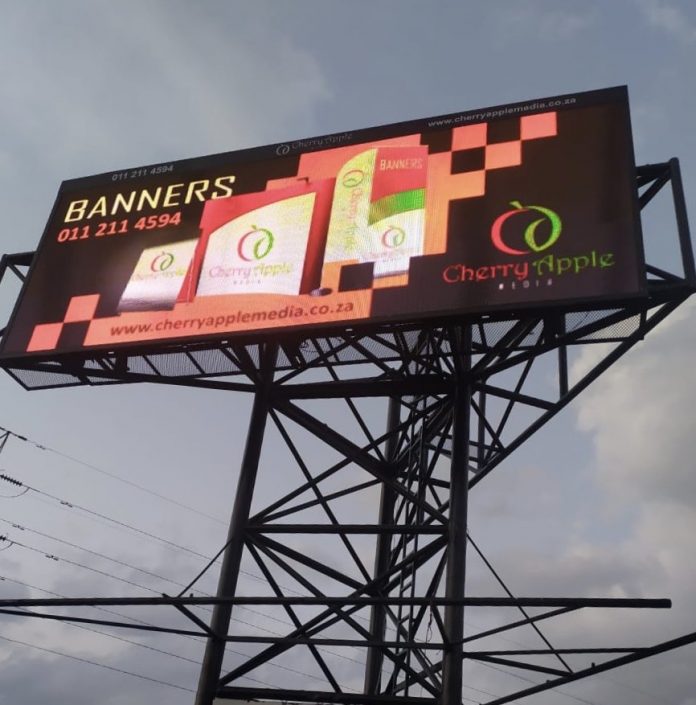
Cherry Apple Media Invests In Energy Saving P10 Pro Billboard From Excel LED

Cherry Apple Media, which specialises in advertising, marketing, indoor and outdoor advertising and more, have invested in the Excel LED P10 Pro Billboard.

The billboard has a high brightness design, 8000nits and can be clearly seen anytime, even when there is strong sunshine. ‘The Energy saving design LED billboard screen consumes lower power than other designs. The average power consumption per square metre is 130W/h. This billboard is 3m x 8m and runs 24 hours per day, 365 days a year. Other LED screens consume over 120,560kW, while Excel LED B10 Pro consumes around 52,242kW, which saves users more than 50%,’ said Eugene Dacache, Head of Operations at Excel LED SA branch.

Left to right: Ziyad Beg (Cherry Apple Media), Eugene Dacache (Excel LED), Zain Beg (Cherry Apple Media) and Priscilla Beg (Cherry Apple Media).

Zain Beg, Managing Member at Cherry Apple Media said, ’We had met Dacache at the previous Modern Marketing Expo, and he showed us the difference in cabinets. This high quality billboard really gives us good service. We chose to have this billboard at a prime location – on the M1 North highway, and therefore the possibilities are endless. It really has good visibility from a distance.’

‘This billboard is a great investment for the company and its clients,’ added Priscilla Beg, Managing Member, Cherry Apple Media.

CHERRY APPLE MEDIA
+27112114594
cherryapplemedia.co.za
EXCEL LED
+27118389326
eugene@ddmetals.co.za
www.excel.co.za

Woolworths South Africa Appoints Flume As Digital Media Agency

Woolworths South Africa appointed Flume as its new Digital Media agency. Flume will be working alongside Woolworths’ internationally acclaimed internal creative agency, offering a digitally-driven perspective to drive innovative work that complements and enhances what they already do exceptionally well.

Flume will lead an integrated media approach across various digital channels with the emphasis being placed on Flume’s strategic digital media capabilities and effective media buying.

Digital services such as digital strategy, development, animation, SEO, tracking and analytic services, and digital marketing dashboards will likely also form part of the scope of work.

Garren Coetzee, GM of Flume Cape Town said, ‘The team is counting down the days to 1 November 2020, the day on which we can start making our contribution to the reputable and much loved Woolworths brand.’

‘It should go without saying that we are fortunate to be able to work on such an iconic South African brand,’ Coetzee said. ‘Having gotten to know the Woolies team a bit better over the last few months, we can’t wait to get stuck in and begin working with such a passionate group of individuals. It’s a hugely significant client win for the agency.’

Sam Wilson-Späth, Head of Digital and Social Media for Woolworths, is also looking forward to the partnership. ‘We love the energy of the team at Flume and are counting on their expertise to assist in our ongoing journey towards becoming a digital-first company.’

FLUME
+27877015501
hello@flume.co.za
www.flume.co.za

King James Group And Stella Artois Launch Together Apart Social Distancing Campaign

Stella Artois and advertising agency, King James Group, unveiled an innovative piece of art for their ‘Together Apart’ social distancing campaign at the Nelson Mandela Square, Sandton.

The campaign comprises of a digital, social and outdoor campaign and is adapted from a Stella Artois global campaign. The artwork was localised by South African illustrator, Lauren Mitchell. Measuring  21m x 38m in size, the mural offers a colourful and welcome respite from the usual red masking tape and foreboding dark circles most other retail spaces stick on the floor to enforce social distancing.

The Stella Artois brand believes in bringing people together to savour life’s moments, and the way they do it is with art, not ads. But how do you bring people together in the middle of a pandemic when they are being encouraged to stay apart? As part of a global campaign, executed in South Africa, they created a giant outdoor floor mural.

The painted illustration is of a woman sharing a Stella Artois moment with a man who we only see as a reflection in her sunglasses – Together Apart. Integrated into her hair and as patterns across the rest of the design are circles. These circles are carefully spaced apart to encourage social distancing. If you came together with friends on the mural but stayed in a circle, you could safely be together, apart.

Graeme Jenner, Executive Creative Director at King James said, ’It is so amazing when your creative work comes together at this scale, literally.’

To celebrate the launch of the installation, and to celebrate the return of the restaurant and hospitality industry, renowned musician and chef, J’Something made a surprise appearance on 30 August 2020, much to the surprise and delight of the shoppers milling past and the patrons at restaurants alongside.

Entitled, ‘Together Apart in the Life Artois’, AB InBev’s High-End Brand Director for Africa, Marsha Kumire, elaborated, ‘Our hope is that the mural will encourage people to still savour life’s beautiful moments together, whilst following the social distancing guidelines that must become the new norm for the next while at least. We chose Nelson Mandela Square’s piazza for the location as it is an iconic space that has always sought to bring people together and now still can.’


KING JAMES GROUP
+27112150000
enquiries@kingjames.co.za
kingjames.co.za

Festive Season Considerations For Retailers And Brands

Mike Smollan, Chief Growth and Innovation Officer, Smollan, observed that from consumers wanting brands to speak the truth and ‘be in touch with reality’, to online shopping being the new normal, the pressure remains on brands and retailers to maximise this final Golden Quarter of 2020 as the effects of the pandemic continue to be felt. 

Re-shaping and refreshing the way forward to avoid a festive foul up as the pre-season is re-imagined, will be the standard approach for retailers and brands in 2020 as there is no repeating last year’s strategy.

With more than 27% of UK shoppers planning on starting gift shopping earlier than usual this year and 34% having already purchased festive season-related items such as cards, wrapping paper and presents, brands need to bed down their strategy without delay. Coupled with emerging trends based on age, with many 16-24 years olds (42%) aiming to start shopping earlier than those aged 55 and above (19%) and overall a quarter of all respondents hoping to have finished their purchases before December, the time is now (Source: EBay).

Never before have we had to heighten our senses to such a degree when it comes to, on the one hand being adaptable and on the other, cautionary, all the while maintaining our authenticity and remaining in touch with consumer realities. As we focus on the last quarter, and with indications that consumerism around the Festive period is going to start earlier this year, retailers and brands need to ensure close alignment with merchandising teams. All the while making sure communication is clear and that the best online and in-store customer experience is offered. In all probability, this holiday season will benefit those who take an omnichannel approach.

A new international trends report from Bazaarvoice offering predictions to help retailers plan for the final stretch for the year, found that 85% of retailers believe online sales will increase this holiday season compared to the last, with 61% expecting higher engagement and/or purchasing through social media channels. Over half of brands and retailers are investing more in e-commerce website upgrades specifically with the holiday season in mind.

In recent months, the same report noted that consumers have spent a record amount of time online with e-commerce sales spiking and online shopping accelerating customer submissions of reviews and questions this year. This information is increasingly influencing whether shoppers decide to purchase or not, and brands must be visible in this regard to their online customer base. 48% of shoppers say brands and retailers responding to reviews improves their odds of buying the product, and they prefer to ask brands questions via social media.

As consumers have been observed enjoying the ease of online shopping, with research finding that almost 44% of UK shoppers planning to do more of their holiday shopping online than they have done previously, many still have a strong sense of responsibility towards local businesses. 53% want to support local this year, with 55% agreeing that, if possible, they will do at least some of their holiday shopping in physical stores. Ensuring that retailers and brands have a compelling e-commerce proposition while supporting their physical business using on-line ads to drive off-line sales, will be crucial to their success this festive season (Source: EBay UK Trend Report).

Furthermore, new research from Rakuten Advertising surveying Asia-Pacific (APAC) shoppers suggests a clear lack of intent to curb spending during peak shopping periods leading up to the holidays. Most consumers (70%) have no plans to defer shopping for major holidays despite over 40% of global peak season shoppers citing a decrease in household spend due to Covid-19.

Using the most current insights and smartest technology and creating brand awareness early on to ensure consumers are engaged, will be the key to reach the right people with the right message as consumers will want to make this Festive Season more traditional, more thoughtful and more meaningful than ever before.

SMOLLAN
smollan.com

Now Is The Perfect Opportunity For Brands To Truly Engage With The Youth

Ronen Aires, Founder and CEO of Student Village.

In the past few years, young people lived in the moment and it was all about experiences. Now, the lockdown has given them time to reflect on what is more important, making them ultra-intentional about their choices, states Ronen Aires, Founder and CEO of Student Village.

Brands need to be on board with supporting youth, their communities and making a positive impact on the world, otherwise they will be unfollowed in an instant and deemed irrelevant.

There’s only one way for a business to thrive in the youth market post Covid-19 and it requires taking responsibility – taking responsibility to level up your offering, practices and communication to be attuned with what young consumers really need from you. Spoiler alert: they just need you to care. 

Young people care about empowering themselves and their community. So what do they want more than your product? Your support. You need to have their back. They need your offering to support their entrepreneurial journey, and they need you to care about the environment and to connect them with their dreams.

Here are 10 key care-related questions businesses should ask themselves in order to level up.  

1. Do you care about load sharing?

Income sources are down, there is less money to play with and it has been a real downer to lose some financial independence. Think about what your brand is doing to show that it is conscious of lightening the load that many young people are facing right now.

2. Do you care about my best version?

Motivated by the aspiration of being an influencer and self-improvement trends, young people are authentically dedicated to becoming their best. How can you help them get there? 

3. Do you care about education for elevation?

Short digital courses have become a loved pastime and are seen as the ticket to freedom, which young people are geared towards. There is an authentic desire for cheaper, shorter courses. Brands developing their own unique courses or workshops are not only generating a new revenue stream but are also providing for what people are seeking.   

4. Do you care about local?

‘Glocal’ is the word, in fact. While a global mentality is being cultivated, young people want to see emerging South African brands supported and realistic representations of themselves in the media. They are truly passionate about improving the local economy with a global mindset i.e.: #Glocal.

5. Do you care about health?

Health, as in both the physical and mental health of your consumers and the health of the planet. Is your brand implementing strategies that speak to the health revolution? 

6. Do you care about the entrepreneurial fire?

Instapreneurs are real. The hustle fire in South Africa is real, and young people are more interested than ever before in becoming digital entrepreneurs. They want you to recognise and support them. What can your brand do to support entrepreneurs?

7. Do you care about the digital hustle?

E-commerce is essential. Young people are making the majority of their purchases online, and entire businesses are being built purely within Instagram. Your products and services need to be accessible digitally, so get on board and get online.  

8. Do you care about the tribe?

Young people’s teams are important to them. Brands that cultivate and support special interest communities and create deals that are shareable with friends and family are winning. 

9. Do you care about creating memorable experiences?

After an extended lack of social time, young people are itching to get back in the game as lockdown eases. Unique, intimate and Instagrammable social gatherings are going to be in huge demand, so think about whether you can play a part in bringing people together again – with social distancing measures in place of course. 

10. Are you caring about sharing?

Creating content, products and services that people truly want to share and shout about on social media ultimately helps brands. It is going to take levelling up to new standards of creativity and authenticity to be seen and shared above all the noise. 

We can’t deny that the post-Covid-19 world requires levelling up, and it is the youth who are pushing brands to drive the positive change that they want to see and benefit from. Now, more than ever is the perfect opportunity for brands to branch out, speak up and truly engage with the youth.

STUDENT VILLAGE
studentvillage.co.za

A Social Marketing Plan That Considers All Options Is A Lifeline To Brands

Wayne Flemming, Founder and Managing Partner at Brandtruth//DGTL.

Wayne Flemming, founder and Managing Director at Brandtruth//DGTL says that the internet lasts forever, but can your brand’s reputation? To be present online, one must plan well and be equipped with a solid risk register to deal with any potential reputational damage that could occur.

Today, almost everyone’s a critic, complete with an unfiltered opinion. Be it the clout chasers or active advocates, many take to social media to air these opinions and grievances where the views are met with either support or scorn, and the line between the two are often blurred.

The simple truth is that anything online lasts forever, but reputation does not. Brands face the risk that a simple post or content piece could be the cause of unintended reputational damage. While a tweet may lead to brand tragedy, it could also lead to business popularity – it is all dependent on metrics. A well-planned social marketing and content plan that considers all options is viewed as a lifeline.  

Make metrics matter

Any social media strategy starts from an objective and ends at an evaluation, but what if the audience relevance is not just missed, but misunderstood? This could lead to a disaster. Brands must plan a reaction for any possible audience commentary situation. Introducing a reputational scoring system into the strategy builds a broader picture that enables the brand to understand various perspectives and either adjust the approach or respond accordingly.  

A scoring system can be built as a quadrant, whereby a risk analysis is completed on content created. Using the quadrant programme, strategists can determine if the risk is worth the reward and gauge how their audience may perceive it. It speaks directly into the objective of the content and whether the overall tactic, be it shock or awareness, will work. 

Consider the viral campaign #VWDriveDry by Volkswagen, which set social media ablaze with speculation and in equal parts concern. It featured a well-known influencer involved in a car crash while conducting an Instagram Live video. While it worked in achieving critical conversation, many saw it as causing unnecessary emotional distress.

The overriding factor was the time from which the incident took place to its reveal as part of a ‘drive responsibly’ campaign. If VW had announced its intentions sooner, the conversation would have catalysed at concern around the topic, not distress around the tactic. Businesses and agencies who do risk analysis before advertising campaigns will help ensure that they land the correct intended message within an engaged audience.

Stakes and stakeholder management  

With the average person exposed to between 6000 to 10,000 adverts and messages a day, it becomes increasingly difficult to have an impact in such a cluttered space. Due to hyper-personalisation and contextual marketing on digital and social platforms, brands and agencies often opt for bigger, more impactful (and what they think is better) and riskier campaigns to win the user’s attention. 

When a brand decides to go big or go home with a campaign, they have to consider the impact this could have on the overall brand image and not simply the short term gain. Engaging various internal stakeholders is imperative to create a collaborative risk mitigation approach. Also, by including the PR team in the process, you allow for an additional layer of risk evaluation based on the many possible outcomes of the campaign.

Online and offline conversations  

Sometimes it isn’t the campaign itself but the consumers that trigger a social media uproar, and while a risk analysis will assist in the response planning, a social listening tool will highlight the impact or the conversational volume. 

#McDStories launched by popular eatery McDonald’s was intended to encourage positive adventures individuals had with the brand, however, it soon turned sour with many using the hashtag to share their negative experiences. The campaign sentiment was skewed and while the brand tried to limit the hashtag, it had spread. By using a social listening tool one can pick up on changing sentiment fast, allowing the brand to react and control the online conversation much quicker.

It also provides insights into account validity, allowing brands to identify spam versus real and when to address the incident. If you can, take the customer service conversations offline into your platform’s private direct messages instead. If the impact remains high (reach) and consistent (frequency), a public announcement may be needed. 

Brands should use a straightforward framework to understand what the potential risks are that can be associated with a campaign or the content, and then list them. A simple calculation is then used to determine what is the likelihood of the risk happening (probability rating) times the level of impact this role could have, which then equals the level of impact (low to severe). This rating indicates the need for certain risk mitigation plans to be aligned to the list.

Ultimately, this year has been noted as the year of honesty, whereby consumers are no longer just stagnant but active in communicating what they want, how they feel and what needs to happen. Social media is a powerful tool for brands to use and when used correctly it can prove invaluable, but always ensure there is a strong crisis mitigation strategy in place for any brand faux pas or customer comment.

This is Modern Marketing