Home Blog Page 404

How Often Should You Replace Your Digital Signage?

How Often Should You Replace Your Digital Signage?

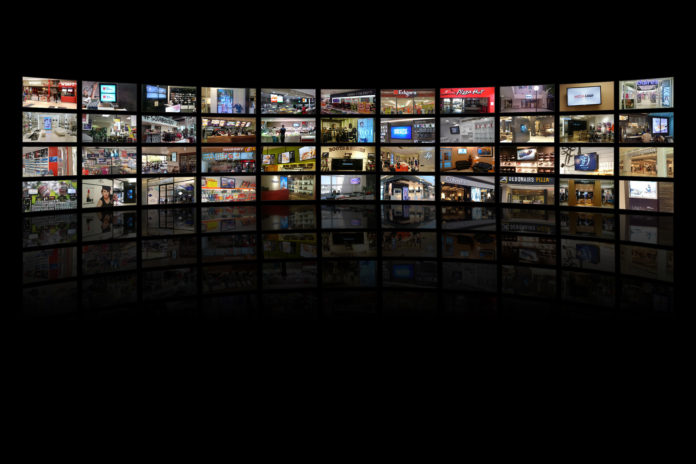
According to Kevin Bierman, Head of Digital Signage Solutions at Moving Tactics, technology moves really fast, so retailers and franchisees need to make an effort to keep up.

In order to ensure that you have the most up-to-date digital signage network in place that offers the best in technology, content and features, you need to ideally replace the network every three years, once the equipment warranties have expired. The positives are that you will experience minimal downtime and be able to introduce the latest technological advancements such as self-service touch kiosks or weather-based menu boards as part of your new network.

Digital signage networks, like any other technology investment, need to be maintained and updated. It doesn’t take long before systems start looking outdated and performance suffers. But how often should digital signage hardware be replaced?

A digital signage network can be compared to a retail store. It looks and operates at its best when it first opens but with time, and as technologies and trends change, the retailer needs to update his/her offering by introducing new products, promotions and up-to-date infrastructure and technologies or the store will start looking dated, perform poorly and put customers off. An old digital signage network will also impact on the bottom line as its look and feel is linked to the brand as well as to advertising sales and promotions. 

Replacing a digital signage network every three years is costly, especially for smaller businesses such as independent retailers and franchisees. Another negative is that once your equipment becomes too outdated, it’s much more difficult to get back up to speed.

What options are there? Other than laying out a large sum of money to purchase your digital signage network outright, more and more businesses are choosing to finance their technology investments to preserve cash flow.

‘Over and above the explicit advantages of effective cash flow management, you also get to have up-to-date technology that is always under warranty and replaced every three years,’ said Sam Dippenaar at Moving Tactics’ Finance Division.

MOVING TACTICS
+27118070094 
chris.day@movingtactics.co.za
www.movingtactics.co.za

99c Creatives Representing SA At The 2019 Cannes Lions Festival

99c Advertising Team To Represent SA At The 2019 Cannes Lions International Festival of Creativity
Carina Coetzee and Amri Botha.

Copywriter Carina Coetzee and Art Director Amri Botha, both from 99c advertising and communication agency, will represent South Africa at the 2019 Cannes Lions International Festival of Creativity, taking place in France from 17 – 21 June. This follows their powerful ad winning the Cinemark Cannes Young Lions competition.

According to UNICEF, half of the world’s teens experience peer violence around school, and about one in three students aged 13-15 have been involved in physical fights.

To help address this, the 2019 Cinemark Cannes Young Lions competition asked entrants to create an ad that tackles the issue and inspired an effort to make schools a safer place for students.

The competition was open to creatives under 30 across the country, who were given 48 hours to film, edit and produce a one-minute commercial for UNICEF South Africa, using the hashtags #I’veGotYourBack and #ENDviolence.

Coetzee and Botha’s treatment is a depiction of a young boy preparing for school and wondering whether his day would be a good day. ‘Will they teach me a lesson I’ll never forget?’ he wonders. ‘You’ll know by my marks.’

The 99c team’s ad for UNICEF calls for an end to the epidemic of violence in South African schools and their video commercial about violence in schools won the Cannes Young Lions competition.

Coetzee and Botha will fly to France where they will again race against the clock to fulfil a new brief. This time, they will compete against the best young talent from around the world in the Film Category of the Cannes Young Lions competition.

Botha said, ‘We are extremely excited and honoured. We really enjoyed the challenge, since it’s a cause we really believe in – for a brand that does such amazing work. We’d like to thank Cinemark for this huge opportunity and we hope to make South Africa proud in Cannes.’

UNICEF South Africa Chief of Communication and Partnerships Sandra Bisin said that the competition, a partnership with Cinemark, was an excellent way to help address the problem of violence in schools. ‘Through this joint campaign, we are encouraging young people in South Africa to raise their voices and to tell us how they are working together and what solutions they are using to #ENDviolence in and around schools once and for all,’ said Bisin.

Cinemark (+27 11) 700 5446 www.cinemark.co.za

99c Advertising info@99c.co.za www.99c.co.za


Constructing A Well-Defined Brand Strategy For Your Start-Up

Constructing A Well-Defined Brand Strategy For Your Startup

Jennifer Tietze, who works in Brand Solutions at DCMN, suggests that you think of your brand as an iceberg. There is a small part that is entirely visible, but the larger part is hidden below the surface.

If you’ve thought of a great idea for a business and have done initial market research in the ideation phase then you should feel comfortable that you can start building a minimum viable product (MVP). Although this is the phase where the real hard work begins and you need to clearly define your business strategy, it is important to remember that you also need a brand strategy that is closely linked to that business strategy.

The visible part is your overall visual identity and your company name and the invisible part is your brand identity. It might seem less fun to start with the invisible part, but strategically you need to define your brand identity (e.g. your vision and mission) to inform your visual identity.

Having a well-defined brand strategy early on (and including as many stakeholders as possible in those decisions) will act as a roadmap for growth and will prevent you from having to spend a lot of money and time later redefining your brand. 

But what is a brand strategy? Branding is so much more than putting your logo on things. According to Simon Sinek’s famous model called ‘the golden circle’, and a theory that DCMN’s Brand Solutions team believes in, it is important to think about the WHY, HOW and WHAT – this is a good starting point to understand where you are going with your brand.

Why are you doing what you do? What is your purpose? Having a true purpose is relevant to the company’s overall success. HOW do you achieve your goals? WHAT is your offer to the customer? What problem do you solve?

When thinking about the ‘how’ and ‘what’, make sure you know your unique selling point (USP). Know who your competitors are and what they are best at, understand your target audience and their needs, think of the emotional and rational benefits your brand offers and find the clear point of difference that meets the customers’ needs. These answers can all be gained from doing proper market research and competitor analysis in the early stages of your business and also understanding your own product or service and its benefits to your target audience.

Vision: describe where you are heading

A vision statement is a clear and inspirational roadmap of your company. It sets a defined direction. It is a catchy, one-sentence statement that clarifies the ‘why’ of your company. What are you trying to achieve? If everything goes according to plan, the vision is how your brand will have changed the world. Make the vision as short and clear as possible, be ambitious and focus on success, make sure it’s future-oriented and keep it specific to your business.

Mission: define how you reach your goal

A mission statement focuses on today and what the organisation does and how you do it. Your mission statement drives the company, it is the core of the business, and from it comes to your objectives and finally, what it takes to reach those objectives. It can also shape your company’s culture. Keep the Mission short and concise, be specific, focus on the customer and align with core values.
 
Brand values: what do you believe as a company?

Values should answer the questions: what do you stand for, what do you value most and what do you believe as a company? The brand values are at the core of the brand and can influence other elements of the visual brand identity.

Make sure your values are memorable, meaningful, actionable, unique and timeless.
 
Brand personality: put yourself into your brand’s shoes. The brand personality is the set of characteristics that are attributed to a brand. It gives an answer to the question: ‘If your brand was a human being, how would you describe him or her?’ The brand‘s personality drives how the brand looks, acts and sounds and makes your brand unique. It attracts the target audience and creates a connection. Limit the number of characteristics that best describe your brand to no more than six, be unambiguous and align with the brand values.

Tone of voice (TOV):  this will inform all written copy

The ToV is the expression of your brand’s unique personality and values. We know that the same thing can be said in so many different ways, so clearly defining your TOV will set a framework for how you communicate with stakeholders (what words and phrases you use, in which style you use it, etc.). By promoting consistency, it helps to maintain a high quality of communication. ToV contributes to differentiating yourself from your competition and building relationships. Make sure the ToV reflects your values and personality, use unambiguous and actionable terms to define your ToV and draft examples.
 
Brand name: one of the most important decisions

A name can be descriptive, evocative, invented, lexical, acronym, geographical, contain the name of a founder, etc. When choosing a name, consider that it is (almost always) for life and it needs to work in the future too. Also, do your homework before deciding on a name – check domain availability and make sure the name isn’t already registered. Keep in mind that certain names have specific associations among your various target groups and cultures and the name should also be internationally suitable. And equally important: be distinctive to be memorable.

Colours: don’t underestimate the psychology of colour

Colour increases brand recognition by 80%, and 84.7% of consumers cite colour as their main reason for buying a particular product (University of Loyola, Maryland study). Think about the following: what personality and/or values do you want to express? What kind of feelings do you want to evoke? What are the trends in the industry and how can you be different within the known visual codes that come for specific industries? 


Shape

Similar to colour, shapes have a psychological effect. Something as basic as logo shapes can convey emotions and each shape triggers a different emotion. Colour can also amplify the effect of the shape. These are examples of associations that your customer can have with different shapes:

Round – soft; positive emotional message; community, friendship, love, relationship and unity and commitment.
Rectangular – stability and balance; safety; strength, efficiency; comfort; professionalism, boldness.
Triangle – strength; speed; direction and movement, substitute for letters ‘A’ and ‘V’; science, religion and law.

A brand is more than just a logo. Everything you communicate and display to the audience, even if you don’t consider it consciously to be ‘branding’, has an effect on your brand. Your visual language needs to reflect the identity and core of your brand. It is very important to know your competition as well as understand your target market. Always know your why and make sure you stand out.  In short, do your homework properly in the early stages of your business so that it can be your roadmap for future growth and success. 

As you move to the next stage in your start-up journey, consider how you will incorporate your brand strategy into the communications and marketing strategy that you need to develop next. Keep a holistic view of your business strategy and understand which marketing activities fit in where.  

DCMN South Africa www.dcmn.com

Dynamic Content Deeply Engages Audiences

Tracking Audience Engagement Through DOOH Ads

Bradley Cooper, Technology Editor for DigitalSignageToday.com, says that dynamic content has the potential to engage audiences in a deep way. This is after Jetstar, an airline operating in Melbourne, Australia, tested out dynamic content with a Digital Out-of-Home campaign managed by JCDecaux.

Jetstar deployed displays in Melbourne to track user’s eyes to deliver content, and dispense dream vacations. This campaign had an extra layer of interactivity as it invited customers to look at certain parts of the screen, for a chance to win vacation packages.

The displays pulled in audiences using the line, ‘Your eyes could win you a gift’. The audience could stand on a backlit section on the ground and the display would show a quick set of instructions, like – removing hats and glasses. The instructions also featured a pair of ‘googly eyes’, which would respond to customer’s eye movements.

The display would then show four images from destinations around the world. The display would slowly zoom in on whichever image the customer was looking at, and would potentially reward customers with a gift card.

This article was sourced from: www.digitalsignagetoday.com

Paying Influencers To Build A Reputation For Brands

Paying Influencers For Building A Reputation For Brands
Image source: mediaonemarketing.com.sg

According to Anne Dolinschek, Founder and Chief Strategist at Nfluential, influencers play an integral part in a brand’s reputation as well as creating awareness and in some cases sales.

If you are a marketer who expects influencers to participate in campaigns for the product alone, unless the said product is of considerable value, ask yourself if you would offer the same compensation for a radio or TV spot? The fact is, influencers are just another marketing channel to reach target markets.

The myth that influencers, unless they’re macro or bigger, should work for free is still making the rounds. This might have been true when influencers first got on the scene, but it’s a ridiculous notion in this day and age.

Back in the day, brands would send a couple of desk drops (products) to bloggers or influencers and their brand would be all over social media. Unboxings were a big deal a couple of years ago. Now of late, only certain niches still do unboxings, but most have found that their audiences aren’t as interested in unboxing videos as they are in actual reviews or just hearing more about the product.

Although desk drops have their place, especially to introduce new products or keep brands top of mind with influencers, they don’t cut it anymore in terms of getting them to be part of campaigns. Fair enough. Influencers are part of a brand’s marketing team for the duration of campaigns, they create content to subtly promote products and services (which isn’t free and takes time); and, if chosen correctly, they speak directly to target markets. That type of marketing is priceless.

Why then do some campaigns fail and sometimes marketers feel less than impressed with the money they spent on influencers? The key is selecting influencers that are right for the brand and who will be best suited to achieve campaign objectives. These influencers need to share brand values, already like a brand’s products or services or be a voice in the industry in order to be authentic.

So often brands are blinded by the wrong numbers when it comes to choosing influencers. They want those with huge followings, no matter what their campaign objectives are. Numbers can be deceptive. I would like for brands to shift away from this mindset and start becoming obsessed with engagement numbers and actual, not perceived, influence.

Macro and mega influencers are great for creating awareness, but we find that they don’t have highly engaged audiences, which means that their followers see brands on their timelines, and that’s where it stops most of the time. Nano and micro influencers, even though they have smaller followings, are much better to drive brand love and purchase consideration because their followers and social circles trust and value their recommendations and opinions.

Truth is, if the right types of influencers are used in the right way, they can bring immense value to brands. They can be the difference between consumers loving or hating a brand or choosing competing brands; and thus, they deserve to get paid.

NFLUENTIAL
+27109002021
www.nfluential.co.za

Grid Worldwide Acquires Openco

Grid Worldewide Acquires Openco

Grid Worldwide has acquired Openco, which both form part of TBWA\South Africa. This move ensures that the group is well placed to bring businesses and creativity closer than ever before.

‘As The Disruption Company, we constantly seek ways to challenge the status quo. A combined Grid and Openco team creates a formidable offer in the marketplace,’ said TBWA\South Africa Group CEO, Sean Donovan.

The new entity, which came into effect on 1 April, will operate under the Grid Worldwide brand. The 60-person strong team falls under the operational management of current Grid joint CEOs Adam Byars and David Cohen and Managing Director Masego Motsogi.

Grid Chief Creative Officer Nathan Reddy stated, ‘The acquisition allows us to build on Grid’s successful approach of viewing creative as an investment vehicle for client brands as opposed to a cost centre.’

‘We are all about Investment Creative (TM), which means value sits at the heart of everything we do. We have specialist creatives from all fields working seamlessly to deliver powerful and impactful solutions across all platforms. The Openco acquisition strengthens our ability to meet and exceed client expectations in a competitive marketplace,’ said Reddy.

Openco Managing Director, Melissa Daniels, will assume a TBWA\SA group role driving key innovation initiatives across the group operating companies.

TBWA
www.tbwa.co.za
 

SA Mint Launching New Campaign To Celebrate 25 Years of Democracy

SA Mint To Launch New Coins In Celebration of 25 Years of Democracy

South African Mint’s special campaign features new commemorative circulation and collectable coins to mark the 25 years since South Africa held its first democratic election. The South African Reserve Bank and SA Mint will officially unveil the coins at the Constitutional Court in June.

South African Mint also introduced a special logo for the campaign, designed to create a visual identity for the new range of coins that makes the packaging and campaign instantly recognisable.

A new website dedicated to the SA25 commemorative circulation and collectable coin range and activities supporting the campaign will also be launched. The campaign will also have a dedicated presence on social media.

SOUTH AFRICAN MINT www.samint.co.za

Digital Marketing Strategies For Audience Targeting

Digital Marketing Strategies For Audience Targeting

According to Digital Marketing Expert Lisa Smith, audience targeting is just what it sounds like – it is the practice of using data to segment consumers by demographics or interests in order to find the holy grail that is the right person on the right device at the right moment.

Here are some strategies digital marketers are using to target their audiences:

Event Tracking

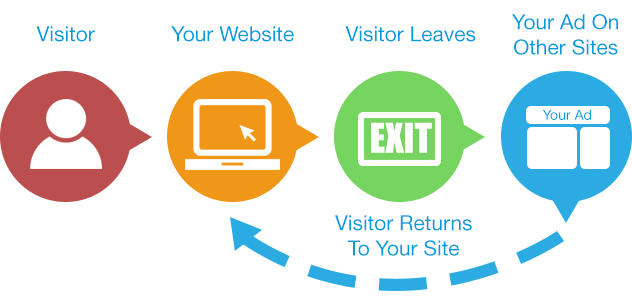
Adding event tracking to your site shows you how visitors are interacting with your site and can help you build a more effective online presence. Marketing companies can capture phone IDs and serve ads based on geography—including location up to six months ago—with just latitude, longitude and date.

Expand reach with Google’s In-Market Audiences

Dale Broadhead, founder of PPC and CRO agency Conversion Hut, expressed genuine love for display campaigns in Google Ads—particularly when targeting an audience that hasn’t heard of his business before. In fact, Google’s in-market audiences feature lets you target consumers who are researching your products or services.

‘We use a not-so-well-known report from our Google Analytics reports finding the highest performing Affinity Categories and In-Market Segments. Once we have our insights, we can then build different ad groups around each of the audiences and create messaging that resonates with them,’ he said. ‘This works because you are making decisions that are backed by data. We’re finding out who the best customers are and then going out to try and find more of them.’

Kim Smith, content marketing manager at review platform GoodFirms stated, ‘The in-market audiences are the ones that are already out there, searching, reading, comparing, or even planning to buy a product or service, just not engaged with your brand directly or indirectly. With past searches, keyword activity and browsing behaviour of the user, machine learning can predict what a user is interested in and when would he/she’d be ready, to convert effectively. Ideally, in-market targeting aims at widening your reach with high buying intent and offers a practical customer acquisition strategy.’

Prioritise SEO

According to Ade Holder, digital marketing consultant at digital marketing agency 427 Marketing, organic SEO is the best targeting there is because ‘there is nothing better than simply being in front of the customer when they search for exactly what you are able to offer’. If your brand ranks high for relevant terms, it is targeting everyone actively searching for your products and services.

This article was originally published on www.wordstream.com

How Digital Agencies Can Advance Brands

Four Ways On How Digital Agencies Can Advance Brands

Co-founder and Executive Creative Director of G&G Digital, Desiree Gullan, discusses how over the past decade, digital agencies have become vital in offering brands the reinvention they crave through the ability to be ever-present (mobile), dynamic (data-driven) and most of all, a joy to use (interaction design). All of these aspects can develop an almost unbreakable bond between brands and consumers.

Several marketing professionals consider a brand as a corporate identity consisting of carefully considered fonts, icons, image guidelines, tone of voice, themes and values, the emphasis in the digital era should be on the experience. Consumers no longer see a difference between their experience of a brand and the brand itself.

Your brand’s digital interaction with your target market is the most significant branding to consider. Lead with the digital experience and let your other channels play a supporting role.

Here are factors to consider before you think of adding another analogue brand to a digital world:

1. Become a digital-first brand: businesses can no longer afford to spend time, money and effort creating analogue communications. The digital experience has to lead the strategy.

2. Digital is the better brand steward: How often do you first interact with a brand on a digital platform? The answer is probably — always. Despite the age of the brand, its digital presence is pivotal in understanding the consumer and engaging with them.

3. Embrace the tech-brand: While most new brands are born with genetics rooted in technology, legacy brands should embrace technology to stay relevant. Take Glossier as an example, a young brand positioned as a tech company in the make-up business. Sephora, a legacy brand, has embraced the use of Augmented Reality to evolve their brand experience and reach today’s tech-savvy market.

4. Evolve. And evolve fast: consumers have reached a point where they prefer streaming content to owning it. They see TripAdvisor as the replacement to a traditional travel agency and prefer mobile banking to making a trip to the bank. Brands have to adapt to the speed of digital.

Digital agencies are well poised to offer deep digitalisation strategies and implementation. The age-old truism about first impressions hasn’t changed. What has changed is the difficulty for a brand to recover from a bad digital first impression, especially in a time when a consumer just needs to tap, click or swipe to get the instant gratification they desire and to share their opinions.

G&G DIGITAL
www.gullanandgullan.com

Primedia Outdoor Executes Gigantic Coke OOH Installation In Zambia

Primedia Outdoor Places A Gigantic Coke In Zambia

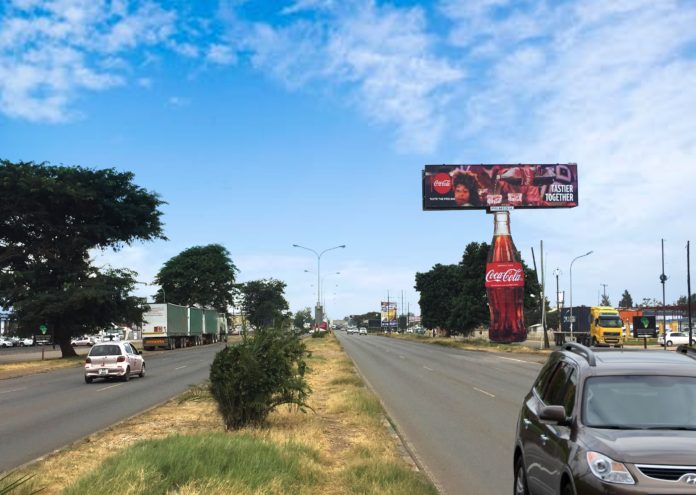
Primedia Outdoor and Coca-Cola installed a 12 metre-high bottle in Lusaka, Zambia, as part of their strategy to drive innovation and create a major impact.

This massive structure is made up of steel – welded directly onto a structure of Primedia Outdoor’s billboard and located on the busy, four-lane Kafue Road. Commuters travelling into and out of the city will be met by this larger-than-life structure, creating a spectacular impact.

Tamara van Eeckhoven, COO of Primedia Outdoor (Rest of Africa) said, ‘We take pride in delivering memorable campaigns that come with rich brand experience and appealing creative execution for our clients. The dominance offered by this structure entrenches brand presence and momentously provides greater visual stand-out, particularly in a competitive market like Lusaka.’

‘Our ultimate intention is to dominate and break through the advertising clutter in Lusaka’s inner city, achieving top-of-mind brand awareness in the biggest way possible. We always strive for innovation across all media platforms, including OOH. This is one of the biggest and innovative executions in Zambia, providing an opportunity to target one of the busiest nodes in the city,’ said Shem Oluchiri, Media Manager of Coca Cola ECAF. ‘Collaborating with Primedia Outdoor goes to show our confidence in their capability to deliver exciting and impactful billboard campaigns.’

PRIMEDIA OUTDOOR
+27114751419 
jorja@primeoutdoor.co.za
www.primediaoutdoor.co.za

This is Modern Marketing