
Home Blog Page 379

New Generation Social And Digital Media Award Winners Announced

Image source: www.newgenawards.co.za

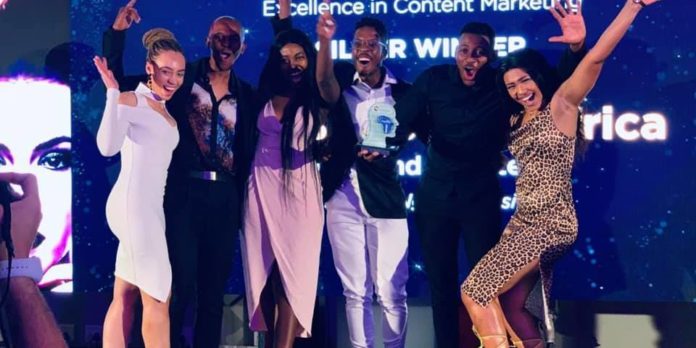
The 7th annual New Generation Social & Digital Media Awards took place at Montecasino on 4 October 2019. This year, close to 400 entries from across 43 categories were received.

‘The industry is booming, and has never been better, with some truly amazing innovative campaigns put forward,’ said Stephen Paxton, awards MD and founder. Entries were judged by 18 esteemed judges over a period of three weeks, with each judge marking around 120 entries, and each entry marked by a minimum of 3-4 judges.

The 2019 awards were sponsored by Futuretech Media – Gold sponsors, JUSTPALM.com, Wunderman Thompson and Old Mutual South Africa – Bronze Sponsors, YOUKNOW+Brandwatch and Arc Interactive – Category Sponsors, RESONATE for the digital activations and FRESHLYCUT MEDIA for their digital animation work.

Best Revenue Generating Marketing Campaign or Event

  • Gold Winner – Vodacom South Africa – Team Red, Vodacom Video Ticket.
  • Gold Winner – Vodacom South Africa – Team Red, Summer Gigs.
  • Silver Winner – Suzuki South Africa – Penquin and Spitfire Inbound, #AllTheRightFeels – Suzuki Swift Launch.
  • Silver Winner – Weylandts – Digital Optimisation in partnership with M&C Saatchi Connect, Marconi 20 Year Campaign.
  • Bronze Winner – Wimpy – Sauce Advertising, Cups for Votes.

Best social media reach from an event

  • Silver Winner – Cricket South Africa – Levergy, Mzansi Super League.
  • Bronze Winner – Michelin Tyre Co SA – Futuretech Media, Michelin Passion Experience 2019.

Best online competition

  • Gold Winner – Vodacom South Africa – Team Red, Vodacom Super Proposal.
  • Gold Winner – Avbob Mutual Assurance Society – Brand et al, The Avbob Poetry Project.
  • Silver Winner – Manhattan Iced Tea – Joe Public Connect, Shop Manhattan Style.

Best use of technical innovation

  • Gold Winner – Anglo American – Joe Public Connect, Instamine.
  • Gold Winner – Associated Media Publishing, Ready to Shop.
  • Silver Winner – Johnson & Johnson – G&G Digital, Listerine Dental Academy.
  • Bronze Winner – Shell South Africa – Futuretech Media & MediaCom, Shell 5in5.

Best low budget campaign

  • Gold Winner – Tiger Brands – Hello Square, The Mega Mash-Up – Tinkies.
  • Silver Winner – Hill’s Pet Nutrition – Kilmer and Cruise, ‘Just a little extra’ Vest.
  • Bronze Winner – New Balance – Levergy, Worn As One.
  • Bronze Winner – Voltex South Africa – CBR Marketing Solutions, No Power No Problem.

Mobile marketing excellence

  • Gold Winner – Anglo American – Joe Public Connect, Instamine.
  • Gold Winner – Mobile Marketing Excellence, Vodacom South Africa – Team Red, Vodacom Summer 2018 – Summer Gigs.
  • Gold Winner – Vodacom South Africa – Team Red, Vodacom Super Proposal.

Blogging excellence

  • Silver Winner – Elite-CV.
  • Silver Winner – Gauteng Tourism Authority – Flow Communications, Gauteng Tourism Authority’s Blog Content.

Most innovative use of social media by a corporate

  • Gold Winner – DSTV – Ogilvy South Africa, Africa United.
  • Gold Winner – Unilever – Digitas Liquorice, Hellmann’s Delicious Surprise.
  • Silver Winner – SuperSport – Levergy, Front Row Football.

Most innovative gamification campaign

  • Gold Winner – Unilever – Gorilla Creative Media, Axe Level Up.

Best community engagement award

  • Gold Winner – CellC – ARC Interactive, CellCgirl.
  • Gold Winner – Old Spice – MediaCom, Inja Ye Game (Top Dog).
  • Silver Winner – Mexem – G&G Digital, Mexem #MindYourBusiness.
  • Bronze Winner – Femagene – Have You Heard Marketing (Pty) Ltd, Best Community Engagement.

Excellence in content marketing

  • Silver Winner – AB inBev South Africa – DNA Brand Architects, iLobola Nge Bhubesi.
  • Silver Winner – MINI South Africa – John Brown South Africa, Mini-Clubman.
  • Silver Winner – Vodacom South Africa – Cerebra, Datawyze.

Best online PR campaign

  • Gold Winner – Sasol – Levergy, #Limitless.
  • Silver Winner – Roche South Africa – G&G Digital, Roche Haemophilia Campaign.
  • Bronze Winner – The Road Accident Fund – Flow Communications, #AlwaysRemember.

Best integrated marketing campaign by a corporate

  • Gold Winner – First National Bank – BrandTruth//DGTL, #BlackFridayMe Campaign.
  • Silver Winner – Suzuki South Africa – Penquin and Spitfire Inbound, #AllTheRightFeels – Suzuki Swift Launch.
  • Bronze Winner – Mondelez – Wunderman Thompson, Mzansi Love Songs.

Most viral campaign

  • Bronze Winner – Old Mutual South Africa, Budget Speech 2019: #ThatsAGreatIdea #BudgetSpeechComp.

Best use of social media to research and evaluate

  • Silver Winner – GynaGuard – Joe Public Connect, #12OfficialVaginas.
  • Bronze Winner – The Road Accident Fund – Flow Communications, #AlwaysRemember.

Most innovative use of digital media by a corporate

  • Gold Winner – South African Breweries – Joe Public Connect, Beer Finder: SA.
  • Silver Winner – Weylandts – Digital Optimisation in partnership with M&C Saatchi Connect, Marconi 20 Year Campaign.
  • Bronze Winner – ABInBev South Africa – DNA Brand Architects, iLobola Nge Bhubesi.

Best Augmented Reality marketing campaign by an agency

  • Silver Winner – bizAR Reality – Burger King SA, BK Gone Wild.

Most innovative app developed by an agency

  • Bronze Winner – Arc Interactive – Dis-Chem, Dis-Chem App.
  • Bronze Winner – Digitas Liquorice – Unilever, Knorr Takeaway Takeover.

Most viral campaign by an agency

  • Silver Winner – MediaCom – Coca-Cola South Africa, #ShareACokeWithMe.
  • Silver Winner – The 13th Floor Where Creatives Live – Dunlop South Africa, Dunlop Warrior Women.
  • Bronze Winner – Sauce Advertising – Wimpy, Cups for Votes.

Most innovative digital media campaign by a small agency

  • Gold Winner – Hello Square – Tiger Brands, The Mega Mash-Up – Tinkies.

Most innovative digital media campaign by a medium-large agency

  • Gold Winner – BrandTruth//DGTL – First National Bank, FNB SWITCH WITH A SELFIE.
  • Gold Winner – Digitas Liquorice – Unilever, Omo Don’t Fear the Dirt.
  • Gold Winner – DNA Brand Architects – ABInBev South Africa, iLobola Nge Bhubesi.
  • Gold Winner – G&G Digital – Johnson & Johnson (PTY) Ltd, Listerine Dental Academy.
  • Gold Winner – Vizeum SA – IndieFin, Mullets Campaign.
  • Silver Winner – Flume Digital Marketing & PR – Love Justice, HT Modelling.

Best influencer marketing campaign by an agency

  • Silver Winner – Ogilvy South Africa – DSTV, Africa United.
  • Bronze Winner – Eclipse Public Relations and King James Group – Netflix, Netflix Man In A Van.

Best integrated marketing campaign by an agency

  • Gold Winner – Arc Interactive – CellC, CellCgirl.
  • Gold Winner – MediaCom – Old Spice, Inja Ye Game (Top Dog).
  • Silver Winner – Playmakers Sponsorship – Coca-Cola South Africa, #CokeScoreChallenge.
  • Bronze Winner – John Brown South Africa – Pick n Pay, Fresh Campaign.

Most innovative social media campaign by a medium-large agency

  • Gold Winner – Digitas Liquorice – Unilever, Hellmann’s Delicious Surprise.
  • Gold Winner – Penquin – Suzuki South Africa, #AllTheRightFeels – Suzuki Swift Launch.
  • Gold Winner – Wunderman Thompson – Mondelez, Mzansi Love Songs.
  • Silver Winner – Gorilla Creative Media – Unilever, Axe Level Up.
  • Bronze Winner – The Niche Guys – Unilever, The Dodgy Dealer.

Most innovative social media campaign by a small agency

  • Silver Winner – Positive Dialogue Communications – Land Rover South Africa, The Land Rover #Exploremore Challenge.
  • Bronze Winner – FCB Durban – The Young Independents, TYI Top 100.

Best corporate website

  • Gold Winner – Seychelles Tourism Board – Joe Public Connect, Explore Seychelles.
  • Silver Winner – Morocco Tourism Board – Joe Public Connect, Moments in Morocco.
  • Bronze Winner – Life Healthcare – John Brown South Africa, Life Healthcare Corporate Website.

Best marketing automation campaign

  • Gold Winner – The IIE’s Varsity College – Conversation LAB, The IIE’s Varsity College Bots.
  • Silver Winner – Suzuki Auto South Africa – Penquin and Spitfire Inbound, Jimny – Born for this.
  • Bronze Winner – Johnson & Johnson (PTY) Ltd – G&G Digital, Listerine Dental Academy.

Best online newsletter

  • Silver Winner – Pick n Pay – John Brown South Africa, Supper Sorted Mailers.
  • Bronze Winner – Godrej Consumer Products – Conversation LAB, Godrej Weekly Snippet.
  • Bronze Winner – The Nelson Mandela Foundation – Flow Communications, News from the Nelson Mandela Foundation.

Best use of podcast/vlog to promote a brand or event

  • Gold Winner – CliffCentral.com, Blind History.
  • Silver Winner – Coronation Fund Managers – Vizeum SA, Let’s Be Honest.
  • Bronze Winner – Just Property – hoola Modern Agency, #YourStorey.

The new generation top graphic designer award

  • Gold Winner – Siyabonga Nhlanhla Ntamela, Conversation LAB.

The new generation best individual influencer marketer award

  • Gold Winner – Tara Turkington, Flow Communication.

The new generation small agency of the year award

  • Gold Winner – ARC Interactive.

The new generation digital brand of the year award

  • Gold Winner – Suzuki South Africa – Suzuki Swift Launch, Penquin and Spitfire Inbound.

The new generation social wiz award

  • Gold Winner – Nosipho Maseko, Joe Public Connect.

The new generation medium-large agency of the year award

  • Gold Winner – Joe Public Connect

The new generation best agency community engagement manager award

  • Gold Winner – Londeka Mkhize, Joe Public Connect.

The new generation overall social and digital corporate of the year award

  • Gold Winner – Vodacom South Africa.

The new generation online strategy of the year award

  • Gold Winner – ARC South Africa, One Day Only – Always on Media.

The new generation overall student of the year award

  • Gold Winner – Aaliyah Tia Singh – University of Johannesburg, Repurposed Inventions.
THE NEW GENERATION AWARDS
newgenawards.co.za

Kwambele Celebrates Five Year Milestone

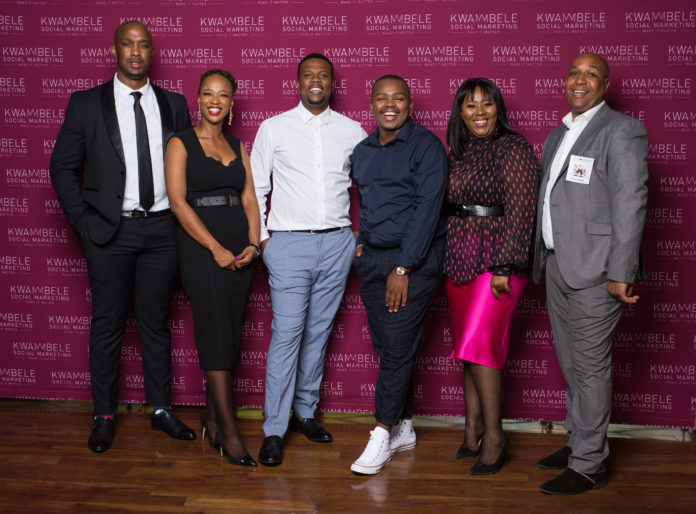
Kwambele Social Marketing team.

Kwambele Social Marketing hosted an event to celebrate their fifth anniversary, which was amalgamated with a panellist discussion on 3 October 2019 at Liliesleaf.

During this event, the talking points were around promoting social marketing for good, what it means and how corporates and society can come together to effect change and make social causes more meaningful and most importantly, impactful.

Panellists included Owen Manda, Director of Public Affairs at Ipsos South Africa; Themba Rumbu, an online social activist and aspiring social entrepreneur and Kwambele’s CEO Tshidi Modikoane Mbele.

Modikoane Mbele opened up the discussion with her gripping presentation on how the spirit of coming together as nation is evident when it comes to sporting events and yet that same spirit lacks much conviction when it comes to social impact. Although there are examples of this spirit in smaller pockets socially, led by unapologetic youth who want to see change and social justice i.e. the #FeesMustFall movement and the Rhodes #RUreferencelist.

Manda gave insight into how corporates should meaningfully invest in social programmes rather than just making it a box ticking exercise for governance and Rumbu spoke to the importance of driving socially fuelled conversations online with the purpose of drawing insight on how to effect change on the ground.

‘It is clear that the time is now; the climate is right for us to create massive change within our companies, communities and the country at large,’ said Modikoane Mbele.

KWAMBELE SOCIAL MARKETING
+27105920098
info@kwambele.co.za
kwambele.co.za

True Inspiration And Creativity Comes From Beyond The Desktop

The Notion Of Freedom In A Creativity Space
Image source: illfactormusic.com

According to David Limbert, creative head of Magnetic Storm, moments of inspiration happen at the most unlikely of times and when you least expect it. A visit to a gallery, watching a bee collect pollen from a flower, your four-year old’s artistic impression of you: moments when you absorb the world. 

And they all more than likely happen when you’re not at your desk, staring into your screen hoping inspiration will strike. There’s a wonderful world out there beyond our screens, and it is our role as creatives to get out there and explore it. The trouble is, almost without exception, the first thing that anyone, in any job, does as soon as they start a project is going to their desks to click, surf and bookmark. Our digital world has its benefits, it helps us to learn, explore and connect, but true inspiration comes from beyond the desktop.

At the recent Exporters Awards at the Boardwalk International Convention Centre in Port Elizabeth, we were tasked with designing the set and bringing their theme to life. I drive past the city’s port daily, and it was the shapes the cranes made, the clanging of containers and the industrial nature of the economic hub of the city that inspired the set design. We did away with the corporate white set, the typical two screens and a stage;  and embraced scaffolding and creativily enhanced the design though decorative panels and static and roving lighting to create a mood of celebration and exclusivity.

Leadership expert Robin Sharma is an advocate of nature walks to break free of the chains of ‘normal thinking’ and going deep into the loftiest realms of creativity, introspection and uncommon insight. And don’t take his word for it – science backs up the benefits of solitude and time away from the desk: when you get out ‘into the wild’ your brain waves slow down from beta to alpha and when you do this in solitude, the part of your brain responsible for self-criticism, mental chatter and constant worry shuts down. 

This silencing of the prefrontal cortex happens temporarily and is known as transient hypofrontality. With the prefrontal cortex temporarily quiet, you enter the Flow State. When you’re in Flow, your neurochemistry is altered. Dopamine (the neurochemical of inspiration) gets released, along with anandamide (the neurochemical of bliss), and serotonin (the neurochemical of pleasure). When you’re in this place, you get your best ideas. Your creativity makes explosive gains. You begin to see around corners and over hurdles and are able to solve problems you might not ordinarily be able to solve. 

My point is, it’s a wonderful world that we live and work in and sometimes it’s good to take the blinkers off and take a look around. And for us creatives, do we get enough time to take part in wide-open thinking at the start of projects? To go out ‘into the field’, to get involved in immersive research that happens in any discovery phase of a project.

The answer is yes, we should. But I think it’s also our job as teams to simply take the time to step back. Chat more. Visit that gallery or just go for that walk. The inspiration is out there. Somewhere. You just need to tap into your own mind. 

MAGNETIC STORM
+27413934800
info@magnetic.co.za
www.magnetic.co.za

The Impact Of Social Media On The Art Of Advertising

Andrew MacKenzie, MD of Boomtown, states that there has been a lot of industry talk about the quality and standard of creativity delivered by brands and their creative partners – especially over the last five years. 

The truth is there have been the couple of standout pieces, generally aligned to a hot political story or a cultural nuance, but in general, we have seen a dip in the level of advertising. So what can we attribute it to? The question ‘is social media killing advertising?’ is very valid.

For the previous two months, two different campaigns, from entirely different categories, have been brutally criticised on social media. The first was the Gillette ‘We believe: the best men can be’ campaign. A campaign that challenged men to be better men. It encouraged us to stop being chauvinists, to stop bullying, to forget the macho facades; it challenged gender inequality in the workplace and asked us to hold each other to a higher standard, to be kinder, gentler, more humane. Social media went mad. The backlash was enormous, with men calling for a boycott of the brand. The YouTube video of the advert has had 29.5 million views to date, with more than 420,000 comments. 

The number of likes stands at 777,000 with double the number of dislikes (1.4 million). On Twitter the debate got even more heated, with Piers Morgan, who is never far from controversy, declaring that he would no longer buy Gillette products and calling on society to let ‘boys be boys’. Yes, the advert used generic stereotypes, but how many adverts don’t? In truth, the message was ‘be a better man’. Treat all people with respect and humility, be kind and care, even if it’s just a little. I found the advert powerful, an emotional challenge to be a better man and a better role model for my son.

The second campaign was a bit closer to home. Woolworths’ Valentine’s Day campaign using lighthearted references to the male and female idiosyncrasies. The popular retailer has not been far from controversy over the last few years with product plagiarism claims, but I believe its Valentine’s Day campaign was unfairly crucified on social media. It was criticised to such an extent that it had to pull the campaign to avoid further fallout.

When did we become so sensitive to advertising? Perhaps social media offers a platform for anybody with an opinion to hide behind their black mirror and share it for others to latch onto and spread the poison. The bitterness, hatred and anger that it solicits is honestly nothing short of scary, and even more surprising is the sort of content that is attracting negativity.

The problem is that brands have become too scared to push the boundaries. Creative partners are finding it increasingly difficult to sell ideas that challenge consumers, campaigns that make a stand, campaigns that are different and courageous. Great campaigns that challenge stereotypes, conformity, that are brave, that push us into a slightly uncomfortable place. Ads that are memorable, that stand out. 

Will we see campaigns that achieve this moving forward? Perhaps a better question to ask in the interest of optimism is: will we see brands and marketing managers being brave enough to take a stand for ideas and creativity that will leave a positive legacy?

BOOMTOWN
+27861199494
cayleigh@boomtown.co.za
boomtown.agency

SamJane Communications Awarded Public Relations Account For Firejuice

Boutique marketing consultancy Firejuice operates in a highly competitive sector and realised – early on – the need for a marketing agency that takes each client’s budget and needs into consideration when offering a strategic marketing plan. This requires both their internal team and strategic partnerships to be committed to the brand at hand, and they believe that an SME like SamJane Communications aligns with this ethos.

Bernard Jansen, Founder of Firejuice, described the agency’s proposal as ‘innovative’ with a strong strategic direction. ‘We believe this to be a perfect fit and are excited to get started and to increase our awareness as a disruptive consultancy,’ Jansen said.

Firejuice is a boutique marketing consultancy that assists small and medium-sized companies to develop high-impact marketing strategies and effectively implement marketing projects.

‘In the last few years, Firejuice has built a reputation in marketing interventions for SMEs through strategic marketing campaigns. SamJane Communications is excited to have partnered with a company of this calibre,’ said SamJane Communications founder Samantha Robinson.

‘I want to work with small businesses that don’t normally have the opportunity to do PR. I prefer smaller clients, with smaller retainers where I am a team member that can truly make an impact and add value,’ she added.

Firejuice
www.firejuice.co.za

SamJane Communications
www.sjcommunications.co.za

Rugby World Cup 2019: What Do The Numbers Mean For Advertisers?

Richard Lord - Media And Operations Director At Meta Media.

The Rugby World Cup was first played in 1987 and was co-hosted by New Zealand and Australia. New Zealand walked out the eventual winners of that inaugural tournament, earning the coveted William Webb Ellis Trophy. The trophy is named after the school boy who, as legend would have it, picked up the ball during a soccer game and ran with it, thus creating the game of rugby. Richard Lord, Media and Operations Director, Meta Media, discusses the #StoryBehindTheStory of the current Rugby World Cup.

So the 2019 Rugby World Cup is in full swing. We are into week three and for the most part, have just one round of pool games left before we move into the knock-out stages. We at Meta Media are all about the data and the numbers. We like to dig deeper and find the insights behind the numbers.

Like the cricket and soccer World Cups, the Rugby World Cup takes place every four years. There have been eight tournaments (excluding the current one in Japan) and of those eight tournaments, only four countries have been crowned champions: New Zealand (1987, 2011, 2015), Australia (1991 and 1999), South Africa (1995 and 2007), and England (2003).

There are currently twenty nations playing in the 2019 edition being hosted by Japan. Most of these nations are part of the Commonwealth, with the Brits having brought the game with the oval ball to all four corners of the globe during the reign of the British Empire. The notable exceptions to this are the South American teams of Argentina and Uruguay, the eastern European sides of Russia and Georgia, the USA, France, Italy and of course the hosts, Japan.

As the tournament has grown and matured, and as rugby as a sport has grown more popular with the inclusion of many non-traditional rugby playing nations in the tournament, match-day attendance at the Rugby World Cup has shown steady and consistent growth throughout the history of the tournament. Total attendance back in 1987 was 604,500 over a total of 32 matches with an average attendance of 20,156 people per game. In 1995 in South Africa 1,100,000 people attended 32 games with average attendance growing by 70.5% to 34,375.

In the last tournament played in the UK and Wales in 2015 a total of 2,477,805 people attended the 48 matches played, with an average attendance of 51,621. This is a growth of 156% over the inaugural tournament! Interestingly, in Australasia in 1987, stadiums were only 60% filled compared to the UK and Wales were stadiums were 95% full. This could be attributed to the fact that the UK is for more accessible than New Zealand, but certainly the growth and popularity of rugby as a global sport has played a huge role in this too!

But what about TV audiences where the vast majority of fans across the world will access the tournament?

Well, in South Africa (and here I have my friends at DStv and SuperSport to thank for the numbers), the opening match in Japan between the hosts and Russia was viewed live on linear TV by 240,729 adult South Africans. This is actually remarkable considering that a) the game was between two non-traditional rugby playing nations, and b) the game was on a weekday at lunchtime!

The first big game of the tournament was between two of the most successful Rugby World Cup nations – South Africa and New Zealand. This attracted 673,509 live/linear viewers. I specify linear because DStv, the exclusive broadcasters in South Africa, also have a number of alternative digital platforms on which the game could also be viewed. When you include these additional platforms, such as DStv Now, the total audience for the SA vs NZ game swelled by an additional 51.2% to a total audience of 1,018,153 South Africans!

The audience in actual fact could have been even bigger if it hadn’t been for a technical error that prevented many viewers logging into the DStv Now feed. It is actually staggering to think just how many South Africans did not watch the game in the traditional way through a linear broadcast on a TV set. The industry is constantly talking about how digital media is going to transform the way that people consume traditional media. I beg to differ. For me, based on these numbers, it is clear that this transformation has already happened.

But how does the audience of this game compare to previous Rugby World Cup matches? Well let’s look at South African’s opening pool game in the 2015 RWC, the Brighton Miracle, where the Boks famously (or is it infamously?) lost to Japan. That game pulled in 1,115,625 South African viewers (according to DStv-i) compared to the 1,018,153 viewers of South Africa’s opening game against New Zealand in 2019. Whilst this is a slight decline of only 9%, the interesting thing for me is the change in how people watched the game. Back in 2015, the majority of the 1.1 million viewers would have watched through traditional linear TV. Fast forward four years and we see how less than 50% of viewers are now watching traditional linear broadcasts.

And lastly, to show just how universally appealing a major world tournament like the RWC is, let’s also compare South Africa vs. New Zealand at the World Cup 2019 to South Africa vs. New Zealand in the Rugby Championship 2019 played just two months ago. If we look just at the linear audience for both games, the RWC game attracted 50% more viewers than the Rugby Championship game. This suggests that the RWC carries a greater appeal amongst casual South African fans, whereas the Rugby Championship is the place for the more serious fan.

So what are the implications for advertisers in all this?

  1. Big tournaments like the World Cup (and I believe it is safe to apply this principle to soccer and cricket as well) are better suited for creating reach. Their appeal is more universal, and their audiences will be broader.
  2. If you want to associate your brand with the more ‘serious’ fans of each sporting code then you are probably better off advertising in tournaments such as Rugby Champs, super 15, English Premier League and IPL.
  3. TV is no longer linear! Digital has changed the way in which people watch TV. There are huge incremental audiences to be gained for advertisers who embrace linear and digital TV.

So now you know the story behind the story of the Rugby World Cup. Let’s all hold thumbs that the Boks continue along their winning ways and that we see them in the final and eventual winders of the Rugby World Cup in Japan!

META MEDIA
+27110818800 
info@metamedia.com
www.metamedia.co.za

Santam’s New Advertising Campaign Features SA Born Hollywood Actress

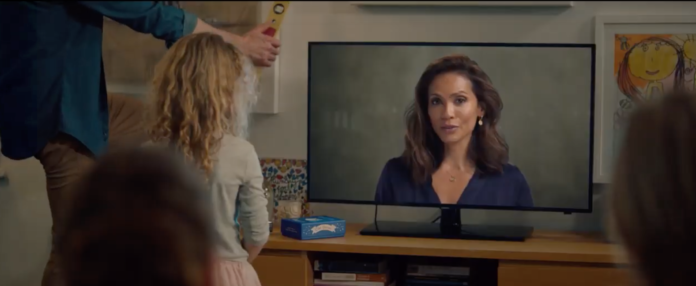
Santam’s new ‘Say I’ advertising campaign features SA born Hollywood actress Lesley-Ann Brandt. Conceptualised by the King James Group, the TV commercial positions Santam as a more modern, relevant and inclusive brand that appeals to all South Africans and encourages them to think about the value of insurance and to ‘say I’ to protecting what they’ve accumulated.

The campaign creative cleverly uses the traditional English affirmation expression – ‘Say Aye’ or ‘Say I’ – meaning ‘Yes’ to confirm certain questions posed and in essence saying yes to what the Santam brand stands for. The advert also positions Santam as a more modern, relevant and inclusive brand that appeals to all South Africans.

Devin Kennedy, Executive Creative Director at King James, said, ‘Evoking the emotion of being part of a ‘wave’ in a crowded stadium, the focus is firmly on inclusivity. The momentum of asking South Africans to stand up and ‘say I’ to protecting what we care about is compelling. It’s about being proud to be part of something.

‘It’s that feeling of satisfaction and ownership that comes with knowing you’re making decisions that count. And you’re making these alongside countless other South Africans, which is affirmation of your choices and encouragement that the country’s collectively growing stronger.’

A strong objective of the campaign was to make all South Africans feel valued and heard. One of the scenes in the TVC features lines of cars in gridlock traffic flashing their lights in unison to the question, ‘If your insurer does what they promise to do when you claim, flash your lights and say I.’ Another shot zooms in on an astronaut in space, ‘saying I’ to being one of the people with the insurer that’s paid out over R40 billion in the last three years. It’s all of us, and it’s the individual. No matter where we are, it’s about feeling safe.

Brandt was chosen because she fits the fresher positioning of the brand, is extremely relatable and is fast becoming a household name in South Africa and abroad. She’s also proudly South African, just like Santam. And she’s passionate about South Africans’ wellbeing, and an advocate for people upskilling themselves from a financial wellness point of view.

Mokaedi Dilotshotlhe, Chief Marketing Officer at Santam said, ‘The new campaign aims to entrench Santam’s leadership positioning in the short-term insurance industry, and showcases the extensive breadth of our offerings, whilst positioning the strength of our claims paying capability, which is well aligned to our strong brand promise of, Insurance Good and Proper.’

KING JAMES GROUP
+27112150000
enquiries@kingjames.co.za
www.kingjames.co.za

Can Brands Still Prosper In An Age Of Ad Blockers And Mistrust?

Patrick Collister.

Author and speaker Patrick Collister, who’ll be presenting the closing presentation at the Nedbank IMC 2020, taking place at The Galleria in Sandton on 19 March said, ‘Right now, both marketing and its servant, advertising, are in trouble, with 800 million people reported to have installed ad blockers on their devices.’

The theme of the Nedbank IMC 2020 conference is Marketing Works. Work it. At a time when advertising has been rated below politics as a trustworthy profession and when, according to a recent survey, 77% of brands wouldn’t be missed if they disappeared overnight, can brands still prosper?

Collister has been Creative Director of Ogilvy EMEA, Creative Director of EHS Brann Europe and, most recently, led Google’s creative think-tank, The Zoo. He continued,  ‘But it’s not all doom and gloom, with purposeful creativity, brands can still be relevant and valued.’

Collister believes there are seven specific actions marketers can take to ensure that their brands not only survive, but thrive – he will elaborate on these actions at the conference. Not least of which are being mobile, insightful and agile. ‘In addition, brands need to be social, collaborative and innovative too. And, of course, being purposeful always tops the list,’ he said.

As the second international speaker of the day – the first being keynote speaker Fernando Machado, Global CMO for Burger King – Collister will be elaborating on these actions in his presentation. He will also be facilitating a workshop the day after the conference for African members of thenetworkone – the world’s largest network of independent advertising agencies.

‘We are delighted to have two such internationally renowned speakers in our line-up of 18 speakers,’ said IMC CEO, Dale Hefer. The IMC is presented in association with MASA and endorsed by the IAB.

NEDBANK IMC CONFERENCE   
www.imcconference.com

Game Partners With The Odd Number For Strategic Repositioning And Rebranding

Game has partnered with The Odd Number on the strategic repositioning and creative execution of its refreshed brand. The store has unveiled its reinvigorated brand and new positioning, including a new pay-off line, ‘You’ve Got Game’.

‘The refresh aims to reconnect customers with this iconic home-grown brand in a highly engaging and relatable way, while more accurately reflecting the business as it is today,’ said Katherine Madley, brand and customer director.

‘The culture of the brand is to help customers save money so that they can live better lives,’ said Madley. The updated positioning is a more contemporary unpacking of this, but it keeps Game’s famous bold pink colour – introduced when the first store opened in Durban in 1970 – in pride of place.

The refresh will assist in rebuilding its ‘rebel’ brand identity and underline the promise that Game is the best choice for consumers. It will highlight Game’s values of innovation, simplicity and passion, while delivering on its purpose of creating a better life for all.

The new pay-off line – ‘You’ve Got Game’ is a contemporary update on the founding sentiment that ‘You always win at Game’. Madley said that the new positioning reflects the irreverent maverick essence of Game. It celebrates the customer as an astute thinker, a clever decision-maker and Game as the rebel that always delivers the best price. The brand is a rebel in the right context, rebelling against the competitors in each category’s higher prices and at times, lower quality.

‘It’s inclusive. It’s a quintessential insight on the everyday swagger that South Africans have. And it’s indicative of the brand and the brand’s personality and nature. It embraces challenge, and fulfils it. It’s almost a challenge to all of us to have Game, because when You’ve Got Game, then Game’s Got You. Keep your chin up, keep your smile on and keep going,’ she added.

Appeal to a younger generation

Brand communication will talk to South Africans in a real and reassuring way. It will appeal to a younger generation without alienating existing customers as the discounter targets new consumer segments while building on this brand loyalty.

Game’s new TV commercial.
GAME SOUTH AFRICA 
www.game.co.za
THE ODD NUMBER
www.theoddnumber.co.za

Top Female Talent To Share Knowledge And Inspiration At Catalyst Africa 2019

Some of South Africa’s top female talent across various industries will share their knowledge and inspiration and drive changes in mindset, creativity and tech at the upcoming Catalyst Africa 2019 event, from 30-31 October 2019, at the V&A Cape Town. 

Catalyst Africa 2019 will comprise of multiple session formats, enabling attendees to choose their own experience and educational content. They are presented by a host of leaders from world-class educational institutions, successful business people and leading technical experts.

Topics will cover:

1. Befriending the muses of Curiosity, Bravery and Playfulness in the Playground of Commerce.
2. How tech and mindset are fuelled by creativity.
3. Cutting through the clutter of the digital music economy.
4. Embracing 4IR to solve everyday problems.
5. Scaling AR driven apps to offer consumers better wine purchase choices.

The aim of the event is to empower South Africans to embrace opportunities around them and find solutions to problems they encounter. From music to art and food, internet of things, marketing and creative leadership – these women are at the cutting edge of their fields.

Dale Imerman, Co-Founder of Catalyst Africa said, ‘The most unexpected discoveries happen when diverse topics and people come together. Our concern is with the actual doing or use of knowledge rather than with theory and ideas to ensure Catalyst Africa attendees are both inspired and equipped to action their ideas.’

The speakers include:

Mignon Reyneke, an Associate Professor of Digital Marketing and Marketing/Business Strategy Consultant with experience in the corporate and academic fields, both locally and internationally. She teaches the core marketing strategy course at the GSB and is also involved with custom corporate training in sales and marketing for ComAir, Tiger Brands, Sasol, SAB, Distell, Business Connexion, Thales, AECI, Southpaw Consulting, British American Tobacco, BMW, Proconics, Schneider, Standard Bank, Discovery, SAICA, Old Mutual, Transnet, Capitec and Chevron.

Annette Muller, the founder of Flexyforce, an innovative new technology start-up aiming to build better supplier relationships. Flexyforce is a B2B cloud based software for companies to automate the onboarding, contracting and payouts of any kind of supplier. 

Lindsay Thomas, a qualified project manager and marketer, she is an educator with experience stretching across the entertainment business, door to door sales, media and team management. She is the organisational and communications arm of ask-jean and is driven by the desire to see great concepts come to life. 

Tertia Barrett, the founder and MD of Cataly5t. Cataly5t uses groundbreaking IoT smart sensing technology to collect data on how people use the spaces they work in. This insight is driving better decision making as they balance smart building management with the evolving needs of their workforce. 

Jules Harding, Vocalist of GoodLuck, an award-winning, chart-topping live electronic band. Officially launched in 2011, the buzzing trio has graduated as one of the brightest hopes from the South African music scene to become a bona fide international act.

Leah Bessa, who completed her Masters in Food Science. Studying insects as an alternative source of protein, she joined forces with a partner to explore various avenues of introducing insects into the South African market. As true entrepreneurs do, they researched, created and experimented with various products before finally focusing their efforts on the dairy alternatives industry.

Caitlin Warther and Wendy Dixon – WartherDixon – an artist duo who collaborate on mirror and light based installation sculptures. Their work creates perceptual questions around the themes of time, identity and spirit. They hope these questions create an embodied learning of self and soul in viewers. 

Elaine Rumboll, an award-winning businesswoman and poet. She is a professor of Play, a master Lego Serious Play practitioner and the founder and owner of The Creative Leadership Consultancy. Talk title: Befriending the muses of Curiosity, Bravery and Playfulness in the Playground of Commerce.

CATALYST AFRICA
catalystafrica.co.za
This is Modern Marketing