

Home Blog Page 378

Evolve Your Brand Services And Be Appealing To Tech-Savvy Customers

Image source: it.toolbox.com

According to BrandQuantum, customers are becoming increasingly tech-savvy and have access to brands across a global marketplace. To compete in this market, brands have to evolve to meet customers’ needs and exceed their expectations. Technology is imperative to connect with customers, improve experiences and drive customer loyalty.

The global marketplace does not restrict customers to trading hours and the consumer knows what they want. Brands need to implement technology solutions that provide a seamless experience whether in-store or online, local or global.

Technology savvy customers

Customers rely on peer reviews before making purchasing decisions. They search, browse and research products online and make purchasing decisions before they have even walked into a store. In some instances, with instant access to the internet via smartphones, they compare products and prices in-store before making final purchasing decisions.

Customers also aren’t limited to trading hours or geographical boundaries as online and mobile shopping presents a convenient alternative to spending time in stores. They are able to find the brands they are looking for and make purchases instantaneously without the hassle of shopping around first and standing in queues. This is supported by research from Nielson, which states that 30% of global retail sales will be made through an app or software by 2020.

Using data to make decisions

Technology isn’t only available to consumers. Brands should be using technology to improve customer engagements and drive brand loyalty. This can be achieved by starting with the data. For years companies have collected customer data, now they have technologies to analyse the data and make informed business decisions.

Starbucks, for example, has implemented technology that enables it to instantly track and aggregate sales and other data to determine which products are the most popular with customers and understand when and where customers are making purchases. This data is then used to determine which new offerings it should introduce according to customer preferences.

While companies are able to use data that customers have provided, companies need to be considerate of adhering to regulations such as the POPI Act and protect their customer data. This is supported by the PWC Global Customer Insight Survey 2019, which cautions that ‘customers want the companies they interact with to protect their personal data, and indicates that they’ll take their business elsewhere if they don’t trust that a company is safeguarding their personal particulars’.

Customer experience is key

According to the Interbrand Breakthrough Brands survey of 2016, leading brands are customer-centric and comprehensive in approaching their touchpoints. This means that companies need to focus beyond product launches and marketing campaigns and pay attention to the entire customer experience in the initial planning of their go-to-market strategy.

Brands need to consider the holistic experience delivered across all devices from direct customer engagements through to online and mobile experiences and ensure that they are all aligned to the brand. However, it is equally important that brands are also looking inwards to ensure that they are considering how they are engaging employees to deliver the brand experience consistently in every customer engagement.

This is supported by findings from the PWC Global Consumer Insights Survey 2019, which highlights that companies are moving towards the ‘return on experience’ which means that they are measuring the return on experience based on how customers interact with their brand and how employee experience contributes to the overall experience.

Technology solutions can be helpful in empowering employees to exceed customers’ expectations by automating repetitive tasks that are time-intensive. For example, customer statements could be automated, while more intensive customer queries could be handled by employees that no longer need to search for statements for clients.

Personalisation

Human interaction is a key factor that will differentiate brands from other offerings on the market. While technology can be used to change the way brands work, it cannot be used to establish relationships of trust with customers. As such, the most critical differentiator for customers will be the human touch. Technology and customer data work hand in hand to help deliver personalised experiences that meet customers’ needs.

Customers no longer want an SMS or email with their name on it, they want information that is relevant to them, they are looking for personalised experiences and they want to feel like companies know who they are and what they want based on their previous behaviour with the company. This means reaching them at a time that is most convenient or relevant to them with information that is specific to their needs rather than bombarding them with content that is designed for everyone.

For example, if a customer purchases pizza every Wednesday, they should be targeted on a Wednesday with a special offer and a prompt that suggests having the order ready for them at the usual time of collection rather than sending messages to them on other days with deals that aren’t relevant to them.

Weave technology into the brand

With tech-savvy customers, brands cannot afford not to embrace technology solutions as part of their offering. While traditionally companies needed to incorporate their core values and mission throughout the brand, today technology needs to be added to this mix. According to Sidney Harman, ‘the more technology is woven into your values, the more likely it is to be used wisely’.

The wise use of technology is critical for businesses to succeed in today’s global market. No longer is technology a nice to have nor can it be incorporated for technology’s sake. It has to meet the specific needs of customers. As such, the customer should be at the centre of every business decision and determine which technologies are incorporated to streamline engagements.

Technology, which should serve as a competitive differentiator in aiding brands to provide superior experience and connect with audiences, should integrate into existing systems to ensure that is it is easy to use and used regularly and effectively.

To achieve this, marketing and technology departments can no longer work as silos within an organisation. They need to sit at the boardroom table and make decisions together to develop solutions that ultimately enhance experiences and delight customers. Find software solutions to help companies deliver consistent customer experiences in all customer engagements. 

BRANDQUANTUM
+27100450905
ignite@brandquantum.com
www.brandquantum.com

Vodacom SA Partners With DYDX For Agile And Fast-Paced Marketing Eco-System

DYDX team.

As Vodacom SA continues its digital transformation drive, a key goal is to increase the pace of commercialisation of ideas into revenue-generating products. The Vodacom marketing team identified the need to transform their systems and processes to increase the pace of work. Partnering with DYDX, a global product and service design practice, a human-centered design approach was taken to reimagine how marketing could operate.

While digital marketing is changing the way we advertise and communicate, some marketing and advertising processes seem stuck in the ’50s. Many agencies still use physical job bags and processes that resemble the industrial age rather than digital age ways of working, including more collaborative approaches and video conferencing replacing face-to-face meetings. As more tools, automation, and bots impact marketing departments, those that don’t adopt a future way of working will not only be left behind but become alarmingly less effective as they waste time doing tasks that can be done more efficiently.

Nevo Hadas, Managing Partner at DYDX said, ‘New tools and ways of working are often scary even though they may have great benefits. Behavioural psychology shows that due to loss aversion, people are very sensitive to what they will lose, even if what they will lose is not really solving their problem well. We designed the on-boarding and training processes to be iterative and support change management so that the users felt they had mastery over their changing environment.’

Within six months, seven agencies and four internal teams were on-boarded. The results have not only enabled better communication and faster issue resolution with agencies but are also providing key benchmarks for how efficiently the eco-system works, wastage reports and managing key SLAs. Marketers and product managers have better control over the process and save significant time from automated status views and exception reporting. Compliance also improves, reducing audit complexities.

‘By mapping out the processes using service design, we saw a significant portion of time was lost in briefing, scheduling, coordinating and approving of creative work. Our new processes centred around reducing this waste,’ said Lana Strydom, Executive Head of Online and Self Service at Vodacom. 

While the new systems have a number of objectives and outcomes, most important is to achieve a better creative outcome by enabling agencies to spend more time in the creative processes and less time in admin or waiting for approvals – delivering a better creative product to the market quicker.

VODACOM 
www.vodacom.com
DYDX DIGITAL
info@dydx.digital
dydx.digital

A Depressed Economy Is An Opportunity To Revisit Marketing Strategies

Image source: expandgh.com

Nona Koza, Business Partner at Oliver South Africa, states that during austere times, marketing activities are among the first to be cut back, which is also often the wrong thing to do. It’s a mistake that brands make worldwide. 

Research shows the contrary is true: if you keep up your brand activity during tough times, when the economy swings up again you make a lot more money. The reason why is something we often forget: consumers buy a value. It’s a promise of what that brand is going to deliver. In tough times, when the brand becomes less prominent, it comes across as a lack of empathy. Your customers are struggling – where are you?

Nonhlanhla Koza, Business Partner at Oliver South Africa.

Customers, just like companies, are more frugal and value-conscious when the economy is down. So, it is ironic that by underplaying your brand during such periods, you are taking important signs of confidence away from your customers. This is why cutting back on brand positioning as a cost-saving measure is often self-defeating.

But slashing budgets need not be the only strategy. Hard times are an opportunity to revisit marketing strategies and ask if there is a better way to do things – and yes, there is. Through an on-site approach, organisations can radically improve their marketing activity. This is crucial for the above considerations: to keep customers close in a tough economy, you want a marketing approach that operates on close proximities and immersion with them.

What you want to pursue is customer retention. How are your customers using your products? Who are your best customers? How do you reach them more directly? For example, the cost of one billboard can cover several breakfast events with key customers. The key thing here is targeted customer engagement and much more face to face interaction.

Targeted engagement is just one side of this strategy. The other is to develop an agile marketing pipeline that is engaged with the business. Brand activities should align with business strategy and expectations. If your marketing people are not there in the trenches, meeting customers alongside other staff, grasping the roadmap and moving with its requirements, your branding efforts will struggle.

External marketing agencies are often too removed from the business coalface to achieve this. Internal marketing can however, represent an incredible cost centre. This challenge has given rise to a third model: the on-site agency.

‘Unlike an external agency, an on-site agency works at the customer’s premises,’ Gabrielle Gray, Executive Creative Director at Oliver South Africa explained. ‘Its people are there to engage with the business at every level – from chatting at the water cooler to sitting in on important meetings. And unlike internal agencies, an on-site agency manages marketing operations such as talent acquisition externally. You get the best of both agency models, but without the drawbacks.’

Gabrielle Gray, Executive Creative Director at Oliver South Africa.

Complementary to any other internal or external marketing functions, on-site agencies improve delivery times, move with the customer business, help align marketing with business objectives, and brings the nuance needed to woo the business’ clients. In difficult times, such a personal touch is important. Customers want to see it from their brands, and those brands need it from their agencies.

Cutting back on brand positioning is not the right strategy during tough times. But branding can be done differently: customer-focused touch points and engagements, pop-up events and tailored digital messages – these are crucial tools. The on-site approach offers significantly better engagement and brand performance at the budgets of traditional marketing, since it works intimately with the organisation to become on-premise brand partners and it can leverage creative resources like no other.

‘Traditional approaches do work for some companies,’ said Gray. ‘However, what we find is the immediacy of being on-site, a client being able to walk over to us and say, ‘I’ve had this idea, how can we execute it? What do you think?’ This is a very good way to deliver on business objectives. As a result, we understand the customer’s business better and, in turn, the customer is more involved with brand activities.’

OLIVER SOUTH AFRICA
+27112349100
info@moreismore.global
www.moreismore.global

Brandtruth//DGTL Wins Two Gold New Generation Awards

Brandtruth//DGTL team.

The 7th annual New Generation Social & Digital Media Awards took place on 4 October 2019 (Montecasino). This year, close to 400 entries from across 43 categories were received.

These are one of the most celebrated digital media awards in South Africa, honouring members of the industry for their innovative use of social and digital media, and cutting-edge use of online media and tools.

Brandtruth//DGTL scooped two golds at the awards for:

  • Most innovative digital media campaign by a medium-large agency for the FNB Switch with a Selfie campaign.
  • Best integrated marketing campaign by a corporate for FNB’s #BlackFridayMe campaign.
BRANDTRUTH//DGTL
+27(0) 87 897 5635
hello@brandtruth.co
brandtruth.co

Improved Online Reviews Contribute To Brand Growth

Image source: startsmallmedia.com

Ashleigh Wainstein, director of Martech firm Social Places, says that increasingly, consumers are writing and checking reviews from their phones. More than 21 million South Africans have smartphones with GPS, which allows them to do location-based searches for shops and restaurants – and then review them, even on-site.

Therefore, improving online review ratings is a strategic necessity for franchises and multi-location brands as more customers engage with them via online listings and expect a response. Companies that adopt effective online review strategies are reaping the benefits and typically see an increased score of 0.2 out of 5 stars every six months. Most consumers won’t consider a business with less than four stars and 88% of consumers say online reviews influence their buying decisions.

They are eager to leave reviews too – seven out of ten consumers will leave feedback if asked to and more than 80% of these are positive. It’s one of the reasons a growing number of South African companies, particularly big brands, are formalising their review strategies as consumers flock to sites like Google, Facebook and TripAdvisor to get recommendations, read reviews and check star ratings. Collecting reviews and feedback at a store level allows brands to identify strengths and weaknesses for each location and can be used to fix operational shortcomings and identify successes.

Ashleigh Wainstein, Director of Social Places.

Social media channels are a relatively inexpensive way for brands to standardise their messaging to their customers and respond to and manage feedback they receive through online reviews. However, these channels need to be carefully managed. It’s no longer enough for organisations to simply have a social media presence – they need to have a strategy for managing and responding to reviews left by customers. 

These steps can help companies to formalise their review strategies:

Getting started:

  • Identify the sites and directories for your industry which have reviews. Then make sure you have created a profile on these sites and have claimed them. Restaurants would have a presence on Facebook, Google, TripAdvisor, Zomato and Eat Out, for example, while retail, financial or telecommunications companies would use Facebook, Google and Hello Peter.
  • Do not ignore a platform that is important for your industry – you will find rogue pages are created by customers, competitors or the sites themselves if you are not actively managing the pages.

Rules of engagement:

  • Multi-location brands should not allow reviews on their national brand page – some customers will use this space only to complain. This results in brand pages with very low review scores, which impacts overall online reputation. Reviews should be activated on individual store pages. Recent research among 163 multi-location global brands showed the top 10 franchises that adopted local strategies saw average sales growth of 12.8% – three times more than their competitors.
  • Ensure your review response tone matches the rest of your brand messaging: website, community management and review response message tone should all align. For example: playful brands should keep their positive responses in line with this persona. Negative review responses should always be handled in a more serious manner and you should always consider the tone of the reviewer before using too much humour.
  • Create a response template that has strategic relevant keywords to boost local SEO. For instance, a high-end restaurant would use words and phrases like quality steak, premium service and best restaurant.
  • Respond to all reviews and ensure negative reviews are responded to within 24 hours and positive reviews within 48 hours. Don’t admit to serious allegations online before you can conduct an investigation in-store. Always answer reviews diplomatically to protect the brand but also be sympathetic.
  • Always take the conversation offline by offering a call to action like: ‘We are so sorry to hear that you had a negative experience at our store, please email ‘customer-care@name of the brand.co.za with your details so that we can get in touch.’ A call to action is any method of getting the customer’s details and taking the conversation offline.
  • Request reviews from your customers – over 80% of reviews are positive and 70% of people will leave feedback if they are asked to. Brands that encourage customers to write reviews will typically increase their review score over time. 
  • Consider using live in-store customer feedback tools. These allow brands to deal with customer feedback immediately, often while the customer is still in the store. They also help keep negative reviews offline.

Personalisation:

  • Personalise responses with the customer’s name and refer to specific events or happenings from their review. If, for example, a customer mentions that they had a wonderful shopping experience with their daughter, your response should include statements like: ‘We look forward to welcoming you and your daughter back again soon for another positive shopping experience.’ 
  • Typically, more than 50% of reviews contain a star rating and no comment. Utilise technology with customised response templates, to respond to large numbers of ratings with no customer comments.  
  • Respond to all positive reviews – this creates customer loyalty and positive brand conversations.

Insights:

  • It’s important to not only respond to reviews but use them as valuable business insights. When capturing these reviews, or using technology to capture them into a single dashboard, it is important that you have the ability to categorise the reviews and customer sentiment topics to understand the strengths and weaknesses of each store and then report on these findings in a simple and visual way. Some technology will create these insights automatically for brands using Artificial Intelligence. This ensures operational teams can address the areas of improvement or reward the stores that are performing well. 
SOCIAL PLACES
+27215513170
letschat@socialplaces.co.za
www.socialplaces.co.za

Levergy Takes Home Four New Generation Social And Digital Media Awards

Levergy team.

The New Generation Social & Digital Media Awards are one of the most celebrated digital media awards in South Africa, honouring members of the industry for their innovative use of social and digital media, and cutting-edge use of online media and tools.

Levergy won an industry-leading four trophies at the awards. The night saw #Limitless, a campaign created for Sasol to grow and change perceptions in women’s football, add a gold award for Best Online PR to its growing list of accolades (which includes a Prism Award, two Marketing Achievement Awards and global recognition as one of the top 10 global sponsorship campaigns of 2018).

Alongside #Limitless, Levergy was acknowledged with silver awards in the Best Social Media Reach for an Event category for the inaugural Mzansi Super League cricket tournament; Most Innovative use of Social Media by a corporate for SuperSport’s Front Row Football, as well as bronze for Best Low Budget Campaign for New Balance’s Worn As One.

Struan Campbell, Levergy co-founder, said, ‘We are proud of the work we continue to do for our clients and would like to thank the New Generation Awards for their recognition. Our mission is to always bring to life simple, creative ideas that deliver maximum impact for our clients. It is thus rewarding to have four different Levergy clients recognised across categories. We appreciate them for the continued support and the belief they have in our work.’

‘We are immensely proud of the digital competency and approach we have developed and the growth we have seen in this sector at Levergy in recent years. We have what I believe to be leading methodologies and have recruited some of the industry’s best talent, not only in the sport and entertainment sector but in South Africa as a whole. To be recognised at the New Generation Awards alongside South Africa’s leading digital agencies is immensely rewarding,’ concluded Campbell.

LEVERGY
info@levergy.co.za
levergy.co.za

Primedia Outdoor Flights ‘Malaria Must Die, So Millions Can Live’ Campaign In SA

The Malaria Must Die campaign began earlier this year where it was championed by David Beckham, launching the world’s first voice petition to end malaria. In a short film, Beckham appears to speak nine languages using emerging Artificial Intelligence (AI) video synthesis technology.

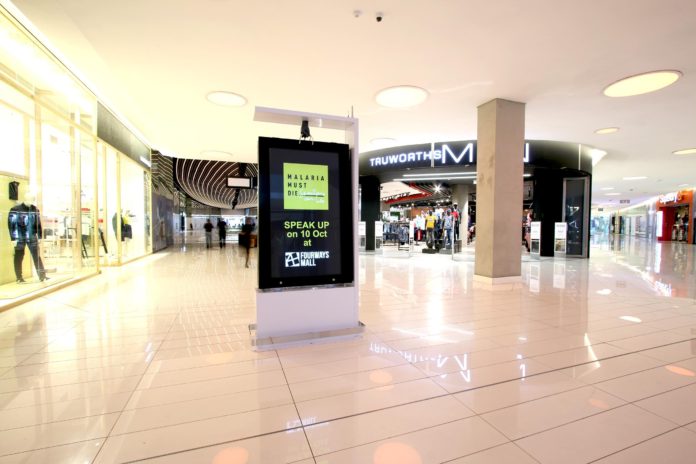
People around the world were invited to speak up by visiting malariamustdie.com and recording the message ‘Malaria Must Die’. The campaign was launched last week in South Africa by Primedia Outdoor using digital Out-of-Home (DOOH) advertising activations to inspire people to join the world’s first voice petition to end malaria.

The DOOH campaign will now reach Europe, Africa and the Middle-East. All of the messages collected via the voice petition will be presented to top decision makers and world leaders at the Global Fund’s Sixth Replenishment Conference in Lyon (France) in a powerful short film. The Global Fund is dedicated to ending the world’s three biggest preventable killer diseases: AIDS, Tuberculosis and Malaria, and is seeking to raise at least US $14 billion for the next three years from donor governments, implementing countries and the private sector, to help save 16 million lives.

The Global Fund is dedicated to ending the world’s three biggest preventable killer diseases – AIDS, Tuberculosis and Malaria and is seeking to raise at least US$14 billion for the next three years from donor governments, implementing countries and the private sector, to help save 16 million lives. 

Last month, the campaign activated online and DOOH displays across New York City during the annual United Nations General Assembly (UNGA) meeting held from 23-27 September, calling on more supporters to add their voice to the petition via the world’s first malaria Augmented Reality (AR) filter.

Developed pro-bono by Facebook and Powster (an award-winning interactive and production company), the filter is available on Facebook and Instagram. The filter simulates a swarm of deadly mosquitoes around the user’s head which only dissipate when ‘Malaria Must Die’ is spoken, reinforcing the message that malaria declines with increased action but can return with a vengeance when the fight is deprioritised. 

Quividi, the world-leading audience and campaign intelligence platform for digital Out-of-Home, has rallied a coalition of preeminent OOH publishers and media owners – Domminaction, Grandi Stazioni Retail, Imediacenter, Pikasso and Primedia Outdoor – to provide pro-bono digital Out-of-Home advertising space, in a selection of strategic locations including malls, train stations and city centres across South Africa, Algeria, France, Italy, Ivory Coast, Jordan and Lebanon. 

Primedia Outdoor is engaging mall shoppers with a Quividi-powered life-size DOOH version of the malaria AR filter, that can be experienced in Fourways Mall, Johannesburg. At the same time, Primedia Outdoor’s roadside LED network will display an advert of Beckham surrounded by thousands of mosquitoes, inviting the audience to join the voice petition and help end Malaria.

Abi Smith, Creative Director at Powster said, ‘We’re extremely proud to have the opportunity to support such an important campaign. Working with Spark AR and Quividi provides a fantastic platform for us to innovate and share the message to ‘Speak Up’ with audiences on and offline in a way that is both playful and meaningful. It’s exciting to employ our technical expertise to create a really cutting-edge experience that will capture attention and help amplify the Malaria Must Die message around the world.’

Ke-Quang Nguyen-Phuc, CEO at Quividi said, ‘We feel privileged to use our digital Out-of-Home audience intelligence platform for such a great cause. Leveraging Powster’s striking face responsive experience, our technology can add its voice to this powerful collective to end malaria. We are also grateful to all our OOH and technology partners that provided pro-bono Digital Out-of-Home advertising space and an interactive digital screen for this fantastic initiative.’

Jorja Wilkins, Marketing and Marketing Services Executive of Primedia Outdoor said, ‘It is a great privilege to have been selected as the media partner for the ‘Malaria Must Die’ campaign in South Africa, and to be part of such a meaningful global initiative. Our mall and roadside digital platforms offer key podiums for this important cause in reaching mass audiences and ensures awareness and engagement for the campaign.’

James Whiting, CEO of Malaria No More UK said, ‘It’s important to find new ways to amplify the voices of those affected by malaria and give everyone the opportunity to speak out and call for more action to end this preventable disease. Malaria is the world’s oldest and deadliest disease and is still claiming the life of a child every two minutes. We want to grab the attention of world leaders and to demonstrate that people around the world have demanded an end to malaria in their generation.’

PRIMEDIA OUTDOOR
+27114751419 
jorja@primeoutdoor.co.za
www.primediaoutdoor.co.za

Engaging Customers Through Digital Content

According to Ryno Colyn, Head of Moving Tactics’ Digital Content, marketers need to understand their digital signage technologies before planning major marketing projects.

Strategic content development involves planning your annual marketing calendar in advance to focus on specific campaigns that will stand out from the rest. Knowing your network is key as technical advances, or limitations, will inform your marketing opportunities. The challenge is, after all, serving the most engaging information to the right audience at the right time. 

Ryno Colyn, Head of Moving Tactics Digital Content.

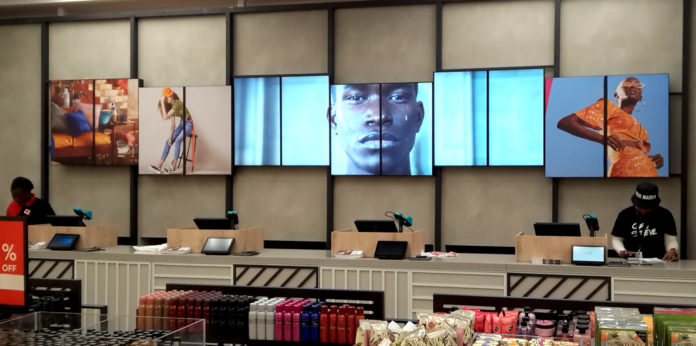
How do you entice your customers to engage with your brand and, most importantly, act on the messages being sent? What will make the content pop? The starting point is using a digital signage network that employs System-on-Chip (SOC) technology. This facilitates media players being built into the screens, which leads to less downtime and technical problems, resulting in a more streamlined installation that saves on costs.

Screen Takeovers

The capability to perform screen takeovers across all digital screens is key and SOC solutions make it possible for digital screens to sync to the millisecond across regional, national or international locations. This technique proves highly effective for promotional content and is visually unmatched. It offers the utmost engagement and ‘WOW’ factor for an audience.  

Quick-Service Restaurant (QSR) are used by chains across South Africa such as McDonald’s, Edgars and Famous Brands. Within the QSR space, the screen takeover is incorporated into the menu panels. Takeovers can be scheduled according to day-parting, such as for breakfast and lunch timeslots, and they are specifically timed to not be too invasive for ordering customers.

Time/Weather-Based Content

Having the ability to upsell or change buying decisions is vital for any brand. One way of doing this is to offer the correct product based on external factors, such as time of the day or the weather. Many external aspects determine people’s buying habits, from time of day and day of the month to being location-specific such as the store’s location or local weather. Some of these factors are controllable, and an intelligent digital signage system should be able to automatically change content based on the time of day or the weather outside, whether it be at an individual store or in a general area.

Bespoke content based on location data is proving more popular and can be built into the planned marketing strategy many months ahead of time. This technology enables clothing retailers to feature summer-friendly clothing if it’s a hot day, or restaurants to upsell coffee with their meals on a cold day rather than cold drinks, automatically.

MOVING TACTICS
+27118070094 
chris.day@movingtactics.co.za
www.movingtactics.co.za

Flume Appointed As Astron Energy’s Digital Marketing Services Provider

Flume has been appointed by Astron Energy as its new Digital Marketing agency. Astron Energy markets its products under the Caltex master brand. 

Flume’s Cape Town team was assembled three years ago to service the agency’s Cape Town-based clients and will therefore take the digital marketing lead on the account. For Flume as a whole, the partnership with Astron Energy represents a significant addition to a portfolio rich in blue chip brands.

Garren Coetzee, Flume General Manager said, ‘We are proud to have been selected after a very thorough pitching process and can’t wait to get stuck in with this new journey for the Caltex brand. The scope of work spans the entire business: from digital strategy, content production and creative, to website development and community management. We look forward to working alongside the Astron Energy team and driving business, brand and marketing objectives within the digital environment.’

FLUME
+27877015501
hello@flume.co.za
www.flume.co.za

Kantar Reveals Top 10 Best Liked Ads

The TV adverts that South Africans have chosen as their best liked for Kantar’s Q1 and Q2 demonstrate expertise in all three areas: Power, Premium and Potential.  Power measures growing sales through extra volume, Premium focuses on commanding a higher price and Potential gauges the sustainable future growth.

Kantar’s Best Liked Ads list celebrates South Africa’s favourite TV commercials. These are the ads that have been rated as the best liked by the South African audience whom Kantar believes to be the most important critic – the person who ultimately chooses to buy your brand or not.

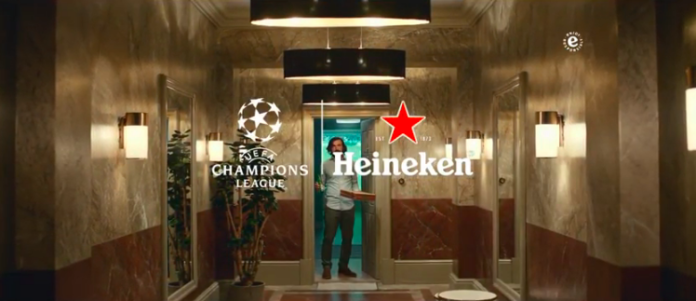
In first place for Q1 we see the hilarious Heineken ‘Unmissable’ advert, which demonstrates a common experience for many of us – it’s when you’re not looking that your team will score the goal! The distinctive creative style as well as brand placement throughout the advert makes this copy unique to Heineken. The bonus of using a common human experience such as this, is that, more often than not, it allows the ad to ‘cross borders’ and deliver a great ROI.

Sasol is at the top of the Q2 list, with the renewed take on ‘Glug Glug’. Brands that take advantage of these historical brand assets and cues are placed favourably within consumer’s minds as they don’t have to work hard to know what the ad is about. Interestingly, the legacy Glug Glug ad from 1991 still tops Kantar’s Best Liked ads of all time, highlighting that difference plays a critical role in a brand’s personality.

Q1 Ads

RANK AD CREATIVE AGENCY
1 Heineken ‘Unmissable‘ Publicis Milan
2 Edgars ‘Don’t tell me what to do’ VMLY&R
3 Cadbury Lunch Bar ‘Treadmill’ Ogilvy Johannesburg
4 Vodacom ‘Its A tie’ Openfield Marketing Johannesburg
5 Wimpy ‘Great Getaway Grill’r’ FoxP2 Joburg
6 Future Life ‘…is the future of breakfast’ Old Friends Young Talent
7 FNB ‘Extended Family’ FoxP2 Joburg
8 Amstel ‘Timeless (Wedding)’ VMLY&R
9 Standard Bank ‘#GoodtoGo’ Collective ID
10 McDonalds ‘The Ritual’ Leo Burnett

Q2 Ads

RANK AD CREATIVE AGENCY
1 Sasol ‘This isn’t just any fuel. #ThisIsGlugGlug’ FCB Joburg
2 Savanna ‘#RulesDontAppy’ FCB Joburg
3 Nike ‘Dream Crazier’ Wieden + Kennedy Portland
4 Debonairs ‘Cram-Decker’ FCB Joburg
5 Cadbury Dairy Milk Chocolate ‘Mom’s birthday’ Ogilvy Johannesburg
6 Ariel ‘Palesa’ Leo Burnett Beirut
7 Rajah ‘Follow your nose’ The Hardy Boys
8 OMO …believes through dirt we are better people’ Ogilvy Durban
9 Samsung ‘Galaxy S10. Wireless PowerShare’ Cheil South Africa
10 Samsung ‘The next generation Galaxy A. Built for the era of live’ Cheil South Africa
KANTAR MILLWARDBROWN 
millwardbrown.com
This is Modern Marketing