Home Blog Page 377

The Riverbed Agency Appoints Director Of Strategy

Kabelo Lehlongwane, new Riverbed Director Of Strategy.

Riverbed has appointed Kabelo Lehlongwane as Director of Strategy and a member of its executive leadership team. Lehlongwane has worked on brands such as Absa, Coca-Cola, Vodacom, South African Tourism, Sasol, Toyota, Uber South Africa, Jameson and Netflorist.

‘The need to scale up the business following these new account gains, although in line with our growth strategy, called for me to not only bring in someone to head up strategy but also build a strong leadership team to support this growth,’ said Monalisa Sibongile Zwambila, Riverbed founder and CEO.

Lehlongwane said, ‘One of the things that drew me to Riverbed is the palpable sense of entrepreneurialism that flows through agency. I think we have all the ingredients to not only deliver results for clients but to build a business with long-term value. With any luck, we’ll also get to reshape the way we think about the way agencies are built. As it stands, Riverbed sits at the nexus between a multitude of disciplines: PR, branding, social and content, data analytics and media — all of which already creates a more organic approach to agility and data-driven integration. Our growth almost demands us to push more boundaries.

RIVERBED AGENCY 
+27860994164
hello@theriverbedagency.co.za
www.theriverbedagency.co.za

Protecting Your Brand From Digital Ad Fraud

One of the areas of brand safety that raises alarm bells within the C-suite of large corporate organisations (beyond the marketing department) is the report of their marketing dollars being spent on fraudulent advertising. Federico de Nardis, GroupM Africa CEO, discusses the practice of ad fraud, and how to address it. 

Ad fraud is ‘impressions that result from an intentionally deceptive practice designed to manipulate legitimate ad serving or measurement processes, or to create fictitious activity that leads to inflated counts,’ according to the 2012 IAB Guidelines for the Conduct of Ad Verification.

There are two general areas where the majority of ad fraud occurs: firstly, and it is a pretty simple rule of thumb, but if there is a scalable opportunity to be exploited by ad fraud companies, they will find a way. Programmatic digital display represents a huge chunk of digital ad budgets, both in the U.S. and around the world, and it is highly vulnerable to fraud thanks in large part to long, complex and opaque supply chains. The result is a significant risk of invalid traffic finding its way to programmatic display campaigns.

Secondly, nascent formats are often more vulnerable, as quite often the traditional fraud detection companies have not been building their tracking capabilities as fast as the fraudsters’ ability to game the system. While not big in terms of volume, new and niche inventory types like native audio or connected TV offer an opportunity to slip under the radar.

Ad fraud by market and channel

There is $18.7 billion of ad fraud in China, making it over 80% of the total ad fraud market globally. However, it is important to note that measurement standards are not yet widespread in China, which presents challenges in benchmarking any areas of risk and determining with certainty if brands appeared in a fraudulent environment.

The majority (54%) of fraud seen in mobile apps is classified as app fraud. App fraud consists of ad impression fraud or invalid traffic practices such as misrepresentation, laundering and hidden ads.

In general, bot fraud is more difficult to perpetrate in closed app environments, so this type of fraud is more prevalent on desktop and connected TV/over-the-top. Not only is this a concern about wasting their shareholders’ money, but also about the moral and ethical issues of funding harmful and illegal practices such as digital piracy and crime syndicates.

Overall estimates of fraud vary widely, but even the most conservative put the money involved worldwide well into the billions annually. Recent estimates vary from $6.5 billion to as high as $23 billion. This has forced some marketers to take action. The most recent high-profile incident involves Uber suing five ad networks for squandering tens of millions of dollars on low-quality or fraudulent inventory.

What can marketers do about fraud?

· Work with publishers directly, as they have a higher percentage of fraud-free inventory compared to open exchanges.

· Partner with best-in-breed technology to block all unsafe inventory and remove untrustworthy sources of inventory.

· Ensure campaign-level optimisations are applied in different cases where, through human and machine monitoring, unusual occurrences such as ‘click clusters’ can be identified to determine if they are fraudulent or instances of classrooms, businesses or other Internet Protocol (IP) groupings.

· Use inclusion/exclusion lists to further ensure that buying programmatically is safe and non-fraudulent, so all sites are reviewed for suspicious activity and suspiciously high clicks, known bot traffic is removed, and previously detected bad IPs, sites and user IDs are blocked.

· Employ human vetting, a manual process performed weekly on inventory using technology.

Brand safety is any risk that an advertiser may face in the digital supply chain and there are three main categories of risk: financial, reputational and legal. Ad fraud forms part of the financial risk.

GroupM estimates there is approximately $22.4 billion of ad-fraudulent inventory in the market, however, this does not mean that this is bought by marketers. Most ad fraud can be avoided using selective buying and verification technology.


GROUPM AFRICA 
www.groupm.com/africa

Measuring Social Media Engagement Without Likes

Image source: phdmedia.com

Andrew Dabbs, Digital Media Strategist at The MediaShop, says that Instagram and Facebook have been running trials in Canada and Australia respectively to hide the number of Likes, reactions and video views that are made to public posts. This new tactic creates some very interesting questions for marketers.

The reason is that the Like has been the vanity metric that most businesses and individuals have sought for so long. The intention is to rethink how users engage with these platforms and to make the social networks less stressful. But this goes against using the main currency that Facebook has used for the past decade: the Like.

Andrew Dabbs, Digital Media Strategist at The MediaShop.

With the rise of influencer marketing over the past few years, how will this influence the influencers and how will these individuals be measured? Will they use the opportunity to see, which will really just be a good guess at best, how they can actually become accountable for sales? In a developing eCommerce environment like South Africa, this will be an interesting challenge.

But maybe we don’t need Likes anymore. With the decrease of organic reach, ‘community managers’ are using Likes, reactions, shares and views as their main metrics. It is possible that Facebook and Instagram are onto something. Given lower engagement rates, they could be doing themselves a service by dropping these metrics before businesses lose faith or have further questions of their platforms.

As Facebook and Instagram keep growing (this without any third-party verification of their actual numbers) and continue to compete with traditional media channels for reach, perhaps this will be the new currency they use. We know that video views are a little sketchy already and there has been the question – ‘What is the value of a Like?’ This being said, maybe Facebook and Instagram have outgrown small to medium businesses in favour of chasing large corporate budgets, resulting in a change or approach. In essence, change is good and as the largest social networks, they need to adapt.

It will be very interesting to see if user engagement changes if those ‘Like’ numbers are removed. Are individuals more attracted to a post or page because it has a lot of Likes, or are they truly interested in the content of what is being published?

Engagement has always been the better measurement, and personally I would like to see the measure of ‘Likes’ gone as it really does not mean anything to anyone except maybe our lovely influencers. What would happen to all the models of Instagram and Facebook? Perhaps they’ll need a change in career with no filters.

THE MEDIASHOP
+27112584000 
www.mediashop.co.za

The Digital Academy Getting Students Work Ready With Level Up Course

Experts across the board have predicted that the demand for digital and software development will continue to skyrocket. In fact, research by Statista revealed that annual mobile app revenues are set to reach $935 billion in revenue by 2023. 

Gary Bannatyne, MD and co-founder of The Digital Academy said, ’This is just one of the examples around demand for talent. Others include robotics, data skills and UX/UI skills to name a few. With this kind of exponential growth, it will certainly be challenging for some organisations to keep up with the demand.’

According to Bannatyne, this is why Level Up, an institution that was borne out of The Digital Academy, introduced a six-month course, called WorkReady, that is not only highly affordable, but was created to transfer all the skills today’s entrants require to enter the workforce and land the jobs that will start their journey into today’s fast-paced digital economy.

He said that this is largely due to the talent shortage that many businesses are experiencing when searching for software developers to match their requirements. ‘The need for software development skills is soaring, and in a competitive job market, applicants must have the skills that organisations are looking to recruit for if they hope to be successful in their application.’

Savvy businesses understand that to remain competitive in this digital era, they need to be innovative, drive operational efficiency, and offer the best customer experience. And because consumers are growing increasingly dependent on their mobile devices for personal and business use, this means offering them the apps they want.

‘This is the future of education in SA today. At Level Up, while we would never disparage the value of university education, these institutions have encouraged a process that too often does not lead to meaningful employment for students. What they need today are real skills, and ones that see them walking into gainful employment.’

He said that there are many new jobs and roles that emerged out of the digital age, and a university degree simply is not a requirement for many of them. ‘In addition, South African entities across the board are searching for the skills they need to help them with their digital transformation efforts, so they can remain competitive and ahead of the curve.’

Any student who would like to apply has to have a little background in the digital space, for example, basic programming, system administration or design. All applicants are also tested for aptitude and their ability to learn and upskill themselves in a modern working environment. 

LEVEL UP
+278615449366
info@thedigitalacademy.co.za
levelup.university

Navigating Digital Marketing Lead Generation

Image source: digitalmarketingphilippines.com

According to Jacqueline Raw, owner and founder of marketing consultancy, Ycagel, digital lead generation is not as complicated as it seems. If you’re clear about who you’re trying to reach, spend time crafting an unbeatable offer that drives value, clearly map out the online journey and automate well, you’re going to win and you’ll win big.

How do we attract qualified leads at scale? By leveraging technology. You can reach more people, more of the time. But, your competitors may have the same idea, so getting your digital lead generation strategy right is crucial.

Five steps to improve digital lead generation:

1. Define your audience

Having a deep understanding of who it is you want to engage with is fundamental to the success of your digital lead generation campaign. Defining an audience using traditional market segmentation strategies or the LSM framework just doesn’t work anymore. You’ve got to get closer to your audience by creating personas. What is your ideal customer’s name? Their dreams and desires? Their greatest fears? What do they care about and where do they choose to spend their time online? Answer these questions for your audience first and then create your offer (visually with compelling copy!) that speaks directly to them, one on one. The power of defining your audience allows you to craft messages that resonate with your audience on a personal level.

2. Build your offer

Differentiating in 2019 and beyond is critical in standing out from your competitors. In highly competitive markets with customers bombarded with promotions and adverts, creating a can’t-refuse-offer is the only way to break through the noise online and ensure that your business is receiving high-quality, convertible leads you need to grow and win.

3. Map out your funnel

Define your funnel online; from choosing which platforms you’ll use to create awareness, to deciding where you’ll position your offer. Define where you’re going to capture and convert your leads is going to ensure that you never miss an opportunity to generate the leads you’re looking for. Take Post-its or grab a whiteboard and physically map out and unpack how you’re attempting to guide the right people through your funnel.

4. Automate engagement

If you’re generating leads at scale, it’s impossible to respond to every lead in real time, however, it is a non-negotiable. This is where automation plays a key role. Define your onboarding journey for new customers and ensure that you select the right automation tools that will engage them and keep your leads warm until you can respond to them yourself (that is if you cannot automate the entire sales process as well). With personalisable chatbots on social platforms and powerful email automation software available, there is just no excuse to let solid leads grow cold.

5. Assess and assert

Often we build what we think are going to be amazing lead generation pipelines and never stop to assess and adjust. Assessing the success of your pipelines on an ongoing basis ensures that you are able to tweak, adjust and optimise those pipelines to get better results. If you’re not continually looking at how your lead generating strategies are performing, you won’t be able to optimise as your audience changes or new technologies emerge.

YCAGEL
+27(0)644552017
y.cagel@live.co.za
YcagelFacebookPage

Industry Interview: Mosidi Seretlo On Bold Leadership, Curiosity and Creativity In Strategic Marketing

Mosidi Seretlo, founder of Mosidi K Seretlo.

When Mosidi Seretlo started in the marketing industry, she knew nothing about marketing, she just loved solving business issues and getting consumers to buy the brands they were selling. She also loved seeing how campaigns and innovation were impacting on business results. Today, Seretlo is the founder of strategic marketing company Mosidi K Seretlo Consulting.

Early life

Her parents wanted her to study a B.Sc but Seretlo studied a B.Comm degree at Rhodes. Some of her modules included marketing, and she was drawn to the subject, but was not sure how it would translate into a career. ‘I saw an advert for a weekend away that Unilever used to do for students. I attended that session and knew that was what I was interested in. So, I applied to Unilever and was accepted.’ She stayed at the company for 12 years, with stints in Dubai and Argentina. Other career highlights include: SABMiller and Vodacom. 

She continued her career through to other blue-chip companies. ‘I was always drawn to strategic marketing – the analysis, research and getting to understand what should be done to drive the growth of a brand in the market.’ She left the corporate world in 2016 and opened up her own strategic marketing consultancy based in Fourways, Johannesburg.

Seretlo’s career highlights include: 

• The EGO to Axe campaign (changing EGO’s name to Axe) and seeing huge volume growth.
• Working on Redd’s Phola Campaign and winning the SAB MD’s award for turning around the brand.
• Launching Sarita (cider) – it had record sales in the first year, beating estimates.
• Working on Vuyo the Beeg Beeg Dreamer (Hansa) and seeing huge equity shift.
• Working on the Vodacom Baby ad and the Vodacom Summer Campaigns with the Priest (2015).
• Starting her own business and working with many clients, even in Kenya.

What do you enjoy most about working in the industry?

‘I enjoy the psychology of understanding consumers and developing solutions to solve their problems. I enjoy innovating and doing 360 TTL campaigns that involve creativity and working with cross-functional teams. In my business, I enjoy working across a variety of industries – no two days are the same.’

Strategic marketing insights and trends

  • CEO’s don’t trust marketers and don’t see the value of marketers. This is becoming even more of a challenge and I see it everywhere, with marketing no longer being considered a real driver of value.
  • Purpose based marketing is growing, e.g. the Nike and Gillette campaigns are making an impact and leading societal changes.
  • More companies are looking to have in-house agencies, which is a real threat to creativity.
  • Big Data is a big trend but I’m not sure that it leads to more creativity or whether it helps in galvanising consumers to buy brands.
  • The advertising stats from big digital players like Google and Facebook are being questioned – are we reaching audiences or robots?
  • Content is becoming very big and this is specifically so with the rise of digital. Some brands are doing well whilst others – well let’s just say they have a long way to go. Word of mouth and referrals are powerful and have become the source of trust – no longer are brands telling us what is good – and they are losing out – which has seen the rise of influencers. But the jury is out whether they help brands achieve their goals.
  • Very few brands are making a real impact and staying relevant and negative, and fake news may impact the brand.
  • Competition is no longer local but global.
  • We are seeing a rise in ethical marketing – making sure whatever you promise actually delivers.

Keys to creating successful campaigns

‘Successful campaigns need bold leadership – leaders who can take risks; a great agency and client partnership. You need to know what the brand’s essence is and then work out a clear narrative that resonates. A successful campaign must engage, be relevant and really make a change in consumers’ lives. Of course, creativity and driving consistency with a fresh perspective are important, as well as understanding the consumer, being curious and being innovative.’

Hobbies

‘I love travelling with my daughter – we save money and chose one place to go every year. I am also an avid blogger; like giving motivational talks and I am a very spiritual person. I run two Facebook business pages – one for female entrepreneurs and one for women called Phenomenal Women. I’ve recently got back into reading. I have also started exercising and, surprisingly, I am enjoying it.’

MOSIDI K SERETLO
+27798916283 
info@mosidikseretlo.org
www.mosidikseretlo.org

Boomtown Creates TVC To Celebrate Lafarge’s 70 Year Milestone

Boomtown created an emotive commercial for online platforms and local television to emphasise how Lafarge Zambia has been building the nation since 1949 – as part of Lafarge Zambia’s 70 year milestone celebration. 

Boomtown and Lafarge both agreed that it would be best to partner with local teams in Zambia in order to create a TV commercial (TVC) with real authenticity. A TV production company and local actors in collaboration with a local activation company produced a high-quality final product that was genuinely Zambian.

The commercial, made by Boomtown’s creative team, was designed to highlight how Lafarge Zambia and its cement products have helped build Zambia through the years, from airports to universities and stadiums. The commercial shows Lafarge Zambia’s role in the growth of the country and emphasises how the company builds dreams for life.

Talking about the narrative, Boomtown Strategic Director Glen Meier said, ‘Based on our strategy to leverage on the global Lafarge brand reputation, it was important to also convey the significance within Lafarge’s local market heritage.’

The TVC sees a grandfather reminiscing with his grandson, reinforcing the message that Lafarge cement is reliable, high-quality, and built on a foundation of 70 years within Zambia.

‘This message is especially important as Zambia is experiencing one of the fastest growth rates in terms of investment in cement capacity compared to the rest of the continent. We are proud to be a part of the role Lafarge plays in the continual development and prospering of a nation,’ added Meier.

BOOMTOWN
+27861199494
cayleigh@boomtown.co.za
boomtown.agency

Generation Alpha – Marketing’s Newest Power Brokers

Image source: metro.co.uk

Sean Sullivan, Business Unit Manager at The MediaShop, says that Generation Alpha is a growing and lucrative consumer market. Collectively, their spending power is huge. These kids are marketing’s newest power brokers. They’re already playing an outsize role in household buying decisions, even though the oldest among them is only nine years old. 

These children are as comfortable swiping a tablet or speaking to a voice assistant than most of their adult relatives are. They pick up tech intuitively and constantly consume information and entertainment. They’re learning soft skills at an unprecedented rate: problem-solving, multi-tasking and quick thinking. Their biggest desire? Devices and screen time.

Sean Sullivan – Business Unit Manager at The MediaShop.

Bracing and gearing our businesses for the onslaught of the future consumer is key to remaining relevant in the media industry and beyond. The new human is wired very differently and if we don’t comprehend their world, we will fail to connect with them.

Generation Z are the first true digital natives; their brains are mapped in a different way. They don’t know a world without smartphones, Google or voice command. So what can we expect from their children, Generation Alpha? It’s a scary thought that perhaps we can’t fully comprehend yet.

Coined by sociologist Mark McCrindle, the term Generation Alpha applies to children born between 2010 and 2025. According to McCrindle, an estimated 2.5 million Alphas are born globally every week.

What consumer businesses need to remember is that these generations don’t wait around to ask questions; they’re more than comfortable just searching for the information they need online. As such, they need to be taught differently and brands need to interact with them and sell to them in a very different way.

The enhanced human

Unlike their parents, the millennials or informally known as digital natives, many Alphas will have a digital footprint before they are even born. Celebrity kids like Prince William and Duchess Catherine’s son, George, already has an Instagram account, managed by his parents. Generation Alpha is the first group who will be immersed in technology their entire lives. These kids are also referred to as the Glass Generation because their glass-fronted devices will be completely integrated with their lifestyle and they will not know communication without it. This generation might be the first to truly embody the enhancement to humanity that technology can be. In their lifestyle and perception:

  • They will be living at 5G speeds in terms of internet and the rate of consumption. It’s instant gratification like never before.
  • It’s the five-year old who can rock a YouTube search before they can read.
  • They’re expected to be the wealthiest, most highly-educated and technologically-connected group to date.
  • Studying to master’s level will become the norm for most.
  • The rest will avoid the higher education system altogether and opt for online learning (self-learning is a norm for these kids).
  • They will take on jobs that don’t yet exist.

Demanding

It’s not just the instant gratification at the speed of 5G that makes this generation demanding, it’s their slightly scary level of self-assurance too. They live and consume on their own terms. They only know the world as one of instant and self-curated access. They navigate Netflix in their sleep, Siri and Alexa are their Aunties, and they won’t believe you when you try and explain the world before Spotify. They have every tool they could ever need at the tips of their fingers and on voice command.

Collective mindset

Although they’re engrossed in screens, this generation may be the one to fix the disconnection and loneliness of which millennials have taken the brunt. Generation Alpha may be the ones to successfully bridge the gap between digital worlds and the real world because they recognise the entire globe as one big group of friends.

Marketing to these children requires simple, detailed content which will assist in cultivating consumer loyalty at a young age. From the onset, Alphas would have been widely exposed to multiple digital platforms. Businesses will have to adapt to radically new ways of interacting and communicating with Alphas, compared to their parents.

Generation Alpha’s consumer experience will have to be seamless and integrated, with a personalised online experience. This will provide new opportunities for marketers. Alpha kids are watching less TV than previous generations, so marketers need different ways to reach them such as tapping into a rising crop of child influencers who have their own Instagram pages and YouTube channels with subscriber counts well into the millions. They are digitally-savvy humanoids and social media connoisseurs; and I’m looking forward to their impact on society.

Sources: Flux trends, Vice.com and Scarymommy.com.

THE MEDIASHOP
+27112584000 
www.mediashop.co.za

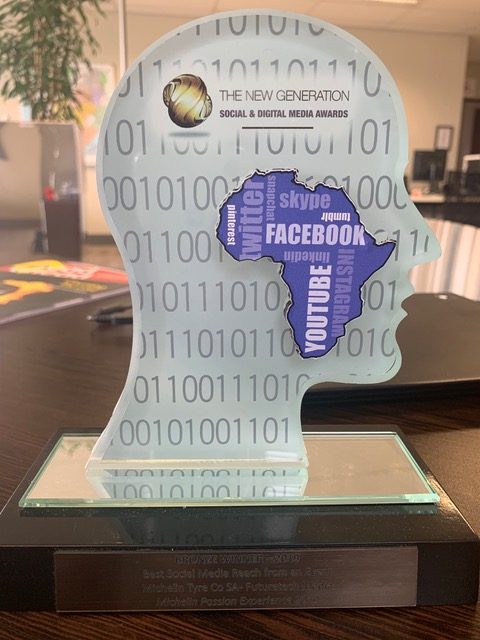
New Generation Social and Digital Media Awards Recognise Michelin Tyre

Michelin Tyre Company South Africa’s Passion Experience received a bronze award in the best social media reach category at the New Generation Social and Digital Media Awards.

The Michelin Passion Experience is a global campaign that completely immerses Michelin customers, influencers and journalists into the diverse and far reaching Michelin brand experience. Through this campaign, the brand’s passion for motorsport, mobility, travel and gastronomy is presented through various experiential activities. 

Speaking about the award, Marketing Director at Michelin Tyre Company South Africa, Shivani Pillay said, ‘We are extremeley proud to be recognised at the New Generational Social and Digital Media Awards for the excellence of the Michelin Passion Experience. It’s testament to the gravitas of the Michelin brand and the fantastic team behind the brand in South Africa.’

In South Africa, these activities started off at the Kyalami Grand Prix Circuit in Johannesburg, with local customers and influencers coming from the Middle East, India and South Africa. Guests were able to test a range of passenger supercars from Nissan, VW, Range Rover, Mercedes Benz and BMW, both with professional car racing drivers and on their own. At centre stage was Michelin’s Pilot Sport range of tyres and these were track tested in various environments and the experiences were shared across multiple social media platforms.

The event then went to Sun City Resort in Rustenburg for a gastronomic experience that included fine dining, an authentic South Africa shebeen lunch and an Afrikaans lunch experience. The guests did a Michelin Gastronomy Masterclass at the SA Culinary School in Johannesburg. The influencers also got to experience some of South Africa’s tourism offers with a game drive in Pilanesburg, a tour of the Cradle of Humankind, and a tour of the Culinan Mine. At each of these experiences, the guests were sharing their activities on social media, echoing the brand’s own curated content.

Pillay continued, ‘The event generated more than 38 million impressions on social media, overshooting targets by more than 300%. The overwhelmingly positive response from our customers, influencers and from the media was impressive and continues to sustain our brand communications.’

MICHELIN SOUTH AFRICA
michelin.co.za

Brands And Marketers Should Learn From The Single-Minded Focus Of The Gambling Industry

Jedd Cokayne, Business Unit Manager at The MediaShop.

Single-minded focus is key in an economy that is struggling and brands are fighting to be part of the consideration set. Marketers often overcomplicate the interaction they have with brands on different levels, which muddies the water for their consumers. This is according to Jedd Cokayne, Business Unit Manager at The MediaShop.

Certain segments have identified specific brand USP’s that have made them successful.  One such industry that has pinhole focus, knows what works for them and makes no excuses for what they do, is the gambling fraternity. They know exactly what works for them, they focus on the outcome and relentlessly pursue it with precision and determination.

And here we thought that vile coloured carpet used in the main lobby and gambling areas was a sick joke by the interior decorator. You might also have thought that the toilets being positioned in the belly of the beast and forcing you to pass all the amenities available just to get to them was a design flaw. All of this actually took plenty of thought to solicit a specific behaviour or outcome.

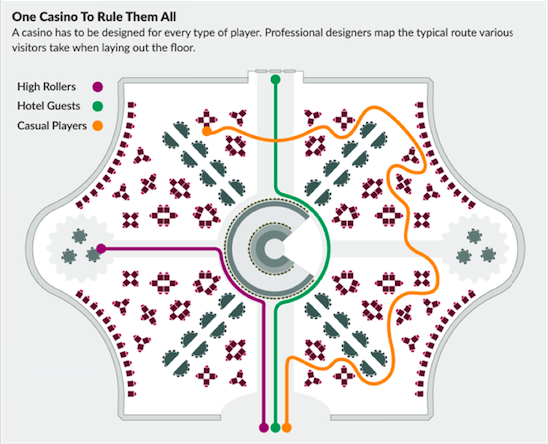
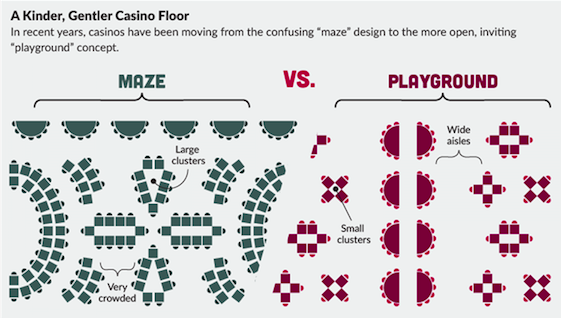
The secret life of a casino is designed to appeal to the thousands of guests and gamers visiting them each day; from the confused newcomer to a cash-laden ‘whale’ looking to play the high stakes tables for hours. By clearly segmenting their visitors and taking them into consideration, each casino is designed to accommodate all.

Let’s take a closer look.

Casinos deliberately don’t have clocks or any item that displays the time. They don’t have any windows and supply false lighting so that players lose track of time and continue to gamble through the night. They deliberately dull the senses to get a desired effect from the gamblers. This is very difficult to replicate in any other surrounding.

Casinos only offer drinks that are small with no form of stimulant to keep people gambling and ensure they don’t leave to go to the toilets. That’s why the toilets are placed in the belly of the beast. Another advantage is that smaller drinks are easier to clean up if spilt.

But what can brands do to ensure people interact with them over a longer period with no distractions and increase the likelihood of purchase? Gamblers are often rewarded at different times as it keeps them coming back for more. Loyalty packages and databases collected often drive repeat purchases on a more frequent basis.

Previously, I mentioned those vile and most gaudiest carpets known to man. Believe it or not, those brightly coloured carpets with wild swirling patterns and designs are purposefully put there to keep players alert and happy, encouraging them to play more.

Casinos are a symphony of non-stop sounds, lights and colours. These all boost the player’s mood, making them more excited about the thought of winning and leading them to spend more.

Standard services like toilets, food, cashiers etc. are all strategically located deep within the casino. This is strategically done so that when the players want to leave the casino and have visited one or more of the above amenities, they have to pass the gambling areas once again and potentially lose some more money.

Players are often lulled into a false sense of control as some games allow them to throw the dice, choose their own cards and pick random numbers. This illusion fools gamblers into thinking they have a higher chance of winning because of their interaction and thus results in them gambling longer and spending more.

As we can see, there is a lot of thought that goes into your plain casino, something we in marketing need to consider the next time we look at how our consumers interact with our brands and ultimately what the desired result is that we want from that interaction.

THE MEDIASHOP
+27112584000 
www.mediashop.co.za
This is Modern Marketing