Home Blog Page 376

PI Printers Meets Branding Demands Quicker With CMT Factory Partnership

PI Printers Showcasing Branding Solutions At The Modern Marketing Expo

Branding products company Personalised Image Printers (PI Printers) has amalgamated with a powerhouse CMT Factory to offer faster turn around times and limitless options.

Linda Fenton of PI Printers commented on the partnership, ‘At PI Printers, we have strived to become a one-stop print shop. We have every printing method available to our clients and now with the CMT Factory on-site, if the client cannot find the specific product their client wants, we can now brand and make it to spec, all under one roof.’

‘This allows clients to not be forced into the generic box and lets their clients choose exactly what they want. This also helps the South African economy as everything is then locally made here in Johannesburg, giving PI Printers the opportunity to create more jobs for the local workforce,’ concluded Fenton.

PI Printers’ branding options include, but are not limited, to:
– Direct to fabric printing on cotton and polyester.
– Cotton and polyester dye sublimation.
– Silk screen printing.
– Posters.
– Canvases.
– Banners.
– Heat transfers.
– Flocking.
– Stickers/labels.
– Full-colour printing.
– Button badges – cut, make and trim.
– Finishing/packaging.
– Rubber stamps.

PI PRINTERS 
sales@piprinters.com
www.piprinters.com

M&C Saatchi Abel Johannesburg Appoints New Executive Creative Director

Neo Mashigo - Group Chief Creative Officer of M&C Saatchi Abel and James Cloete - newly appointed Executive Creative Director at M&C Saatchi Abel.

M&C Saatchi Abel announced the appointment of James Cloete as Executive Creative Director with a strategic handle on the Standard Bank account. He will form part of the M&C Saatchi Abel Johannesburg leadership team with Neo Mashigo – Group Chief Creative Officer, Johannesburg; managing partner Faheem Chaudhry and Makosha Maja-Rasethaba, Johannesburg Head of Strategy.

Cloete has worked across multiple brands including Coca-Cola, MTN, SABC, ABSA, Old Mutual, Cell C, MTN, Tiger Brands, Toyota and Nampak, among many others. Because of the scale of the business, the agency is strategically marrying talent with specific clients. Cloete adds firepower to the Johannesburg team, supporting Johannesburg-based Partner and Creative Director Adam Weber, who will be able to hone in creatively on specific clients.

Cloete said that M&C Saatchi Abel is experiencing very strong growth, which is the result of the agency investing in the top talent in the industry. ‘It is very empowering to know that you are surrounded by excellence with everything you do, and so I’m very excited about the next phase of my career at M&C Saatchi Abel.’

Mashigo said that Cloete, awarded both locally and internationally, is the perfect match for M&C Saatchi Abel. ‘Cloete has the experience and skill to work on large-scale clients such as Standard Bank. Having worked with him before, I have always loved his sharp mind, his work, his energy and his ability to perform under pressure. He’s a perfect fit. He is innovative and creative in how he approaches problems and comes up with solutions. We look forward to a very successful relationship resulting in relevant and inspiring work.’

Cloete has been awarded at Cannes, D&AD, One Show, Clios, The Loerie Awards, The Eagles and The Pendorings. He has also been invited to judge at various shows, both locally and abroad, including Cannes, The New York Festival and The Loerie Awards.

M&C SAATCHI ABEL 
+27112686388 
jerry.mpufane@mcsaatchiabel.co.za
www.mcsaatchiabel.co.za

Smollan And DYDX Collaborate For Retail Innovation

The combined informal market represents 35% of all retail sales in SA. This market, however, is notoriously difficult for brands, as the unstructured distribution channels mean very little effective data can be gathered. Smollan and DYDX collaborated to deliver an innovative solution for the informal market that could both change how FMCG products are sold and reduce the use of single-use plastics.

Due to low levels of affordability, brands have resorted to smaller packaged units to reach this market, mostly single-use plastics. This has created a gap between affordability for customers and brands’ responsibility to the environment.

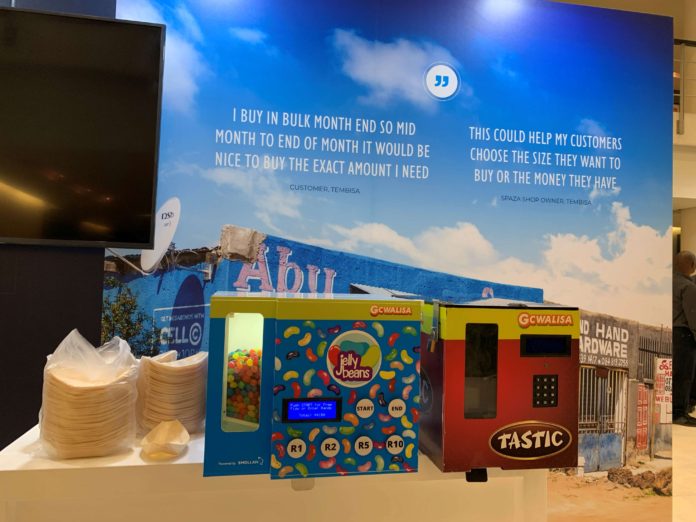
The Gcwalisa dispensers, created by Smollan and DYDX, allow customers to purchase food and home care products in values from as little as R1. Spaza owners can provide the amount requested by customers quickly, thanks to onboard computers with IoT sensors measuring volume while dispensing. Goods are dispensed into reusable containers, allowing brands to deliver bulk into the informal channel and for the shop-owners to distribute in micro sizes without single-use plastics. 

This takes significant costs out of the channel and creates new opportunities for consumers to purchase their preferred brands, even at very low volumes. The dispensers are connected IoT devices, providing brands with detailed sales data from each shop, giving data granularity and insight that could revolutionise distribution, understanding of buying patterns and price points.

Using a structured design thinking and innovation process, the joint team, headed by Rudi Nienaber, Innovation Executive at Smollan, supported by DYDX, created a new way to sell products through the informal channels. ‘Innovation requires asking different questions and lots of on-the-ground research and prototyping. Our starting point was to turn products into services, which led to a series of new ideas, of which Gcwalisa was the best one.’

‘We know that people have real affordability challenges, and price is often linked to distribution constraints of minimum-sized packaging. We wanted to change how the pricing worked, allowing people to purchase FMCG products like they do airtime. Another key factor is a positive social impact. By eradicating single-use plastic and packaging, we not only save brands and consumers money but also benefit the environment, which is critical. With major brands looking to reduce plastic usage but not impact sales this approach makes perfect sense,’ said Mike Smollan, Chief Growth & Innovation Officer at Smollan.

Revealed at Smollan’s Inspire Evolve event, the project already has interest from a number of brands. ‘Distribution into informal markets is not a ‘one size fits all’ approach. While we can re-use the technology and approach, we are working with brands to understand both the unique dynamics of their market and the technical properties of their products to optimise the solution for them,’ said Nevo Hadas, managing partner at DYDX. 

DYDX DIGITAL
info@dydx.digital
dydx.digital
SMOLLAN
smollan.com

Audi SA Hosts Purpose-Driven Marketing Roundtable Discussion

Delegates at the Audi SA Purpose-Driven Marketing Roundtable Discussion.

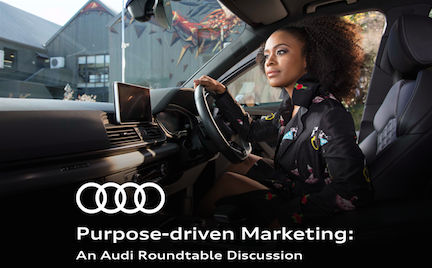
Modern Marketing attended an event hosted by Audi South Africa at their Sandton premises on 17 October. The interactive roundtable discussion on the topic of Purpose-Driven Marketing focused on how brands can cut through the clutter by strategically developing a story that successfully reaches audiences.

Trevor Hill, Head of Audi South Africa introduced the reimagined, purpose-driven marketing Audi brand and gave a brief history thereof.

Asif Hoosen, Head of Marketing, Product and PR at Audi South Africa said, ‘At Audi, our purpose is to drive progress – a direct translation of our Vorsprung brand claim. We aim to drive progress and advancement not just in terms of technology that is offered within our vehicles but to encourage personal growth and personal freedom.’ 

Some of the influencers at the discussion, including David Tshabalala, Thickleeyonce (Lesego Lekgobane) and Rabia Ghoor, gave brief feedback on the campaigns they’ve worked on for Audi. Watch their videos below:

In essence, Audi SA’s impact is embodied in the messaging created to resonate with South Africans’ progressive values through local stories that will leave a meaningful impact on consumers.

AUDI SOUTH AFRICA
audi.co.za

Effective Digital Marketing Strategies That Increase Brand Awareness

Gilbert Kumpukwe, Senior Campaign Manager at Version Eight.

Gilbert Kumpukwe, Senior Campaign Manager at Version Eight, focused on achieving business growth through effective digital branding and marketing strategies at the #ModernmarketingTrendCamp. This article highlights key takeaways from his presentation.

Key digital marketing strategies for 2019/20:

The marketing rule of seven: it takes about six to seven times for some people to see your brand’s advert before they take action. People do not know your brand as well as you think they do, so you need to get people to recognise it and build trust between them and your brand. You’re more likely to get customers to engage with you after you’ve gained their trust and can proceed to a transactional level.

Facebook ads are a good place to drive your brand, even though the platform has become a pay-to-play platform – they want to show less of the business pages as they might annoy people who are just there for social reasons. There is also an option of Facebook Messenger and chatbots. 

A game changer disrupting SEO in 2019 is Voice Search – a voice query made by someone on their device on Google, Alexia, Siri and so forth – do take advantage of this trend. 

Chatbots – automated assistants that are used not only for conversation but also lead capture and/or qualification of leads for businesses. This can also fall under Conversational marketing and can include Facebook chatbots, website chatbots and the like.

Micro-influencers: there was a great increase in popularity of this in 2018 and this still continues in 2019 because influencers have earned a level of trust and can persuade people into purchasing. However, people have also become wary of these so-called paid influencers so the race to authenticity is what’s important now. 

One of the main trends I presented on that falls under Content Marketing is Live Video. Whether you’re on Youtube, Facebook, Instagram and now, LinkedIn, video has become one of the most attention-grabbing and engaging pieces of content. If you go live, people can engage with your content as it’s happening and the platforms mentioned above notify your followers when you are live so you get maximum reach and engagement. A live experience is much more valuable to people than a pre-recorded video. Live videos can be used for both business to business or business to consumer marketing.

Highlights from Kumpukwe’s talk at the #ModernmarketingTrendCamp:

VERSION EIGHT 
+27100353794  
info@v8media.co.za
v8media.co.za

MODERN MARKETING EXPO 
+27114501650  
info@modernmarketing.co.za
www.modernmarketingexpo.co.za

Think Creative Africa And Pink Ribbon Hosting Breast Cancer Awareness Event With A Difference

October is Cancer awareness month and Think Creative Africa along with Pink Ribbon are hosting their second annual breast cancer event on 26 October 2019. This aims to educate women about the importance of self-examinations to help detect breast cancer at an early stage.

Feel, dance, learn, play and feel again. ‘The Feel Party’ combines play, poetry and music to bring breast cancer awareness to the fore during October. The campaign is designed to connect with women in an authentic way that doesn’t intimidate or alienate.

Nkgabiseng Motau, founding partner at Think Creative Africa said, ‘Oftentimes breast cancer awareness comes with a great deal of trepidation for most women but ‘The Feel Party’ wanted to talk about breast cancer awareness in a way that could be understood and enjoyed.’

She said that there are a lot of feelings associated with breast cancer but sometimes it feels like women have no safe spaces to feel those feelings. ‘The tone of conversations must change from frightening to approachable. This is a fun campaign. The logo, for instance, is an ode to varying types of boobs. Current awareness that exists around breast cancer is devoid of the kind of cultural nuance that we believe can influence action. We want women to examine their breasts regularly and through our campaign, which encompasses several touchpoints, we want to encourage behavioural change,’ Motau added.

Email Feel@ThinkCreativeAfrica.com to book your free spot, limited spots available. 

THINK CREATIVE AFRICA
+27113261799
info@thinkcreativeafrica.com
www.thinkcreativeafrica.co.za

Ways To Increase Sales And Reduce Online Shopping Cart Abandonment

Derek Cikes, Commercial Director at Payflex, says reducing friction in the checkout process is key to reducing cart abandonment. A simple checkout process will result in significantly higher sales for eCommerce merchants.

Reducing cart abandonment is critical to increasing sales and revenue when it comes to eCommerce. The industry norm for abandoned carts is an astonishing 75-80%, which means that merchants are losing 4 out of every 5 sales due to poor checkout conversion – this is after the customer has gone through the mental gymnastics to make the decision to purchase the selected items in the first place.

Six core strategies to reduce cart abandonment:

1. Use a 1-click checkout solution

Create a frictionless experience to reduce the number of steps to complete a card payment transaction. From entering card information details to completing the 3D secure mobile phone process, each step is a point of friction that can (and often does) go wrong, leading to an abandoned cart. 

Amazon’s 1-click checkout function was a game changer to reduce friction in the payment process. This feature dramatically increases sales conversions by facilitating a seamless shopping experience. Customers enter their card information just once. The details are then safely stored for future transactions and can be accessed any time through a ‘1-click’ checkout.

2. Communicate delivery costs

Shipping costs is one of the biggest grudge payments when it comes to online shopping and is a key reason for cart abandonment. Being upfront about delivery charges manages shopper expectations, so they’re not surprised by a higher than expected cost during the checkout process. Better yet, offer free delivery wherever possible to improve conversion.

3. Choose a flexible payment solution

Reduce the number of payment offerings at the checkout by choosing a flexible, customer-centric payment solution that incorporates a 1-click payment solution and offers shoppers a choice of payment options. It’s also critical that your payment provider offers top-notch customer service to solve any issues timeously as well as a stable and proven platform, so you don’t lose any of those hard-won sales.

4. Hold your shopper’s attention

Use a progress indicator on your site to show the three steps of the checkout process, namely shipping, payment and order. This keeps your shopper involved and provides a clear path to completing the order.

5. Nurture trust and security

Many shoppers still have trust issues when asked to supply sensitive financial information, such as card details, to complete a purchase. Remind the customer of your security and data privacy protections to encourage completion of the sale and display trust symbols of well-known security partners such as Norton or VeriSign on your website to improve trust.

6. Understand impediments to checkout completion

Regularly review the checkout process to identify obstacles that are causing abandoned carts – and remove the obstacles to create a frictionless checkout experience. Optimise navigation and provide clear calls to action, such as ‘Buy Now (with one click)’, to increase sales.

A relentless focus on creating a frictionless customer journey, including a simple customer-centric payment solution offering, will significantly reduce abandoned carts and increase sales.

PAYFLEX
+27104440004
support@payflex.co.za
payflex.co.za

Acer’s Predator Gaming Brand Gets Maximum Exposure With Rocket Creative’s Unique Expo Stand

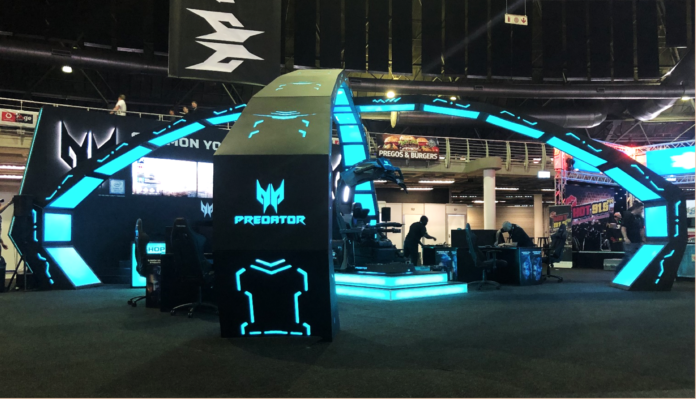
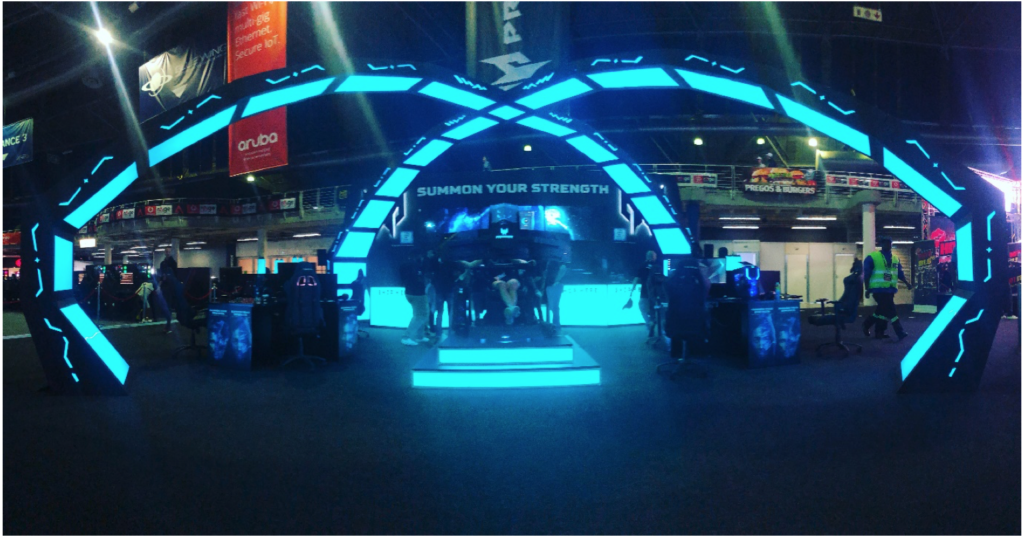
Working with a global brand that owns such an aggressive and iconic visual identity allowed the Rocket Creative design team to stretch their imagination to the extreme, both structurally and aesthetically. The team created an ultra-innovative and spectacularly trendsetting exhibition stand for Acer’s Predator Gaming brand at the 2019 rAge Festival.

The stand was built over three days at the Ticket Pro Dome, where it received an overwhelming response from show visitors and industry insiders alike. The stand was inundated with visitors throughout the show, and the Predator brand achieved phenomenal consumer engagement and industry exposure – as intended.   

Rocket Creative’s Managing Director and creative head, Richard Nilson, said, ‘The Predator visual identity is defined by their hard-core gaming tech and uncompromising industrial design aesthetics. This aesthetic is best reflected in their remarkable Thronos Gaming Chair, and our radical structural concept mimicked the same design, albeit in a colossal format.’  

‘Four massive scorpion-like metal arms spanned 9.6m square and reached the show limit of 4m high. Into the structure, we installed a mass of programmable RGB LED’s, and then added illuminated sales and gaming counters, as well as a giant rear wall with TV’s synced to deliver what was being played on the Thronos. It was challenging to determine how we would deliver on the daring concept, but we managed to achieve the impossible with a team of incredibly talented, dedicated craftsmen and women. The result was a jaw-dropping, pulsing, industrial sculpture-like structure that delivered a high-tech, ultra-interactive environment,’ he concluded.

ROCKET CREATIVE
+27112624698
hello@rocketcreative.co.za
www.rocketcreative.co.za

Becoming A Challenger Brand Is A State Of Mind

Adam Morgan, founder and partner of eatbigfish.

Adam Morgan, founder and partner of eatbigfish, explains that a challenger brand is defined, primarily, by a mindset – it has business ambitions bigger than its conventional resources, and is prepared to do something bold, usually against the existing conventions or codes of the category, to break through.

There are many categories in the African continent that are dominated by large legacy businesses. It’s not just that these brand leaders are bigger and enjoy proportionately greater benefits; it’s that the superiority of their advantage increases almost exponentially, the larger they get.

But, despite an environment of scarce resources and ongoing threats of international competition, there are advantages to being a challenger in Africa. You don’t have to be all things to all people. You can choose a place to stand and something to believe in. And if some choose to navigate by you, and others choose to sail right on by, well, so be it; the one thing we don’t want to be is what Wal-Mart calls ‘the mush in the middle’. To be just another second-rank brand is to put yourself into the mouth of the big fish and wait for its jaws to close.

Being a challenger is not about a state of the market; being number two or three or four doesn’t in itself make you a challenger. A challenger is, above all, a state of mind. It is a brand, and a group of people behind that brand, whose business ambitions exceed its conventional marketing resources, and, in consequence, it needs to change the category decision-making criteria in its favour, to close the implications of that gap.

If we want or need to think like a challenger, there are some core principles for us to live and thrive by. These principles have been captured in the Challenger Strategic Approach:

  1. Embrace intelligent naivety.
  2. Build a lighthouse identity.
  3. Become a thought leader.
  4. Create a symbol of re-evaluation.
  5. Sacrifice.
  6. Overcommit.
  7. Enter popular culture.
  8. Become ideas-centred.

This is such an important concept for African business. It enables us to channel our larger-than-life ambitions together with our ingenuity and people-first mindset to create African solutions to African problems.

There are three fundamental criteria for a challenger brand:

1. State of market: challengers are by definition not the number one brands, nor are they niche.

2. State of mind: this is what really characterises challenger brands – being number two (or number six or eighteen) is at some level simply an accident of birth.

Challenger brands have a mind-set that encompass two key differentiators: ambitions that exceed their conventional marketing resources, and a preparedness to accept the marketing implications of the gap between their ambition and their marketing resource.

The latter is an important distinction — ambition in a marketing plan is not enough; being smaller and hopeful, without preparedness to behave in whatever way is necessary to fulfil that ambition will lead to nothing but being small and disappointed.

3. Rate of success

Challenger brands enjoy significant and sustained growth through their marketing actions. This is not to say that they are still and always growing, but that there is a period of their life from which to learn from.

Conversely, there are some leaders who still profess to deliberately adopt a ‘challenger mindset’, even after becoming market leaders.

Challenger behaviour is not confined to the new or the small. Regardless of category, competition, heritage or personality, all brands can benefit from adopting a Challenger mindset to drive more ambitious growth and make the impact they desire.

EATBIGFISH  
+27714838514
helloafrica@theatbigfish.com
eatbigfish.com

Audio Marketing Strategies To Consider

Wayne Flemming, Founder and Managing Partner at Brandtruth//DGTL.

Wayne Flemming, founder and managing partner at Brandtruth//DGTL, says that in our digital world, video has once again become the star and is great when you’re at home watching YouTube content on your iPad or scrolling through IGTV on your phone. Where does audio fit into this visually saturated world of marketing?

Images help to tell a story when you are reading an article online or stops your thumb when you’re scrolling through social media. In both cases, your eyes are locked on the screen. Audio is different. People wake up to a tune, get ready for work while listening to the news, drive or commute to work while listening to podcasts, exercise to the rhythm of music and relax and unwind to audiobooks.

We respond to sound much quicker – even faster than touch and a picture. And If a picture is worth a thousand words, where does audio fit into this visually saturated world of marketing? The answer is ‘everywhere’, even places where video and pictures can’t reach.

‘Audio as a medium will grow, and as it grows, it will give rise to ‘earfluence’,’ said Jennifer Kavanagh, Senior Vice President of Marketing and Media at the Philadelphia Eagles. People spend more time listening instead of watching because it’s more convenient. Audio is always on.

Not only that, audio has a strong link to emotion. Neuroscience studies have shown that audio stimuli and emotional responses are encoded together in the auditory cortex centre of the brain, meaning the subsequent exposure to a sound will trigger the same emotional responses.

Sound can express a brand’s values and beliefs in an emotionally direct way, which is why a brand’s sonic signature is so important – it is the audio equivalent of their name. From smart speakers to connected cars, the audio content sphere is booming. According to Edison Research, podcasting has been on a steady rise since 2006, growing by an impressive 300%. Juniper Research predicts that by 2022, Americans’ use of voice-assistant-enabled devices across smartphones, tablets, PCs, speakers, TVs, and cars will increase by 95%.

So, what are some of the elements to consider for your sonic brand strategy?

First up, remember that there’s more to audio branding than a single jingle. Every sound that plays during a customer’s experience with your brand, is an element of audio branding. From the music you play in a physical store to the theme track on your TV commercial, to the short notification sound that pops up on your app and the call centre experience — you need a consistent approach to audio branding.

Secondly, remember that sounds make us think and feel a certain way. It’s a highly emotive sense. While some sonic signatures are romantic and seductive, others are fun and carefree. Do you want to be dramatic and exciting? Gentle and welcoming? Fun and family-friendly? Make sure your audio matches your brand identity.

Thirdly, your brand voice is a critical part of your identity – the way you sound is part of what makes you unique. While you can convey aspects of your voice through your content marketing and visual media, you’ll need to also ensure that your tone is reflected in your audio branding.

Here are some current and future audio advertising opportunities to consider:

1. Podcasting

Findings from the IAB and Edison Research indicates that 65% of podcast listeners are more inclined to consider making a purchase of a product or service that was promoted via audio. According to Spotify South Africa, 42 percent of 18-34 year-olds listen to podcasts at least once a week, and the percentage is even greater for parts of the next generation (aged 12-17). Spotify also highlights that 35% of South Africans listen to podcasts: 88% do so at home, and 20% listen while they are on the move. 

2. Programmatic audio

The decline in the popularity of traditional radio has made way for online and digital-radio broadcasting. Programmatic audio uses technology to automate the selling and insertion of ads into digital audio content, delivering targeted campaigns in a brand-safe environment.

3. Voice search optimisation

Ever considered using an audio version of Google Adwords? You should! Smart speakers like Google Home and Amazon’s Alexa are not only used for listening, but also for shopping and research. Brands will need to learn to optimise their product pages on search engines to rank as the best answer for voice searches.

4. Voice-enabled advertising

Voice-enabled ads take a voice command from the customer and act on the ad by saying something like ‘Order Now’ or ‘Play Now’ to perform that required call to action. Previously, Google Express (now Google Shopping), was the only option for this service, but earlier this year Spotify launched voice-enabled ads on mobile devices in a limited US test and Pandora confirmed it would begin testing interactive voice ads later in 2019.

5. Connected cars

Brands should start investigating the potential marketing opportunities presented by connected cars and autonomous vehicles. Long-form content will work really well in this environment – as long as it adds value.

6. Streaming services

Although some streaming services are ad-free, there are a number that are rapidly growing their ad-support. From music to video services, there are various ways to connect with audiences through digital audio adverts. As these services become more technologically advanced, they can deliver personalised ads based on the available data points. In today’s world, where we can geo-target audio messaging to coincide with Out-of-Home advertising, brands have the opportunity to create some truly remarkable multichannel audio experiences.

Ultimately, audio branding isn’t just a great way to get people to remember your brand; it’s also a fantastic way to improve the way they feel about your brand. Remember, it’s the consumer that decides who they want to listen to. Your job is to turn up the audio.


BRANDTRUTH//DGTL
+27(0) 87 897 5635
hello@brandtruth.co
brandtruth.co
This is Modern Marketing