

Home Blog Page 365

PR Is A Powerful Marketing Tool

Judith Middleton, CEO of DUO Marketing and Communications.

Judith Middleton, CEO of DUO Marketing + Communications, says that for those planning their marketing tactics with the next generation in mind, both Generation Y (millennials) and Z trust editorial content (68% of respondents in both cases) and view earned content as their fourth and third most trusted advertising format respectively. 

In a recent online marketing survey, one of the questions asked was which sources of information respondents trust the most when they’re in the market for a new technology solution. The multiple-choice options included online articles; information on the company website; social media posts, recommendations from peers, friends and family as well as videos.

Online articles is an interesting choice. How can B2B technology companies secure online articles and why would readers trust the articles they read? To answer the first question, the company will most likely use a PR agency to secure online editorial coverage or earned media. If not, it will pay for the article to be published by a credible news site, also known as native or paid content.

To answer the second question, we need to take a closer look at the content people trust. The most recent Nielsen Global Trust in Advertising Survey found that 66% of respondents trust earned editorial content, such as online and print articles. This percentage is even higher (71%) for respondents from Africa and the Middle East. In our region, respondents only have more trust in brand sponsorship, brand websites and recommendations from people they know than editorial content.

Trust is earned

It goes without saying that trust and action go hand-in-hand, but trust isn’t always a prerequisite for purchasing a product or a solution. Some advertising, particularly online and mobile formats, make it easy for people to take action and make a purchase. They click on a link, are directed to a landing page or website, find the information they’re after and make a purchasing decision. However, when it comes to a technology solution or service, the ‘why’ isn’t always that clear from the first engagement with a brand – why is this solution better than another, why must I do business with this particular company and why must I trust this company with my cloud migration, digital transformation implementation or modernisation project?

The Nielsen survey found that trust exceeds action in only one format of advertising and that is with earned editorial content, such as online and print articles. 66% of respondents trust editorial as an advertising format, with 63% who take action based on that trust.

Increase PR’s return on investment

This is where PR comes in and why it is such a powerful tool in your marketing arsenal. When PR forms part of a holistic marketing strategy the trust, credibility and brand awareness it builds can be extended quickly, widely and effectively across earned, owned and shared media. This proven tool is especially valuable when competing for audiences’ attention across screens and platforms in an increasingly cluttered content landscape.

Here are some tactics to increase PR’s ROI:
• Share the editorial content generated through an amplification strategy across the company’s social media platforms, linking back to the original stories on third-party media sites.
• For added credibility, ensure that created editorial content is published to the respective company spokesperson’s individual LinkedIn profile.
• Share suggested social media posts internally with employees and encourage them to make it their own as part of an employee advocacy programme.
• Add synopses of the news articles to your website’s news page with a link to the original story and a logo of the media platform.
• Repurpose the PR content into short articles of no more than 300 words for the company’s blog to support SEO. Also use the time with the spokesperson to create a podcast or a short vox pop video off the back of a content briefing to share on the website and across social media channels.

Extend the trust

The aim is to make the most of the PR content generated. This is where a niche B2B agency that specialises in PR, marketing and digital amplification can deliver all of the above and more. Such a partner understands the industry and how to translate a business’s value simply and effectively. It has the ability to be more nimble in an evolving PR market, and offers clients scalable, focused and flexible models of service that delivers impactful PR, with a high return on investment. Technology brands should expect nothing less from their PR and marketing partner.

This means PR has earned its rightful place in a well-thought-out marketing strategy and has an important role to fulfill when it comes to building trust, now and in the future.

Read the top 5 stories weekly on WhatsApp or sign up to our newsletter.
DUO MARKETING  
+27101403720
contact@duomarketing.co.za
duomarketing.co.za

Keeping Up With New Loyalty Programme Channels

Image source: www.eighty20.co.za

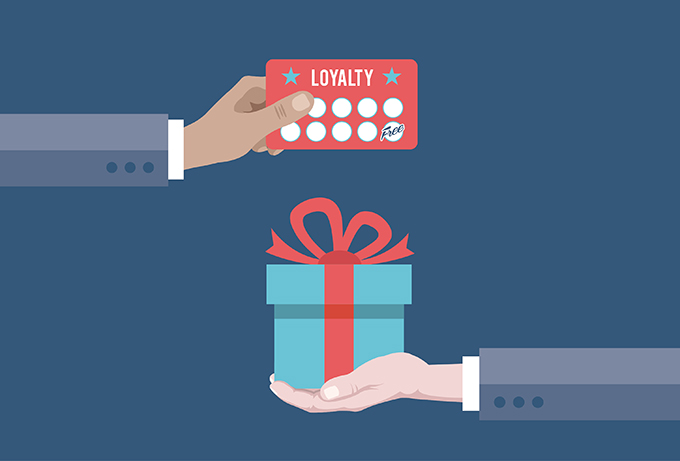
Are loyalty programmes still relevant and effective in the retail sector? Andrew Weinberg, CEO of Retail Engage, discusses the new channels of loyalty programmes and how they are run.

In short – yes, the programmes are still relevant and effective. However, the mechanics and channels of how loyalty programmes are run and who they even target has most certainly changed over recent years. In the retail landscape specifically, a number of external factors and developments have transformed this landscape. Some of these factors include the increased access to information via cellular phones, as well as the overall major advancements in technology to capture and mine data.

Not only have marketeers seen a shift in consumer behaviour and buying patterns within the retail space, but even the focus of efforts by retailers and brands of who they should be targeting to see growth in a depressed economy has changed. 

54% of the SA population falls between LSMs 3 – 6 with there being an estimated 13 million shoppers in the independent and informal retail sector. These consumers are not traditional, bottom-end or emerging, they make up the ‘main’ market of South Africa. Previously, it was the higher LSMs of eight to ten bracket that was targeted by brands through loyalty programmes and other advertising and marketing touch points, with 70% of spend being focused on this elite and yet smaller audience. 

South Africa’s main market (commonly also referred to as the ‘mass market’) didn’t even feature, with over 81% of households not being proactively engaged with. Fortunately in recent years we have seen first-hand how this approach and strategies by brands has changed through the introduction of loyalty programmes like bonsella®, that successfully targets 10 million shoppers and consumers in the independent ‘main market’ sector in South Africa. 

Technology has proven to be key to connect with this audience effectively by meeting the needs of the consumers to want to participate and engage with loyalty programmes, while still providing retailers and brands with access to valuable consumer insights. These are critical to brand decision making and driving market share and sales.

A report released by GSMA Intelligence and authored by Jan Stryiak and Mayuran Sivakumaran earlier this year revealed that at the end of 2018, 5.1 billion people around the world subscribed to mobile services, which accounts for 67% of the global population. Furthermore, the report revealed that of the 710 million people expected to subscribe to mobile services for the first time over the next seven years, half will come from the Asia Pacific region and just under a quarter will come from Sub-Saharan Africa.

Every cent matters to the main market, so loyalty programmes need to meet the consumers’ needs of doing their regular shopping while saving money on their monthly airtime spend. There is great success in rewarding shoppers with instant airtime to their mobile phones for products on promotion in-store. Participating stores realise increased sales revenue and increases in average basket size and foot traffic, while brands achieve a significant increase in product sales per campaign.

Not only do I believe that loyalty programmes still have an important role in helping brands realise growth in market share and sales under conditions of severe economic pressure; but loyalty programmes that deliver instant rewards to consumers and leverage on the developments of technology are THE solution to bringing value, experience, trust and connection between brands, retailers and consumers in the main market space. Not just across Africa, but globally.

Read the top 5 stories weekly on WhatsApp or sign up to our newsletter.

RETAIL ENGAGE
+27873102881
info@retailengage.co.za
bonsella.com

How Marketers Can Forge Human Connections In The Digital Age

According to Jos Caelers, CEO of Engagement Factory, consumers don’t like hearing your adverts, so they stream music. They don’t like seeing commercials, so they get Netflix. And let’s not even address the adblocker you’re probably using right now.

We as marketers and businesses are losing control over our marketing materials, and as a result, traditional marketing strategies are losing power. Cars are starting to drive themselves, augmented reality is introducing innovation – as well as Pokemon – into our homes, and Japan has plans to build a robotic moon base by the end of the year. With everything changing so fast, it shouldn’t surprise you that the way we talk about, market and promote our businesses is changing too.

No one cares about your marketing. The evidence for this is everywhere. It’s clearly time for a shift in how we think. Maybe we shouldn’t be marketing at all, at least how it currently stands. This radical notion is something we have been proposing for a while now, and as consumers continue to get more power over what content they view, it’s starting to become a fact.

No sane person would hang around another who was obsessed with control and power, and likewise, no consumer will begin a relationship with a company that takes the same approach. However, the problem comes in where we as businesses know little to nothing about the people we’re trying to build a relationship with. The ‘but we hardly know each other’ line is never more valid and prominent in the world of digital marketing, and the results are often too similar in professional and social relationships.

Too many businesses have excel sheets of data detailing every piece of information that makes up the person in question, but continue to address them with a one-size-fits-all robotic approach. Your company doesn’t need more information – your company needs insights. Data, processes and analytic tools are still important, but they’re only insightful so long as they’re used to create a human connection.

They describe this process of taking data and analytics to inform our marketing decisions for the purpose of relationship building as ‘programmatic marketing’. Think of it as forging human connections in the digital age without the creepy effects of over-personalisation. Here’s how it works.

Tell a story

Storytelling is in our genes. It’s how we taught others about dangerous predators, tempting vices and the moral fabric that has kept our society going. Essentially, storytelling is the best way to bridge the gap between data and those who need to learn something from it.

These days, the channels and mediums have changed, but the soul of the narrative has remained. As marketers, we should also be storytellers. It’s our responsibility to tell a story to the audience and use data to back up our narrative.

Personal stories work best. That’s why the gaming industry has earned more than the film, book and music industry combined for the past 10 years, because each game is a personal experience to the player, rather than just content they consume. So how do you make your story a personalised experience for thousands of leads? That’s exactly what programmatic marketing does.

By tailoring a narrative around the needs and wants of each specific audience, programmatic marketing manages the customer journey to a point where the customer and the business are an ideal match. Your business is not the only choice, but the preferred choice of the customer as it fits into their narrative.

Align your tools towards experience, not numbers

Channel-flooding and traditional campaign-focused advertising is a quick way to alienate and teach your customers to hate you – and for good reason. If you’re not prepared to speak your customer’s language, why should they be prepared to pay you?

How the customer experiences your brand is relative to how the customer contributes to your bottom line, and the best part is using programmatic marketing works no matter your industry, size or budget.

Restructuring your tools and processes can be challenging, but earning the trust back from your customers is even more so. Thus, restructuring is a necessary step towards creating an environment where the customer experience is not a tacked-on feature, but a priority. By changing your focus and repurposing your company’s tools, you’ll not only be able to create a personalised narrative experience for your current customers, but for your future customers as well.

Listen, measure and react

Relationships are about work and the same holds true for relationship-marketing. Listening to your customers is important, but there’s a problem: many customers don’t exactly mean what they say. As Steve Jobs said, ‘people don’t know what they want until you show it to them’, and the best way to find out what they want is through measuring their experience.

Today, we have thousands of metrics and data to point us in the right direction when looking to remedy or optimise our customer approach. Finding those points where customers lose interest, stray from an expected outcome or simply fall off the radar is what will help you create the best kind of engagement without damaging the narrative. The second your customers are able to see the numbers, is the second where the narrative dissolves.

Jobs also said, ‘Get closer than ever to your customers. So close that you tell them what they need before they realise it themselves.’ With programmatic marketing, this is now more achievable than ever before.

Learn more

So maybe we, as marketers, have been thinking about marketing the wrong way for a long time. Stop marketing, and start engaging. As we head into 2020 with new perspectives, thoughts and goals – take another look at how you market your company and how you approach your prospective customers. 

Read the top 5 stories weekly on WhatsApp or sign up to our newsletter.

ENGAGEMENT FACTORY
engagementfactory.com

SA Ad Agency CEO Joins New York Festival’s Advertising Awards Executive Jury

Respected chief creative officers and executive creative directors from the world’s most prominent advertising agencies will gather for four days of passionate and focused deliberations taking place in New York City from 31 March to 3 April to select the world’s best advertising. Ahmed Tilly, chief creative officer at FCB Joburg, will be among this group.

The 2020 executive jury will review the shortlisted entries selected by the online New York Festival (NYF) grand jury. ‘For 10 years, NYF has brought together an elite jury of global creatives with a reputation for innovation. We are beyond thrilled that these respected leaders will bring their attention to the 2020 New York Festivals Advertising Awards entries,’ said Ellen Smyth, CEO, New York Festivals.

‘NYF’s Executive Jury of respected creatives set the standard for award-winning work,’ said Scott Rose, executive director, New York Festivals Advertising Awards. ‘All entries achieving shortlist status will be judged by this panel of renowned industry leaders, ensuring that each entry is reviewed with meticulous care and consideration and with a global perspective.’

2020 executive jury to date:

• Executive Jury President Alexander Schill, global CCO & partner at Serviceplan Group, Germany.
• Rodolfo Borrell, President and Chief Creative Officer, Pagés BBDO, Dominican Republic.
• Nathalie Brown, VP, Executive Creative Director, VMLY&R, USA.
• Paul Chan, Chief Creative Officer, Cheil Hong Kong, Hong Kong.
• Juliana Cobb, Executive Creative Director, Droga, USA.
• Gaëtan du Peloux, Executive Creative Director, Marcel, France.
• Fede Garcia, Global Executive Creative Director, Huge, USA.
• Guido Heffels, Chief Creative Officer, HEIMAT, Germany.
• Genevieve Hoey, Group Executive Creative Director, R/GA, USA.
• Sheena Jeng, Chief Creative Officer, McCann Worldgroup, China.
• Simon Langley, Chief Creative Officer, Wunderman Thompson, Australia.
• Walid Kanaan, Chief Creative Officer, TBWA\RAAD, United Arab Emirates.
• Monica Moro, Chief Creative Officer, McCann, Spain.
• Piyush Pandey, Chief Creative Officer, Ogilvy, India.
• Kazoo (Hidekazu) Sato, Chief Creative Officer, TBWA\HAKUHODO, Japan.
• Jason Schragger, Chief Creative Officer, Saatchi & Saatchi, USA.
• Chaka Sobhani, Chief Creative Officer, Leo Burnett London, United Kingdom.
• Ahmed Tilly, Chief Creative Officer, FCB Joburg, South Africa.
• Tony Waissmann, Chief Creative Officer, Geometry, Argentina.
• Gerrit Zinke, Managing Director Creation/Partner, thjnk Hamburg Gmbh, Germany.

Read the top 5 stories weekly on WhatsApp or sign up to our newsletter.

NEW YORK FESTIVALS ADVERTISING AWARDS
nyfadvertisng.com

Geopoll Wins Best Mobile-Based Research Solutions Brand Award

The GeoPoll team with their award.

The Digital Tech Excellence awards have named Geopoll as the best mobile-based research solutions brand.

The Awards, held in Nairobi in December 2019, recognise brands in various sectors that have successfully adopted digital solutions in their day to day operations and by doing so, serve their clients more conveniently and have positively impacted their sectors.

The annual awards event had over 50 firms who have been most exemplary in their use of digital solutions in their industries. Commenting on the award, GeoPoll’s Regional Director for East Africa, John Paul Murunga said, ‘This award is a true testament of the confidence that our clients and the market at large have for GeoPoll. This is a team of young, talented and highly driven professionals and winning this accolade is a product of the concerted efforts of the entire GeoPoll team. As an organisation that has its foundation anchored on technology and innovation, GeoPoll will continue to provide agile and quality solutions that speak to the needs in the market.’

Read the top 5 stories weekly on WhatsApp or sign up to our newsletter.

GEOPOLL
www.geopoll.com

Five Publishing Trends For 2020

Image source: amnet-systems.com

According to the Publisher Research Council, readership research is in a period of disruption and will continue its road to transformation in 2020 with the role of measurement councils evolving. The International Publisher and Data Conference (IPDC) held in Lisbon in 2019 revealed that most markets are dealing with similar challenges, from cost cutting, to adapting samples and moving beyond Average Issue Readership.

With that in mind, it’s worth examining the top trends:

1. Publishers will put readers at the heart of the business strategy

It’s a fact that readers no longer read news from a couple of trusted sources. Advertisers started ‘chasing audiences at scale across the internet’, as The Guardian UK’s chief revenue officer, Hamish Nicklin, said. The venerable British newspaper in 2019 showed a small profit after a three-year plan to become sustainable by ‘putting the reader at the heart of everything’. Now over half its revenues comes from readers. As Nicklin said, ‘we’re definitely more of a digital business, and more of a reader-focused business.’

2. The future is hybrid

The overwhelming message at the IPDC was that the future is hybrid, using cross platform, cross media measurement in which print can remain valued by many, providing it coexists with publishers’ online efforts. Cross media audience measurement is a growing trend globally among publishers who ‘want to win back trust, both from audiences and commercial partners,’ as FIPP’s Piet van Niekerk points out.

3. Big data will deliver actionable insights… if analysed properly

Audience engagement and analytics researcher, Hanne Brasseur, from Brussel’s public service medium VRT NWS, believes data doesn’t mean anything until you analyse it. By having a ‘culture of data’ online analytics helps her newsroom make good editorial choices (in real time), take strategic decisions and grow loyal audiences.

4. Context is vital for advertising

Under-investment by advertisers in print and online news brands is a risk. Denise Turner, insight director of Newsworks in the UK, pointed out at the IPDC that research and analysis has demonstrated the importance of context and the quality of environment – it’s worth paying a bit more because you get much more effect. Although the quality environment was more expensive, it was 42% more cost effective.

5. Not all digital is equal

A study by Lumen in the UK showed that just because an ad is viewable, doesn’t mean it’s been viewed. Quality content delivers 2.6 times more attention to advertising. Lumen recommends that given that more relevant ads lead to greater attention, ads that are fit for purpose, and made for the platform they appear on with time invested in device-appropriate creatives, will be more viewable.

Read the top 5 stories weekly on WhatsApp or sign up to our newsletter.

PUBLISHER RESEARCH COUNCIL 
www.prc.za.com/pams

2020 Digital Signage Solutions Trends

According to Chris Day, Managing Director of Moving Tactics, the trends that they have predicted over the last few years have become the norm and they work exceedingly well. It is essential that the basic building blocks are in place on which to build a value-add system that has the capability to accommodate the digital signage solutions that will continue to shape the industry in the coming year.

Digital signage has become an accepted and necessary marketing and advertising channel across most industries, most notably in retail and Quick-Service Restaurant (QSR) outlets. What were previously digital signage technology trends have become core requirements for marketers wanting to engage with customers and build their brand. 

1. Get the basics right

Kevin Bierman, Head of Digital Signage at Moving Tactics, said ‘My best advice to clients would be to get the basics right, such as employing quality commercial grade screens and implementing System-on-Chip technology, which replaces the need for external media players. These are absolute musts.’

Firstly, quality commercial grade screens end up costing brands less in the long run as they are less likely to fail, use less power and are hardy enough to deal with load shedding and regular power cuts. These screens also automatically switch back on after a power failure so that your marketing and advertising content can continue unaffected.

Secondly, System-on-Chip (SOC) digital signage technology does away with using multiple pieces of equipment, resulting in a much more streamlined solution, while providing overall health of your digital signage assets. This technology makes it possible to pair normal digital signage with value-add features such as scheduling and day parting, amongst others.

2. Weather-based menu boards

Weather-based content for digital menu boards is becoming the norm for leading QSR brands. Weather-based digital menu boards will replace menu items being displayed based on the actual weather being experienced outside, in real time. So if it’s a cooler day, warmer and heartier foods will be promoted and displayed in place of frozen drinks and salads on the menu boards.

In addition, menu items promoted based on the time of day, also known as day-parting for breakfast and lunch, give customers more choice as well as more practical and relevant food options; and for the restauranteur, the pricing on menu boards can be linked directly to the point of sale system and updated in real time.

3. In-store music

Research has confirmed that consumers shop for longer, spend more money and have an enhanced shopping experience if they’re exposed to music. In this way, local and international retail and restaurant brands are installing in-store music and audio solutions to create a more engaging and brand-specific experience.

4. Staff training on digital screens

Early morning in-store training for staff has progressed with the latest technology advancements and can be scheduled in a similar way to promotional content. Staff training no longer needs to be done live or scheduled weeks ahead of time. With the latest technologies, staff are able to stream or download the most recent training that needs to be undertaken via the corporate network. Using the digital audio and visual network in-store, makes training as easy as 1, 2, 3.

5. Refresh your network

Technology is ever-evolving and a digital signage network should be refreshed every three years to keep equipment compatible with the latest software. Obsolete equipment often negates the time and effort put into creating content to promote products and services. We do, however, understand that refreshing a network can be a costly exercise. It’s for this reason that we recommend rental finance options with financial flexibility.

Read the top 5 stories weekly on WhatsApp or sign up to our newsletter.

MOVING TACTICS
+27118070094 
chris.day@movingtactics.co.za
www.movingtactics.co.za

Create A Simple Customer Journey Through UX And UI

Natalie Pool, Head of Content at VMLY&R South Africa.

According to Natalie Pool, Head of Content at VMLY&R South Africa, content writing and now more specifically the burgeoning field of user experience (UX) writing is not like conceptual copywriting. We are not trying to outsmart our audience or make them wonder if they should change their mind. As content designers, we are here to make our users’ lives easier.

If they have to think about, or question their next move, we have failed. Our job is to work with UX and user interface (UI) designers (not before or after they’ve done their part) to create a customer journey that feels natural, simple and intuitive.

I have been in love with words for as long as I can remember. And I’ve been lucky enough to create a career out of them – first in magazines, then with blogs and social media and now in websites and apps. And as much as the platforms may change, the key principle stays the same: write for the user.

And the only way to do this is through understanding and a little thing called empathy. This means lots and lots of research into the industry as a whole, the specific business, its customers, their pain points and goals. And then we collaborate with the other members of our customer experience team to create visuals and words that work together to help customers accomplish their mission.

While currently working on a complex web project with many moving parts, I have created my own guiding principles needed to create worlds, with words. And I shall illustrate them, with something we can all relate to – food! And more importantly how to order it.

1. Meet expectations

Whether in a restaurant or browsing online, people have certain expectations on how and where to find what they’re looking for. Whether it’s starters, mains, sides and desserts or pasta, pizza, grill and seafood, we have been programmed to look for information in a certain way. As content designers, we must give our customers what they want in a tone and style that matches their mood. Don’t put dinner before breakfast. Don’t hide the sauce in the drinks. And please don’t put the prices before the descriptions.

2. Write for mindsets, not target markets

I cringe at the mention of target markets, as though people fit into a box and never leave it. Just because I crave fast food one day, doesn’t mean I don’t enjoy a fine dining experience the next. As writers, we must put ourselves in our customers’ shoes at that moment and speak to them in a way that answers a specific need right now.

3. Create great decision-makers

Have you ever looked at a menu so overwhelming and ordered a toasted cheese sandwich because it was easier than finding what you really wanted? We’re here to help people make good decisions, not just any decision. Name items in a way that makes sense to humans, not just to the business. Write clear, enticing descriptions that are easily comparable. Identify the vegetarian options with a symbol. Add images that are appealing but also honest. Let people know if they can customise their meal, and give them space to make that special request.

4. Remember your regulars

The gold standard for customer experience is personalisation – remembering someone when they come back to your restaurant or website with a friendly ‘Hi, nice to see you again.’ Once you’ve been personally introduced, it’s greeting them by name when they sit down or log in. And as you get to know them, it’s remembering their favourite meal and even their special requirements. This creates a truly memorable experience and goes a long way to create loyal customers and valuable brand ambassadors.

5. Pay attention to detail

A great customer experience is in the detail. It’s the sign when you walk in, the story of your restaurant’s beginnings in the menu, it’s the chalkboard specials on the wall and the signs to the restroom. The tone for all should be human, consistent and easy to understand. And it should translate to digital. From the welcome screen to error messages, the calls to action to the confirmation screen, micro copy is often overlooked but can make or break your customers’ experience. Take time to craft every word so your user feels empowered, welcomed and part of the family.

VML SOUTH AFRICA
+27115553800
www.vml.com/southafrica

Get Your Google Ads Ready for 2020

Image source: www.wordstream.com

Allison Day, digital marketing associate at WordStream, gives tips on how to get your Google Ads ready for 2020 and says that you should always aim for a high Quality Score. This improves your ads’ chances of being shown and decreases the amount you’ll need to bid on them. 

A high-performing Google Ads account helps you reach your business goals.When making lots of changes in your account, it’s important to make sure you’re keeping close tabs on the areas where the changes have been implemented. If you have a fairly large Google Ads account, it is a good idea to pick three or four campaigns to check on at once to avoid getting overwhelmed. 

Either way, create some type of document and choose your first three to analyse and collect notes on. You can make use of Google Sheets, as Google Ads allows you to export data and provides Google Sheets as an option to export to. By taking notes and starting with a few campaigns, you can evaluate whether the new strategy is working or not and make adjustments accordingly. 

Do some audience retargeting 

If your site is tagged with Google’s tracking pixel and your website gets enough traffic to meet Google’s requirements, you should be able to refresh your Google Ads account by adding retargeting audience. Retargeting audience shows your ads to users that have previously visited your website. These audiences are configured at a campaign level.

Try and come up with creative ways to retarget your website visitors – this is an easy way to reach users who have already shown interest in your brand, product, or services. It is the same as working with a warmer audience who is more likely to convert. Remarketing campaigns often work well with display ads, but try out this tactic for search campaigns.

Check your bidding strategy

There are two main categories of bid strategies on Google Ads: manual bidding and automated bidding. Bid strategies are controlled on the campaign level. To switch between the two, click on ‘Settings’ under any campaign. Under ‘Bidding’, click on ‘Change bid strategy’.

There are positives and negatives to both automated and manual bidding, do not dismiss either strategy until you’ve tried it. 

An automated bidding strategy is less time-consuming. With this bidding strategy, you’ll need to let Google know what you want to focus on: conversions, conversion value, clicks, or impression share. Once you select an option, you’ll be prompted to fill out some information on your target or maximum spend based on whichever goal you’re focusing on. From there, you’re trusting the Google algorithm to adjust bids for you based on their performance predictions.

With manual bidding, you have the ability to decide which ad groups and keywords you’d like to adjust bids on based on your own analysis of their performance. Therefore, this option gives you increased control over your bids. So, your decision on which bid strategy to use ultimately comes down to how much time and effort you’re willing to spend on bidding, and how much control you wish to have over your bids.

Adding negative keywords

Adding negative keywords is one of the easiest ways to eliminate wasted spend within your Google Ads account. The search terms that result in your ad being shown are constantly changing. It’s important to look through them, pick out the super irrelevant ones, and add those as negative keywords. Consider having negative keyword lists for each campaign, as well as a keyword list for your entire account.

Bonus tip: If one topic is commonly showing up in your search terms and is not relevant to the ads it’s showing for but is relevant to your business, consider creating a new campaign/ad group for that topic.

Read the top 5 stories weekly on WhatsApp or sign up to our newsletter.

For more tips, visit www.wordstream.com

This is Modern Marketing