Home Blog Page 301

Edelman Expands Executive Team

Edelman Expands Executive Team

Edelman has announced an integration between its Middle East and Africa (MEA) offices as part of a renewed strategy focused on unlocking growth through international collaboration. The pan-African communications firm has also expanded its executive team with several new internal promotions.

Through leveraging of talent across both regions, the new operating entity will provide greater scale across the continent in order to best service its client base of established and fast-growing brands.

Edelman Africa CEO, Jordan Rittenberry, has assumed an expanded role of Chairman, MEA, while continuing in his capacity as CEO for Africa. In addition, the firm has recognised that to continue concentrating its efforts on growing its presence in Africa, broadening its in-market leadership team will be critical to building on the significant growth achieved over the last few years. 

As part of its continued commitment to growing local talent, a group of the firm’s veterans have been appointed to new executive positions at Edelman’s offices in Johannesburg. 

  • After several years of expanding the firm’s Advisory Practice, Karena Crerar will be taking on the role of Managing Director for South Africa, where she will oversee the firm’s business across South Africa.
  • Reputation practice lead, Caroline Carstens, has been promoted to Chief Operating Officer, Africa, where she will continue formalising efficiencies in each of the markets within which the company operates.
  • Meanwhile, brand practice lead Mpumelelo Zondi will be leading the expansion and scale of this practice across Africa as well as overseeing the growth of Edelman’s regional creative hub of integrated solutions.
  • Kgomotso Moalusi will be taking the reins of the advisory team as the new practice lead, where she will have oversight of the firm’s crisis capabilities as well as its public affairs, investor relations and employee engagement counsel for clients.

‘We have been so fortunate to have such a concentrated group of talented people who have proven they have what it takes to make a real impact in an emerging market space. We are always particularly delighted when we can grow and develop that talent from within Edelman. Under this new leadership, we expect to continue to reach new heights as we grow our client base, who all deserve the absolute best we can give,’ said Rittenberry.

‘As we expand into West Africa in the coming year, we’ll bring together six offices under our new structure that will play an increasingly important role in Edelman’s global strategy and make our mark as we support African brands and international players who can see the wealth of opportunities – and talent – available here,’ he concluded.

ELDELMAN 
+27115044000
edelman.com

Ultimate Media Celebrates Tenth Anniversary Milestone

Ultimate Media Celebrates Tenth Milestone

Now in its tenth year, Ultimate Media has conceptualised and managed at least 500 different radio campaigns across multiple stations (commercial, African Language and community) and in multiple languages. They have worked with hundreds of top brands and with nearly all of the major media agencies.

When Ultimate Media was established ten years ago, the radio industry was quite a different place than it is today. Most radio stations had just come off a record revenue year inspired by the 2010 FIFA World Cup. As a result, staff complements at stations were healthy and skill levels were high, as were the expensive overheads that come with running a radio station.

The media agency world was also a different place back then. Revenue wasn’t being squeezed as tightly as it is today and clients, in general, were less demanding on campaign measurement and accountability (procurement was not yet running the show).

When it came to creating radio campaigns, brands had not yet discovered the power of content marketing and storytelling, of building campaigns around the brand’s message. As a result, brands were still happy just to attach their names to campaigns that primarily drove station objectives.

For all of these reasons, most people in the industry could not see what gap Ultimate Media was trying to fill. Why use a third party when the agency and radio station can come up with a solution without incurring any additional fees? Ultimate Media filled the gap to simplify radio advertising and to take the schlep out of doing radio. They became a one-stop-shop where clients could access all the creative, commercial and implementation skills they would expect to get at a radio station.

‘Advertisers are way more demanding of radio than they were 10 years ago. So, you have to innovate,’ said John Walls, Managing Director. ‘All of our campaigns will integrate an ever‐expanding bouquet of digital and social channels in order to amplify the messaging.’

Walls added, ‘This is going to be the decade of the audio strategy for brands. There is a listening revolution happening, driven through the ease of consuming audio through our digital devices. Listeners are still consuming traditional broadcast radio but now they have also added podcasts and music streaming to their mix. Brands need an audio strategy if they want to insert themselves into their target consumer’s ears, irrespective of what audio they are consuming. They need to do it at the best rate, with the most effective buy. The beauty of combining broadcast and digital audio is that you can make a budget stretch significantly longer – integrating promotional spikes on radio with an always-on presence on digital audio.’

ULTIMATE MEDIA
+27732912537
ultimatemedia.co.za

Customers Now Influence And Control The Narrative

Customers Now Influence And Control The Narrative

Content creator and digital strategist, Shaheer Lala, states that social media has significantly shifted the power of influence and control of the narrative towards customers, who can now consume and produce content simultaneously for brands. Trust has shifted, and while brick-and-mortar stores benefit from the physical practicability, word-of-mouth has never been more vital. 

Given the massive insurgence towards creating a digitally sustainable platform to ensure brand longevity, companies have had to rapidly adapt and scale their online proficiencies. This was in large part due to the evolving consumer who prioritised safety over price and choice. With more than two billion individuals expected to make an online purchase this year, what can one expect from the everyday customer? 

Customers Now Influence And Control The Narrative
Shaheer Lala, content creator and digital strategist.

Powerful prosumers 

A few Facebook reviews from real people can influence potential customers on an actionable purchase. Given the greater risk with any e-commerce transaction, customers are more reliant on research and the reviews that this uncovers. Social communities are connected via shared or similar experiences, and one bad review posted online could have hundreds of comments validating this due to their personal brand encounter. 

Nike developed @teamnike on Twitter, which is a dedicated team that services customer queries in seven languages seven days a week, with record response times. This is due to primed responses for potential complaints and effectively moving the conversation offline into direct messages for a more human experience. 

AX vs CX 

While most strategies are developed towards being customer-centric and the customer experience (CX), a grass roots approach must be considered. AX, described as the agent experience, is a prerequisite to create positive customer interactions. 

Ensure that front-line and support staff are effectively trained and that customer feedback is integrated via practiced channels of communication. Move away from ‘the customer is always right’, to a happy employee leads to a satisfied customer. 

Zoom, which saw an increase from 10 million meeting participants per day in December of 2019 to 300 million by March of 2020, can boast about having the happiest employees of last year, proving that AX is imperative despite their exponential customer growth. 

Convenience and customisation 

With safety being a determining factor towards an online purchase, consumers have become accustomed to the convenience available in a few taps and clicks. Uber Eats highlights the successful integration of both by having orders arrive in under 30 minutes via contactless delivery. 

Customers appreciate and prioritise a personalised experience even when online. To achieve this, customer data must be effectively mined, segmented and analysed continuously, to understand the ever-developing needs of the target base. Using technology, like Dixa, allows for effective data management that makes finding insights and implementing this into a strategy easier. 

User experience (UX) is an imperative component of any business success and can be a C-level threat. Customers want a CEO that is more active online, engaging with customers, and a brand that understands its purpose and its customers’ position. With the power in the hands of the buyer, the greatest asset to invest in is not what is sold, but how it is sold, placing UX upfront.

SHAHEER LALA
+27 (0) 76 157 3466
shaheerlala128@gmail.com

Using Marketing Phrases That Build Trust

Using Marketing Phrases That Build Trust

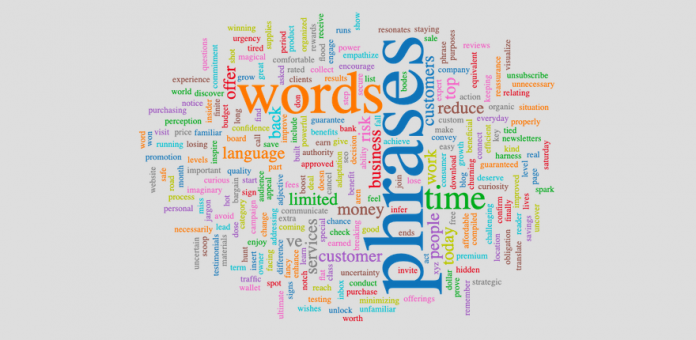
According to Kristen McCormick, Senior Managing Editor at WordStream, reducing uncertainty is only the first part of the equation when writing effective marketing copy. You also have to build trust.

Here are some phrases to include in your assets to give customers more reasons to continue engaging with you:

  • Check out our testimonials page.
  • See our reviews.
  • See our resource library.
  • Check out our FAQ section.
  • Chat live with a specialist.

Connect with your audience

Relating to clients on a personal level goes a long way in winning and keeping their business. Think about your target audience’s problems, goals, challenges and ideal situations. Describing these pain points and desires helps to demonstrate to your readers in your website, promotional emails, landing page copy, and more that you really know them, can empathise with them, and even be the answer to their problems. Try out these words and phrases as a starting point to this approach:

  • Ever wish you could/ever wish there was a…
  • Finally, a …
  • At last…
  • Aren’t you tired of…
  • We get it…
  • We’ve got you/We’ve got your back.
  • Discover what it’s like to…
  • Look familiar?
  • Experience a world free of…
  • You deserve…

Reduce risk

Minimising a customer’s perception of risk will make them that much more comfortable making the decision to do business with you. Try to use phrases in your marketing copy that communicate reassurance that they aren’t at risk of losing money or being tied into a long-term commitment. A sense of predictability or set of expectations is the goal here. Some words and related phrases include:

  • Guaranteed or your money back.
  • You can unsubscribe at any time.
  • We won’t flood your inbox.
  • No obligation.
  • No purchase necessary.
  • Cancel at any time.
  • What do you have to lose?
  • Free returns/full refund, no questions asked.
  • Try it first.
  • Book a demo.
  • Talk to (a representative) to see if (the business name or product) is right for you.

Reduce uncertainty

Uncertainty is one of the biggest barriers to entry for any conversion action you are trying to get your customers to perform within your funnel. Of course, the first step in reducing uncertainty is to build brand awareness, as the more familiar a consumer becomes with your brand, the more likely they are to trust and get to know you. The more they know about your brand, the more seamless their journey will be from browser to customer. Here are some keywords that stand out to website visitors to help reduce uncertainty and boost confidence in engaging further with your business: 

  • First month/time period free.
  • See for yourself.
  • No hidden fees.
  • Check out a sample report.
  • Money-back guarantee.
  • The [business name] guarantee.
  • Risk-free guarantee.

Invite purchasing

People must be able to visualise how your product or services will change their lives for the better. But the focus should not be on your product or service, it should be on the value your customers will get out of it and how easy it is for them to obtain it.

  • Achieve [main benefit[s] you offer] and sign up today.
  • How can [business name or product] help you (achieve XYZ?) Find out for yourself.
  • What do you have to lose?
  • Give us a shot!
  • What’s in it for you? (Then answer that).
  • Take advantage of this special offer.
  • A bargain you can’t beat.
  • Do you want to/Are you ready to… [insert benefits of your services here].
  • See the results you want/Real results.
  • Achieve growth/[other ultimate benefits your customers are seeking].
  • Start achieving [XYZ] with [business name or product] now.
  • Become [adjective your customer wishes to become] with [business name/product].

Language is powerful and using the right words will be the difference between marketing phrases that work and those that fall flat. Remember that a word or phrase that bodes well for one campaign doesn’t necessarily mean it will work across the board. As always, be strategic and conduct A/B testing to confirm you re using these marketing phrases properly. 

This article was sourced from WordStream. 

WORDSTREAM 
www.wordstream.com

The Transformational Role Of Marketing Leaders In Times Of Crisis

The Transformational Role Of Marketing Leaders In Times Of Crisis

According to Samrat Sharma, John Rolston and Tom Birtwhistle from strategy+business (a PwC division), long before the novel coronavirus paralysed businesses globally, the chief marketing officer’s (CMO) role was evolving in scope, focus and sometimes name. New titles such as chief growth officer and chief customer officer emerged to reflect the redefined, more transformational role of today’s marketing and commerce leaders.

CMOs were already becoming key players in helping drive customer demand and generate growth. Now, in a world upended by the pandemic, these expectations are amplified. How do businesses do more, earn more and operate better when they have fewer resources and when challenges loom everywhere? It is a perennial predicament with elusive solutions – and one with which CMOs are certainly familiar.

But now, doing more with less has become an urgent mandate rather than a puzzle to ponder, as businesses around the world work to recover from the effects of the Covid-19 pandemic. But if one thinks of challenges as opportunities in disguise, then now might be the moment for CMOs – by whatever title – to drive positive change. The pandemic has underscored the importance of customer experience, and that is where marketers can play a critical role. Who better knows customers and what they want, how they make decisions and how best to reach them?

Marketers’ moment has arrived. CMOs can use their platform to orchestrate both organisational and professional growth as they focus anew on fuelling customer demand and business growth in a changed environment. Here are five ways marketing and commerce leaders can deliver on expanded expectations.

Finding new ways to predict demand and understand customer behaviour

Historical data is no longer as helpful as it once was. Consumer behaviour has fundamentally changed almost overnight, as people are suddenly shopping more online – even for essentials – and embracing new habits, such as contactless delivery. Many of these changes are likely to be permanent, and more will continue to evolve, requiring companies to rely on fluid data points and employ new tools and strategies to better engage and understand customers.

Global beauty brand L’Oréal has set its sights on becoming what it calls the number one beauty tech company, and in 2018 it acquired ModiFace, a leader in augmented reality, to catalyse that effort. In addition to rolling out virtual makeup try-on and shopping services on owned platforms, the company has shared the technology with retail and advertising partners such as Amazon. This has helped expand the reach of L’Oréal’s services to whatever touchpoints consumers use and enabled the brand to offer a robust beauty experience despite being in a shopping environment of restricted physical contact.

Marketers are key players in helping their companies capture, integrate and use this type of first-party data – such as user profiles, preferences, traits and channel engagement – to monitor in real-time how customer habits are changing. Second-party data might also be useful, especially if delivered in a timely manner. Collaboration with business and supply chain partners, for instance, can yield valuable, real-time customer information.

Third-party data and associated predictive models can also play a role in unearthing actionable customer insights, as can activating marketing efforts in response to new demand triggers, such as footfall traffic patterns, recent category purchase data, competitor purchase behaviours, location data and other data points that can increase customer acquisition and engagement.

Innovating products and services to drive growth

Companies are eager to rebuild or enhance revenue streams in the wake of the pandemic. Among global CFOs recently surveyed by PwC, 63% said that offering new or enhanced products or services was most important to their company’s recovery.

Innovation and reinvention are always business imperatives, but the pandemic is creating new opportunities for companies that can move quickly. For example, in thinking about financial pressures consumers were experiencing as a result of the pandemic, UK-based Saga recognised the need for a new insurance product: a three-year fixed-price offering for older customers on fixed incomes. Though the product was rolled out in response to the pandemic, the company expects to continue offering it.

China-based Pinduoduo saw an opportunity in the pandemic to expand its social commerce platform. The company set up a virtual pavilion for the online sale of agricultural products to augment its usual sales of consumer staples such as cosmetics and televisions. The move was intended to help farmers sell their goods directly to consumers at a time when demand had dropped and in-person shopping was limited.

At the heart of greater innovation is a more outward-looking, customer-centric approach, in which the customer drives the product or service offering, rather than the other way around. ‘Start with the customer and work backwards,’ Amazon’s Jeff Bezos has said. Marketing leaders, leveraging their understanding of customers, should play a key role in helping their company do this.

Enabling a great experience across every touchpoint

Companies and brands are judged by the quality and effectiveness of their touchpoints with customers – whether in the form of a website, call centre or supply chain partner or other third parties. This is where customers are won or lost.

Case in point: during the pandemic, a customer finally decides to try a new subscription-based meal kit service that keeps appearing on his/her social media feeds. Although they are pleased with the quality of the meals, the delivery service is unreliable – a third party fails to deliver the meals within the scheduled window, essentially ruining dinner plans on several occasions. So even though marketing has done its traditional job of capturing a new customer, logistical failures apart from marketing ultimately cause the loss of a customer.

As the chief customer experience officers – whether in title or not – CMOs can and should work across the enterprise and get their fingers into areas conventionally considered nonmarketing areas to ensure the best customer experience at every touchpoint. Moreover, CMOs should be instrumental in helping foster an enterprise-wide mindset that is focused on customer experience.

Touchpoints have to be functionally effective, but customers also crave engaging, meaningful interactions. This is where marketers can play a larger role than they traditionally have by becoming more involved in creating satisfying, brand-defining and omnichannel customer experiences.

Optimising marketing spend

Even before the pandemic, marketing teams were pressed to show persuasive results from media spend. This is unlikely to change as digital advertising spend continues to grow. Yet there is a lack of confidence in the digital advertising ecosystem owing to poor control, decision-making complexity, ineffective ads and a lack of transparency.

According to PwC research, only 51 percent of media dollars spent on consumer-facing activities actually make it to a publisher as a result of money lost on fees, charges and hidden costs. And when ad fraud (in which advertisers pay for fraudulent clicks and impressions) and unviewed ads are accounted for, it turns out that only 26 cents of every dollar being spent on digital advertising results in an impression that makes it to a consumer.

CMOs must lead the charge to gain more visibility into their media supply chain. They need to better understand how much is being spent, in what manner and where. Some companies are bringing media activities back in-house or updating their agency contracts to take back data ownership or demand greater transparency from vendors.

Pressure to rein in marketing spend contributed to Procter & Gamble’s decision, for instance, to bring almost 30 percent of its US$7 billion global media spend in-house, jettisoning some of its agency partnerships in the process. The international consumer goods giant has significantly reduced both costs and time lines by doing more media planning as well as creative and production work internally – saving more than $1 billion over the past five years. In addition, P&G believes its decision to move more creative functions in-house has led to greater agility and innovation.

Marketing leaders must investigate their media spend more closely to find optimisation opportunities. The savings are tangible and can be realised quickly. Artificial intelligence can play a role by informing decision-making with highly specific data, helping eliminate human bias in media spend. A renewed focus on customer segmentation can also help CMOs prioritise investments to improve and personalise targeting.

Enhancing productivity in a newly lean environment

Marketing departments are accustomed to feeling pressure to validate their effectiveness. Now, many are being asked to do so with fewer human and financial resources. In response, marketing teams, many of which have flirted with agile marketing principles in recent years, should fast-track their agile efforts and insist that their agencies and other partners do so, too.

Agile marketing has five core values:

  • Validated learning over opinions and conventions.
  • Customer-focused collaboration over silos and hierarchy.
  • Adaptive and iterative campaigns over one-shot, ‘big bang’ campaigns.
  • Process of discovery over static prediction.
  • Many small experiments over a few large bets.

Consumer packaged goods companies have been at the forefront of the agile movement, and many have embedded a culture of ‘test and learn’ in their marketing organisation. This approach allows them to keep their finger on the pulse of changes among their customers and to innovate more quickly. For example, Conagra has trained its entire marketing and digital commerce teams in agile behaviours and now runs cross-functional pods that include talent from brand, decision science, e-commerce, content and media.

These teams have enabled a successful new brand-building model based on always-on, tailored communication. Despite shifting its media mix to 81% digital, Conagra is still able to reach 89% of all category buyers and increase effectiveness, using precision targeting to drive a 40% higher purchase rate over general creative messaging.

A time to meet the moment

Although the challenges of adapting to a post-pandemic environment are considerable, so are the opportunities. The stage is set for both CMOs and their companies to reinvent themselves, uncover new ways to deliver value and succeed anew in a changed world. Marketing had already been on the verge of a significant transformation, but the pandemic accelerated the need for change. This might be the professional moment CMOs have dreamed of.

By boldly moving beyond traditional marketing tactics and strategies and focusing more intently on new sources of customer data, growth via innovation, the end-to-end customer experience, smart spending and the principles of agile marketing, CMOs can become catalysts for the changes that are needed now.


PWC
pwc.co.za

New Content Collective 2Stories Is Launched

New Content Collective 2Stories Is Launched
Joanne Hope and Anelde Greeff, founders of 2Stories.

Serial entrepreneur Joanne Hope and seasoned content director Anelde Greeff have launched 2Stories, a new content collective. 2Stories offers boutique-level service with big-agency experience that turns the usual model on its head.

‘Imagine a traditional content marketing agency. We’re not that,’ explained chief operating officer Hope. ‘We are a new genre. Think smaller, and with way more flex appeal. We speak, write, strategise, conceptualise, plan, direct and produce content marketing fluently.’

2Stories believes in work that is driven by humans, not channels. Both founders bring a wealth of editorial experience to the table: Greeff spent 15 years at New Media in various roles such as head of content: food division, editor-in-chief of Eat Out and content director of Woolworths TASTE. She is currently also a director of SheSays Cape Town – Africa’s first chapter of the global movement focused on the engagement, education and advancement of women in creative industries.

Hope was general manager of the South African operations for global content marketing agency John Brown Media, where she oversaw operations and client service for Capitec, Life Healthcare, Old Mutual and BMW Mini amongst others. She is also the founder of cannabis lifestyle brand KushKush.

Together, Hope and Greeff believe in creating editorialised content that inspires and converts, because great stories can change the world – and there is never just one side to a story.

‘We love working with clients and brands that move society forward – and actively seek those stories out,’ said Greeff, who fills the role of 2Stories chief content officer. ‘Anyone can put content out there, but stories that help customers connect the dots is what gets them to the purchase faster.’

‘It’s the gentle art of anticipating what a brand’s audience really wants. What are they searching for? What questions are they asking? Digital targeting has become all data and no intuition about what real people actually want. We spend a lot of time helping brands find their intuition again.’

Collaborating with other agencies

Although a wholly independent agency, 2Stories embraces collaboration with other industry players by supplementing its above-the-line offerings with content strategy and content-creation services. ‘We don’t want to compete with traditional agencies. We want to help them optimise their offering to their clients and, more importantly, the end consumer,’ said Hope.

2STORIES
(+27 21) 300 5884
hello@2stories.co.za
2stories.co.za

Internal Communications Strategy Is A Key Trend

Internal Communications Strategy A Key Trend
Karyn Strybos, Marketing Manager at Everlytic.

According to Karyn Strybos, Marketing Manager at Everlytic, many CEOs have already used the Covid-19 pandemic as the opportune time to rethink the way they work and communicate. Internal communications, with its focus on engaging employees, sharing information and creating a company culture, will require a fundamentally different viewpoint to be successful in the journey to come.

Companies have had to reinvent many of their traditional business processes to remain operational while ensuring the safety of their employees during the turbulent events of the past year. Throughout this, communicating with all stakeholders has become more important than ever. This will have a significant impact on the trends influencing these engagements in 2021 and beyond.

Prioritising internal communications

Internal communication must remove as many barriers as possible for employees to access the content and systems they need to remain productive. Additionally, the organisation must be aware and understand how this radically different environment will impact on the mental health and wellness of employees. Having an internal communications strategy that reflects this will be a key trend in the new year.

Remember privacy

Furthermore, the implementation of the Protection of Personal Information Act (POPIA) is around the corner. Companies only have a few months to get their systems ready to reflect an increased focus on data privacy and security.

More than that, it will also change how businesses can communicate with their customers. For instance, people must now opt-in for email and SMS messages, there must be a relevant privacy notice in place and the unsubscribe process must be comprehensively audited. Non-compliance will carry significant financial fines and reputational damage if the company is found guilty. This means that any marketing campaign and piece of communication that gets disseminated must adhere to the regulatory framework.

Understanding customers better

Even before the lockdown, data science was a growing field. But as companies need to differentiate themselves better thanks to more challenging economic conditions, they will refocus their efforts to embrace predictive analytics and gain a better understanding of their customers.

The rise of clean data gathering tools that are supported by omnichannel platforms will help decision-makers understand even more from their data. Nothing is unimportant when it comes to customer data. Everything has the power to inform how goals for the business are created going forward.

Everything from transactional customer data to customer behaviour tracking can significantly influence how products are developed. However, it is in the personalisation of communications with customers where a lot of value can be added as people will feel the business has a better understanding of their requirements and who they are.

More than just retention

This understanding will be great to become more customer-centric. This is vital given how businesses cannot rely on customer acquisition alone but also still need to provide exceptional value for existing ones to mitigate against the risk of churn. Signing on new customers is a resource-intensive process. Invariably it takes some of the focus away from identifying opportunities for growth.

Using automated communications will allow the organisation to retain a customer and build a long-term relationship with them at a scale previously unimaginable. The customer needs to have a consistent feel of the organisation from when they are a prospect to a new customer and eventually to a loyal customer who has the potential to become a brand advocate.

This is where more meaningful customer experiences become key. Companies must capitalise on relevance and personalisation in this regard. But personalisation goes beyond marketing and into every way that customers interact with the business. For example, something as simple as asking a customer for their communication preferences can make a big difference. The business then knows how they want to be contacted and can avoid frustrating them by choosing a different method.

Ultimately, 2021 will be about putting people first regardless if they are employees or customers. It is about gaining a better understanding of these stakeholders and using digital solutions to send timeous, relevant and automated communications that speak to their needs.

EVERLYTIC
everlytic.co.za

Loeries Publish Brand Communications Industry Official Rankings

Loeries Publish Brand Communications Industry Official Rankings

Loeries Official Rankings offer a comprehensive overview of the annual performance across the brand communications industry throughout Africa and the Middle East.

Since 2018, the Loeries has included points for finalists in its Official Rankings across Africa and the Middle East. In the past, the Loeries only awarded points for bronze awards and above. The reason for this change was that around 20 countries enter the Loeries and the spread of results is large.

The rankings are a useful and independent measure of the most innovative brands, agencies, organisations and individuals across Africa and the Middle East in the brand communication space. In general, the Loeries have been able to publish longer rankings across all categories, thereby providing more information on the performance of the industry across the region. This change is especially positive for small agencies and countries just beginning to improve their creative output.

On the lower end, they are now able to distinguish regions, countries and agencies through finalists, while on the upper end, the Grands Prix and Golds make the difference. Some brands and agencies walk away with several awards, while others manage one of two finalists. By including finalists in their analysis, they are able to drill deeper for a better representation of performance across the whole region. However, in order to prevent domination of the rankings with finalists, these points are capped at a maximum of 30 finalists – equivalent to three bronze awards.

This year the Loeries have included the rankings from 2018 and 2019. This will allow readers to get a view of sustained excellence over a period of time versus monadic data, which focuses on a single year.

Overall ranking by brand

2020

1. Chicken Licken.
2. BBC Studios.
3. Mastercard.
4. Nedbank.
5. An-Nahar Newspaper.
6. First For Women.
7. Novomed Allergy Clinic.
8. Ikea.
9. Hype Magazine & Tears Foundation.
10. KFC.
11. Apsara Pearl Group.
12. DStv.
13. AB InBev.
14. Head & Shoulders.
15. Fiftyfifty Lebanon.
16. Redemption Rum.
17. Etisalat.
18. Loto Libanais.
19. Tops At Spar.
20. Emirates NBD.
21. Powa.
22. Bose.
23. CANSA.
24. Pineapple Insurance.
25. Amnesty International.

2019

1. Chicken Licken.
2. City Lodge Hotel Group.
3. Philips and The Nelson Mandela Foundation.
4. Nando’s.
5. AB InBev.
6. Sanlam.
7. Theatre Hours.
8. The Coca-Cola Company.
9. MTN.
10. Ikea.
11. 28 Too Many.
12. Saint.
13. BBL Security Products.
14. Kleine Rijke.
15. Waste Management Coalition.
16. Standard Bank.
17. Okavango Diamond Company.
18. Investec.
19. Tiger Brands.
20. Edgars.
21. Jet.
22. Turkcell.
23. National Geographic.
24. Old Mutual.
25. Kimberly-Clark.

To see the full rankings, click here.

LOERIES 
www.loeries.com

Tailor Make In-Store Experiences With Customer-Influenced Content

Tailor Make In-Store Experiences With Customer-Influenced Content

How do brick-and-mortar stores attract and retain customers while creating an engaging experience that competes with their online experience? According to Chris Day, Managing Director of Moving Tactics, the store of the future will employ integrated technologies and data – similar to those used online – to tailor the in-store experience to a specific customer.

Brick-and-mortar stores have been under pressure with the onslaught of online shopping for several years, but the Covid-19 pandemic created a new set of challenges for retail stores. With the fear of the pandemic and social distancing, sanitising and mask-wearing being the norm, retailers are facing a new battle to attract customers back to stores whilst providing a safe, engaging, entertaining and personalised experience.

Retailers need to think about how they are going to get the online mindset into their stores. The future of retail will be about using multiple touchpoints, such as non-touch interactive digital signage screens, touchscreens, promotional screens and virtual queuing to develop an understanding of what customers are engaging with in-store, what they are doing, wanting to know, and prefer to purchase. Similar to online searches, data gathered from these various touchpoints will be the foundation of organic customer-influenced content.

Taking this a step further, data gathered from the in-store digital customer journey and experience, combined with online data gathered from customers in a specific local geographic area, could provide retailers with detailed information on preferred and sought-after products, services and information, which in turn enables the retailer to develop a customer-curated experience in their store. Not only are customers being offered a more tailored and personal experience, but retailers are able to plan their stockholding, staff complement and promotions more effectively.

Linking mobile search to these elements adds another layer of service efficiency. While searching for a product or service, customers could be directed to their closest store, advised on what documentation will be required and allocated a placement in the virtual queue to see a consultant. Following on from the virtual queue allocation, the consultant would be equipped to address the customer’s queries based on their online search. It is about providing customer service on a completely different level.

No matter how large the retailer network, customer-influenced content targets customers with product and service-specific information that negates the need for blanket advertising. The new digital in-store customer journey not only provides tailored, customer-influenced content but also applied retail analytics and big data to enhance the retailer’s customer experience and optimise business operations.

MOVING TACTICS
www.movingtactics.co.za

The Social Craft Agency Connecting Africa To Real Opportunity Through The Digital Space

The Social Craft Connecting Africa To Real Opportunity Through Digital Space

Samantha Coom has launched The Social Craft digital agency, partnering with Turn Left Media (LinkedIn’s official partner in South Africa). Coom is following her passion for connecting Africa to real opportunity through the digital space.

Coom, who is passionate about technology, media and branding, together with Turn Left Media, are injecting passion, expertise and skills development into the digital marketing space across Africa, the Middle East and Mediterranean countries.

Coom said, ‘While Covid-19 turned 2020 into a whirlwind for many of us, it gave me the push I needed to follow my passion to keep connecting Africa to opportunity through digital transformation.’

The partnership between Turn Left Media and The Social Craft now brings a unique blend of skills in digital marketing, employer branding development and media strategy to the African HR, digital and marketing industry. The agency, based in Ireland, allows for closer collaboration with the LinkedIn team and also plans to expand to digitally transform corporate and employer brands in the Middle East, Turkey, Israel, Malta and Greece.

The Social Craft will develop and curate employer and corporate brands, enhance their digital experience and amplify them with strategic media channels; building digital campaigns for optimal performance and turning social into sale across digital and social media platforms like LinkedIn to create brand stories that sell. 

Marius Greeff, Founder and Director of Turn Left Media said, ‘Covid-19 has amplified the changes occurring in the world of work, and the way companies, their customers and current and future employees engage. The path to digital has accelerated, and it’s critical now for brands to understand the potential that online channels give them to tell their special and unique brand stories.’

Together, these two digital businesses will now offer one integrated digital branding service across all three key marketing segments – B2B, B2E and B2C, to support businesses focusing and embarking on transforming their total digital brand portfolio. They are excited to bring a female, millennial and brand-centric strategy to the digital game.

Greeff explained, ‘The partnership is particularly powerful as it enables us to support a complete digital brand portfolio for both local and international companies.’

Coom concluded, ‘We believe every brand has a unique design, texture, colour and pattern, much like a thumbprint. We’re so excited to enable brands to digitally create stories that sell and turn social into sale.’

THE SOCIAL CRAFT
samc@thesocialcraft.ie
thesocialcraft.ie
This is Modern Marketing