Home Blog Page 294

Marketers Should Embrace The Potential Of New Technologies And Champion Data-Driven Insights

Marketers should embrace the potential
Haydn Townsend, Managing Director at Accenture Interactive Africa

Haydn Townsend, Managing Director at Accenture Interactive Africa, says an experience renaissance is afoot. Customers were already expecting more from brands, but now they are demanding it.

The consumer behaviour shifts we are seeing today are not a blip and are likely to stay with us for a long time. Some have been in motion for years, and many have been accelerated by the Covid-19 pandemic. For example, over 80% of consumers who increased their digital usage in a variety of channels during the pandemic expect to sustain these levels moving forward.

Around 60% of outperforming companies acknowledged that they need to stand for something bigger than the products and services they sell and that they expect to always seek the best outcomes for their customers. Brands need to be more empathetic, flex experiences to suit the individual and accelerate their uptake of available technologies to support new ways of working.

Although we have made huge strides in improving customer experience (CX), as defined by the sum of these interactions through touchpoints, it has become too homogenised, leaving little differentiation. Our latest research at Accenture Interactive reveals that after the pandemic started, CX dropped down the priority list by 33% among CEOs, and one of the newer concerns that emerged is ‘lack of clarity about ROI for CX investments’.

However, when companies orient around experience, growth follows. Leaders need to think beyond CX and embrace a new approach to orient their entire organisation around being in the Business of Experience (BX). These are companies that drive commercial impact by driving positive human impact and they have proven to outperform their peers in profitability by at least six times year-on-year.

Future customer-centricity

A new marketing landscape has emerged with new rules, and companies that put experience at the heart of their organisation will ignite growth and be our new category of leaders into the year and decade ahead. The stats speak for themselves: some say happy customers spend 140% more, others say 300% more, but everyone agrees they spend more. If a company gets it wrong, customers will vote with their feet and tell everyone they meet to shop elsewhere.

Becoming a BX leader starts with becoming customer obsessed and 77% of CEOs agree that their company will fundamentally change the way it engages and interacts with its customers. Beyond the CEO, every C-level executive and leader inside both front and back-office functions needs to be invested in shifting their thinking about experience. This includes making experience innovation an everyday habit, expanding the experience remit across the organisation and syncing the tech, data and human agendas.

Intelligent technologies such as conversational Artificial Intelligence (AI), the Internet of Things (IoT), Machine Learning (ML) and Mixed Reality (MR) are no longer the stuff of science fiction. Organisations are adopting them to optimise operations, automate workflows, produce targeted messaging at scale and reduce costs. Customers are starting to benefit from the personalised experiences they open up such as AI-powered voice assistants who do everything from managing our calendars to providing real-time traffic updates, or smart insulin pens that tell users the time and dose needed for their next injection, sharing data via a custom dose calculator on a mobile app.

Companies will do well if they ensure to generate actionable insights by working out what questions the organisation needs answers to, then gathering and analysing the data that will answer those questions. Uncovering these insights is most effectively done by people and machines working together in partnership, and for insights to be actionable, they need to be easily accessible to everyone who needs them within the organisation.

Ambitious marketeers will seize this opportunity to raise their game, embrace the potential of new technologies and champion data-driven insights across their organisation. They will work with trusted partners to ensure that they have the skills and tools they need to innovate and delight the customer at every touchpoint.

Customers expect a personalised approach and they buy into products and services that meet and exceed their expectations. Data-driven insights hold the key to more empathetic, relevant and nimble communications and organisations with their fingers on the data pulse will be those that rise above the competition and succeed in the future.
ACCENTURE SOUTH AFRICA
accenture.com/za-en

M&C Saatchi Adds Even More Depth Of Talent To The Agency

M&C Saatchi Adds Even More Depth Of Talent To The Agency
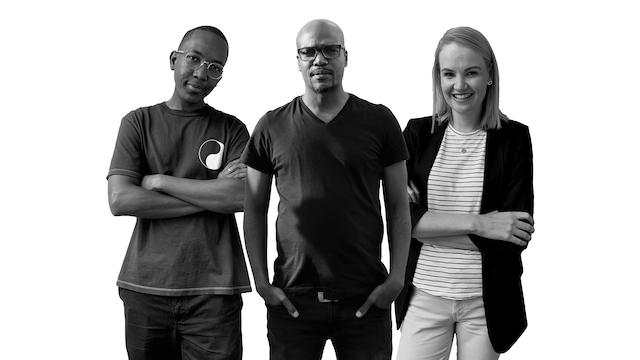
Keke Mahlelebe, Mohlalfi Lentsoane and Ille Potgieter.

M&C Saatchi Abel has promoted three dynamic leaders to key agency roles. Effective April 1st, Illé Potgieter steps up from Business Partner to M&C Saatchi Abel Cape Town Managing Director, Keke Mahlelebe moves from Strategy Partner to Head of Strategy for M&C Saatchi Abel Cape Town, while Creative Director Mohlalifi Lentsoane becomes Joint Executive Creative Director for M&C Saatchi Abel Johannesburg alongside James Cloete.

‘Our partner model is about having the right depth of talent and tenure to ensure we can continue to bring diverse, talented and fresh thinkers into leadership positions and importantly, provide clients with access to senior management on a day-to-day basis. We deeply believe in the philosophy of Diversity of Thought as a powerful orientation and we work with talented individuals for many years to help unlock their potential and fast track them and their skills in preparation for this new challenge. Potgieter and Mahlelebe are huge talents and the Cape Town office is in very capable hands,’ said M&C Saatchi Abel co-founder and Group Managing Director Jason Harrison.

Speaking about Lentsoane, M&C Saatchi Group Chief Creative Officer, Neo Mashigo said: ‘Lentsoane’s considered approach to solving the most complicated problems with the power of creativity has been crucial to our successes across clients. He is a gifted creative and with this promotion he will have a broader canvas to continue his positive influence.’

Potgieter said shared values have underpinned her growth in the agency. ‘I’ve been part of this family for seven years and witnessed immense growth. Often when an agency undergoes so much growth, so quickly, it loses its DNA. This is what I love about M&C Saatchi Abel – our foundational values remain, and with them our DNA remains intact and, in fact, underpins everything we do. This is important to me, as values matter immensely. I am excited about the opportunity to lead the Cape Town business and do what I love: grow and mentor diverse talent so that we deliver meaningful work,’ she said.

Mahlelebe said he is excited to bring authentic and resonant work to more South Africans. ‘Historically, strategists were obsessed with trying to be more locally relevant to ‘the market’. Our focus, and certainly the fuel in my tank, is to be a whole lot more resonant to more South African people. Resonance is not what you think, but how you feel. As part of a fresh injection of leadership, I could not be more excited to unlock more Brutal Simplicity of Thought to influence how consumers feel,’ he said.

‘This, along with the diversely skilled team I will oversee in Cape Town as we work on a portfolio of iconic brands, means the future of M&C Saatchi Abel is bright and I am honoured to be on the front line of this hot, fast-moving family of partners and friends.’

Lentsoane said his animating force is a commitment to creativity. ‘Creativity is more than just creating something beautiful,’ he said. ‘Creativity is about problem-solving to find surprising, exciting, relevant and compelling solutions that resonate with people. I am incredibly excited to be part of the senior leadership team in this fast-growing and dynamic creative agency.’

M&C SAATCHI ABEL
www.mcsaatchiabel.co.za

Innovative And Engaging Digital Experiences Are Emerging For Brands And Advertisers

Innovative And Engaging Digital Experiences Are Emerging For Brands And Advertisers

Grant Kruger, business lead ID/IT at LG Electronics South Africa, says in-store advertising is undergoing a significant digital transformation. As lockdown restrictions ease and retail spaces open up, there has never been a better time to take another look at digital signage.

As the way we interact with the world around us becomes increasingly digital, more opportunities for innovative and engaging digital experiences are emerging for brands and advertisers to reach customers.

The benefits for business

Picture this: you are walking through a mall and a flashing screen catches your eye. The advertisement is bright, colourful and moving and it informs you that a 20% sale has started today. If this ad had been on a printed poster, you probably would not have noticed it. It may also have been outdated, and you would have arrived at the store, only to be disappointed to find that the special was no longer running.

With digital signage, advertising campaigns are not only rolled out faster, more cost-effectively and on-demand, but this technology also allows for far greater flexibility when it comes to design elements and content variety. Having the wall space for a video format means that advertisers can realise their creative visions to tell stories about their brands through stunning, animated visuals rather than easily ignored, static images.

Being able to roll out these campaigns digitally rather than through print saves money on printing, transportation, and labour costs. Add cloud platforms into the mix, and you can instantly have advertisements go live across all your branches at the touch of a button. This is particularly useful to retailers launching ‘flash sales’ to get rid of unwanted or seasonal stock.

Innovations in display technology

With continued innovations in display technology, digital signage is also becoming more striking. Displays are not only becoming better looking, but also a lot slimmer at the same time.

The future of advertising

As the world heads increasingly towards digitalisation, it is probably inevitable that traditional posters and banners will eventually become obsolete. A few years ago, it would have been hard to picture ourselves living in a futuristic city where advertisements on LED screens are everywhere. But that future is happening now, and digital signage is becoming more commonplace. Savvy business leaders need to realise that as more retailers make the move to digital signs, static and printed assets will become even easier to ignore.

LG ELECTRONICS
grant.kruger@lge.com
lg.com/za

Loeries Creative Future Scholarship Recipient Announced

Loeries Creative Future Scholarship Recipient Announced
Scholarship recipient Lisa Asani.

This year, a search was launched to find a Capetonian recipient of the scholarship who would not ordinarily be in a financial position to continue their studies and who displayed strong creative potential and talent, and award them fully-covered tuition to develop their creative career in one of the most highly ranked brand communication schools in South Africa.

The Loeries has always been dedicated to nurturing, encouraging and enabling creativity at grassroots levels through the Loeries Creative Future Scholarship. Official Loeries partner Red and Yellow Creative School of Business with their Bob Rightford Scholarship is contributing to those core values by making Lisa Asani’s dream to study towards a three-year degree within the brand communication field a reality.

Asani, a 2021 Loeries Creative Future Scholarship recipient, is a recent matriculant who took to writing in order to express herself as living at her parents’ place of employment meant no noise, hardly any friends over and no playing in the front of the house. ‘I am the product of a hardworking domestic worker and gardener. My whole life I’ve stayed in the back cottage of a main house because we never had our own house. Because I lived at a place of employment for my family, there were certain rules given to me by my parents to respect their employers.’

Asani recalled when she discovered that paper was the only place that had no restrictions and gave her complete freedom. It became her canvas and her escape. ‘I could transform into anyone I wanted to and visit any place I wanted to without money ever being a problem. I am so grateful to Loeries and Red and Yellow Creative School of Business for extending that freedom of mine by giving me an opportunity to study a Bachelor of Arts in Visual Communication.’

From 1994, Red and Yellow Creative School of Business has aimed to shape young minds, teach them to think creatively and equip them for the future. Since then the school has expanded its core specialisation, added more flexibility to studying with fully online accredited qualifications and has produced world-renowned creative business thinkers and industry leaders.

‘In line with our partnership with the Loeries, we are very excited about the announcement of the Bob Rightford Scholarship being awarded to a very deserving and talented student. This just further affirms our long-standing social promise that at least 10% of our students benefit from sponsored education. As one of the leading educators of emerging creative thinkers it is our honour to welcome Asani to our institution,’ commented Red and Yellow Managing Director, Verusha Maharaj.

Asani’s story is not unique, but what sets her apart is her drive to see her own growth and to inspire others like herself to persevere even against the worst circumstances. ‘I often have to wake up and study at 4am in the morning so that I can study when my family is sleeping because our house is small and during the day or early evening there is no place to study – this is one of the many challenges I have overcome. I really hope that completing this degree will help me inspire young individuals just like myself to know that no matter your background or your circumstances, you can achieve any goal and no industry is too big for you to enter. I also feel that by entering the brand communication industry that I will be able to reach out and impact people in a positive way.’

Asani will also receive a PC laptop for her studies, which has been kindly sponsored by Janine De Abreu, Director of We ‘R’ IT.

Entries are now open for the Loeries awards, which reward innovation and creativity in brand communication. Work flighted between 1 June 2020 and 31 May 2021 will be eligible to enter this round of the Loeries. Entry fees are locked at 2019 rates until 3rd May 2021 and entries close on 31st May 2021. Enter here. Modern Marketing is an official media partner of the Loeries.

LOERIES 
www.loeries.com

Creating A Data-Driven Workplace Culture

Creating A Data-Driven Workplace Culture

Jacki McEwen-Powell, founding partner and strategist at Eclipse Communications, says today’s workforces expect messaging that is more inclusive, personally relevant and decidedly digital. In short, companies need to engage with employees more than ever before.

This is underlined by Beekeeper’s Internal Communications Trends in 2021, which notes that in 2020, 84% of employees felt their company’s management did not share enough information and 75% felt out of the loop when it came to company policy changes or other important information.

With ongoing concerns around the pandemic, employee anxiety remains at an all-time high. A 2020 survey by Pharma Dynamics reveals a significant increase in psychological and emotional stress amongst South Africans as a result of COVID-19, with 56% of respondents noting higher levels of distress than before the pandemic. This can lead to a disengaged workforce, which costs employers in the long run.

This means maintaining transparency, emphasising sustainability, recognising employees, keeping the lines of communication between employees and management open, and allowing time and space for informal interactions in virtual settings that mimic what they miss about their conventional ‘watercooler’ interactions.

Trends that emerged in response to the pandemic will continue to shape the future of corporate communications. According to local industry bodies, Institute of Internal Communication and the Chartered Institute of Public Relations, employers need to remain employee-centric.

There are three main areas that employees want communication on:
– Remote working and business continuity (89%).
– Public health information (64%).
– Driving positivity in uncertain times (61%).

Know who you are talking to

WorkPlace notes that as much as 80% of the global workforce doesn’t sit behind desks all day. Remote operations increased the disconnect between colleagues, and there is a growing need to effectively connect all employees – be they frontline, remote, deskless or office-bound – to drive business productivity and success.

All is not equal when it comes to access to computers and other tools for desk-bound versus deskless employees. Deskless or remote employees deserve to be part of the conversation, and not including them will make them feel even more isolated, undervalued, and unmotivated.

According to Gallup:
– 71% of deskless or remote employees are not actively engaged in their businesses.
– 85% say that the communication they receive just is not enough.

Add that personal touch

A company’s success is directly linked to the quality of its employees’ experiences, and understanding the ‘who, what, where, when, why and how’ of employees is crucial to tailoring messaging for them. When they are inundated with information, they often filter out communication they don’t feel is personally relevant to them. This could mean that critical messages remain unread, unheard or unwatched.

In the UK alone, 65.2% of employees say their work is negatively affected by the sheer volume of data they have to process while at work. Ultimately, companies need to consider creating more personalised and interactive channels and content (memes, video content, infographics) to better the employee experience, keep them engaged and drive a deeper connection between peers, as well as employees and employers.

Drive the digital agenda

Cross-platform digital offerings are replacing the intranets of old and paving the way for effective and engaging internal communication, with mobile apps driving the conversation. According to Dell Technologies, eight in 10 organisations are fast-tracking parts of their digital transformation agenda in response to the current climate. CustomerThinks claims that 44% of employees want wider adoption of internal communication tools, while 85% use more than one device to communicate at work.

Cloud-based enterprise social networks (ESNs) such as Workplace and Yammer have led to greater rates of engagement, however these are merely the tip of the iceberg of what’s possible. Bankmycell says that as many as 3.5 billion people worldwide use smartphones, with Statista predicting this to rise to 7.33 billion by 2023.

With the majority of today’s workforce using mobile devices, mobile-friendly apps can provide quick and effortless ways to communicate, irrespective of employee location. A single mobile communication hub can eliminate silos and include an array of features, including shift scheduling, and even user data and payslips.

Create a data-driven culture

If we cannot measure it, we should not be doing it; and in this digital-first era, internal communications teams have more metrics at their disposal than ever before. However, insights from Unily say that as few as 43% of companies use this data to drive business decisions. Strategic internal communications are truly successful when their effectiveness can be measured and quantified. Measurement metrics have evolved to provide behavioural patterns, content preferences, time of day posting and even engagement rates.

Do not just inform – inspire action

Effective internal communications are the foundation of success, and as quoted by Viktoria Tegard, Head of Internal Communications at Virgin Atlantic Airways, companies who want to remain competitive and successful need to ensure they involve, motivate and inspire colleagues.

ECLIPSE COMMUNICATIONS
eclipsecomms.com

Use Algorithms To Create Streamlined And Highly-Effective Social Campaigns

Use Algorithms To Create Streamlined And Highly-Effective Social Campaigns

Zubeida Goolam, co-founder and chief creative officer at Valiant, said the changes made to social media algorithms in the past couple of years have made many brands rethink their content strategies. Instead of the accustomed chronological order, user feeds were now recalibrated to highlight ‘generally engaged with’ posts.

Facebook’s pledge to put ‘friends and family first’ meant that more personal posts would be prioritised over branded messages, while Instagram aims to ensure users’ feeds are filled with fresh, timely content. By using algorithms to code a much more individualised approach, the aim is essentially to remove ‘irrelevant content’ and create a user-ready and much more contextual social feed. It is designed to change and develop alongside the user and enhanced to achieve taps and likes.

It is a numbers game

Algorithms provide a unique scenario that offers equal parts threat and opportunity. With algorithms curating user feeds based on engagement, posts are ranked on relevancy which has a big impact on organic reach. Frequency, now dependent on engagement and not the other way round, is making posts more valuable given the audience that would see it, but could also potentially lessen the audience that may see it.

It is important to speak to followers that are already interacting with your brand and to start a conversation with those who show interest; to turn a ‘like’ into a ‘follow’ and ‘follows’ into real and meaningful engagement with your audience. However, unengaged potential customers may not see your post, resulting in a lower ranking. To beat this requires a strategy of consistency.

It is in your secret sauce

The starting point in outsmarting the social media algorithms is to create consistently high-quality content that can stand up to future algorithm changes. We know that bold visually appealing content, particularly on Instagram, attracts more attention. Increasing your branded video content is strongly encouraged by all social platforms, and IGTV content is now also appearing in followers’ feeds rather than only confined on IGTV itself.

Stories are one of the most popular uses of social media. Twitter announced its own version of Stories called ‘Fleets’, which is currently being tested in Brazil. Instagram Stories surpassed 500 million daily users, and while Stories don’t have an influence on the Instagram algorithm, it is the perfect addition to your social media strategy to help build brand love by showcasing daily, speedy and relatable content in a format that’s super popular.

Adding to this, it is important to craft compelling captions and add hashtags to ensure your posts are searchable and discoverable. Including hashtags may be a basic principle, but using the correct hashtag is where it matters. A combination of branded, product, trending and community hashtags is the way to go. On Instagram, it is suggested that brands use at least nine to ten relevant hashtags to encourage engagement, and on Twitter, it is best practice to use a maximum of two.

Finally, one of the easiest ways to win with social algorithms is to monitor your audience behaviour, increase your posting frequency and post during peak hours. Simply having a social media presence for your brand is not enough anymore. You need to analyse, optimise and grow your audience.

Rather than be afraid of the new and constantly changing algorithm rules, use them as an opportunity to help analyse your audience date and create streamlined highly-effective social campaigns with maximised results.

VALIANT
+27 10 001 2531
hello@valiantagency.com
www.valiantagency.com

There Is An Opportunity To Enhance Brand Equity And Customer Loyalty For The Future

There Is An Opportunity To Enhance Brand Equity And Customer Loyalty For The Future

Marketers that invest in understanding how people’s emotions and values are changing in the face of multiple national lockdowns and Covid-19 waves will position their brands to thrive in this volatile landscape. To keep pace, brands need to move beyond demographics and focus more than ever on psychographics. This is according to Virginia Alvarez, Head of Cognitive Intelligence Practice, EMEA at Acceleration, a Wunderman Thompson Company.

In a world where emotions such as anxiety are running high and people are preoccupied with mental and physical health, brands need to take a closer look at how they fit into the consumer’s personal life. In particular, they would be wise to focus on how consumers’ values and motivations are changing.

Value systems influence human behaviour and shape what people want to hear from brands. At this time, we may see values such as freedom, togetherness, respect and time spent with their loved ones begin to trump socially oriented values like social status or materialism. Brands that can understand how their customer’s values are changing will be able to influence them more effectively.

Consider the fact that 92% of respondents in a survey conducted by Wunderman Thompson said that they admire companies that are taking action to alleviate the impact of the coronavirus. This points to the emotional link consumers make with brands and the importance of fostering these links by aligning with their values.

The WT Inspiring for Growth consumer study, meanwhile, shows that it matters how people feel about brands. Customers want brands to be inspirational (72%), but only 53% experience brand inspiration, presenting a major growth opportunity for brands. Furthermore, inspiration predicts 63% of a brand’s ability to drive demand, 52% of brands’ ability to command higher prices, and 48% of brands’ ability to convert customers at the point of purchase.

Consumers at the core

Responsive, empathetic brands that put consumers at the core will be positioned to thrive in this landscape. Yet most companies have work to do before they reach this state. They depend heavily on demographic or behavioural data to understand their customers—which paints an incomplete picture of what really drives customers’ decisions. They can see what customers are buying or not buying, but they have less insight into what actually drives the decision.

To truly understand customers, brands should dig deeper to unravel their unconscious motivations and emotional needs. This is where the concept of actionable and scalable audience targeting via cognitive intelligence has a key role to play. Supported by behavioural science principles, this approach identifies the intrinsic emotions and motivations that influence consumer choices, and thus enabling brands to understand why people buy what they do.

Using psychological principles to identify consumers’ ever-evolving motivations and leverage emerging technologies such as artificial intelligence to model how changing values, emotions and motivations shape customer choice. It adds an emotional dimension to the data we already have about customers.

AI and behavioural science

By tapping into the capabilities and technology cognitive intelligence can offer, brands can drive a more human customer-centric audience strategy. This will be built on an intimate understanding of consumers’ changing motivational mindsets, mapping the why behind the buy as well as identifying and quantifying winnable audiences.

Motivational audience strategies inform the creative process by highlighting the role of emotions. People are not only driven by their own beliefs and motivations, but also by their feelings. Emotions play a central role in the decisions we make. Humans are, as António R. Damásio, the neurologist said, ‘not thinking machines that feel, but feeling machines that think’.

A meaningful connection with consumers’ unconscious needs will not increase the brand’s relevance, but also help it respond to moments of need at different stages of the consumer journey. Brands will be able to create better connections with consumers through engaging moments and content by delivering the right message at the right stage of the journey, and to the right audiences on the right channel.

One real world example showing how this works in practice is a healthcare company that wanted to help people to stop smoking. Every smoker is aware of the rational reasons to quit smoking — meaning that rational content has limited efficacy in bringing about behavioural change. But using data and strategy, it could identify their underlying motivations related to quitting and tailored experiences to their needs.

By hitting members of the audience with a message tailored to their motivations and emotional states — whether health-related fears or optimism about a smoke-free future— the company experienced a tremendous increase in influencing behaviour, compared to previous attempts. Simply put, it broke through the consumer’s inertia with more ‘human’ personally relevant content.

An edge for the future

Brands that lay a strong foundation for understanding consumers’ needs and motivations during this uncertain time will be able to get an edge for the future. This is an opportunity not only to steer through what remains of the pandemic, but also to enhance their brand equity and customer loyalty for the future.

ACCELERATION
+27 11 267 0700
acceleration.biz

Liquorish Ink Develops Proud Mary’s Unique Brand Proposition

Liquorish Ink Develops Proud Mary's Unique Brand Proposition

Liquorish Ink was entrusted with the development of Proud Mary’s unique brand proposition and corporate identity, a truly exciting proposition for the agency. Proud Mary opened its doors in Rosebank in March and has already become a very welcome and well-loved addition to the Joburg food scene.

After considering the landscape in South Africa and internationally, they drew inspiration from the fact that in every city there is a place that when you stumble upon it, feels like you have known it your whole life. It is the comfort of familiarity mixed with just the right amount of nostalgic old school charm and modern-day fresh sophistication. A place that transcends as the hours go by. By day the hustle and bustle of the neighbourhood emanate all around you, by night the illumination of fun and laughter fill the room. A place where friends become family, where business feels like a pleasure, and every experience is remembered.

The graphic design team comprising of Leanie Nortje and Ilze van der Merwe translated this concept into a mid-century modern corporate identity and visual style that has seamlessly pulled the whole environment together. From the logo to the menus, packaging and uniforms, every aspect of the brand has been carefully considered. As part of the experience, there is also a coffee bar and a seafood raw bar all adding to the old school charm of an era gone by.

The restaurant industry is one of the trickiest to navigate at the moment, Covid-19 has fundamentally changed people’s expectations and behaviour and delivering this type of proposition now was no simple task.

‘Working with such an experienced and talented team of restaurateurs and interior designers during lockdown to create a brand that delivers this proposition has been a privilege for us and watching such an amazing team bring it to life has been even better,’ said Leigh-Anne Acquisto, Founder and Managing Director of Liquorish Ink.

LIQUORISH INK
https://www.facebook.com/liquorishink

How Do You Get Customers To Engage With Your Digital Communications?

How Do You Get Customers To Engage With Your Digital Communications?
The engagement equation.

Brent Haumann, Managing Director, Striata Africa, says while there are all sorts of complicated formulae for calculating a customer experience (CX) score, there is a simpler solution. Given how important customer communication is to customer experience, it makes sense to simply measure engagement.

Not only does doing so save organisations a lot of time and effort that would otherwise be wasted, it also gives them a single, relevant, customer experience measure that everyone within the organisation is likely to understand.

Customer communication and CX

The link between communication and customer experience should be obvious. So much of CX is about the relationship between a company and its customers and it’s impossible to build a relationship in silence. That is especially true in a world where 73% of customers expect companies to understand their personal needs and expectations. It should hardly be surprising then that 95% of customers are looking for some degree of proactive communication from the companies with which they do business.

Done properly, customer communication can be a core driver of CX. By meeting customers where they are and sending the right message, at the right time, on the right channel, organisations can inspire loyalty and advocacy, which are two of the most important end-goals of customer experience management.

It makes sense that, when you drill down, the only thing really worth measuring when it comes to CX is engagement. Engagement with the brand’s communications can tell you whether customers feel that the experience they’re getting is relevant and if they’re interested in the experience you’re trying to provide. It can also tell you whether you’re setting the right context in your customer experience efforts.

Digital communication in particular enables companies to collect huge amounts of data on customers and prospects, which helps marketers understand decision processes, buying behaviour and consumption patterns. By measuring engagement against this data, organisations can tailor their communications to be hyper-personalised and contextual, showing that the organisation is thinking about the customer and what their needs are at that point in time.

Simplifying CX thinking

Focusing on engagement also means that organisations can simplify their CX thinking. Rather than chasing multiple measures, they can chase a bigger picture. For example, once the organisation knows that a customer is engaged, it can influence their behaviour and increase business. It’s also worth noting that once you’re in a position to influence customer behaviour, only then can you steer customers to adopt digital channels, self serve, improve efficiencies and reduce the overall cost to serve.

So that leaves only one key question. How do we get our customers to engage with our digital communications? In short, there is no silver bullet to achieving engagement, but there are some powerful techniques. One of those is by manufacturing experiences. This is the process of re-imagining your existing communication touchpoints by manufacturing ground-up redesigns of engagements that are perfectly tailored to meet the customers’ exact needs. In effect, this creates a virtuous circle, which allows organisations to continually improve the overall customer experience.

The right approach across the organisation

It is important to note that this focus on engagement shouldn’t just happen in the communication that an organisation pushes out to customers, but also the platforms it pulls those customers into (e.g. portals, apps, Instant message, chatbots). One without the other will result in a fractured experience, which ultimately harms the organisation’s CX efforts. There is a symbiotic relationship between push and pull channels which is essential for building a stand-out customer experience.

For those that get it right however, the rewards will only compound over time. By focusing on engagement, organisations can create great experiences that serve their customers’ wants and needs and help them stand out from the competition.

STRIATA
www.striata.com

OFyt Helps Position Galaxy And Co As A Jewellery Brand That Lives In A Digital Space

OFyt Helps Position Galaxy And Co As A Jewellery Brand That Lives In A Digital Space

Old Friends Young Talent (OFyt) created brand collateral for the newly launched Galaxy and Co, part of the TFG (Foschini Group) stable. Contrary to Galaxy and Co’s previous form and focus, the brand is wanting to connect with the younger and fashion-conscious consumer.

The relationship between TFG and OFyt started with the agency redesigning the American Swiss brand identity in 2017 and delivering additional brand and design solutions across their jewellery offerings, which also includes Sterns.

The current relationship has grown to extend into group marketing and OFyt continues to build brand driven solutions within the bigger ecosystem. The result is the latest work on Galaxy and Co.

Brandt Botes, Head of Design at OFyt, explained, ‘The Galaxy brand was reinvented and relaunched as a pure play brand at the end of 2020 – a first within the TFG stable and at a time when the world experienced a massive shift in consumer behaviour.’

OFyt was handed the re-imagined brand identity, which allowed the team to be completely objective about the application and roll-out thereof into a digital space. ‘It was the perfect opportunity to marry design and social media/digital in a way we have not done before as an agency.’

Naomi du Plessis, Social Media Content Manager at OFyt, said, ‘They’re all about jewellery stacking, mixing and matching and customisation – but are still looking for pieces that will stand the test of time. So, it’s important for us to position ourselves directly in that sweet spot between being trendy yet delivering on quality. This approach also resulted in the brand position: ‘Your Way Your Style’.’

Creating a jewellery brand that lives in a digital space was an exciting and bold move for TFG. Lee Reitz, Head of Jewellery Marketing at TFG, said, ‘It’s worth noting that our audience is not just our consumer, they’re our ‘muses’ too. They’re the ones we look to for inspiration, and we really want to place them front and centre in our social media content and approach – to always have how they experience the jewellery and our brand communication front of mind.’

While it was important to create brand awareness and build out the new Galaxy identity, it was also critical to hit the ground running in terms of revenue. Botes added, ‘We took a slightly different approach to the application of the bold and iconic identity in our most recent content. The identity is incorporated within the photography, rather than overlayed on top of it – it seems obvious, but it gives an opportunity to get the best of both worlds.’

TFG set out to make sure Galaxy and Co stand out from the competition by driving engaging content and a customer-inspired product strategy as a pureplay brand. ‘We’re confident with our choice as this is where our consumer is creating content, being influenced and ultimately shopping,’ concluded Reitz.

OLD FRIENDS YOUNG TALENT
+27 21 461 5178
https://ofyt.co.za

This is Modern Marketing