
Home Blog Page 292

Understanding How TV And YouTube Work Together And Their Brand Impact

Understanding How TV And YouTube Work Together And Their Brand Impact

Zanele Hlatshwayo, YouTube lead at Google Africa and Ciarán Whitaker, FMCG Industry Manager at Google Africa, state that there are 24 million South Africans over the age of 18 on YouTube, and that this number is growing. This is not a platform number, but the number of adult viewers who can be reached through advertising on YouTube. According to research, YouTube is five times more cost-effective than TV at driving brand impact.

Google has been conducting ongoing research since the start of Covid-19, internally and with the help of Kantar and Ipsos, in a number of markets including South Africa. We recently asked Kantar to conduct a meta-analysis of brand and media impact across traditional and digital channels, specifically looking at how television and YouTube work together. The study looked at 53 individual campaigns that aired between 2017 and 2019 in South Africa (n=approx. 53,000).

Why did we want to better understand how TV and YouTube work together?

If YouTube were a TV channel, it would be the fourth largest channel in South Africa, since it currently has a higher viewership than SABC3 and any individual DStv paid channel. The insights from our research bring us to the ‘secrets’ that can help marketers get the best out of their video advertising budgets.

1. Campaign reach is the result of synergy

Compared to TV, YouTube’s average campaign reach has grown by a phenomenal 87% since 2017, strengthening over time, while TV’s reach remains consistent. TV and YouTube used together are complementary mediums when looking to build synergistic overlap. YouTube is also highly effective at building frequency among light TV viewers, helping to deliver where TV struggles.

2. Share of investment doesn’t tell the whole story

YouTube’s share of investment (the percentage of the overall advertising budget that was spent on YouTube advertising) has been marginal from 1.5% in 2017 to 1.8% in 2019, while TV’s share of investment remains high, and increased from 40% in 2017 to 44% in 2019. Given YouTube’s proven track record for relatively high reach vs. its share of investment, it is wise for marketers to explore the role that YouTube can play alongside TV in any harmonious media strategy.

3. YouTube magnifies TV’s reach

Even with a low share of investment, Kantar found that YouTube is seven times more effective than TV at generating reach for intended audiences. A deeper analysis of the Kantar South Africa CrossMedia database also reveals that YouTube has been key in delivering overlap reach with TV, showcasing the online video platform’s power to magnify and extend reach in any given campaign that uses TV.

4. YouTube is seven times more cost-efficient than TV at reaching intended audiences

Ultimately, the study found that TV reaches 85% of the intended audience through a 36% share of investment, while YouTube reaches 20% of the intended audience with an investment share of 1.5%. That delivers real efficiency (average reach for investment) of 2 for TV and 13 for YouTube (higher efficiency numbers are better).

This is great news for marketers who need to decide where to invest their budgets, especially in light of limitations on marketing budgets and with increased targets for media efficiencies in 2021. For the most cost-efficient reach, Kantar recommends aiming for 30% of your YouTube target audience at a frequency of four over the campaign period, and being very deliberate to run YouTube alongside TV with the same messaging.

5. YouTube is five times more cost-effective than TV at driving brand impact

The results of the Kantar study have shown that YouTube is very cost-efficient in driving reach, but what about effectiveness? Is YouTube effective at driving sales or driving brand impact? Brand impact is driven by three metrics: awareness (is your brand top-of-mind?), motivation (is your brand there when a consumer intends to make a purchase?) and brand associations (which ideas and values are associated with your brand?). All three of these metrics are positively impacted by advertising on YouTube.

6. YouTube drives offline sales

Nielsen Matched Panel Analysis (MPA) analysed 55 YouTube campaigns across nine countries and found that over 70% of YouTube campaigns drove a significant lift in offline sales. The results of a Marketing Mix Modelling analysis done in South Africa show that YouTube was the most effective channel in driving offline sales at the best possible return of R90 for every R1 spent on advertising, compared with Google Search at R74, TV at R76 and radio at R19.

GOOGLE AFRICA
africa.googleblog.com

Hoorah Digital Appoints Chief Innovation Officer

Hoorah Digital Appoints Chief Innovation Officer
Mark Tomlinson, new Chief Innovation Officer at Hoorah Digital.

Hoorah Digital has announced that Mark Tomlinson has joined their team as Chief Innovation Officer. 

Tomlinson started his first digital agency in 1999 – going on to start Hellocomputer – which grew into one of the preeminent digital agencies in South Africa. Throughout his career, Tomlinson has remained passionate about ideas, the determinants that shape people’s behaviour, and how to apply data and creativity to solve real business problems. 

Tomlinson said, ‘I like to surround myself with people who challenge me, people who themselves like to challenge the status quo, and this is exactly what I found at Hoorah.’ As Chief Innovation Officer, he will employ his versatility and expert understanding of the nuances and opportunities within the digital space to drive excellence – and measurable results – to greater heights, both within the agency and for their clients.  

Shaune Jordaan, Hoorah CEO, believes Tomlinson is ideally suited to the role. ‘Tomlinson is digital. More than that, he is as comfortable in a boardroom talking figures as he is deep diving into data. He understands digital transformation because he’s been on the digital journey right from the start. It’s great to have him on our team.’ 

Tomlinson said, ‘There’s no doubt that the Covid-19 lockdown and social distancing measures have had a huge impact on digital media consumption. Brands and businesses can no longer afford to ignore or delay the fact that digital is massive, and that it is here to stay.’

HOORAH DIGITAL
www.hoorahdigital.com

The Loeries Induct Industry Guru Into Hall Of Fame And Announce Marketing Leadership and Innovation Award 

The Loeries Induct Industry Guru Into Hall of Fame And Gives Marketing Leadership and Innovation Award 
Boniswa Pezisa, Net#work BBDO’s Group Chief Executive and Chantal Sombonos-Van Tonder, Chicken Licken’s Managing Director and Chief Marketer.

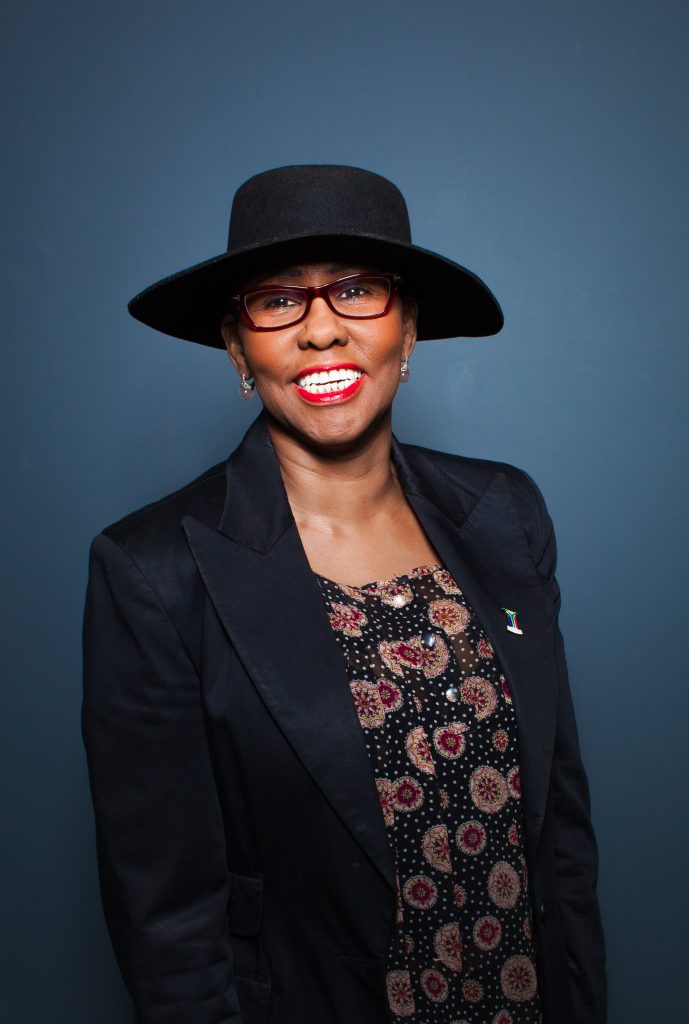
Boniswa Pezisa, Net#work BBDO’s Group Chief Executive, is this year’s Loeries Hall of Fame inductee. Chicken Licken’s Managing Director and Chief Marketer, Chantal Sombonos-Van Tonder, has won the 2020 Marketing Leadership and Innovation Award.

Pezisa is a lover of life, hats and other accessories, and she has experience in delivering breakthrough communications strategies across a wide range of diverse sectors from retail, automotive, finance and FMCG to telecommunications, hotels and petrochemicals. The Hall of Fame was introduced by the Loeries in 2008 to recognise dedicated individuals who have contributed to the building and elevation of the creative and brand communications industry.

‘Pezisa is well respected as a committed leader and advocate for transformation in the industry. She is also a former chairperson of the both the Loeries and the ACA and commands great love and respect from the industry, which she has served for three decades. We are honoured to be able to add her to the Loeries Hall of Fame,’ said Preetesh Sewraj, CEO of the Loeries.

2020 Loeries Hall of Fame inductee.
Boniswa Pezisa, Net#work BBDO’s Group Chief Executive and 2020 Loeries Hall of Fame inductee.

‘I am relishing and enjoying this moment in my career and am truly honoured that a size four shoe can stand amongst giants like Nunu Ntshingila, Mike Schalit, Robyn Putter, Nathan Reddy and Nkwenkwe Nkomo, further affirming my belief that ‘black child your dreams are valid’,’ said Pezisa.

The mother, business leader, community builder and activist joined the industry back in the late ’80s and already in the early ’90s, even before the dawn of democracy, was involved in projects focused on transforming the industry with the simple focus of inclusion for all.

‘As a black female I was aware from the beginning – even when I did not have the language for it – that I was part of a revolution and carried a huge burden to be a conduit for change, diversity, innovation, inclusion and integration,’ said Pezisa.

She said while she is happy with the inroads made to date, to which she has contributed, she is well aware that transformation is not a destination but a continuous journey and there is still a lot of work to be done, especially in bringing women and the youth to the fore.

‘It’s heart-warming to see the prominent rise of the likes of Neo Mashigo, Xolisa Dyeshana and women like Nombini Mehlomakulu (who was once my intern and is now taking a seat at the table of transformation), as this is testament to all the efforts towards inclusion. I am thankful to Net#work BBDO, who from the beginning embraced diversity, for the support they have given me, the space to express myself and explore ideas as well as valuable time to serve the industry on various committees and boards,’ said Pezisa.

Pezisa said the power of Ubuntu, which sounds so cliché, is powerful and has been an anchor of her career. ‘Take the greeting Sawubona for instance, it is packed with such depth. It means: I see you, I acknowledge you, I submit to your presence and you matter. This is my approach to clients and their brands, to my team, my community and my family. This is part of the consciousness which I believe has contributed to my where I am today.’

Asked about what the future holds for the petite firebrand, she replied, ‘This is not the end but just the beginning for me. For me it is service, service and more service. I’ve been blessed with much and have so much to give back. Africa is a youthful continent. My passion is for young people and women and I believe I can make a real difference, especially in people development. I want to cultivate a culture of serving, which is a channel for building a progressive industry.’

On how the lockdown affected her, she said, ‘It has been a year of great reflection and digging deep and the award has come at the right time. I have always maximised on every opportunity along my career path. I hold the door and if someone opens, I budge right in. I will not stop breaking down barriers that hinder transformation,’ Pezisa added.

2020 Marketing Leadership and Innovation Award  

Chicken Licken’s Managing Director and Chief Marketer, Chantal Sombonos-Van Tonder, has made Loeries history by being the first second-generation award winner of the coveted Marketing Leadership Award, an honour her late father George Sombonos received in 2013.  

2020 loeries Marketing Leadership Award winner
Chantal Sombonos-Van Tonder, Chicken Licken’s Managing Director and Chief Marketer and 2020 loeries Marketing Leadership Award winner.

Sombonos-Van Tonder has made Loeries history by being the first second-generation award winner of the coveted Marketing Leadership Award, an honour her late father George Sombonos received in 2013.

The award was introduced by the Loeries in 2007 to recognise an individual for their marketing achievements over a sustained period of time. Previous winners have included Andrea Quaye, former Vice President of Marketing at Anheuser-Busch InBev; Doug Place, Chief Marketing Officer at Nandos; Claudia Waters, Marketing Communications Manager at Mercedes Benz and Yegs Ramiah, former Chief Executive of Brand at Sanlam.

‘Sombonos-Van Tonder’s leadership has seen Chicken Licken win numerous Loerie Awards over the recent years, culminating in Chicken Licken becoming the number one ranked brand in the Loeries 2019 rankings. Her support of her agency is a testament to how effective brand and agency partnerships can create innovative experiences for society,’ said Preetesh Sewraj, CEO of the Loeries.

An elated Sombonos-Van Tonder said, ‘It is a huge honour for me on behalf of my creative team and Chicken Licken family, but also on a personal level it’s a huge affirmation of the work I am doing in continuing my father’s legacy of tenacity and hard work while chartering new territories for the brand.’

Sombonos-Van Tonder, who eats Chicken Licken daily, is exceptionally passionate about the brand founded by her father in 1981 and attributes her business success to the partnership with creative agency Joe Public and her supportive husband and family. ‘The success of our brand is a balance between our agency’s outstanding creativity and my instincts for knowing what is best for the brand, which has been part of my life since primary school,’ she said.

Sharing her father’s firm belief in the power of creativity to move the business forward has already yielded exceptional results, despite the tough economic climate. Even with its doors closed during the Covid-19 lockdown, and while other brands struggled to strike the right tone, Sombonos-Van Tonder ensured that Chicken Licken nimbly adapted its advertising to delight its audience and thereby sustaining fans’ ardent brand love.

Since taking over the helm, Sombonos-Van Tonder has collected a series of accolades – a total of 49 Loeries including a Grand Prix, eleven Gold awards and both the coveted ‘Brand of the Year’ and ‘Brand Representative of the Year’ awards for 2019.

As one of a few women in leadership, the mom of two boys highlights that, ‘Women can achieve the same success and, with determination and support, can balance both career and family.’

Sombonos-Van Tonder holds a Bachelor of Scientific Economics from the University of Stellenbosch and has been at the helm of the business for nearly two decades. ‘Chicken Licken is my life and I am as passionate about it as my father. He once told me that if you believe in something, you should be willing to die for it.’

LOERIES 
www.loeries.com

Online Shopping Is Shifting Purchasing Habits Forever

Online Shopping Is Shifting Purchasing Habits Forever
Claire Herman, Media Operations Lead at The MediaShop.

Claire Herman, Media Operations Manager at The MediaShop, stated that one good thing that came out of lockdown was her introduction to online shopping. She is not unique – according to a recent IOL article, statistics from Mobicred, South Africa’s largest digital credit facility, show some interesting trends pre and post-lockdown.

These include:

  1. Monthly online transactions grew by 40%.
  2. The 60+ years age group grew by a massive 90% (granted it is off quite a small base).
  3. Average purchase size is up by 25%.
  4. Transaction frequency sees an increase of 30%.

People are buying more, more often. This is great for the bottom line for online retailers, which is why Mobicred has also seen a 50% increase in the number of new online retailer sign-ups, and thanks to Covid-19, the definite winners have been the food, alcohol and pharmacy retailers. According to the PayFast Ecommerce Performance Index (PEP Index), beer, wine and liquor online sales have grown by a massive 1787% this year and e-commerce will double its retail market share this year from 1-2% to 2-4%. 

But who else is winning? Despite the enormous blows for the fashion industry in the real world, the online fashion sales space has emerged from the ashes and is set to grow in leaps and bounds. I for one have a tough time shopping for clothes online – shout out to all the short girls out there – but several examples over the past few months are testament to this rapidly evolving space, where virtual change rooms and size guide tables are the order of the day. 

Zara plans to close 1000 of its smaller stores around the world, saying that they expect virtual sales to account for more than a quarter of their business by 2022, and H&M is following suit and will be closing 250 stores worldwide in 2021 in favour of their online platform.

Woolworths is also actively relooking their business strategy to accommodate the massive shift to online sales that they are experiencing, which is up by 41.3% in the second half of this year. And then, following in the footsteps of the two largest fashion e-tailers in South Africa, Zando and Superbalist, a new kid on the block, StyleMode, has just been launched. 

But online growth is not only limited to these select industries. A year ago, I would have argued that clothes purchases wouldn’t have been impacted so severely, but I was wrong. A more logical online purchase for me is home décor and household appliances (which has been very helpful in setting up my home office space), but the usual suspects of high-end furniture stores are now also being challenged, with JD Group’s pending launch of Everyshop. Not only will you be able to continue to access Incredible Connection and HiFi Corp through their new shopping portal, but also Russells, Bradlows, Rochester and Sleepmasters. A whole new market will be opened up here for online furniture and appliance purchases in the mass market – watch this space to see if it gains traction. 

What about cars? It is important to note that even if the final purchase doesn’t happen online, the decision-making process definitely starts online, and more dealerships are bringing more of the dealership experience home for potential buyers. Seeing as, at the point of sale, most of the time actually spent inside the dealership is on paperwork and finance, surely most of this can be done online too? But wait, there is more: according to the Google/Kantar US Automotive Path to Purchase 2020 study, 63% of purchasers would consider ordering a new car online and having it delivered to their homes, and 65% expect more online purchase options in the future.

And travel? Sure, you can make bookings and payments online, and organise flights and accommodation, but did you ever think that you would buy a virtual travel tour? WildEarth is a case in point here, with daily live safari tours brought into the comfort of your own home in real-time, and you can now even add virtual travel to your Amazon Shopping cart. 

So as we enter the highest retail peak of the year, with Black Friday 2020 and Christmas fast approaching, and following on from this increasing trend of online shopping, spend on e-commerce sites is ‘set to soar’, with brands taking advantage of the increased site traffic close to the point of purchase. And brands who have not considered this shift need to start gearing up for this change in consumer behaviour, otherwise they will be left behind. 

This shift not only impacts on how brands sell to consumers, by either enabling their online platforms for e-commerce or partnering with the likes of Takealot, but there is a knock-on effect for the entire supply chain ecosystem and the resultant marketing strategy that will need to be adopted. Stock availability, safe payment options, delivery options and timeframes, client query facilities, return policies and consumer communication strategies, to name a few, will all need to be considered and adapted. Is your brand ready to be added to my shopping cart?

THE MEDIASHOP
www.mediashop.co.za

How Brands Can Connect With Consumers Who Are Re-Evaluating Priorities

How Brands Can Connect With Consumers Who Are Re-Evaluating Priorities

According to Karena Crerar, Advisory Lead at Edelman Africa, before the pandemic brands were able to plan and prepare for potential crises based on known risks. However, things are no longer predictable.

We do not yet know the nature of the challenges that await but we can be certain their effects will be felt for years to come. The damage that hits a business today has the potential to affect not only profit but also the way in which people and society interact with this business.

The Covid-19 pandemic threw businesses across the world into a state of crisis. Despite the start of systematic recovery in some countries, the pandemic has changed every aspect of our lives – how we connect, move, live and work.

Consumers have adjusted to ‘the new normal’, they are re-evaluating their choices, priorities and even their values. The Edelman Trust Barometer Special Report on Marketing Amidst a Crisis shows that globally consumers values have shifted towards protecting their families, spending time with loved ones and making smart purchasing decisions. As people re-imagine society and the communities in which they live and work, while wearily anticipating a second wave of infections, there is a change in the expectations that people have from the businesses that they engage with.

Many businesses are cautiously optimistic about restarting their engines – a second wave may mean looking at the possibility of having to re-close their operations, the potential reintroduction of restrictions on movement and trade, as well as the impact this could have on employees and stakeholders.

The reality is, businesses need to be more agile to adapt to the new normal and start thinking about crisis in a new way. A large part of this will be ensuring that a proactive approach to risk and crisis management becomes an intrinsic part of their processes.

There are three ways in which business can change how they approach crisis management going forward.

Firstly, brands need to change their mindset around crisis so that they can employ new ways of always being prepared. An integrated response is needed to successfully navigate a crisis. All areas of a business need to come together to communicate with the necessary stakeholders. This needs to be done with recognition of changing consumer values and with a tone that is appropriate for the crisis at hand. Looking at Covid-19, businesses were tasked to move beyond communications for crisis, beyond news cycles.

Brands needed to respond holistically to the Covid-19 crisis as it presented more than communications and perception issues. Policies were no longer applicable, supply chains across various industries were disrupted and global priorities fundamentally shifted. The fuel industry, for example, was particularly affected as demand dropped significantly, fuel prices plummeted, the industry’s franchise model was challenged on the compliance front and employee safety needed to be a top priority. The pandemic overwhelmed many parts of businesses that may have been siloed in the past.

Second to this, many brands will need to change their thinking around their business strategy with crisis thinking now making up a key component. Instead of thinking about the known risks to a business, businesses will need to start predicting future risks that may affect them even if not directly associated with their industry.

A way to manage this can include a shift from focusing on retrospective reporting to forward-looking landscape analysis. Your reputation seldom gets damaged in retrospect, it is what is around the corner that counts. 

Lastly, taking action against crisis will be a key priority as businesses try and regain stability and move into recovery – action should be at the core of any communications activity. Businesses will need to draw on their trusted relationships in order to ensure constant preparedness. The new challenges presented by modern crises cannot be fixed alone and there is a need and expectation from consumers that society collaborates in order to overcome a crisis of this magnitude.

As much as siloes within businesses need to be broken down to address issues effectively, so do siloes in industries and between the public and private sectors. When industries work together, they are better able to share information that helps businesses look around corners and come up with agile and quick solutions. This was seen with the banking industry’s well-aligned approach to granting payment holidays to individuals and small businesses, led by the regulator.

It is essential that businesses change their approach to crisis communications, and that this is done through strategic integration across business functions and stakeholders. If brands work on building trust between themselves and employees, investors, regulators and consumers, they will be able to strengthen their reputation resilience. The old building blocks of crisis preparedness are still important but these need to exist in a more holistic framework to ensure that the new order of crisis does not overwhelm businesses again.

EDELMAN AFRICA
edelman.com

SAIMM Set To Better Serve Markets With Firejuice Appointment

SAIMM Set To Better Serve Markets With Firejuice Appointment

At its core, the Southern African Institute of Mining and Metallurgy (SAIMM) is a professional institute with local and global links aimed at assisting members to source information about technological developments in the mining, metallurgical and related sectors. SAIMM appointed Firejuice is to assist it in repositioning in order to better serve its markets. 

This will begin in early 2021, with the introduction by the SAIMM of its modernised value proposition, made up of six main thrusts. Vaughn Duke, CEO of mining consultancy Sound Mining and current president of the SAIMM said, ‘South Africa has always been a mining powerhouse. Having a dedicated body that provides relevant services to help the industry grow is a key ingredient in its future growth and sustainability.’ 

Bernard Jansen, founder and principal consultant at Firejuice said, ‘Over the years we’ve successfully worked with a number of businesses in mining, and we are excited to now have the chance to work with the body that represents the entire sector.’

FIREJUICE
bernard@firejuice.co.za
www.firejuice.co.za

The Business Of Belonging At #Loeries2020

The Business Of Belonging At #Loeries2020
Jess Weiner, CEO of Talk to Jess.

Jess Weiner, CEO of Talk to Jess, was one of the speakers at the #Loeries2020 Creative Week. Her presentation was based on the business of belonging: how inclusivity evolved the world’s most famous doll.

‘Although I initially started talking to women and girls, I realised that in order to make a real systemic impact, you have to talk to women, girls, boys and men and those who don’t identify in any one of those binary gender categories. This is really about opening wider, broader, and being more inclusive than we have been before,’ said Weiner. 

One of the most powerful amplifiers of her work has been her ability to cut through the noise and look at the cultural context of what people are experiencing around the world. ‘What started my work in this kind of brand advocacy was the campaign for real beauty with Dove in 2004. I have helped to be a part of that and proud to say that we have reached over 60 million girls with self-esteem education curricula. In fact, Dove has become the number one distributor of free self-esteem content around the world, larger than any NGO or NPO organisation. Dove provides this content and we are continuing with some very lofty goals in the years to come. But this has become a long-term commitment for Unilever and it has opened up conversation around the world around beauty standards and unrealistic beauty ideals,’ she added. 

She is particularly proud to be associated with her work with Disney on evolving the ‘Disney princess’. ‘I remember in some of this work with Disney, one of our key insights was that girls were many things. This sounds pretty obvious for those of us who identify as women and girls – of course we’re multi-dimensional.’

‘Also important to note that this was an inspiration to look at because this category was falling pretty soft in 2012 and 2013, which is when I started working with them, and a lot of that was because mothers in the US and also around the world were really challenging what their children were playing with. They were asking the question: am I buying the toys and the stories that are going to be most representative of my values as a parent?’

LOERIES 
www.loeries.com

Visceral Creativity At the #Loeries2020

The Business Of Belonging At #Loeries2020
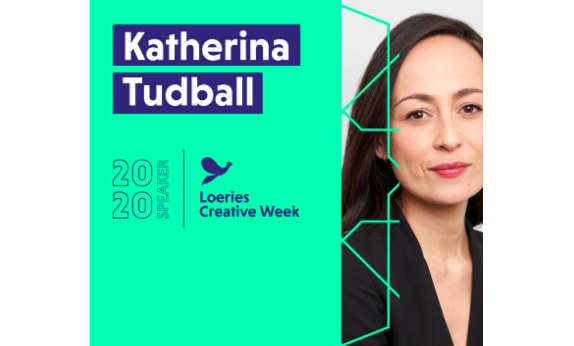
Katherina Tudball, Creative Director at Superunion London.

Katherina Tudball, creative director at Superunion London and one of the speakers on the first day of the #Loeries2020 Creative Week, addressed visceral creativity. She said that during her time as a designer, there is one word that sums up her approach to creativity, and that is ‘ideas’.

‘What I mean is that conceptual thinking is at the heart of everything that I think of in terms of my approach to design,’ she said. Going back to being a student, there were a few books that were influential for her as she was starting out:

A Smile in the Mind by Beryl McAlhone. ‘This book introduced me to the idea that you could have visual ideas, that you could create clever connections with words and images that could really make a memorable connection with your audience, and I really started to love that way of working in graphic design.’

The other book, Problem Solved, was written by her first boss, Michael Johnson. ‘This was actually published shortly after I graduated and was already working for Johnson, and it was all about approaching design as a problem-solving exercise and then finding the ideas – these kinds of hidden gems and ways to solve those problems.’

She shared projects and different ways in which she sees a slightly more emotional side coming through in the approach to the work and the work itself. The first is Shakespeare’s Globe, a theatre and cultural centre in London on the South Bank of the Thames, that was about capturing the visceral nature of a real physical place. One of the things she particularly loved about this was the physicality of the project.

The next project is BBC2, a UK television terrestrial broadcast channel. The project was all about evoking moods and trying to put the viewer into a particular frame of mind. ‘BBC2 had this very iconic identity for 27 years and it was very much loved by the public and the design industry as a real classic of British broadcast design, so it was quite a scary project to undertake, but what we were trying to do was reflect what BBC2 is today, and that is the channel in the UK that commissions the most original content,’ she said. 

‘The brief to us working really closely with BBC’s in-house creative agency, BBC Creative was to basically reflect that fact that BBC creates really stimulating content, and this was a super collaborative project. I guess trying to capture the spirit of a place that has so much history, that has so much storytelling behind it, that is messy and dynamic, and trying to kind of encapsulate that in a visual identity system that still works was the big challenge for the Globe. For BBC2, it was all about that great scope of human emotion that we all share and that can be expressed through abstract imagery and motion and sound in a way that can connect to anybody and kind of bypasses the kind of intellectual and rational side of our brain.’


LOERIES 
www.loeries.com

Facebook And Red & Yellow Support Young Talent Through #Loeries2020 Partnerships

Facebook And Red & Yellow Support Young Talent And Drive Meaningful Change In SA Through #Loeries2020 Partnership

Red & Yellow Creative School of Business in Cape Town, joins forces with Africa and the Middle East’s premier award as the official education partner of the Loeries. Facebook is sponsoring the Student Category at the Loeries in order to champion diverse and young creative talent, for the fifth consecutive year.

This includes the much-coveted Loeries Student Instagram Challenge, which sees students tackle a real-world problem through the power of mobile creative. Young people in Africa and the Middle East were invited to create a mobile-first Instagram campaign for underage drinking in association with Aware.org – the Association for Alcohol Awareness and Responsibility. The discussions and debates were shown across three channels: Loeries Presents, Loeries Conversations and Loeries Engage which include an interactive workshop with Instagram.

Instagram winners

Awards Credits
Student Instagram category, in partnership with Facebook
A Bronze Loerie goes to Jasmine Acton, Ria-Mari van Rooyen, Erin Knoesen from IIE-Vega for Aware.org Drinking Games College/University: IIE-Vega;
Lecturer: Christiaan Graaff, Darren Meltz, Farrell West;
Student: Jasmine Acton, Ria-Mari van Rooyen, Erin Knoesen
A Bronze Loerie goes to Ncumisa Vabaza, Abongile Nongqoza, Busisiwe Laveni, Tembukazi Ncanisa from Nelson Mandela University for Aware.org Who Influenced Who? campaign College/University: Nelson Mandela University;
Lecturer: Senzo Xulu;
Student: Ncumisa Vabaza, Abongile Nongqoza, Busisiwe Laveni, Tembukazi Ncanisa
A Silver Loerie goes to Anna Durr from Red & Yellow Creative School of Business for Aware.org You can make it campaign College/University: Red & Yellow Creative School of Business;
Lecturer: Carmen Schaefer;
Student: Anna Durr


This year, in celebration of Instagram’s 10th year anniversary, the Loeries also played home to a virtual ‘House of Instagram’ on 17 November, where key Instagram trends and innovations were highlighted.
 

‘We are really excited about how young people are using the mobile canvas, specifically Instagram, to create, innovate and, in keeping with the Loeries theme, #CreateChange,’ said Elizma Nolte, Regional Marketing Manager for Sub-Saharan Africa at Facebook. ‘At a time that society is debating the dangers of underage drinking and promoting behaviour change, the Facebook and Instagram Stories ads we saw astonished us with their authenticity and raw power. We look forward to showcasing the winning campaign across Instagram in 2021. And, of course, celebrating 10 years of Instagram with the creative industry.’ 

Preetesh Sewraj, CEO of the Loerie Awards added, ‘The future of the world lies in the hands of young people and through encouraging them to deepen their curiosity and sharpen their problem-solving skills, we go a long way in improving creativity and innovation.’

Red & Yellow Creative School of Business

Being the official education partner of the Loeries is a progressive step in expanding the school’s powerful legacy of building relationships with industry leaders to ensure students get exposure to the ‘real’ world. The partnership provides an incredible opportunity to celebrate the shared respect for excellence in creative thinking, emotional intelligence and making a meaningful difference.

The purpose of the Loeries is defined as ‘It’s more than an award. It’s about doing something. Something big. Something that makes a real difference. Challenging the world. Changing it – from bitter to better, less trending and more mending. Flipping the likes and fixing the dislikes. It’s about making work that doesn’t count views, it changes them.’

The intention of the campaign – launched in Loeries Creative Week – is to pay tribute to the school’s legendary founders by opening up further opportunities for talented humans to reap the benefits of education and build successful careers in the creative industry:

2 full-time Tuition Scholarships for:

One previously disadvantaged student  – the Red & Yellow Brian Searle-Tripp Scholarship, in conjunction with the Loeries.

One female student – the Red & Yellow Bob Rightford Scholarship, in conjunction with the Loeries.

3 sponsored Red & Yellow online courses (in recognition of the 3 founders).

20 Honoris Skills Certificates for students – chosen by the Loeries  – designed to help improve employability prospects.

50 student tickets give-aways to Loeries Creative Week for current and prospective students, providing valuable access to the biggest gathering of creative minds.

Awards boost careers/recognition earns respect

Awards ceremonies like the Loeries are immensely valuable as public affirmations of talent, creative thinking and hard work. Particularly for students, as it helps them stand out from their peers when entering the brutal job market. While they should never detract from the hard work required to equip the next generation with all the necessary skills and knowledge, they definitely play a significant role in reassuring educators that they are on the right track, and give finalists and award-winning students a boost of confidence and a point of difference.

Carmen Schaefer, Red & Yellow’s Head of Full-Time Education said, ‘We’re particularly proud that our finalists come from diverse backgrounds and different programmes, and that the nominated work spans four different languages and numerous award categories. This is evidence that all our programmes are delivering a high level of quality education and that our students are being prepared to take on the corporate world in a variety of sectors. But what I’m most proud of is the determination and hard work of all our students who refused to let the challenges of 2020 get them down. They inspire my colleagues and I on a daily basis.’ 

LOERIES 
www.loeries.com

Nike Appoints Wunderman Thompson South Africa To Elevate E-Commerce Customer Experience

Nike Appoints Wunderman Thompson South Africa
Thamsanqa Moyo, the MD of Wunderman Thompson SA - Consulting.

The Wunderman Thompson South Africa appointment scope by Nike includes customer experience, strategy, creative, user experience (UX) and user interface (UI) design for all Nike products on Sportscene, with the launch of the first release planned for December. The agency will elevate Nike’s e-commerce customer experience.

This comes after Nike appointed Wunderman Thompson South Africa in October. The agency was approached to pitch a creative concept for the Nike ‘Home of Air’ campaign.  Creative Director, Wunderman Thompson South Africa, Francois Botes expressed, ‘We had to consider how we might differentiate Nike in an increasingly crowded e-commerce space. We found opportunities within Nike’s customer journeys to provide delightful digital experiences through the creation of new value-added services. These services will elevate Nike’s e-commerce customer experience beyond an undifferentiated purchase transaction.’

Agency managing director – Consulting, Thamsanqa Moyo added, ‘We are thrilled to be creating future-fit customer experiences for an iconic brand like Nike. Wunderman Thompson has the right set of capabilities for Nike to thrive within a highly competitive and fast-changing e-commerce environment.’

WUNDERMAN SA
+27117507300
wunderman.co.za
This is Modern Marketing