
Home Blog

The Conversationalist Era Has Arrived. Is Your Brand Ready?

The Conversationalist Era Has Arrived. Is Your Brand Ready
Natalie Druion, Momentum Group.

Natalie Druion, Executive Head of Conversations at Momentum Group, says ‘I have been obsessed with stories for as long as I can remember. The longer I spend building brands, the more I realise this: a story told into silence is simply noise. It is the conversations that follow the response, the debate, the shared meaning that make a story matter.’

Right now the global marketing industry is gathered on the French Riviera for Cannes Lions, the biggest celebration of creativity our business has. Tens of thousands of delegates. Hundreds of stages. An ocean of rosé. And one question running underneath all of it: what actually makes creative work matter? Not reach. Not budget. Conversation.

It is telling that this year Cannes introduced a new Creative Brand Lion, rewarding brands that use creativity across the whole organisation to build lasting growth rather than chase a single campaign. Natasha Woodwal, the festival’s Director of Content, framed the 2026 programme around ‘new voices, new communities and new conversations’. The industry is finally naming the shift I have spent years living.

‘Most brands have mastered the telling, but very few have mastered the listening.’

We Are Drowning In Noise

The average consumer is exposed to thousands of brand messages every day. Across television, radio, social media, streaming platforms, outdoor advertising, and mobile devices, brands are competing for increasingly scarce attention, and yet many marketing teams still believe their campaigns are cutting through. Most are not.

We have become obsessed with reach, impressions, click-through rates, and conversion funnels. In the process, we have forgotten something fundamental: brands need to be interesting. Content has become wallpaper. Brands are talking. People are scrolling. The uncomfortable truth is that we have optimised ourselves into irrelevance.

The Creativity Crisis

Research tells us we’re born with 98% creativity. By adulthood, that number collapses to 2%.

Two percent. Somewhere along the way, marketing became less about curiosity and more about certainty. We stopped asking ‘what if?’ and started asking ‘what worked last quarter?’ The result is predictable. Much of today’s content looks the same, sounds the same, and delivers the same outcome: very little.

At the same time, people are engaging in thousands of conversations every day through WhatsApp groups, comment sections, DMs, podcasts, online communities, and face-to-face interactions. Yet many brands continue to treat their most powerful engagement channels as digital noticeboards. The opportunity is not to produce more content but to become part of the conversations people are already having.

Social Media Is Not A Billboard

Social media was never designed to be a broadcast channel. It is the world’s largest conversation platform. The brands winning today understand this. They are not asking, ‘How do we reach our audience?’ They are asking, ‘How do we create something with our audience?’ This shift represents a transfer of power.

Consumers are no longer passive recipients of marketing messages. They want participation, they want ownership, and they want to contribute to culture rather than simply consume it. The brands that understand this do not just build audiences. They build communities, and when communities reach scale, something more powerful emerges: fandom.

Fandom Is The New Brand Loyalty

Fandoms are earned, not bought. Think about the organisations and personalities that command extraordinary loyalty. They stand for something bigger than what they sell. Their communities share language, rituals, values, and identity. The same principle applies to brands.

Within Momentum Group, the #SheOwnsHerSuccess platform offers a compelling example. What began as a commitment to advancing women’s financial independence has evolved into a broader ecosystem of workshops, masterclasses, digital tools, funding initiatives, and resources. Its longevity has not come from a campaign budget, it has come from consistency.

People do not build emotional connections with campaigns; they build emotional connections with causes, communities, and convictions. Research consistently shows that younger generations increasingly expect brands to reflect their values and create opportunities for participation. For marketers, that represents one of the most underutilised opportunities available today. Building a fandom does not require massive budgets. It requires a clear point of view and the discipline to show up consistently over time.

Emotional Connection Is A Business Metric

This is where conversations become commercially valuable: when you analyse how people speak about a brand not just what they say, but how they feel you uncover insights that traditional performance metrics often miss. You begin to understand the anxieties, aspirations, frustrations, and victories shaping customer behaviour. You see the moments where trust is earned, strengthened, or lost. Tools such as sentiment analysis, topic mapping, and conversation monitoring are often viewed as reputation-management functions. In reality, they are empathy tools; they help brands understand context as they reveal where a brand can contribute meaningfully rather than interrupt unnecessarily.

Three Things Brands Need To Stop Getting Wrong

1. Stop Fence-Sitting

Brands cannot mean something to everyone. The organisations that create lasting relevance are willing to take a position. They understand their values, articulate them clearly, and consistently demonstrate them through action. Being brave does not mean being reckless. It means having the conviction to stand for something.

2. Stop Treating Communities Like Demographics

Audiences are not neat categories. The most vibrant communities are often complex, contradictory, and difficult to segment. They contain people with different motivations, identities, and perspectives. Brands that embrace that complexity build stronger relationships than those trying to force people into predefined marketing boxes.

3. Stop Broadcasting. Start Belonging.

The strongest communities are built through participation, they celebrate customer milestones, respond to content, invite collaboration and offer behind-the-scenes access. People do not want to feel like followers, they want to feel like insiders.

The Rise Of Smaller Communities

One of the most interesting shifts happening today is that meaningful engagement is increasingly moving into smaller, more focused spaces. Consumers are gravitating towards platforms and communities that feel more personal, more intentional, and more authentic. The success of platforms like Substack demonstrates this clearly. In a digital environment dominated by algorithms and endless feeds, people are actively choosing spaces built around direct relationships, trust, and shared interests. The lesson for brands is simple: meaningful engagement doesn’t require the largest audience; it requires the right audience.

Closer to home, Checkers Sixty60 demonstrates the power of this principle. What began as a grocery delivery service became something much bigger because customers genuinely loved the experience. The enthusiasm surrounding the brand wasn’t manufactured; it was amplified by people who felt emotionally invested in it. That is what happens when usefulness, consistency, and community intersect.

Five Principles For Modern Brand Builders

After years of building brand voices and managing conversations, five lessons continue to hold:

– Think like a producer. Consistency matters. Audiences love familiarity, provided it evolves over time.
– Act like a storyteller. Prioritise human moments over polished perfection. Authenticity is memorable.
– Edit like a detective. The strongest ideas survive scrutiny. Write freely, then refine ruthlessly.
– Experiment like a scientist. Protect a portion of your budget for testing. Innovation rarely emerges from certainty.
– Stay curious. Inspiration often comes from unexpected places. The most effective strategists remain lifelong students of people and culture.

The brands earning loyalty today are not necessarily the loudest, they are the most conversational. They understand that attention is earned through relevance, not volume. They recognise that community creates more value than reach. And they know that belonging drives behaviour more effectively than broadcasting ever could. The world is not getting quieter. Content volumes will continue to rise, and algorithms will continue to change. But brands that learn to listen, participate, and contribute meaningfully to the conversations shaping people’s lives will remain relevant long after the latest marketing trend has passed.

By Friday the Lions will be handed out and the Croisette will empty. The trophies matter for a week. The conversations a brand builds matter for years. That is the difference between winning a moment and earning a place in people’s lives. The rise of the conversationalist is not a trend; it’s a response to a world that has stopped listening to brands and started listening to each other.

MOMENTUM GROUP
https://www.momentumgroupltd.co.za/

CMO’s Can’t Ignore The Platform Shaping What AI Says About Your Brand

CMOs Cant Ignore The Platform Shaping What AI Says About Your Brand
Musa Kalenga, the Brave Group,

Musa Kalenga, CEO of the Brave Group, says for years, Reddit occupied an awkward corner of the marketing map: too chaotic to manage, too niche to justify a serious budget, too hostile to tolerate branded content. Most marketing teams treated it as a place to monitor occasionally and otherwise avoid. That instinct is now a liability.

Reddit is quietly becoming one of the most consequential inputs into how consumers discover and evaluate brands in the AI era. Understanding why requires a small detour into how large language models actually work.

How AI Learned To Think Like Reddit

The systems powering ChatGPT, Google Gemini, and the AI Overviews now embedded at the top of search results were trained on vast amounts of publicly available text. Reddit, with its billions of posts and comment threads spanning two decades of candid, specific, experience-driven human conversation, is among the richest sources of that training data.

Several of the largest AI developers have signed commercial licensing agreements with Reddit to formalise that access.

The consequence is significant. When a consumer asks an AI assistant which product to buy, which brand to trust, or what downsides no one mentions, the answer has been shaped in part by what Reddit communities have been saying about those categories for years. The official website, the press release, the carefully crafted product description: none of these carries the same weight as thousands of authentic peer conversations.

AI ‘Loves’ Reddit

As a result, AI experiences tend to reward content that looks like Reddit: problem-first, experience-driven, and debate-tested. Reddit threads begin with questions; replies are structured as answers; upvotes signal what the community considers credible. The platform is, in effect, a library of human judgment organised in exactly the same way AI systems are prompted.

There is a further dimension that many marketing teams have yet to absorb. Reddit threads regularly rank on the first page of Google results for relevant queries. A well-upvoted post recommending or condemning a product can persist at the top of search for months or years.

The lifespan of that influence vastly exceeds that of any paid campaign. One outdated complaint, one unresolved support incident handled badly in public: these can become disproportionately influential simply because they represent the most substantial public narrative available about a brand.

Dove And The Courage Of Radical Transparency

If the strategic case still sounds abstract, Dove’s r/eal Reviews campaign offers a concrete illustration of what engagement on Reddit’s own terms can achieve.

In early 2026, Dove launched a campaign for its Intensive Repair 10-in-1 Serum Hair Mask built on a premise that most brand safety teams would have rejected outright. The brand invited Redditors to try the product and share their honest opinions. It then promised to publish the first 50 reviews verbatim, without curation, and to use those unedited consumer voices as the creative itself across out-of-home billboards in New York City and across social media.

The reviews were exactly what you would expect from a platform built on candour. Most were enthusiastic. One reviewer noted that the mask smelled, in their words, like expired hotel shampoo. That review made the campaign.

Reddit’s Bottom-Line Results For Unilever

The results were remarkable: more than one billion impressions, hour-long queues at a Manhattan sampling pop-up, over 150 pieces of user-generated content, a meaningful lift in large language model search results for Dove Hair during the campaign period, and high single-digit growth in Unilever’s Hair Care category in the first quarter of 2026.

Emily Barfoot, Head of Dove US for Beauty and Wellbeing, frames the strategic logic with precision: ‘Transparency was not a risk. It was our strategy.’ She noted that Dove’s own research showed 71 per cent of consumers use Reddit to research brands before purchase decisions, and that the platform’s growing influence on AI and LLM outputs makes it not just culturally relevant but strategically critical.

What made the campaign work was not a clever media execution. It was the recognition that Reddit is a culture, not a channel. The brand integrated Reddit’s own Snoovatars into the campaign creative. It listened before it broadcast. It respected the community’s norms rather than attempting to override them.

The Trust Gap That Paid Media Cannot Close

The Dove campaign is not an isolated case study. It reflects a structural shift in how consumer trust is built and lost. The Edelman Trust Barometer 2025 found that peer recommendations now outrank paid advertising by 28 percentage points in consumer trust, and that gap is widening.

Companies with strong communities grow revenue 2.1 times faster than those without, according to separate research, with every pound invested returning an average of five pounds across acquisition, retention and reduced support costs.

For CMOs, the practical implications are becoming harder to defer. Specialist Reddit marketing agencies are now being formally recognised by industry bodies. Senior community roles at technology firms command salaries of $170,000 to $220,000. The title of Chief Community Officer has begun to appear on executive org charts. These are not vanity signals; they reflect belated recognition that community is a strategic function, not a marketing subtask.

What This Means For Marketing Leaders

The starting point is not a Reddit campaign. It is a Reddit audit. Identify which subreddits function as decision hubs in your category. Understand what consumers consistently say about your brand when no one from your company is in the room. Map the misconceptions that recur, the competitors being recommended in your place, and the unofficial truths that AI systems are absorbing and repeating. Only then does participation make sense.

The strategic mindset shift required is subtle but important. The question is not how to run Reddit as a channel. It is how to participate in the conversations that are already shaping your category narrative.

Brands that approach the platform as a distribution mechanism for existing messaging will earn distrust. Those who approach it as a reputation layer, one that requires patience, authenticity, and genuine contribution, can earn something far more durable.

In the age of AI-mediated discovery, understanding Reddit may matter as much as any line in your media plan. The platform is no longer where conversations about your brand end up. Increasingly, it is where the machines form their opinions about you.

Whether you are part of that conversation is, for the first time, genuinely optional. The consequences are not.

BRAVE GROUP
https://bravegroup.co.za

Infobip Positioned Furthest By Gartner For Completeness Of Vision For Second Year Running

Infobip Positioned Furthest By Gartner For Completeness Of Vision For Second Year Running

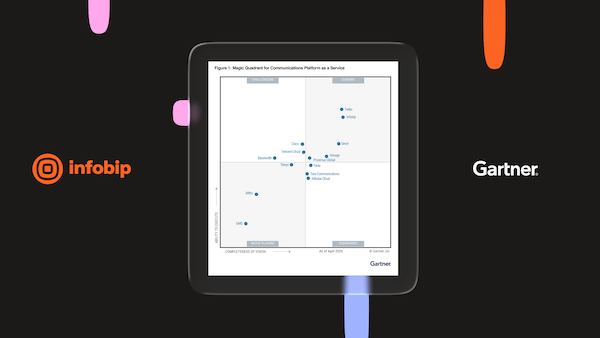
Infobip has been named a Leader in the 2026 Gartner Magic Quadrant for Communications Platform-as-a-Service (CPaaS)1 for the fourth consecutive year. For the second time, the company is positioned furthest for Completeness of Vision. Infobip views the Gartner recognition as a reflection of the company’s sustained ability to anticipate what comes next, not chase what is trending today.

Two decades ago, Infobip began with a simple mission: use technology to bring people closer together. What has followed is a consistent pattern of building ahead of the market, moving from SMS to omnichannel communications, then conversational AI, and now with the launch of Infobip AgentOS, bringing agentic AI to enterprise scale.

Infobip AgentOS enables businesses to deploy AI agents that autonomously handle transactions, manage routing, and optimise workflows in real time, safely and at scale, with less manual intervention and faster execution than before. Rather than forcing enterprises into rigid workflows, Infobip enables customers to compose exactly the capabilities they need, unlocking use cases that simply weren’t possible before.

Read a complimentary copy of the Gartner CPaaS Magic Quadrant 2026 report here.

1) Gartner, Magic Quadrant for Communications Platform as a Service by Lisa Unden-Farboud, Pankil Sheth, Ajit Patankar, 18 May 2026.

INFOBIP
www.infobip.com

How To Ensure Your Brand Shows Up In AI-Generated Search Results

How To Ensure Your Brand Shows Up In AI-Generated Search Results

Thelma Ngoma-Mavhunga, senior communications specialist at Flow Communications, says many people now receive direct answers from AI tools such as ChatGPT, Gemini and Perplexity, or through AI-generated summaries embedded in search results. This new reality changes what ‘visibility’ means in practice. It is no longer only about ranking, it is about whether your brand is part of the answer at all.

Google’s AI Overviews, which it has rolled out across search, make this shift visible. Instead of showing only links, Google generates a summary at the top of the page in response to some queries.

A Pew Research Center study published in July 2025 analysed the browsing activity of 900 adults and found that users clicked on traditional search results in only 8% of searches where an AI summary appeared, compared to 15% where there was no summary. Clicks on links inside the AI summaries were even lower, accounting for only 1% of visits. The findings suggest that when users receive a complete answer upfront, many do not continue beyond the summary.

That matters for brands. Fewer clicks mean fewer chances to shape how you are understood through content housed on your own platforms.

For South African corporates, this shift builds on an already competitive digital environment. Traditional search engine optimisation, media coverage and social media posting remain important marketing tools, but they no longer guarantee your visibility inside AI-generated responses.

GEO And How AI Systems Decide What Shows Up

Understanding how AI systems generate answers to search queries is the starting point. This is where Generative Engine Optimisation (GEO) becomes relevant. It looks at how brands appear in AI-generated answers, not only where they rank in search results.

According to OpenAI, large language models are trained on large volumes of publicly available text. When answering a question, many AI tools pull real-time information from the internet to improve accuracy. In both cases, the output reflects what is already most present and consistent in the public record. Brands that appear frequently and across credible sources are more likely to be referenced in AI search results. Brands with fragmented or contradictory records are more likely to be misrepresented or ignored. This puts pressure on brands to pay closer attention to something most organisations underestimate: consistency.

If a brand is described differently across press releases, outdated bios, scattered reports and inconsistent media coverage, AI systems are more likely to produce incomplete or uneven summaries. This is not because the model is biased, but because the source material is fragmented.

When Fragmented Information Becomes A Reputational Risk

There is a reputational layer that is often overlooked. Generative AI systems summarise information that is publicly available online. They reflect what exists in the public record, without prioritising what a company intends to communicate. If outdated or negative information is more visible than official content, it can shape how an organisation is represented in AI-generated responses.

This is a real challenge for many South African organisations. Information is often spread across reports, PDFs, archived webpages and media coverage that are not always aligned. That fragmentation can affect how AI tools describe a brand.

What matters increasingly is coherence: consistent naming, updated leadership information, clear governance and impact reporting and media coverage that is easy to verify and trace. These established communication principles now influence whether a brand is accurately reflected in AI-generated answers.

Flow Communications is seeing growing demand from organisations to build connected information ecosystems rather than isolated campaigns. This means aligning media relations and owned content so that the public record is consistent and stable.

In practice, this includes both technical and editorial work. Technical work involves cleaning outdated information, aligning naming conventions and improving how reports are structured online. Editorial work focuses on clear, consistent messaging so that key information about a business is current and accessible across platforms.

As AI becomes a default gateway to information, communications is no longer only about creating content or running campaigns. It is also about maintaining a clear and credible public record. The organisations that do this well are more likely to be accurately represented in the answers people increasingly rely on.

FLOW COMMUNICATIONS
www.flowsa.com

Think Beyond Efficiency When Using AI

Think Beyond Efficiency When Using AI
Scott Reinders and Izak van der Walt.

There is a seductive story being told across boardrooms right now: adopt AI, move faster, do more with less. The pitch is compelling. The dashboards are impressive. And yet, for most businesses, the returns are nowhere to be found. The most visible consequence has been headcount reduction. But organisations that treated AI as a staffing equation are discovering that removing people without rethinking how work gets done does not create a smarter business. It creates a thinner one.

This is according to Izak van der Walt, Project Director: AI and Automation, The Up&Up Group, and Scott Reinders, Chief Operating Officer, Connect (part of the Up&Up Group).

A 2025 report from MIT’s Media Lab found that despite $30 to $40 billion dollars in global enterprise spending on generative AI, 95% of organisations are seeing no measurable return on investment. McKinsey’s 2025 State of AI survey tells a similar story. While 88% of organisations now use AI in at least one function, only around a third are scaling it meaningfully, and just 6% qualify as high performers delivering real bottom line impact. Meanwhile, Gartner found that only 5% of marketing leaders using generative AI purely as a productivity tool reported significant business gains.

The pattern is clear. The industry has been fixated on efficiency. Speed, volume, output. But from our experience leading AI implementation and media strategy inside the same agency group, being fast is not a competitive advantage when everyone has access to the same tools. The real question is whether you are using technology to do the right things, not just to do things faster.

The Efficiency Trap

It is easy to understand why efficiency became the default objective. Budgets are under pressure. Expectations around quality, scale, and speed have not dropped. In many cases, they have increased. AI and automation offer a credible way to do more within those constraints. But efficiency on its own does not change what gets done. It only changes how quickly it happens.

McKinsey’s research draws a sharp line here. High performing organisations, the ones actually generating measurable value from AI, are nearly three times more likely than others to have fundamentally redesigned their workflows. They do not simply bolt AI onto existing processes. They rethink the processes themselves. Importantly, while 80 percent of companies set efficiency as an AI objective, high performers also set growth and innovation as goals. That broader ambition is what sets them apart.

A landmark study from Harvard Business School and Boston Consulting Group adds another layer. Consultants using AI completed tasks 25 percent more quickly and produced 40 percent higher quality results, but only when AI was applied to the right tasks. For tasks outside AI’s competence boundary, what researchers called the jagged technological frontier, AI actually made people perform worse. The first job is not to automate everything. It is to understand where AI genuinely adds value, and where human judgement and creativity are still critical.

More Ads Is Not A Media Strategy

From a media strategy perspective, Reinders sees this playing out every day. ‘The temptation is to use AI to produce more. More ads, more placements, more variations. But without asking whether that volume is actually driving outcomes,’ he said. ‘Every scrolling feed, every open web banner gets packed with deals and promotions. Scale without signal is just noise.’

Gartner’s data supports this concern. A 2024 survey of marketing leaders found that 87% of CMOs experienced campaign performance issues in the previous year, with nearly half terminating campaigns early. More output has not solved the challenge of cutting through in a cluttered market. If anything, it may be making it worse.

Reinders argued that the real competitive edge in media comes from making sharper decisions about where, when, and how to invest. ‘Platforms that deliver strong active attention, TikTok when creative aligns with the format, YouTube non skippable for storytelling, work because someone made a deliberate choice about the environment. That is an effectiveness decision, not an efficiency one.’

For South African brands operating with tighter budgets than their global counterparts, this distinction matters even more. When you cannot outspend the competition, you need to outthink it. That means using technology to improve the quality of strategic decisions, not just the speed of execution.

What Effectiveness Actually Requires

Moving from efficiency to effectiveness is not a matter of slowing down. It is a matter of redirecting where the speed is applied. From our experience, three shifts separate the organisations generating real value from those still chasing output.

From generic to contextual. When every company has access to the same AI models, plugging them in without adaptation produces the same generic outputs as everyone else. The organisations pulling ahead are the ones embedding their own context into how AI is deployed: how their teams actually work, the signals they respond to, the judgement calls that repeat across real situations. The tool is commoditised. The application of it is not.

From executional to strategic. Too often, AI enters the workflow at the point of execution: generating assets, populating templates, speeding up production. But if the brief was wrong, or the channel strategy was misaligned, faster execution just delivers the wrong thing more efficiently. The shift is to move AI upstream, into the strategic decisions that determine what gets made and why.

From linear to iterative. Traditional campaign cycles run on a launch-and-review cadence that measures results in quarters. By the time the data comes back, the budget is spent. Redesigning workflows around continuous optimisation, with shorter cycles, live feedback, and rapid adjustment, reduces the risk of full campaign failures and turns every deployment into a learning opportunity.

‘Intelligent Practice is our model for integrating human creativity, data, AI, and automation across six specialist agencies,’ said Izak van der Walt, Project Director for AI and Automation at The Up&Up Group. ‘We documented this approach in our white paper because the experimentation phase is over. Clients and agencies need results, not endless pilots. The cost of unfocused implementation, in wasted investment and team fatigue, is real.’

The organisations that thrive in this next chapter will not be the ones that moved fastest. They will be the ones that knew where they were going.

THE UP&UP GROUP
https://www.theupandupgroup.com/

Windhoek Campaign Shows Brand’s Commitment To Not Use AI-Generated Imagery

Windhoek Campaign Shows Brands Commitment To Not Use AI-Generated Imagery

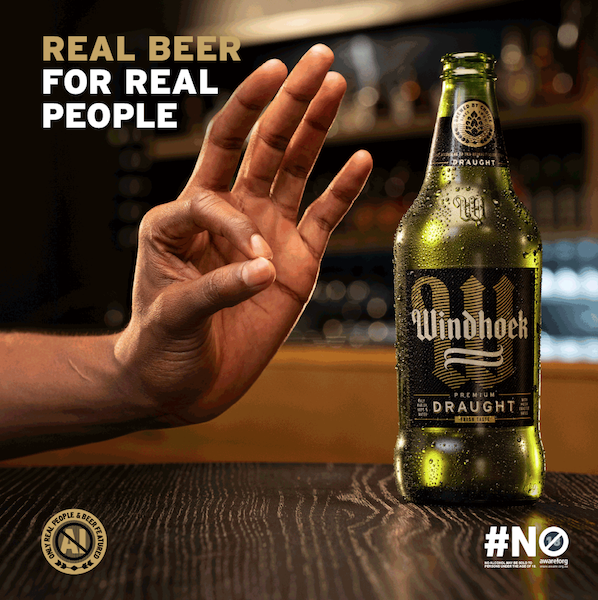
Windhoek Beer has launched its integrated campaign ‘The Real Guy’, a culturally driven platform that challenges artificial perfection by celebrating real people, real stories, and human imperfection. Windhoek also formalises a commitment not to use AI-generated imagery in any consumer-facing communications. All brand content will feature real people, real beer, and real-world production.

At the centre of the campaign is James Kumar, whose story reflects its core idea. Born with polydactylism, a congenital condition resulting in him being born with six fingers on each hand, James has navigated conventional ideas of physical perfection. His hands become a symbol of authenticity at a time when AI still struggles to accurately render one of the most fundamental human features.

Hands remain one of the most commonly distorted elements in AI-generated imagery. Windhoek leans into this irony by placing Kumar’s real hands at the centre of the narrative, not as difference, but as proof that humanity cannot be manufactured.

The campaign moves beyond advertising into a wider cultural conversation about trust, identity, and authenticity in a world where reality itself can be generated.

‘Authenticity has always been at the core of Windhoek,’ said Keval Ramraj, Marketing Manager at Windhoek Beer South Africa. ‘As AI-generated content becomes more prevalent, we wanted to make a clear and intentional statement about what we stand for. Not artificial perfection. Not manufactured humanity. Real stories, real people, and real beer.’

Developed collaboratively with Kumar, the campaign ensures his voice and perspective shape the storytelling. A documentary film follows his journey from upbringing and community life to his first major brand collaboration as a content creator, including his first flight, and his reflections on authenticity in a changing world. Produced with the team behind Chasing the Sun, the campaign rolls out across out-of-home, digital, social, and video platforms in South Africa.

Alongside the campaign, Windhoek Beer formalises a ‘100% Real’ Pledge, extending its philosophy across all communications. All consumer-facing content will feature real people, real product, and real-world production, including authentic human representation, genuine Windhoek Beer liquid, accurate pack shots, and real beer serves.

This standard is embedded in contracts with all creative agency, production, and content partners. AI-generated or fully synthetic humans, influencers, product renders, or pack shots are not permitted in final consumer-facing executions.

The policy does not restrict responsible use of AI in internal processes such as strategy, ideation, planning, optimisation, or production support, provided final outputs comply with the authenticity standard. Heineken Beverages will enforce this across all Windhoek partners.

‘This is not a rejection of technology,’ said Ramraj. ‘AI has a role in modern business. But when it comes to how we represent people, culture, and our brand to consumers, authenticity matters more than ever.’

WINDHOEK BEER SOUTH AFRICA
https://www.windhoekbeer.com/

Public Relations And Marketing Still Need To Be Human-Led

Public Relations And Marketing Cannot Be Automated
Tendai Rukwava, Coral Communications.

Tendai Rukwava, Founder and CEO, Coral Communications, says she does not hate AI, but she hates what it is doing to how we think. The technology is not the problem but the way we are using it is. She makes the case for building a human-led, AI-supported business.

What I object to is what I have watched AI do to the way people work. AI has quietly become a crutch. People are no longer thinking critically. They are handing over the one capability that has always separated the best operators from everyone else, the ability to build a strategy, and letting a machine do it for them. That is what I have a problem with.

Used well, AI is one of the most useful tools available to us. I love it when it supports our strengths instead of standing in for them. The difference between those two outcomes is not the software. It is us.

This is exactly why every business needs an AI usage policy, and needs one now. Everyone and their grandmother is on this bandwagon. When a tool is adopted that quickly, that widely, and that thoughtlessly, you do not get to sit back and see how it plays out. You set clear rules and terms of engagement up front, or you clean up the mess later.

Here is what a serious policy has to address:

Start with your information, and treat it as something that can never be taken back, because it cannot. The moment you paste a client brief, a colleague’s details, an internal strategy, or a confidential document into an AI platform, you have lost control of where that information travels. We genuinely do not know how these platforms store what we feed them, what they train on, or what they might regenerate down the line. So the rule is simple: sensitive information does not go in. Not client data, not business secrets, not internal strategy, not anything you would not want resurfacing somewhere you never put it. Be deliberate about what you upload, and just as deliberate about what you ask it to produce.

Keep the final decision human. AI is genuinely good at research. It will surface options and suggest ways through a problem faster than any of us could alone. But information is not action, and action is what produces results. A machine can hand you a hundred ideas and not one of them will move the needle until a person understands it, pressure-tests it, and leads the implementation. Let the research be AI-supported. The decision stays human-led, every single time.

Do not trust the flattery. This is the part most people miss. These platforms are built to be agreeable. They hand you the encouraging answer, the positive spin, the version that makes you feel clever. That is not always the answer you need, and in business it is often the most expensive one to accept. Your job is to push back on it: to think critically, analytically, and strategically about every output before you act on it. The tool will not do that part for you, it was never meant to.

And let go of the idea that no one can tell. A lot of people have quietly convinced themselves that using AI makes them the smartest person in the room, and that nobody will know they leaned on it. Both halves of that are wrong. Now that everyone is using it, we can all recognise what AI sounds like, and we can all spot the fluff. Using it as a shortcut does not make your work look sharper, it makes it look like everyone else’s.

Which brings me to the question I am asked most often, usually by someone who has just discovered how quickly AI can produce a press release: if a machine can write the copy, draft the pitch, and generate a month of social content in an afternoon, what is left for public relations, communications, and marketing to do? A great deal. More than ever, in fact.

The question gets one thing badly wrong. It assumes our job was ever the copy. It was not. The copy is the output. The work is everything that has to be true before a single word is written: knowing what to say, who to say it to, when, and why. AI can generate a thousand versions of a message. It cannot tell you which one your audience actually needs to hear, or whether you should be saying anything at all. That judgement is the job, and it is human.

Our work is also built on relationships, and relationships cannot be automated. A press release does not land because it is well written. It lands because of who sent it, who they know, and the trust they have built over years. AI cannot call an editor it has a history with. It cannot read a room, sense the moment, or know which journalist will care about which story and why. Media relations, stakeholder trust, community, reputation: these are earned between people, and they stay between people.

Then there is the part of our work that happens in a room, not on a screen. Events and activations exist to make people feel something, and AI cannot design an experience for a human being. It does not know what it is like to walk into a space and be moved by it. It cannot read the energy of a live crowd, sense when a moment is landing or falling flat, or create the kind of memory that sends someone home with a brand lodged in their heart instead of their inbox. Connecting a brand to hearts and minds is not a content problem to be solved at scale. It happens between people, in real time, and it is felt long after the lights go down.

And when something goes wrong, which it eventually always does, you do not want a machine at the wheel. A reputation under threat needs judgement, instinct, timing, and the ability to hear everything a situation is not saying out loud. AI can draft you a statement. It cannot navigate the politics, weigh the stakes, or carry the accountability when a brand’s name is on the line. A human has to own that, and a human always will.

Here is the part the doom narrative misses entirely: the more the world floods with AI-generated content, the more valuable genuinely human communication becomes. When everyone can produce, sameness becomes the default and originality becomes the advantage. When every inbox is full of the same machine-smoothed messaging, the message that sounds like a real person, with a real point of view, is the one that breaks through. AI is not making our work obsolete, it is making the human parts of it the entire game.

So no, AI is not coming to replace public relations, communications, or marketing. What it will do is expose the difference between people who were only ever producing content and people doing the actual work: the thinking, the strategy, the relationships, the experiences, the judgement. The first group has reason to worry. The second has never been more necessary.

None of this is anti-AI. It is the opposite. The businesses that win the next few years, and the professionals who build them, will not be the ones using AI the most. They will be the ones using it the best: human-led, AI-supported, across the board. Yes, the technology makes our work faster, easier, and more convenient. But fast and easy are not the same as effective, and if we want our strategies to actually hold up, the thinking still has to be ours.

That is the entire point of a policy: not to slow anyone down, and not to ban a tool that genuinely helps. It is to make sure that while everyone else rushes in, we are the ones using AI to move the needle, rather than adding to a world already drowning in AI fluff.

CORAL COMMUNICATIONS
www.coralcommunications.agency

Cashless. Finally. inDrive Brings Flexibility And Humour To South Africa’s Ride-Hailing Payments

Cashless. Finally. inDrive Brings Flexibility And Humour To South Africas Ride-Hailing Payments

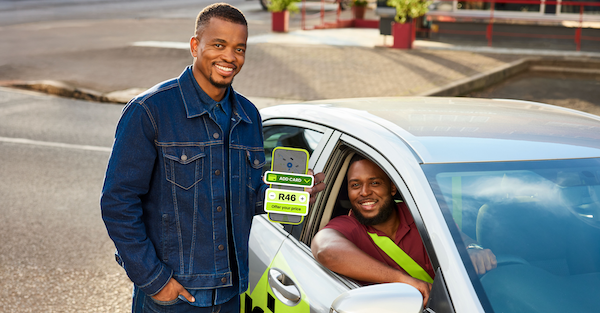
inDrive is leaning into what is often considered being ‘late to the party’, having recently launched its cashless payments feature on the inDrive app.

‘Cashless. Finally.’ is the name of the campaign, with inDrive humorously doubling down on and making light of this reality, but it says that giving their drivers and loyal users the convenience of this option now is less about timing, and more about the freedom to choose how you ride.

‘What matters most for us is not being first, but being able to address the needs of passengers and drivers in our service,’ said Mikita Ponarin, inDrive Africa Marketing Lead. Some of them prefer cash, others want the ease of cashless, but all consider cashless as a safer option to pay for a ride. We want to give an opportunity to choose the payment method and ensure that both work without friction. It is about giving riders and drivers control over how a trip happens, not forcing a single way of doing it.’

Developed by inLab, inDrive’s in-house creative team, the campaign included two films that were tailored for riders and drivers, featuring much-loved South African comedian, Mpho Popps. The creative leans into exaggeration, framing inDrive’s ‘late arrival’ through the visual idea of flying pigs, a playful nod to the phrase ‘when pigs fly’, reinforced with AI-generated imagery.

‘It’s deliberately absurd, and that is the point,’ laughed Ponarin. ‘The goal was to combine humour and self-irony, and to deliver it through the voice of one of the country’s funniest comedic voices.’

Built On Fairness, Designed For Real Life

inDrive is a global mobility and urban services platform operating in South Africa and international markets. Built on a peer-to-peer pricing model, the platform allows riders to suggest fares and drivers to accept or negotiate directly.

At its core, inDrive positions itself differently from traditional ride-hailing platforms, focusing on the principle of fairness as the centre of its identity. The model is built on peer-to-peer fare negotiation, where riders suggest a price and drivers choose whether to accept.

For riders, the introduction of cashless payments means flexibility whether you are paying digitally when travelling without cash, booking for family members or moving through areas where cash is less practical. For drivers, it offers an additional payment option that aligns with shifting consumer behaviour in South Africa’s increasingly digital economy.

In fact, industry data shows card payments now represent a significant share of e-commerce activity in the country, reinforcing the shift towards digital-first behaviour in urban markets. ‘It was a natural step for us in South Africa,’ said Ashif Black, inDrive country representative. ‘We listen closely to how people use the platform. What they want is not complexity. It is control, fairness and choice.’

With the introduction of cashless payments, inDrive continues to expand practical choice on the platform while staying anchored in its founding principle that people should set the terms of their own journeys. ‘Cashless. Finally.’ is part of that evolution, reinforcing inDrive’s wider brand promise of flexibility, fairness and user control across every trip.

Your Ride. Your Price. Download the inDrive app on Google Play or Apple, or find out more at inDrive.

INDRIVE
https://indrive.com/en-za

The Challenges Facing Marketers Are Still Fundamentally Human

The Challenges Facing Marketers Are Still Fundamentally Human
Tahaab Rais, Publicis Groupe Middle East & Turkey.

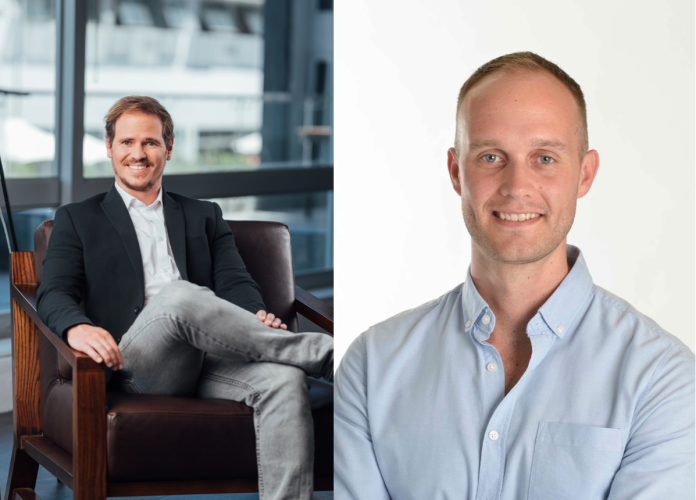
The Nedbank IMC has announced Tahaab Rais, Group Chief Strategy Officer and Film Director at Publicis Groupe Middle East and Turkey, as an international keynote speaker for its 2026 conference, taking place on 17 September 2026 at Mosaïek, Johannesburg. Modern Marketing is a proud media partner. 

Under the 2026 theme Shift Happens™, Rais’ session, The Real Shift Isn’t Technological. It’s Psychological., brings the conversation back to the human shift behind the technological one: how people think, decide, buy, resist and change.

For the past decade, business conversations have been dominated by technology. Artificial intelligence, automation, platforms, data and algorithms have transformed industries, reshaped organisations and altered the way people live and work.

Yet despite extraordinary technological progress, many of the challenges facing marketers and business leaders remain fundamentally human.

Why do people resist change even when it benefits them? Why do some ideas spread while others disappear? Why do organisations struggle with transformation despite having access to the same tools and technologies?

Rais’ keynote explores the idea that while technology changes the environment around us, psychology determines how we respond to it.

Drawing from behavioural science, strategy, creativity and real-world business transformation, the session will examine the forces that shape decision-making, influence behaviour and drive action. It will challenge audiences to look beyond the latest tools and trends and focus instead on the beliefs, biases, emotions and motivations that ultimately determine whether change succeeds or fails.

‘We’re living through one of the strangest and most transformative periods in modern history. Technology is shifting. Culture is shifting. Attention is shifting. Identity is shifting. Even our relationship with reality feels like it’s changing in real time. And yet underneath all of that, human beings are still trying to answer the same ancient questions: Who am I? Where do I belong? What matters? What do I believe in?’, said Rais. ‘The real shift Isn’t technological. It’s psychological.’

Rais is one of the region’s most awarded and respected strategic voices. His work has been recognised across major international and regional creative and effectiveness platforms, and he is known for combining sharp strategic thinking with a deeply practical approach to creativity and business.

As Group Chief Strategy Officer at Publicis Groupe Middle East and Turkey, he has helped shape growth strategies for some of the region’s most influential brands and institutions, building a reputation for turning human insight into measurable business impact.

For marketers facing real business pressure, that combination matters. Rais’swork focuses on the human systems that shape growth: how people make choices, how teams create, how cultures evolve, and how strategy can move from theory into ideas that work in market.

The Nedbank IMC 2026 will again feature a curated, not crowdsourced, speaker line-up, blending global insight with African context. Students from across South Africa will again attend virtually at no cost through the YOUTH1000 programme, in partnership with MASA.

NEDBANK IMC CONFERENCE
www.imcconference.com

New Agency Group Will Challenge The Traditional Holding-Company Model

New Agency Group To Challenge The Traditional Holding-Company Model

Demographica, Halo and Second Rodeo have formally launched Slightly Dangerous Co., a curated group of founder-led specialist agencies designed to collaborate while protecting the independence that makes them effective. Each agency has a stake in the others’ success, and that aligned ownership is what makes the model work.

The idea is simple. Modern clients are not concerned about structure, geography, networks, efficiencies and economies of scale. Clients care about helping them grow. Globally, we are seeing the rise of independent agencies performing incredibly well, and clients increasingly want to work with them. Large brands often require broader capability and scale than a single specialist agency can provide. The usual solution is expansion, more services, bigger teams, and gradual dilution.

Slightly Dangerous Co. takes a different approach. Instead of becoming a larger generalist agency, Demographica, Halo and Second Rodeo remain focused on what they each do best and collaborating when clients need broader expertise. Demographica is a specialist B2B agency in South Africa, Halo will continue focusing on brand creative and Second Rodeo will keep growing their performance and digital offering.

This is not a merger and it is not a holding company, and it is deliberately designed that way.

Each agency retains its independent leadership, identity and culture. Clients continue to contract directly with the individual agencies, while Slightly Dangerous Co. provides the connective tissue that allows founder-led specialists to work together when the work demands it.

For ambitious brands, that means access to deeper thinking, stronger creative craft and broader expertise without the overhead and bureaucracy that often come with large agency networks.

At the centre of the model is a shared belief in marketing effectiveness. The agencies align around evidence-based marketing principles and methodologies, ensuring creativity is designed not only to attract attention but to build brands and drive commercial results.

‘We believe the best work happens when specialists collaborate without losing what makes them special,’ said Warren Moss, founder of Demographica and Commercial Partner of Slightly Dangerous Co. ‘Clients increasingly want the depth and commitment that comes from founder-led agencies. At the same time, they often need broader scale. Slightly Dangerous Co. is our way of delivering both without turning independent agencies into diluted versions within holding companies.’

The partnership itself is not new. The agencies have worked together behind the scenes for years, sharing intellectual property, capital and office space, and collaborating on several major client engagements where strategy, creative and digital expertise were needed to work closely together.

That track record has already drawn industry attention. In 2025 the group was collectively recognised as MarkLives Agency Newsmakers of the Year, as voted by marketing leaders and industry professionals.

Individually, the agencies also carry strong credentials. Halo was one of only two South African agencies included in Drum’s Top 100 Indie Agencies globally for 2025, while Demographica was the only South African agency listed in Drum’s Top 100 B2B Agencies globally.

For the founders involved, formalising the group is just a reflection of something that was already working but presents further opportunity to grow and attract like-minded specialist agencies across other verticals.

‘Halo has always enjoyed the creative freedom that comes with being independent and it’s something we have always wanted to protect,’ said Dean Oelschig, founder of Halo. ‘It allows for slower and better hiring, more senior resources and complete management control. As such, we don’t need permission to continually innovate on our agency business model in a way that serves our product. But what works for us might not work for Demo or Second Rodeo, so remaining independent and founder-led is key. But collectively, we have 100 people who can serve clients of any size in South Africa. This group ensures no one agency will become more important than another, yet still supports each other’s areas of expertise.’

A defining feature of Slightly Dangerous Co. is its emphasis on founder leadership. The agencies are all run by the same people who started these businesses to make a dent in the world. No corporate CEOs are hired here. That translates into a different client experience. CMOs gain access to passionate specialists and leaders willing to challenge thinking, push creative standards, and stay closely involved in the work.

Mike Stopforth said, ‘I’ve always defaulted to specialisation, and I’m drawn to partners who value depth. I like the feeling of being at the front of the pack, hacking away at the woods with a machete. Carving a new path. It’s risky, it’s often messy, and it makes it easier for others to follow the same path. But excellence in expertise forces you to know what you know, and be accountable for its success, too. I can’t imagine clients wanting anything less than obsessive expertise.’

The model reflects a deliberate shift away from the scale-driven logic that has shaped much of the agency industry over the past two decades. Rather than building large organisations that attempt to offer everything under one roof, Slightly Dangerous Co. believes the future lies in highly specialised agencies working together when the problem demands it.

With 100 people across Johannesburg and Cape Town, the three founding agencies already cover a broad range of capabilities. Over time, Slightly Dangerous Co. will expand to include additional founder-led specialist agencies, but only if they meet the same standards of craft, thinking and independence.

As Moss put it: ‘Plenty of agency groups have grown by becoming safe. Slightly Dangerous Co. is built on a different belief. The best ideas come from people who care deeply about the work, challenge each other relentlessly and refuse to settle for average.

SLIGHTLY DANGEROUS
www.slightlydangerous.co

This is Modern Marketing