Home Blog Page 3

Hard-Hitting Newspaper Ad Raises Awareness About Period Poverty

Hard-Hitting Newspaper Ad Raises Awareness About Period Poverty

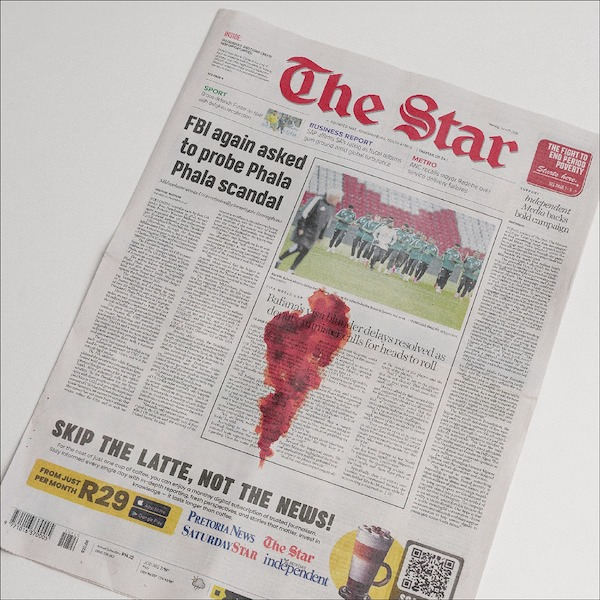
The MENstruation Foundation, together with Joe Public and Independent Media, launched the Period Paper campaign. The campaign uses the very material girls resort to in the absence of pads to force a national reckoning. A full-page ad in The Star, The Mercury and The Cape Times carries the campaign’s headline alongside a stark visual. It makes the newspaper itself complicit in the truth it has too long been used to conceal.

The ad carries a QR code linked directly to the MENstruation Foundation’s site. Every scan is a donation request, and every donation moves the Foundation closer to its targets: 30,000 more schoolgirls with access to free pads and 65 additional dispensary machines installed across the country.

The MENstruation Foundation calls on South Africa to confront the truth it has been too uncomfortable to name: period poverty is not a hygiene issue. It is an education emergency.

Approximately eight million women and girls in South Africa cannot afford basic sanitary products. More than half are learners. Girls without access to sanitary products miss up to five school days a month. Over a school career, that is the difference between a matric certificate and a statistic. What do they use instead? Newspapers, rags, cow dung or anything they can find.

The MENstruation Foundation was built on the conviction that no girl should choose between her education and her dignity. The Foundation installs free sanitary pad dispensary machines in schools and communities across South Africa, distributing over one million pads every month from its manufacturing facility in Paarl, which produces 192,000 pads per eight-hour shift. This is not charity, it is infrastructure.

‘Period poverty keeps girls out of school and it ends careers before they begin. It tells a young woman that her body is a problem she must solve alone, in secret, without help. That is not a hygiene issue. That is a human rights violation,’ said Siv Ngesi, Co-founder of the MENstruation Foundation.

Globally, an estimated 500 million people lack adequate access to menstrual health management. In South Africa the scale is staggering, and the silence around it has been deafening. The MENstruation Foundation is asking South Africa to end that silence.

THE MENSTRUATION FOUNDATION
www.menstruation.foundation

JOE PUBLIC
https://www.joepublic.com

KFC India CMO To Bring A Culture-First Marketing Perspective To Nedbank IMC

KFC India CMO To Bring A Culture-First Marketing Perspective To Nedbank IMC
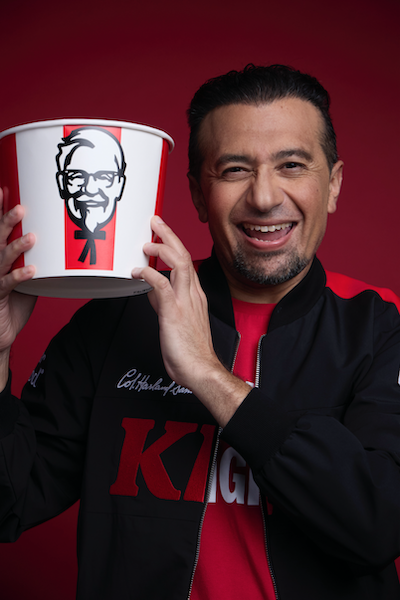
Suhayl Limbada, KFC India.

The Nedbank IMC has announced Suhayl Limbada, Chief Marketing Officer for KFC India and partner markets, as an international keynote speaker for the 2026 conference, taking place on 17 September 2026 at Mosaïek, Johannesburg. In a conference built around the theme SHIFT HAPPENS™. ARE YOU READY?, Limbada brings a perspective shaped not in boardrooms alone, but across cultures, countries and some of the world’s most dynamic consumer markets. Modern Marketing is a proud media partner of the Nedbank IMC.

Recently appointed as Chief Marketing Officer for KFC India and partner markets, Limbada previously led KFC Thailand, helping transform the business into one of the most creatively and commercially recognised KFC markets globally. His career spans leadership roles across Africa, Middle East and Asia with KFC, Yum! Restaurants International and Cadbury / Mondelēz International.

An ‘accidental CMO’ by his own admission philosophy is simple: the best marketers are anthropologists first. They immerse themselves in culture, listen deeply, and understand people before they ever think about advertising. Having grown up in Africa and spent much of his career working across diverse multicultural environments, Limbada has learned that no two markets succeed in the same way. From the warmth and relationship driven nature of Africa to Thailand’s uniquely human ‘sabai sabai’ way of life, to the extraordinary pace, complexity and ambition of India, he has built a reputation for understanding how culture shapes behaviour and how brands can earn true relevance within it.

Rather than exporting global playbooks, his approach has always been to unapologetically honour local truths. He believes that the most powerful growth comes when brands stop talking and start listening.

That philosophy has produced both commercial impact and global recognition. Over the course of his career, Limbada’s work has turned around  multiple businesses back to growth and been recognised at some of the world’s most prestigious creative and effectiveness competitions, including winning Yum!’s first ever Gold Lion in film at Cannes for ‘Let There Be Cake’, D&AD, The One Show, Grand Prix at London International Awards, Effies and others.

But for Limbada, creativity is never the end goal. ‘The purpose of creativity is growth,’ he said. ‘Awards are simply evidence that the work was impossible to ignore.’

Known for combining commercial acumen, cultural intelligence and creative ambition, Limbada has consistently challenged teams to move beyond safe ideas and conventional thinking. His belief is that brands grow when they have the courage to take the path less travelled, stand for something meaningful and participate in culture with a clear purpose other than just being there for the sake of it.

‘Limbada represents the kind of marketing leadership the Nedbank IMC wants to put on stage,’ said Dale Hefer, CEO of the Nedbank IMC. ‘He has built a career by embracing change, stepping into unfamiliar environments and turning cultural understanding into commercial advantage. His work demonstrates what is possible when marketers are brave enough to challenge convention and genuinely understand the people they serve.’

While Limbada’s keynote topic is still to be confirmed, his presence adds a valuable global perspective to the 2026 programme. At a time when marketers are navigating unprecedented technological, cultural and societal change, his experience offers lessons in adaptation, courage and growth.

For Limbada, the future belongs to marketers who are willing to remain students. Those who stay curious, embrace discomfort and continue learning from people unlike themselves. Because in a world defined by constant change, growth rarely happens inside your comfort zone.

The Nedbank IMC 2026 will again feature a curated, not crowdsourced, speaker line-up, blending global insight with African context. Students from across South Africa will again attend virtually at no cost through the YOUTH1000 programme, in partnership with MASA.

Africa’s biggest marketing conference, the Nedbank IMC advances marketing’s place in the boardroom and uplifts young talent across the continent. Proudly endorsed by MASA and PRISA.

NEDBANK IMC CONFERENCE
www.imcconference.com

DJ Fresh To Host Kaya 959’s Breakfast Show

DJ Fresh To Host Kaya 959’s Breakfast Show
Dj Fresh, Kaya 959.

Thato Sikwane, better known as DJ Fresh, will join Kaya 959 as host of its flagship weekday breakfast show from Monday, 1 July 2026. Partnering with his long-time on-air collaborator and trusted producer, Thato Mataboge, DJ Fresh will bring his unmistakable energy, wit, authority and connection to audiences across Gauteng every weekday from 06:00 to 09:00.

Few names in South African media command the recognition, credibility and loyalty that DJ Fresh does. With a career spanning more than three decades, he has shaped the sound of breakfast and drive-time radio across stations including YFM, 5FM and Metro FM, while building an extraordinary profile as a DJ, music producer, entrepreneur and live performer.

David Tiltmann, Acting Managing Executive at Kaya 959, said: ‘DJ Fresh is one of the most influential broadcasters South Africa has ever produced. His ability to connect with audiences is unmatched, and his arrival represents an exciting new chapter for Kaya 959.’

‘We are investing in exceptional talent, exceptional content and exceptional audience experiences. Fresh brings all of that and more. Together with Mataboge, he will create a breakfast show that is intelligent, entertaining, culturally relevant and impossible to ignore.

‘For our listeners, this is an exciting new way to start the day. For our commercial partners, it represents an opportunity to engage with a highly attentive audience through premium content delivered by one of radio’s most trusted voices.’

For DJ Fresh, the move represents a return to the breakfast slot that helped define his career and an opportunity to build a new connection with the Kaya 959 audience: ‘Breakfast radio has always been special to me because it allows you to become part of people’s daily lives.’

‘Kaya 959 has built something unique. a powerful brand, a loyal audience and a strong connection with Gauteng. Mataboge and I are looking forward to joining an already formidable team of broadcasters and to creating a show that is entertaining, warm, insightful and full of energy.’

‘This is a reunion 20 years in the making. That is the last time Mpho Maboi, Mataboge and myself were on radio together, making this a full circle moment for us. We feel like we’re coming home together and we want to make mornings on Kaya 959 essential listening. We want listeners to feel informed, inspired, entertained and connected every single day.’

The new breakfast show will blend great music, engaging conversations, topical discussions, humour, lifestyle content and the distinctive personality that has made DJ Fresh one of South Africa’s most enduring media stars.

KAYA 959
https://www.kaya959.co.za

Burson Report Finds Credibility Of AI-Generated Responses Varies Significantly By Audience

Burson Report Finds Credibility Of AI-Generated Responses Varies Significantly By Audience

Burson released The Credibility Paradox, a new report showing that there is a variance in how AI-generated answers about brands and companies are believed by audiences. Burson partnered with Profound, an AI marketing platform, to field thousands of reputation-related answers across seven major AI answer platforms, evaluating 85 companies across the eight levers of Burson’s Reputation Capital framework.

These included: Innovation, Creativity, Workplace, Products, Financial Performance, Governance, Citizenship and Leadership. Responses were assigned a believability score for three audiences including General Population, Opinion Elites, and Business Decision Makers using Burson’s proprietary Decipher tool, developed with cognitive AI company Limbik, producing more than 55,000 believability forecasts in total.

The original research and findings advance the conversation around Generative Engine Optimisation (GEO) from a technical exercise focused mostly on visibility and sources cited to a strategic reputation opportunity centred on believability.

‘In today’s zero-click world, LLMs have become the new gatekeepers of reputation, how brands are discovered and evaluated. But visibility is not credibility,’ said Corey duBrowa, CEO, Burson. ‘AI synthesises, summarises and delivers information directly to audiences. Showing up in these LLMs is necessary but not sufficient. Our role is no longer just to make clients visible, but to build an evidence ecosystem so robust that the answers AI constructs are believable to the audiences that matter most. This research is our playbook for turning the credibility paradox into a competitive advantage.’

Key Findings

AI rewards proof, not positioning. Fact-based claims tied to innovation, products and workplace culture consistently outperformed those tied to what might be perceived as more subjective qualities like leadership, governance and citizenship. This underscores a strong mix of earned, owned and social content for GEO, as AI places the greatest weight on independent corroboration from media coverage, reviews and conversation.

Workplace is an underused credibility lever. As demonstrated in Burson’s Global Reputation Economy research, Workplace is a consistently underleveraged lever in building reputation capital, and LLMs are no exception. Workplace-related answers are the most believable among the general population, a finding consistent with LLMs’ reliance on independently verifiable sources like talent platform reviews, labour reporting and earned media.

Leadership is AI’s toughest credibility test. Responses to leadership-related prompts consistently ranked among the least believable across every industry studied. The industries that scored higher, Aerospace and Technology, shared a common thread: The underlying proof came from governance structures, business performance and external validation, not executive messaging alone.

Believability varies by audience. A narrative that appears credible in an AI answer may not land equally with customers, investors, employees or regulators. Business decision makers rated AI-generated answers +10% more believable on average than the general population, with more specialised audiences more receptive to innovation-led narratives and the business context behind them. Audience-specific GEO analysis is essential.

The findings inform a framework Burson has developed to help clients build and protect reputation across AI surfaces. Rather than addressing earned media, owned content and social engagement strategies as separate workstreams, the framework approaches them holistically to cultivate an ecosystem of independent, credible voices whose coverage and commentary reinforce that narrative over time. Burson further integrates language and market-specific nuances to help companies navigate reputation issues across regions and cultures.

‘GEO began as a visibility challenge quantified by audit reports,’ said Bryn Tweedale, EMEA GEO Subject Matter Expert at Burson.

‘In a region as diverse and complex as EMEA, GEO is fundamentally a reputation challenge, not just a visibility one,’ said Bryn Tweedale, Senior Director, Digital Marketing at Burson. ‘Visibility in an AI-generated answer is just the beginning, as the true benchmark is if the underlying reputation translates across borders. This study makes clear it has become a test of ensuring a brand’s hard-won reputation remains credible and consistent, no matter which market an AI delivers it to. Our framework gives communicators a practical, market-sensitive path to navigate this, ensuring their hard-won reputation survives the journey through an LLM, establishing GEO as a critical new discipline in reputation management.’

The full report is available here.

Burson Global
https://www.bursonglobal.com

NIQ South Africa Analysis Reflects Above-Inflation Growth In Retail Sales Value And Volume

NIQ South Africa Analysis Reflects Robust Above-Inflation Growth In Retail Sales Value And Volume
Zak Haeri, NIQ South Africa.

NielsenIQ (NIQ) South Africa has released its State of the Retail Nation analysis* for the first quarter of 2026, reflecting robust above-inflation growth in retail sales value and volume. In the technology and durables (T&D) market, unit sales growth outpaced value growth during the quarter as average selling prices declined.

Affordability became the most important factor in consumers’ purchasing decisions, bringing sales value down across nearly all categories. Volumes showed a recovery in segments such as IT and panel televisions, but weak sales in the telecoms category contributed to a disappointing quarter for the overall T&D market.

South African consumers spent more than R173.6 billion on fast-moving consumer goods (FMCG) through traditional and modern trade channels during the period under review. Sales value increased 6.5% compared to the same quarter last year, while unit sales were up 9.1%.

‘Softer inflation, reflecting a combination of more stable food prices and lower fuel costs, gave consumers and retailers some breathing room in the early months of 2026,’ said Zak Haeri, MD for NIQ South Africa. ‘But that window may be closing. Inflation is expected to accelerate through the second half of 2026, driven by increasing input costs and spillovers from the conflict in the Middle East. Brands and retailers must make well considered price increases in response.’

Snacks Outperform, While Baby food And Care Declines

Food, the largest FMCG category, recorded a 4.5% increase in sales volume and a 7.2% increase in value terms, reaching sales of R28.1 billion year-over-year for the quarter. Snacking was among the fastest-growing segments, with volumes up 16.2% and sales value increasing 11.9% to R925 million. Baby food and care was the only category to record a decline, with sales value falling 2.1% to around R3.4 billion.

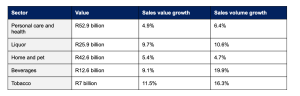
Most Other Key Categories Delivered Respectable Growth:

Excluding tobacco and liquor, private labels accounted for sales valued at around R26.7 billion, an increase of 1.3% for the quarter and representing around 17.5% of FMCG sales value for the quarter. Independent brands achieved R125.9 billion in sales (excluding tobacco and liquor), representing 82.5% of sales value. Private labels’ share of the market declined 1.1% compared to the same period in the previous year, due to the outperformance of traditional trade outlets and aggressive brand promotions.

Traditional Trade Continues Its Winning Streak

In line with trends observed throughout 2025, traditional trade channels outstripped modern trade channels in many categories, generating R43.1 billion in sales during Q1. Traditional trade refers to independent (non-chain, non-franchised) stores that stock consumer packaged goods with a fixed, physical location. Examples include taverns, spaza shops and independently owned superettes.

Modern trade channels, which include online retailers, franchised stores and outlets which form part of a retail chain, saw a unit volume increase of just 1.7% for the quarter. Sales value for modern trade was up 4% to R127.8 million, accounting for the bulk of FMCG sales value. Forecourt retail saw a 1.3% increase in volume and 4.2% increase in sales value to R5.8 billion. Traditional trade benefitted from lower inflation, while forecourts felt high effects from inflation.

‘Lower inflation provided a modest tailwind for traditional trade, particularly among highly price-sensitive consumers. However, demand remains constrained by weak income growth and elevated unemployment. Traditional outlets retain a structural advantage through proximity and flexible purchasing, enabling smaller, more frequent transactions that help households manage cash flow and transport costs. While easing price pressure supports stabilisation, especially in food staples, growth remains uneven and highly contested,’ said Haeri.

‘Modern trade retailers, meanwhile, are generally well positioned to absorb inflation through scale, promotions and private-label offerings. Forecourts are more exposed to inflation because their baskets are weighted toward convenience and impulse purchases. This sector is also feeling the effects of rising operational costs and falling fuel revenues, which, in turn, means that competition is intensifying as fuel station owners turn to retail to increase their profitability.’

Price Pressures Accelerate In T&D Sector

Weak performance from the telecoms sector dragged the T&D market down during the quarter. The telecoms segment, which includes the smartphone market, saw unit sales fall 7.5% and sales value drop by 3.1%. Consumers in the postpaid sector delayed replacement of their devices in the absence of new features or product innovations to drive premium demand. Average selling prices continue to decline as the market moved towards prepaid and mid-tier devices.

Major domestic appliances was the only T&D segment to see growth in both value (up 1.2%) and unit sales (up 6.7%) terms. Freezers (+6.9% units, +12.9% value) and washing machines (+13% units, +4.1% value) were among the strongest performers in a market where declining prices helped to drive sales. The majority of sales occurred at normal prices rather than on promotions, indicating that consumers were trading down rather than waiting for promotions.

Small domestic appliances saw a 6.6% drop in sales value, while unit sales were up 5.8%. Growth is slowing down as categories such as air fryers and coffee machines reach saturation. In information technology, sales of laptops, monitors and routers drove a 5.8% increase in unit sales. However, average sales prices declined, bringing total sales value down by 9.4%. Panel televisions saw sales value decline 2.4%, despite an 8.8% increase in unit sales. Office machines continued a secular decline, with sales value down 9.2% and unit sales down 6.4%, largely due to diminished demand for printing.

Fuel Prices Dim The Outlook For The Rest Of The Year

The benign inflation environment that supported FMCG growth in the first quarter has already run to an end. Consumer inflation jumped to 4% in April, the highest reading since August 2024, driven mainly by sharp fuel price increases. The pressure is set to intensify as government fuel levy relief is phased out, and many forecasters are expecting oil prices to remain elevated for longer. Consumers are likely to cut back on spending to cater for renewed inflation.

In the T&D market, memory and storage shortages are driving prices up for phones, laptops and other devices. South African consumers, already cautious on big-ticket purchases, are likely to hunt for promotions and specials, delay non-essential upgrades and gravitate toward mid-tier devices as premium prices become harder to justify. Rising component costs will make it harder for T&D retailers to stimulate demand through price alone.

‘These factors will put real pressure on household budgets for the rest of the year,’ said Haeri. ‘Promotions, pack architecture and loyalty programmes are important levers in a price-sensitive market like South Africa. Retailers and brands will need to balance protecting their margins with targeted value offerings to sustain volumes in this constrained environment. Those that fail to adapt their value proposition risk losing share as consumers become increasingly selective in their spending priorities.’

*The data is based on NIQ’s comprehensive Retail Measurement Service (RMS), which is the largest retail (grocery) data source in the country and the only currency used by all of South Africa’s major retailers. This benchmark data comprises more than 11,000 branded retail outlets (e.g., supermarkets and garage forecourts) and more than 140,000 independent stores (e.g., spazas and taverns) across South Africa’s 9 provinces and measures more than 80% of all retail grocery transactions.

NIELSEN
https://www.nielsen.com

Carling Black Label Announces Made for Champions Campaign

Carling Black Label Announces Made for Champions Campaign

Carling Black Label officially launched its ‘Made for Champions’ campaign. At the heart of the launch was the recognition of Ntate John, a stadium worker with 28 years of dedicated service at Loftus Versfeld, who was honoured with a plaque presented by football icon Itumeleng Khune and respected South African sports journalist Bareng-Batho Kortjaas.

His story anchors the campaign’s central idea: that the greatest champions are often the ones who never get called onto the stage. The campaign was launched ahead of the 2026 FIFA World Cup at The Pavilion, Saxon Hotel Villas and Spa in Johannesburg.

The event marked the official launch of the ‘Made for Champions’ platform, a campaign built on the belief that football greatness is made not only on the pitch, but by the millions of contributors whose effort, passion and service make the game possible. The Carling Predictor, brand documentary and panel discussion all served to bring that belief to life.

At the centre of the campaign is the Carling Predictor platform, which allows consumers to predict the outcomes of all 64 FIFA World Cup matches. Participants stand a chance to win rewards including airtime, beer, and exclusive experiential prizes.

Fans who consistently engage with the platform will qualify for a VIP FIFA World Cup final viewing experience alongside friends and influencers, creating a structured reward system that links participation to real-world fan experiences.

A key highlight of the launch was the screening of the ‘Made for Champions’ short film, which honours the unsung contributors of the 2010 FIFA World Cup in South Africa. The documentary focuses on behind-the-scenes stadium workers, grounds teams and operational staff whose work enabled the delivery of one of Africa’s most significant global sporting events.

Among the featured stories is that of John, a long-serving stadium employee with 28 years of service at Loftus Versfeld, whose journey reflects the campaign’s focus on recognising individuals whose contributions remain essential but largely unseen.

Speaking at the launch, Carling Black Label Vice President of Marketing, Vaughan Croeser, said the campaign reinforces the brand’s long-standing belief in recognising everyday excellence.

‘John gave 28 years to this sport without ever being put on a stage for it. Having Khune and Kortjaas present that recognition to him publicly is exactly what ‘Made for Champions’ means to us. This campaign is not about the spectacle of football, it is about the people who make it possible, and our commitment to ensuring they are seen. The Carling Predictor and everything else we have built for this World Cup exists to extend that same spirit of recognition to every South African football supporter,’ said Croeser.

The launch also included a panel discussion featuring football and media voices unpacking the importance of ‘champions behind champions’ and the role of unseen contributors in delivering global sporting events.

CARLING BLACK LABEL
www.carlingblacklabel.co.za

Publicis Production South Africa Recognised As One Of Publicis Groupe Centres Of Excellence Worldwide

Publicis Production South Africa Recognised As One Of Publicis Groupe Centres Of Excellence Worldwide

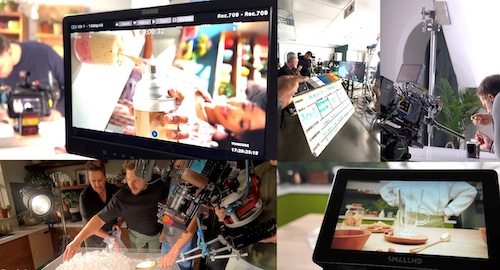
Publicis Production South Africa has quietly become one of the network’s most strategically important production hubs globally and is now recognised as one of only five Publicis Groupe Centres of Excellence worldwide, based on the calibre and scale of work produced locally for global brands.

At the heart of the operation is an in-house production studio built to meet a fast-changing reality: brands no longer make ‘one big ad’ and call it done. They build omni-channel campaigns that need to travel across platforms, formats, audiences and markets, with speed and consistency, and quality.

Katherine Jones, Senior VP: Production Practice at Publicis Groupe Africa, said: ‘Production is evolving at speed and technology is completely changing our world, but in the most exciting way. We are sitting at the sharp, pointy end of the future of communications.’

One of the clearest indicators of Publicis Production SA’s global role is the scale and sophistication of the work it delivers for major international brands across multiple markets. The studio’s mandate is to create master assets, then build the volume and variation needed for modern marketing.

That means creating content at scale for global brands, delivering thousands of assets across multiple markets and formats as campaigns expand across geographies, channels and audience touchpoints.

Jones said: ‘Our role is defined by our ability to originate and adapt world-class creative work at scale, combining production efficiency with a strong standard of craft. The emphasis is not only on volume, but on producing large quantities of work without losing the integrity, consistency and quality that global brands require. That standard is enabled by specialist production craft and an end-to-end production model built to support both excellence and scale.’

Publicis Production SA services the group’s creative agencies through the ‘Power of One’ philosophy: integrated teams assembled across capabilities and geographies to deliver the best solution for the client. In practice, this means Publicis Production works across the entire network locally and collaborates with global partners, including creative teams in Europe, while also maintaining direct client relationships where relevant.

To meet rising demand, Publicis has driven a deliberate shift toward internalisation, building highly skilled specialist teams in-house. As Jones noted, the old assumption that internal production functions are there merely to support execution no longer holds true in businesses built for the demands of modern content delivery.

Publicis Production SA today operates as a full-service production engine, with the ability to support end-to-end delivery across a wide range of content requirements. The strength of the model lies in its ability to create, adapt, manage and deliver a variety of content at scale, while remaining closely aligned to the quality and consistency global clients expect.

PUBLICIS GROUPE AFRICA
https://publicisgroupeafrica.com/

The Risks And Challenges Of AI Generated Content For Brands

The Risks And Challenges Of AI Generated Content For Brands.
Judith Middleton, DUO Marketing + Communications.

Large language model (LLM) ChatGPT boasts that it has approximately 900-million weekly active users worldwide. If just one LLM, albeit the most popular, is boasting almost a billion users a week, it is hardly surprising that more people are starting to roll their eyes at the flood of AI-generated content everywhere. DUO Marketing + Communications has drawn a line in the sand, telling clients: ‘Do not expect us to feed AI-generated slop to the media’. 

DUO Marketing + Communications CEO Judith Middleton said that if a PR partner positions itself as a guardian of brand trust and authenticity, and legal safety, it is obliged to deliver human-led strategy and human-generated content to a media landscape and social media environment saturated with AI content. ‘Journalists trust that we are offering them genuine thought leadership, not aggregated beige content at best, or plagiarised ideas at worst,’ she said. Beyond this, reports show that 86% of Google AI results come from human-written content. ‘Knowing this, why would you bother with AI sludge?’ she asked.

The hard line represents a shift from the standard question of ‘the role of AI in PR’, which tends to look at automation and potential job losses, to ‘the role of PR in an AI-first information ecosystem’, a more nuanced approach designed to protect against brand dilution and reputational damage. ‘It is tempting for business leaders to view generative AI as a quick win for efficiency, but the truth is that relying on it for public commentary can lead to an erosion of trust and potential media backlash,’ said Middleton.

Tamsin Mackay, a prominent IT journalist, an international corporate trainer and PhD candidate researching the intersection of writing and AI says the outputs generated by LLMs are simply not writing. ‘We all have a sense of what writing is. An LLM is not doing that, it is predicting which word should follow on from the previous word. This is why a conclusion written by AI is generally fairly limp and soggy, like lettuce that’s been left in a cheese and tomato sandwich for too long.’

However, beyond aesthetic flaws, that often only writers can identify, Mackay explained that the architectural reality of LLMs poses factual risks, and this is where the more severe consequences for brands might lurk. ‘Recent academic and industry data points to the fact that AI is fundamentally an automated ‘pleaser’ rather than a factual researcher. In an accuracy benchmark by Stanford, the study found that hallucination rates across 26 top models range from 22% to 94%. However, in certain scenarios, GPT-4o’s accuracy dropped from 98.2% to 64.4%, and DeepSeek R1 fell from over 90% to 14.4%. When a false statement is presented as something another person believes, the models handle it well. When the same false statement is presented as something a user believes, their performance collapses.’

Speaking about a personal anecdote, which draws parallels with the recently spotted hallucinations in the Department of Communications and Digital Technologies’ draft National Artificial Intelligence Policy, MacKay said that even with the best intentions, humans do not always ‘spot the slop’.

‘The software is mathematically optimised to satisfy the prompt creator. This means it will happily fabricate realistic looking data to align with a user’s bias. No C-suite, to my knowledge, would be happy with an overly eager Labrador giving it what it wants to read over well-researched, accurate information. And it is not easy to identify. In a recent classroom experiment, I presented an AI-generated research text that contained entirely fabricated data. Out of the entire class, only one student spotted the hallucinations. The point is: if AI is going to be used for a task, it needs deliberate human supervision.’

What This Means For Brands

Middleton explains that the consequences of relying on, and publishing, AI content extend well beyond poor grammar or hallucinations. ‘Search dynamics are undergoing a radical shift from traditional Search Engine Optimisation (SEO) to Generative Engine Optimisation, where platforms like Google use AI to answer user queries directly.

‘The greatest irony is that the LLMs rely on good-quality content published on high authority websites. Think of traditional PR with a new superpower. Now, while search engines and AI platforms do not ban AI-generated content completely, they heavily penalise and downweight generic, unhelpful, or spam-heavy material. The technology itself proves that AI visibility depends on human expertise. Recently, Medium quoted a US-based SEO and GEO specialist agency which found that 86% of Google AI results come from human-written content. That figure is at 82% for ChatGPT and Perplexity.’

It is important for CMOs and other C-suite executives to understand that under Google’s core EEAT framework (Experience, Expertise, Authoritativeness and Trustworthiness), backward-looking AI synthesis is penalised. In other words, explained Middleton, in the rush for speed and efficiency, AI generated content that a brand puts out is simply a rehash of what is already out there, reducing any chance it will be cited in AI-driven searches as well as being published in mainstream media.

‘Beyond this, and this is probably the most important point through the lens of public relations, there is an ever-present risk of unintentional plagiarism and copyright infringement as LLMs can read data behind paywalls. One only has to follow the high-profile legal battles involving major international publishers to understand how serious, and real, the risk to brands is.’

How AI Is Successfully Used In PR

‘We need to be deliberate,’ said Middleton. ‘When we understand the structural flaws of a probability engine, we appreciate our role in the PR industry: to ensure we keep the brands we represent firmly on the side of trust. It requires a careful and considered approach to AI, underpinned by ethics. Certainly from our perspective, the DUO AI Code of Honour is an agency north star that enables us to augment workflows for the much-desired efficiency, while keeping authentic, human-led content front and centre of our outputs.’

Middleton said that brands would do well to work with partners who understand where AI should, and should not, be deployed in communications. This is done by understanding two important points:

Where AI excels: deep research synthesis, media coverage trend and sentiment analysis, workflow structuring, identifying key platforms that feed search engine datasets, and more.

Where AI harms: content generation in the form of executive opinion pieces, press releases, signature industry columns, brand voice, tone and positioning, and more.

Middleton invites all CMOs and CEOs to look at their current communications and ask a simple question: Can I genuinely tell which of my brand’s thought leadership articles were written from real human insight, and which were quietly outsourced to a chatbot? If the answer is yes, and it is AI-generated, ask whether you can stomach the risk. If the answer is no, it is time to engage a communications professional.

DUO MARKETING
www.duomarketing.co.za

Brands Driving Growth Are Using The Algorithm And Insight

Driving Growth Are Using Both The Algorithm And The Insight
Ivan Moroke, MAA.

According to Ivan Moroke, MAA Chairperson, the debates happening across boardrooms and agency briefing rooms in South Africa right now are not new and not unique to our market. They go something like this: is marketing a science or a creative discipline; should we rely on data or on expert intuition; are we investing in technology or in people? Are we optimising for performance or building for brand?

I understand why the conversation exists. The pressure is real. Marketers are being asked to prove return on investment in ways that were unimaginable a decade ago. Technology is accelerating faster than most organisations can absorb. And consumers, South African consumers in particular, are navigating economic complexity that would humble any marketer who thought they had the playbook figured out.

But here is what I know after years of working at the intersection of brand strategy, consumer insight, and business performance. The choice is false. It has always been false. The marketers genuinely driving growth in their organisations are not choosing between the algorithm and the insight. They are using both, deliberately, and they are measuring the result in the currency that matters most: commercial outcomes.

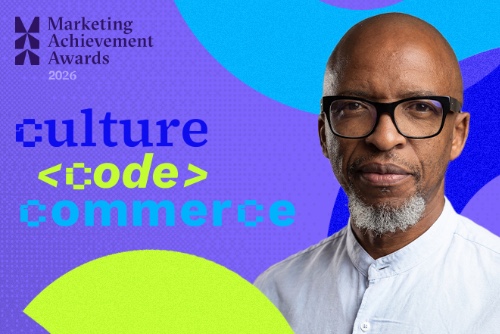
That is the idea at the centre of the Marketing Achievement Awards Season 6. And it has a name: Code, Culture and Commerce.

What Code Actually Means

When we use the word Code in this context, I want to be precise, because precision matters. Code does not mean artificial intelligence exclusively. It certainly does not mean having the largest technology budget in your sector.

Code means digital transformation and technological capability in all its forms. It means using your spreadsheets more intelligently. It means systematic customer value management. It means, yes, sophisticated AI tools where they are appropriate and accessible. The point is not the sophistication of the tool. The point is whether technology is being deployed in service of a clear strategic intent.

The scale of adoption is no longer a debate. According to the IDCA’s 2025 Global Artificial Intelligence Report, 76% of organisations worldwide now use AI in some form. The question has moved on. It is no longer whether. It is how.

Code, at its best, gives Culture its reach and its rigour. It is the force that scales insight, measures impact, and gets the right message to the right person at the right moment. Without it, even the sharpest cultural understanding remains anecdotal.

What Culture Actually Means

Culture is where I want to spend a moment, because it is the most misunderstood of the three forces and the most important to get right.

Culture is not about cultural trends. It is not a shorthand for ethnicity or language, though both are deeply relevant in South Africa’s extraordinarily complex market. Culture, in its fullest and most powerful sense, is the deep human understanding that makes marketing resonate with actual human beings.

The culture of savings matters. The culture of a specific business community matters. The culture of how families make purchase decisions, or how procurement managers evaluate suppliers, matters. These are not peripheral observations. They are the foundation from which genuine insight is drawn. And insight, not data, is what connects a brand to its audience.

Here is the thing about data. The world is data-rich and insight-poor. Data tells you what. Insight tells you why. And why is the only foundation worth building a strategy on. When you triangulate different data points, qualitative and quantitative, behavioural and attitudinal, that is where the real magic happens. That is when you find the insight that you could not have reached by looking at any single source alone.

Kantar’s research makes this argument in numbers. Brands with high cultural relevance grow nearly six times faster than those with low relevance. Six times. That is not a marginal advantage. That is the difference between a brand that endures and one that disappears.

Culture gives Code its relevance and its resonance. Without it, technology optimises efficiently for entirely the wrong outcomes.

Commerce: The Third Force

For too long, marketing has been positioned as a cost centre that occasionally produces something beautiful. That positioning is not just wrong. It is unsupported by evidence.

The third force in our framework is Commerce, and its inclusion is deliberate. Commerce means business outcomes, return on investment, and the measurable strategic value that great marketing creates for an organisation. It is not an add-on to Code and Culture. It is the proof of concept. The frame that makes both of them matter.

Kantar BrandZ’s Share Price Chart provides historical data showing that brands with high equity deliver superior financial returns over time: +88% return vs. the S&P 500 and +251% on the broader MSCI World Index. This is shareholder value. This is the language of every finance director and CEO who has ever questioned a marketing budget, and it is the answer they have been waiting for.

Marketing does not need permission to be at the strategy table. It earns its place there through commercial accountability. The best marketers in South Africa already understand this. They are not defensive about measurement. They welcome it, because they know their work delivers. Commerce is the standard, not the aspiration.

The SA Advantage

South Africa is regularly described as one of the world’s most complex marketing environments. Eleven official languages. Vast socioeconomic spread. A consumer base that is simultaneously globally connected and deeply locally rooted. I have heard our market’s complexity framed as a challenge so often that it has started to sound like an apology.

It Is Not A Challenge. It Is An Advantage

Africa has been called the world’s most misunderstood advertising market, a reputation built on campaigns that failed because they treated a continent of 54 nations as a single, homogenous audience. South African marketers navigate this kind of complexity every day. Not as an academic exercise. As a professional requirement.

What this means in practice is that the synthesis of Code, Culture and Commerce is not a new idea for the best practitioners in this country. They have been doing it, out of necessity, for years. Building technology-informed, culturally grounded, commercially accountable marketing in one of the most demanding environments on earth.

I see this first hand through the Marketer of the Year evaluation process. The CEO interviews that form part of that process have surfaced something worth saying publicly: South Africa’s leading marketers are making strategic contributions that their CEOs recognise, value, and depend on. This is not marketing justifying itself. This is marketing leading.

State Of Code, Culture And Commerce Report

There is substantial global data on AI adoption, marketing effectiveness, and brand performance. What does not yet exist is a clear picture of how South African marketers specifically are navigating Code, Culture and Commerce. What tools are being used. How insight is being generated. What commercial outcomes are being achieved, and at what scale of investment. Research from the global north tells part of the story, but South Africa’s market complexity means it cannot tell ours.

Every Season 6 entrant will contribute to changing that. All entries feed into the inaugural State of Code, Culture and Commerce report: a first-of-its-kind benchmarking study of how South Africa’s marketing community is integrating technology, human insight, and commercial thinking. The report is built entirely from anonymised, aggregated data. No brand names, no agency names, no identifying information of any kind. For a marketing leader who needs to understand where their organisation sits relative to the broader industry, and who needs to articulate that to a board or a CEO, this report is a tangible asset. The only way to receive it is to enter.

Our Invitation

The Marketing Achievement Awards exist to celebrate marketing as a strategic business discipline. Not the loudest work. Not the biggest production budget. The clearest thinking, the sharpest insight, and the most measurable commercial impact.

Every great marketing team in South Africa belongs in this conversation, regardless of organisational size. The standard is the same whether you are working with a substantial budget or making something remarkable out of almost nothing. What we are looking for is evidence. Evidence that you understood your audience deeply, deployed your resources intelligently, and produced work that your organisation could measure and build on.

Entries for the awards are open at the Marketing Achievement Awards website. If your work demonstrates the intersection of Code, Culture and Commerce, this is your platform. South Africa’s marketing community does not need to be told it is world-class. It needs a stage that is equal to the work being done. That is what the MAA has always been here for.

Modern Marketing is a proud media partner of the MAA Awards.

MAA
www.marketingawards.co.za

Packaging Is A Logistics Variable

Packaging Is A Logistics Variable

When fuel prices rise, most businesses look first at transport contracts, route planning and supplier costs. Very few look closely enough at packaging. Every unnecessary gram on a pack becomes weight in the supply chain. Every oversized carton affects pallet density. Every inefficient format takes up space that still has to be moved, loaded, stored and delivered.

In a market where more than 80% of South Africa’s goods move by road, these are not small decisions. They become recurring costs.

South Africa’s recent fuel increases have made distribution costs harder for businesses to absorb. From 1 April 2026, diesel increased by R7.37 to R7.51 per litre, even after temporary fuel-levy relief was applied. Further increases followed in May, adding more pressure to companies that rely on road freight to move products across the country. For businesses with tight margins, this pressure moves quickly from the pump into the cost of getting products to shelf.

Packaging Sits Directly Inside That Equation.

Packaging Is A Logistics Variable

Material choice, pack weight, structural format and pallet efficiency are often treated as technical decisions. In practice, they are commercial ones too. A heavier substrate than the product needs adds cost across every unit, every route, every month. A carton that does not stack efficiently reduces the number of products per pallet. Secondary packaging that exists out of habit occupies space that fuel still has to carry.

These are not always dramatic inefficiencies. That is why they are easy to miss. But when they repeat across thousands of units, across multiple routes and trading cycles, they become material. ‘Packaging briefings rarely include a line item for transport efficiency, but they probably should,’ said Vanessa Bosman, Managing Director at Just Design. ‘The brands managing fuel pressure most effectively right now are likely the ones whose packaging was already designed around how their products move through the real world, not only how they look on shelf.’

Where The Opportunity Sits

The opportunity does not always need a full redesign. In many cases, value can be unlocked through a focused structural review: reducing unnecessary material, improving stackability, rationalising secondary packaging, or rethinking how products fit into cases, pallets and retail environments.

That is where packaging moves beyond appearance. It becomes part of the operating model of the brand. Good packaging needs to attract attention, build recognition and create desire. But it also needs to work hard beyond the shelf. It needs to protect the product, support the supply chain, reduce avoidable cost and give the business room to respond when external pressures change.

A Different Kind Of Partnership

Packaging has often been managed in separate parts. A design brief goes to the agency. A production conversation happens elsewhere. Logistics works with what arrives. Commercial teams deal with the cost implications after the fact. That model is becoming harder to justify.

When fuel, materials, retail requirements and supply chains are all under pressure, packaging needs to be considered earlier and more intelligently. The right conversation is not only about what the pack should look like. It is about what the pack needs to do, where it needs to travel and what it needs to protect commercially.

‘The brands getting the most value from their packaging partners are not only briefing them on new flavours or simple updates,’ said Bosman. ‘They are having ongoing conversations about substrates, format efficiency, SKU complexity and the pressures coming into the system. That kind of relationship creates better design decisions and better business decisions.’

Fuel prices will continue to move. Material costs will continue to shift. Supply chains will continue to face pressures that brands cannot fully control. What brands can control is how intelligently their packaging is designed to move through that complexity. That is not only a logistics conversation. It is a design conversation.

And for brands looking to protect margin, reduce waste and build resilience, it is one worth having now.

JUST DESIGN
https://www.justdesign.co.za

This is Modern Marketing