Home Blog Page 2

AAA Launches South Africa’s First Master Of Digital Marketing Degree

AAA Launches South Africa’s First Master Of Digital Marketing Degree

Accredited by the Council of Higher Education (CHE) and registered with the South African Qualifications Authority (SAQA), the Master of Digital Marketing programme is designed to merge the creative and analytical components needed to operate at the highest level of this specialist discipline.

Avikar Ramsundra, Dean of AAA, said the qualification addresses a critical absence in the postgraduate landscape. ‘Most tertiary degrees are either course or research-based,’ he explained. ‘We saw a need to bridge this gap. Our master’s programme equips graduates with theoretical understanding, analytical precision, and practical application.’

Ramsundra said the programme is purpose-built for established marketing professionals and creative strategists looking to upskill, and aspiring digital leaders who want to progress their careers by bringing world-class, value-adding knowledge and expertise to their organisations.

He is most excited about how this qualification equips graduates to apply evaluative thinking to the strategic challenges of the digital age, and gives them the credibility that a strong master’s degree brings.

Students will learn to systematically synthesise digital marketing theories, strategically design advanced campaigns that leverage big data and AI, and exhibit mastery in interpreting complex consumer behaviour to arrive at creative solutions using predictive modelling. The curriculum covers integrated multi-channel communication strategies, advanced digital tactics including SEO, SEM, social media marketing and programmatic advertising, and original research at an advanced level.

Practical exposure is central. Students use tools such as Google Analytics, and AI platforms, but Ramsundra noted that the curriculum doesn’t just focus on teaching students how to use AI; it ensures that they learn to use it responsibly by applying contextual judgement.

The programme offers six elective pathways: influencer marketing, mobile marketing, content marketing, ecommerce, digital branding, and advanced digital marketing and web analytics. Graduates will demonstrate strategic leadership, insight-based decision-making, innovation capability, ethical responsibility, research competence, communication excellence, and the cultural sensitivity needed to solve both local and global challenges.

AAA is the only institution in Africa accredited by the International Advertising Association (IAA), and maintains partnerships with industry players such as MASA and the IAB to keep its curricula aligned with industry needs.

The course launches in semester two of 2026, with intake beginning in July/August. Prospective students should apply on AAA’s website.

AAA
https://aaaschool.ac.za/

Ogilvy Namibia And College Of The Arts Conclude Creative Mentorship

Ogilvy Namibia And College Of The Arts Conclude Creative Mentorship

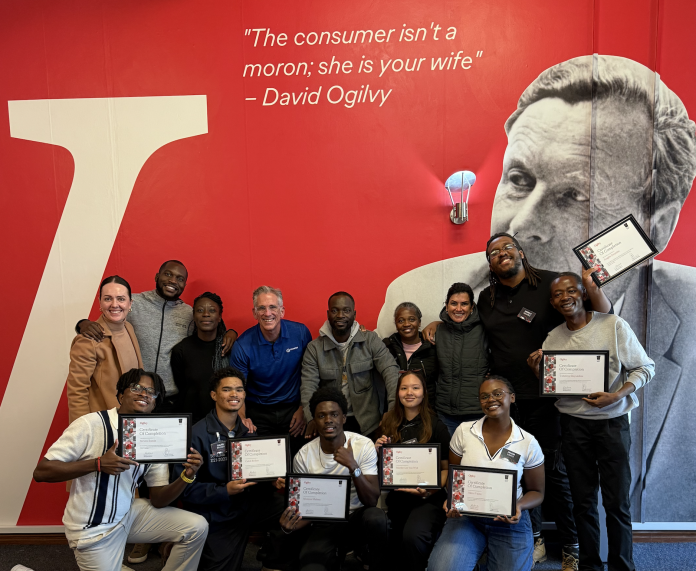
Ogilvy Namibia has concluded a three-month creative mentorship programme with the College of the Arts (COTA). On 10 June 2026, eight students presented full marketing campaigns to representatives from Paratus Namibia at the agency’s Windhoek offices. The programme paired design, photography and web design students with the agency’s strategic and creative teams to solve a live client brief under professional conditions.

The collaboration began in March 2026. Students were grouped into two agency-style teams, Team Para and Team STXSH, and briefed to develop a marketing campaign using Paratus Namibia as the case study. The brief required them to conduct research, set a strategy, develop a central creative idea, produce visual assets, apply the client’s brand guidelines and combine photography and design into a single campaign.

The programme was led by Ogilvy Namibia’s Managing Director, Rozanne van der Merwe, working alongside COTA lecturers Clara Schnack, Patrik Mwashindange and Ebben Kapalie. Before the creative work began, students completed the Lynette de Beer Temperament Colour Assessment to help them understand their working styles within a team.

‘This partnership has been a tremendous success, and we are incredibly proud of the growth shown by the students throughout the programme. Beyond producing great work, the objective was to prepare them for the realities of the professional world. What stood out most was their willingness to collaborate, take constructive criticism, adapt, and keep pushing forward despite numerous revisions. Their perseverance and positive attitude were evident from start to finish. At Ogilvy Namibia, we believe that skills can be taught, but attitude is everything. If you remain open to learning, embrace feedback, and never give up, anything is possible,’ said van der Merwe.

Representatives from Paratus Namibia attended the final presentations to review the campaigns and give feedback directly to the students, giving participants exposure to a live client setting.

The mentorship forms part of Ogilvy Namibia’s 30th-anniversary activity in 2026 and continues the College of the Arts’ practice of placing students with industry partners. Ogilvy Namibia has confirmed its intention to support similar programmes in future.

OGILVY NAMIBIA
https://www.ogilvy.com.na/

ReachPlayers Joins IAB’s Task Force To Define How Gaming Is Bought And Sold As A Media Channel

ReachPlayers Joins IABs Task Force To Define How Gaming Is Bought And Sold As A Media Channel

ReachPlayers has been selected as one of 18 companies joining the IAB’s task force to define how gaming is bought and sold as a media channel. The IAB is convening a small group of companies to establish the frameworks brands and agencies need to invest in gaming with confidence: agreed measurement methodologies, brand suitability standards, and buying models that sit comfortably inside a media plan.

For ReachPlayers, the invitation connects directly to what the company has been building since launch: in-game media that is structured, measurable, and commercially familiar. Unlike most digital channels, gaming has historically lacked the standardised infrastructure that planners need, no common currency for impressions, no agreed approach to brand safety, no buying model a CFO could benchmark. The IAB task force is the industry’s formal attempt to fix that.

‘Gaming is already where the audience is. This task force is about making sure the industry has the infrastructure to match,’ said Michael Anav, CEO at ReachPlayers. ‘Being part of this conversation means gaming is moving closer to where it belongs: inside the media plan, with clear buying models, clear measurement, and clear value for brands. We are proud to be in the room.’

The selection reflects a broader shift in how the advertising industry is approaching gaming. Audiences inside platforms like Roblox, Fortnite, and Minecraft number in the hundreds of millions, and engagement quality is unlike almost anything else on a media plan. Campaigns have generated average in-game engagement times of five to nine minutes per player. Players have gone on to create their own content about those brand experiences on TikTok and Discord without being prompted, extending reach organically at no additional cost.

Those results follow directly from the approach: embedding into environments where the audience already exists, turning brand touchpoints into something players choose to interact with, and delivering against guaranteed CPM and defined reach rather than speculative builds.

Participation in the IAB task force begins immediately. ReachPlayers will contribute to working groups focused on measurement standards and buying model frameworks.

REACHPLAYERS
https://reachplayers.com/

How SA Marketers Can Plan For One Of The Biggest Media Planning Shifts In Decades

How SA Marketers Can Plan For One Of The Biggest Media Planning Shifts In Decades

Global ad spend forecasts from WARC’s Future of Media 2026 Report, the collapse of South Africa’s traditional pay-TV model, and the rise of AI-powered search should act as stark wake-up calls for marketers, warns The Digital Media Collective (TDMC), a view reinforced by South African data from Google, TDMC’s Premier Partner.

WARC’s Future of Media 2026 Report opened with a sentence that should have stopped every South African marketer in their tracks: ‘The established model for media planning and buying is breaking apart, and nobody knows exactly what comes next,’ said Paul Stringer, Managing Editor at WARC, the global authority on marketing effectiveness.

‘For South African brands, the timing of this report matters more than we are letting on, because we have just over seven months until our entire television currency is replaced too,’ said Cheryl Ingram, founder and CEO of TDMC. Ingram and Caleb Shepard, Media Director at TDMC, unpack what this means, and what brands need to do this year to win in 2027 and beyond.

What The WARC Report Revealed

The Future of Media 2026 forecasts global ad spend at $1.3 trillion in 2026, a 9.1% jump on 2025. ‘But the more important number is where that money is going,’ said Ingram. Almost 80% of ad spend will flow into just three categories: retail media, paid search, and social platforms. The remaining 20% is shared across every other channel: television, radio, print, out-of-home, podcasting, gaming.

WARC’s response to that fragmentation is a new operating model that manages paid, owned, and earned media as a single connected system. The report also flags two further forces: AI-powered search has created a second audience for marketing, the machines themselves, making Generative Engine Optimisation (GEO) a discipline most brands have not started implementing; and creator marketing is now a primary brand-building channel, but significant investment is being wasted through poor brand fit and weak measurement.

The Collapse Of Traditional Pay-TV

While WARC’s findings are global, South African brands face a compounding local factor: our television measurement is being rebuilt from the ground up at precisely the moment that the audiences it was built to measure have already left.

Google South Africa’s market research is unambiguous. South African pay-TV dropped 9.6% in a single year, falling to 6.7 million subscribers. Over five years, MultiChoice lost 1.6 million linear broadcasting subscribers, a compound annual decline of 5.2%. Total broadcast revenue declined 4.6% to R33 billion, yet programming spend surged 7.6% to R17.2 billion.

‘That last number is the one that should alarm every advertiser,’ said Shepard, who leads the agency’s performance and media planning function. ‘Broadcasters are spending more to produce content for an audience that is shrinking. The cost of reaching an engaged viewer on linear TV is rising at exactly the moment that viewer is choosing to watch somewhere else. That is not a trend, that is a structural failure.’

South African viewers spend an average of 1 hour 52 minutes per day streaming, among the highest figures of any measured market globally. The streaming market has also been reshuffled: Showmax, which held 27% of the local streaming market, shut down on 30 April 2026, replaced by Canal+. Brands carrying Showmax as part of their video strategy now face an immediate measurement and reach question, before the TVM transition has even begun.

Where The Waste Is Hiding

Google South Africa’s research exposes a structural flaw in how linear TV spend has always worked here. Just 21% of the population absorbs 61% of all TV ad impressions, receiving an average of 27 impressions each. Linear TV effectively caps out at 60-63% reach, beyond that ceiling, every additional rand buys frequency waste, not new audiences.

‘This is what the new TVM currency is going to make visible for the first time,’ said Shepard. ‘When you can see reach and frequency across all screens in a single view, the inefficiency of a linear-heavy plan becomes impossible to ignore.’

A New Measurement System For A New Viewing Reality

In September 2025, the Broadcast Research Council of South Africa (BRC) appointed GfK to design and deploy the country’s new Total Video Measurement (TVM) service, ending Nielsen’s 38-year run as the TAMS provider. The rollout runs in three phases: a new daily TV currency goes live on 1 January 2027; broadcaster on-demand and streaming are added by end of 2027; and a unified all-screens view, linear TV, BVOD, OTT, mobile, and connected TV, completes during 2028.

‘Brands and agencies will be entering a viewing landscape they have not seen before. The way we plan, buy and prove TV will look different on 2 January 2027 to how it looks today,’ said Ingram.

The Connected TV Opportunity Brands Are Underestimating

YouTube reaches more than 25 million South Africans monthly, including over 7.5 million Gen-Z viewers aged 18-29. More than 8 million South African households now have a Smart TV. YouTube watch time on connected TV is up 16%, with views up 29%. CTV already accounts for 32.6% of all YouTube watch time in South Africa, challenging mobile as the primary viewing platform.

‘As a Google Premier Partner, we have early sight of where this audience data is heading,’ said Shepard. ‘And the story it tells is unambiguous: the living room is back, but it is streaming now. YouTube on a Smart TV is the new prime time for a significant and fast-growing share of the SA audience. The brands that plan for this ahead of Phase 3 of the BRC rollout will have a measurable head start.’

When that Phase 3 unified measurement arrives in 2028, YouTube and other CTV platforms will be measured alongside linear for the first time. Brands that have not started building CTV into their video strategy will be entering that landscape cold.

What This Means For Brands

The budget shift is already under way. Google South Africa’s Q1 2026 data shows roughly one-third of linear TV advertisers are actively reducing their legacy linear budgets, with 30% of that shifted spend being captured by Google and YouTube. ‘If you are a South African brand still planning media the way you did in 2022, with budget allocations split by channel, separate teams running paid social and TV, and no view of how AI search is reshaping discovery, you are not behind by a year. You are behind by a generation,’ said Ingram.

TDMC is telling clients to take five steps in 2026:

Audit your media plan against the WARC 80/20 split. If your spend mirrors the global pattern, ensure your measurement and creative are equally evolved. If it does not, ask honestly whether that is strategic or inertia.

Treat creator investment as a core media channel. Google’s data shows that combining creator-driven content with branded assets drove 8% higher conversion volume, 20% higher value per conversion, and a 41% boost in watch time. It needs to be always-on, properly measured, and integrated with the rest of the plan.

Get your AI search visibility audited now. GEO is the new SEO. ChatGPT.com is already the fourth most visited website in South Africa. AI-referred sessions jumped 527% year-on-year in the first five months of 2025. If your brand is not being cited by ChatGPT, Gemini, Perplexity, and Google AI Overviews, your discoverability is eroding right now.

Audit your video strategy for the connected TV gap. Google’s data shows that reallocating 32% of a linear TV budget to YouTube breaks the linear reach ceiling and drives up to 64% more total sales. YouTube Connected TV delivers 4.5x higher ROAS versus streaming TV and 1.89x higher long-term ROAS than linear TV.

Plan now for the 1 January 2027 TV cutover. Identify the people in your business who will run the transition. Put pressure on your media partners to show you their preparation roadmap. The grace period the industry will need in early 2027 is not a luxury, it is a planning input.

Plan Now, Benefit Later

Ingram said brands have seven months to decide whether they treat 2026 as a year of preparation or a year of denial. ‘WARC has told the world that the old model is over. The BRC has told South Africa that our most established media currency is being rebuilt. The ones that prepare will start 2027 with a competitive advantage. The ones that do not will start 2027 with a measurement system they cannot interpret, a spend allocation that no longer reflects where audiences are, and a creator strategy that costs more than it returns. That is not a forecast. It is just maths.’

For Shepard, the data closes the loop. ‘WARC tells us the global model is broken. Google’s South African numbers tell us exactly how it is breaking here. The pay-TV subscriber base is declining. The linear reach ceiling is real. The audience is on connected TV and it is growing fast.’

TDMC
https://tdmc.co.za

Five Tips To Go From Start-Up To Success

Five Tips To Go From Start-Up To Success
Taryn Hunter Sharman.

As South Africa continues to search for solutions to unemployment, entrepreneurship stands out as one of the most practical and powerful drivers for income and success. According to SA’s new Entrepreneur of the Year, Taryn Hunter Sharman, business success is possible if you are willing to embrace the realities of the journey.

‘Building a business takes more than a good idea, passion, or a strong social media presence,’ she said. ‘It takes discipline, commercial thinking, consistency, and the ability to keep going when cash flow is tight, deals fall through, or growth takes longer than expected. Success is often built in the unglamorous moments that nobody sees.’

She said the entrepreneurs who succeed long-term are often the ones who build strong fundamentals, stay adaptable, and keep showing up when things get difficult.

Five Tips To Go From Start-Up To Success:

Build A Business, Not Just A Service

Too many businesses in South Africa are still stuck selling outputs instead of solving real commercial problems. If you are not tied to revenue, growth, or measurable impact, you are replaceable. The shift from supplier to partner is where real value and longevity sit.

Do The Ordinary, Extraordinarily Well

South Africans have been conditioned to expect average. Late deliveries, unreturned calls, work that is close enough. That is not just a service culture problem, it is a business opportunity. If you show up on time, do what you said you would do, and do it consistently, you are already outperforming most of the market. Excellence does not always start with innovation, sometimes it starts with answering your emails.

Design For Reality

The South African market is complex. Disposable income is under pressure, trust is low, and competition is aggressive. The businesses that win adapt quickly, price smartly, and meet people where they actually are, not where strategy decks say they should be.

The Model Matters As Much As The Idea

Business owners spend too much time perfecting the business offerings and not enough time designing a business model that can sustain and grow it. What has worked for us at Faith & Fear is a modular, scalable structure that allows for flexibility, speed, and lower overheads. The idea gets you started. The model determines whether you survive.

Self-Worth And Net Worth Are More Connected Than People Admit

The biggest constraint in business is rarely strategy, it is mindset. What you believe you are worth shows up in your pricing, your partnerships, and the risks you are willing to take. If you do not deal with that, you will keep capping your own growth.

Business success is rarely a straight line. It demands resilience, commercial discipline, the willingness to make difficult decisions, and the ability to keep evolving as the market changes.

‘There is no shortcut to building a sustainable business,’ said Sharman. ‘It’s about making the right decisions consistently, even when it is hard.’

She added that success is not about chasing overnight wins or constant hustle, it is about building something durable enough to withstand setbacks, uncertainty and growth pressures.

TARYN HUNTER SHARMAN
https://tarynhuntersharman.com

The Strategist’s Challenge: Contradiction Is The Consumer Condition

The Strategist's Challenge: Contradiction Is The Consumer Condition
Inamangwe Mtumtum, Boomtown.

Inamangwe Mtumtum, Senior Integrated Strategist at Boomtown, says there is a strange performance built into strategy. We are paid to make ambiguity sound elegant; to turn collective panic into commercial pillars. To look at a country that feels like it is being held together by debit orders, WhatsApp prayers and mid-month calculations and somehow produce a seamless way forward.

But what happens when reality refuses to be simplified? Right now, South Africans are not just under pressure but are living inside a matrix of overlapping crises. The official unemployment rate rose to 32.7% in the first quarter of this year, with youth unemployment at an alarming 45.8%. This translates to almost one in two young people looking for work unable to find employment.

Meanwhile, the cost of living keeps rising with the average household food basket costing R5,452.09 in April 2026, up by R123.56 from the previous month. On top of financial strain, public institutions face intense scrutiny under the Madlanga Commission’s look into policing and systemic failures, while renewed parliamentary debates around presidential accountability keep national anxieties simmering.

Then there’s the more insidious stress of artificial intelligence threatening that your so-called valuable skill set might be tomorrow’s automated efficiency saving.

We tell young people to build careers in an economy that can’t absorb them. We expect workers to be grateful for employment they are terrified of losing. And we bombard consumers with conflicting cultural mandates: spend, save, heal, hustle, rest, glow, gym, supplement, self-care, invest, soft-life, hard-launch – and somehow still have money left over for fuel. No wonder ashwagandha (a herb in traditional Ayurvedic medicine that helps the body resist and adapt to stress) has become a personality type.

The Consumer Condition Is The Contradiction

In the midst of all this, strategists are asked to understand the consumer, grow the brand, unlock relevance and drive conversion. We are asked to find the elusive human truth that will compel someone to spend a little more, switch a little faster or care a little deeper.

At times, it feels absurd, even mildly offensive. Because the honest, uncomfortable question we must ask ourselves is: How do you ask people to buy more when life is already taking so much?

That is exactly where the strategist’s imposter syndrome begins. It does not stem from incompetence, but from the fact that the job demands absolute certainty from a reality that only offers compounding tension. We are expected to provide definitive answers while the consumers themselves are still desperately negotiating basic questions such as whether they can even afford the product or service: Can I justify buying this? Do I deserve this? Is this responsible? Is this joy, or is this just survival?

Contradiction is no longer a consumer insight. It’s the consumer condition. The traditional strategist could historically hide behind neat, tidy segmentations such as ‘The Aspirational Consumer’, ‘The Value Seeker’ and ‘The Young Urban Professional’, amongst others. Those labels feel laughably thin in the current environment.

Today’s consumer can be anxious about their financial future and still buy luxury perfume. They can be deeply mistrustful of institutions and still gamble online. They can be exhausted by capitalism and still deeply desire a Stanley cup, a pilates membership, an IV drip and the curated soft life aesthetic.

The growth of gambling and online sports betting in particular, is a case in point. While formal job opportunities continue to shrink, South Africa’s betting revenue has grown fourfold since 2021. The local gambling sector reported a staggering R1.5 trillion in total amounts wagered in FY2024/25, with gross gambling revenue reaching R74.5 billion. Betting has stopped being mere entertainment. For many, it has become hope with odds attached, a small, high-stakes theatre where people can feel like their lives might fundamentally change by the final whistle. That is not irrational behaviour. It’s rational behaviour operating inside an irrational economy.

Moving From Empathy To Brand Accountability

What defines our real work now is not to make brands sound certain, but to make them more honest.

We must stop pretending consumers are simply ‘resilient.’ Resilience has become the polite, corporate euphemism we use when structural systems have repeatedly failed people. We must stop romanticising systemic struggle into ‘hustle culture.’ Crucially, we cannot use empathy as a tone of voice while our underlying strategy remains purely extractive.

Empathy at scale can’t just mean writing softer ad copy. It has to mean enforcing sharper brand responsibility. Consumers can instantly feel the difference between a brand that genuinely understands their pressure and a brand that is merely studying it to fuel a campaign.

This is where clients, agencies and strategists need to have much more uncomfortable conversations. We can’t keep asking advertising to feel culturally alive while simultaneously starving it of the operational conditions that make it meaningful.

The paradox is that while brands are asking for emotional relevance, cultural breakthrough, organic loyalty and deep human connection, what they actually provide are compressed budgets, hyper-accelerated timelines, conservative approvals, generic CSI and risk-averse briefs.

We operate under a flawed belief that culture can be borrowed for a seasonal campaign without ever being invested in. We chase emotional relevance while refusing to take any emotional risk. Advertising cannot keep shouting “we see you” while doing absolutely nothing to prove it.

Embracing The Mess

The future of strategy will not belong to those who sound the most certain. It will belong to the people who can sit inside uncertainty without flattening it.

The industry needs strategists who can look at a slide deck and acknowledge that the consumer is scared but still desire things; broke, but still expressive; angry, but still hopeful; exhausted, but still reachable. But they are only reachable if we stop insulting them with oversimplified messaging.

Maybe the strategist’s job is no longer to manufacture a false sense of certainty. Maybe our job is simply to make better sense of the mess; to help brands understand that in uncertain times, people aren’t just buying products for the sake of owning the item. What they are also buying is relief from immediate friction, proof of their hard work, control over a small part of their day, status, escape and continuity. They are buying a fleeting feeling that life has not completely cornered them.

The most honest strategy today starts with admitting that we don’t have a perfect answer. Instead, we have a responsibility to ask far better questions.

The consumer is not a static target audience on a PowerPoint slide. They are somebody trying to make rent, dodge debit orders, stay sane, look good, believe in something, feed a family, survive the family WhatsApp group, avoid the depressing news cycle, keep their job, or find one, and still retain enough internal softness to want something beautiful.

So yes, being a strategist right now feels like imposter syndrome. But maybe that discomfort is not proof that we are frauds but rather proof that we are finally paying attention.

BOOMTOWN
https://boomtownagency.com/

Practical Strategies For Conquering Mid-Year Fatigue

Practical Strategies For Conquering Mid-Year Fatigue

As June rolls in, many employees across the South African corporate landscape are hitting a familiar, exhausting milestone: mid-year fatigue. According to Annemie Burger, HR Director at Penquin, the phenomenon is becoming increasingly common as employees continue to navigate demanding workloads, economic uncertainty and the ongoing pressure to perform.

‘By the time we reach the middle of the year, many people are operating on depleted reserves,’ said Burger. ‘The goals and excitement that fuelled us in January have often been replaced by deadlines, responsibilities and the reality that there is still a long stretch of the year ahead.’

While many people dismiss mid-year fatigue as simply being tired, Burger believes it often signals something deeper. ‘It os not always about needing more sleep,’ she explained. ‘Often it is a combination of mental fatigue, emotional exhaustion and a lack of recovery time. People have been pushing hard for six months without stopping to assess whether their energy, priorities and wellbeing are still in balance.’

The impact can be felt across organisations, with employees reporting lower motivation, reduced productivity, difficulty concentrating and increased feelings of stress or overwhelm.

But according to Burger, the solution is not necessarily taking a two-week holiday and hoping for the best. ‘People often think they need a dramatic reset,’ she said. ‘In reality, small, intentional changes can have a significant impact on how we feel and perform.’

Recognising The Signs And Taking Back Control

According to Burger, common symptoms include mental fog, emotional exhaustion, reduced enthusiasm, and even physical tiredness despite adequate sleep. She noted that hybrid work, economic pressure, and the relentless pace of modern business have made the mid-year slump more intense.

‘Many people push through thinking it is just a phase, but that only makes it worse,’ she explained. ‘The key is to pause, reset, and be intentional about rebuilding your energy.’

Burger’s practical strategies for navigating and conquering mid-year fatigue:

Revisit and reset your goals: ‘Mid-year is the perfect time for a personal and professional audit. Ask yourself: What is working? What needs to change? Set three meaningful goals for the next six months instead of carrying unrealistic January expectations.’

Prioritise recovery, not just rest: ‘Rest is not something you earn once you have completed everything on your list,’ Burger explained. ‘Recovery is what allows you to perform sustainably over the long term. Without it, even the most capable employees eventually hit a wall. It is not enough to collapse on the couch. Schedule proper recovery, whether it is a digital detox weekend, a morning walk, or a proper holiday. Your brain needs space to recharge.’

Reignite purpose and connection: ‘Fatigue often stems from feeling disconnected from the ‘why’ behind your work. Reconnect with your team, celebrate small wins, and seek out projects that energise you.’

Support physical and mental fuel: ‘Movement, nutrition, hydration, and sleep are non-negotiable.’

As South Africans navigate another busy year, Burger said the key is to view the halfway mark as an opportunity rather than a warning sign. ‘The middle of the year should not feel like a survival test,’ she said. ‘It is a checkpoint. A chance to pause, reflect, adjust and make sure you are setting yourself up for success during the second half of the year.’

Her advice is simple. ‘Do not wait until you are completely burnt out to make changes. The sooner you recognise the signs of fatigue and take action, the easier it becomes to regain momentum. Taking control of your wellbeing is one of the most important investments you can make in your personal and professional success.’

As agencies and brands push toward the second half of the year, Burger’s message serves as a timely reminder: professional success should never come at the expense of personal well-being. By normalising conversations around burnout and providing the tools to navigate it, companies can ensure their teams remain energised, innovative, and ready to tackle the challenges ahead.

PENQUIN
https://www.penquin.co.za

Agencies Are Moving From Creative Scarcity To Creative Scale

Agencies Are Moving From Creative Scarcity To Creative Scale
Candice Siege, Brandtech+.

As generative AI rapidly transforms the marketing landscape, the future of agencies is not about replacement but reinvention. While early discussions framed AI as a potential threat to agencies and creative roles, the emerging reality is different: AI is becoming the foundation that will determine which agencies grow and which fall behind.

According to McKinsey, generative AI could add between $2.6 trillion and $4.4 trillion annually to the global economy, withmarketing and sales now the most common functions where companies deploy generative AI.

At the same time, adoption has accelerated dramatically. McKinsey’s latest research shows that 65% of organisations now regularly use generative AI in at least one business function, while Gartner forecasts that more than 80% of enterprises will use generative AI APIs or models by 2026.For marketing agencies, the implications are profound.

‘AI isn’t replacing agencies,’ said Candice Siege, Global COO at Brandtech+. ‘It’s changing how they compete. Agencies that integrate AI into their operations, not just for content speed, but for transforming teamwork and delivery, will succeed. The ones guiding brands in reimagining marketing through talent, tech, and tools will thrive.’

From Creative Scarcity To Creative Scale

Traditionally, agencies differentiated themselves through their ability to access creative talent and unique ideas. This dynamic persists in the current landscape. However, she adds that generative AI is changing the scale at which these ideas are generated, evaluated, and executed, advancing creativity and craftsmanship by introducing innovative approaches to workflow.

Rather than replacing creativity, AI enables the strongest ideas to travel further and faster, allowing talented teams to produce, test, adapt, and deploy campaigns across markets and channels at unprecedented speed.

Siege explains that AI doesn’t replace creative thinking; it amplifies it. The agencies and teams with the strongest ideas, supported by an AI-first culture, will always have the advantage.

Today, 88% of marketers report using AI tools in their daily work, while adoption across organisations has surged dramatically in recent years. Industry studies also show that over 64% of companies have already developed generative AI use cases in marketing, making the function one of the earliest and fastest adopters of the technology.

She said that as AI expands production capacity and simplifies our process, the nature of creative work is shifting.

‘Creative production used to take most of the time and effort,’ she explained. ‘Now AI can dramatically accelerate that process. The real advantage, however, comes from the people guiding it, those who can shape ideas, interpret insights, and apply creative judgement. Those who exhibit critical thinking and ask the question, why? The real power comes from the amplification of effectiveness rather than just efficiency from scale.’

This shift is why many organisations are investing heavily in talent growth and development and building Gen-AI-first cultures, where teams learn how to combine human creativity with AI-enabled production.

The Talent Race In The AI Era

Despite headlines about automation, the agencies leading the AI transition are investing heavily in people.

Siege adds that the biggest shift happening inside global marketing organisations is the focus on learning and development of Gen-AI-first cultures, where teams are trained to integrate AI into their daily workflows rather than treat it as an experimental tool.

‘AI doesn’t remove the need for talent; it changes what talent needs to do,’ she said. ‘The agencies that succeed will be those that invest in their people and build teams that are confident working with AI rather than competing against it.’

‘Our focus is on developing an AI-native workforce,’ she said. ‘That means embedding AI into everyday workflows, investing in training and pilot testing programmes to ensure our teams are equipped to operate in a world where creative production is effectively limitless.’

A New Agency Model Emerging

She explained that the rise of generative AI is accelerating a shift in how agencies deliver work and value to their clients.

‘Generative AI is dramatically expanding the scale and speed at which creative ideas can be developed and produced,’ she said. ‘What we’re seeing is the emergence of AI-enabled teams that can ideate, test and produce content far more quickly, while spending more time shaping strategy, creative direction and craft.’

For brands, this shift is unlocking new possibilities. Campaigns can be deployed faster, content can be adapted more easily across platforms and markets, and new forms of personalisation are becoming possible at scale.

The market opportunity is significant. It is estimated that generative AI alone could drive productivity gains equivalent to 5–15% of total marketing spend globally, representing hundreds of billions of dollars in potential value.

But Siege cautioned that access to technology alone will not determine success.
‘Every agency will eventually have access to the same AI tools,’ she said. ‘What will separate winners from everyone else is culture, whether an organisation has the mindset, skills and operating model to use those tools effectively.’

Competing In The AI Economy

As generative AI moves from experimentation to everyday infrastructure, the competitive landscape for agencies is entering a new phase. Rather than eliminating agencies, AI is intensifying the race to build smarter, faster and more adaptable organisations.

‘The conversation shouldn’t be about AI replacing agencies,’ Siege concluded. ‘It should be about how agencies evolve. Those with smart tech enabled ‘nervous systems’ powered by automation and AI in their processes. Those that invest in talent, build a Gen-AI-first cultures and rethink how marketing work is delivered will define the next generation of the industry.’

BRANDTECH+
https://www.brandtech.plus

Network X OOH Unveils Refreshed Identity And Renewed Market Positioning

Network X OOH Unveils Refreshed Identity And Renewed Market Positioning

Network X OOH has relaunched with a bold new identity rooted in Mzansi’s streets. The refreshed brand signals a new chapter as the out-of-home media owner sharpens its focus on township culture, commuter movement and real-world attention

The relaunch marks a new chapter for a business that has spent more than a decade building outdoor media networks where South Africans live, move, trade and connect.

‘For us, this relaunch is not about changing who we are. It is about giving the market a clearer expression of what has always made Network X OOH different,’ said Dimitri Tsaperas, co-founder of Network X OOH. ‘We have always believed that South Africa’s streets carry intelligence, culture, movement and opportunity. If brands want to understand where attention is really happening, they need to understand the places where people are gathering, travelling, buying, talking and living.’

The relaunch also includes a new brand campaign featuring Xolani Maphanga from the South African television show X Repo. Built on a local creative idea, the campaign sees Maphanga arrive under the impression that Network X OOH has ‘stolen’ the X from X Repo. What begins as a humorous confrontation becomes a story about the role outdoor media plays in communities.

As the campaign unfolds, Maphanga moves through Network X OOH environments and engages with commuters, businesses and residents who explain that billboards and digital screens can represent more than advertising space. Illuminated sites contribute to visibility at night, infrastructure supports local activity, and outdoor platforms become part of township and commuter life.

The campaign uses humour, familiarity and street-level storytelling to show that outdoor media is not passive infrastructure. In South Africa, it sits inside living environments, where culture, commerce and community intersect.

Jason Steyn, Sales Director, said the refreshed positioning speaks to what clients need from out-of-home media. ‘Brands are under pressure to prove that their media choices are not only visible, but relevant,’ said Steyn. ‘Our strength lies in understanding movement patterns, commuter behaviour and the commercial energy of township and urban environments. The opportunity is not just to place a message in front of people. It is to place it in the right context, where it feels part of the environment and has a better chance of being noticed and acted on.’

The relaunch forms part of a broader growth strategy that will include content initiatives and storytelling around township economies, commuter culture and the future of outdoor advertising in Africa. ‘Outdoor media has always been about more than panels and sites,’ added Steyn. ‘It is about presence, timing and understanding the flow of people. The brands that win are the ones that show up with relevance and consistency. That is the space Network X OOH is built for.’

NETWORK X OOH
https://www.networkx.co.za

Ignis Labs Relaunches Consumer Loyalty Platform Under New Name

Ignis Labs Relaunches Consumer Loyalty Platform Under New Name

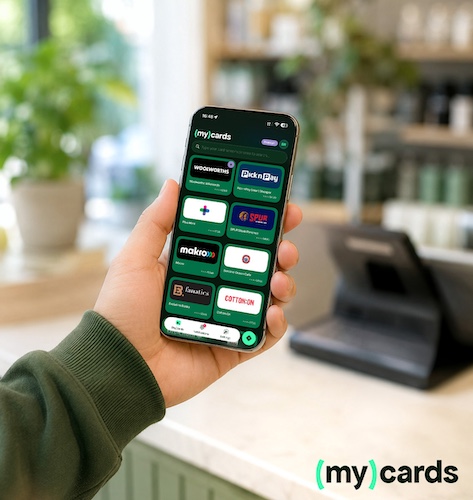
Ignis Labs, the technology division of South African media and innovation group Glynt, has announced the relaunch of its consumer loyalty platform under a new name. StoreMyCards is now (my)cards, an app to help South Africans get the full value from all their retail loyalty programmes.

Since Glynt acquired the app towards the end of 2025, the platform has evolved beyond simple card storage toward an easy, consumer-centred loyalty experience. With many consumers belonging to multiple loyalty programmes, cards can get lost, and rewards go unredeemed. (my)cards brings everything together in one seamless app, making it easier to access and benefit from the rewards on offer.

‘StoreMyCards reflected what the product did,’ said Byron Rode, co-founder and CEO of Ignis Labs. ‘It was a functional ‘storage’ space. (my)cards reflects a more personal relationship with loyalty, one that goes beyond storage to helping consumers manage and unlock value.’

There is also a next phase on the horizon, called (my)loyalty, which will bring together rewards, offers and benefits in a more seamless and accessible way, with a waitlist now open. ‘The goal is simple,’ said Rode. ‘To move from ‘never forget your card’ to ‘never miss your value’.’

The rebrand reflects a shift in the market, with loyalty moving away from fragmented, brand-specific programmes toward more integrated ecosystems. At the same time, brands are looking for a fuller picture of shopping trends and consumer behaviour, to help them engage customers in a more tailored way.

‘(my)cards introduces a more connected, user-driven environment that allows for a wider view of how consumers engage across multiple programmes. This creates the opportunity for more relevant, data-led engagement, moving beyond static rewards toward more dynamic and personalised interactions,’ said Rode.

GLYNT GROUP
https://glyntgroup.co.za/

This is Modern Marketing