
Home Blog Page 28

Treating AI Creative As A Long-Term, Data-Governed Process

Treating AI Creative As A Long-Term, Data-Governed Process

As local brands race to embed AI into their marketing, compliance and reputational risk are quickly outpacing internal controls. And, while SA has no standalone law just yet, global regulations, such as the EU’s AI Act, will apply the moment South African campaigns touch overseas audiences.

‘Leaders can’t be complacent, while South Africa currently has no standalone AI law, we do have an AI policy process, including the 2024 National AI Policy Framework and, as of April 2026, a draft national AI policy approved for public comment. This explicitly flags bias and discrimination as key risks along with disinformation and fake news generated through generative AI. Even without an enacted AI law, we have all the signals we need to know where we are heading, and our CMOs must get their houses in order’, said Marisa Swanepoel, Global Creative Operations Director at Incubeta.

SA Likely To Take EU Lead

Europe operates under the EU AI Act, which came into force in August 2024, with most provisioning fully applicable by August this year. It imposes strict rules on high-risk AI like real-time biometric profiling for targeted ads and requires transparency for AI-generated content. EU regulators are serious about protecting consumers and the act has made provision for fines up to €35 million or 7% of global turnover. Because it applies to any content reaching EU audiences, it is directly relevant to global brands operating from South Africa as well.

However, Swanepoel pointed out that our existing regulators aren’t altogether toothless when it comes to AI misuse, saying South Africa already has legal pathways to pursue many AI-related abuses, even without a dedicated AI statute. This can be done through existing laws on identity rights, defamation, POPIA (for misuse of personal data in training deepfakes), and the Cybercrimes Act.

Risk Is Real But Local Brands Are Struggling

Swanepoel said working with both local and international clients to solve compliance challenges has highlighted how global organisations are treating AI bias as a hard compliance and brand‑risk issue rather than a soft ethics concern. This is in contrast to local companies, which she said often struggle with the fact that AI tools have moved faster than governance, both internally and externally.

‘We’ve seen what happens when that grey space is exploited. South African audiences have already been exposed to deepfake ads featuring fabricated endorsements from well-known figures, with documented cases of deepfake ads aimed to mislead,’ said Swanepoel, referring to the recent case of local celeb Katlego Maboe. ‘It’s no longer a hypothetical risk, and it’s caused real harm to local personalities. It is our responsibility as marketers to ask the right questions and to evaluate how we approach creativity and AI in an ethical manner. Not just in South Africa, but globally,’ she said.

Treating AI Creative As A long-term, Data-Governed Process

Swanepoel said in order to mitigate AI governance risk, businesses need clear accountability, refreshed rights and data controls, and the discipline not to cut corners just because AI is fast.

Every AI project should have a named owner for permissions and legal checks. Contracts with models, influencers, photographers and agencies must explicitly cover AI and synthetic use, and brands should avoid using likeness or deep fakes without informed consent.

Sensitive data must be handled under strict sovereignty and security rules, with full visibility into where it is stored and which tools process it. Above all, companies should build bias, licensing and sign‑off checks into everyday workflows and keep policies updated as local and global regulations evolve.

‘By treating AI creative as a governed, data-informed process, we deliver work that relies on genuine insight rather than tactical AI guesswork. This requires a greater upfront investment as well as good problem statements and data points, but your outputs are defensible, ethical, and superior in performance. What’s more, with the right data foundation, a governed approach scales exponentially over time, both in speed and efficiency, through a compounding effect,’ she said.

Looking ahead, Swanepoel said brands can’t get away from the fact that AI is already deeply embedded in how local brands create, target and optimise their marketing.

‘AI has moved on from an abstract, ethical discussion. CMOs must be able to demonstrate that their use of the technology is lawful, careful and accountable. Putting in the work now to ensure you are covered by existing global regulations and will reduce legal, operational and reputational risk as South Africa’s draft AI policy moves toward a more formal governance framework over the next few years,’ Swanepoel advised.

INCUBETA
www.incubeta.com
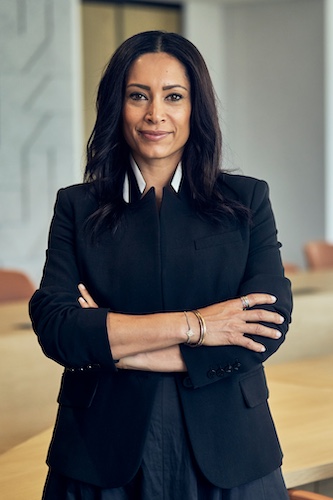
The Best Briefs Are Drawn Out Of The Business

The Best Briefs Are Drawn Out Of The Business.
Wendy Bergsteedt, Old Mutual Investment Group.

Wendy Bergsteedt, Head of Marketing, Old Mutual Investment Group, says most people who build things know the frustration of searching for something you believe exists, even when the evidence hasn’t arrived yet. That feeling is the heart of Old Mutual Investment Group’s (OMiG’s) new campaign, Champion the Unseen. And it resonates because it didn’t start as a campaign at all.

There’s a moment in their new television commercial where a young astronomer sits alone, staring at a screen full of data that isn’t giving her answers. She’s been searching for years. Nothing is working. But instead of walking away, she leans in.

The Star Nobody Noticed

We filmed at the Johannesburg Observatory for strategic reasons. In 1915, its director Robert Innes discovered Proxima Centauri, the nearest star to Earth after the sun. It had been hiding in plain sight, so faint that nobody thought to search for it. The scientific community took years to accept the finding because the idea that something so significant could sit unnoticed seemed implausible.

That story mirrors the investment philosophy behind our brand. At OMIG, our core investment approach, Underappreciated Quality, focuses on businesses the market has overlooked or undervalued. The thesis is straightforward. The discipline it takes to act on it is not.

How An Investment Philosophy Became A Brand Platform

Two years ago, we began an internal process we called the Brand Obsession, not a rebrand, but an interrogation of whether what we say externally reflects what happens inside the business. We kept returning to Underappreciated Quality, not only as a way of investing but as a way of seeing the world. Our people dig deeper, question consensus, and stay in the room longer than most. Once we recognised this, the creative platform revealed itself: Champion the Unseen. Not a payoff-line, but an organising principle.

We could have built the campaign around what we sell. Instead, we built it around how we think. That distinction changed everything, giving us a platform with integrity across every channel and audience rather than a message that expires with the next set of numbers.

Why We Chose An Astronomer

We wanted to tell a human story, not about financial services, but about what it means to keep searching when nobody else sees what you see. We needed someone whose persistence felt familiar and whose reward felt earned. Working with Clockwork and Little Big Productions, we explored multiple directions before landing on the Astronomer: a young woman who spends decades searching for something others dismissed, who faces skepticism, and who ultimately finds what was there all along, unseen but not without value.

Jacques Shalom, Chief Creative Officer at Clockwork, said the OMIG team gave them something ‘genuinely honest to work with’. Suhana Gordhan helped uncover the strategic thinking by starting from the inside, understanding culture, leadership, and what drives people before seeking external expression. That patience produced something the entire organisation recognised immediately.

Four Things This Process Taught Me

– Your deepest belief is your richest creative material.
– Product features and performance numbers matter, but they don’t make a brand distinctive over time. What made this campaign different is that it grew from a genuine conviction about how we see the world. When a platform is rooted in real belief, it holds.

The Best Briefs Are Drawn Out Of The Business

We spent time listening to leaders, investment teams, and clients before briefing any creative partner. The temptation is to move faster, but the depth of that internal work gave the creative team something substantial to build on and gave the business ownership of the result.

Distinctiveness Takes Discipline

Choosing an astronomer over a conventional financial narrative required confidence. The safer route would have been easier to justify. I’m happy we held the line. Distinctiveness isn’t about being bold for its own sake; it’s about trusting the audience to meet you where the story is honest.

The real test is whether people outside marketing use the language. I knew the idea had taken root when portfolio managers started talking about ‘championing the unseen’ unprompted. If the language lives only inside marketing, the platform hasn’t landed. When it shows up naturally in how the business talks about itself, you’ve built something that will endure.

This work was deeply collaborative. Clockwork and Little Big Productions brought the story to life with care, while LoveSong shaped the thinking early on. Internally, the campaign was supported at every level. It wasn’t imposed by marketing; it was drawn out of the organisation. I’m grateful to everyone who shaped and believed in it before it was finished.

Our Hope For This Campaign

Champion the Unseen connects how we invest, how we build teams, how we engage with clients, and how we think about South Africa and the African continent. It speaks to overlooked opportunities, quiet strength, and the conviction that real value rarely announces itself.

What I hope for, beyond awareness, is a shift in how the market understands who we are, not just what we do, but why we do it. That’s a longer game and harder to measure, but it builds the kind of trust no amount of media spend can buy.

Robert Innes spent years verifying Proxima Centauri because the world couldn’t believe something significant had been hiding in plain sight. I think about that often, not only as a metaphor for our investment philosophy, but as a reminder that things worth finding usually require the most patience. That’s the work. We look deeper. And then we look again.

OLD MUTUAL INVESTMENT GROUP
https://www.oldmutualinvest.com/institutional/

Treat Corporate Gifting As An Opportunity For Connection

Treat Corporate Gifting As An Opportunity For Connection

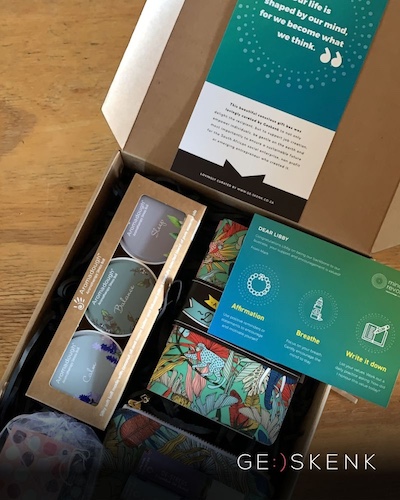
According to Vicki Scheffel, Founder of GeSkenk, most corporate gifts don’t stand a chance. They arrive, get opened, there is a polite ‘thank you’, and then they quietly disappear into a drawer, a cupboard, or that mysterious office corner where all the branded mugs go to retire. Not because people are ungrateful, but because nothing about the moment made them feel anything.

And that is the real problem.

Not just because the moment was missed, but because businesses are already investing significant budgets into these gestures. Every forgotten gift is not only a missed emotional connection, it is wasted spend, and in many cases, literal waste. Items that do not land do not linger, they get discarded, which means what was meant to build a relationship ends up in a landfill.

South African businesses have spent years optimising for efficiency, scale and output. We measure performance, track delivery, and refine processes. But somewhere along the way, we have stripped something out of how we work, lead and connect: the human experience. In many organisations, moments that should matter, recognition, milestones, client relationships, have become transactional. Tick the box. Send the item. Move on.

The result is what I have spoken about before: a kind of killjoy culture. Not because leaders do not care, but because pressure and process have crowded out meaning. And this is not just cultural, it is neurological. Because joy is how the brain decides what matters.

The brain is constantly filtering information and emotion tells it what to keep. When something makes us feel appreciated, included or recognised, that memory strengthens. When something feels neutral, it fades. Which explains a lot about that branded mug.

In business, we focus on information, but what people remember are moments. Moments where they felt seen, where something felt genuine, where they felt like they mattered. Those moments shape behaviour over time, influencing trust, loyalty and how people choose to show up. In a nutshell: No emotion, no memory. No memory, no impact.

Most corporate gestures fail because they are not designed as human moments, but as procurement exercises. A gift is sent because the calendar says so, a budget is allocated because it’s a special occasion, an item is selected because it’s quick and easy, and branding is applied because, well, it has to be branded, doesn’t it? But nowhere in that process is the question: how will this make someone feel?

These moments are not insignificant line items because companies are already spending meaningful budgets here. The issue is not whether the money is being spent, it is how it is being spent. When these moments are approached without thought, they do not just become forgettable, they become wasteful: financially, creatively, and environmentally.

The result? Something completely forgettable. The moment is empty. We could blame the gift itself, but really, it is because it is not the object that creates meaning; it is the way the moment is designed.

Emotion acts like a highlighter in the brain. It marks what is important. That is why a simple, thoughtful gesture can stay with someone for years, while a generic one is forgotten within days. We tend to overthink the item and under-think the feeling.

When something is clearly considered, people recognise the effort behind it. That builds trust, which is the foundation of every business relationship. When people feel valued, they invest in the relationship, advocate for it, and go the extra mile. That is emotional equity, and it is powerful.

Often, it is the smallest moments that matter most. A genuine message, an unexpected thank you, a nod to acknowledge those overtime hours or extra effort. These moments carry enormous meaning because they make people feel seen. Culture is built in small, repeated moments. Gifting is one of those moments. The question is whether those moments are treated as transactions or as opportunities for connection.

If there is one thing I believe more organisations should start doing, it is this: design for joy. Not superficial fun, but genuine moments of appreciation, recognition, belonging and human connection. Why? People may forget the meeting, the presentation, the email, but they never forget how you made them feel. That feeling is not just emotional; it is neurological. It shapes memory, which, in turn, shapes behaviour.

So, we can keep sending things, or we can start making moments. One gets opened and forgotten, the other sticks. And in business, what sticks, stays.

GESKENK
https://ge-skenk.co.za

Performative PR Ticks The Boxes But Lacks Substance And Credibility

Performative PR Ticks The Boxes But Lacks Substance And Credibility.
Samantha Thomas and Kirsten Roos, Pulse Communications.

There is a growing disconnect in the PR industry, one that is less about capability, and more about trust. Brands are investing in expertise, yet the outcomes often do not reflect it. Data shows that 82% of journalists distrust brand narratives that feel overly controlled or inauthentic (Cision State of the Media), meanwhile, 63% of PR professionals say their strategic counsel is often overridden by internal agendas (PR Week Global Survey).

The result? Just 28% of consumers trust what brands say about themselves, while 66% place their trust in earned media (Edelman Trust Barometer). On their own, these are just statistics. Together, they point to something more telling: Brands are investing in PR expertise, that part is clear. But, increasingly, they are holding back the very thing that makes that expertise valuable in the first place: The space to lead.

Briefs come in with clear intent: Build credibility, shape a strong narrative and get meaningful media traction. On paper, everything aligns but somewhere between strategy and execution, something shifts.

The edges get softened. The messaging gets refined. Risk is quietly removed. Before long, what started as a story with real potential becomes something far more controlled, and far less effective.

The data may quantify it, but it does not fully capture the outcome because what is emerging is not just ‘safe’ PR. It’s something closer to performative PR which is work that looks right, ticks the boxes, but ultimately lacks the substance and credibility needed to land.

In today’s media environment, that gap is harder to ignore than ever. Newsrooms are smaller, journalists are under constant pressure. There is less time, less patience and significantly less appetite for anything that feels like it has been overworked or over-controlled. If a story is not clear, credible and genuinely relevant to that audience, it does not make it through.

‘When PR strategy is diluted, stories lose their edge. What could have been a narrative that resonates beyond the brand quickly turns into something self-referential, more about the company than the context it operates in and at that point, it stops being a story. It becomes an ad, and journalists do not publish ads,’ said Kirsten Roos, Managing Parter at strategic communications agency, Pulse Communications.

There is also a longer-term cost that’s often overlooked: Media relationships, for PR professionals, are not transactional, they are built over time, through consistency and credibility. When PR teams are expected to push messaging that feels exaggerated, unclear or simply not newsworthy, it chips away at that trust.

At a brand level, the impact is just as significant. PR is not a once-off output: It is an ongoing process of shaping perception. When that process is disrupted, like when strategy is repeatedly adjusted to meet short-term internal comfort, it leads to fragmented narratives that do not quite stick.

The irony is that, in trying to maintain control, brands often dilute the very outcomes they are investing in.

Part of the misunderstanding lies in how PR is perceived. There is still a tendency to see agencies as channels for distribution, rather than strategic partners, but the reality is that PR sits much closer to reputation than it does to messaging.

‘When a weak or over-engineered narrative goes out, it does not just reflect on the brand, it reflects on the agency that put it forward. Increasingly, agencies are becoming more conscious of that and more protective of it, even. We have had to turn down work in the past because the narrative did not align with our expertise and could compromise our media relationships,’ added Samantha Thomas, Managing Partner at Pulse Communications.

The most effective work still comes from collaboration. Brands bring depth of insight into their business and industry and agencies bring an understanding of how stories land, how media works and what resonates.

But, for that relationship to work, there has to be trust on both sides. Not just in capability but in judgement, because if PR is reduced to executing pre-approved messaging, its role becomes limited by design; and in a media landscape defined by scepticism and noise, that is a missed opportunity.

Credibility is not something that can be engineered through process or approval cycles. It is built through clarity, relevance and a willingness to let the story stand on its own, and more often than not, that requires letting the experts lead.

PULSE COMMUNICATIONS
www.pulsecomms.co.za

The One Show 2026 Announces African Finalists

The One Show 2026 Announces African Finalists

The One Club for Creativity today announced the entries from 51 countries and regions that have been selected as finalists for The One Show 2026. All finalists will win Gold, Silver, or Bronze Pencils or Merits, to be announced during Creative Week 2026 on May 14, and celebrated at The One Show 2026 awards ceremony on May 15 at Cipriani Wall Street in New York.

Ogilvy South Africa Cape Town boasts 15 finalists, including 13 for its work on ‘Vaseline Verified’ for Vaseline.

Accenture Song South Africa Cape Town has 13 finalists, all for ‘The Philipstown WireCar Grand Prix’ on behalf of The Philipstown WireCar Foundation. Giant Films Cape Town has seven finalists, including five also for its work on ‘The Philipstown WireCar Grand Prix’.

Agencies with six One Show 2026 finalists: Joe Public Sandton, including two for Breast Cancer UK ‘Street Nipples’; and Promise Johannesburg, all for AfriSam ‘Unwanted Sites’.

Two finalists each went to TBWA\ Hunt Lascaris Johannesburg.

Agencies with one finalist each: Edelman Johannesburg, M+C Saatchi Abel Johannesburg, The Odd Number Johannesburg, and VML South Africa Johannesburg.

South Africa has 48 finalists. Globally, Rethink Toronto has the most finalists in the world with 47. Uncommon Creative Studio London has 34 finalists, followed by Apple Cupertino, FCB Chicago and VML New York with 26 each, Courage Inc. Toronto with 23, Area 23 with 21, and LePub Mexico with 20.

This year’s esteemed One Show global jury selected a total of 1,345 finalists from 51 countries and regions.

Creative Week 2026

Now in its 17th year, Creative Week is a premier annual gathering for the advertising and design industries to come together and celebrate the creative excellence showcased in The One Club’s leading global awards shows: The One Show, ADC 105th Annual Awards, and Young Ones Student Awards.

This year’s One Show ceremony on May 15 includes announcement of special awards such as Best of Show and Best of Discipline, the inaugural One Show Members Choice Award, as voted from among this year’s top winners by The One Club membership, and 2026 Creative Hall of Fame inductees.

Other Creative Week 2026 programming includes The One Club AI Creative Challenge, exclusive Executive Creative Summit 2026, Client Pitch Competition, in person and virtual Portfolio Reviews, Type Directors Club TDC Lettering Walk, and informative daily Morning Buzz panels.

THE ONE CLUB
https://www.oneclub.org

Global Gerety Awards Announce Final Entry Deadline

Global Gerety Awards Announce Final Entry Deadline

The Gerety Awards brings together more than 260 judges from over 50 countries, with executive jury sessions held across major creative hubs worldwide. With the final entry deadline set for May 15, the Gerety Awards has announced a series of global initiatives designed to bring the industry closer to the work and conversations shaping the 2026 shortlist.

In the lead-up to judging, Gerety will host a programme of jury insight panels in collaboration with leading advertising trade press and associations. These sessions will bring together members of the executive jury to share perspectives on the standards being applied, trends and how creative excellence is evolving across the industry.

Following the executive jury sessions, held across 15 locations and responsible for defining the official shortlist, Gerety will once again expand access to the work through its global screening initiative.

Building on strong demand from previous years, internal screening sessions will take place across agencies and companies worldwide.

The curated 30-minute reel, featuring the highest-scoring shortlisted work, will be sent to over 1,000 industry leaders across more than 70 countries, creating a shared global moment around the ideas already setting the standard for the year, and offering an early indicator of the work likely to shape the awards season.

These sessions extend beyond the judging rooms, creating space for discussion, debate and a deeper understanding of the work defining the year.

‘Gerety has always been about offering a powerful perspective on what makes work truly resonate,’ said Lucía Ongay, Co-Founder of the Gerety Awards. ‘By opening up access through conversations and screenings, we are inviting more of the industry into that perspective, not just to see the work, but to engage with it.’

The programme reflects Gerety’s global structure, with executive juries meeting in cities worldwide to define the shortlist, followed by final judging from the Grand Jury.

Entries for the 2026 Gerety Awards are open until the final deadline of May 15.

GERETY AWARDS
https://www.geretyawards.com/enter

The Death Of The Polished Ad

The Death Of The Polished Ad

The South African marketing landscape is witnessing a significant recalibration of digital budgets. As digital noise reaches an all-time high, the ‘influence’ of a creator is no longer being measured by the size of their following, but by the depth of their community connection.

The Death Of The ‘Polished’ Ad

According to Michelle Swart, Head of Digital and Social Media at Penquin, the move toward raw, unfiltered content is a direct response to a more sophisticated and sceptical consumer base.

‘Influencer budgets are shifting back to creator-led content because people connect more with content that feels real and relatable,’ said Swart. ‘South African audiences are highly community-driven. Creators who speak authentically, often in local languages or within specific cultural spaces, tend to build stronger trust and engagement than polished, brand-first campaigns.’

This shift highlights a growing preference for smaller and mid-tier creators. Unlike celebrity-tier influencers, these creators often occupy a space that feels closer to the ‘everyday life’ of their followers, making their endorsements feel like a recommendation from a friend rather than a paid placement.

‘It’s not just about visibility anymore,’ Swart explained. ‘It’s about relatability. Audiences want to see themselves reflected in the content they consume, and creators are uniquely positioned to do that in a way that brands alone often can’t.’

Relevance Is The New Reach

In the South African context, the ‘one-size-fits-all’ approach to digital storytelling is becoming obsolete. The most successful campaigns in 2026 are those that lean into the specific cultural intelligence of the creator.

Interestingly, smaller and mid-tier creators are emerging as particularly powerful partners for brands. While they may not have the largest followings, their content often feels more personal and closer to everyday life, resulting in higher levels of engagement and credibility.

‘What we’re seeing is that influence isn’t only about scale,’ Swart added. ‘It’s about connection. Smaller creators tend to have more engaged communities, and that translates into more meaningful interactions and, ultimately, better outcomes for brands.’

What sets the South African market apart is the depth of understanding that creators have of their audiences. This local insight allows them to craft content that feels natural, culturally relevant, and aligned with how their communities communicate and consume media.

For brands, this means a shift in mindset, from control to collaboration. ‘The most successful campaigns are the ones where brands trust creators to do what they do best,’ Swart continued. ‘When creators are given the space to tell stories in their own voice, the content performs better because it doesn’t feel forced or overly scripted.’

This trend marks a significant evolution from the macro-influencer-heavy strategies that dominated recent years. Penquin is advising clients to adopt a more balanced 2026 influencer strategy: combining micro, mid-tier, and macro creators to deliver both authentic engagement and scalable reach.

The message for 2026 is clear: in an increasingly sceptical media landscape, authenticity and cultural resonance are the new currency of influence.

PENQUIN
https://www.penquin.co.za

MAPS® 22nd Edition Webinar Will Provide The Latest Data On SA Consumer Behaviour

MAPS 22nd Edition Webinar Will Provide The Latest Data On SA Consumer Behaviour

The Marketing Research Foundation (MRF), in partnership with Plus94 Research, will host a live webinar to present the findings from the 22nd edition of the Marketing All Product Survey (MAPS®), providing the latest data on South African consumer behaviour. The session will offer a structured walkthrough of the dataset, highlighting key shifts in media consumption, purchasing behaviour, brand engagement and audience profiles.

Webinar Details:
Date: Wednesday, 22 April 2026
Time: 09:00 – 10:30 (SAST)
Registration: Click here to register.

Attendance is open to marketing, media, advertising and research professionals seeking to strengthen planning, targeting and strategic decision-making through current consumer intelligence.

‘MAPS® was built to give the industry a single, shared view of the South African consumer that everyone can trust and act on. This webinar is an opportunity to engage directly with key highlights of that data and understand what is changing in the market,’ said Johann Koster, Chief Executive Officer of the Marketing Research Foundation.

The webinar follows the release of the 22nd edition of MAPS®, which marks five years of continuous tracking of consumer behaviour in South Africa. The dataset remains a central resource for agencies, marketers and media owners requiring consistent and comparable insights.

Produced using an independently audited methodology, MAPS® is designed to reflect observed consumer behaviour across a wide range of categories, rather than inferred trends.

‘The 22nd edition reflects both the depth and the continuity that makes MAPS® useful. Five years of data means we are not only describing the market but tracking how it evolves,’ added Koster.

MARKETING RESEARCH FOUNDATION
http://mrfsa.org.za/

Dentsu South Africa Launches Influence And Cultural Offering

Dentsu South Africa Launches Influence And Cultural Offering

Dentsu Influence, powered by CSA, brings media, creators, culture and PR into one integrated offering for modern brand growth. Built in partnership with CSA, the offering combines dentsu’s media scale, data capability and integrated marketing strength with CSA’s expertise in cultural storytelling, talent partnerships, entertainment and earned influence – creating a more connected model for how brands build relevance today.

At the centre of the offering is a unified influence model that brings together media, creators, culture and communications in one system. Rather than treating influence as a standalone campaign layer, Dentsu Influence, powered by CSA is designed to help brands move from fragmented activations to a more accountable, end-to-end approach spanning strategy, creator partnerships, content, amplification, PR and measurement. This model has been implemented across African markets, including Zambia, where it has been supported by CSA’s active involvement over the past three years.

An important part of the proposition is the intelligence behind it. CSA has developed the Cultural Index, a proprietary talent intelligence platform designed to help brands assess cultural value, momentum, brand readiness, and media power, not just follower numbers. This gives our teams a more strategic and defensible way to evaluate talent and shape partnership decisions.

Further strengthening the collaboration, dentsu South Africa will also offer a dedicated public relations capability in partnership with CSA, ensuring that earned attention and reputation-building sit alongside the broader influence proposition.

Roxana Ravjee, CEO of Dentsu South Africa, said, ‘The future of brand growth is culture-led. Dentsu Influence, powered by CSA, unites media, culture, creators and performance into a single model that gives our clients sharper relevance, stronger accountability and outcomes they can clearly measure.’

Davin Phillips, Chief Culture Officer, who will lead the offering, said, ‘The future of influence will belong to brands that understand culture properly, not just content distribution. This model is about bringing creative intelligence, talent understanding, storytelling and media together in a way that reflects how people actually engage today, and how culture is shaping growth across South Africa and the continent.’

DENTSU
www.dentsu.com

CSA
www.csa.global

VML South Africa Announces Creative Leadership Appointments

VML South Africa Announces Creative Leadership Appointments
Fumani Khumalo and Zinhle Mbatha, VML South Africa.

VML South Africa has bolstered its creative leadership team with two internal promotions. Fumani Khumalo and Zinhle Mbatha are stepping into creative leadership roles after being promoted to Creative Director positions. Khumalo was previously Art Director, while Mbatha held the position of Copywriter.

Reflecting on his career and the respected creative leaders he’s learnt from along the way, Khumalo said, ‘Stepping into this new role is both rewarding and humbling. I am reminded of the standard that was set for me. In this new role, I am excited by the opportunity to pay it forward, to mentor, guide and grow talent in the same way I was supported.’

Mbatha describes the experience of following in his mentors’ footsteps as ‘surreal’, adding that, ‘so much of what we know and what still echoes in our heads is from them. I hope to leave the same impact and love for creativity in those I get the chance to work with.’

Nhlanhla Ngcobo, Executive Creative Director at VML South Africa, said, ‘This has been a long time coming! Mbatha and Khumalo’s work has consistently demonstrated not only craft, but clarity of thought, leadership instinct, and the unusual ability to turn ambiguity into something sharp, memorable, and effective.’

‘I am personally looking forward to how they will inspire the teams they’ll lead to wave multi-coloured middle fingers to the conventional and pedestrian way of doing things. And how they’ll get them to colour outside the lines as they, themselves, have for the longest time on our most prolific and well awarded clients. Teams rally around their thinking because it’s both grounded and ambitious in all the right ways.’

‘Creative leadership today requires emotional intelligence, relationships, decisiveness, and the acumen to creatively solve business problems. Those qualities show up consistently with this dynamic duo. This is earned, overdue, and exactly the kind of leadership we should be investing in. I’m so proud.’

Khumalo and Mbatha take up their new roles at a time when the creative industry is in need of leadership that’s both level-headed and forward-thinking. Here, they reflect on the industry’s challenges and opportunities, and the strengths they bring to their new positions.

What are the unique challenges creative directors face in 2026?

FK: With every new wave of technological advancement comes the risk of losing the fundamentals of what truly shapes great work. The basics that are honed through repetition, craft and doing the work, not just generating an outcome.

As someone who’s had the opportunity to do those basics and equally embraces technological advancements, my challenge is to ensure that, even in this new fast-paced, output-driven world we live in, I still create a space for the fundamentals so that work isn’t just efficient but also has depth, meaning, and is well-crafted.

ZM: There is a real balancing act between embracing what’s new and still honouring the tried-and-tested creative process.

The runway is much shorter now for young creatives; tight deadlines and automation mean there’s less work to get your reps in. The challenge is helping them hone their taste. It’s the only thing that will set them and the work apart.

Where do the biggest creative opportunities lie in South Africa right now?

FK: The biggest opportunity in South Africa is to turn our constraints into creative opportunities. We’re a mobile-first market with diverse, highly engaged audiences, which creates the perfect conditions for ideas that are born in culture, not just broadcast into it.

What excites me is the ability to approach ideas as platforms rather than traditional campaign thinking. Platforms that live natively in social, in creator ecosystems, in real-world spaces and move fluidly between them.

ZM: We’re still figuring out who we are as a nation and that tension is actually a creative goldmine, especially for storytelling. On top of that, we have problems that genuinely don’t exist anywhere else in the world.

What keeps me obsessed is this space where you can blend technology, existing solutions, and who South Africans actually are. What comes out the other side is something entirely new that’s ours to own.

What excites you most about your new role?

FK: The shift from focusing on my own output to shaping the creative direction of a team. As an Art Director, I loved being hands-on and crafting the work, but this role allows me to have a wider impact guiding ideas from a higher level, mentoring talent and helping elevate the overall standard of the work.

ZM: It’s the shift to owning the full vision; not just a great execution, but what a brand stands for creatively and how every piece of work ladders up to that. Bringing different minds and strengths together to bring that vision to life excites me more than I ever thought it would.

VML SOUTH AFRICA
https://www.vml.com/south-africa

This is Modern Marketing