Home Blog Page 29

IMM Institute Recognising Outstanding Achievement Across Marketing And More

IMM Institute Recognising Outstanding Achievement Across Marketing And More
Irene Gregory, IMM Institute.

The IMM Institute will host its annual Gala Dinner on 8 May 2026, recognising outstanding achievement across marketing, supply chain management and business leadership at the prestigious IMM Institute Excellence Awards. Modern Marketing is a proud media partner. 

The evening, hosted in partnership with Kwikot, will honour exceptional individuals and organisations that have demonstrated excellence in their fields. ‘This year, we have taken a more deliberate and discerning approach to nominations, placing strong emphasis on meaningful impact and depth of achievement, an important step in ensuring the Awards remain both aspirational and elite as we continue to grow the calibre and diversity of entries,’ said Irene Gregory, CEO of the IMM Institute.

Finalists and winners will be independently assessed and selected by a panel of judges comprising highly respected industry leaders, seasoned practitioners, and academic experts. Gregory highlights that this composition brings ‘exceptional credibility and a richness of perspective to the process, ensuring that every recognition is rigorously and fairly adjudicated.’

Nominations closed on 31 March 2026, and the panel has now commenced deliberations. Finalists will be notified on 25 April, followed by the announcement of the winners at the Awards Gala Dinner on 8 May.

The gala dinner will take place at The Venue, Melrose Arch, which Gregory described as offering ‘a truly memorable red-carpet experience, an opportunity for industry peers to connect, celebrate, and be inspired together.’ Attendees can look forward to the prestigious Lifetime Achievement Awards, a highlight of the evening that honours individuals whose careers have left an indelible mark on the marketing and supply chain profession in South Africa.

Recipients of the two Lifetime Achievement Awards will be invited to address guests in a feature speech, offering a rare opportunity to hear directly from those who have shaped the industry, with insights drawn from decades of leadership and innovation. Alongside world-class entertainment and the celebrated Govan Whittles as Master of Ceremonies, these addresses are expected to be among the most memorable moments of the night.

The Gala Dinner also presents a valuable networking opportunity for professionals across the marketing and supply chain disciplines.

IMM INSTITUTE
www.imminstitute.co.za

The Consequences Of Stalled AI Scale

The Consequences Of Stalled AI Scale
Kgomotso Lebele, Accenture, South Africa.

Kgomotso Lebele, Country Managing Director for Accenture South Africa says in a low-growth economy where expanding revenue is challenging, organisations are under increasing pressure to unlock efficiencies and do more with less.

Consider a major South African bank that recently celebrated a successful AI-powered fraud detection pilot. Results were impressive: faster detection, fewer false positives, measurable savings. Leadership was energised. Yet eighteen months later, the system still operates in the same contained environment it was built for – the pilot never became a platform.

This is not a cautionary tale about one bank. It is the story of enterprise AI in South Africa right now – playing out in financial services, retail, mining and telecommunications, year after year. And in an economy defined by constrained growth, rising operational costs, load shedding-disrupted infrastructure and a shrinking pool of skilled technology professionals, the consequences of stalled AI scale are far more pronounced.

Accenture’s research paints a striking picture. Across multiple studies surveying thousands of executives globally, a consistent paradox emerges: more than 63% of organisations plan to increase AI investment, yet only 8% have successfully scaled multiple strategic AI initiatives enterprise-wide. The other 92% are running the same experiment on a loop – refining pilots, celebrating incremental wins, and wondering why transformation feels perpetually out of reach.

The problem is not ambition. It is not even technology. Most organisations are simply optimising for the wrong thing.

The Pilot Trap

There is a seductive logic to AI pilots. They are contained, measurable and low-risk. But they are also insulated from the complexity of the real enterprise, fragmented data, legacy infrastructure, competing priorities and human resistance. When a pilot succeeds in isolation, it proves AI can work under ideal conditions. It does not prove AI can work at scale.

The core constraint, Accenture’s research shows, is low data readiness. Most enterprises run on siloed, inconsistently governed data. Unstructured data such as conversations, documents, and operational signals remains largely untapped despite containing the richest insight. When the foundation is weak, models built in one unit cannot be reliably deployed in another. Each use case requires rebuilding from scratch, and the cost of scaling compounds with every iteration.

But infrastructure alone does not explain why scaling fails. The constraint may be structural, but addressing it is ultimately a leadership responsibility.

Strategic Bets vs. Table Stakes

Table stakes, chatbots, automated reporting, basic process automation, deliver real but incremental value. They make existing processes faster and cheaper, but are typically easy to replicate and rarely differentiate. As a result, they improve efficiency without fundamentally shifting the competitive equation. Strategic bets on the other hand target the core of a company’s value chain, where AI can fundamentally reshape how the business competes.

For South African enterprises, these are not abstract possibilities. In banking, scaling real-time fraud detection and payments automation across every transaction channel protects customer trust in a sector where it is hard won – a shift already made by 29% of banking institutions globally. In insurance, AI-driven claims intake and fraud detection is accelerating payouts while cutting losses. In retail, demand forecasting can materially improve profitability in a high-cost, margin-sensitive environment. And for mining companies, predictive maintenance and safety systems deployed at scale can reduce downtime and protect lives. These are not efficiency plays, but reinvention plays.

Companies that scale even one strategic bet are nearly three times more likely to exceed their ROI expectations from AI. The leverage is in going deeper on fewer, more consequential bets over having more pilots. Yet even the most advanced organisations, we refer to as front-runners, have only scaled 34% of their strategic bets.

Five Imperatives That Separate Front-Runners From The Rest

Our research identifies five concrete imperatives that distinguish the 8% of companies successfully scaling AI from the 92% still stuck in pilot mode. Together, they form a practical playbook for enterprise-wide reinvention.

1. Lead With Value

Front-runners do not invest in AI for technology’s sake. Every initiative is anchored to a specific business outcome: revenue growth, cost reduction, customer retention. This requires proactive CEO and board engagement, with clear value targets that the enterprise is held accountable for delivering. Our research found that C-suite sponsorship makes AI success 2.4 times more likely. Without it, AI programmes drift toward activity rather than impact.

2. Reinvent Talent And Ways Of Working

The most important differentiator for successful AI scaling is not investment, it is talent maturity. Front-runners demonstrate talent maturity four times higher than companies still experimenting. This gap requires systematic, enterprise-wide capability building including upskilling across functions, developing human-AI collaboration models, and recruiting specialists in AI strategy, architecture and responsible deployment. For South African organisations navigating a constrained talent pipeline, this means treating workforce transformation as seriously as technology investment.

3. Build A Data And AI Foundation

Scaling AI without a strong data foundation is like building on sand. Front-runners invest early and deliberately in data infrastructure by consolidating siloed sources, improving data governance, and expanding their use of unstructured, synthetic and third-party data.

4. Industrialise And Govern AI

Moving from pilot to production requires operational discipline that most organisations have not yet developed. Front-runners build centralised AI operating models that standardise how models are deployed, monitored and improved across the enterprise. They embed responsible AI practices not as a compliance exercise but as a trust-building mechanism that accelerates adoption.

5. Pursue Agentic Architecture

The next frontier of enterprise AI is not automation, it is orchestration. Agentic architecture refers to networks of AI agents that autonomously manage complex, multi-step business workflows: not just completing tasks, but coordinating across systems, making decisions and continuously optimising outcomes. Early adopters are beginning to deploy AI agents to orchestrate more complex workflows, particularly in areas like customer operations, IT service management and supply chain coordination. Front-runners are already building the infrastructure required to support these more sophisticated systems.

The Imperative Ahead

The returns for organisations that successfully scale AI are both compelling and concrete: front-runners report gains of 13% in productivity, 12% in revenue, and 11% improvements in both customer experience and cost reduction within 18 months. These are not aspirational figures but measurable outcomes of embedding AI into core operations. For organisations still confined to pilots, the cost of delay is rising, each quarter allows competitors to build advantage, while late movers face more expensive, large-scale transformation across data, talent and operating models. The window to catch up is narrowing rapidly. For South African business leaders, the path forward is clear: move beyond pilots, focus on a few strategic bets, and pursue them with full executive backing and enterprise-wide commitment.

ACCENTURE SONG
https://www.accenture.com/za-en/

Five Common Myths That Continue To Shape Digital Marketing Decisions

Five Common Myths That Continue To Shape Digital Marketing Decisions
Mateen Suliman, iqbusiness.

According to Mateen Suliman, Business Development Executive for digital media at iqbusiness, digital marketing has never had more tools, targeting options, and dashboards. And yet, many brands are working harder than ever for returns that feel smaller than they should.

Often, the reason for this is that brands are still following ‘conventional wisdom’ that has become outdated or which was never true in the first place. The result is that their campaigns are getting held back by counterproductive practices.

Taken too far, these myths lead to misallocated budgets, uninspired creative and strategies that optimise for the wrong outcomes.

In this article, I look at five common myths shaping digital marketing decisions today, what the evidence actually shows, and what to do differently.

Myth 1: Digital Is Fully Measurable

The myth: Because it’s digital, we can measure outcomes with precision. We do not need to rely on guesswork because the data tells us exactly what is working for us and what is not.

The reality: A growing portion of what we call digital measurement is based on probability modelling. Attribution is increasingly opaque. Many digital marketers have noticed that the gap between click and session is widening. Reasons for this include ad blockers intercepting tags and pixels before they fire, returning users not getting recognised due to cookie deprecation, and browser privacy features blocking tracking parameters.

We saw this in a recent campaign for a sports league where ticket sales looked very different depending on the reporting source. Conversion API data and GA4 data didn’t align. The Google Analytics tool could not reliably trace sales back to Meta or TikTok, so it filed them under direct (we don’t know where this person came from) or not set(the data was missing entirely). It then claimed a portion of those sales for Google Ads.

The implication: Practically speaking, brands and agencies should look to triangulate data across multiple sources rather than relying on any single reporting tool. Third-party verification and attribution technology are important tools in any marketer’s arsenal. Marketers will need to shift towards platform-agnostic analytics, conversion API, and differential attribution measurement tools to ensure they are getting accurate insights that contribute to long-term success.

Myth 2: Always Trust The Algorithm

The myth: Just use the smart bidding tools and let the platforms do the work. Trust that the algorithms will do what is best for your campaign objectives.

The reality: Big tech platforms use their algorithms to optimise for their own objectives, not your brand equity. As Shoshana Zuboff argues in The Age of Surveillance Capitalism, tech platforms profit from extracting and packaging behavioural data. When you depend only on smart bidding, you are relying on a system that is structurally incentivised to spend your budget and report favourable results. The goal is to use your data to persuade you to keep spending.

The implication: Smart bidding has its place, but effective optimisation is still human. Leveraging first-party data and reviewing multiple data sources will give you a more cohesive performance and brand picture. With more signals to draw from, you can make more effective and accurate real-time adjustments. We saw this in practice when we implemented customer lists and lookalikes across one of our campaigns. We saw a 50% improvement in the cost per acquisition, alongside a lift in session duration, relevance and revenue when we tapped into first-party data.

Myth 3: It’s About Targeting, Not Creative

The myth: Many marketers believe that precise audience targeting is the key driver of campaign performance, while the message and execution matter far less.

The reality: Many digital marketers have distanced themselves from creative ideation and input, leading to users getting overwhelmed with repurposed or uninspiring advertising. But intentional creative can stop users in their scroll. Research from Nielsen Catalina Solutions (NCS) found that advertising creative is the leading driver of sales lift, accounting for 47% of the total, on average.

We have found that testing at least four creative options and tailoring creative to the audience and platform dramatically improves performance. In one case, we remarketed a product with a complimentary offer to existing customers. By personalising the message and creating bespoke placements, the campaign’s CPA was roughly 10% of the median CPA.

The implication: Creative quality drives effectiveness more than targeting tweaks. Agencies and brands should get digital media teams involved in concept ideation and campaign direction from the outset instead of only handing over when the campaign hits the platforms. Media teams have direct visibility into how audiences behave on each platform, what formats perform and what messaging resonates in different contexts. Involving them early means creative decisions are informed by that knowledge.

Myth 4: Performance Marketing Gets The Results, So All Of Our Budget Should Go There

The myth: Because performance marketing is a powerful tool for short-term activations, it is the best place to put all of a brand’s budget. If it’s not directly attributable, it’s waste.

The reality: Brands are not built at the bottom of the funnel, but at the top where awareness and recall are created. Performance marketing often harvests demand that a brand has nurtured throughout a longer customer journey. When you over-invest in conversion-only activity, you can hit diminishing returns and end up paying more to convert the same people.

We saw this with a banking brand that was receiving diminishing returns on performance campaigns. Leads remained stagnant even as budgets increased. After running a brand campaign, we recorded about a 40% lift in leads over the next three months, with no increase in conversion spend. And importantly, leads didn’t immediately drop when the brand campaign ended.

The implication: Full-funnel investment drives stronger long-term returns than concentrating your budget only on performance marketing. Brand campaigns should be regarded as the demand generation engine that makes performance campaigns work harder. That is why it is important to allocate meaningful budget to brand-building activity, too, and resist the pull of short-term attribution metrics.

Myth 5: Going Viral Is A Strategy

The myth: There is a code to crack that will enable us to go viral and reap returns exponentially higher than our investment in a campaign.

The reality: Virality is a cultural moment, not a repeatable strategy. As Duncan Watts pointed out in research from nearly 20 years ago, designing messages to go viral is extremely difficult. We cannot predict which messages will spread virally nor which influencers will be responsible for spreading them. Even the most popular influencers cannot manufacture virality and genuine virality remains unpredictable and elusive. If it was possible to reliably go viral, then of course, every brand with a clever idea and a budget would do so, day in and day out.

The implication: Even if you have the deepest pockets and the most followers, you cannot spend your way to virality. You can capitalise on the viral moment with a timed campaign, but that has to come after. Focus on reaching the right audience with the right message, and enjoy and capitalise the viral moment if and when it happens.

IQBUSINESS
www.iqbusiness.net

Effie South Africa Introduces Agency And Marketer Of The Year Rankings For 2026

Effie South Africa Introduces Agency Of The Year And Marketer Of The Year Rankings For 2026

Two new local recognitions have been introduced by Effie South Africa for the 2026 season: Agency of the Year and Marketer of the Year. The rankings will be revealed at the Effie Awards South Africa Gala, alongside the 2026 winners, as part of Effie South Africa’s continued effort to spotlight marketing effectiveness. Modern Marketing is a proud media partner of the Effie Awards South Africa. 

The new awards are local programme rankings, calculated from the finalists and winners of Effie Awards South Africa only. They will be tabulated using the points structure aligned to the Effie Index methodology to ensure consistency across the Effie brand, while remaining clearly distinct from the global Effie Index. These rankings will be recognised through official Effie South Africa announcements and programme materials, rather than a physical trophy.

‘Effie exists to champion ideas that work, and to reward the teams behind them with credibility that stands up to scrutiny,’ said Gillian Rightford, ACA Executive Director for Effie South Africa. ‘By introducing Agency of the Year and Marketer of the Year rankings locally, Effie South Africa is adding another meaningful layer to our awards celebration. It recognises consistency and performance across the programme, and it gives agency teams, as well as the marketers who have driven effectiveness inside their organisations, one more reason to enter work that can prove its impact.’

2026 Call For Entries

Effie South Africa has issued the call for entries for the 2026 programme, with entries opening on 01 April 2026. Campaigns are eligible if they flighted in South Africa between 01 February 2025 and 31 January 2026. For entries submitted in the Sustained Success category, campaigns must have flighted between 01 February 2023 and 31 January 2026.

Entry Windows

– Early Bird: 1 April – 30 April 2026.
– On-Time: 1 May – 14 May 2026.
– Last Minute: 15 May – 29 May 2026.

For detailed information on entry categories, submission guidelines, and to initiate the entry process, visit the ‘Awards Entry Information’ tab on the Effie South Africa website

Effie recognition also extends beyond South Africa. Finalists and winners earn points on the global Effie Index, showcasing the strength of local agencies, brands and marketing talent on the world stage. Gold winners further advance to Effie’s Global Best of the Best, where South Africa’s most effective work is benchmarked against top campaigns internationally.

With Agency of the Year and Marketer of the Year now joining the programme, Effie South Africa looks to build on a record 2025 as it continues to celebrate the most effective work in the market.

EFFIE SOUTH AFRICA
https://effie.org/partners/south-africa/

Cannes Lions 2026 Announced Liesl Lategan As The Cohort For See It Be It

Cannes Lions 2026 Announced Liesl Lategan As The Cohort For See It Be It
Liesl Lategan, Spitfire Films.

Cannes Lions has announced Liesl Lategan as the cohort for the 2026 See It Be It (SIBI) talent programme. Designed to accelerate the careers of women and non-binary talent, the 2026 cohort selected for this unique learning and development programme includes 20 creatives from 15 global markets. Lategan, executive producer of Spitfire Films, is South Africa’s representative.

Taking place at the Cannes Lions International Festival of Creativity, between 22 and 26 June 2026, the programme includes mentorship opportunities and private masterclasses with industry leaders, as well as backstage access and sessions tailored to each participant’s career goals.

As the gateway to the world’s most prestigious celebration of creative excellence, the Cannes Lions Festival sits at the heart of the See It Be It initiative. So too, Ster-Kinekor, the exclusive Cannes Lions Festival Representative for South Africa, is committed to the nurturing of creativity across all brand communication platforms.

‘Ster-Kinekor has always been passionate about storytelling, creativity and the power of ideas to move audiences. We are very excited that Liesl Lategan has been selected as part of the 2026 See It Be It cohort, and we are sure she will share her learnings and experiences from the programme far and wide across the industry on her return from Cannes,’ said Lynne Wylie, chief marketing officer of Ster-Kinekor Theatres.

Lategan said that being chosen as the representative from South Africa for the SIBI Cohort of 2026 is a huge honour. ‘Creativity and being creative are completely natural for me. They are the fabric of my life and my purpose, which is inextricably linked to my business and its people. I look forward to learning at Cannes and becoming a better leader to continue growing Spitfire as a business that embodies transformation, purpose and passion in all that we do,’ she said.

The See It Be It programme is a cornerstone initiative at Cannes Lions, embodying an unwavering commitment to elevating underrepresented talent in the creative industry. This year, the programme welcomes a dynamic cohort representing a broad range of creative disciplines and global markets. Their unique perspectives and experiences will enrich the SIBI community, a network dedicated to fostering career development and paving the way forward for women and non-binary talent in the industry.

Since its inception in 2014, more than 150 women and non-binary talent from 44 markets have participated in the programme that is designed to combat the gender imbalance of creative directors in the industry. See It Be It is open to all women and non-binary people.
At Cannes this year, the cohort will be supported by Alumni Tutors Leena Gupta, Creative & Founding Member, Talented Agency, India, and Natasha Lashly, Founder & ECD, Piña Colada, Venezuela.

The 2026 Cohort Comprises:

– Aidovhioghie Anani | Deputy Creative Director, X3M Ideas, Nigeria

– Alba Abelló Balmes | Senior Creative, Twitch, UK

– Beatriz Fiori | Senior Copywriter, GUT São Paulo, Brazil

– Dana Buckhorn | Creative Director, Copywriter, Mischief @ No Fixed Address, USA

– Eugene Park | Creative Excellence Lead, CJ Cheiljedang, South Korea

– Farah El Beaini | Group Account Director, Burson, Lebanon / UAE

– Haylie Craig | Global Associate Creative Director, LEGO Group, Denmark (they/them)

– Hilary Ngan Kee | Head of Strategy, Motion Sickness, Aotearoa New Zealand

– Holly Attrill | Senior Creative, Wieden+Kennedy London, UK

– Kristen Gaerlan | Creative Director, Weber Shandwick, USA

– Liesl Lategan – Kyriakou | Founder/Executive Producer, Spitfire Films, South Africa

– Liyana Hidhir | Copywriter, Independent, Singapore

– Micaelle Lages | Creative Director & Co-Founder, thecode, Brazil

– Natalie Narh | Co-Founder & CEO, NewComma, Ghana

– Padcha Tanviruch | Independent Creative Director, Thailand

– Priscila Ramos de Sousa | Associate Creative Director, Area 23, USA

– Shreya Arora | Creative Strategy, Ultrahuman, India

– Shyaire Ganglani | Associate Creative Director (Copywriter), Leo Australia, Australia

– Svetlana Ćopić | Founder & Creative Director, No Agency, Serbia

-Valentina Bezzolo Briceño | Senior Creative Copywriter, DDB Chile, Chile


CANNES YOUNG LIONS
cannesyounglionssouthafrica.co.za

2025 Trends Report Presented By Effie South Africa And Ipsos

2025 Trends Report Presented By Effie South Africa And Ipsos

The third 2025 Trends Report was presented on a webinar held on 24 March, by Effie South Africa, in partnership with Ipsos, offering a focused view of what the 2025 winning cases reveal about driving marketing effectiveness in South Africa. The report explores how the country’s most effective work made deliberate choices about what it needed to achieve, how strategy showed up across channels, and how creative execution converted attention into action.

2025 Trends Report Presented By Effie South Africa And Ipsos

The report reinforces the outcomes identified in Effie South Africa and Ipsos’ previous reports, strengthening an evidence base that has become increasingly consistent across winning work. Effectiveness is rarely accidental. The most successful cases begin with clarity of intent (the job to be done), then orchestrate channel roles and investment with purpose, and rely on creative execution to earn attention, lift awareness and improve recall, and drive behaviour.

2025 Trends Report Presented By Effie South Africa And Ipsos

‘This is the third Effie South Africa Ipsos Trends Report, and it continues to sharpen what effectiveness looks like in our market,’ said Gillian Rightford, ACA Executive Director for Effie South Africa. ‘The lesson from the 2025’s entries is simple but powerful. Winning brands don’t try to do everything. They are clear about the job to be done. They sequence growth. They orchestrate channels with intent, not noise. And they make creativity carry the commercial load, using humour, emotion, distinctive ideas and clear calls to action to turn attention into action.’

2025 Trends Report Presented By Effie South Africa And Ipsos

That discipline comes through clearly in the 2025 Grand Effie winner, TBWA\Hunt Lascaris and City Lodge Hotel Group’s ‘Save Our Stay (SOS)’, where humour and a distinctive creative platform helped the campaign break category conventions, achieve rapid attention and translate intent into tangible action. Across the winning cases, the report highlights how humour and storytelling accelerate cut-through, while distinctive ideas and design choices help brands stand apart in saturated environments, improving recall and strengthening brand identity over time.

2025 Trends Report Presented By Effie South Africa And Ipsos

‘Winning strategies utilise humour and storytelling to cut through the clutter, reinforcing brand identity and inciting behavioural changes,’ said Quantin Montello, Service Line Manager, Creative Excellence at Ipsos. ‘In today’s saturated environment, reaching your audience at the right moment with precise messaging proves paramount. The 2025 winners show how strong orchestration and clear creative choices turn attention into measurable outcomes.’

The 2025 Effie South Africa Ipsos Trends Report is available to download, alongside the webinar recording presented on 24 March. Download the report or watch the webinar on Effie South Africa’s YouTube page here.

EFFIE SOUTH AFRICA
https://effie.org/partners/south-africa/

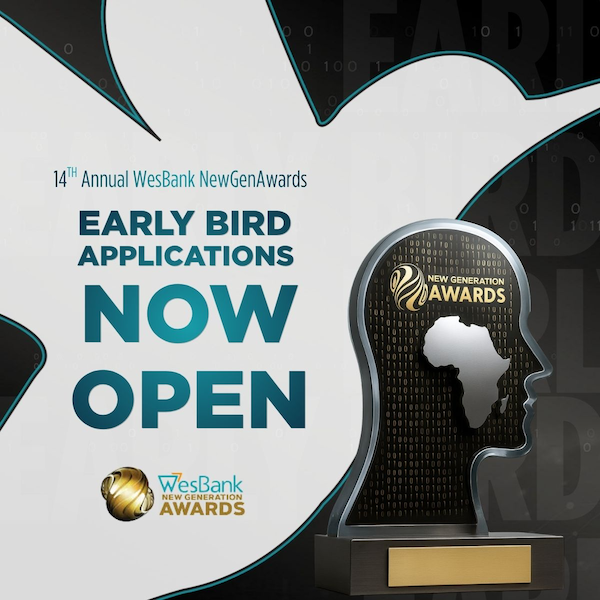
The 14th Annual WesBank New Generation Awards Announces Early-Bird Entries

The 14th Annual WesBank New Generation Awards Announces Early-Bird Entries

The WesBank New Generation Social & Digital Media Awards, South Africa’s premier independent and performance-based digital accolades, have become the definitive benchmark for digital excellence in the South African corporate and agency sectors. Modern Marketing is a proud media partner. 

The WesBank New Generation Social & Digital Media Awards is proud to announce the opening of early-bird entries for its landmark 14th edition. Teams can secure their participation at preferred rates from 10-30 April 2026, before standard entry fees take effect.

Over the past 13 years, the awards have processed more than 6,000 entries across 60 Industry-Specific Categories and bestowed more than 1,700 accolades, celebrating the pioneers who move the needle in social-first marketing, digital media, AI, creativity, integrated marketing, and online technology.

Stephen Paxton, Founder of the Awards, commented, ‘A New Gen Award is more than an accolade, it is a validation of excellence in an era of rapid digital shift. It represents the moment where raw data meets creative brilliance, and where the industry’s most impactful strategies are officially codified into legacy.’

Early-Bird Entry Information

Agencies and corporates are encouraged to take advantage of the early-bird entry phase to secure their participation at a preferred rate. This is the opportunity for innovators to showcase their creativity, technical prowess, and strategic ROI on the national stage.

For the entry guide, category descriptions, and entry fees, please visit here.

Why Enter New Gen? The Benchmark for 2026 Marketing Excellence:

1. Validate Your Strategic Architecture

In an era of AI-driven systems and shifting algorithms, winning a New Gen Award proves that your strategy isn’t just ‘functional’, it’s architectural. It validates that your brand successfully fused human creativity with technical mastery to drive measurable results.

2. Elevate Your Market Authority

A New Gen accolade is more than a trophy; it is a commercial asset. Previous winners have seen a direct increase in agency demand and a total recalibration of how their platforms are viewed by stakeholders and competitors alike.

3. Attract and Retain Elite Talent

The ‘New Gen’ brand is synonymous with innovation. Winning gives your team the earned confidence that their work delivers ‘real Impact’, not just engagement. It positions your organization as the premier destination for the industry’s top creative and technical minds.

4. Benchmark Against the Best

Join a 14-year legacy of excellence. With a judging panel of industry giants and a history of celebrating over 1700 accolades among top innovators, entering allows you to measure your work against the highest standards of the South African digital landscape, from across the corporate and agency sectors.

‘The New Gen Awards have been a catalyst for our strategic evolution. Beyond validation, they have given our team data-backed confidence that our work drives measurable impact, not just engagement. This elevated market positioning has directly accelerated agency demand, elevating how our platform is viewed in the market, and solidified the high-value partnerships that fuel our growth,’ said Kyle Oosthuizen, CEO at Blue Robot Group.

About the Awards

The 2026 Awards Gala marks a bold new era for the New Gen legacy. We have refined every detail to create a sleeker, sharper, and more impactful ceremony that honours the pace of the digital world. New Gen is shedding the traditional to embrace the dynamic, with a minimalist, industrial setting, creating a stage dedicated to the work and the people behind it. Mark your calendars for September 23rd, the night Johannesburg witnesses the pinnacle of South African digital achievement.

Sustained Excellence: WesBank Returns as Platinum Sponsor

Building on a successful partnership, the awards are proud to welcome back WesBank as the Platinum Headline Naming Sponsor for the second consecutive year. The awards will continue to be branded as The WesBank New Generation Awards through May 2027, reinforcing a shared commitment to honoring the architects of South Africa’s digital future.

Media & Sponsorship Inquiries: Stephen Paxton, Awards Founder, email: stephen@newgenawards.co.za

WESBANK NEW GENERATION
https://www.newgenawards.co.za/

South African Brands Need To Embrace The Always-On Mindset

South African Brands Need To Embrace The Always-On Mindset
Martin Slabbert, Alkemi Collective

According to Martin Slabbert, Head of Newsroom, Alkemi Collective, if your brand’s communication strategy still relies on a single, massive launch event every quarter, you are essentially telling your audience, and the media, that your business is only worth talking about four times a year. That simply does not cut it anymore.

The reality is that audiences are always on, and therefore, your brand must be always-on. The solution is not just more content, it is adopting a strategic mindset borrowed directly from the media world: the Continuous Newsroom.

For years, brands planned their communications like a military operation: The Big Campaign.

We would gather all the budget, all the resources, and all the creative energy for a single, powerful push. The result was often spectacular, generating a flurry of media coverage and social buzz.

But what happens on day 46, after the budget runs out and the agency moves onto the next client? Nothing. Silence.

This boom-and-bust cycle creates a feast-or-famine relationship with the media and, more crucially, with your customers. The moment you go silent, you lose the opportunity to participate in the real-time conversations shaping your industry.

In South Africa, where media houses are under immense pressure and journalists are juggling multiple beats, they don’t have the luxury of waiting six months for your next big product announcement. They are looking for credible, timely, and relevant commentary right now. They need an expert who can react to the Budget Speech, comment on the latest interest rate hike, or weigh in on the national debate around AI ethics.

If you are not positioned as that expert in the moment, someone else will be.

The Newsroom approach fundamentally changes the structure of a brand’s communications. It moves the focus away from the product launch and towards the continuous narrative. Instead of a marketing department that builds campaigns, you create an agile, dedicated team (internal or external) whose job is to operate like a media house.

What Does This Mean In Practice?

Reactive and proactive story mining: A Continuous Newsroom is constantly scanning the external environment, economic trends, political developments, and social media chatter, to find opportunities for the brand to legitimately contribute. Think of a local South African bank. Instead of waiting for their next home loan campaign, a newsroom would immediately analyse the impact of a surprise SARB rate announcement and issue a commentary piece within hours, positioning the bank’s economist as the go-to expert.

Repurposing and ripping: In the old world, a campaign generated a press release and maybe a few social posts. In the newsroom model, one core idea is ripped into multiple formats. A five-minute CEO video on a new sustainability initiative becomes a LinkedIn article by the Head of Logistics, a series of TikTok clips showing behind-the-scenes staff interviews, and a detailed infographic for trade publications. Multichoice or Woolworths are good examples of brands that do this well, continually feeding their owned media channels with fresh, relevant lifestyle and business content that goes far beyond simply selling a product.

Your greatest assets are the knowledgeable people within your organisation. A newsroom identifies your key experts and technical geniuses, and trains them to be the consistent voice of the brand. This provides the media with fresh, authentic sources, rather than the same old corporate statement.

The Nando’s Effect

The most powerful South African illustration of an always-on strategy is arguably Nando’s. They are the masters of the real-time, continuous conversation. While their advertising campaigns are memorable, their true power lies in their agility.

When a political controversy erupts, or a major social event dominates the public sphere, Nando’s is often the first brand to respond with witty, culturally relevant commentary that lands perfectly with the audience. They do this because they operate with a Newsroom mentality, a team poised to seize the moment, not wait for a quarterly creative briefing. This isn’t just advertising; it’s public relations at the speed of news, embedding the brand directly into the national dialogue.

Transitioning to a Continuous Newsroom is not a cost. It is an investment in relevance and resilience. It ensures your brand is not just present when you want it to be but expected to be present when the customer or the news environment demands it.

For South African brands looking to thrive in our dynamic and demanding market, the choice is clear: stop relying on the occasional big bang. Embrace the Continuous Newsroom. Adopt the always-on mindset. It is the only way to ensure your story is not just told, but becomes an integral, trusted part of the daily conversation.

ALKEMI COLLECTIVE
https://alkemi.global

A South African Idea Sees Heineken Launch ‘Bar De Change’

A South African Idea Sees Heineken Launch ‘Bar De Change’
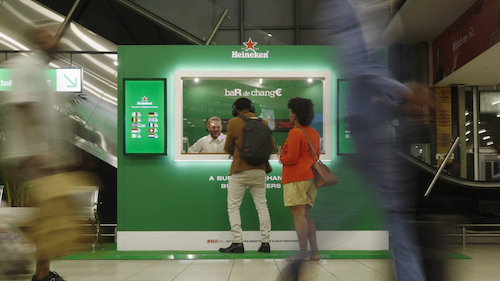
Heineken® launches ‘Bar De Change’ a Bureau de Change – but for beers

A Heineken® beer abroad can cost up to three times more than it does at home for South Africans which affects how much we can socialise when travelling abroad. When every round requires a quick mental conversion, the moment starts to feel a little less free. So, Heineken® decided to remove the maths. Introducing ‘Bar De Change’ – a Bureau de Change, but for beers.

At OR Tambo International Airport in Johannesburg, Heineken® installed a one-of-a-kind exchange counter where travellers could purchase Heineken® beers at South African prices before they departed. Instead of exchanging currency, travellers received digital vouchers which were redeemable at participating Heineken® partner bars across Europe.

The result? At selected partner bars across Europe, a Heineken® could cost the same as it does back home. One beer there = one beer here, making it easier for South Africans to keep socialising and sharing moments wherever their travels take them.

‘South Africans understand better than most how exchange rates can shape everyday experiences abroad,’ said Alex Drake, Heineken® Brand Director South Africa. ‘As the world’s most international brewer, Heineken exists to bring people together across borders. With Bar De Change, we wanted to remove the friction of currency conversions so travellers can focus on what really matters, sharing social moments wherever they are.’

To bring the idea to life, a group of South African creators travelled to Europe, redeeming their Heineken’s across multiple cities and documenting the experience in real time.

Actor Kwenzo Ngcobo captured the simplicity of the idea, ‘It’s such a simple thing but it changes everything. You’re not thinking about the price or doing the conversion, you’re just in the moment, enjoying the city and the people around you.’

Content creator Katlego added, ‘It turns something small into something memorable. Your first beer in a new city already feels like home.’

And for Candice Coulsen (Kandis Kardash), it was about what the idea represents, ‘Travel is about new experiences, but this makes you feel connected straight away.’

Bar De Change was launched out of South Africa, a country where the impact of exchange rates is felt every time people travel. But, if the Rand ever strengthens, we’ll make sure the next round is on us.

HEINEKEN
www.theHEINEKENcompany.com 

Retailers Are Experiencing Tech Exhaustion

Retailers Are Experiencing Tech Exhaustion

Although smartphones are now widely accessible, an estimated 95% of retail in emerging markets remains offline, not because small businesses are avoiding technology, but because they are overwhelmed by it. South African SME retailers are increasingly juggling multiple disconnected digital tools, from POS systems to payment platforms and marketing apps, each adding cost, complexity, and time pressure to already demanding operations.

Picture the owner of an independent hardware store in Brackenfell, or a family-run butchery in George. On their phone: a POS app from one provider, an inventory tracker from another, a loyalty platform they signed up for at a trade show, a payment gateway the bank insisted on, and a WhatsApp marketing tool a supplier recommended. Forty-seven apps. Perhaps five in regular use. The rest: a graveyard of good intentions.

This is the daily reality for thousands of South African SME retailers and it is costing them more than they realise.

The Skills Gap Is Real But It’s Not The Whole Story

Recent research from PKF South Africa indicates that more than 60% of South African businesses cite skills shortages as a barrier to digital transformation [1]— while the FinScope MSME South Africa 2024 Survey highlights that the cost and complexity of adopting new platforms remains a critical obstacle, particularly for businesses operating in the informal economy [2].

But framing this purely as a skills problem misses the point. These are not businesses that have rejected the digital economy. They are businesses that have been sold the wrong version of it, one built around vendor convenience rather than operator reality. Every new tool promises transformation. Most deliver complexity.

Each additional app means another login, another dashboard, another training curve, another monthly fee. For an owner running a high-pressure retail operation with no IT support and real cash flow constraints, the rational response is to stop adopting. And that is exactly what is happening.

Unpacking Digital Fatigue: Fragmentation Is the Problem

The failure mode is always the same. An SME owner adopts a POS system, only to find it does not speak to their inventory tracker. Loyalty data sits in a separate platform. Promotions generate stats no one reads. Payments require yet another dashboard. Without the time or resources to stitch these systems together, manual workarounds become the default and the tools get quietly abandoned.

World Bank research tracking SME digital adoption found that while initial uptake is often high, usage rates collapse within months, with fewer than 35% of businesses still actively using a platform 18 months after adoption[3]. [4]The UK Government’s SME Digital Adoption Taskforce has identified fragmented technology stacks as the primary culprit, finding that businesses juggling multiple disconnected tools consistently struggle to integrate them, justify the cost, or sustain meaningful use. The consequences are tangible: spoiled stock from poor tracking, missed sales from clunky checkout experiences, and stunted growth from insights that never get acted on.

Digital inclusion does not fail because retailers are resistant. It fails because the tools add complexity rather than remove it. The real barrier is not the absence of technology, it is the gap between trust and transaction. Between what a platform promises, and what it actually delivers on a Tuesday morning when the queue is out the door.

From App Proliferation To App Consolidation: What The Evidence Shows

The consolidation thesis is already being proven in the market. The platforms gaining real traction among SME retailers are not the ones with the most features, they are the ones that collapse the stack.

As I have argued for some time now, ‘For the last fifteen years, the internet has been built around single-purpose apps. One app for transport. One app for shopping. One app for payments. But this model is breaking, not because the apps are bad, but because the user experience is fragmented. Consumers don’t want more apps. They want less friction’, said André De Wet, founder of Flood.

For an SME retailer, this means auto-syncing supplier deliveries to inventory, WhatsApp stock alerts, seamless loyalty at checkout, and AI-driven promotions, all in one interface, inside a platform they already open every day. Features get discovered, not deployed. Engagement builds without fatigue.

Why Big Institutions Hold The Winning Hand

The businesses best positioned to solve the digital fatigue problem are not niche fintechs. They are banks and telcos, institutions with daily user engagement, embedded trust, and distribution that no startup can replicate.

When commerce is embedded inside a banking app or an airtime platform, the adoption question disappears. The merchant is already there. The consumer is already there. The infrastructure of payments, identity, compliance is already in place. What is needed is a commerce layer that slots in without disruption.

This is precisely what consolidation platforms enable: white-label, API-driven commerce infrastructure that turns a banking app into a local marketplace, compliant with POPIA and SARS requirements, capable of geo-targeted discovery, in-store pickup, and real-time analytics, without asking the merchant to learn anything new.

The average smartphone user has 80 apps installed but actively uses fewer than 10. The winning platforms for the next decade will not be the ones that add to that number. They will be the ones already embedded in the 10.

Why 2026 Is the Turning Point

‘My argument is simple: 2026 is the year the Superapp goes global.’

Three trends are converging to make this moment decisive. Mobile payments infrastructure has matured, 2.8 billion digital wallets are now in circulation globally. AI has dramatically reduced the cost and complexity of building integrated platforms. And consumer patience with fragmentation has run out. After a decade of downloading more and more apps, people and businesses are asking why it isn’t all just one place.

A Superapp brings together commerce, payments, discovery, logistics, loyalty, and communication inside a single digital ecosystem. Instead of ten apps, one platform that connects the real economy around you. It succeeds not just on product merit, but on economics: more consumers attract more businesses, which attract more consumers, creating a self-reinforcing digital economy. WeChat’s 1.3 billion users did not happen by accident. Neither will the next generation of emerging market platforms.

André said, ‘The next great digital platforms won’t just come from Silicon Valley. They will emerge where real economies need them most.’

The Path Forward For SA’s SME Retailers

South Africa’s independent retailers, the hardware stores, the butcheries, the corner spaza operators who have graduated into formal retail are not waiting for a digital revolution. They are waiting for tools that actually fit their lives.

As consolidation platforms scale their partnerships with banks and telcos, those retailers stand to gain the most: formalised operations, fewer errors, better data, and ultimately stronger margins. Digital fatigue does not end with another app. It ends when the right platform makes all the others unnecessary.

For South Africa’s SME retailers, that moment is arriving.

FLOOD

www.flood.finance

 

This is Modern Marketing