Home Blog Page 30

Choosing The Cheapest Agency Can Be A Very Expensive Mistake

Choosing The Cheapest Agency Can Be A Very Expensive Mistake
Tiffany Turkington-Palmer, Flow Communications.

You’re choosing a communications partner, after all. You’re investing in the health of your brand, the future of your business, and the relationships you hold with customers, stakeholders and the public. What you need is a bona fide partner: an agency that invests in real depth, sharp thinking and the confidence to act strategically in the best interests of your business.

Quality agencies are built to be reliable, accountable, nimble and outcomes-focused. They are geared to solve problems, not create new ones. A low fee rarely reflects the full picture of what you’re buying and, more importantly, what you may need to fix later.

Agency pricing is shaped by the calibre of talent employed, the intellectual property developed over time, the strength of internal processes, and the infrastructure required to deliver work that stands up to scrutiny and competitor pressure. Before signing on the dotted line, these are the things (along with the agency’s track record) that should be interrogated.

When assessing proposals, value should be examined with the same rigour as cost.

How long has the agency been in business, and what does that longevity say about resilience and relevance? Is there evidence of strategic thinking, not just tactical execution? Are key skills genuinely housed in-house, or quietly outsourced once the contract is signed? Has the work been recognised by clients or industry peers? And perhaps the simplest question of all: would their clients hire them again?

The real cost to a business isn’t the agency fee. It’s money spent on work that doesn’t deliver, strategies that miss the mark and partnerships that unravel. Many organisations know the pain of appointing a bargain-basement agency, only to hire a second, more experienced one to untangle the mess and rebuild trust, while politely pretending the first phase never happened.

Appointing a marketing, communications, advertising or digital agency is an investment decision. And as with most investments, the cheapest option often carries the highest hidden costs. Businesses that understand this don’t just buy services; they buy results that elevate brands and drive profitability.

FLOW COMMUNICATIONS
www.flowsa.com


Creators Are The Most Efficient Trust-Builders Brands Can Invest In

Creators Are The Most Efficient Trust-Builders Brands Can Invest In
Michael Cost, Humanz.

Michael Cost, Head of Strategy and Client Development, Humanz, says in 2026, the brands that win are not the ones shouting louder, although paid media has made this possible. They are the ones building relevance through real human connection, at scale. That is exactly why creators and influencers have become the new golden thread of marketing.

The Biggest Lie In Social Media Marketing

There is a misconception that still shapes how many organisations allocate budgets and structure teams: that social media was created for brands.

I know this will break your heart, but it was not. Social media was built for people. Brands moved in after the fact, trying to earn space in places they were initially not designed for. But this does not stop the humanification of brands on social and the mimicking of influencers.

‘Social Media wasn’t made for business, it was made for people.’ – Neal Schaffer.

System update: Influence 2.6

We have entered what I call Influence 2.6, the latest Influencer Software update. A new era where creator marketing is no longer a channel or a campaign add-on. It is becoming the infrastructure of modern brand building.

What Defines Influence 2.6:

– Advocacy Has Become Standardised: Influencer marketing has matured. Expectations are clearer. Deliverables are more structured. Measurement is increasingly tied to business outcomes, not vanity metrics. Well, that’s if you have the right technology partners. #ShamelessPlug

– Creators Are Shaping All Social Content: Creators do not just post, they shape the creative language of platforms. Creators set the tone, create the trends, and decide what is platform worthy.

– Influencer Marketing Is No Longer A Line item: Budgets are growing but, more importantly, they are shifting. Brands are increasingly integrating creators across the full marketing mix, not isolating them inside social or PR.

From The Broken Funnel To The Connection Circle

The traditional funnel assumes audiences move forward in one direction. But modern customer journeys do not move linearly anymore. Attention is fragmented and trust is the new currency.

People discover, doomscroll, forget, rediscover, ask friends, watch reviews, scan comments, wait for payday, see a creator again, click a link, abandon a cart, come back later, buy in-store and, only then, maybe, post about it. Almost like multiplying the ‘rule of 7’, the consumer journey now needs multiple touchpoints to lead to conversion. Although we suggest a full-funnel approach with advocacy, the funnel has changed dramatically.

This is why the future model is better represented as a connection circle. A continuous loop where content feeds community, community feeds trust, and trust drives action. Brands need to attract audiences, engage with them, and reward them.

In this circle, the goal is not just conversion, obviously. The goal is connection that compounds, tapping into:

– Content that sparks relevance.
– Community that builds belonging.
– Creators who translate brand value into human truth
 and peer-to-peer sharing that becomes a powerful distribution engine.

But first, we need to understand community.

One of the biggest strategic mistakes brands make is believing they can build a community the way they build a campaign. Another? Believing that a database is the same thing as a community.

‘You don’t build communities, you join them.’ – Jeremiah Owyang.

Great brands do not force communities into existence. They create the conditions for communities to form, merge, and evolve on their own terms, with the brand acting as a catalyst rather than a controller.

Creators are essential to this because creators do not enter communities like brands do, they generally created them. They already speak the language. They already have trust. As our global marketing officer, Pierre Cassuto, said, ‘Influencers are hosting parties, and brands need to try and get invited to these parties.’ The best outcome is if we manage to become the DJ, but remember that DJs don’t stay at a party for long.

The Golden Thread Is Not A Campaign

We are moving from a marketing world dominated by broadcast, to one dominated by peer-to-peer influence. Creators sit at the centre of that shift because they connect paid and organic, social and traditional channels, as well as in-feed engagement and real-world conversation. This is why influencer marketing is no longer something you add on, it is something you design around.

The golden thread is the constant presence of creators connecting awareness, engagement, and conversion. Influencers are not just at the top of the funnel. They are not just content creators. They are not just a PR tactic. They are, increasingly, the connective tissue between what people notice, what people trust, what people talk about, what people buy, and what people recommend.

In a world where trust is the new currency, creators are often the most efficient trust-builders brands can possibly invest in. This is why it is imperative to have a partner who understands this and is able to measure the entire conversion circle.


HUMANZ
www.humanz.com

The Marketing Industry Is Facing A Shortage Of People Who Can Manage AI

The Marketing Industry Is Facing A Shortage Of People Who Can Manage AI
Tanya Lilley, Brandtech+.

While some commentators suggest that artificial intelligence will reduce the need for marketing talent and shrink agency teams, early signals from the industry point in the opposite direction. The scale, speed and complexity of modern marketing have increased so rapidly that execution, not ideation, has become the primary constraint.

‘AI has fundamentally changed the economics of content creation,’ said Tanya Lilley, Talent Acquisition Lead at Brandtech+. ‘But what it hasn’t done is simplify the system around it. If anything, it has made marketing significantly more complex to manage.’

‘As brands produce more content across more channels, in more markets and formats than ever before, the operational burden has intensified,’ she explained. ‘Campaigns now require continuous localisation, faster approvals, tighter governance and seamless deployment across global teams, all under increasing pressure to deliver in real time.’

The result she adds is a structural shift in where demand for talent is growing.

‘The industry spent decades optimising for creative output,’ Lilley said ‘AI has effectively removed that constraint and what’s emerged in its place is a far more complex challenge; how to coordinate, manage and scale that output effectively.’

‘Roles such as project managers, delivery leads, account directors and marketing technologists are becoming critical to the success of modern campaigns,’ she explained. ‘These positions, traditionally viewed as support functions, are now central to performance as organisations grapple with increased volume and complexity.’

This shift Lilley adds is also reshaping agency models. ‘Rather than large, production-heavy teams, many organisations are moving toward more specialised, senior-led structures supported by AI-powered production capabilities,’ she added. ‘The focus is no longer on scaling headcount linearly, but on scaling output intelligently.’

‘AI allows us to produce more, faster, but without the right operational infrastructure, that quickly becomes chaos,’ she added. ‘The real competitive advantage now lies in how well organisations can orchestrate that complexity.’

For markets like South Africa, she notes that the implications are significant. ‘The rise of distributed, AI-enabled operating models is opening access to global work, particularly for professionals with strong delivery, coordination and technical capabilities.’

‘This is not a contraction of opportunity, it’s a redistribution of it,’ she said. ‘South African talent is well-positioned to plug into global delivery ecosystems, especially in roles that manage complexity across markets and time zones.’

Lilley explains that as AI continues to accelerate marketing output, the industry is entering a new phase, one where execution infrastructure, not creative generation, defines success.

‘The conversation shouldn’t be about whether AI will replace marketing jobs,’ she said. ‘It should be about whether organisations are equipped to handle what AI is about to unleash.’

‘In this new landscape, the winners will not be those who produce the most content, but those who can manage it best,’ Lilley concludes.

BRANDTECH+
https://www.brandtech.plus

Using Marketing And Technology For Community Impact

Using Marketing And Technology For Community Impact
Celestine Lourens, Deep South Report.

Deep South Report is a technology-enabled community information system that provides verified, real-time updates to more than 20,000 residents and travellers across the Southern Peninsula in Cape Town. Deep South Report functions as a live, walking newspaper, delivering immediate, verified updates on the incidents that matter most to daily life in the Deep South. Emergency services, city authorities, and disaster risk management teams have all formally relied on Deep South Report to communicate with the public.

Their immediate broadcasts help prevent panic, reduce risk, and guide people away from danger. They’ve helped residents avoid flooded roads, fires, medical scenes, and crime hotspots. They’ve also assisted in missing persons cases and vehicle recoveries.

They also contribute to the local economy. Their weekly eBook promotes local businesses, markets, fairs, school events, fundraisers, library activities, workshops, theatre productions, and pensioner specials. This gives small businesses visibility they often cannot afford elsewhere. Everything they offer is free, except for sponsored business pages, and that income goes directly into operational costs. They receive no funding from any organisation, so sustainability is one of their biggest challenges, but they continue because the community needs this service.

Founder and administrator of Deep South Report, Celestine Lourens, has been nominated for the Woman of Stature Awards in the Technology category for 2026. Lourens’ background spans content, design, photography, branding and media marketing.

‘Not everything we do is crisis-related. I balance our broadcasts with history, heritage, and environmental education. Our ‘On this day in shipwreck history’ posts are loved by elders and museums. I share old postcards, historical notes, and local stories that connect people to the past. We also highlight interesting animal sightings and environmental events. These posts bring joy and curiosity into the community. We’ve done marine talks with underprivileged school groups through the Cape Peninsula Civil Conservation NPO,’ said Lourens.

‘Inspiration is not something I set out to achieve, it’s something that has grown naturally from the work. My mentorship is practical and rooted in service. I teach residents how to report responsibly, how to verify information, and how to avoid spreading panic or misinformation. This is digital mentorship, guiding people to use technology ethically. I’ve worked with school groups, teaching them about marine life, environmental awareness, and community responsibility.’

‘Deep South Report started because I was frustrated by how hard it was to find accurate, timely information during emergencies. I realised that if I could solve that problem for myself, I could solve it for thousands of others,’ added Lourens.

‘Deep South Report has grown into something far bigger than I ever imagined. It’s a living, breathing system that supports safety, connection, and community spirit.’

C1W Initiative

Change 1 Woman (C1W) aims to empower women in the branding, print and signage industries. If you have any trend/business articles related to the branding and marketing industries, please email content to: meggan@practicalmedia.co.za. Follow C1W on Facebook and LinkedIn for more updates.

DEEP SOUTH REPORT
Facebook page 

Why National Marketing Strategies Are Failing At A Local Level

Why National Marketing Strategies Are Failing At A Local Level
Caitlyn Greve, Sauce Advertising.

Caitlyn Greve, Digital Co-Ordinator at Sauce Advertising, says if you are a marketing decision-maker, you need to hear this: brands are not just losing clicks, they are losing eligibility. As we all know, online search does not work like it used to. Discovery is becoming increasingly local and context-aware, and that means your marketing mix needs to be managed like a connected system.

If it isn’t, you are going to lose visibility, trust, and demand market by market, without even seeing it happen.

Look, a lot of us wish we could go back to the early days of SEO, the golden era when the right keywords combined with a solid (and well-structured) backbone of content could bring in the clicks. But that’s not realistic. GEO is here to stay, and so is AI search.

Marketers need to learn to accept and adapt to the new reality, or risk being left behind. Putting our heads in the sand isn’t going to solve the urgent problem our industry is facing.

Growth When The Ground Is Shaking

I hear it daily: CMOs being asked to demonstrate growth, that all-powerful metric, while protecting brand value and remaining culturally relevant. But the ground is quite literally shifting under their feet, and ‘stressed’ doesn’t even begin to describe their state of mind.

Put simply, discovery is no longer ‘search’. From Cape Town to Tokyo and everywhere in between, it’s happening on maps, across social, through reviews, and yes, of course in the increasingly ubiquitous AI answers. And all of these surfaces are becoming local and context-aware by default.

Customers aren’t asking, ‘Who is the best brand?’ I mean, would you? Take a minute to think about it – it’s actually quite unnatural. Instead, they’re asking things like:

– ‘What’s open near me, right now?’
– ‘Where can I get this done today?’
– ‘Which branch is closest?’

And this is a complete game-changer for national brands. Visibility is not something that can be won at the country level and then applied locally. It has to be earned locally, and repeatedly, through thousands of micro-moments and hundreds of locations. That’s where the real issue comes in.

I know, from my experience working with clients, that the more local and context-aware discovery becomes, the more impossible consistency becomes to manage manually (and it was never easy). We are talking one wrong set of opening hours, a single mismatched offer, one bad review spiral, a lone missing attribute – and poof, the brand quietly disappears.

Four Key Words – Plus One

Discovery, trust, culture, and performance. To me, these four words summarise the marketing playbook in 2026. In every meeting, these concepts are what I am trying to drive home. And then there’s measurement.

Measurement has easily become one of the hardest parts of a marketer’s job. One of the main reasons is that traditional dashboards simply fall short when it comes to explaining why, or how, discoverability rises and falls across markets. I have had clients come to me and say that they have lost visibility in specific regions without a clear alert in their reporting until the revenue has already been impacted. National averages often mask local underperformance, but the long-term consequences can be significant.

Bring In A System, Don’t Bow Out

As mentioned, the ‘secret’ to winning in the era of local + AI discovery is in a well-connected system. You should be looking for something that will do the following:

– Track visibility, information accuracy and competitive position across platforms and locations.
– Maintain consistency across touchpoints.
– Respond to review signals quickly.
– Manage location-level performance, not just national averages.
– Offer early warning signals before local gaps become revenue gaps.

And how exactly is that achieved? Successful brands are leaning on performance software to help them thrive. The right package can help CMOs track visibility, information accuracy, and competitive position across platforms and locations at scale, making it possible to identify gaps early, prioritise fixes, and, crucially, prove progress.

I always tell my client to leave the random manual spot checks where they belong, which is in 2023. It is time to replace them with a reliable view of what’s happening across your brand footprint.

SAUCE ADVERTISING
https://sauceadvertising.co.za

Gaming Is One Of The Most Engaged Segments Of The Digital Consumer Landscape

Gaming Is One Of The Most Engaged Segments Of The Digital Consumer Landscape

According to new data from consumer insights agency KLA using YouGov Profiles+ data, among South African internet users, 62% stream games and 61% download games. A further 49% actively play games online, placing gaming firmly alongside the most common internet activities. These are not fringe numbers, they reflect a mainstream shift in how South Africans spend their time.

Part Of The Digital Routine

Email leads internet activity at 88%, followed by online banking at 81% and social networking at 68%. But gaming has earned its place in that company. Streaming games at 62% and downloading games at 61% puts gaming on a level with reading news online (61%), suggesting it is no longer something people do instead of other activities, it is one of those activities.

The 49% of internet users who actively play games represent millions of South Africans for whom gaming defines a substantial portion of their free time. What the data makes clear is that gaming is not competing for space in the daily digital routine, it already has that space.

Mobile Gaming Becomes A Daily Habit

The mobile picture reinforces the same story. Close to half of South African mobile users (47%) play games on their phones as part of their daily routine. That places mobile gaming ahead of everyday activities like using navigation apps, paying bills and listening to the radio.

This matters because it speaks to the nature of gaming today. It is no longer something that requires a dedicated device, a dedicated evening or a dedicated mindset. South Africans pick up their phones while commuting, waiting in queues or winding down at home, and increasingly, the game is what they reach for.

Players, Downloaders And Spectators

One of the more telling dimensions of the data is the diversity of ways people engage with gaming. Downloading (61%) and streaming (62%) sit alongside active play (49%) as distinct but interconnected behaviours. Consumers are not simply playing, they are curating gaming libraries and watching others play.

That streaming figure is particularly significant. Watching gameplay has become a legitimate form of entertainment in its own right, mirroring a global trend in which platforms like Twitch and YouTube Gaming compete directly with traditional video content for viewers’ time and attention. South Africa is part of that shift, not behind it.

What This Means For Brands

For brands and marketers, ignoring gaming is no longer a neutral position. With near-majority or majority adoption across playing, downloading and streaming, gaming represents one of the most engaged segments of the digital consumer landscape. The 47% of mobile users playing games daily are a captive, attentive audience, one that traditional advertising channels often struggle to reach as effectively.

The data points to gaming touchpoints that exist throughout the consumer journey, from morning commutes on mobile to evening sessions at home. Sponsorships, in-game advertising, gaming content partnerships and community-building are all entry points for brands looking to connect with audiences where they are genuinely spending their time.

Gaming demands active participation and sustained focus in a way that passive media consumption does not. When close to half of all internet users are actively playing, and nearly as many are watching others play, that represents a level of consumer attention and engagement that brands cannot afford to overlook.

The data referenced in this release is sourced from YouGov Profiles+, South Africa, fielded on 7 December 2025. The nationally representative sample comprised 23,239 adults aged 18 and over.

KLA
https://kla.co.za/

Club Med Launches Latest Campaign

Club Med Launches Latest Campaign

Today’s travellers are no longer simply booking holidays, they are seeking immersive experiences that feel cinematic, emotional and memorable. Against this backdrop, Club Med introduces ‘The Ultimate Escape’, a locally tailored campaign that reimagines travel as storytelling, where every moment feels like a scene, and every traveller becomes the protagonist.

Drawing inspiration from the measurable impact of film and television on travel demand, most notably the surge in bookings to destinations featured in The White Lotus, the campaign frames travel through a cinematic lens. A safari becomes an epic narrative, a sunset transforms into a visual masterpiece, and even a surf lesson becomes a personal triumph.

‘The Ultimate Escape’ launches in parallel with Club Med’s global flagship campaign,’The Adventure of a Lifetime’, positioning South Africa as a destination that speaks differently, yet powerfully, to both international and local travellers. The campaigns are linked to the Club Med South Africa Beach and Safari Resort opening in KZN, South Africa, in July 2026.

At the heart of this strategy is a key insight: while safari remains a major drawcard for international visitors, local travellers are increasingly seeking all-inclusive beach escapes centred on relaxation, ease and premium experiences.

‘The Adventure of a Lifetime’ speaks to the global traveller’s dream, offering a cinematic safari experience defined by rare wildlife encounters, sweeping savannah sunsets and seamless premium service. It positions South Africa as a once-in-a-lifetime journey into the wild, immersive, memorable and deeply experiential.

In contrast, ‘The Ultimate Escape’ reframes South Africa for the local market, not as a distant adventure, but as a reimagined homegrown escape. The campaign highlights the ease of an all-inclusive holiday, paired with beachfront luxury along the Dolphin Coast.

Together, the two campaigns signal a broader shift in how destinations are marketed and experienced. Globally, South Africa is positioned as a cinematic, bucket-list adventure, while locally it becomes an effortless, all-inclusive escape tailored to modern travellers.
Both narratives are united by a single promise: This isn’t a movie. It’s your next journey.

CLUB MED
https://www.clubmed.co.za/

Building Brand Love, Pushing Industry Innovation And Other Marketing Insights

Building Brand Love, Pushing Industry Innovation And Other Marketing Insights copy
Kyle Oosthuizen, Blue Robot.

This year’s New Gen Trends in Marketing and Tech Conference is sponsored by Blue Robot. Kyle Oosthuizen, Chief Executive Officer at Blue Robot, discusses the company’s partnership with New Gen, why gamification is an effective marketing tool and how brands can truly connect with their customers. Modern Marketing is a proud media partner of the New Gen Trends in Marketing and Tech Conference.

The New Gen Trends in Marketing and Tech Conference is hosted by ‘The New Generation Awards’. Taking place Tuesday, 26 May at The Venue in Melrose Arch, the conference will feature nine leading influencers from the corporate and agency sectors, including recipients of last year’s New Generation Awards, who collectively earned over 40 accolades.

For full event details and ticket fees, click here. To book your seats email: stephen@newgenawards.co.za.

1. Why did Blue Robot get involved as a sponsor of this year’s New Gen Trends in Marketing and Tech Conference?

We entered the New Generation awards last year, and we saw it as a platform that gives opportunities for great work to be celebrated. There’s a lot of discussion about pushing the industry forward, but the New Generation Awards is a chance for that work to actually be showcased.

Many people speak about active engagement and innovation, but that’s not what you see on social media, and there’s a big disconnect. Many social media ads are just about buying a product and consumers will forget 99% of those ads instantly.

But when you speak to the teams behind those ads, they’ll tell you that they want to do creative and innovative work. So it’s up to all of us to challenge ourselves and live up to what we’re saying.

2. What value will Blue Robot bring to the partnership?

We bring a unique perspective. There are creative agencies, media agencies, marketing teams and brands. But as a tech enabler, there’s not really a category that Blue Robot fits into. So we get to work with all brands, not just a client of record. We’ve worked with global clients and we can see what works in different countries and where the industry is heading. Because we remove that barrier between great ideas and budget constraints, we get to deliver a lot of great work and it gives us a unique approach.

3. New Gen aims to ignite a spirit of excellence and challenge participants to push the boundaries of innovation. How is Blue Robot pushing the boundaries of innovation?

We’ve transformed the business over the last couple of years to allow agencies and brands to push the boundaries without the necessary timelines and budgets that come with it. We also offer gamified and interactive rich media banners on programmatic advertising, AR and VR models, microsites, as well as building games and some of the safety tools for X.

4. Why is gamification an effective marketing platform?

Blue Robot’s mission is to move people from passive to active attention. So gamification fits in there perfectly. If you serve an ad to a user or a human being, you’re speaking at them. You’re telling them, ‘go buy my product. This is why my product is great’.

But when you offer consumers a game, you’re inviting them to experience something. It taps into people’s competitive nature of wanting to climb a leaderboard against friends, family and random people on the internet. People love that competitive edge and it’s something that they get to experience. They become part of a bigger community playing that game.

We believe you need nine seconds of a user’s attention to drive brand recall. If there’s a static ad or even a video that gets two or three seconds of attention, it’s impossible to do that. But by playing the branded game, the brand gets remembered and people speak about the game. That drives brand favourability and brand recall.

5. What are your top tips for brands to truly connect with and engage their customers? How do you get from brand like to brand love?

Static engagement, shares, likes, views, etc. are not true measurement of brand connection. You need to measure the quality or active engagements.

So things like: what did the user physically do to engage with you as a brand? Did you invite them in or did you just serve them an ad, speak to them and then they moved on with their lives? What we generally ask agencies or marketing teams is: can you remember a single ad that you’ve seen in the last day or seven days?

No one’s actually been able to answer that question, which means a thousand ads (some people estimate it to be between 4 and 10,000) could be served to people on a daily basis in South Africa, but if you can’t remember a single ad, that means the static content isn’t driving brand recall.

Don’t measure on the static engagements that look correct in Excel. Find your real measure of brand love or engagement that you want from users, and then invite them to experience something with you. The user has to get something out of it.

One of our core company values is ‘user first’. So we design something that the user will enjoy, and then we focus on what the brand will get out of it. That allows us to really get the user to engage, build brand love, and then to be relevant and consistent as well.

There’s no point in launching one standout campaign a year and then spending the rest of the year asking consumers to buy your product. It’s about being consistent, inviting them in, and sharing that experience with them.

Brand building is a long-term exercise. What people are saying when you aren’t speaking to them or when you aren’t in the room: that’s really what your brand is.

6. Looking holistically at social media content, the majority seems generic and companies can get lost in a ‘sea of sameness’. Do you think brands are playing it too safe with their content for fear of not offending their audiences and being ‘cancelled’?

It’s the easiest it’s ever been to create thousands of variations of an ad or to create static ads, which doesn’t help in terms of differentiation.

There’s also deadlines, pressure, and under-resourced teams. It’s not that people don’t want to be innovative, there is a systematic problem that’s pushing content that is too safe. Agencies want to push the biggest, best and the most innovative work, but they can’t necessarily get it approved or there’s not enough budget etc. So the process needs to be fixed.

7. Is AI enhancing brand content, or is it contributing to the ’sea of sameness’ mentioned above?

It’s really about how you use it. If you have an average or weak strategy, AI just amplifies that. Weak ideas are getting out there quicker and at larger scale, so AI hasn’t created the problem, it has just amplified an existing problem.

But if you have a great and innovative idea, AI will amplify that as well and remove barriers for you. The best ideas still win.

8. What are Blue Robot’s plans for 2026?

We are re-establishing our presence in Kenya with a new office. Then our big focus for the next four years will be Europe, with launches in Germany, Spain, Italy, the Netherlands and France. We’ve worked in 27 countries, so we can scale to any market in the world because advertising happens in every market. Our key offerings scale very well in those regions and we’ve identified them based on historic campaigns and relationships that we’ve had.

Blue Robot started just over 10 years ago, and we were in the social media space for the first eight or nine years. The solutions that we could offer clients were limited to social media and this limited our participation in the full digital advertising landscape.

Our bluematic division touches on programmatic, rich media, display banners, as well as digital out of home.

We’ve launched an independent division, EGG studios, which handles anything that isn’t programmatic or social media that fits in that model. We entered the New Generation Awards in the first place to celebrate EGG studios campaigns to show where we’re pushing the boundaries and where we are innovative.

Because of our expansion, when we work with an agency or marketing team, we can give them a solution no matter the platform.

BLUE ROBOT
https://www.bluerobot.com/

NEW GEN TRENDS CONFERENCE
www.newgenawards.co.za/pages/marketing-conference

Packaging Is Evolving Into A Strategic Tool That Helps FMCG Brands Manage Disruption

Packaging Is Evolving Into A Strategic Tool That Helps FMCG Brands Manage Disruption

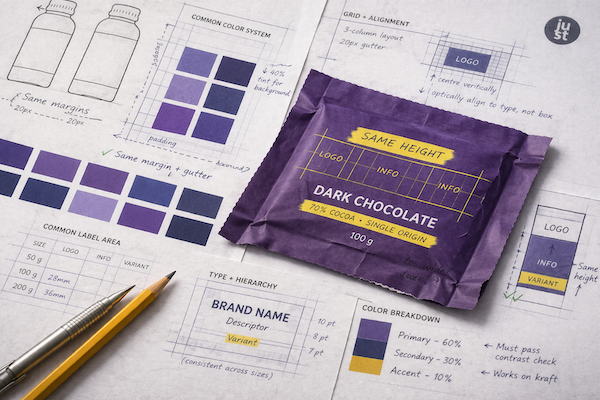
Vanessa Bosman, Group Managing Director, Just Design, says when global trade routes come under pressure, the impact does not stop at logistics. It moves quickly through supply chains and lands, repeatedly, in packaging. Every adjustment a business makes, whether a new supplier, a different ingredient source, a shift in manufacturing location or a change in pack size, ultimately needs to be reflected on pack. And it needs to be done quickly, accurately and at scale. That is where pressure builds.

As tensions in the Middle East continue to affect key corridors like the Strait of Hormuz and the Red Sea, carriers are already rerouting and timelines are shifting. For FMCG brands, this does not remain a macro issue for long. It translates into operational changes and those changes almost always become packaging updates.

What That Looks Like In Practice

When conditions tighten, packaging change accelerates. Manufacturer details shift as co-packers change. Ingredient panels and allergen statements are revised as sourcing moves. Origin declarations are updated. Pack formats are resized to manage cost pressure. For alcohol brands, excise, ABV and market-specific compliance requirements may also need to flex. What appears operational upstream becomes highly executional downstream, often under compressed timelines and with very little margin for error.

Packaging is not the final step in FMCG. In volatile conditions, it becomes the control layer that keeps everything moving.

The difference is not speed. It is structure.

The agencies that perform best in these moments are not simply reacting faster. They are working from systems that were built for change in the first place. That means pre-structured artwork, modular compliance blocks and master files that can flex across SKUs, markets and production variables, without introducing risk. When change instructions arrive and in these conditions they arrive constantly, the work moves cleanly to print. Without version confusion, rework or delays.

Packaging As A Strategic Asset

A well-architected packaging system allows brands to absorb change without slowing down. It protects speed to shelf, maintains compliance and preserves brand equity even as conditions shift. This is where packaging moves beyond execution. It becomes infrastructure.

Agencies need to understand how design decisions impact production timelines, retailer requirements and regulatory sign-off under pressure.

The Role Of A Different Kind Of Agency

Good agencies produce good creative. Great agencies understand the role design plays inside a business, often before the pressure arrives. That means staying close to global events, understanding how they translate into operational risk and building systems that allow brands to respond without disruption.

The brands that come through periods like this the strongest, are not the ones reacting in the moment. They are the ones that prepared ahead of it. Because when disruption hits, the real question is not how quickly you can respond but whether you were set up to, in the first place.

JUST DESIGN
https://www.justdesign.co.za

Establishing Trust Leads To More Meaningful AI Adoption

Establishing Trust Leads To More Meaningful AI Adoption

While Chief Information Officers (CIOs) increasingly understand the potential of artificial intelligence, Chief Finance Officers (CFOs) are often left unconvinced, unsure whether proposed solutions will deliver measurable value or simply add another line item to an already pressured budget. According to Dawood Patel, CEO of Helm, this disconnect between technology and finance leadership is one of the biggest blockers to meaningful AI adoption in South Africa.

‘We see a consistent pattern where CIOs are excited about what AI could do, while CFOs are understandably cautious about what it will actually deliver,’ said Patel. ‘When those two perspectives don’t align, AI initiatives stall, not because the technology isn’t viable, but because trust hasn’t been established.’

The challenge is amplified locally by what Patel describes as a ‘perfect storm’ of conditions:

– Low data maturity across many organisations.
– Legacy systems that are difficult to integrate or interrogate.
– A crowded market where predictive analytics and automation are frequently marketed as ‘AI’, eroding trust.
– Rather obviously, but quite crucially, price.

‘There’s a lot of noise in the market,’ Patel explained. ‘CFOs are being sold ‘AI’ that is often little more than rebranded predictive analytics. That makes them cautious and rightly so.’

The result is a growing disconnect: CIOs struggle to secure buy-in, while CFOs struggle to distinguish credible AI investments from hype.

For CIOs, Patel said the challenge is less about technology and more about translation. ‘CFOs don’t approve algorithms, they approve outcomes,’ he said. ‘If the value isn’t framed in commercial terms, the conversation is already lost.’

AI proposals should clearly link to outcomes such as:

– Cost reduction or avoidance.
– Revenue protection or uplift.
– Risk mitigation or compliance improvement.
– Productivity gains in high-value functions.

‘If a CIO can’t explain what decision improves or what cost disappears because of AI, the CFO can’t justify the spend,’ Patel added.

Overselling AI readiness is one of the fastest ways to lose credibility. ‘AI doesn’t fix poor data or broken processes, it amplifies them,’ said Patel. ‘CIOs need to be upfront about the foundational work required, even if it’s uncomfortable.’

Rather than positioning AI as a large, transformational investment, Patel recommends phased delivery.

‘Start small, prove value, then scale. CFOs are far more willing to fund something they can test and measure than something they’re expected to believe in.’

Patel is equally clear that CFOs don’t need to become technologists, but they do need sharper questions.

‘One of the most important questions a CFO can ask is whether the solution genuinely learns or adapts over time,’ Patel said. ‘If it doesn’t, it may still be valuable but it shouldn’t be sold as AI.’

AI should enable better or faster decisions, not just prettier dashboards. ‘If the output doesn’t change behaviour or decision-making, the ROI will always be questionable,’ Patel noted.

‘Data quality is one of the biggest hidden risks in AI,’ he said. ‘CFOs should be asking where the data comes from, how reliable it is, and who owns its quality.’

Clear checkpoints matter. ‘AI shouldn’t be an open-ended experiment,’ Patel explained. ‘There need to be defined milestones where the business can say: this is working, this needs adjustment, or this stops.’

In the short term, alignment between the CIO and CFO enables organisations to cut through market noise and avoid hype-driven investments. Instead of chasing ambitious, poorly defined initiatives, businesses can focus on targeted, low-risk use cases that demonstrate measurable value early on. This builds internal confidence, establishes credibility across leadership teams, and creates a more disciplined approach to AI investment.

Over the longer term, that same alignment lays the groundwork for stronger data foundations and more confident digital investment decisions. As trust develops between technology and finance functions, AI can move beyond isolated experiments and become embedded as a core business capability supporting smarter decision-making, operational resilience and sustained competitive advantage.

‘When CIOs and CFOs are aligned, AI stops being a debate about technology and becomes a discussion about competitive advantage,’ Patel said.

AI adoption doesn’t fail because of a lack of tools, it fails because of a lack of shared understanding. ‘When CFOs have the right questions and CIOs provide the right context, trust follows,’ Patel concluded. ‘That’s when AI solutions get approved, implemented and paid for with confidence.’

HELM
www.helm.africa

This is Modern Marketing