Home Blog Page 31

Bus Shelter Rooftops Across Tshwane Are Being Converted Into Living Urban Gardens

Bus Shelter Rooftops Across Tshwane Are Being Converted Into Living Urban Gardens

Leap by Provantage, Street Network™, in partnership with the City of Tshwane, is enabling brands to demonstrate real, visible impact in the communities they serve by transforming everyday public infrastructure into a platform for visible, community-based sustainability.

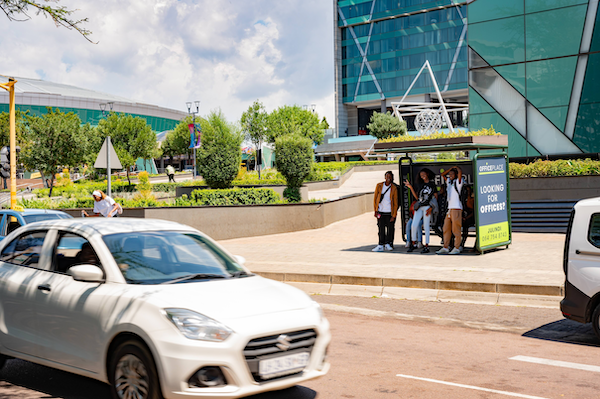
A first-of-its-kind South African initiative, 150 bus shelter rooftops across Tshwane are being converted into living urban gardens, repurposing street furniture infrastructure into green spaces that bring shade and ecological benefits into the heart of the city.

Rolled out across key commuter routes including Menlyn, Lynnwood, Centurion, Brooklyn, Wierdapark, Montana, Lyttelton and Equestria, the network reaches hundreds of thousands of people every day. These are not passive impressions. They are repeated, lived experiences in spaces where people move, wait, and engage with their surroundings.

Each shelter incorporates Spekboom (Portulacaria afra), a resilient indigenous plant known for its carbon absorption properties and minimal water requirements. The structures introduce greenery into dense urban areas, support pollinators, and create natural cooling through shaded environments. This enhances the commuter experience while contributing to greener urban spaces.

For brands, this creates something more meaningful than traditional advertising exposure. It enables a visible, ongoing presence that communities can see, experience, and associate directly with the brand supporting it.

‘Customers are no longer moved by what brands promise. They are moved by what brands do visibly, in the communities where they work, live and play. This initiative changes that, not through reports or promises, but through visible infrastructure embedded in the communities a brand serves every day,’ said Vaughan Berry, Executive Director.

This initiative positions Street Network™ and the City of Tshwane at the forefront of sustainable urban design, while giving brands a new way to engage. One that combines reach, relevance, and responsibility.

Exclusive naming rights across the network provide brands with the opportunity to align with a large-scale urban greening initiative. From implementation to ongoing maintenance, Street Network™ manages the full lifecycle of the project, ensuring the infrastructure remains active and integrated into the environments it serves.

PROVANTAGE
www.provantage.co.za

Gerety Awards Celebrating The Best Funny Advertising

Gerety Awards Celebrating The Best Funny Advertising

With the April 17 deadline approaching, the Gerety Awards has confirmed the return of its partnership with Funny Women for the 2026 Humour category jury. The Humour category at Gerety celebrates the very best of funny advertising. Making people laugh is one of the most refined arts in entertainment, and humour remains one of the most effective ways brands connect with audiences in memorable and culturally relevant ways.

Named for Frances Gerety, the Gerety Awards brings together a global jury to select the best in advertising from a powerful perspective. The awards celebrate campaigns that are not only award-worthy but resonate with the world’s most powerful consumers, recognising work based on a single criterion: the originality of the idea and the creativity of its execution.

Votes from the Funny Women jury will be included alongside those of the global executive jury when determining the shortlist, which will be announced in early June.

Gerety co-founder Lucía Ongay said, ‘Humour has always been an important part of the Gerety winners showcase and we have seen some fantastic campaigns rewarded in this category over the years as humour takes back its prominent place in advertising. We are delighted to once again partner with Funny Women for this unique jury and to share the selected work with their audience.’

Founded in 2002, Funny Women is a non-profit organisation dedicated to empowering women from all walks of life using comedy and humour to build confidence, explore creativity and develop their own distinctive voices. The organisation has built an international reputation for championing female and non-binary comedy talent through its programmes, events and the annual Funny Women Awards.

Commenting on the partnership, Lynne Parker, founder and chief executive of Funny Women, said: ‘Comedy and humour are essential components of everyday life, it’s our superpower as human beings. Every form of culture, from books to film, theatre, media and politics, embraces humour. Above all we remember the funny stuff and humour sells.’

This year’s Funny Women humour jury is led by Parker. She is joined by a diverse group of performers, producers and creative leaders including Monica Gaga, Robin Golinski and Kirstin Miller.

The jury also includes Val Troy, Tracey Barr and Carly Smallman, alongside Rachel Creeger, Ali Jay, Harriet Minter and Lauren Allpress. Funny Women is also currently inviting participants to take part in its Glitter Challenge, a programme designed for people new to stand-up comedy that culminates in a live performance at the Edinburgh Festival Fringe in August 2026. The initiative forms part of the organisation’s wider Glitter Project, which focuses on creating inclusive spaces for women to explore creativity and confidence through comedy.

The Gerety Awards jury brings together leading creative voices from across the global advertising industry, with judges from more than 50 countries evaluating work based on a single criterion: the originality of the idea and the creativity of its execution.

Entries for the 2026 Gerety Awards are now open, with the standard deadline set for April 17. Agencies and brands have the opportunity to have their work judged by some of the industry’s most respected creative leaders and to contribute to global industry rankings.

Enter the 2026 Gerety Awards here.

GERETY AWARDS
www.geretyawards.com

Ster-Kinekor And Heineken Beverages Celebrate Cannes Young Lions South Africa 2026 Winners

Ster-Kinekor And Heineken Beverages Celebrate Cannes Young Lions South Africa 2026 Winners

Ster-Kinekor, the official South African representative of the Cannes Lions International Festival of Creativity, in partnership with Heineken® Beverages is proud to announce the winners of the Cannes Young Lions South Africa 2026 competition.

This year’s competition reached a new high, attracting over 150 teams. The volume and calibre of submissions reflect the growing ambition and strength of South Africa’s young creative community.

Following an intense 48-hour challenge of strategy, creativity and storytelling, two standout teams have earned their place at the Cannes Lions International Festival of Creativity in France.

A panel of leading industry judges reviewed the work to select the winning teams.

Film Category Winners

Work Title: Return to Cinema
Winners: Peter Maluleke and Rosemary Mabasa
Agency: TBWA

In the film category, participants were tasked with creating a 45–60 second commercial showing why cinema still matters in the lives of young South Africans. ‘Return to Cinema’ builds on a simple truth: streaming is convenient, but constantly interrupted. Notifications, ads and distractions break the experience. The winning idea reminds audiences why cinema remains the one place where stories can truly be experienced without interruption.

Digital Category Winners

Work Title: Inner Circle
Winners: Jessica Babsy and Pippa Browning
Agency: VML

Participants in the digital category were challenged to develop a digital and out-of-home idea that reimagines Johannesburg’s inner city, creating something aspirational, locally relevant, and worth sharing.

‘Inner Circle’ taps into the familiar ‘Close Friends’ social media feature to create a city-wide invitation to exclusive Joburg experiences. As stories go live, OOH screens and venue facades mirror the same visual cue with a single signal connecting online and real-world moments, unlocking Heineken experiences along the way.

Selecting the final winners proved highly competitive, with judges noting the exceptional standard of work across both categories. The winning teams will now go on to compete against the world’s best young creatives at Cannes Lions in June.

‘We are confident that Maluleke and Mabasa will be outstanding ambassadors for Ster-Kinekor, South Africa, and the film category when they compete on the global stage in Cannes,’ said Lynne Wylie, chief marketing officer of Ster-Kinekor Theatres.

‘Cannes Young Lions is a powerful platform for unlocking talent and celebrating creativity as a force that shapes culture and drives commercial success. This year’s winners represent the kind of bold, future-facing thinking our industry needs, and we’re incredibly proud to see them carry South Africa’s creative voice onto the global stage,’ said Andrea Quaye, marketing director at Heineken Beverages.

The Cannes Young Lions South Africa competition exists to showcase local talent on a global stage, offering international recognition and career-defining opportunities for the next generation of creative leaders.

CANNES YOUNG LIONS
cannesyounglionssouthafrica.co.za

Responsibility Reshapes Women Leaders In Ways We Rarely Acknowledge

Responsibility Reshapes Women Leaders In Ways We Rarely Acknowledge
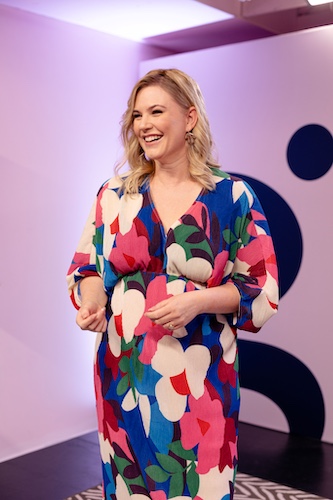
Jeni-Anne Campbell, The Good Businesswoman.

At some point in every leader’s journey, there is a shift. Leadership stops being about what you do and quietly becomes about who you are. Who were you before responsibility found you, asks Jeni-Anne Campbell, founder of The Good Businesswoman and author of Feeding Unicorns. 

It is a question that sits at the heart of Leadrescence, a concept she developed to describe how responsibility reshapes leaders in ways we rarely acknowledge.

We are well-trained for the external demands of leadership. Strategy, growth, financial management, performance. These are the things we are taught to measure, refine and improve. What we are not prepared for is the internal transformation that comes with being responsible for other people’s livelihoods.

Because that responsibility is not abstract. It is deeply human.

It looks like carrying the weight of payroll while managing client expectations. It looks like being the calm one at work and the strong one at home. It looks like making decisions that affect not just revenue, but stability, security and the lives of the people who depend on you.

Over time, this level of responsibility begins to reorganise you. Your tolerance for uncertainty increases, your emotional regulation is tested daily, your decision making sharpens under pressure, and without even realising it, you become more resilient, more capable and more composed than you ever expected to be.

From the outside, this is what leadership success looks like – good job! But there is another side to this transformation that is far less visible.

Leadership is not the only space where identity is reshaped by responsibility. In psychology, the term matrescence is used to describe the developmental transition into motherhood, a process where identity reorganises, priorities shift, and emotional capacity expands. It acknowledges that becoming a mother changes who you are, not just what you do.

Leadrescence builds on this idea. It recognises that leadership creates a similar shift. When you become responsible for teams, payroll, clients and livelihoods, your internal world reorganises in ways that are just as profound, but far less acknowledged.

And, if left unconscious, Leadrescence can harden identity in the name of competence.

Many women leaders wake up one day incredibly capable, but quietly disconnected from themselves. They have built strength, but lost a sense of wholeness. They are performing at a high level, but operating in a constant state of survival.

This is where the conversation becomes more complex for women.

We are still navigating a leadership narrative that asks us to hold opposing expectations. To be decisive, strategic and authoritative, while also being empathetic, likeable and emotionally available. To lead and to carry, to perform, and, while we’re doing it, to also make people feel secure.

The result is often overextension: over-preparing, over-anticipating, over-carrying. And over time, that becomes unsustainable.

This is why naming Leadrescence matters. Because once we understand that leadership is changing us, we can begin to engage with that change deliberately. Leadership pressure can either strengthen you or harden you. The difference lies in whether the transformation is conscious.

Conscious Leadrescence is the decision to actively participate in who you are becoming as a leader. It is the shift from surviving responsibility to selecting how you carry it.

What does this look like? Setting boundaries and repeating them, even when it feels uncomfortable. Allowing your team to solve problems without stepping in immediately. Resisting the instinct to fix everything, to overexplain, or to carry more than is yours to carry.

It also requires a redefinition of strength.

Many leaders operate as though strength means being unbreakable. The ability to absorb pressure without showing cracks has become a quiet benchmark for success, but sustained leadership inevitably creates pressure points. The goal is not to avoid breaking but to repair deliberately.

The philosophy of Kintsugi offers a powerful parallel. In this Japanese art form, broken pottery is repaired with gold. The cracks are not hidden; they are reinforced and become part of the object’s strength and story.

Leadership is no different. When we engage consciously with Leadrescence, we stop protecting an image of resilience and start building something far more sustainable. A version of leadership that is calm, boundaried and clear that carries responsibility without carrying everything.

This shift is particularly important in a South African context, where leaders are operating in environments that demand resilience on multiple levels. Economic pressure, social responsibility and business performance often intersect in ways that require leaders to carry more than their role description suggests.

At the same time, there is a growing recognition that performance and wellbeing are not opposing forces. The most effective leaders are not those who carry the most, but those who lead with clarity, perspective and intention. Leadrescence gives us a practical framework for that shift.

It reminds us that leadership will change us whether we engage with it or not. The real question is whether we allow that change to happen unconsciously, or whether we choose to shape it.

Because success should feel as good looking back as it does moving forward. And that requires more than capability; it requires wholeness. Leadrescence is inevitable. Conscious Leadrescence is where sustainable power lives.

THE GOOD BUSINESSWOMAN
https://thegoodbusinesswoman.com

Emeris Announces New Brand Identity

Emeris Announces New Brand Identity

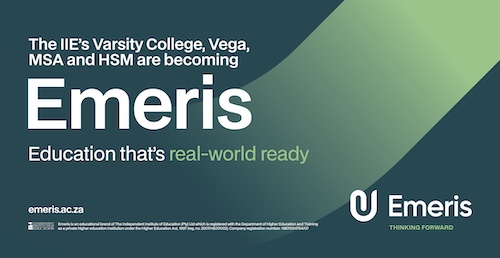
In September 2025 Advtech announced the launch of Emeris, a new private higher education brand that, as of 2026, brings The IIE’s longstanding and well-respected Varsity College, Vega School, and MSA brands together under a unified name. But the Emeris brand story reflects a bigger shift in South Africa’s tertiary education landscape.

The shift in South Africa’s education landscape has been driven by necessity. It’s no secret that South Africa has a massive youth unemployment problem. According to the latest figures, 44.3% of South Africans aged 25-34 are without a job. And with emerging technology such as AI reshaping the world of work and threatening jobs previously regarded as secure, future-focused education is more important than ever.

‘Education will always be relevant,’ said Thabang Butelezi, Marketing Executive at Emeris. ‘People should never give up their ability to think. Formal education gives you tools and structure to thinking, moving it away from being random and messy to more organised. As a human, you can contextualise things in a way technology cannot, that can be the difference between success and failure, especially when you have to sell something to other humans.’

This workplace-ready approach to education is reflected in the new Emeris brand identity. The brand purposefully moves away from the concept of universities as being grounded in theory and tradition. Its fresh, modern feel is more ‘business campus’ than ‘college campus’.

It reflects a future where education is adaptable, future-focused and grounded in practical application, echoing the Emeris curriculum which is designed around real-world needs.

‘I think it will get parents in particular to at least relook their thoughts on where their kids should go for their tertiary studies,’ said Butelezi. ‘We didn’t try too hard, which may seem strange, but I think it was right, given the position private tertiary education holds in people’s minds at the moment. We respected that to start the shift and didn’t act like a rebrand has fixed everything. We dealt with reality, not what we hoped or wished the situation to be.’

‘The category has been stuck in an outdated narrative, where private education is seen as second choice,’’ said Rita Doherty at VML South Africa, the agency that worked with Emeris to develop its new identity, name, logo and marketing campaign. ‘In reality, the most future-fit education models are already more applied, more intensive, and closer to the world of work. Emeris is built on that truth.’

The brand identity also needed to reflect the evolution of Emeris from well-known and respected individual colleges to a combined entity and emphasise the real-world relevance of Emeris degrees.

This was achieved by using colours and design elements to create an unexpected visual identity that feels more like a tech company than an education brand. The website copy retains the clear, straightforward messaging of a college, avoiding an overly academic tone. Meanwhile, social media and ad campaigns have more of a university feel. The name also gives a nod to university traditions by combining two Latin words: ‘Ephemeris’ (the trajectory of celestial objects) and ‘Emeritus’ (merit and earned success) to signify the individual path to achievement.

EMERIS
https://www.emeris.ac.za

How To Add Real Value To Your Internship

How To Add Real Value To Your Internship
Annemie Burger, Penquin.

In today’s competitive job market, internships have become more than just a line on a CV. They are often the first real opportunity to turn potential into a profession. Annemie Burger, HR Director at Penquin, says while many interns focus on simply ‘getting through’ the experience, those who truly stand out are the ones who treat every day as a chance to leave a lasting impression.

The difference often comes down to mindset. ‘An internship is not just about what you learn, it’s about how you show up,’ she explained. ‘The interns who make a lasting impression are the ones who are curious, proactive and willing to go the extra mile, even in the smallest tasks.’

As thousands of students and graduates prepare for internship opportunities in 2026, Burger shares practical advice on how to stand out, add real value, and build a strong professional reputation from day one.

Start With The Basics And Master Them

While it may be tempting to focus only on big, visible contributions, Burger stresses that consistency in the basics is what builds trust. ‘Arriving on time, meeting deadlines and paying attention to detail may sound simple, but they are often what set strong interns apart,’ she said. ‘Reliability is one of the most underrated qualities in a fast-paced working environment.’

Be Curious, Not Just Compliant

Interns who ask questions tend to learn faster and contribute more meaningfully. ‘Don’t be afraid to speak up if you don’t understand something,’ Burger advised. ‘Curiosity shows that you’re engaged and invested. It also helps you grow much faster than just completing tasks without context.’

Take Initiative Where You Can

Standing out doesn’t always require grand gestures. Often, it’s about identifying opportunities to add value. ‘If you see a gap, offer to help. If you have an idea, share it respectfully,’ said Burger. ‘Managers notice interns who think beyond their immediate responsibilities and show a genuine interest in the bigger picture.’

Be Open To Feedback And Act On It

Feedback is a crucial part of any internship, but what truly matters is how it’s received. ‘Constructive feedback is there to help you improve, not to criticise you,’ Burger explained. ‘The interns who grow the most are those who listen, adapt and come back stronger.’

Build Relationships, Not Just A Résumé

An internship is as much about people as it is about work. ‘Take the time to connect with your colleagues,’ she said. ‘Observe how different teams operate, learn from others and build relationships. Those connections often become invaluable as your career develops.’

Bring Your Authentic Self To The Table

While professionalism is key, authenticity shouldn’t be lost. ‘We don’t expect interns to know everything,’ Burger added. ‘What we value is honesty, enthusiasm and a willingness to learn. Being yourself, while staying respectful and professional, goes a long way.’

Document Your Wins

Burger advises interns to keep a ‘brag sheet’ or a log of everything they contribute to during their tenure. ‘When it comes time for your exit interview or a potential contract discussion, having a clear list of projects you supported and problems you solved makes it much easier for HR to build a case for your permanent employment.’

As workplaces continue to evolve, one thing remains constant: attitude and effort matter. And for interns looking to make their mark, it’s often the small, consistent actions that leave the biggest impact.

PENQUIN
https://www.penquin.co.za

Adidas South Africa Transformed Mary Fitzgerald Square Into A Living Tribute To SA Football Culture

Adidas South Africa Transformed Mary Fitzgerald Square Into A Living Tribute To SA Football Culture

Adidas took to the streets to mobilise a nation to support Bafana Bafana. In a moment that brought the heartbeat of the city to a brief pause, the brand transformed Mary Fitzgerald Square into a living, breathing tribute to South African football culture, showcasing the new adidas x SAFA jersey in a way only Mzansi could.

At the centre of it all was a symbol every South African understands: the taxi. More than just transport, it’s rhythm, movement, and connection. And on this day, it became something more.

One by one, taxis entered the square. Then more. Then rows. What first felt like the familiar energy of organised chaos began to shift into something intentional. Something bigger.

Guided by football icon Lucas Radebe, alongside cultural voices Bontle Modiselle and Primo Baloyi, and brought to life with real taxi marshals, the square pulsed with sound, humour, and unmistakable South African spirit. Hooters blared. Drivers moved in sync. Crowds gathered, phones raised, drawn into a moment that was unfolding in real time.

And then, from above, the full picture revealed itself.

Nearly 40 taxis, precisely aligned, form the shape of the new Bafana Bafana jersey. Not just revealed, but built by the people who carry the nation forward every day. It is a statement of unity, pride, and belonging. A reminder that football in South Africa lives far beyond the pitch, it lives in our streets, our stories, and our shared identity.

The moment also marked the launch of #WearFootballFriday, a nationwide call for South Africans to come together every Friday, wear their colours with pride, and stand behind Bafana Bafana and Banyana Banyana as one nation.

ADIDAS
https://www.adidas.co.za/

ExpoX Awards And Brand Sentiment Rankings Announced

ExpoX Awards And Brand Sentiment Rankings Announced

The ExpoX Awards and Brand Sentiment Rankings have been released, recognising exhibitions that generated strong audience engagement and positive reactions on Facebook during 2025. The rankings were compiled independently, and no events submitted nominations, as the results were calculated using verified data from Meta to score and rank each expo.

ExpoXAwards and Rankings 2026

Most Liked Expos On Facebook
– Gold: Rand Show.
– Silver: Outdoor X.
– Bronze: Comic Con Africa.

Highly Recommended
– The South African 4×4 and Outdoor Show.
– Festival of Motoring.

Most Loved Expos On Facebook
– Gold: Rand Show.
– Silver: Comic Con Africa.
– Bronze: Decorex Africa.

Highly Recommended
– MamaMagic.
– Festival of Motoring.

Expos With The Highest Positive Brand Sentiment
– Gold: The South African 4×4 and Outdoor Show.
– Silver: Hobby-X.
– Bronze: Festival of Motoring.

Highly Recommended
– Rand Show.
– Good Life Show Africa.

Most Engaged Expo With The Highest Amount of Followers
– Gold: Rand Show.
– Silver: MamaMagic.
– Bronze: Comic Con Africa.

Highly Recommended
– Festival of Motoring.
– Boatica Cape Town.

Best In Social Media Expo Of The Year
– The Rand Show.

According to Gerrit Davids, Lead Advisor at TaranisCo Advisory, the agency that compiled the ExpoXAwards, ‘Due to its consistent performance across multiple engagement indicators, the Rand Show leads in audience appreciation and emotional reactions while also maintaining the largest and most engaged online community, demonstrating a well-balanced social media presence compared with other expos.’

Verified metrics tables are available on request.

GEROM MEDIA
www.gerommedia.co.za

SA Fintech To Scale The First Ad-Subsidised Payments Network

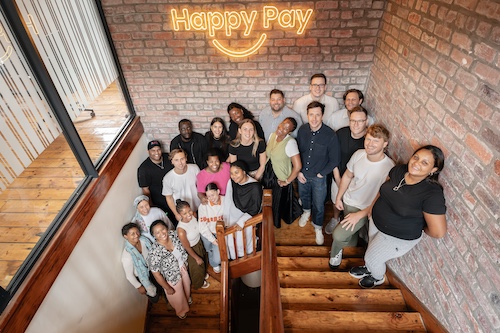
Happy Pay Platform Partners With Partech To Close Multimillion Deal

Happy Pay is building what it calls an ad-subsidised payments network, a model that removes interest and fees from consumer finance entirely, shifting the cost of instalments to the merchants and brands that actually benefit from the resulting sales.

Happy Pay has closed a $5 million seed round led by global technology investor Partech. The round saw participation from Futuregrowth Asset Management, 4Di Capital, E4E Africa, Equitable Ventures, Summit Deals, the University Technology Fund and Felix Strategic Investments.

‘Our mission is simple, to make cash-flow management free for consumers,’ said Wesley Billett, Co-Founder and CEO of Happy Pay. ‘If we can connect the right product to the right person at the right moment and remove payment friction, commerce itself can fund the flexibility. That allows us to deliver installment payments without charging consumers interest.’

The model is a deliberate departure from traditional lending. Where most credit providers rely on interest, fees, or revolving balances, Happy Pay earns through merchant funding. Retailers pay because flexible payments, paired with well-timed advertising, drive real commercial outcomes: higher conversion, bigger baskets, and access to new customers they wouldn’t otherwise reach.

Central to Happy Pay’s approach is an AI-driven advertising and distribution engine that matches merchants with high-intent shoppers in real time. The platform draws on behavioural signals, transaction data, affordability insights, and contextual cues to figure out what a user is most likely to buy, and when.

Those offers are then surfaced inside Happy Pay’s own app and pushed across partner apps, digital channelsf, and other touchpoints, moving consumers from discovery through to checkout with instalment payments already built in.

The key difference from standard digital advertising: Happy Pay optimises for completed purchases, not impressions or clicks. Merchants pay only when a transaction happens. Consumers get interest-free flexibility at the exact moment they’re ready to buy.

The company describes this as a closed-loop model, one that pushes relevant products to users and drives them into both e-commerce checkouts and physical stores, turning marketing spend into trackable revenue rather than a bet on attention.

Buy Now, Pay Later (BNPL) has taken off globally, but most providers still operate as standalone payment options bolted onto checkout. Happy Pay is going after something bigger: a commerce layer where advertising, payments, and financing work as a single, connected system.

Brands can promote specific products to targeted audiences. Merchants get incremental revenue. Consumers get flexible payments, all within one network. It’s as much an advertising marketplace as it is a financial product, sitting at the intersection of fintech, commerce, and adtech.

In South Africa, consumer credit typically carries high interest rates and access to affordable lending remains patchy. Short-term instalment options have filled a gap as people look for predictable repayment structures that don’t saddle them with long-term debt.

‘Our growth reflects a shift that’s been building for a while, toward financial tools that offer real flexibility without the trap of revolving balances. Traditional credit in South Africa is expensive, with the average credit-active consumer spending around 28% of their net income on debt repayments,’ said Billett. ‘We believe our model changes that equation by creating value for every participant. Merchants grow sales and acquire new customers, consumers gain access to cost-free cash-flow flexibility, and we build a business designed to deliver positive, long-term impact.’

‘We’ve looked at most BNPL companies across Africa, Europe and the US, and we’re clear that the best model for creating true value is the one Happy Pay has built. BNPL only makes sense when it delivers real affordability for consumers while helping merchants improve conversion, grow their client base, build loyalty, and reduce acquisition costs,’ said Matthieu Marchand, Principal at Partech.

The fresh capital will go toward expanding merchant partnerships, growing distribution across digital and physical channels, and continuing to develop the AI-driven recommendations and ads engine.

‘Finance has previously been monetised through the consumer,’ concluded Billett. ‘We’re proving it can be monetised through value creation instead. When merchants grow, consumers shouldn’t have to go into debt to make that happen.’

HAPPY PAY
https://happypay.co.za

The Future Belongs To CMO’s Who Bridge The Gap Between The Spreadsheet And The Story

The Future Belongs To CMO's Who Bridge The Gap Between The Spreadsheet And The Story
Pieter Geyser, Humanz.

There is a quiet coup happening in the C-suite. It isn’t being led by a rival brand or a disruptive startup, but by a department two floors down: procurement, writes Pieter Geyser, Commercial Director, Humanz.

In the modern corporate machine, marketing, once the engine of growth and the soul of the brand, has been demoted to a line-item expense. We have entered the era of ‘Efficiency Marketing,’ where the most critical question asked of a CMO is no longer ‘How do we build unshakeable market authority?’ but rather ‘Which agency has the lowest hourly rate?’

The result? A self-inflicted demise, where the CMO role is evolving into a hybrid of data scientist and cost-cutter, while the actual power to shape the future of the business is being traded for a decimal point on a spreadsheet.

The Rise Of The ‘Commodity’ Partner

The current landscape is driven by finance and procurement teams who treat marketing services like office supplies. Decisions are made not based on creative insight, category knowledge, or strategic chemistry, but on standardised service offerings and bottom-dollar bidding.

When procurement dictates the partner, the CMO loses their most potent weapon: the ability to build long-term brand equity. We are witnessing a ‘Value vs Cost’ gap. While procurement celebrates a 10% saving on agency fees, the brand suffers a 20% loss in market share because the ‘cheapest’ partner lacked the soul to resonate with a human audience.

The 81% Problem: Why ‘Cheap’ Is Expensive

The data tells a harrowing story for those obsessed with efficiency over effectiveness. Recent market trends show that B2B buying cycles are shortening, and a staggering 81% of buyers now choose their vendor before they even contact a sales representative.

If the sale is won or lost before the first phone call, the ‘service rates’ of your marketing partner are irrelevant if your brand wasn’t on the shortlist to begin with. By prioritising ‘Efficiency Marketing’ (cost-cutting), companies are failing at ‘Effectiveness Marketing’ (demand-building). If you aren’t building a brand that occupies the buyer’s mind months before they need you, no amount of procurement-led ‘optimisation’ will save your quarterly targets.

The CMO’s Evolution: From Art To Algorithm (And Back)

The CMO role has undoubtedly expanded. Today’s leader must navigate AI, analytics, business strategy, and complex commercials. But in this rush to become ‘business-literate,’ many have surrendered their ‘marketing-literacy.’

The ‘Commercial CMO’ must stop reporting on ‘Likes’ and start speaking the language of the balance sheet. We need to move away from vanity metrics and towards Brand Contribution; i.e. the actual dollar amount the brand contributes to the parent company’s value. When you can prove that Brand Value is a balance sheet asset rather than a marketing cost, the procurement conversation shifts from ‘How much does this cost?’ to ‘How much value are we leaving on the table?’

The Antidote: Lo-Fi Authority And Human Connection

As we move further into 2026, we are seeing massive ‘AI fatigue.’ Nearly one-third of consumers are less likely to choose a brand that uses obvious, ‘slop-style’ AI advertising. To bypass procurement’s spreadsheets, marketers must build ‘Human-Led Authority.’

This means moving away from polished, soulless corporate sizzle reels and towards ‘Lo-Fi Executive Authenticity.’ Think whiteboard sessions, unfiltered thought leadership, and smartphone-shot insights. This ‘un-produced’ content builds a level of trust that a procurement algorithm cannot quantify, and a commodity competitor cannot replicate.

Taking Back The Power: A 90-day Sprint

To reclaim the throne, CMOs must lead a ‘Power Shift’ campaign within their own organisations:

1. Phase 1 (Awareness): Debunk the myth of marketing as a cost centre. Use data to show that cheap partners lead to high churn and low Customer Lifetime Value (CLV).
2. Phase 2 (Education): Educate the C-suite on ‘Share of Search.’ If you aren’t being searched for, you don’t exist in the 10-month buying cycle.
3. Phase 3 (Conversion): Present case studies where brand-led (not procurement-led) partnerships drove 3x higher ROI.

The Verdict

The CMO is not going extinct, but the passive CMO is. The future belongs to the leader who can bridge the gap between the spreadsheet and the story. It is time to stop letting procurement choose our dance partners based on the price of their shoes.

We must prioritise giving marketing power back to the marketers, not for the sake of the ego, but for the sake of the bottom line. Because, at the end of the day, a business that competes only on price is a business that has already lost the war.

HUMANZ
www.humanz.com

This is Modern Marketing