

Home Blog Page 32

South African Consumers Want Brands That Deliver Measurable Value

South African Consumers Want Brands That Deliver Measurable Value
Adheesh Ori, Accenture Song.

According to Adheesh Ori, Consumer Goods and Services, Retail and Automotive lead for Accenture Song, South Africa’s Consumer Goods and Services sector is entering a defining stretch.  Product alone is no longer a differentiator. Experience has become the strategy.

Consumers are not simply buying goods or services; they are assessing how easily a brand fits into their lives. Convenience, clarity and consistency now carry as much weight as quality or price. The brands that win will be those that design every interaction to feel intuitive, responsive and respectful of people’s time and realities.

Artificial intelligence is central to this shift. It is no longer a futuristic add-on in SA but a core capability shaping our competitiveness. AI enables organisations to interpret demand signals faster, personalise engagement at scale and remove friction before frustration sets in. It supports better forecasting, smarter pricing and more relevant recommendations. In a market where loyalty is fragile and alternatives are one click away, intelligence at scale is becoming the difference between being considered and being ignored. For customers, LLM-driven search is becoming more conversational, intent-led, and rooted in personal experience. In this context, credibility matters more than keywords or price comparisons – with decisions increasingly shaped by trusted reviews and consistent brand experiences.

South Africans are navigating rising costs, infrastructure instability, political noise and digital overload. Yet rather than lowering expectations, these pressures have sharpened them. Consumers are more deliberate, more research-driven and less tolerant of poor experiences. They expect value that extends beyond price, communication that is transparent and service that is dependable. They are influenced by creators, reviews and global standards that continuously redefine what ‘good’ looks like. Relevance must now be earned repeatedly, not assumed.

A clear behavioural shift is emerging across categories. The old belief that cheapest wins is fading. In its place is a search for durable value: offerings that combine functional excellence, thoughtful design and reliability without unnecessary mark-ups. People want products that work the first time, services that keep their promises and experiences that feel seamless. They are willing to pay for confidence and convenience, but not for hype. In this environment, value is measured over time, not at the checkout.

The divide between digital and physical has effectively disappeared, forming phygital. Consumers move fluidly between social discovery, online comparison, AI-assisted research and in-store confirmation. To them, it is one continuous journey. Brands that treat channels as separate projects create friction. Those that build connected ecosystems create momentum. Each touchpoint must recognise context, remember preferences and reduce repetition. Continuity is no longer innovative; it is expected.

Trust has become a primary competitive advantage. Consumers reward brands that are clear about pricing, honest about delays and consistent in fulfilment. They look for proof of ethical sourcing and credible sustainability rather than marketing claims. They do not demand perfection, but they do expect transparency and accountability. In uncertain times, predictability becomes powerful.

The next phase of change will be shaped by agentic commerce. As AI tools increasingly help consumers compare prices, monitor spending and automate replenishment, decision-making will shift from persuasion to verification. Brands will not only need to appeal to people but also to the systems acting and selecting on their behalf. If information is unclear, stock unreliable or value difficult to justify, options will quietly disappear from consideration. In this environment, visibility itself becomes earned.

For leaders, this moment requires reframing strategy around real-life contexts rather than product categories. Designing around moments such as stretching a paycheque, managing a household or prioritising wellbeing reveals deeper insight than demographics alone. Intelligent systems should anticipate needs and remove friction, while human touch remains present where empathy and reassurance matter. Operational excellence must be treated as a core brand signal, not a back-office function.

The South African consumer is redefining the rules with clarity and confidence. They want brands that understand their pressures, respect their time and deliver measurable value. The organisations that blend data, creativity, technology and human insight will shape the next chapter. In 2026, the brands that endure will be those that earn the right to be chosen, consistently and convincingly.

ACCENTURE SONG
https://www.accenture.com/za-en/

Marketers Need To Understand Consumers’ Behaviour Under Sustained Economic Pressure

Marketers Need To Understand Consumers' Behaviour Under Sustained Economic Pressure

Bonita Christie, Business Unit Director, Publicis Commerce Experiential, says the cost-of-living conversation is not new, but each fresh trigger, a fuel levy increase, a rate hold that offers no relief, another round of administered price adjustments, acts as an accelerant. It tightens decision-making and raises the threshold for what earns a place in the basket. For brands operating in this environment, the strategic implications are immediate and real.

Understanding what happens to consumer behaviour under sustained economic pressure is the brief that every marketer should be working to right now.

The Basket Optimisation Economy

One of the most telling shifts in cost-pressured markets is that consumers do not simply stop spending. They recalibrate. Research and anecdotal evidence from South Africa’s retail sector consistently shows the same pattern: households are shopping more frequently but buying fewer items per trip. The basket gets smaller and significantly more scrutinised.

This is basket optimisation behaviour and it presents both a threat and an opportunity for brands. The threat is obvious: if consumers are curating more tightly, only items with an immediate, demonstrable reason to be chosen will survive. The opportunity lies in being that item.

In a basket optimisation economy, awareness is no longer sufficient. Brands must earn their place through immediate usefulness, functional value, relevant messaging and a purchase experience that signals the choice is a smart one. The ‘wow factor’ of brand theatre becomes a luxury that neither the brand nor the consumer can afford.

Every Item Must Earn Its Place

Alongside basket optimisation runs a parallel psychological shift: the need for justification. Consumers under financial pressure become hyperrational. Every discretionary purchase is subjected to an internal audit. Is this worth it right now? Can I defend this choice to myself, or to my household?

Brands that understand this dynamic build their messaging accordingly. They make the purchase decision feel smart and defensible. They offer proof points, not promises. This is where experiential marketing earns its budget. A well-designed brand interaction at the point of decision does something no media placement can replicate: it gives the consumer a lived reason to choose. A sample, a demonstration, a direct conversation; these create the justification that turns consideration into purchase.

Price Hikes Tighten The Basket Overnight

Few economic events recalibrate consumer behaviour as quickly as a fuel price increase. The mechanism is direct and visible: higher fuel costs raise transport expenses, filter into the cost of logistics and distribution and surface in the price of everyday goods within days. For SA households where commuting costs are a significant share of take-home income, the psychological impact precedes the actual price changes.

Anticipated fuel increases act like a fast-forward button on value behaviour. Consumers pre-emptively tighten before the formal adjustments take effect, switching to private label or simply cutting categories that feel non-essential. The basket disciplines itself ahead of necessity.

For marketers, this signals a narrow window. In the weeks surrounding a fuel price announcement, consumer attention to value messaging peaks. Brands that show up in that moment with relevant, practical, well-placed communication catch consumers at their most receptive to new information about value.

Pivotability: The New Brand KPI

Volatility has become a structural condition of the South African market. Brands that have built their strategies around stable economic conditions are increasingly exposed. The brands that thrive are those that have built genuine pivotability into their operating model.

Pivotability is the organisational and creative agility to shift offer mechanics, messaging emphasis and experience design in response to changing consumer pressures, without dismantling brand equity or defaulting to a price war. A pivotable brand can reframe a product’s value story or introduce a relevant trial mechanic within weeks rather than quarters.

In practical terms, this means building campaign structures that allow for modular adaptation: messaging layers that can be adjusted without a full creative restart, activation formats that can scale up or down based on conditions on the ground and measurement frameworks that capture behavioural signals early enough to act on them.

The New Job Of Experiential

Experiential marketing built much of its reputation on spectacle. Immersive environments, shareable moments, brand theatre designed to generate reach through social amplification. This model now faces a structural challenge: consumers have less tolerance for the performative and more appetite for the useful.

The evolution of experiential in this context is a sharpening of purpose. The most effective activations are increasingly designed around utility and helping consumers decide faster through trial, enabling direct comparison, demonstrating practical benefit and creating a clear, frictionless path to purchase. The consumer who leaves a brand interaction feeling informed and well-served is significantly more likely to return and recommend than one who was simply entertained.

The shift from theatre to utility requires redirecting creative energy toward the question of what the consumer actually needs at this moment and building an experience that delivers it with precision.

The Strategic Imperative

South African consumers are adapting in real time. The basket under pressure is a mirror of how trust, value and relevance are being renegotiated between brands and the people they serve. Brands must show up with clarity, utility and genuine responsiveness to the pressures consumers are navigating to earn their place in that basket or be quietly edited out.

PUBLICIS GROUPE AFRICA
https://publicisgroupeafrica.com/

Connected TV Brings Clearer Measurement To TV Advertising

Connected TV Brings Clearer Measurement To TV Advertising
Adiela Dramat, Reach Africa.

According to Adiela Dramat, Senior Client Partner at Reach Africa, across Africa, more viewers are now watching content through streaming platforms on smart TVs and connected devices. Audiences move between subscription services and free ad-supported streaming television (FAST) channels, choosing what to watch rather than following a fixed broadcast schedule.

For advertisers, this shift enables new ways to reach audiences in the premium TV environment. Rather than replacing traditional TV, Connected TV (CTV) is expanding how brands participate in it.

CTV Opens The Door To More Advertisers

One of the biggest misconceptions about CTV advertising is that it is only for brands with big budgets. Another is that it only reaches niche or affluent audiences. In reality, as streaming continues to grow across the continent, CTV connects brands with a wide range of viewers.

It is also changing how TV advertising is bought. Instead of planning around programme slots, advertisers can focus on the audiences they want to reach and the results they want to achieve. In this sense, CTV isn’t really a separate channel – it is simply a more flexible way of buying television.

Campaigns can start small. Brands can test their message, see how audiences respond, and then grow the campaign. This flexibility lowers the barrier to TV advertising. Brands that once relied only on social media or digital display can now access the power of the TV screen while still benefiting from the accountability of digital media.

For some brands, CTV is a first step onto the biggest screen in the home. For established advertisers, it is a powerful extension of television campaigns, allowing them to plan and measure streaming environments using the same reach, frequency and measurement frameworks they already use for broadcast TV.

Bringing Clearer Measurement To TV Advertising

Measurement is another area where CTV is making a difference.

Traditional broadcast TV relies on ratings and Gross Rating Points (GRPs) to estimate how many people saw an advert. This system has worked well for many years and remains important for delivering large reach and cultural impact. But it does not always show how audiences engage with advertising.

CTV brings more clarity. Advertisers can see metrics such as viewability, completion rates, reach and frequency. In simple terms, brands can understand not only how many people saw their advert, but how viewers interacted with it.

The industry is also finding ways to connect these digital metrics with the familiar language of television planning.Increasingly, impressions and views can be translated into audience ratings and Gross Rating Points (GRPs); the same metrics long used to plan and measure traditional TV campaigns.

For media planners, this creates an important bridge between broadcast TV and streaming environments. Campaigns can be planned and measured in ways that make sense across the entire TV ecosystem, rather than treating streaming as something completely separate.

CTV Is A Natural Evolution Of Television

As these measurement systems continue to align, the line between ‘CTV advertising’ and ‘TV advertising’ will become less important. For many brands, CTV is simply another way to reach television audiences.

As streaming grows across Africa, the television landscape will continue to evolve. The screen is becoming more flexible, more measurable, and more accessible to advertisers than ever before.

For brands, the opportunity is simple: the power and impact of TV, combined with the flexibility of digital media.

REACH AFRICA
https://www.reachafrica.com

South African Tourism Appoints Chief Marketing Officer

South African Tourism Appoints Chief Marketing Officer
Sithembile Ndaba, South African Tourism.

Sithembile Ndaba has been appointed as Chief Marketing Officer (CMO), effective 1 April 2026, of South African Tourism. Ndaba, CM(SA), MCom, is a highly accomplished marketing and communications executive with more than 25 years of experience spanning brand strategy, global positioning, integrated marketing, and reputation management.

Her career includes senior roles across both the public and private sectors, with notable experience in multinational FMCG organisations such as Pioneer Foods, Tiger Brands, and Unilever, where she built deep expertise in consumer insight, brand development, and market expansion.

She joins South African Tourism from Brand South Africa, where she currently serves as General Manager: Marketing and has also held leadership roles as Acting Chief Executive Officer and Acting Chief Marketing Officer. During her tenure, she played a pivotal role in advancing South Africa’s nation brand identity and global reputation, while driving impactful domestic programmes that strengthened stakeholder engagement.

Ndaba has represented Brand South Africa on prominent global platforms, including the World Economic Forum and BRICS, and contributes to international marketing thought leadership as an advisory board member of the CMO Council Sub-Saharan Africa chapter and City Nation Place (UK). Her extensive experience, global perspective, and industry influence position her strongly to lead South African Tourism’s marketing and destination branding efforts.

SOUTH AFRICAN TOURISM
https://www.southafrica.net/za/en/

HOT 102.7FM MD Returns To New York Festivals Radio Awards Global Panel

HOT 102.7FM MD Returns To New York Festivals Radio Awards Global Panel
Lloyd Madurai, HOT 102.7FM.

Lloyd Madurai, Founder and Managing Director of HOT 102.7FM, has been reappointed to the prestigious Grand Jury of the New York Festivals Radio Awards, one of the world’s most influential judging panels in audio storytelling. Madurai returns to the global panel as one of more than 100 leading audio professionals from 20 countries selected to shape the future of international audio.

His inclusion places a South African commercial radio leader among executives and creators from major international media organisations, including BBC Radio, SiriusXM Radio, Radio-Canada and Swedish Radio, entrusted with evaluating the world’s best radio, podcast and audio content.

A broadcast specialist with 34 years of experience in radio and the youngest inductee into the South African Radio Hall of Fame, Madurai’s reappointment reflects the growing international credibility of South African radio leadership.

Madurai’s appointment signals a clear milestone for the station: HOT 102.7FM is no longer only a high-performing local player, but a globally acknowledged audio brand with leadership credibility at the highest level.

This milestone carries a powerful message: a Johannesburg-born radio station is helping judge the best audio storytelling on the global stage.

‘Radio and audio storytelling are evolving faster than ever, whether you’re listening via broadcast, podcasts, digital platforms or global streaming,’ said Madurai. ‘What makes the New York Festivals unique is that it recognises the creativity and craft that drive that evolution. Being part of the Grand Jury means helping set the benchmark for what world-class audio looks and sounds like.’

The New York Festivals Radio Awards Grand Jury evaluates entries across production values, creative execution, writing, direction, achievement of purpose and audience relevance, benchmarks that mirror the standards the station applies daily to its own programming.

‘We’ve always appreciated the fact that our listeners trust us with their time and our advertisers trust us with their brands,’ said Madurai. ‘Being part of global conversations about the future of audio is incredibly exciting, because we’re focused on creating radio people genuinely care about. When one of the world’s most respected radio institutions extends that same trust to us, it’s something our listeners and our team can be proud of.’

HOT 102.7FM
https://hot1027.co.za

Customers Are Making A Structural Shift Towards More Value-Conscious Shopping

Customers Are Making A Structural Shift Towards More Value-Conscious Shopping

According to the latest State of the Nation report from Worldpanel by Numerator, the FMCG market reached R414 billion in the 12 months to December 2025, delivering +4.6% value growth and +3.3% volume growth year on year. Household participation increased by +1.9%, driven by higher shopping frequency.

However, the underlying story signals tightening basket discipline.

Q4 2025 marked the weakest fourth quarter on record in volume terms. Packs per buyer declined from 183 in Q4 2024 to 180, while packs per trip fell from 6.69 to 6.50. Shoppers are visiting stores more often, but purchasing fewer units per visit, indicating deliberate basket optimisation rather than demand collapse.

Vanessa Hall, Commercial Growth Partner at Worldpanel by Numerator South Africa, explained: ‘South Africans are not retreating from FMCG consumption, they are recalibrating it. Frequency is up, but every item must justify its place in the basket. What we are seeing is a structural shift towards more intentional, value-conscious shopping.’

Volume Pressure Concentrated – Not Universal

The slowdown is uneven across sectors. In Q4 2025:

– Beverages declined -5.2% in volume, led by alcohol and juice concentrates.
– Food delivered +1.9% volume growth, remaining the only macro sector in positive territory.
– Dairy, Home Care and Personal Care recorded softer volume trends, primarily due to fewer units per buyer.

Over the longer term (December 2022–2025), beverages show sustained rationalisation, suggesting an ongoing behavioural adjustment rather than short-term volatility.
Importantly, households are not exiting categories. In fact, they are buying into slightly more categories year on year, but with reduced volume within each. The result is greater fragmentation of spend and intensified competition within the basket.

Challenger Brands Gain Ground As Scale Alone Loses Power

Brand dynamics further reflect this tightening environment. Established leader brands are, in several categories, losing volume share, while lower-priced challenger brands are gaining traction.

Notably, this is not primarily a private label shift, private label value share has remained broadly stable over the past 18 months. The divergence suggests that in 2026, growth will depend less on brand scale and more on accessible pricing architecture, clear value communication and relevance to specific shopping missions.

Retail Implications: Mission-Based, Tactical Spending

Retail performance mirrors the same behaviour. While supermarkets remain dominant in value share, independent retailers continue to outperform total market growth rates.
November significantly over-indexed in spend, supported by Black Friday activity, while both October and December underperformed in volume terms. Shopper engagement remains high, but spending is increasingly tactical, event-driven and mission-specific.
Hall concludes:

‘The opportunity for retailers and brands in 2026 will not be about chasing volume at any cost. The consistent theme is rationalisation, not retreat. Winning will require sharper pricing strategies, stronger differentiation and a clear understanding of the missions shaping household spend.’

NUMERATOR
https://www.numerator.com

Next Shift Youth Panel To Unpack How Younger Generations Are Reshaping Brand Relevance

Next Shift Youth Panel To Unpack How Younger Generations Are Reshaping Brand Relevance
Marko Stavrou.

The Nedbank IMC 2026 is highlighting one of its most anticipated conversations: The Next Shift Youth Panel. This dynamic session brings together Gen Z and Gen Alpha voices alongside senior marketing leadership to unpack how younger generations are actively reshaping brand relevance, culture, and consumer influence. Modern Marketing is a proud media partner of the Nedbank IMC.

A 21-year-old entrepreneur advising corporates on Gen Z: Marko Stavrou, the Gen Z Guy and founder of Genlink. A 9-year-old performer, Desmond Koolen, already commanding a global audience. Both will share the stage at the Nedbank IMC 2026, Africa’s biggest marketing conference, in a conversation that highlights how dramatically the drivers of brand growth are changing.

The discussion will be facilitated by Telkom’s Chief Marketing Officer, Gugu Mthembu, bringing senior marketing leadership into a discussion about how brands remain relevant as new generations reshape markets, culture and influence.

Hosted under the conference theme Shift Happens™. Are You Ready? The 2026 Youth Panel, The Next Shift: A Gen Z-Gen Alpha Conversation, brings together young voices and senior leadership to explore how businesses can stay relevant as new generations reshape markets, culture, and influence.

Rather than treating youth as a distant future audience, the panel reflects a growing reality: younger generations are already shaping purchasing decisions, influencing culture and redefining how brands earn trust.

At just 21, Stavrou has become one of South Africa’s most prominent business strategists and entrepreneurs. As the founder of Genlink, an investor-backed consulting and insights firm, he advises organisations on unlocking the commercial potential of next-generation talent and customers. Having worked with the likes of Standard Bank, Nedbank, Universal Music South Africa and presented at more than 100 events, from student audiences to some of Africa’s top CEOs, Stavrou represents a generation stepping confidently into authority.

Representing the emerging voice of Gen Alpha is Koolen, whose viral rendition of I Feel Good captured global attention and earned recognition from international audiences, including Hollywood actor Will Smith. Now a young performer, sportsman and digital creator, Koolen reflects a generation growing up fluent in digital culture, where authenticity and relatability drive influence.

Desmond Koolen.

The discussion will be hosted by Mthembu, one of South Africa’s most respected marketing leaders, who brings more than two decades of experience in ICT and telecommunications. As Chief Marketing Officer at Telkom, she has led a bold transformation of the brand, embedding data science and digital-first thinking into its growth strategy and securing major industry recognition, including Best Mobile Provider in the 2024/25 Ask Africa Orange Index and a place among South Africa’s 30 Most Admired Brands.

Gugu Mthembu.

Her recent appointment as Jury President for the Creative Business Transformation category at the Cannes Lions International Festival of Creativity further underscores her global influence in shaping how brands drive meaningful business impact.

Why This Conversation Matters Now

Gen Z and Gen Alpha are not just future consumers. They are already influencing household spending and shaping culture, while redefining how the next generation will work, spend and engage with brands. For business leaders, this means rethinking how brands earn relevance, how companies attract talent and how trust is built in a digital-first world.

‘The Youth Panel is not symbolic,’ said Dale Hefer, CEO of the Nedbank IMC. ‘It’s about understanding where growth will come from next. If you want long-term brand strength, you need to understand how younger generations think, spend and participate.’

Hosted as part of a single-stream experience convening more than 3500 delegates across in-person and virtual platforms, the Nedbank IMC gathers CMOs, founders, agency leaders and strategists from more than 20 countries. The Youth Panel is designed to challenge established thinking and spark practical action in the boardroom.

Grounded in Real Youth Engagement

This conversation is not theoretical. It is shaped by the IMC’s long-standing investment in young talent. Through its YOUTH1000 programme, in partnership with MASA, the conference has brought more than 1000 marketing students into the IMC experience over the years, ensuring that emerging voices are in the room. The presence of scholars and young marketers adds a real-time perspective to the discussion, making it as informed by future industry leaders as it is by current ones.

With scholars and young professionals in the room, The Next Shift reflects the real energy of the next generation, not an abstract interpretation.

Book your ticket here.

NEDBANK IMC CONFERENCE
www.imcconference.com

Marketers Need To Balance Analytics With Empathy And Human Insight

Marketers Need To Balance Analytics With Empathy And Human Insight
Ziphindiwe Ngcobo, Isuzu Motors South Africa.

According to Ziphindiwe Ngcobo, Department Executive for Marketing, Isuzu Motors South Africa, we have more data than ever. We know more about what our consumers are doing. Yet, somewhere between the dashboard and the decision, we keep losing them.

I say this as someone who started her career at Kantar, where data is not just support, it is the foundation. I learned to find the consumer truth hidden in numbers, to uncover insights that were overlooked, and to use that information to put a product on the shelf that the market didn’t know it needed. I believe in data like some people believe in gravity. It is essential; it is the basis for everything.

But here’s what I have realised over the years: data shows what people do, but it rarely explains why they do it. In that gap between behavior and belief lies what makes a brand truly matter.

The Seduction Of Certainty

The marketing industry is currently enamored with precision, and I understand why. After years of convincing CFOs to invest in brands, we now have tools that demonstrate our efforts. We have programmatic targeting, attribution models, predictive analytics, and AI-generated content at scale. We can reach the right person at the right moment with the right message, and we can prove it.

But precision doesn’t equal resonance. Reach doesn’t mean connection. A model optimised for clicks will never be optimized for trust.

I witness this tension daily in automotive marketing, one of the most data-rich and emotionally complex areas of consumer behavior. Buying a vehicle is not just a logical choice, it is deeply personal. It reflects identity, aspirations, practicality, family, and livelihood. A farmer selecting a bakkie is not just analyzing data; she is expressing who she is and what she is made for. If I only market to her data profile, I completely miss her.

What AI Gives Us, And What It Cannot

I want to be clear,I’m not arguing that AI is the enemy of creativity. That claim is outdated and incorrect. At ISUZU, we use data intelligence to enhance every decision we make, from media planning to consumer segmentation to campaign measurement. AI is a valuable tool.

However, AI cannot sit with a woman in Limpopo and understand why she picked an ISUZU D-Max over other options. It cannot grasp the significance of that decision for her business, family, or sense of self. It cannot turn that truth into a brand story that makes the next woman in Limpopo feel acknowledged. That is the aim of human-centric marketing, and it is on the decline.

We are creating more content than ever, at lower costs and quicker speeds, yet less of it connects. Consumers are not harder to reach; they are harder to influence. The quantity has increased while the meaning has diminished. The missing layer is empathy, a strong strategic skill.

The South African Marketing Reality

This conversation is especially urgent in our context. South African consumers are not a single group, and no algorithm based on global data will capture their nuances, values, or decision-making processes.

We are a market full of contradictions and complexities. There is aspiration and limitation, tradition and change. Brand loyalty exists in some areas, while other sectors see rapid switching behaviour. The consumer insight that drives growth here will not come from a global AI model; it will come from marketers who are close enough to the culture to understand it and disciplined enough to turn that understanding into strategy.

This is the mission I believe South African marketers should embrace. We are not just custodians of local consumer truth; we are building a marketing model that others worldwide will eventually need to learn from.

We balance data and humanity better than most because we have had to. That should never be a limitation, but our competitive edge.

The Compass And The Engine

In my experience, effective marketing relies on two elements working together: the compass and the engine. The compass represents human insigh, understanding what people believe, fear, aspire to, and love. The engine is data, the rigor that ensures we are heading in the right direction, at the right speed, towards the right people.

Neither can function without the other. An engine without a compass produces fast-moving noise. A compass without an engine is a beautiful idea that gets nowhere.

The mistake our industry keeps making is treating these as a choice, data or story, efficiency or empathy, scale or meaning. Framing it as either/or leads to technically correct yet emotionally empty work.

The marketers who will shape the next decade, both in South Africa and globally, are those who reject that trade-off. They insist on including the human layer, even when dashboards don’t provide a column for it. They know the most crucial number is the one you can’t quantify, how a brand makes someone feel about themselves.

A Call To The Industry

I write this not to criticise but to invite. To my fellow industry members, planners, strategists, brand builders, data scientists sitting at our marketing tables, let’s come to an agreement.

The tools are not the answer; they support the answer. And the answer has been the same all along: understand the person in front of you well enough that your brand becomes part of how they see themselves.

That is the purpose of marketing, not the impressions, not the CTR, not the attribution model. The human layer is not a luxury; it is the main purpose.

If we lose it in the push for efficiency, we won’t just create poorer marketing. We will create brands that no one believes in and an industry that forgets its reason for existence.

ISUZU MOTORS SOUTH AFRICA
https://www.isuzu.co.za/


Nielsen Sports Partners With WTM Africa To Launch Sports Tourism Platform

Nielsen Sports Partners With WTM Africa To Launch Sports Tourism Platform

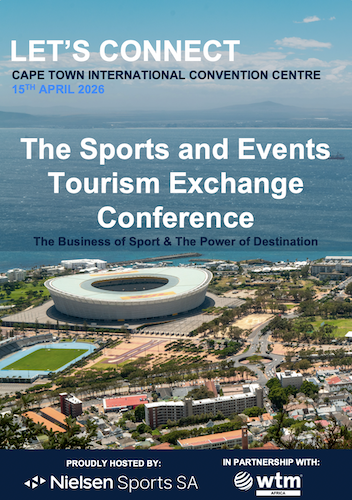
Nielsen Sports South Africa has announced its partnership with WTM Africa to host and deliver the Sports & Events Tourism Exchange (SETE) Conference. The initiative will debut at WTM Africa 15 April 2026, at the Cape Town International Convention Centre, bringing together sports rights holders, federations, tourism authorities, destination marketing organisations, and global travel trade stakeholders alongside a dedicated conference programme focused on the growing influence of sport as a catalyst for travel demand and destination marketing.

The platform is designed to strengthen the relationship between sport and tourism and unlock new economic opportunities for the continent.

According to Tumelo Selikane, Managing Director of Nielsen Sports SA, the initiative reflects a strategic focus on strengthening the relationship between sport and tourism across South Africa and the broader African continent. ‘Sport is one of the most powerful drivers of travel demand globally. South Africa already hosts an extraordinary calendar of sporting events that attract international participants and spectators such as the Sanlam Cape Town Marathon, Total Sports Two Oceans Marathon, Comrades Marathon, Cape Town Cycle Tour, Absa Cape Epic, Betway SA20, the HSBC SVNS Cape Town rugby tournament, and the Sunshine Tour’s year-round golf schedule. International properties such as LIV Golf and the NBA Basketball Africa League have also brought global attention to the country, while the upcoming 2027 ICC Cricket World Cup presents a significant opportunity to further elevate inbound sports tourism. Our goal is to ensure that these events are fully leveraged as tourism assets that drive sustained economic value,’ said Selikane.

Beyond elite competitions, school sport tournaments across South Africa generate substantial domestic and regional travel, with teams, parents, and extended families travelling in large groups to attend festivals and competitions.

At Nielsen Sports SA, ongoing research highlights the strong relationship between sport and travel behaviour. The Nielsen Fan Insights show that more than 90% of respondents indicate a strong interest in travelling locally, while those interested in participating in sport and fitness activities indicate a 93% interest in travelling locally, reinforcing sports enthusiasts as a key target market for the travel industry.

‘Sports fans are highly motivated travellers,’ Selikane added. ‘Understanding their behaviour and motivations is critical for tourism stakeholders looking to understand and deliver on their demands.’

Olivia Gradidge, Marketing Manager of WTM Africa, commented, ‘I am thrilled about the relaunch of SETE in partnership with Nielsen Sports SA. This new initiative not only strengthens our content programme but also brings together key industry decision-makers under the Sports umbrella. We are proud to host a platform packed with vital insights and educational content designed to empower and grow businesses across the industry. This forward-thinking approach marks an exciting new chapter for the SETE conference. I look forward to welcoming attendees this year and witnessing the impactful collaborations that will undoubtedly emerge.’

She further added, ‘This initiative is a major step for our industry. It brings clear educational content and practical insights to help businesses make smarter, more informed decisions. I’m really excited about how SETE will support and work to grow our industry. ‘

Through SETE and its broader sports tourism initiatives, Nielsen Sports SA aims to work more closely with tourism bodies, destination marketing companies, and national tourism agencies to position sport as a strategic driver of travel and economic development.

The company plans to support the industry through specialised research and intelligence, including:

– Sports fan travel behaviour insights.
– Tourism demand analysis.
– Event-driven travel insights.
– Economic impact studies.
– Tourism intelligence development.

These insights will help Destination Management Companies (DMCs), tourism authorities, and rights holders better understand why visitors travel and how sport influences destination demand, enabling more effective travel packages, partnerships, and destination marketing strategies.

‘WTM Africa places us at the centre of the global travel trade ecosystem,’ Selikane said. ‘Our presence there allows us to contribute meaningfully to the tourism conversation and demonstrate the value that sport brings to the industry.’

‘We believe sports rights holders must start looking beyond the traditional ‘business of sport’ lens and fully embrace the business of tourism,’ Selikane said. ‘Sport, travel, hospitality, and destination marketing are part of the same ecosystem. When these sectors collaborate intentionally, the impact is exponential.’

Nielsen Sports SA intends for SETE to become a long-term platform for collaboration and innovation, with plans to grow the initiative annually in partnership with WTM Africa.
‘We are incredibly excited about launching this initiative and look forward to building it year on year as a cornerstone platform for sports tourism in Africa.’

NIELSEN SPORTS
https://nielsensports.com/

Lucky Hustle Turns Operational Setback Into Creative Expression

Lucky Hustle Turns Operational Setback Into Creative Expression
Darren Morris, Lucky Hustle.

When Lucky Hustle lost access to its long-standing LinkedIn page, the agency chose not to simply rebuild quietly. Instead, we held a funeral for the old page, complete with an obituary and ceremonial farewell. This public and creative response reframed what could have been a frustrating setback into a cultural moment that resonated with audiences and reinforced the agency’s brand identity.

Digital disruption presents continuous challenges, but it also provides unique opportunities for those who understand the power of storytelling. Too often, brands treat disruptions as problems to solve quietly, hoping that no one notices. The reality is that every platform hiccup presents an opportunity to shape the narrative meaningfully. Brands cannot control the digital environment entirely, but they can influence how audiences perceive events within it.

The Lucky Hustle example demonstrates how disruption can be turned into a powerful narrative moment.

There are several lessons that brands can draw from disruption.

First, they must own the story rather than simply react to it. When social accounts disappear or platforms change, the instinct is to resolve the operational problem immediately. The greater opportunity lies in guiding the audience’s understanding of the situation. Transparency, creativity, and a considered response transform a potential setback into a compelling narrative.

Second, disruption can serve as a catalyst for storytelling. Unexpected events provide material that can demonstrate resilience, highlight brand values, and engage audiences in ways that ordinary campaigns cannot. The brands that succeed are those that embrace the unexpected and find ways to make it relevant to the human experience.

Third, brands should focus on narratives that transcend individual platforms. Social media accounts and digital channels are temporary, but a well-crafted story endures. When brands invest in narratives that resonate across different channels and communities, they maintain relevance even when the platforms themselves change.

Ultimately, navigating digital disruption is not solely a marketing challenge; it is an opportunity to demonstrate cultural relevance and leadership. Brands that turn disruption into narrative opportunity are able to shape conversations, build loyalty, and remain influential despite changes in the digital environment.

Every unexpected challenge provides a chance to highlight what makes a brand distinctive, to demonstrate resilience, and to connect with stakeholders on a deeper level. Those who embrace disruption as part of their narrative are able to transform uncertainty into opportunity and turn moments of volatility into memorable experiences that resonate long after the event has passed.

The central lesson is that a strong story is more powerful than any temporary setback, and those who understand this principle will not only survive disruption but also define the way others respond to it.

LUCKY HUSTLE
https://luckyhustle.co.za

This is Modern Marketing