

Home Blog Page 33

How Studios And Agencies Are Using AI To Strengthen Production Outcomes

How Studios And Agencies Are Using AI To Strengthen Production Outcomes
Garon Campbell, Breadbin Productions.

Garon Campbell, Founder and Director at Breadbin Productions, says
the real value of AI in production isn’t speed in post. It’s clarity before production begins.

The Problem We’ve Normalised

In our industry, we’ve normalised a costly pattern. Clients debate tone for weeks. Decks are refined repeatedly. Scripts are approved in principle. Then the shoot begins, and it becomes obvious that everyone was picturing a slightly different film.

We tend to blame personalities. The ‘difficult’ client. The ‘unclear’ brief. The ‘moving’ target. But most pre-production friction isn’t emotional. It’s structural. There was no shared visual truth.

For decades, storyboards solved this. They weren’t decorative, they were alignment tools. A visual contract between agency, client and production that grounded interpretation early. Over time, as budgets tightened and timelines compressed, proper look-dev and previs became optional. Decks grew more abstract. Approval relied more on imagination than visibility. Not because storyboards lost value, but because they became too slow to execute properly.

AI-driven prototyping has made disciplined visual alignment viable within modern timelines. Look development, scene testing and stylistic variations can now be generated, refined and compared in hours rather than days. That fundamentally shifts the approval process. Instead of persuading stakeholders through language alone, teams can present visual evidence early enough to shape direction.

And in production, timing is everything. Once cameras roll, ambiguity becomes expensive. Performance direction, pacing, design choices and visual language harden into logistics. Misalignment turns into overtime, compromised execution or post-production rescue work. Despite what clients sometimes hope, not everything can be fixed in post.

AI-driven prototyping moves correction forward. It exposes tonal inconsistencies before they’re embedded in call sheets. It stress-tests visual intent before it becomes a production cost. It forces teams to confront whether an idea truly works, not just conceptually, but cinematically. This isn’t about replacing instinct, it’s about reinforcing it.

Risk Becomes Testable, Not Theoretical

Under sustained budget pressure, creative risk has narrowed across the industry. Safe work is easier to defend. Ambitious work often dies because it’s difficult to visualise clearly enough to justify spend.

AI shifts that balance. When teams can prototype multiple directions quickly, risk becomes testable. You don’t have to imagine whether a tonal pivot works, you can see it. You don’t have to argue about aesthetic choices, you can compare them. The cost of exploration drops dramatically, which paradoxically raises the creative standard.

Faster visualisation doesn’t lower the bar, it removes ambiguity. That clarity shortens feedback loops. Approval becomes less about persuasion and more about alignment. Stakeholders respond to something tangible rather than interpreting a description. Decisions lock sooner because uncertainty shrinks.

The Upstream Shift In Creative Authority

This also changes where value sits inside a production team. Editors, hybrid directors and creative technologists who understand both storytelling and AI tools are moving upstream. Their judgment shapes work at the point of conception, not just at the end of execution. The role shifts from repair to refinement.

That is the real disruption. AI hasn’t destabilised production by eliminating roles. It has strengthened it by restoring a layer we allowed to erode, rigorous visual prototyping before money hardens into logistics. The storyboard wasn’t outdated, it was under-supported. Now it’s back, faster, more adaptable and harder to ignore.

Before Production Locks

In a climate where budgets are tighter, timelines are shorter and scrutiny is higher than ever, the most expensive mistake isn’t experimentation, it’s assumption. Before the camera rolls, alignment must be visible, not implied. AI-driven prototyping makes that possible.

BREADBIN PRODUCTIONS
https://breadbinproductions.co.za/

Every Rand Spent On Marketing Should Work To Build Brands And Drive Growth

Every Rand Spent On Marketing Should Work To Build Brands And Drive Growth
Gillian Rightford, ACA.

According to Gillian Rightford, Executive Director, Association for Communication and Advertising (ACA), marketing teams everywhere are under pressure to do more with less. Budgets are scrutinised, performance is expected to improve every year, and the digital ecosystem we operate in has become increasingly complex.

One of the ongoing challenges within that complexity is how much of our digital investment actually reaches real people. As digital advertising has grown, so too has the infrastructure that supports it. Programmatic trading, automated optimisation and sophisticated targeting have created enormous opportunities for marketers.

At the same time, the scale and automation of the system means that issues such as invalid traffic, brand safety and ad fraud have become part of the global industry conversation.

Not all invalid traffic is malicious. Some of it is simply the result of automated systems such as search crawlers. However, there are also instances where bad actors deliberately exploit the system through bot activity, spoofed domains or other techniques designed to extract value from advertising budgets without delivering genuine human engagement.

For marketers and agencies, the question is not whether digital media works. It clearly does work. The question is how we ensure that the money we invest works as efficiently and transparently as possible.

That requires a continued focus on measurement, verification and transparency across the digital supply chain. Independent analytics, responsible platform partnerships and clear reporting standards all play a role in strengthening confidence in digital media investment.

South Africa’s advertising industry has always been strong when it works collaboratively. Agencies, marketers, publishers and technology partners all have a role to play in improving standards and ensuring that media investment delivers genuine value

Ultimately, the goal is simple. Every rand spent on marketing should work as hard as possible to build brands and drive growth. Strengthening transparency and accountability across the digital ecosystem is one way we can help make that happen.

ACA

www.acasa.co.za


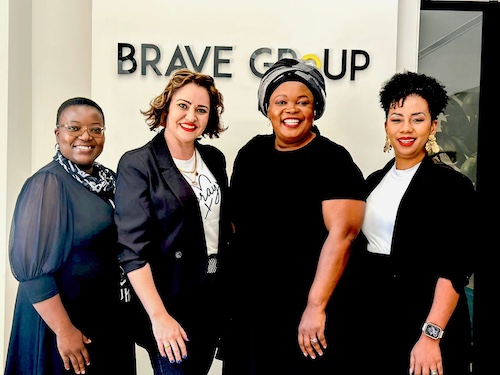
Brave Group Announces Four Strategic Leadership Appointments

Brave Group Announces Four Strategic Leadership Appointments

Brave Group’s new leadership appointments are designed to sharpen governance, deepen client capabilities, and unlock the group’s primary market differentiator.

‘Brave’s unique selling proposition is leading with transformative technology that connects with creativity and culture,’ said Musa Kalenga, Chief Executive Officer of Brave Group. ‘These appointments gear the group for growth while staying true to our sweet spot. Our clients operate in markets where the old playbooks no longer work, and where contexts and Artificial Intelligence (AI) change the game daily. These appointments are deliberately calibrated to gear the business for what’s ahead and to ensure we have the operational depth and strategic governance to deliver on our promise of integrating elite creativity with AI-powered marketing intelligence,’ said Kalenga.

Strategic Leadership Appointments:

Monica Gomes: Group Managing Director

Gomes steps up to Group Managing Director after a five-year tenure marked by operational steadiness and an instinct for institutional leadership. ‘Her promotion consolidates oversight across Brave’s portfolio of specialist units, with a mandate to ensure the Group’s integration of creative intelligence and AI-driven marketing workflows operates at scale. For the business, it is a recognition long overdue,’ Kalenga said.

Vimbainashe Macheka: Head Of Finance

Having previously operated as a fractional resource to the Group, Macheka now joins full-time as Head of Finance. Her appointment injects the financial rigour and strategic clarity that Brave’s accelerating growth trajectory demands. ‘At a moment when the Group is investing heavily in its proprietary technology and expanding its service architecture, the timing is deliberate,’ Kalenga added.

Robyn Jones: Group Client Service Director

Jones assumes the Group Client Service Director role, a promotion that reflects both the strategic depth and the commercial instinct she has consistently demonstrated. ‘In a Group structured around specialist units, each with distinct capabilities and audiences, the Client Service Director function is pivotal: it is the connective tissue between Brave’s marketing intelligence and the brand challenges its clients bring to the table,’ Kalenga said.

Nkateko Khosa: Business Unit Director, BOLD

Khosa takes the helm at BOLD, Brave’s PR and corporate communications unit, as Business Unit Director. ‘With deep relationships across the media landscape and a reputation for communications strategy that moves at the speed of culture, Khosa is the architect BOLD needs as it enters its next phase. BOLD’s mandate, strategic reputation management and earned media, sits at the heart of what brand leaders increasingly recognise as non-negotiable in a fragmented media environment,’ Kalenga said.

‘The appointments are an important signal to the market. These are the leaders who can help Brave create measurable competitive advantage for the brands and CMOs who are our partners. They are structural moves in a Group that has staked its market position on a clear bet: that the future of marketing belongs to businesses that can seamlessly combine creative excellence with AI-powered intelligence,’ Kalenga said.

‘Brave’s hybrid architecture, in which specialist units lead client relationships through creative innovation, technological prowess, and brand-building strategy, requires the right leaders at every node. We now have a dream team who will enable this,’ Kalenga added.

For CMOs, brand directors, and marketing executives navigating complex contexts, Brave’s expanded leadership bench strengthens the proposition. ‘They’re a group of specialists, underpinned by a unified strategic vision, built to solve the brand challenges that matter most.’

BRAVE GROUP
www.bravegroup.co.za

Why Micro Communities Are Gaining Attention From Advertisers

Why Micro Communities Are Gaining Attention From Advertisers
Natascha Torres, iqbusiness.

According to Natascha Torres, Head of Digital Media Strategy at iqbusiness, social and programmatic platforms such as Google, Meta, TikTok, YouTube and LinkedIn are popular with advertisers for good reasons. But their popularity increasingly comes with the downside that it can be difficult for a brand to stand out from the other advertisers’ jostling for the audience’s attention.

Costs per click and per acquisition (CPC and CPA) are rising fast and advertisers are paying more to reach an audience that is increasingly distracted by and saturated with brand messaging.

For this reason, we are seeing many advertisers look at alternative channels with growing interest. Micro communities are emerging as a particularly compelling option for brands that want to stand out from competitors and forge more meaningful connections with their customers. This is a realm that is particularly relevant for B2B brands, but not exclusive to them.

A micro community is a space where people can connect with others around shared interests rather than following and connecting with individuals and brands. These communities may be oriented around identities (like nationality, sexual orientation, culture or religion), challenges (visa advice or pain management) or interests (for example, hobbies and professions).

Micro communities are hosted across a range of platforms, but the one that is often overlooked in South Africa is Reddit, where you can find ‘subreddits’ about anything from retro video games, cross-fit and culinary advice to stock trading tips, South African politics and city-specific communities.

Reaching High-Intent Audiences

For brands, the beauty of this environment is that it narrows exposure to audiences primed around a specific problem or interest. They can focus on high-intent audiences who are already interested in their industry or offering. Users are active and engaged, seeking information and discussion rather than thumbing through a feed until something catches their eye.

Browse through subreddits and you will find people looking for advice and recommendations before making high-consideration purchases in segments such as travel, software, health or financial services. Many business professionals seek advice from their peers via Reddit, but so do consumers looking for advice from others who share their values and interests.

Aside from anything else, this is a gold mine of insight for anyone who wants to understand their customers’ decision-making process. Use of pseudonyms on Reddit allows for candid, unfiltered discussions. A reputation system, meanwhile, ensures that the most useful, relevant contributions are surfaced and poor-quality content is pushed down.

Content longevity on Reddit is longer than on most social platforms with high-performing posts continuing to surface via search and internal discovery weeks or months later. This is particularly interesting for brands that are focusing on generative engine optimisation (GEO) to ensure visibility in the new world of large language models (LLMs).

Beyond traditional search engine optimisation, GEO is a priority for brands because people are increasingly getting their search results from Google’s AI Overviews and platforms like ChatGPT. Reddit is one of the top two domains that Google pulls from when generating AI Overviews and is also one of the domains that ChatGPT prefers when compiling responses.

Reddit is favoured by LLMs because they prioritise conversational, experience-based content over polished brand copy when generating answers. Threads on Reddit frequently rank for long-tail, problem-led queries that may not arise on brands’ own web properties or other social platforms.

While Reddit’s global user base of around 450 million users is nowhere near the size of the audiences on Facebook, YouTube or TikTok, scale is not the point. Reddit should not be seen as a replacement for the mass reach of those platforms, but rather as a complementary channel reaching high relevance, high-intent communities with a targeted message.

Skip The Scroll, Join The Conversation

In South Africa, Reddit reaches around 2.75 million users, but this audience is growing rapidly. Reddit’s potential ad reach in South Africa increased by nearly 1.7million between the end of 2024 and late 2025. This suggests adoption is still in an early phase in South Africa, offering a first-mover advantage for brands along with lower advertiser density and audience ad fatigue.

Brands that want to take advantage of Reddit as a platform should know that it is an unforgiving environment where authentic, community-driven content is valued. Those that succeed on Reddit lead with useful insights and information rather than overtly promotional product or brand positioning. Brands should test different messaging and creative styles to see what works.

Value matters more than overly polished corporate messaging. Successful formats include educational text posts, memes, raw user-generated content and AMA-style (Ask Me Anything) ads that encourage conversation. Ads that resemble organic content and fit in with a subreddit’s focuses tend to do best.

Reddit may not match the scale of Facebook or YouTube, but its engaged, interest-driven communities give brands a unique chance to connect authentically, gather insights, and boost visibility in AI-driven search. Brands with longer purchasing journeys should certainly consider it as a complement to traditional social and programmatic platforms.

IQBUSINESS
https://iqbusiness.net

Metropolitan Launches New Campaign

Metropolitan Launches New Campaign

Metropolitan’s new campaign, Gogo Vivian and the Fam, reflects the reality that families come in many forms, but often there is a powerful matriarch at the centre. At the heart of the story is Gogo Vivian, a glamorous, sharp and direct matriarch who calls her family together to confront the conversations many households avoid.

The campaign arrives at a revealing moment in South African financial life, and at a deliberate one in Metropolitan’s. According to research conducted by the Bureau of Marketing Research, nearly 75% of South African households hold funeral cover, making it the most widely held financial product in the country. Yet fewer than 30% participate in a pension fund, and just 23% hold any form of savings or investment product. South Africa has planned for the end with considerably more diligence than it has planned for everything that comes before it.

Through humour, cultural truth and deeply relatable family dynamics, Gogo Vivian and the Fam show what it looks like to truly have these details in place. A funeral already arranged, a retirement securely planned, and loved ones spared the chaos that so often comes when families are least prepared. ‘South Africans understand better than most that protecting the people you love is not something you leave to chance. Gogo Vivian shows what it looks like when the details are truly taken care of. And that is the certainty Metropolitan exists to provide, across every stage of life,’ said Lindiwe Gumede, Chief Marketing Officer at Metropolitan.

In an environment where many households face rising financial pressure, Metropolitan believes that clearer conversations about financial protection are more important than ever. The brand has long been one of South Africa’s most trusted names in funeral cover for 128 years, but Gogo Vivian and the Fam represent a deliberate expansion of that identity. ‘That history means people know us, trust us and have tested us over generations. It also gives us the credibility to have honest conversations about planning and the role it plays in protecting families,’ Gumede added. Each execution introduces a new dimension of Gogo Vivian’s planning, and a new argument for why certainty at every stage of life requires the same attention to detail.

The creative concept was developed in partnership with Lobengula Advertising, whose storytelling approach is grounded in real South African cultural insight. Brenda Khumalo, Founder and Managing Director of Lobengula Advertising, said the idea for Gogo Vivian was inspired by familiar family dynamics across the country. ‘This campaign was built on the power of partnership, between Lobengula and Metropolitan, and between creativity and real South African insight. Many of the young creatives who worked on this campaign grew up in homes where there was always that matriarch ensuring things were done properly,’ said Khumalo. ‘Gogo Vivian exists in every South African family, the person who has thought about the things the rest of the family has not. What we wanted was for people to see her and immediately recognise her. The comedy comes from that recognition, but underneath it is something very real: the relief of knowing someone has handled the details.’

Through this campaign, the brand intends to empower South Africans to better understand their choices and take control of their planning journey. The campaign will roll out across television, out-of-home, radio, digital platforms and social media, supported by a range of storytelling formats designed to deepen engagement.

METROPOLITAN
https://www.metropolitan.co.za/

PR Is About Understanding How Narratives Form And How Trust Moves Between People

PR Is About Understanding How Narratives Form And How Trust Moves Between People

Every industry reaches a point where its language stops describing what actually happens. PR may be one of those industries. For years, public relations has been framed around media coverage: press releases, placements, interviews and headlines. The assumption was straightforward: secure attention through the right channels and you shape perception.

But attention doesn’t move like that anymore.

At the recent Bring Lunch session at Friends & Family, creative entrepreneur and Amplified PR founder Siki Msuseni shareD her experience building a PR agency and working with lifestyle brands across South Africa. What quickly became clear in the room was that the real work of PR today has very little to do with traditional media mechanics. The real work is narrative. Not just what a brand says, but how a story moves, through communities, culture, conversation and reputation.

Media once acted as the gatekeeper of narrative. Today it’s just one node in a much larger ecosystem. Stories travel through social networks, creators, group chats, communities and lived experiences with brands. Reputation is built less through announcements and more through accumulated meaning.

This shift demands a different mindset from PR practitioners. As Head of PR, Rafeeqah Larney, said: ‘A solid narrative and weaving the brand’s key messaging in an impactful, relevant manner circles back to the essence of your strategy. The trick is being aware of the brand’s world within the bigger world. Once the narrative is shaped, choosing the correct channels that are relationship-led is where PR moves the needle. It’s not spray and pray off a database found on the dusty PR server.’

PR is no longer simply about securing visibility. It’s about understanding how narratives form and how trust moves between people.

That means asking different questions:

What story is already being told about the brand?

What tensions exist in the culture around it?

What communities are shaping the conversation?

And perhaps most importantly: what narrative does the brand actually deserve to own?

Because narratives can’t simply be declared. They have to be earned, reinforced and lived consistently over time.

One of the most powerful themes from Msuseni’s conversation was the role of relationships, not as transactional tools for exposure, but as the infrastructure through which narratives travel. When people trust the storyteller, the story moves differently.

In that sense, PR today looks less like media relations and more like cultural stewardship.

For brands, this creates both an opportunity and a challenge.

The opportunity is that meaningful narratives can emerge from anywhere, from founders, from communities, from the way a brand behaves in the world.

The challenge is that narratives are no longer fully controllable. They must be cultivated rather than managed.

Bring Lunch is a monthly lecture series hosted by Friends & Family, bringing together creatives and industry peers to share ideas, experiences and perspectives shaping the industry.

THE NEPO AGENCY
www.thenepoagency.com

AMPLIFIED PR
www.amplifiedpr.co.za

How Brands Can Achieve True Marketing ROI

How Brands Can Achieve True Marketing ROI
Lorraine Landon, Google.

Lorraine Landon, head of advertising solutions for Google in sub-Saharan Africa, says despite mindset shifts taking place or the tools at our disposal, many brands are hitting a ceiling. She’s identified three primary growth blockers that consistently stand in the way of true ROI and how we can dismantle them.

Growth Blocker 1: Closed-Door Budgeting Is Closed-Door Thinking

Demand is not a flat line; it fluctuates. And one of the most common blockers I see is the ‘closed door’ policy created by rigid monthly budgets. When a marketing team relies on a fixed budget, regardless of market demand, they effectively turn customers away as they are still trying to get in.

For example, you may see more demand for a certain product on Sundays or higher search interest for a specific keyword in the evenings, but your daily budget has capped how much demand you’re allowed to capture and convert.

Fixed budgeting isn’t just about changing numbers on a spreadsheet, but evolving the psychology of the finance team. CFOs have traditionally enjoyed the control that finite, capped budgets have afforded the business, and thinking of budgets in fluid terms is the antithesis of that.

Here’s how CMOs in sub-Saharan Africa can can convince their finance team to see demand-led budgeting as the path toward ROI growth:

Quantify the loss: Show your CFO exactly how much value is being left on the table by budget constraints by running a test over three-to-six months to show the varying results of rigid versus demand-led budgeting. By opening the tap for a controlled experiment, you can provide the data validation needed to prove that fluid budgeting anchors directly to the business’s profitability goals.

Show the value of a demand-led budget with AI-powered bidding: While smart bidding instructs the system on who to find based on targets like ROAS, rigid budgeting limits the scope, preventing the underlying AI from capturing all identified high-potential customers. Demand-led budgeting provides the necessary fuel for smart bidding to operate at its peak.

Growth blocker 2: Over-indexing On Conversions While Neglecting Branding

There has been a historical divorce between brand and performance teams, leading to silos and fragmented strategies. Over-weighting on performance marketing is great for converting customers who want to make a purchase now, but it fails to create new demand from people who are still perusing and contemplating.

Especially in highly contested verticals like flight booking or insurance, a strong branding strategy ensures consumers default to you rather than searching for expensive, generic keywords such as ‘car insurance’ or ‘flights to [location]’.

Here’s how brands can create their ideal brand-performance mix:

Find your golden ratio: To find your unique blend, CMOs should instruct a testing period with several campaigns using different brand-performance budget splits.

The long-term commitment: As consumers change, and the landscape of your vertical, your branding should continue. Google research shows that investment in brand activity doesn’t just drive long-term growth, it boosts short-term performance. Analysis across categories reveals that a 1% increase in brand awareness typically drives a 0.6% lift in long-term sales, while also boosting short-term sales by 0.4%.

Growth Blocker 3: The ‘Broken Pipes’ Of Data Strength

We often talk about how clean data translates to ROI, but without data strength, which speaks to the maturity of a business’s data ecosystem, this outcome can’t come to fruition. Product adoption from Google’s suite of tools will increase, diversify, and improve your data, but this isn’t just about having data; it’s about a comprehensive architectural plan to inform your marketing decision-making.

Think of your data infrastructure as a series of pipes that supply flowing water, or, audience signals, to your taps (campaign goals, in this instance). If you have broken or non-existent pipes, your flow of audience signals may be reduced to a dismal trickle. Ultimately, this erodes the strength of your data application.

For CMOs In Sub-Saharan Africa, the conversation needs to move from straightforward product adoption to a structural, forward-thinking data plan:

Centralise your data: Bring all your data together, including offline data, transaction data, and CRM, from its various sources. You can do this with Ads Data Manager, a tool that centralises a brand’s multiple data sources, streamlines conversion measurement and audience targeting.

Enrich and bridge your data: Enrich your data with various signals, such as hashed customer signals (like email addresses), to increase observability and improve attribution from ad interactions to purchases.

GOOGLE
https://blog.google/intl/en-africa/products/

The Strongest Pathway To Social Commerce Conversion Is The Community

The Strongest Pathway To Social Commerce Conversion Is The Community

With more than 5.4 billion people on social platforms and nearly 19 hours a week spent scrolling, social media has become far more than the top of the funnel. It is now the arena in which discovery, trust-building, conversation and purchase coexist in a single motion; one uninterrupted swipe.

The Digitas Future Talks session on the future of social commerce demonstrated a profound shift: the strongest pathway to conversion is the community.

Social commerce has matured into a default buying environment where influence, intent and transaction converge almost instantaneously. The data speaks plainly: 76% of global social users say the content they consume directly affects what they buy, and among Gen Z that influence climbs to 90%.

TikTok, now on track to surpass Instagram in monthly active users, has become the engine of this behaviour. Users spend more than an hour and a half a day on the platform, immersed in creator-led storytelling that dissolves the traditional boundaries of the shopping journey. In this world, content is commerce.

Behaviour, credibility and community are at the centre of great brand strategy. Rather than segmenting people by age or income, cohorts form organically around shared habits. Influence flows from creators whose credibility is earned through lived experience rather than celebrity polish. Communities build momentum as consumers discuss, challenge, recommend and validate one another, turning comment sections into trust engines. And content succeeds only when it is native to the platform’s language rather than repurposed from above-the-line campaigns that feel out of place in the scroll.

When these elements align, social stops functioning as an awareness mechanism and starts behaving like a genuine conversion channel.

The real proof lies in the brands that have already embraced this shift. PepsiCo reimagined its snacks as culinary ingredients after noticing how TikTok users folded them naturally into their cooking content. Crocs turned criticism into cultural currency by leaning into negative sentiment with humour and speed. Burger King revived a discontinued product because the TikTok community wouldn’t let it die. SA Tourism uncovered an entirely new and high-value audience segment (pensioners) simply by paying attention to who was engaging with its content, ultimately driving a 44% increase in bookings. And NedBank used influencer unboxing to challenge South Africa’s premium-consumerism culture, reframing responsible spending as a lifestyle choice. In each example, the community steered the conversations.

TikTok in particular, is shaping the architecture for what comes next. The platform has evolved beyond social commerce into community commerce; an ecosystem where people discover, debate, learn and purchase without stepping outside the app. The scale is staggering: more than 143 billion views on #TikTokMadeMeBuyIt, and an algorithm able to surface micro-interests with precision.

The introduction of AI tools such as TikTok’s Symphony, now accessible through Adobe Express, further lowers the barrier for brands to create content that matches the pace and texture of the platform, enabling them to participate rather than broadcast. While cross-platform conversion loops between TikTok and Meta have not yet materialised, the expectation is that integrated pathways are on the horizon, which will only strengthen the fluidity of discovery-to-purchase behaviours.

When brands treat social as a media placement, audiences behave like viewers. But when brands behave as contributors within a community, responsive, human, attuned to cultural rhythms, then viewers shift into participants and participants shift into purchasers. The onus lies with brands to create content that invites interaction rather than demands attention.

The future of commerce will favour brands that embrace this collapsing of the funnel, where behaviour, authenticity and community carry more weight than demographics or production quality. Shopping will increasingly feel woven into the social fabric, shaped by the creators people trust and the communities they choose to belong to. The feed is already becoming the new storefront, and each micro-interaction acts as a new kind of sales moment.

The path forward requires brands to rethink their presence on platforms as an ongoing dialogue. If shopping is to become as social as the feed, then brands must be willing to meet consumers inside communities that shape what they discover and what they buy.

DIGITAS SOUTH AFRICA
https://www.digitas.com/en-za/

Challenges Of The Modern Agency Pitch Process

Challenges Of The Modern Agency Pitch Process
Davina Malan, Tribeca Public Relations.

Every agency knows the email. A brand reaches out asking for a proposal and a budget. Within hours, teams are pulling together ideas, strategies and plans in the hope of winning the work. This first contact comes without a meeting or a request for one. There is limited context, no real sense of chemistry and little clarity around the budget. Just a request to submit a proposal.

Davina Malan, Managing Partner at Tribeca Public Relations, says agencies respond because this is what they do. They are wired to solve problems and show up with ideas. Every opportunity matters and they are always grateful to be considered. However, this approach can simultaneously create challenges for both sides.

Preparing a thoughtful proposal takes time and focus. When agencies invest this effort without a prior discussion, there is always a risk that the thinking misses the mark simply because the brief did not provide enough context. Sometimes the response is that there is no budget, the fit is not right or the direction has changed. Occasionally, there is no response at all.

It has, at times, become a numbers exercise. Brands approach several agencies at once and wait to see what comes back. This raises a simple question. How can either side properly assess whether there is a good fit without first having a conversation?

Without understanding the real business challenge, internal expectations or budget parameters, agencies are left to make assumptions, which doesn’t always lead to the best outcome.

There are two areas worth reconsidering. The first is the value of strategic thinking. Campaign ideas and direction are not administrative steps. They are the core service agencies provide. When detailed proposals are requested before a relationship has begun, it can blur the boundaries of what a pitch should reasonably involve.

The second is people. Many agencies offer similar services. What often determines success is the relationship between the agency team and the client team. Trust, working style and shared expectations are difficult to evaluate through documents alone. They become clearer through conversation, where both sides can get a sense of the people behind the work and determine whether there is a natural connection.

For brands looking to appoint an agency, a simple shift could make a difference. Start with a meeting. Allow space for questions. Share context and provide early guidance on the available budget. Then decide whether there is alignment before requesting detailed proposals.

Feedback should always be part of the process. Tell us where we fell short. Was the issue budget, chemistry or our strategic approach? This kind of feedback helps agencies learn, improve and refine how we respond in the future.

Our agency was invited to meet with a brand recently for an in-person meeting. The only request was to prepare a few slides on some of the work we have done and are proud of. No grand strategy or fully fledged campaign ideas. No deep dive into their business before we had even met. We sat down, face-to-face, and had a proper conversation about what they were looking for and whether we were the right agency to provide it. It felt honest and more importantly, it felt respectful.

So, is the brief dead? Not at all. A clear brief still has value. What needs refinement is how it is introduced.

Starting with a conversation sets a stronger foundation. It allows proposals to be more focused, more realistic and more aligned to real needs. Agency selection works best when it is built on dialogue, clarity and mutual respect rather than volume alone.

TRIBECA
www.tribecapr.co.za

PR Should Be Recognised As A Critical Skill

PR Should Be Recognised As A Critical Skill
Rethabile Molehe.

Rethabile Molehe says South Africa is right to prioritise doctors, engineers, and scientists. But if skills alone built national competitiveness, countries like Cuba and Iran would already be global powerhouses. First-world countries are not perceived as advanced only because of their technical expertise, but because of how effectively they communicate progress, stability, and competence.

While STEM (Science, Technology, Engineering, and Mathematics) skills are crucial for the development of a country, good PR gives voice to innovation, fosters public trust, and bridges the gap between scientific advancements and societal understanding.

For South Africa’s economic growth, combatting high youth unemployment and bridging the critical skills gap, the STEM industry is essential. While precise aggregates vary, sectors heavily reliant on STEM skills, such as manufacturing, ICT, and finance/business services, represent a substantial share of GDP, highlighting their vital importance. R&D expenditure remains low at around 0.62% of GDP (HSRC/DSTI, 2023/24), far below the OECD average of 2.5–3%, though modest growth has been observed in recent years.

However, innovation alone doesn’t shape global confidence; communication does. Public Relations is far beyond just media coverage, events, or publicity. It is also about national branding: how South Africa sets itself apart and creates a recognisable global identity. PR creates a trademark identity, amplifies progress, manages reputation, controls narratives, builds trust, and provides crisis communication. In this way, it becomes a strategic amplifier of development, ensuring that achievements in areas such as STEM, healthcare, and infrastructure are not only realised but also communicated effectively to inspire confidence, attract investment, and strengthen South Africa’s global standing.

Additionally, countries are not only judged by what they do, but by how their stories are told. These stories build a national persona, shaping how a country is viewed from the outside and influencing investors, tourists, global media, and strategic relations with foreign governments. This means that GDP alone does not influence investors; it’s the stability, governance, transparency, and how a crisis is communicated. For tourists, safety is often more important than experience, while cultural miscommunication can further shape perceptions. With good PR, we define ourselves rather than the global media defining us.

This, however, does not mean lying about what is currently happening, nor does it mean only writing about the good things, but rather balancing the two. The alarming crime rates, persistent inequality, and governance challenges must be acknowledged alongside the country’s achievements. Effective PR does not erase these realities but contextualises them, showing both the problems and the proactive measures being taken to address them. By communicating transparently, South Africa can demonstrate resilience, accountability, and a commitment to progress. Thus, do not allow negative headlines to become the national brand.

Despite its strategic importance, PR is still sidelined and not recognised as a critical skill in the national development framework. Evidence from the Identification of Skills Gaps in South Africa 2023/24 report and the National Critical Skills List (2023/24) shows that the majority of prioritised roles, over two-thirds, are in engineering, ICT, health, and data science. Core PR and strategic communication roles remain largely absent, despite broader policy reports acknowledging gaps in communication, active listening, and persuasion. Funding and SETA bursaries overwhelmingly prioritise engineering, ICT, and health sciences. This reflects a misguided view of PR as a ‘soft’ skill rather than a strategic one. The impact of such a theory can be seen in weak national messaging, reactive crisis communication, and fragmented public trust. More importantly, it also limits national competitiveness.

Beyond national image and policy frameworks, the sidelining of PR has direct consequences for South Africa’s youth unemployment crisis. Strategic communication, public relations, digital storytelling, public affairs, and reputation management all create accessible entry points for young graduates. These roles are essential not only for government and large corporations, but also for small businesses, start-ups, tourism operators, and entrepreneurs who rely on visibility and trust for survival. When PR is excluded from national priority and funding, the country underutilises a generation of strategic thinkers, media practitioners, and communication professionals.

South Africa must rethink how it defines ‘critical skill.’ There is no denying the importance of the STEM sector for economic growth. However, innovation without communication loses impact. Government, policymakers, and education and skills authorities need to recognise that innovation must be complemented by communication. Without effective communication, the consequences include a lack of narrative control, persistent mistrust, and global misinterpretation. Ultimately, a nation that cannot communicate its progress with clarity, credibility, and confidence will struggle to transform development into trust, investment, and sustainable growth.

RETHABILE MOLEHE
LinkedIn page 

This is Modern Marketing