Home Blog Page 27

Carling Black Label’s Campaign Looks At The Champions Behind The Champions

Carling Black Labels Campaign Looks At The Champions Behind The Champions

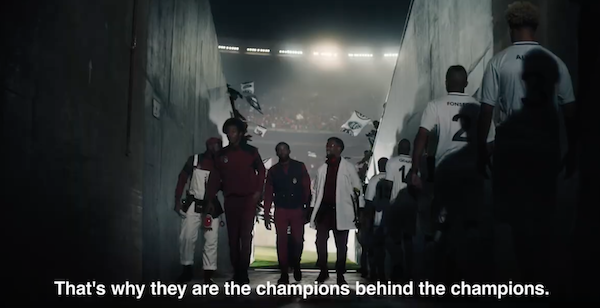
As anticipation builds toward the 2026 FIFA World Cup, Carling Black Label’s campaign explores a simple but powerful idea. Every moment of greatness on the pitch is made possible by individuals whose work happens long before the whistle blows.

From those who prepare the field of play to those who ensure every detail is in place, these are the people who quietly set the stage for champions to thrive.

This thinking builds on the brand’s long-standing association with champion fans, but shifts the lens. It moves beyond support in the stands to recognise those who embody the same discipline, consistency and commitment associated with high performance, often without recognition.

Across South Africa, this mindset is everywhere. In stadiums, in control rooms, across early mornings and late nights, there are people whose contribution may not be visible, but is always essential. Their role is not defined by the spotlight, but by the standard they hold themselves to, day in and day out.

The campaign brings this idea to life through a film that places these individuals at the centre of the story. Instead of focusing only on the players, it lingers on the moments that happen long before kick-off: groundsmen carefully marking the pitch, hands tightening goal nets into place, stadium staff preparing stands that will soon be filled with energy. These are the details that often go unnoticed, yet they form the foundation for everything that follows. By drawing a clear line between this preparation and what unfolds on the pitch, the story reinforces a simple truth: behind every moment of greatness are the champions behind the champions.

The storytelling is intentionally understated. There are no exaggerated moments, just a steady build of detail, effort and precision. It is in these moments that the idea becomes clear, not as a concept, but as a lived reality.

Kerryn Greenleaf, Brand Director for Carling Black Label, said the intention was to recognise a group of champions who rarely receive the same level of attention. ‘There are so many people who operate with the same discipline and commitment we associate with champions but do so without recognition. This was about shifting the focus and shining the spotlight and making sure those individuals are indeed recognised for the champions that they are.’

The work was brought to life in collaboration with Romance Films, under the direction of Nthato Mokgata, whose approach leans into authenticity and real, human moments rather than spectacle.

As the global spotlight turns to the FIFA World Cup, the message is clear: greatness is never achieved in isolation. Behind every moment on the pitch is a network of individuals whose consistency and commitment make it all possible.

CARLING BLACK LABEL
www.carlingblacklabel.co.za

Rogerwilco’s Research Reports Receive Professional Body CPD Approval From MASA

Rogerwilcos Research Reports Receive Professional Body CPD Approval From MASA

Rogerwilco has announced that two of its flagship industry research reports, Township Customer Experience and South African Customer Experience, have received Professional Body CPD approval from the Marketing Association of South Africa (MASA). The MASA CPD Panel has approved both reports under the Marketing category, with each report carrying 12 CPD points.

Members designated as Chartered Marketers (CMSA), Marketing Practitioners (MPSA) and Associate Marketers (MPSA) can now claim their points on completion of the approved learning process.

Marketing professionals will earn CPD points by downloading and reading the approved research reports and completing a structured assessment process aligned with MASA CPD requirements.

According to Rogerwilco, the approval reflects the growing recognition of high-quality local marketing research as a valuable source of professional learning.

‘South Africa’s marketing industry needs relevant, evidence-based insights that reflect our unique market realities,’ said Mongezi Mtati, Senior Brand Strategist at Rogerwilco. ‘These reports have been developed and refined annually over seven years to help marketers better understand evolving customer expectations and township market dynamics. Having them approved for MASA Professional Body CPD points recognises the role that research-led learning plays in advancing professional standards across the industry.’

The MASA CPD requirements for professionally designated marketers aims to ensure that designated marketers maintain and enhance their competencies through ongoing learning and engagement with approved industry content.

Enrico Du Plessis, programme leader for professional designations at MASA, said the inclusion of industry research reflects a broader shift in how professional development is recognised. ‘MASA’s CPD framework supports diverse forms of meaningful learning that strengthen professional marketing practice. Approving locally relevant research initiatives allows designated members to engage deeply with insights that contribute to professional growth and industry advancement.’

The 2025 Township Customer Experience (CPD Approval Number: MA RW 26001) and the 2025 South African Customer Experience (CPD Approval Number: MA RW 26002) reports have been developed through collaboration with strategic partners, providing marketers with data-driven trends and perspectives on consumer behaviour, brand experience and evolving engagement strategies within the South African context.

Designated members interested in earning CPD points can access the reports via the links above and follow the assessment process outlined in the download confirmation email to submit their participation.

ROGERWILCO
https://www.rogerwilco.co.za/

Cape Town Deserves More Of The OOH Budget

Cape Town Deserves More Of The OOH Budget

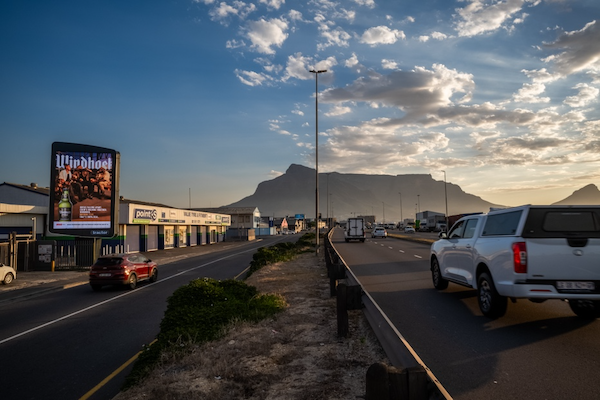
Steve Duck, Chief Revenue Officer: Media at Tractor Outdoor, says South Africa now has roughly 16,200 billboard faces, with steady growth over the past six months, and digital inventory expanding even faster, with roadside screens up around 10% year-on-year. But most of that growth continues to concentrate in Gauteng, where new sites are added to an already dominant base.

That concentration is clear when you look at how inventory is distributed. Gauteng holds around 54% of the country’s billboard stock, while the Western Cape sits at roughly 9%. In digital out of home (DOOH), the gap is just as stark, with over 500 roadside screens in Gauteng compared to just over 80 in the Western Cape.

Yet the economic picture tells a different story. Gauteng contributes around 34% to national GDP, while the Western Cape contributes approximately 14%, making it the second-largest regional economy in South Africa. In other words, OOH inventory, and by extension, spend, is significantly more concentrated than the underlying economy it is meant to serve.

The skew is even more pronounced when you look at spend, with Gauteng accounting for an estimated R170 million in monthly DOOH rate card value, compared to roughly R30 million in the Western Cape.

Consider how campaigns are actually planned. Even among the country’s largest advertisers, national DOOH campaigns tend to cluster heavily in Gauteng. The average large campaign sits at around 48 sites, but a disproportionate share of those placements are concentrated in a single province.

A more balanced national strategy would look very different. Based on economic contribution alone, roughly three out of every 10 DOOH sites in a national campaign should be allocated to Cape Town, but in reality, the city receives a far smaller share.

Less Clutter, More Impact

In Gauteng, scale comes with saturation. More sites mean more competition, with multiple brands competing for the same audience attention in the same spaces. Unless a brand is dominating spend, it becomes increasingly difficult to stand out. Presence does not automatically translate into impact.

Cape Town operates differently. With fewer sites and less visual clutter, campaigns benefit from greater visibility. The same investment could deliver a higher share of voice simply because it is not diluted by surrounding noise. It is a fundamentally different media environment; one where impact is driven by the ability to cut-through the noise.

A Consumption Market Hiding In Plain Sight

The case for Cape Town is also about consumer behaviour.

The Western Cape is one of South Africa’s strongest consumption markets, with high levels of household expenditure and some of the highest average incomes in the country. Cape Town residents rank among the top spenders on key categories such as groceries and dining out – precisely the sectors that dominate OOH investment. Yet despite this, the region remains underweight in both inventory and spend. The result is a mismatch between where consumers are spending and where brands are showing up.

The Opportunity For Smarter Planning

This is not about pulling budget out of Gauteng. It remains a critical market and will continue to showcase a plethora of national campaigns well into the future. Don’t expect that to change anytime soon. But we would argue that the current level of concentration reflects habit more than actual impact.

OOH planning has historically followed infrastructure; where sites exist, budgets follow. But as the market evolves, planners have an opportunity to be more deliberate about how investment is distributed. Rebalancing spend towards Cape Town allows brands to complement scale with impact, and to align media investment more closely with both economic contribution and consumer behaviour.

And as OOH continues to grow, particularly in digital, correcting that imbalance may be one of the simplest ways to deliver more effective campaigns.

Cape Town shouldn’t be your brand’s ‘holiday destination’, it’s the very place where OOH can have some real OOMPH.

TRACTOR OUTDOOR
www.tractoroutdoor.com

How Resilience Becomes A Leadership Discipline

How Resilience Becomes A Leadership Discipline
Kabelo Mabalane.

In a conference built around the theme SHIFT HAPPENS™. ARE YOU READY?, few speakers embody the reality of transformation more completely than Kabelo Mabalane. Mabalane’s life is a study in reinvention: from chart-topping kwaito star with TKZee and a solo career that produced multi-platinum success, to a man who nearly lost everything to addiction. He then became a pastor, bestselling author and committed endurance runner.

Mabalane will take the stage on 17 September 2026 at The Nedbank IMC, Mosaïek, Johannesburg. Modern Marketing is a proud media partner. With ten SAMA awards, more than ten Comrades Marathon finishes, and a memoir titled I Ran For My Life, Mabalane brings credibility that goes beyond celebrity. He brings perspective earned the hard way.

‘Mabalane represents the most honest kind of leadership, the kind forged in failure, faith and the relentless decision to keep going,’ said Dale Hefer, CEO of the Nedbank IMC. ‘Our 2026 theme asks marketers if they are ready for shift. Mabalane does not just say yes. He shows what it costs, what it changes, and what becomes possible on the other side.’

Mabalane’s keynote will explore themes not often addressed with enough honesty on marketing stages: how to perform under pressure without losing yourself, how to rebuild trust after crisis, how accountability shapes culture, and how resilience becomes a leadership discipline.

His voice counts because marketers are operating in an environment that rewards visibility but punishes fragility. Brands are expected to move fast, lead with conviction and recover well when things go wrong. Mabalane’s journey speaks directly to that tension.

Through music, ministry, wellness advocacy and community work, he has built a public life that connects influence with impact. He has shared stages with global artists including Jay-Z, 50 Cent and Rihanna. Today, his strongest contribution may be in rooms where leaders are confronting difficult questions about purpose, pressure and second chances.

‘Marketing is not just about campaigns,’ said Mabalane. ‘It is about connection, trust and showing up when it is hard. I have learnt that on stages, on the road, in faith communities and in the quiet work of starting again. I am honoured to bring that perspective to the Nedbank IMC.’

The Nedbank IMC 2026 will again feature a curated, not crowdsourced, speaker line-up, blending global insight with African context. Thousands of students will also attend virtually at no cost through the YOUTH1000 programme in partnership with MASA.

Africa’s biggest marketing conference, the Nedbank IMC advances marketing’s place in the boardroom and uplifts young talent across the continent. Proudly endorsed by MASA and PRISA. Book your tickets here.

NEDBANK IMC CONFERENCE
www.imcconference.com

Responsible Marketing Needs To Be About Stewardship Rather Than Persuasion

Responsible Marketing Needs To Be About Stewardship Rather Than Persuasion
Nombulelo Ntakakazi, Milpark Education.

Nombulelo Ntakakazi, Marketing Academic and Lecturer at Milpark Education, discusses responsible marketing’s role in a marketplace where confidence must be earned. There is no doubt that consumer trust is evolving. Shoppers are willing to spend 51% more with retailers they trust compared to those they do not, but that trust is fragile.

In fact, building trust requires an average of four good experiences, while it takes just two bad experiences for it to be lost. As a result, conversations around consumer protection and trust are gaining momentum, one just has to look at the high volume of recent product recalls and tightening packaging and disclosure regulations to see that responsible marketing is no longer a ‘nice to have’.

It is becoming the foundational requirement for earning and sustaining confidence in an increasingly complex marketplace where consumers are more exposed, more connected and more vulnerable than ever before.

For years, responsible marketing was treated as a regulatory checkbox. Today, it defines whether brands remain relevant. As the marketplace shifts from aisles to apps, product trust is no longer experienced through physical touch but through information, features that are highlighted, emphasised or even omitted. This shift is especially clear when we compare the bricks and mortar to the digital present. Many of us grew up watching our parents scrutinise groceries at the end of the month. comparing labels, dates etc, a slow, methodical and deliberate process. What felt like unnecessary fuss was, in fact, a simple risk management system grounded in physical inspection. Today, that safety net is gone.

Many consumers now shop in a digital marketplace where products, sellers and sometimes even countries of origin remain unseen. Instead, decisions are guided by images, reviews, star ratings, influencer endorsements, limited-time offers and algorithmic ‘best sellers’. These cues feel helpful, but they are in fact, not neutral. They are designed to persuade, accelerate choices, or direct action in particular ways. And as a result, the future of marketing is being shaped not by louder messages, but by ones that respect a consumer’s right to understand and choose.

When information is incomplete, misleading, or optimised purely for conversion, we see the consequences. Unsafe products slip through, misleading claims go viral and sellers disappear before consumers even realise they’ve been duped. And by the time regulators intervene, the harm is already done.

That is why the call for ‘confident consumers’ resonates so strongly this year. Confidence today cannot be built on blind trust or intuitive judgment rather it comes from understanding how digital systems work, how products are ranked, how recommendations are generated, what information is missing and when urgency is artificially created.

Transparency and accountability are key to directly shaping long-term value. Compliance should not just be obligatory. Consumers who feel misled disengage. Consumers who feel informed stay.

Confidence is also not created at checkout. It is cultivated long before. through honest communication, accessible information and marketing practices that respect consumer rights.

This is also where marketing education becomes essential. Future professionals need to understand not only how to compete in complex markets but also how to shape them. and more so, how to shape them responsibly.

Marketing, business and digital strategy will continue to overlap, and the next generation of marketers need to play a critical role in building environments where safe products are visible, informed choices are possible, and consumer confidence is earned rather than engineered or driven by algorithms. Responsible marketing can no longer just be about persuasion; it needs to be about stewardship. And as the digital marketplace continues to evolve, the opportunity is clear: build systems that elevate transparency, reward ethical behaviour and put consumer trust at the centre.

MILPARK EDUCATION
https://www.milpark.ac.za/

Brands Should Learn About Customers As People And Not Just As Data Points

Brands Should Learn About Customers As People And Not Just As Data Points
Mogorosi Mashilo, Trender.

Mogorosi Mashilo, Founder and Director at Trender, a VML supplier development partner, says research only becomes useful when you know how to use it effectively. That starts with gathering the right insights to achieve your specific goals. It also means knowing how to interpret the information you receive and use it strategically.

Here is where many South African companies get it wrong:

1. Misalignment Of Market Research And Strategy

Research gives you truth, insight gives you direction, and strategy gives you action.

When you approach market research from a place of assumption rather than curiosity, failure is almost inevitable. What people say is often not as valuable as understanding the broader context that’s influencing their behaviour.

We have found that starting with consumer research uncovers the real behaviours, needs, tensions, and motivations that drive people’s decisions. From there, we analyse patterns and meaning, turning information into clear insights. And it is those insights that become the foundation for strategy.

When strategy starts with research, marketers can successfully:

– Define the opportunity.
– Shape the brand’s role in people’s lives.
– Guide messaging and creative direction in a way that matters to customers.

2. Assuming International Findings Apply To South Africa

Too often we see brands being influenced by market research in other countries. They apply those principles in the local market and are disappointed when South African customers do not respond the way the very reputable, well-funded report said they would.

While this information can be valuable as a starting point, providing a global perspective or insight into other markets, it’s risky to rely purely on international research. People do not live in global averages; they live in local realities.

In a market like South Africa, consumer behaviour is shaped by a unique mix of:

– Cultural diversity and language.
– Economic inequality and pricing sensitivity.
– Township vs urban retail dynamics.
– Informal trade (e.g. spaza shops) vs formal retail.
– Deeply rooted social norms and community influence.

Even countries that have similarities in some of these areas lack the exact cultural nuances that we see in South Africa.

International insights often assume stable infrastructure, consistent income, and Western consumption habits, which do not always translate locally. Gathering local insights ensures that strategy is grounded in how the people we are speaking to actually live, choose, and buy. Ultimately, relevance is what makes strategy work, and you only get that when your strategy is informed by local research.

3. Focusing Exclusively On Online Research

Digital tools have allowed market research to expand in ways that would never have been possible previously. But as marketers, we must be careful not to become too reliant on them, especially in South Africa.

While online research can provide scale and speed, it tends to over-represent more connected, urban, and higher-income audiences. This leaves out a significant portion of the population whose realities, behaviours, and decision-making contexts are shaped offline.

For comprehensive insights that more accurately represent the South African population, offline methodologies are critical. They allow you to access real customer nuance, the unspoken behaviours, cultural codes, environmental influences, and social dynamics that do not always translate into surveys or digital analytics.

Being physically present in communities, homes, or retail environments (like spaza shops) gives you a deeper, more human understanding of how people actually operate in the real world.

More importantly, offline research reminds us that consumers are not just data points. They are people with emotions, habits, constraints, and cultural identities. Face-to-face engagement enables richer, more honest responses. You do not just gather what people have to say, but also how they say it, what they do, and what they might not even realise they are doing.

4. Making Customers Feel Stalked

Customers like to feel seen, but they do not like to feel watched. As insights become more available, concerns about privacy are top of mind for many people. We have the technology to create hyper-targeted messaging but having access to a powerful tool means learning when to exercise restraint. Brands win loyalty when it feels like we listened. The danger is that we stray into the territory of uncomfortable surveillance and lose our customers’ trust.

We talk about practising ‘respectful understanding’. Brands use consumer insights sensitively when they move from targeting people to serving people. Consumers are more comfortable when insights are used to improve their experience, better products, clearer messaging, meaningful solutions, not just to push sales. Use them to speak to a truth, not a person.

5. Focusing On Volume

Collecting more data does not guarantee better decisions. In fact, it often creates noise and confusion. We have worked with many brands that have no shortage of data points on their customers, but none of them is useful.

The difference between data and market research is selectivity. Brands should start with a clear question or objective, then focus only on the metrics that help answer it meaningfully. The goal is not to accumulate information, but to uncover insights that drive action. By combining the right data with human understanding and context, brands move from simply reporting numbers to shaping strategies that are relevant, focused, and impactful.

Data, even at scale (so-called ‘big data’), is superficial. Yes, you can observe trends in spending patterns, product choice and so on, but it’s important to avoid the trap of not going deeper. In the market research we do, we’ve found it’s rarely the case that the valuable insights you need are the responses you see at face value.

People have become suspicious and guarded about their personal information and rightfully so. When we take the time to learn about our customers as people and not just as data points, we create a more valuable experience for customers and brands alike.

TRENDER
https://trender.co.za/

VML South Africa Scoops Clio Awards For Vaseline’s Viral Heritage Day Campaign

VML South Africa Scoops Clio Awards For Vaseline’s Viral Heritage Day Campaign

VML South Africa and Vaseline are flying the South African flag high at this year’s Clio Awards, having picked up two awards: Silver in Social Media Craft, and Bronze in Social Media.

The awards are for Vaseline’s social media post Mntana ka Gogo, part of the brand’s Heritage Day campaign, which went viral in September last year.

In a beautiful moment of nostalgia, South Africans rushed to the comments with personal anecdotes. Others shared their pride at seeing quintessential African stories celebrated authentically. It dominated local headlines and news feeds.

But the post didn’t stay within South Africa’s borders; it resonated with audiences around the world. Now, its international appeal has been amplified even further through its recognition at the prestigious global Clio Awards, proving that when an idea is rooted in something real, it travels.

‘The most surprising thing for us was how, as much as this was a local campaign, so many people related to it across the world. It was amazing to see,’ said Nhlanhla Ngcobo, Executive Creative Director at VML South Africa, who led the creative team behind the campaign. ‘The insight tapped into the nostalgia of many childhoods worldwide. I think that is why people have such a deep emotional connection to it. People started sharing their own stories and the memories they have in relation to the story of the ad. All of that played a big role in this campaign landing in the way that it has, and it’s really humbling to have it garner the attention and accolades it has so far!’

Widely regarded as one of the most respected international honours in advertising, the Clio Awards celebrate creative excellence across disciplines including film, digital, design and integrated campaigns.

Judged by leading industry figures from around the world, the Clios recognise work that not only demonstrates high levels of craft but also pushes boundaries and makes a meaningful impact. To win is a significant achievement in an intensely competitive global field.

Power Of Hyper-Local Stories

Vaseline’s Heritage Day campaign tapped into deeply familiar South African truths: the brand’s enduring presence in homes across generations and its association with love from a caregiver. Through a simple yet evocative narrative, the work captured how an everyday ritual can carry meaning and memory, particularly pertinent in the context of Heritage Day.

The image, which was shot in 40 minutes and stars the daughter of one of the creatives, struck a chord locally for its familiarity. And its powerful storytelling and human connection attracted attention from global audiences and juries alike.

Rather than try to be universally appealing, it did the opposite, leaning into specific cultural nuances and lived experiences. The result is proof of a principle that’s often talked about, but that many brands shy away from putting into practice: the more honestly local a story is, the more universally it can land.

African Stories Excelling On The Global Stage

In addition to the two Clio wins, the post has also been announced as a finalist for the One Show in the Social Media Social Post, Single category.

These accolades demonstrate the strength of the idea, the quality of its execution and the importance of a trusting agency-client partnership.

‘I hadn’t actually seen the creative before it went live so it was really an exercise in trust,’ said Kenosi Matsebatlela, Head of Marketing for Vaseline, speaking on The Lead Creative Podcast. Matsebatlela said she bought into the simplicity and authenticity of the idea. ‘We were speaking about our people. How we resonate with the people who actually use and purchase our products.’

Seeing local work that is so deeply rooted in South African culture gain traction on the global stage shows that world-class work doesn’t always require global thinking, but rather conviction. When you trust the specificity of your story, the world tends to listen.

VML SOUTH AFRICA
https://www.vml.com/south-africa

PRISMS Awards 2026 Invite Entrants To Submit Their Most Impactful Work

Prisms Awards 2026 Invites Entrants To Submit Their Most Impactful Work

The Public Relations Institute of Southern Africa (PRISA) has officially opened the call for entries for the 2026 PRISMS Summit and Awards. The 2026 awards are anchored in the theme Kaleidoscope: Patterns of Impact Across Past, Present and Future, a concept that reflects the evolving role of communication in shaping meaning, influencing systems and contributing to sustainable development.

Much like a kaleidoscope reframes familiar fragments into new patterns, the theme recognises how strategic communication brings Africa’s past, present and future into sharper focus, revealing new possibilities with every turn.

PRISA invites practitioners, agencies, corporates, NGOs and government practitioners across the continent to submit their most impactful work. The entry portal opens this May and closes on 2 August 2026, meaning a three-month entry window this year.

PRISA President Bradly Howland said the theme arrives at a pivotal moment for the continent and the profession.

‘Africa’s communications landscape is expanding, maturing and asserting its voice. PRISA continues to bring the continent’s practitioners together, strengthening the profession through shared standards, learning and purpose,’ said Howland. ‘As we advance the African Declaration, currently underway, PRISA remains a lighthouse for communicators across the region, guiding the industry towards ethical practice, meaningful impact and a unified professional identity. Kaleidoscope speaks directly to this moment, reminding us that when we shift perspective, we unlock new patterns of possibility for Africa.’

Chairman of the PRISMS Awards 2026 Committee, Paul Reynell, emphasised the theme’s importance in shaping the industry’s contribution to society.

‘Kaleidoscope: Patterns of Impact Across Past, Present and Future calls on our profession to elevate its thinking and responsibility. The work we do influences public understanding, strengthens institutions and shapes the trajectory of communities. This theme challenges practitioners to bring clarity to complexity and to use communication as a force for positive, measurable change. 2026 PRISMS Summit and Awards celebrates work that not only tells powerful stories, but drives transformation, contributing meaningfully to the future of Africa and her people.’

In support of the theme, PRISA has introduced a new special category for 2026: Kaleidoscope, Patterns of Impact Across Past, Present and Future. This category recognises an exceptional PR campaign in any sector that demonstrates a meaningful or measurable contribution to sustainable development in one or more of the following areas: Economic Growth and Innovation; Climate Resilience and Environmental Stewardship; Social Equity, Health and Human Development; and Governance, Accountability and Ethical Leadership.

The PRISMS Awards remain the benchmark for excellence in strategic communication across Africa, celebrating work that is innovative, ethical and impactful. Entrants are encouraged to demonstrate clear objectives, strategic insight, creativity, measurable outcomes and alignment with responsible communication practice.

Entries must be submitted via the official PRISMS portal before 2 August 2026.

PRISMS AWARDS
https://www.prisa.co.za/

Registration Is Now Open For FAME Week Africa 2026

Registration Is Now Open For FAME Week Africa 2026

Hosted by the City of Cape Town, FAME Week Africa is a truly continental and global marketplace, bringing together industry leaders, creatives, and decision-makers from across Africa and around the world.

From Lagos to Nairobi, Johannesburg to Paris and beyond, the event serves as a gateway into Africa’s rapidly growing creative economy, connecting international studios, platforms, buyers, and investors with the continent’s talent, stories, and opportunities.

Registration is now open for FAME Week Africa 2026, taking place from 28 October to 1 November 2026.

Building on the momentum of a transformative 2025 edition, which underscored the industry’s shift toward scalable business models and global competitiveness, FAME Week Africa 2026 continues to position Africa at the forefront of the global creative economy.

‘FAME Week Africa has become a critical meeting point for the global creative industry to engage with Africa’s content, talent, and opportunities,’ said Martin Hiller, Portfolio Director of FAME Week Africa. ‘This is where connections are made, partnerships are formed, and African stories are positioned for international audiences. In 2026, we are doubling down on our role as a marketplace that drives real business outcomes across the creative economy.’

As Host City, the City of Cape Town continues to play a key role in supporting the growth of Africa’s creative industries.

‘Cape Town is proud to host FAME Week Africa, a platform that showcases the city and the continent as a hub for creativity, innovation, and investment,’ said a JP Smith, the City’s Mayoral Committee Member for Safety and Security. ‘The City of Cape Town’s support for FAME Week Africa forms part of our broader strategy to back initiatives that celebrate creatives, stimulate the economy, and create job opportunities for our residents, while also spotlighting African talent and storytelling.’

FAME Week Africa aligns creators, commissioners, and distributors to move bold stories from development to global audiences. The programme features four flagship events:

– MIP Africa: Africa’s B2B market for film, television, and digital content distribution and co-production.
– Muziki Africa : A dynamic gathering for the music industry.
– African Fashion Forum :Connecting fashion with film, television, and music.
– FAME Shorts Film Festival: Showcasing bold storytelling from emerging and established filmmakers.

Destination Focus: France

FAME Week Africa 2026 will spotlight France as its Destination Focus, strengthening cultural and commercial ties between Africa and one of the world’s most influential creative markets. The initiative creates a dedicated platform for French producers, distributors, institutions, and investors to engage directly with African partners, unlocking co-production opportunities, funding pathways, and international distribution.

‘France is honoured to be the Destination Focus of FAME Week Africa 2026. This recognition reflects a shared commitment to strengthening ties between African and French creative industries. By supporting co-production, professional exchange, and access to international markets, FAME Week Africa offers a framework for building enduring partnerships and ensuring wider circulation of creative works between Africa and Europe.’ said David Martinon, Ambassador of France to South Africa.

Pre-registration offers industry professionals a strategic advantage, including early access to programme announcements, the curated matchmaking platform, and the ability to schedule meetings in advance.

With dedicated content streams across Film and TV, Animation, Music, and Fashion, attendees will gain insights from global experts while connecting with key players across the value chain.

FAME WEEK AFRICA
https://register.fameweekafrica.com/register

Portfolio Versatility Is A Resilience Strategy For Brands

Portfolio Versatility Is A Resilience Strategy For Brands
Domaine Rautenbach, Jacobs.

Domaine Rautenbach, Senior Brand Manager for Jacobs, says consumers are navigating rising living costs, hybrid working and an abundance of choice. As a result, their behaviour is no longer linear. The same shopper can be value-driven in the morning, indulgent in the afternoon and convenience-led by evening. They brew coffee at home, pick something up on the go between meetings and explore new flavours over the weekend.

In this environment, growth is no longer about pushing one winning product harder. It is about building a portfolio that flexes with real life.

Portfolio versatility has become one of the most powerful growth levers for brands operating in volatile markets.

Fragmented Behaviour Demands Flexible Brands

Modern consumers have become more intentional. They are not abandoning brands, but they expect brands to meet them across multiple moments rather than a single need.

This fragmentation shows up in three key ways:

– Occasions: Morning routines, work breaks, and social moments now demand different product formats and flavour profiles.
– Budgets: Consumers trade up and down within the same category depending on need, not loyalty alone.
– Channels: Retail, convenience, cafés, and experiential spaces all influence how products are discovered and consumed.

Brands that rely on a narrow offering struggle to remain relevant across these shifts. Those with a broader, well-curated portfolio can maintain frequency, protect margins, and build resilience.

Coffee As The Blueprint For Portfolio-Driven Growth

The coffee category offers one of the clearest examples of how versatility within a single brand ecosystem fuels sustainable growth.

Coffee is no longer one product consumed in one way. It spans instant coffee for everyday reliability, on-the-go sachets for convenience, flavoured cappuccinos and lattes for indulgence, ready-to-drink (RTD) formats for mobility, and whole beans for craft and exploration.

Each format serves a distinct consumer mindset and moment. Together, they create a brand presence that follows the consumer throughout the day – from morning ritual to social connection to evening wind-down.

Rather than competing with itself, a strong portfolio builds complementary roles. The instant range anchors trust. Flavoured variants drive experimentation. Whole beans elevate perception and craftsmanship. This is how brands move from being a product to becoming part of a lifestyle.

Versatility Protects Both Relevance And Revenue

From a business perspective, portfolio breadth does more than expand choice. It enables brands to:

– Drive frequency through multiple touchpoints.
– Protect margins by balancing value and premium segments.
– Reduce risk by avoiding dependence on a single SKU.
– Strengthen loyalty by keeping consumers within one ecosystem.

In uncertain economic conditions, this adaptability becomes a strategic advantage rather than a nice-to-have.

Innovation Must Be Meaningful, Not Cluttered

Portfolio growth is not about launching endlessly. It is about launching intentionally.

True versatility comes from understanding real consumption moments and designing products that earn their place. Innovation should respond to clear needs: convenience, indulgence, craft or connection.

The challenge is not to innovate more, but to curate better.

Moving With Consumers, Not Against Them

Growth in the next decade will not belong to brands that shout the loudest behind a single hero product. It will favour those that design portfolios around the reality of how people live, spend, and choose.

Portfolio versatility is not just a marketing strategy; it is a resilience strategy. It allows brands to remain relevant across economic cycles; lifestyle shifts and cultural change.

The coffee category shows what’s possible when one brand can serve multiple needs, from instant to indulgent, home to on-the-go, routine to exploration. When a portfolio is built intentionally, it does more than drive growth, it embeds the brand into the rhythm of daily life.

In a world of fragmented behaviour, that kind of presence is no longer optional. It is the strongest growth lever of all.

JACOBS
www.jacobscoffee.co.za

This is Modern Marketing