
Home Blog Page 416

Suits And Sneakers Host Marketing In 2019 Event

Suits And Sneakers Hosts Marketing In 2019 Event
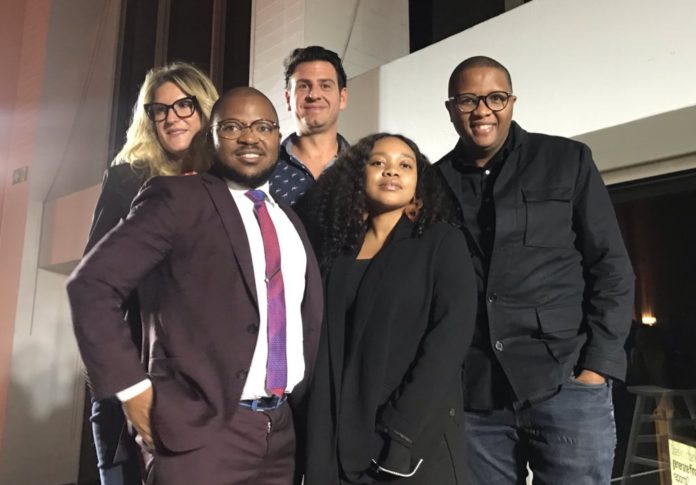
Back: Lauren Woolf (Founder of MRS WOOLF) and Mike Sharman (Founder of Retroviral). Front: Khaya Dlanga (Chief Marketing Officer of rain South Africa), Owethu Makhathini (Founder of Makhathini Media) and Xolisa Dyeshana (Chief Creative Officer at Joe Public United).

On 6 February 2019, marketing professionals gathered at The Park, House of Events on 7 in Hyde Park, for the Marketing In 2019 Event hosted by Suits & Sneakers under the hashtag #SSMarketing19.

During the event, panellists hosted by founder of Suits & Sneakers Mark Sham dissected the best marketing practices for 2019 by sharing some of their thinking, tools and strategies for getting the best out of your marketing this year.

Speakers:
• Mike Sharman – Founder of Retroviral and author of ‘The Best Dick’.
• Lauren Woolf – Former CMO of Ogilvy South Africa + founder of MRS WOOLF.
• Owethu Makhathini – Founder of Makhathini Media.
• Khaya Dlanga – Chief Marketing Officer of rain South Africa.
• Gareth Cliff- Founder of CliffCentral.com.
• Xolisa Dyeshana – Chief Creative Officer at Joe Public United.

Some tips from the panellists:

‘Marketers should experiment at the edges, move fast and be OK with dying as that is a sign of something new to come,’ – Khaya Dlanga.

‘Credibility is far more important than popularity, so be a credible marketer instead of the most popular one. In this day and age, content is decided by the audience, not by the host anymore,’ – Gareth Cliff.
Suits And Sneakers Host Marketing In 2019 Event 1
Panel discussion: Gareth Cliff (Founder of CliffCentral.com), Khaya Dlanga (Chief Marketing Officer of rain South Africa) and Mark Sham (Host and Founder of Suits & Sneakers)

Xolisa Dyeshana stated, ‘Everyone wants to grow but no one knows where the growth will come from, hence we need to consider changing the marketing systems. Be willing to take risks and encourage and participate in a lot more collaboration projects. Go out there, learn, and actually start caring and understanding your target market.’

Lauren Woolf commented, ‘Marketers that choose creativity over conformity are more likely to succeed. I do encourage marketers to tap into the Artificial Intelligence (AI) and Virtual Reality (VR) tech space but do not forget to build the relationship and trust with the people with whom you’re dealing. Always ask yourself: what do you do? Why do you do it? And who cares?’
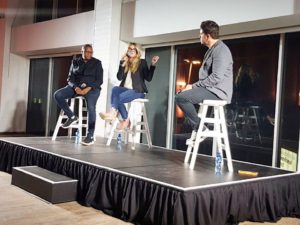
Panel discussion: Xolisa Dyeshana (Chief Creative Officer at Joe Public United), Lauren Woolf (Founder of MRS WOOLF) and Mark Sham (Host and Founder of Suits & Sneakers).

Owethu Makhathini said, ‘The people who are mostly marginalised are usually the most creative. So we need to brew and nurture marginalised people. Agencies should have space that allows people to be creative even if it doesn’t meet their immediate ROI.’

Mark Sharman concluded, ‘Love and care for your stuff first and let your content feedback be from the stuff.’
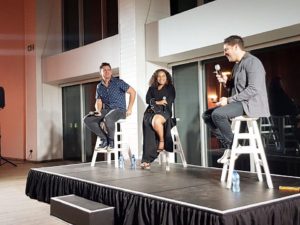
Suits And Sneakers Host Marketing In 2019 Event 4
Panel discussion: Mike Sharman (Founder of Retroviral), Owethu Makhathini (Founder of Makhathini Media) and Mark Sham (Host and Founder of Suits & Sneakers)

Suits & Sneakers is running a survey to understand ‘Which is the best company to work for’. They would like your help by taking the survey. They will be hosting an event to reveal all the details. You can take the survey at: SSBestCompany. 

SUITS & SNEAKERS
info@suitsandsneakers.co.za
www.suitsandsneakers.co.za

Nielsen Releases Shoppergraphics Report

Nielsen Releases Shoppergraphics Report

South African shoppers are beset by a storm of rising prices and it seems their shopping baskets are definitely feeling the pain with the average consumer now hyper-aware of what they’re purchasing.

As a result, the latest Nielsen Shoppergraphics Report – which looks at shifts in consumer purchasing behaviour within 4,000 representative households across the country on a quarterly basis – reveals local consumers have dropped an unprecedented three grocery categories from their shopping basket.

Nielsen CPG Client Service Director Kelly Arnold commented, ‘It’s no secret that South African consumers are experiencing a severe wallet squeeze thanks to a raft of rising costs including spiralling petrol and electricity prices, the implementation of sugar tax and a VAT increase to 15%. The effect that this has had on consumer behaviour is profound and we’re now clearly seeing shoppers jumping out of some categories and consolidating their spend.’

As the household basket has become more expensive, we have also seen consumers limiting the number of trips, to 60 trips a year on average, and the top-up shop that used to be twice or three times a week has dropped to once every two weeks, with spend per trip now averaging at R210.’

Overall the volume of sales has grown by 2.8%, with the monetary value of sales growing at about 6.3%. ‘That said, we’re simply not seeing massive growth with consumers shopping less and spending slightly less; although there are instances of upgrading to larger pack sizes which may be a contributory factor to the small levels of growth.

‘Interestingly, the repertoire or number of stores that consumers visit has increased to 4.9 retailers a year. This is as extremely price conscious consumers seek out deals and are more prepared to shop around.’

An upswing in branded retail

The Shoppergraphics Report also revealed a shift towards modern branded retail outlets away from independent retail within the LSM 1-6 market. ‘The growth in usage of branded retail chains by this market could be due to the fact that more retail chains have opened stores in previously under-served areas with large, traditionally modern trade retailers having invested in this sector in the last two years. We also know that branded retail offers more competitive pricing and is therefore seen as less expensive,’ said Arnold.

In contrast, higher LSM groups are increasing their spend in independent retail. ‘The type of behaviour driving this trend is that higher LSM groups are going to branded retail for their big monthly shops and utilising independent retail outlets to do their more frequent top-up shopping. For example, ‘I’m on my way home to Soweto and I stop at the taxi rank where there is a Spaza shop nearby, and grab a couple of things as a top-up’, resulting in LSM 7-10 spending more there,’ explained Arnold.

To counter these trying times, retailers need to ensure they have the right composition of goods for their shoppers, at the right price given that positive price perception is extremely important for future success. Arnold stressed, ‘Retail data has also never been more important in order to move past tough times and Nielsen’s broad reach means an unmatched national footprint allowing for not only accurate data but in-depth understanding and insights into what that data actually means.’

What’s in and what’s out?

Drilling down to category performance, Arnold reported that consumers now purchase around 68 categories per year. ‘We have seen a move towards consumers spending more on dry groceries and perishables with staples remaining stable. The highest amount of spend is happening in frozen chicken and ready to eat cereals, sugar and UHT milk (a long-term trend) and canned meat. The latter might be because of the listeriosis crisis earlier this year, which compelled many consumers to switch from cold meats

Looking at the specific categories that have experienced the biggest declines Household/Cleaning Goods which are no longer seen as a necessity have dropped by 6% and Beverages by 6%, with Carbonated Soft Drinks (CSDs) experiencing particularly negative performance. ‘In this regard, contributing factors may well be the shift in volumes from 500ml to 450 ml size bottle within some of the top brands as well as an influx of other brands carving out a market share for themselves and now spreading their national footprint,’ explained Arnold.

NIELSEN www.nielsen.com/za/en.html

Nederburg Runs #TellMyStory Campaign

Nederburg Runs #TellMyStory Campaign

Nederburg recently set out to celebrate South Africans forging their own paths in their own inimitable ways, via an exciting national marketing campaign entitled #TellMyStory. Aimed at reflecting Nederburg’s multitude of stories, given a history that spans more than 200 years (since 1791), it also mirrors the winery’s innate nature to do things in their own unique manner.  

Nicola Coubrough, brand manager for Nederburg in South Africa explained, ‘Nederburg’s #TellMyStory campaign served as an open platform for consumers to submit their unique stories of how they’re doing life their own way to stand a chance to win their share of R200,000.’

To launch its #TellMyStory campaign, Nederburg collaborated with up-and-coming South African designer, Tshepo the JeanMaker, as well as popular street artist, Russell Abrahams, in terms of online video clips portraying their unique stories.

Tshepo Mohlala was born in Lydenburg and raised in Tsakane, a small township situated in the east of JohannesburgN. He founded his business in late 2015 in a quest to live out his passion for denim, which he says was inspired by his aunt’s classic yet quirky personal style. The stylish denim wear he creates is universal and timeless with original and eccentric nuances.

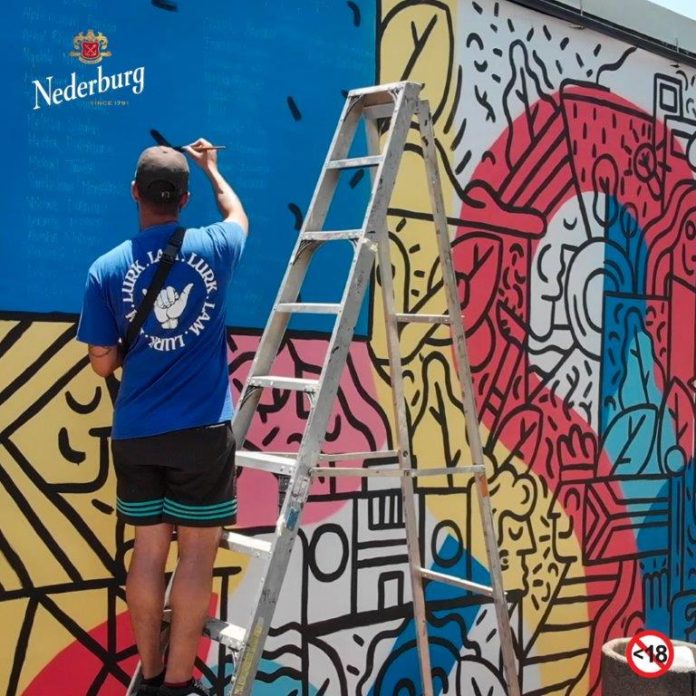
‘We also commissioned Russell to create a huge street art mural in Johannesburg’s bustling Maboneng district, using 50 of the consumer stories entered into the competition as inspiration. This public piece of art is on display until the end of February. In addition, we have featured quite a few consumer stories on our social media pages throughout the campaign period.’

‘The Tshepo the JeanMaker brand also evolved from my love for story-telling – something that’s been a part of my life since I can remember. I grew up listening to tales told by my grandmother. She was a pastor, and used story-telling as a vehicle to spread a message of hope within our impoverished community. I personally experienced the impact. Additionally, I believe that jeans carry personal stories and the more they age, the more sentimental they become to the wearer,’ explained Mohlala.

Made in Johannesburg, the Tshepo the JeanMaker products are distributed nationally and in neighbouring countries including Botswana, Lesotho and Zimbabwe.

A Cape Town-based illustrator, graphic designer and street artist, Abrahams was born and bred in the Cape Town. A graphic design graduate from CPUT (Cape Peninsula University of Technology) and a participant in the 2014 Design Indaba Emerging Creatives Programme, Abrahams is intent on conveying narratives and messages through his illustrations and street art. His work is inspired by a melange of local people and cultures, characterised by bold colour, a unique graphic style and playful nature.

‘My illustrations are bold and graphic,’ he explained. ‘I’m known to work in a very local style with vibrant colours. It stems from the society in which I live. I like for my artwork to reflect my surroundings and the pulse of our nation. There are so many interesting vibrant stories – narratives with depth – to portray!

‘I established my illustration studio to help provide young artists a leg up in the industry. I’m passionate about mentorship and creating new platforms of expression. I believe that together we can uplift communities and heal the hood with colour.’

https://www.youtube.com/watch?v=Y0KDo7vV0WQ
 
To conclude the campaign, the cash prize winners, and their chosen partners, are all being treated to a unique dinner experience hosted by the brand together with well-known South African chef, Zola Nene, in Johannesburg and Cape Town during March.

‘We’re doing so to celebrate our winners as well as to highlight Nederburg’s sponsorship of Nene’s latest television series, Celeb Feasts with Zola. The 13-episode show is currently being broadcast on DStv’s Mzansi Magic channel. We are pleased to have received hundreds of #TellMyStory entries over the three-month campaign period and look forward to rewarding our winners for their participation,’ Coubrough concluded.

https://www.youtube.com/watch?v=35AzpugZDSk

NEDERBURG nederburg.com

Tips Brands Should Consider When Building And Maintaining A Website

Four Important Points Brands need To Consider When It Comes To Building And Maintain A Website
Image source: www.lynda.com

David Jenkins and Chris Avery, founders and partners of digital marketing agency MickeyLlew, state that they are always stunned by big brands spending millions on their websites, while ignoring the role that search engine optimisation (SEO) plays in their overall marketing strategy.

In an increasingly digital business environment, your website is your most important tool for attracting customers, obtaining email addresses for further marketing activity and communicating important offers and information. Furthermore, people using Google tend to trust the top organic search results rather than paid ones (where anyone can feature with little effort). First page websites get 91.5% of Google traffic, while being top on page one nets you 32.5% of the traffic.

Getting Google to organically see your website before your competitors’ site is a delicate art and science that calls for a unique skillset. You wouldn’t call an electrician when the pipes connected to your geyser bursts or when you need to install a new one, but a plumber. While most electricians can repair the electrical element, they don’t fully understand the bigger picture of water management. Similarly, many developers might feel they have a good understanding of SEO but fail to recognise that it is a specialised discipline and not an add-on. They often miss important steps that would see their websites rank at the top in any given search.

Consider these four important points when planning to build and maintain your website so you give yourself the foundation required to rank well in organic search.

1. Choose the technology

We recently worked with a company that had spent a huge amount of money on a very slick website only to find, once it launched, that the language used to build it made it impossible for Google to index the site unless specific technology was introduced that would be a huge expense. They had to re-build the entire website from scratch, with a different language to solve this problem.

It’s too easy to get caught up in beautiful looking aesthetics that aren’t SEO-friendly at all. Make sure to pick a web development language that is easily crawled by Google. When in doubt choose tools and languages that are known to be crawler friendly – any of the tech solutions such as WordPress, Umbraco, Shopify, Magento will do the job, depending on your budget of course.

2. Ensure SEO is out the box

Whatever tech you use should offer the ability to handle all SEO requirements out of the box. This would include: URLs, Title Tags, H1s, Meta Descriptions, URL Redirects, as well as separation between URL, Title and H1 at a base level. This is just the tip of the iceberg and the complexities of search go far deeper but, many of these Content Management Systems (CMS) are designed with SEO in mind. This is because it is becoming a core requirement when selecting technology built to last and compete in the market.

3. Research and write content that works

We recently worked with another company that created pages talking about ‘home lending’, which was searched about 260 searches a day. We did some quick keyword research and changed the term to ‘home loans’, boosting the number of search results to 1900 per day. Using the right terms in your web content doesn’t have to be a guessing game. You can use tools like Moz, KWFinder, Keyword Tool, SERPS and many others to make sure that every word goes the extra mile in attracting the right eyes to your pages and further improving your exposure in the right places.

4. Find harmony in the team

A developer’s job is purely technical, ensuring that the core functionality works as required and aligns with the technical specification. However, this becomes more complex when you involve specialists from other areas (Front End, SEO, CRO, UX etc) and it’s common for specialists to disagree. The user experience (UX) person might want a certain functionality that the developer says isn’t possible or ideal.

The graphic designer might disagree with the user experience person putting too many buttons at the top of the page. Each of these people can miss the bigger picture, which is to drive traffic. Every part of a project needs to be done with this in mind, so the website is ranked at the top of every search associated with the brand, product or service. The SEO person can help ensure it is steered in the right direction.

While a multitude of different players are involved in building a website, it’s ultimately the channel owner who is responsible for the SEO, not the designer, or even the developer. It is up to you as an SEO manager to ensure that all the various technical people play nicely together and align with the bigger goal, which is delivering traffic, conversions and increasing the bottom line. Employing an SEO resource/consultant at the beginning may come with an additional cost, but in the long run it could save you millions and months in lost time, and more importantly, bring the right leads to your site, quickly.

MICKEYLLEW
+27814498506 
hello@mickeyllew.co.za
www.mickeyllew.co.za

Scan Display Takes Home Four Exhibition Industry Awards

Scan Display Takes Home Four Exhibition Industry Awards
Scan Display team.

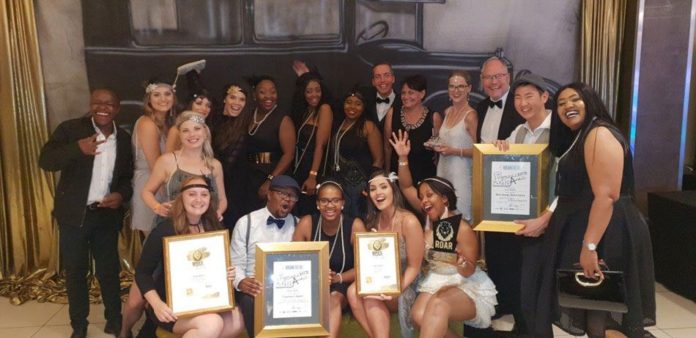
Scan Display was recognised by local exhibition industry associations Association of African Exhibition Organisers (AAXO) and Exhibition & Event Association of Southern Africa (EXSA), at their combined awards evening at Montecasino.

Scan Display won the following four awards:

• EXSA’s EXSA-llence Award for Best Design Stand in the Custom Stand 13–24sqm category. This was for the South 32 stand at Mining Indaba 2018.
• EXSA’s Chairman’s Award was presented to Scan Display’s Financial Director, Moses Nefale, for his contribution to the industry in his role as EXSA’s Treasurer.
• AAXO’s ROAR Award for Best Stand in the 36sqm and below category. This was for Scan Display’s own stand at Madex 2018.
• AAXO’s ROAR Certificate of Excellence for Stand Design.

Nefale was acknowledged with the EXSA Chairman’s Award and he said, ‘It is fantastic to be recognised by EXSA Chairman, Doug Rix. I am very passionate about skills transfer and education in our industry and I appreciate the recognition of the Treasurer’s role within the Association and the broader exhibition industry.’

AAXO’s Certificate of Excellence for Stand Design is a meaningful accolade as it is voted for by the organisers in the exhibition industry. Scan Display’s Managing Director, Justin Hawes, said, ‘This award is very special to me because it is such an honour to be recognised by the exhibition organisers as a leader in innovative stand design.’

SCAN DISPLAY
+27114474777
justin@scandisplay.co.za
www.scandisplay.co.za

New Digital Age Changes In The Branding And Out-Of-Home Media Sector

New Digital Age Changes In The Branding And Out-of-home Media Sector

According to Darren Kirby, Managing Director of Technique Media, the age of digital has resulted in a period of change for many industries, including the branding, signage and Out-of-Home media sector.

Evidence from the latest display advertising reports by various organisations suggest that:

• Due to its availability and affordability across developed and emerging markets, print advertising and signage is the most widely used solution around the globe. Indoor print and point-of-sale signage dominates the market while – with the emergence of digital signage – outdoor printed information, directions and traffic signage are witnessing a lower demand.

• Not surprisingly, being one of the most visible and predominant forms of outdoor signage, billboards continue to hold a large share of the spend.

• While television remains the top advertising medium, its share has been falling since 2009 in favour of online videos, which is set to record the strongest growth this year with the rise of mobile usage and Smart TV’s driving internet-connected television growth.

• The advancement in transport networks, public infrastructure, educational facilities and new commercial buildings, particularly in developing economies, is creating more opportunities for digital signage.

But while technological advancements are definitely closing the gap between multi-channel marketing solutions to bring about a more integrated omnichannel approach, the emergence of digital brings about a time of uncertainty for many.

Digital signage can offer significant benefits: real-time information exchange, a greater flexibility of the type of information on display and the increased scope for innovation are to name but a few. Content is still king, and creativity is the key to reaching a diverse market such as ours. One of digital’s strongest USPs is its ability to offer differing creative on one network, dependent on the target market or markets, thereby giving advertisers greater strategic communicative control and less wastage on investment.

On the flipside, going digital requires careful consideration. Most digital forms of signage need high amounts of electricity to operate and marketers should take into account things like CMS capability, skill set service requirements and human resources, hardware and software upgrades, as well as budget requirements. So, consultation with experts is always highly recommended.

Whilst the global and more recent local trend indicates a move towards an increase in digital signage, many brands and agencies are still coming to grips with this complex medium. Going digital can be likened to a ‘hamster wheel’ effect, where once you’re on it’s not so easy to get off.

If anything, it can place a greater burden on companies to first determine the environment in which they operate, the markets they reach and the practicalities and delivery of their messaging and content. In fact, in the much longer term we expect more complexity with the advent of the Fourth Industrial Revolution’s artificial intelligence technology.

I believe that only time will tell which industries are more suited to adopting digital platforms and who can adjust and best afford its requirements in the long run. In fact, we are already seeing finance options for companies looking to go this route or to stay the course. This said, all insights point towards digital far outweighing static media in terms of reach and customer engagement capability. Time to gear up.’

TECHNIQUE MEDIA 
+27823917717
darren@techniquemedia.co.za
www.techniquemedia.co.za

World’s First Full Scale 3D Printed Concept Car Inspired By David Bowie

World’s First Full Scale 3D Printed Concept Car Inspired By David Bowie

The world’s first 3D printed, full-scale concept car will soon be unveiled thanks to the collaborative efforts of Massivit 3D Printing Technologies, Marie 3D and car designer Takumi Yamamoto.

World’s first 3D concept car inspired by David Bowie.

It will be unveiled at the Festival Automobile International (FAI) taking place in Paris from 31 January to 3 February. FAI President, Rémi Depoix, said, ‘It is the first time in our 34-year history that we are exhibiting a full-scale car that has been entirely produced with 3D printing. Yamamoto’s concept car demonstrates immense creativity. We were keen to support this project and present the car almost as a piece of art, very much like a sculpture. I am very impressed with this new technology. It opens up new opportunities in terms of creativity and design for the automotive industry.’

World’s first 3D concept car inspired by David Bowie.

Yamamoto, designer of the esteemed GT by Citroen and a former leading designer at the PSA Peugeot Advanced Design Studio, is the creative force behind this concept car, which is a consummation of his life-long passions for car design and David Bowie.

Paris-based Marie 3D identified that 3D printing was the only feasible production method for implementing the concept car due to its capability to produce complex and creative geometry forms. Traditional manufacturing methods, including CNC routing, would have proven limited in terms of realising Yamamoto’s vision. Furthermore, 3D printing turned out to be more cost-effective, having a faster production speed and less waste production.

The car has been 3D printed on Marie 3D’s Massivit 1800 large format 3D printer. The company has an established standing in the automobile industry and this innovative project, leveraging managing director Philippe Marie’s expertise in prototyping as well as his timely adoption of a Massivit 3D printer, has paved the way for an entirely new approach to producing concept prototypes.

This new concept prototype production method has provided the perfect expression of Yamamoto’s imaginative and emotive dream to build a David Bowie-inspired concept car that embodies Bowie’s key personal and physical traits. The design incorporates a core body that represents and ‘protects’ the inner Bowie while the intricate, outer body is designed with different looks from various perspectives in homage to the singer’s chameleon-like personality. Crystals were chosen to reflect the purity of Bowie’s lyrical and musical message.

Marie 3D’s managing director Philippe Marie said, ‘This was an exciting challenge combining a work of art with a prototype. We especially enjoyed the fact that this is the first project that has allowed us complete creative control, independent of serving a car manufacturer. We have made the most of this total creative freedom. We embarked on the project to demonstrate the capabilities of our Massivit 3D printer in terms of size, speed and reliability. This technology provides a faster and significantly more cost-effective alternative to the conventional processes, supports design creativity, geometric freedom and smoother production.’

He added, ‘This concept car exposes a completely new method and capabilities for prototyping through 3D printing. Our goal now is to expose the possibilities to the automotive world.’

Amir Veresh, VP business development and marketing at Massivit 3D confirmed, ‘This project highlights how Massivit 3D’s large format 3D printing technology facilitates fresh opportunities for scale 1:1 concept prototyping and is sure to fuel the imagination of tomorrow’s car designers and manufacturers. We are absolutely thrilled to partner in this inspirational project.’

Other important players in the project include industrial designer Cyrille Ancely and CG artist Alexandre Larnac. Ancelly worked on bringing Yamamoto’s dream to life by developing the design and transforming the concept into a 3D model. Larnac turned the concept car’s screen-based 3D model into realistic renderings and animations, giving the impression that the car was actually driving on the road while keeping the artistic inspiration of David Bowie’s spirit.

MASSIVIT 3D 
www.massivit3d.com

VR Marketing Is The Future Of The Beauty Industry

VR Marketing The Future of Beauty Industry
Image: L’Oreal

According to 2Easy, VR goggles are like a World of Warcraft game – they bring you into a world of magic and limitless adventure. VR marketing is a more immersive pleasure that can now be experienced in the fashion and beauty sector. This lets you go behind the scenes of a cosmetic company and see how things are really happening.

L’Oreal has taken the virtual reality space further by creating the ultimate VR tech currently used for research: the Beauty Lab. Virtual reality seems to be not just a big innovation to the business but serves in making internal decisions according to Hillary Milnes, a senior fashion, luxury and technology reporter.

This technology has been used by Dermablend professionals to test changes in the packaging and merchandising of their goods. In fact, a focus group has been hired to see the differences in terms of stocks, packaging and store layout. This includes giving feedback on the products and monitoring VR space. By acquiring virtual reality, reprinting packaging and set-up can be done with ease.

VR Marketing – an Immerse impact on the brand

As changes can positively create an immense impact on their brand, the store has discovered that the process of rebranding on its Ulta unit has reached has taken about three months and it would likely have taken eight months without the VR demonstration. The implementation of this technology is helpful finding valuable insights for every cosmetic company.

VR investing does not just saves time and effort in rebranding, remerchandising and repackaging of goods but also creates a significant investment in the future of both bigger companies and individual retail sectors. NYX for example allows shoppers to scan products on their Smartphones. Buyers can create an account with their skin type and product preference options and individualised recommendations will pop up. Suggestions and customisations will also add to customer experiences.

Because the profile has set up, it is easy for shoppers to find which product is a good match. They don’t need to jot down a long list of details because all they need to do is to scan the cosmetics they are interested in, apply it virtually, and if they get the correct match, their phone beeps.

2 EASY 2easy.io

Moving Tactics Highlights Five Key Digital Signage Technologies For 2019

Moving Tactics Highlights Five Key Digital Signage Technologies For 2019
Chris Day, Managing Director at Moving Tactics

According to Chris Day, Managing Director of Moving Tactics, retailers and marketing professionals need to keep up-to-date with what’s new in the industry and what will work best for their brands and customers.

We often see that Retail and Quick-Service Restaurant (QSR) chains are focused on the bottom line, but it is crucial that you have the key building blocks in place so that your digital technology solutions deliver operationally on your KPIs.

Technology in the digital signage industry continues to change at a rapid pace so retailers and marketers need to make sure they are keeping their eye on the proverbial ball. Here are five digital signage technology must-haves for 2019 that will yield operational efficiency and enhanced customer experience.

1. In-store music and podcasts

The impact of music on consumer behaviour is well-known with research demonstrating that consumers shop for longer, spend more money and have an enhanced shopping experience if they’re exposed to music. Many local and international retail and restaurant brands are implementing bespoke in-store music and audio solutions to create a more engaging and brand-specific experience.

One such solution that Moving Tactics has introduced within a retail environment is tailored and regionalised radio service with live podcasting. The radio service can also be linked to staff training as and when it’s required by downloading podcasts.

Stores are also able to link back to past content and replay the podcasts whenever needed. Technology allows customers to generate in-store content via social media by sending voice notes, which can be edited and added to the in-store audio solution. This gives the impression of ‘live’ radio that can be carefully orchestrated according to the brand image.

2. Weather-based menu boards

Moving Tactics has been working with leading QSRs over the last several months to trial weather-based content for digital menu boards. Weather-based digital menu boards will change the menu items being displayed in the restaurant based on the actual weather being experienced outside, in real time. So if it’s a cooler day, warmer and heartier menu items will be promoted and displayed in place of frozen drinks and salads on the menu boards.

Over and above menu items being promoted and highlighted based on the time of day (day-parting for breakfast, lunch, etc), the weather-based menu boards give customers more choice as well as more practical and relevant food options.

3. Streaming staff training

Early morning in-store training for staff has progressed with the latest technology advancements and can be scheduled in a similar way to promotional content. Staff training no longer needs to be done live or scheduled weeks ahead of time. With the latest technologies, staff are able to stream or download podcasts of the most recent training that needs to be undertaken via the corporate network. Using the digital audio and visual network in-store makes training as easy as 1, 2, 3.

4. Virtual queueing

More and more retailers are utilising virtual queue technologies to better manage the wait for service in an increasingly digital world. There’s nothing more off-putting to shoppers and detrimental to sales than long queues in your store, so retailers are using virtual queuing systems to enable customers to check in, maintain their place in the virtual line, and be notified when it’s their turn for service.

And to top it off, the right queuing software can help retailers better understand their own businesses and iron out any kinks in customer service. ‘From an analytics perspective, we can provide our client with data retrieved from the Virtual Queue solution relating to footfall, wait times and service times. The retailer can use this information to analyse trends and monitor individual stores or benchmark their brand’s performance.’

5. Refresh your network

Technology is ever-evolving and it is recommended to refresh your digital signage network every three years to keep equipment compatible with the latest software. Obsolete equipment negates the reasons why retailers and QSRs initially install the equipment to engage with their customers and promote products, services and specials to add value to their bottom lines.

MOVING TACTICS
www.movingtactics.co.za

The Authenticity Of Advertising Lies In Creativity

The Authenticity Of Advertising Lies In Creativity

Darren Kirby, Managing Director of Technique Media, states that while brands have spent the last decade investing heavily in understanding Millennials, a few years back the buzz word ‘Afrilennial’ sent shivers down the spine of every brand strategist working within an African context.

In theory, it made sense: why would Africans be the same and think the same as the rest of the world? Our unique challenges and landscape coupled with emerging markets means that the rule-book, to a large degree, is thrown out the window.

Then in 2018, global thought leaders and research institutes suggested a new dynamic – one that may indicate we have been barking up the wrong tree in many regards: affordability. While brands have been trying to figure out a way to repackage and reposition premium brands to appeal to the now 35-year-old and younger Millennial consumer, it turns out that Millennials love premium brands. They just can’t afford them.

In an age of post-demographic consumerism whereby brands see themselves grappling with shrinking market share, is Africa rising to the challenges ahead? One sector experiencing complications, as a result, is the alcohol industry.

A team at University College London recently released a research paper indicating that one third of Millennials sampled do not drink alcohol. Is this because Millennials are generally healthier, and brands need to release a range of healthier alternatives to maintain market share? Or is it because Millennials just can’t afford to drink alcohol? Research suggests the latter. In which case, never mind the new range of healthier alternatives, and do we view this as the new normal?

Luckily for all of us Africans, our continent is home to, dare we say, the majority of the most creative minds in the world. South African advertising agencies (as a matter of fact, all brand disciplines) have been recognised on the global stage for their outstanding contributions to the branding landscape for many years. And let’s face it, we are the only ones that have a licence to laugh at ourselves and the little quirks that make us African!

So, with all these dynamics, what is the key to success for the year ahead? Stick to the creativity. In a climate so diverse and with so many cultures making up one audience or target market, the one attribute that always cuts through the noise and clutter is creativity.

We take pride in the fact that at Technique Media, we thoroughly understand all signage mediums and, to this end, are able to sit around the table and conceptualise creative solutions that stand up against multiple outputs and touchpoints. And we’ve established an excellent track-record across the continent as this year saw our work produced as far as Mozambique, Namibia, Tanzania, Ghana, Nigeria and Cameroon.

So, while the country’s top brand strategists may agree that sticking with creativity is the most authentic way to reach an African consumer, it remains undisputed that one of the primary keys to success is to partner with service providers that can navigate this tricky terrain and provide affordable solutions. Partners that can find the solutions required in an environment where the execution needs an additional layer of consultation or problem-solving.

TECHNIQUE MEDIA 
+27823917717
darren@techniquemedia.co.za
www.techniquemedia.co.za
This is Modern Marketing