

Interactive Digital Signage Is A Must

Marketing manager at Agosto Inc, Kelsey Moen, says that no matter what industry you use it in, interactive digital signage can make your content more impactful, engaging and exciting.
Just like people are more likely to remember something if they write it down, they are also more likely to remember something if they have to engage with it, rather than just see it. We only remember 10 percent of what we read. We only remember 20 percent of what we hear. We only remember 30 percent of what we see. But we remember 80 percent of what we personally experience. That’s where interactive signs come in.
Not convinced interactive digital signage is for you? Here’s three reasons why it is a must.
1. It’s engaging
What are you most likely to stop and look at: a screen with a slogan and photo or a screen that offers you the choice to look at whatever content you’re most interested in?
Probably the second option, right? 81 percent of survey respondents said that interactive content grabs attention more effectively than static content. So yes, it’s pretty obvious that we’re more likely to approach an interactive kiosk than a static sign (even if it’s on a digital screen). With interactive marketing, your business can grow brand awareness, differentiate from your competition, increase customer loyalty and increase profits.
In retail, making digital signage advertisements interactive increases a shopper’s likelihood to impulse buy. In fact, 70 percent of marketers found that interactive content is more effective in converting visitors. So, instead of displaying a photo or video of your products, get creative and think of ways your customers can engage with your products digitally.
2. It’s memorable
Going back to the above example: what are you most likely to remember: a screen with a slogan and photo; or a screen that offers you the choice to look at whatever content you’re most interested in?
Again, probably the second option! That’s because digital signage is inherently more memorable than traditional, static digital signage. Interactive advertising manages to hold the attention of the consumer longer, leading to a better chance of that consumer remembering your brand. Actually, unaided brand recall was eight percent higher for interactive ads, and 10 percent higher for aided brand recall — for example when viewing a subsequent ad or piece of marketing.
Today the average person is bombarded with the equivalent of 174 newspapers of data every single day. That’s a lot of distracting information! In reality, the average person only retains about 10 percent of the information we hear, three days after we hear it.
So, by making our digital signage interactive, it increases the likelihood that your content will be retained among the 174-newspapers-worth of information we absorb in a given day.
3. It’s impactful
We can’t emphasise enough that consumers are demanding more and more from businesses. They’re looking for personable, meaningful interactions among a sea of constant distraction. This is exactly what makes having the ability to actually interest and engage them with your content so impactful.
By integrating interactive content into your digital signage strategy, you make it easier to gather impactful metrics — how many people are interacting, what are they interacting with, for how long, where are they dropping off, etc. You open up the doors to help make data-driven decisions that will ultimately impact your bottom line.
At the end of the day, it is of course important to carefully consider what content works best for your digital strategy and customer profiles. If interactive digital signage sounds like a good fit for both, you could be on the cusp of something incredibly impactful.
This article was sourced from: www.digitalsignagetoday.com
Qwick Media Unveils 3D Wayfinding Water Kiosk

Qwick Media’s Waterfillz is a self-service kiosk for the water refill station sector, that can be customised with digital signage or touchscreen features.
Waterfillz provides 94,635 litres (25,000 gallons) of purified water per filter. Its touchscreen technology offers a variety of helpful self-service functions, including 2D and 3D way-finding, a media player, time and weather, directory search and custom apps.
The kiosk can be custom branded for marketing and advertising purposes. Water refill stations are used in environments ranging from hotels to campuses to office buildings.
QWICK MEDIA www.qwickmedia.com
Alliance Media Scoops Best OOH Company Award In Namibia

Alliance Media Namibia was the overall winner in the Out-of-Home (OOH) category at the Professional Management Review (PMR) awards, which were held at the Safari Hotel in Windhoek on 26 February 2019. The Alliance Media team scored the highest out of all the industry players.
Greg Benatar, Group Sales Director at Alliance Media said, ’The Alliance Media Namibia team has been truly committed to Outdoor and Airport advertising in Namibia, and the award further solidifies their position as the market leader in OOH in Namibia.’
The PMR awards are awarded through an independent survey. The ratings are sourced from top decision-makers to identify leaders in all major industries who contribute to economic growth and development.
Alliance Media has been awarded as the best OOH media company in multiple African markets for the past 10 years. In addition, Alliance Media was awarded the ‘Best Media Owner in Africa’ at the recent 2018 South African Media Awards.
ALLIANCE MEDIA
info@alliancemedia.com
www.alliancemedia.com
What Is The Future Of Signage In South Africa?
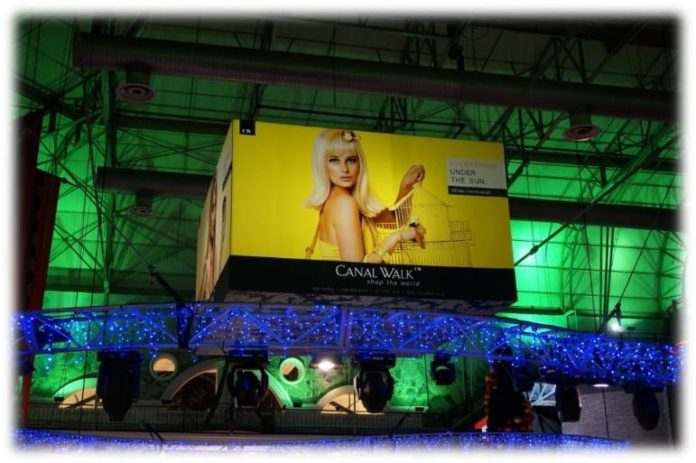
Where are consumers driving the signage environment and what changes can we expect to see over the next few years? Industry experts discuss the future of signage in South Africa.
A number of recent marketing trend reports* have indicated that while print is still the most widely used signage solution around the globe, due to the emergence of digital signage and more opportunities for it, print signage is currently experiencing a lower uptake in the marketing mix.
Managing Director of Technique Media, Darren Kirby, believes that the global movement towards digital means that the future of signage in South Africa is ultimately going to be technologically advanced and personal, although there is a long road ahead as marketers weigh up the pros and cons of the commitment to this shift.
Philip Gelderblom, Production Manager at Singh & Sons, said that with post-demographic consumerism driving strategic changes for brands, we are seeing ‘more messaging across many platforms that compete for the consumer’s attention. Signage needs to be bold and visible to be seen, with a simple message to grab the consumer. In future, we will see much more interactivity, electronic signage with varying messaging, and instant gratification interaction between consumer and sign, undoubtedly integrating mobile devices’.
‘Signage will have to be part of a mix of marketing tools. That said, there are risks to traditional signage: the increase in online shopping is breaking the chain between input and decision, and the lure of the cell phone. Most commuters, and even pedestrians, are constantly distracted by their cell phones. They do not see their environment anymore,’ he added.
Vik Norval, Creative Director at Creative Workshop, said that they are seeing a fair number of clients migrating to digital solutions for conducting business, mirroring global trends. ‘The reduction of data costs has allowed for a longer engagement rate. In future, there will be a strong emphasis on brand awareness and identity, and less on ‘glitz and glamour’. Inevitably, consumers will have seen a brand online and signage will serve more as an indicator of location or brand as opposed to a lure,’ he said.
‘Where businesses have a physical footprint there will always be a need for signage, but rather than be a primary marketing tool, it becomes an extension of digital activity. The only consideration from a design perspective is that branding and corporate identity need to be transferable across traditional and digital platforms. Strong, bold designs that work well across all platforms are key, and the use of substrates and quality finishes that are representative of the brand ethos will remain.’
Kirby said, ‘With this in mind, marketers must assess the intentions behind their signage needs. The print signage industry may be seeing somewhat of a decline and all indications of current trends suggest that this will only increase in time, but as Norval stated, where businesses have a physical footprint, there will always be a need for signage. Even if only as an indicator of location. And this is especially true for companies whose main objective is not to directly reach end consumers.’
Ulanda Neveling from Freddy Hirsch Group said, ‘Our brand may consider digital solutions in future for the ease and speed in which it can be done, and for the ability to change messaging regularly at a relatively low price, but currently we use signage to indicate where our premises are located and to create a corporate brand image at our various sites.’
‘Whether your company observes current and future signage trends or not really depends on your brands, audience and objectives, but the future of signage in South Africa – and indeed across the globe – is in an interesting industry to watch. We’re all very excited to see what the future holds,’ concluded Kirby.
TECHNIQUE MEDIA
+27823917717
darren@techniquemedia.co.za
www.techniquemedia.co.za
*1) Research reports by Mordor Intelligence
https://www.mordorintelligence.com/industry-reports/printed-signage-market
https://www.mordorintelligence.com/industry-reports/global-digital-signage-market-industry
2) Reports by Rohan Ayyar and Katherine Hays at Entreprenuer Magazine
https://www.entrepreneur.com/article/235563
https://www.entrepreneur.com/article/326236
3) An insightful article by Cardinal Digital Marketing
https://www.cardinaldigitalmarketing.com/blog/digital-marketing-trends-and-innovative-tactics-for-2019/
CoNext Explores Great Next-Gen Sponsorship Marketing

CoNext’s second Sponsorship Forum, held on 21 February at The Cube WorkSpace in Fourways, explored next-generation marketing and sponsorship best practices.
The panel speakers included Steve Elworthy, Tournament Director of the Cricket World Cup 2019 and member of the England and Wales Cricket Board (ECB), Clive Eksteen, the Commercial Director of Cricket SA and Ros Goldin, independent analyst and former Marketing Director for Cricket South Africa.
The CoNext Sponsorship Forum is a platform where local sponsorship, media, marketing and advertising industries and their agencies can gain key learnings from successful sponsorship partnerships in order to grow the quality of work in the African sponsorships arena.
‘Our first, sold out installment of #CoNext focused on the need for brands to partner with rights holders to genuinely unlock value in sponsorships, and was based on a case study between Shield Deodorant (Unilever) and Chelsea FC,’ said CoNext Founder and Managing Director Andrew Ross.
February’s episode two, entitled Adapt or Die, expanded on this narrative, while exploring the need for continued evolution, relevance in the modern sponsorship arena and the evolution of sport for the modern fan.
The modern consumer has evolved faster than expected, and like other entertainment offerings, sport has faced challenges in re-establishing its value proposition to a new and evolving audience. Stadium attendances are dwindling, and rights holders are facing increased competition to attract and retain commercial partners.
Cricket was one of the first mainstream sports to evolve its product to address a new emerging audience, and whatever anyone’s opinion on the Twenty Over (T20) format of the game, it has proved a formidable tool in marketing the sport to new audiences. T20 was developed to satisfy both existing fans who had shorter attention spans, while also expanding an appeal for the game.
CONEXT
info@conext.co.za
www.conext.co.za
Out-Of-Home Measurement Council Releases ROAD OOH Guidelines
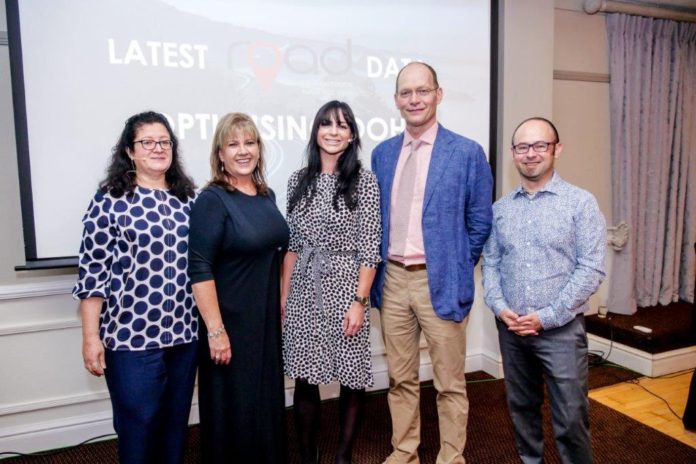
Modern Marketing recently attended the Out-Of-Home Measurement Council’s (OMC’s) presentation of the latest release of three years of fused ROAD research in Johannesburg at the Bryanston Country Club.
The research highlights how the industry is better equipped to evaluate and plan OOH, with a currency that offers the same metrics as other media types. This new release allows for all users to optimise media planning and buying, and to develop effective strategies.
During the presentation, OOH media owners, media agencies and marketers witnessed first-hand just how integral this data and software will become in their daily planning. The unveiling of the enhanced Optimiser tool demonstrated how OOH can be based on both budget and set criteria, aligning the software to the user’s needs and delivering efficiencies and better planning. Further projects and initiatives that the OMC had been busy with over the past year were shared with the audience.
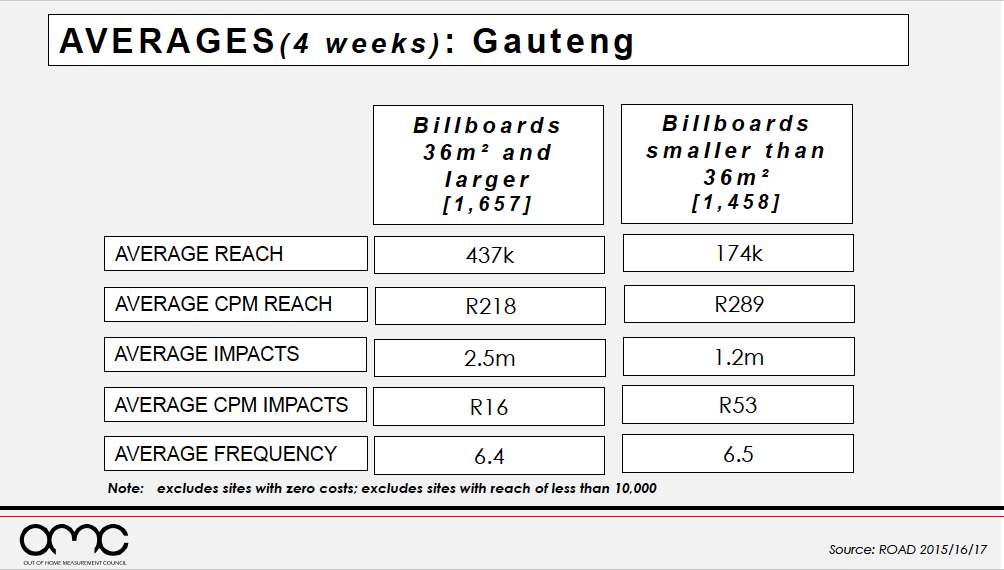
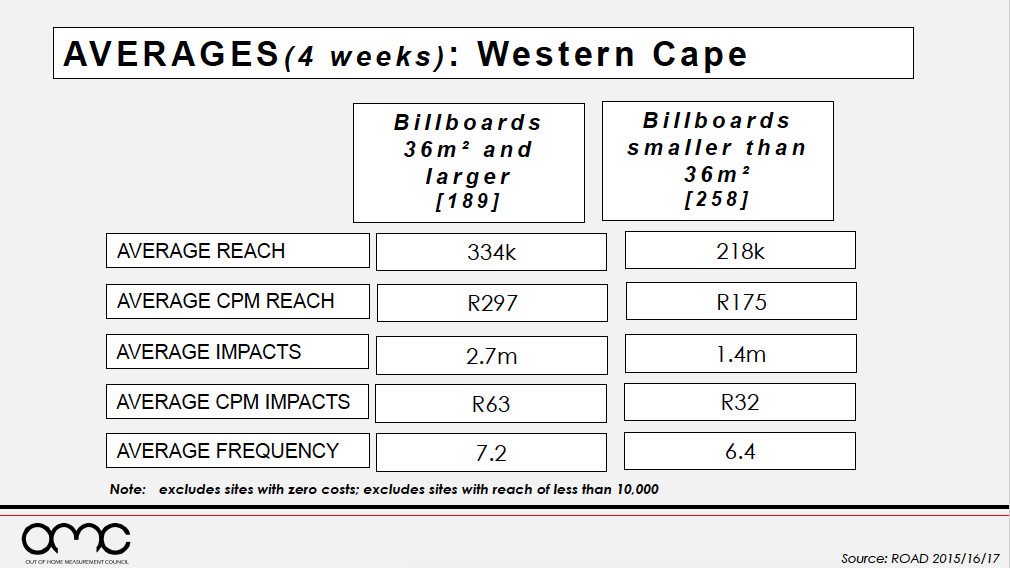
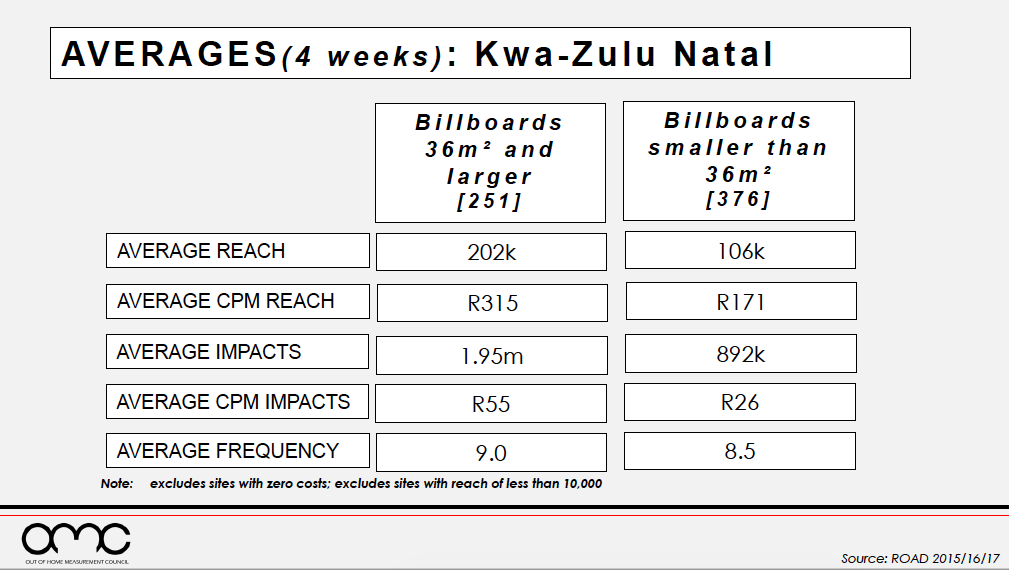
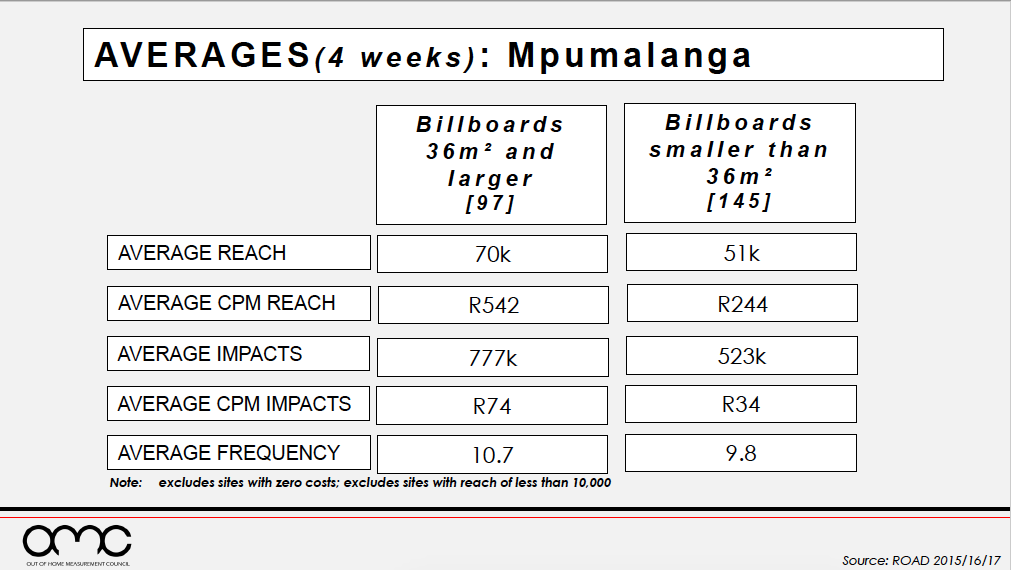
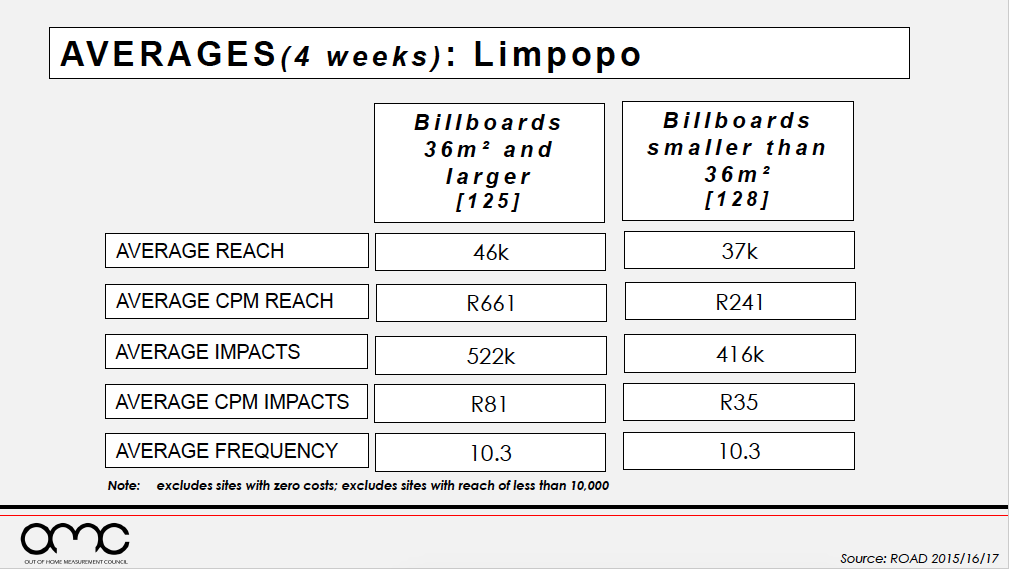
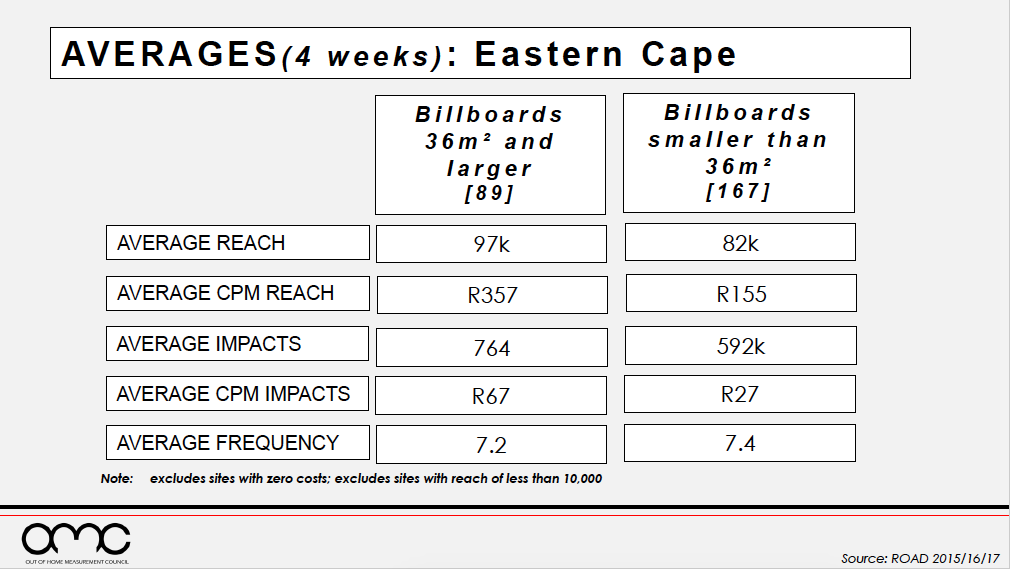
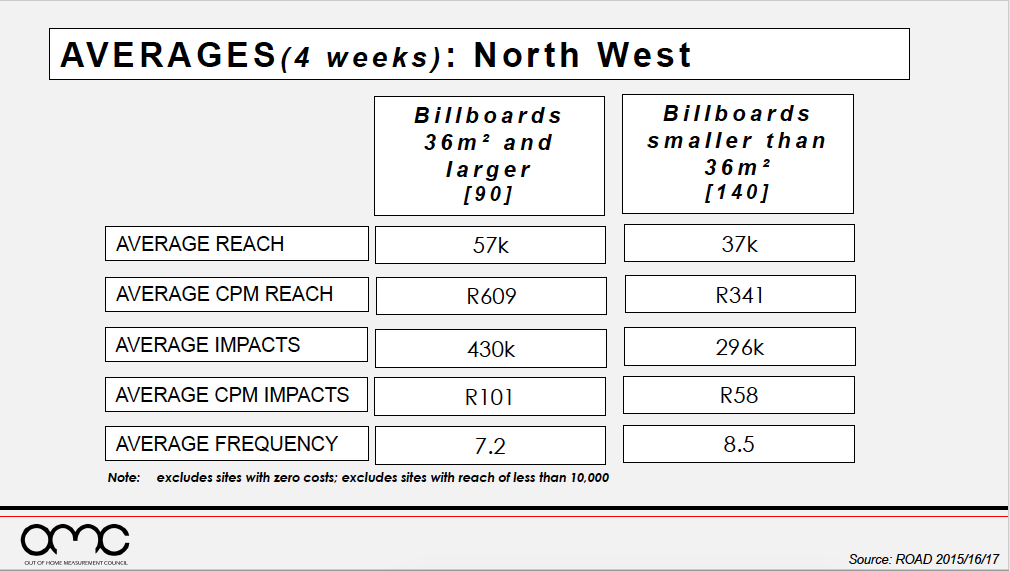
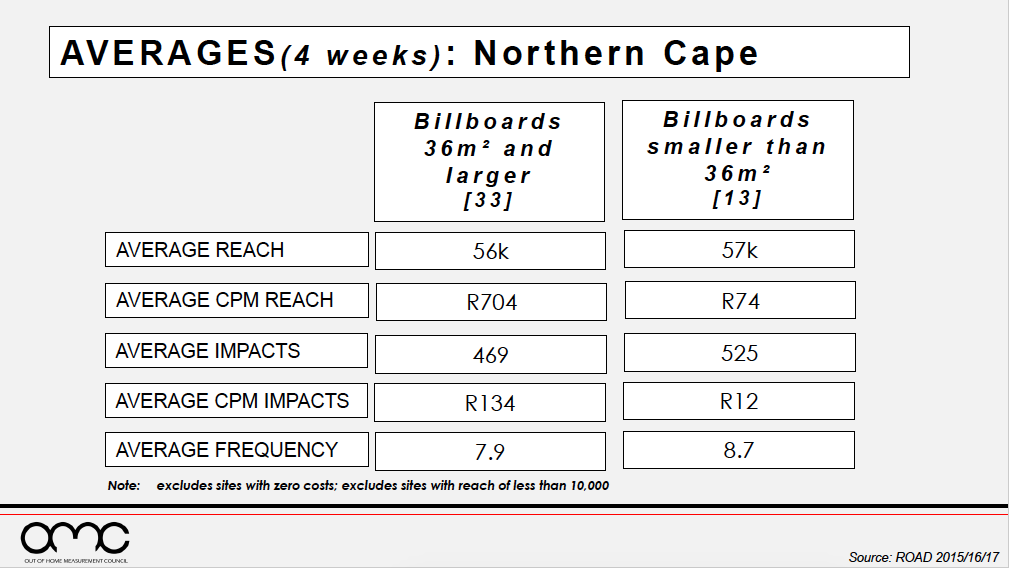
This released research document serves as a guide to assist in understanding the scope of Out-of-Home billboards that are loaded on the Quantum software. The objective of the document is to understand the distribution of sites based on site audience reach and impacts.
The information will enable an assessment or evaluation of the audience volume delivered by set formats across all nine provinces as the population numbers and distribution are vastly different. Through the understanding of the volume of sites associated with a set audience volume, it is possible to consider or assess how different billboard sizes perform.
Campaign average per province
Gauteng
Western Cape
KwaZulu-Natal
Mpumalanga
Limpopo
Eastern Cape
North West
Northern Cape
Free State
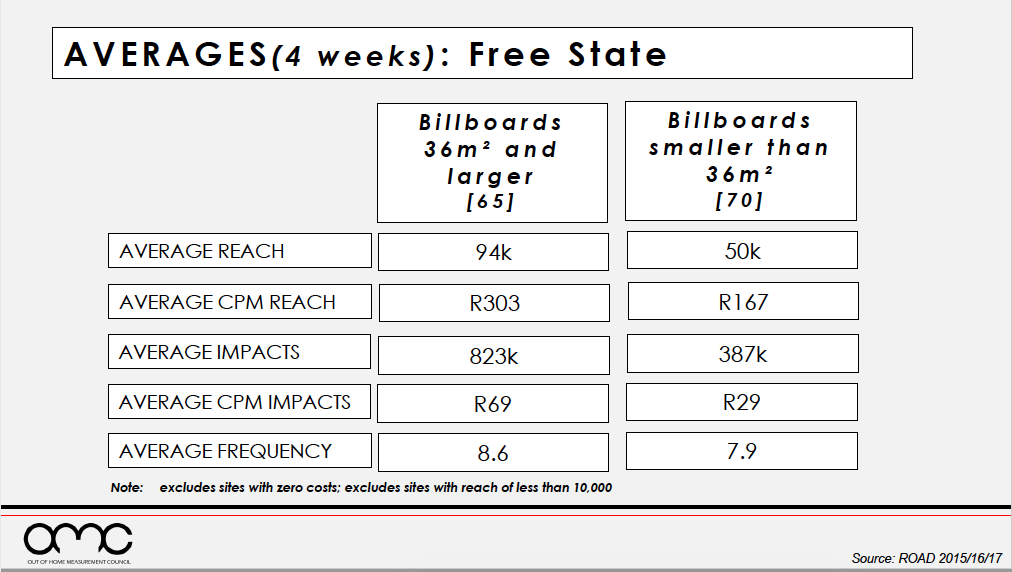
The guideline ranges have been calculated into groups of unduplicated reach as well as impacts over a four week period. This demonstrates that as one moves up the pyramid, there are fewer billboards available in the high reaching groups and at the lower levels more billboards are available. Therefore for the same costs/CPM one could potentially buy more billboards in the lower ranges and fewer billboards in the upper ranges.
International guest speaker James Whitmore, Managing Director of Route in the UK, outlined his organisation’s history, its structure and scope. He emphasised that it is through trust and collaboration that Route has been able to deliver robust and detailed OOH audience measurement. He also outlined how Route is funded, with both media owners and media agencies contributing towards the research. The industry has committed to a cycle of six-year funding periods, which ensures a stable financial base that gives the organisation the freedom and independence to plan and think ahead. He concluded with a number of case studies. These demonstrate how audience data can be used to illustrate how OOH improves advertising results for clients, whether as a single medium or as part of a combination of media.
Lauren Shapiro from Kuper Research detailed how OOH research is different from other media research and is not a simple plug and play process. She explained that in terms of improved understanding of mobility, routing and the value of a greater number of respondents, the ROAD research highlights the OMC’s commitment in terms of longevity and delivers accurate audience insights to the market.
‘The perception around OOH must be changed in order to stay current,’ said Howard Lonstein, Marketing Manager, Outdoor Network and OMC committee member. ‘One way of demonstrating how OOH can stay current is to look at how optimising OOH in the media mix can increase the share of advertising spend to the medium. The best medium to demonstrate this is to synergise with digital. We are all aware that advertising budgets are not necessarily being cut, but rather being allocated to different media channels. By integrating digital with ROAD, some amazing and impactful insights are gained to guide planning and improve consumer targeting.’
‘It is only by creating accountability for our valuable client’s media spend and with trust in the data and methodologies, that the OOH industry can and will grow. The ever-improving ROAD research and Quantum software will go a long way in achieving this,’ concluded OMC’s General Manager Trish Guilford.
OMC www.omcsa.org.za
Canon South Africa Outlines Advantages Of Print Marketing

Michelle Janse van Vuuren, marketing director at Canon SA, details how print marketing plays a pivotal role in a digitally-charged world.
The rise of digital media has reduced consumers’ attention span to that of a goldfish, which is less than nine seconds (1). With consumers seeing over 5000 ads a day (2), it’s no surprise that around 615 million devices globally are now blocking ads (3). With so many brands competing for a few seconds of our time, how can they cut through the digital clutter with their marketing efforts? From apps being created to be deliberately addictive to users (4), to consumers feeling as though they are being stalked by bad digital ads (5), marketers are responding by going to the extremes.
But the answer is more simple: effective marketing is about understanding people and their behaviour. Nick Morris, founding partner and Managing Director at independent behavioural insights practice Canvas8, whose clients include Google, Nike, Samsung and MTV explained, ‘Despite so much digital data being collected about consumers, brands are still failing to fully understand their customers. It’s more than just the collection of data. Through gathering behavioural insights, considered analysis and consistent application to a brand’s marketing activities, businesses can better understand their customers’ behaviours and predict how they are likely to engage with certain marketing messages.’
Consumers are already telling us that advertising has become pervasive, intrusive and relentless. Research by Trinity Mirror Solutions has shown that 40% of people associate brands with being ‘pushy’ and 57% of adults agree that brands should be more careful where they place their advertising (6).
However, with annual volumes of direct mail equating to 5.7 billion items in 2017 in the UK alone (7), what is the difference between direct mail that remains at the front of a consumer’s mind compared to ‘junk mail’ that is thrown in the bin?
Brands can maximise the effectiveness of direct mail by going beyond simply addressing customers by name: the key to doing this successfully is the relevance of the marketing message and delivering it in a timely fashion. As a recipient of brand communication, we tend not to resent marketing when it’s personal and relevant. However, it becomes irritating and wasteful when it’s generic information that is not tailored to our individual buying behaviours and product preferences – or has been delivered at an unsuitable time.
By gathering behavioural insights on customers, it is now more possible than ever to communicate timely and relevant messages. Brands can now track customers and prospects through every stage of the customer journey, from looking at a product online to buying it in store. At each touchpoint, they can collect and analyse data to gain a 360 degree view of the customer’s behaviours and preferences. This gives the brand multiple opportunities to act on what the data tells them, creating tailored offers and delivering them to consumers in real-time. Through digital media, consumers are sharing more and more of this data about themselves with brands. In return, they expect a positive trade-off in the form of relevant marketing materials, personalised special offers that apply to previous purchases, or loyalty rewards – and rightly so.
People sell to people and the decision to buy from one brand over another is not always necessarily about the product itself. This brings us back to Morris’ focus on behavioural insights: there is an important lesson for any brand to learn and that is to be human.
When devising any omni-channel marketing campaign, brands should analyse the data they have on consumers to understand how they behave and how they want to be interacted with. This means brands must become more personal and aim to surprise consumers, by reaching them with relevant personalised messages at a moment when they are receptive – what Morris calls ‘sparking serendipity’.
Through using individualised printed direct mail as a high quality communication tool to complement digital marketing, brands can leverage the emotional pull of physical media and intelligent personalisation to stimulate a deeper connection to the promotional message and stimulate response with ultra-targeted offers.
Inkpact is just one example of a forward-thinking brand that is transforming the way businesses communicate with their customers by offering the opportunity to send personalised handwritten letters to customers. Speaking at Canon’s Future Promotion Forum in 2018, Morris highlighted why companies like Inkpact are successful, ‘In order for direct mail to truly succeed, it needs to be two things: smart and personal. ‘Smart’ derives from the insight gained from studying the customer’s behaviour – it’s about being timely and relevant. ‘Personal’ direct mail, when done well, addresses me and my needs without being intrusive or inappropriate. Without these two things, it is vacuous.’
We believe that the future success of direct mail will come from the power of ‘programmatic print’. By this we mean the combination of digital marketing’s unique ability to personally address consumers with relevant messages at each touchpoint in the customer journey with print’s equally unique ability to engage consumers with those messages on a deeper emotional level.
Programmatic direct mail is only one example of how today’s digital print solutions can help to increase direct marketing effectiveness. There are now a variety of promotional print applications brands can use beyond direct mail to engage with customers including brochures, catalogues, ‘magalogues’, customer magazines, brand books, customer newsletters and so on.
Helping companies tailor their brand marketing material for their respective customers has never been easier, thanks to the new potential enabled by digital print. Everything that can be personalised online can now be personalised in print.
Digital production technologies give print the same immediacy as online, offering the brand owner the capability to adapt and personalise their print marketing collateral and produce selective amounts for short-term and highly targeted campaigns.
The key benefit of today’s on-demand promotional communications is the agility to respond dynamically to live campaign data. Using the latest digital print technology, brands can use consumer data to tailor communications, fine-tuning campaign messages on the fly to achieve maximum effectiveness. Small adjustments in targeting can be made relatively quickly and simply as the campaign evolves, with delivery to the consumer within less than 24 hours.
Marketers that make intelligent use of data about their consumers and take a smart and personalised approach to print marketing will deliver more effective marketing campaigns, achieve better engagement with customers, and see the direct impact on short-term sales and long-term brand engagement.
(1) humans-have-shorter-attention-span-than-goldfish-thanks-to-smart
(2) cutting-through-advertising-clutter
(3) The state of the blocked web, PageFair 2017 Adblock Report, PageFair.
(4) bbc.co.uk/news/technology-44640959
(5 and 6) why-people-block-ads-and-what-it-means-for-marketers-and-advertisers
(7) door-drop-spend-remains-stable-despite-uncertainty
CANON SOUTH AFRICA (+27 12) 675 4900 James.DeWaal@Canon.co.za http://www.canon.co.za
Living & Loving Introduces Online Video Series

Caxton Magazine’s Living & Loving brand has expanded its consumer touchpoints to include a new online video series aimed at moms and moms-to-be.
Living & Loving editor Sonya Naude said, ‘Following a five-episode trial series at the end of last year, we’re thrilled to announce that we have secured a ten episode series that will run from the 6 March to the 15 May with brand Epi-Max having full exclusivity for these ten episodes.’
‘The original five-episode series featured the Epi-Max brand and was produced by Life in a Bulb productions. The series featured popular Mommy blogger Melissa Swart and we were honestly blown away by the results. Our ‘getting your body back after baby’ had a reach of over 19,000 people and over 3500 engagements. It’s a topic that clearly resonated with our audience,’ said Naude.
This past series, entitled ‘1,2,3 with Melissa Swart’, focused on motherhood and how to cope with all its realities. Topics included getting your body back after a baby, post-natal depression and ‘suicide hour’, a term used in parenting circles for that time of day when all hell breaks loose.
‘Apart from being wholly engaging with a personality that moms can identify with, viewers had the opportunity to win a hamper of Epi-max products each week by posting the answer to a question posed by Swart at the end of each video on the Living & Loving Facebook page,’ explained Naude. ‘In the new series, Epi-Max will be giving away more product hampers and a R10,000 cash prize to one viewer at the end of the series. We would encourage brands that wish to make an impact with our audience of young moms and moms-to-be to get in touch with us and ensure that their brand is seen on our new platform.’
CAXTON MAGAZINES www.caxtonmags.co.za
What The Communication And Advertising Sector Can Learn From #Budget2019

Mathe Okaba, CEO of the Association for Communication and Advertising (ACA), discusses what the communication and advertising sector can learn from the 2019 budget speech.
In his first budget speech as Minister of Finance, Tito Mboweni provided the country with some insight into how the government intends to get us back on track and back on the path to success, towards growth. There were many interpretations, but in reality, there was no silver bullet, not for State Owned Enterprises (SOE’s), not for industry, private citizens, small business or anyone for that matter.
Time for renewal, for growth
Minister Mboweni focused on looking inward, to getting our house in order for taking action that would ultimately bear fruit. For agencies, there’s a lesson there. Agencies need to fiercely defend what they set out to do. Mboweni stated that we should look after what we sow, what we as a country have ploughed and laboured over so tirelessly, defend it from the ravages and risks, prune it, look after it and in turn, it will grow and bear fruit. That’s at a government level, and yes, Eskom needs to be sorted out, since without power all of this is simply rhetoric. But again, there’s a lesson.
What are agencies here for, if not to help brands succeed? It’s not to simply create pretty pictures, accompanied by some clever copy. Agencies set out to build brands, guide them, ensure they have longevity, and deliver a return on investment to the brand owner. In these relatively tough times, as a profession, we need to target growth. And how do we do that? By creating effective communications campaigns that have a positive effect on the client’s bottom line.
Why? Because it’s the currency of the profession, of the industry – validation that we are able to swing opinion and drive brand objectives successfully.
The aloe in the room
The minister walked into the Parliament with an iconic South African plant, the Aloe. He noted that a predecessor had brought plums – sweet, vibrant and full of promise. The Aloe, on the other hand, is resilient, sturdy and drought-resistant. He used it in an analagous manner, describing how as a country, we need to take the bitter with the sweet. To prove that if we plant anew, we can return to those plum times.
Chat to any agency representative, and they’ll tell you how difficult it is out there. Budgets are shrinking while expected delivery remains on par. South African agencies are akin to the Aloe. They are resilient. They make do with what is available, and always look forward to plum times. They are iconic in their own right. South African agencies, and the professionals within them are highly regarded worldwide, punching way above their weight.
In years past we’ve spoken about recession, difficult times, shrinking revenues and increased expenditure. It was all about where the money was going. This year it would seem, it’s more about ‘what the money can do’. And that’s precisely what agencies should be asking as they take an inward view of how to make it out there.
The budget in action – everywhere
We’re a tough bunch. While issues at the SOE’s threaten the entire economy, tax brackets creep and a review of civil servant wages reduce disposable income and so called ‘sin taxes’ drive increased revenue collections for government, all of us need to suit up.
Our industry has staying power. We’ve never given up, and we’re not about to start. But what we can do is raise the bar on the perception of what we offer. As a collective, we can drive our own ‘currency’. Our true value.
We should use this year’s budget as a reminder of how to keep our own houses in order, and in so doing, making them work to the best of their ability. Making them stronger, more efficient and effective. As tax paying citizens we expect something in return for our taxes. Remember that when planning your next brand campaign.
It’s time to deliver
Our profession should strive to always create effective communications campaigns, ones that truly deliver against set objectives. Government is highlighting the ills that come from doing something simply to say, there, we’ve taken action. But what does that action deliver?
Let’s ensure we take action with proper insight. Targeting effective communications ultimately leads to overall success, for the client and agency. Look after the industry seed that we have grown over the years. Nurture and protect it, and it will deliver the plum.
ACA SOUTH AFRICA
+27117812772
ceo@acasa.co.za
www.acasa.co.za
Primedia Outdoor Campaign Shows How OOH Industry Can Harness New Technologies
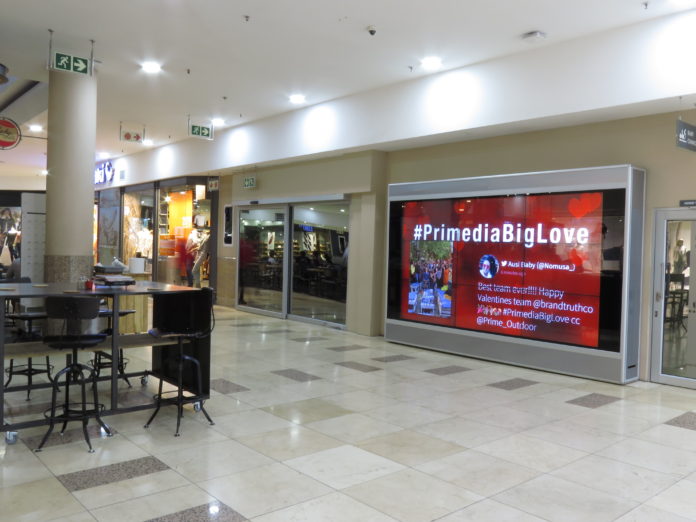
To make Valentine’s Day extra special, Primedia Outdoor took over the streets and social media and invited the public to send Valentine’s Day messages of love to their partners, family, friends and colleagues on Twitter and then have their message automatically showcased on Primedia Outdoor’s urban and mall digital Out-of-Home holding.
People joined in their numbers, tweeting their romantic messages using the hashtag #PrimediaBigLove and their posts were instantly flighted across Primedia Outdoor’s Urban Digital Network after a quick and effective screening process. The Urban Digital Network delivers impressive audience impacts of 2,605,515 with a unique audience reach of 881,303 over a one-week period (ROAD 15/16/17 SM).
Jorja Wilkins, Marketing Services Executive of Primedia Outdoor believes that this love-filled campaign fired up consumer engagement and interactivity with digital Out-of-Home. ‘We wanted to push the envelope with this campaign and demonstrate the power of Out-of-Home and social media synergy,’ she said. ‘We received over 220 tweets throughout the day, yielding a total of 8927 organic impressions. In addition to that, radio stations 947 and Talk Radio 702 promoted the campaign during their shows and also across their social media platforms.’
According to TrendWiki SA, the #PrimediaBigLove hashtag was one of the trendiest hashtags on Valentine’s Day, trending in the top ten for most of the day and peaking at fourth position. This fully-automated digital campaign showcased the immediacy and interactive capability of digital Out-of-Home, by linking live social feeds from Twitter to be displayed onto the screens. In essence, this campaign has proven to be highly engaging and has shown how digital Out-of-Home can be a strategic platform for direct consumer response.
Primedia Outdoor exhibited how the out-of-home industry can harness new technologies and showcasing how marketers can leverage the synergy of social media and digital out-of-home.