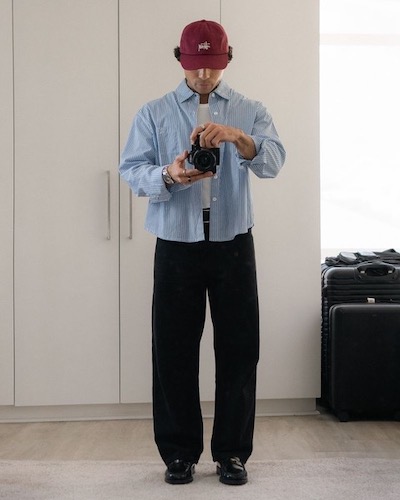
In an attempt to frame the real edge behind the authenticity advantage, Webfluential spoke to digital fashion and lifestyle creator, Ethan Kieffer, to unpack his creator journey and how authenticity has become his biggest competitive edge.
How Did Your Creator Journey Begin?
I started posting fashion content just after high school, mostly on TikTok. At the time, I didn’t have a long-term plan. I just loved fashion and wanted to share it. I actually posted more back then than I do now! But after a while, growth plateaued, and I pulled back.
Then, in 2023, I shifted my mindset: I decided to post purely because I enjoy creating. And I think that was the best piece of advice I gave myself. Luckily enough, people started really enjoying that. That’s when things really started taking off. All of a sudden, the numbers started coming in. I set a few goals for the end of the year, and I doubled them.
You’ve Built A Strong Brand In Fashion. Why Add Lifestyle Content Now?
Fashion will always be a passion, but I realised that people follow you not just for what you do, but also for who you are. People go on social media for connection. As much as I enjoy fashion, I don’t want people just to view me as an object online, something that they come to just to gain fashion inspiration. I want to be someone that they can connect with and relate to on a personal level. One of the big reasons I got into YouTube was to show more of my personal brand, not just the product side of things (like the fashion advice I share on social media).
What Role Has Personal Branding Played In Your Success?
It’s been everything. People can copy trends, editing styles, and even outfits. But they can’t copy you. Your personal brand is what makes you stand out. It’s the reason people stay. Personal branding makes you memorable. When people feel like they know you, they stick around, and brands notice that too.
It’s been pretty special to see how people have reacted to all the media that I’ve posted and how much they resonate with a lot of things. And the fact that I’m able to help inspire people in a little way – I think that’s also one of the coolest parts of doing what I do.
You’re Landing International Brand Deals — How Did That Happen?
A lot of people assumed I wasn’t from South Africa because of my style. That helped me attract a more global audience. Eventually, I signed with an agent in Paris, which helped open more international doors. She’s a former creator herself, so she really gets it.
What Advice Would You Give To Other Creators Looking To Grow?
Focus on what makes you different. Don’t just chase trends, create what you’re passionate about, and do it consistently. People can tell when you’re authentic. That’s what builds a real community.
According to Simon Wall, Group CEO at Glynt, at this year’s World Out of Home Organisation (WOO) Congress, held from 4-6 June in Mexico, one thing was obvious: digital out of home (DOOH) media is moving into a new era. The focus is sharper, the stakes are higher and the expectations from brands are rising fast.
This evolution reflects changing advertiser expectations and consumer behaviours. In a world where attention is fragmented and measurable outcomes matter more than ever, outdoor media is having to prove its value in ways it never has before. It’s no longer enough to simply be seen. The medium must now demonstrate impact, accountability and agility. This means becoming more intelligent, more integrated, and more aligned with how people move, think and shop in real life.
10 Shifts Pointing To Where The Industry Is Headed Next:
1. Smarter Targeting Is Winning Budgets
The DOOH industry is shifting from location-based buying to audience-based targeting. This means advertisers can now tailor messages to specific audiences, not just general areas. That level of precision is helping DOOH secure a bigger share of digital ad budgets, where accountability and relevance is key.
2. Retail Is Leading The Way
Retail environments are becoming a powerful space for DOOH. Screens placed in or near stores give brands the opportunity to reach customers at the exact moment they’re ready to buy. These placements are driving innovation in creative, data use and integration with retail media networks.
3. Programmatic Is Growing But Still Complex
Buying DOOH programmatically is becoming more common, but it’s far from seamless. Advertisers face too many disconnected platforms, inconsistent standards and a general lack of education. Until these gaps are addressed, scale will remain limited.
4. Advertisers Want Proof It Worked
Impressions are no longer enough. Advertisers want to know if their campaigns are driving real-world results, like increased foot traffic, app activity or sales. DOOH partners that can demonstrate this kind of performance will stand out.
5. Ads That React To The World Work Better
Campaigns that adapt to real-world triggers – such as weather changes, traffic conditions or time of day – consistently outperform static messaging. With more data and automation now available, this kind of contextual creative is becoming a baseline expectation.
6. Audience Insight Goes Beyond Location
Advertisers are looking for more than just where people are. They want to understand who those people are, what motivates them and what they’re likely to do next. DOOH platforms that offer deeper behavioural and psychographic insights are better positioned to deliver meaningful impact.
7. Complexity Is Getting In The Way
The DOOH ecosystem has become crowded with intermediaries, platforms and processes. For advertisers, this means more friction and less efficiency. Simplifying the supply chain is becoming essential to unlock scale and effectiveness.
8. Local Messaging Delivers More Impact
Generic creative is no longer enough. Campaigns that are tailored to specific neighbourhoods or communities tend to drive stronger engagement. Hyperlocal relevance builds trust and makes brands feel more connected to the people they’re trying to reach.
9. Sustainability is becoming a deal-breaker
More clients are prioritising sustainability in their briefs. They want to know that their media partners are investing in cleaner technology, reducing emissions and offering credible ways to offset environmental impact. Those that can’t show progress risk being left behind.
10. Direct Relationships Bring More Control
In a complex landscape, some advertisers are choosing to bypass intermediaries and deal directly with media owners. This gives them more say over placement, better creative flexibility and often greater cost efficiency.
Out-of-home is entering a new phase. Advertisers want less complexity, more proof of results and stronger alignment with their goals. The businesses that can deliver on those needs will be the ones that lead the future of the industry.
South Africa’s economy is overdue for a reinvention. Growth remains sluggish, unemployment remains one of the highest globally, and our power and infrastructure crises continue to hinder progress. Amid these challenges lies an opportunity to reimagine how we solve problems, do business, and equip the next generation to flourish.
Why Creative Thinking Is At The Heart Of That Opportunity
We’re not talking about painting, poetry, or passion projects (though there’s value in all of that too). Solving complex business problems with originality, empathy, logic, and vision can’t be replaced by AI or automation.
‘We have to shake off this outdated notion that creativity doesn’t pay,’ said Verusha Maharaj, Managing Director of Red & Yellow Creative School of Business. ‘Creativity drives business. It powers brands, fuels innovation, and solves problems in fresh, human ways.’
Here Are The Creative Solutions We Have Been Looking For
While advertising, branding, and design are often associated with ‘creative’ careers, the demand for creative thinking spans every industry. From data science to digital marketing, web development to business analytics, the modern business world needs hybrid thinkers and people who can apply logic and imagination to challenges.
‘We don’t teach creativity for creativity’s sake,’ Maharaj explained. ‘We teach creative thinking that’s plugs into business strategy. This helps us support thinkers, doers, and changemakers, and people who are trained to solve problems in more than one way.’
Students from forward-thinking business schools today walk away with a certificate and practical experience. Their education is often grounded in real-world application, taught by industry-active lecturers, and shaped around solving tangible challenges. Whether it’s developing a go-to-market strategy, analysing consumer behaviour, or designing intuitive user experiences, these graduates are equipped to hit the ground running.
Many are trained to think outside of the box of the conventional job title. They’re Strategists and Savants, Brand Managers and Renegades, to Digital Marketers and Mavericks. These hybrid thinkers blend logic with creativity, insight with instinct. That’s exactly the kind of thinking modern businesses want and the future workforce demands.
Future-Fit Careers Aren’t Built On Repetition
AI and automation will continue to transform industries. This means that the safest jobs won’t be the most traditional ones – they’ll be the most human. Creativity, adaptability, and critical thinking will stay irreplaceable. These skills help businesses navigate uncertainty, tell better stories, connect with real people, and stay relevant.
That’s why investing in a creative business education is far from frivolous. Simply put. It’s future-proof.
The government’s renewed focus on digital infrastructure, renewable energy, and small business development points to a growing need for creative problem-solvers. Who else will design more sustainable products, rethink service delivery models, or translate complex data into action?
Breaking The Stigma And Rewriting The Narrative
The stigma around studying creative disciplines still lingers in many South African households, especially when compared to so-called ‘safe’ options like law, medicine, or engineering. But the world has changed and with it, the definition of what a smart career choice looks like.
‘We’ve seen first-hand how young people light up when they realise that creativity can be more than a hobby,’ said Maharaj. ‘That moment of possibility is everything.’
If you’re a young South African weighing your future, or a parent helping to guide that decision, ask yourself:
– What kind of work will always need a human touch?
– What skills are becoming more valuable, not less?
– And what kind of graduate is every business looking for?
The answer is usually found at an intersection. Between marketing and meaning. Between data and design. Between business goals and human needs.
South African Tourism (SA Tourism), the official tourism marketing arm of the South African government, has appointed Accenture Song as its Public Relations agency of record following a competitive tender process. This three-year partnership will harness Accenture Song’s expertise in communications, innovation, and technology to enhance SA Tourism’s global brand reputation.
Leveraging research-driven insights and cutting-edge technology – supported by the global digital might of Accenture – Accenture Song will deliver a communications approach that drives material results for SA Tourism – and South Africa.
As a key driver of economic growth, tourism in South Africa is expected to grow at an average rate of 7.6% annually over the next decade, contributing over R554.6 billion to GDP and creating more than 800 000 jobs by 2032. Accenture Song’s research-driven approach, combined with its digital and creative capabilities, will support SA Tourism’s mission to position the country as a top global destination for leisure, business, and events.
‘Tourism is not just about driving GDP growth, it’s about creating sustainable jobs, fostering transformation, and ensuring that all South Africans benefit from the economic and social empowerment the sector brings,’ said SA Tourism CMO Thembisile Sehlolo. ‘Accenture Song’s ethos and capabilities are a natural fit for this mission. With its proven ability to combine imagination, technology, and intelligence, Accenture Song will help us inspire global audiences and unlock new opportunities nationwide.’
‘We are thrilled to partner with SA Tourism to showcase South Africa as a premier travel destination,’ said Moagi Bodibe, Managing Director of Marketing at Accenture Song. ‘By combining industry knowledge, data-driven insights, and an understanding of global and local trends, we aim to develop innovative strategies that resonate with diverse audiences. Together, we will craft compelling stories that highlight South Africa’s unparalleled beauty and experiences while amplifying tourism’s role in economic growth, job creation, and transformation. As proud South Africans, it’s an honour to collaborate with SA Tourism to share our nation with the world.’
Mandy Kojetin, Practice Head: Earned Media at Accenture Song, said, ‘Our strength lies in the unmatched synergy of our seasoned, award-winning Earned Media professionals, the cutting-edge expertise of Accenture Song, and the Public Sector team’s strategic insights. This collective depth of talent and experience equips us to navigate complex challenges and craft winning solutions that truly resonate’
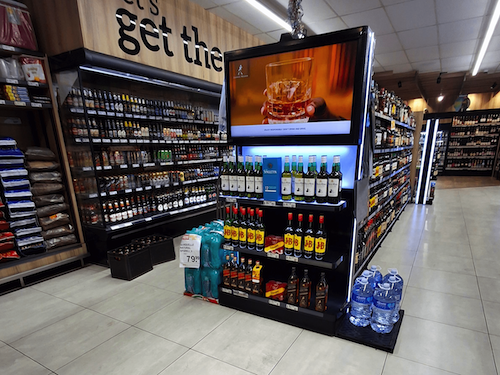
South Africa’s off-trade (1) liquor market, comprising formal retail channels such as grocery liquor stores, liquor wholesalers and hypers, exceeded R100bn in sales in 2024, according to the newly released Liquor Retailing Report from Trade Intelligence. The report shows that retailers are continuing to expand aggressively in the liquor space, and shopper behaviour is evolving alongside shifting channel dynamics.
Retailers Accelerate Liquor Expansion
Looking at South Africa’s listed corporate grocery retailers, the Shoprite Group, Pick n Pay, Boxer and SPAR, standalone liquor store footprint has grown by +31% over the past five years, nearly double the rate of grocery store expansion.
The Shoprite Group has overtaken TOPS at SPAR in total liquor store footprint, operating 925 outlets across Shoprite and Checkers LiquorShop and OK Liquors banners, with TOPS at SPAR operating 914 stores.
Format Performance Highlights Evolving Roles
While grocery liquor continues to expand, a full five years after the pandemic, on-trade (2) liquor turnover still remains below pre-pandemic levels. Although tavern sales showed growth, bars and restaurants remain slower to recover.
Within the off-trade market, grocery liquor sub-channel growth outpaced liquor hypers and wholesalers’ growth.
‘Liquor is still predominantly bought in-store, but it’s a mission-driven category,’ said Nicola Allen, Senior Retail Analyst at Trade Intelligence and lead analyst of the report. ‘Shoppers could be doing anything from stocking up for an event to grabbing a bottle for later to looking for the best possible price, and this drives their behaviour and choices in terms of channel and priorities, i.e. price sensitivity.’
The report identifies several common and/or high-frequency missions that define liquor shopping. Each mission is associated with specific formats and banners, based on value, urgency, and occasion type.
Shopper Behaviour Remains In-Store, But New Behaviours Are Emerging
Across liquor categories, the vast majority of shoppers continue to purchase in physical stores, i.e. over 90% of shoppers across each of the spirits, wine, beer and cider/RTD categories.
This confirms that liquor still plays out on the shelf, even as digital grows, reinforcing why channel-specific retail strategy matters.
At the same time, 46% of 18- to 24-year-old cider/RTD shoppers also regularly buy via delivery apps and are more likely to engage across multiple platforms before purchase.
Across all categories, shopper missions such as stocking up for an occasion, grabbing something for later, and hunting down a special remain common, and frequently influence channel and format choice.
Understanding Format Roles And Shopper Missions Is Key To Planning
Trade Intelligence notes that understanding the liquor retail channel requires close attention to its sub-channel dynamics and shopper missions. Grocery liquor, liquor hypers and wholesalers each play distinct roles in meeting shopper needs, and recovery in on-trade remains slow and uneven across sub-channels. As shopper behaviour diversifies, format roles evolve, and store expansion continues, the importance of clear channel strategies is coming into sharper focus for liquor suppliers and retailers alike.
(1) Off-trade refers to physical or online stores selling beverages for later consumption off the premises.
(2) On-trade refers to bars, restaurants, pubs, and taverns that sell beverages for immediate consumption on the premises.
The New Generation Awards are recognised as the largest independent, performance-based accolades in social-first marketing, digital media, AI, creativity, integrated marketing, and online technology. WesBank has become the Platinum Headline Naming Sponsor of this year’s New Generation Awards. This strategic partnership demonstrates WesBank’s commitment to empowering progressive growth by supporting innovation and excellence across diverse industries.
The collaboration with WesBank will bring a new flavour to the event experience, and both parties are looking forward to making this year unforgettable together. To celebrate the partnership, the awards will be rebranded as The WesBank New Generation Awards for twelve months.
Stephen Paxton, the founder of the awards, commented, ‘We are excited to collaborate with WesBank for this year’s New Gen Awards, a growing platform that in 13 short years has adapted its offerings to a diverse audience of future-ready marketers and creatives, paving the way for excellence. It’s a great honour to have as a partner a brand like WesBank, which has demonstrated remarkable resilience and adaptability over its 50+ year history, successfully aligning its offerings with the evolving preferences and expectations of the new generation. This partnership marks a significant new chapter for the awards, showcasing a forward-thinking collaboration that embodies the spirit and aspirations of the new generation.’
Lebogang Gaoaketse, Head of Marketing and Communication at WesBank, commented, ‘Through this new partnership, we feel like we’re exactly where we’re meant to be. We’re moving with the new generation, not just in how we show up differently but also in how we engage. These awards recognise the impact of their creativity, and WesBank is proud to back them all the way.’
About The Awards:
The awards celebrate the innovators among corporations, agencies, and individuals who implement creative strategies and use advanced technology to enhance their brands and products, meeting the changing demands of today’s consumers. Modern Marketing is a proud media partner of the awards.
With 60 industry-specific categories, the awards ignite a spirit of excellence and challenge participants to push the boundaries of innovation, setting new benchmarks for all to aspire to. In just 12 years, New Gen has garnered over 5000 submissions from corporates, agencies, students, individuals, and brands, awarding more than 1500 accolades that inspire the industry to reach unprecedented heights.
WesBank has proudly sponsored the following categories:
• Best Social Media Reach from an Event / Activation by a Corporate.
• Best Online Competition by a Corporate.
• Most Innovative App Developed by a Corporate.
• Best Use of Technical Innovation by a Corporate.
• Mobile Marketing Excellence by a Corporate.
• Most Innovative Gamification Campaign by a Corporate.
• Excellence in Content Marketing by a Corporate.
• Best Use of Social Media to Research and Evaluate by a Corporate.
• Best Augmented Reality Marketing Campaign by an Agency.
• Best Virtual Reality Marketing Campaign.
• The Black Onyx Individual Influencer Marketer of the Year Award.
• The Black Onyx Digital Brand of the Year Award.
• The Black Onyx Social Wiz of the Year Award.
• The Black Onyx Best Customer Experience (CX) Award.
• The New Generation Outstanding Student of the Year Award.
• The New Generation Outstanding Student Group of the Year Award.
The WesBank New Generation Awards are calling for entries. Entries officially opened on May 1st, with the deadline for submissions formally extended until July 25th. This will be the final cut-off date to receive submissions. For more info on the 2025 awards and entry fees, click here.
Judging will begin on August 1st, and the finalists will be announced on September 1st. Get ready for an unforgettable night! This year’s awards gala ceremony will dazzle on Tuesday, September 23rd, at the luxurious NH Sandton. Hosted by the brilliant Lebo Mokoena (The Mood Engineer), and powered by Monster Productions. Mark your calendars, because this is set to be the highlight of the SA awards calendar!
Nicole Glover, Executive Creative Director – Digital at Penquin, believes successful influencer partnerships are rooted in purpose, insight, and mutual value. It’s not about chasing hype. It’s about building trust, telling stories, and ultimately driving results.
In today’s digital landscape, influencers are an indispensable tool for brands looking to connect with audiences in a truly authentic way. In a world where authenticity now trumps algorithms, the right influencer can elevate your brand with a single post. However, impactful influencer marketing is rarely accidental. Many campaigns fall short — not because of the influencer chosen, but due to a lack of solid, strategic planning.
Prioritise Audience Alignment Over Pure Reach
It’s tempting to chase influencers with millions of followers, but sheer reach can be misleading. The most critical factor is how closely an influencer’s audience mirrors your brand’s target demographic, psychographics, and behaviours. ‘A large follower count is merely a vanity metric if that audience isn’t genuinely interested in what you offer,’ Glover said. ‘True impact comes from precise audience alignment, ensuring your message lands with those most likely to convert and engage.’
Seek Authenticity, Not Just Endorsement
Consumers can quickly identify when an endorsement feels forced or inauthentic. The most effective campaigns emerge from influencers who genuinely resonate with, use, and believe in your product or service. ‘Authenticity is the bedrock of successful influencer partnerships,’ Glover explained. ‘Consumers can discern genuine passion from paid promotion, and it’s the former that truly moves the needle, building trust and credibility.’
Prioritise Creative Credibility
Influencers are creators first. Evaluate their ability to craft visually compelling, platform-native content. ‘Their aesthetic should seamlessly align with your brand, but still feel unmistakably ‘them’,’ said Glover. ‘Forced content performs poorly. Full stop.’
Focus On Engagement Quality, Not Just Quantity
While likes and follower numbers provide a basic metric, true influence is measured by the depth of engagement. Are followers leaving thoughtful comments? Are they asking questions? Is there evidence of genuine brand affinity or a shift in behaviour? ‘Don’t be swayed by superficial numbers,’ cautioned Glover. ‘Deep, meaningful engagement, genuine conversations and action is the true indicator of an influencer’s sway, leading to more impactful outcomes than surface-level stats.’
Be Platform-Smart
Instagram, TikTok, YouTube, and X all play different roles. The platform you choose must match the campaign goal and the influencer’s natural environment. ‘An incredible storyteller on YouTube might not translate to TikTok. Context is everything,’ Glover explained.
Do Your Due Diligence
Before onboarding an influencer, review their previous partnerships. Have they worked with direct competitors? Are they endorsing a new product every week? ‘Your brand deserves exclusivity, not just space on a crowded carousel,’ Glover warned.
Give Creative Freedom – With Boundaries
While brand guidelines are essential, micro-managing content can stifle an influencer’s creativity and diminish authenticity. Empowering influencers with the flexibility to interpret your brief in their unique voice often leads to more engaging and relatable content. ‘While brands provide the brief, true magic happens when influencers are empowered with creative freedom,’ Glover said. ‘This allows them to translate your message into their authentic voice, making it truly resonate with their followers.’
Lock Down the Details
Clear communication is non-negotiable. Agree upfront on deliverables, timelines, usage rights, review processes and payment terms. ‘It’s a creative collaboration, but it’s also a business transaction,’ Glover reminded.
Track What Matters
Use analytics to measure success beyond vanity metrics. Consider engagement rates, sentiment, traffic, conversions, and ROI. ‘Good influencer marketing isn’t guesswork, it’s measurable,’ said Glover. ‘And if you’re not learning, you’re wasting money.’
Build Partnerships, Not One-Off Posts
‘One-and-done campaigns rarely drive lasting impact,’ said Glover. ‘When influencers become true advocates over time, their audience develops genuine trust – and that’s when you see real brand loyalty.’ When influencers evolve into genuine brand advocates over time, the trust they build with their audience translates into enduring brand loyalty and significant long-term brand equity.
Influencer marketing isn’t a shortcut – it’s a strategic investment. When done right, it can spark emotional connections, boost credibility, and drive real business value. ‘As brands, we need to move beyond the vanity of visibility and focus on meaningful impact,’ Glover concluded. ‘Influencers are powerful. But only when we approach them with purpose.’
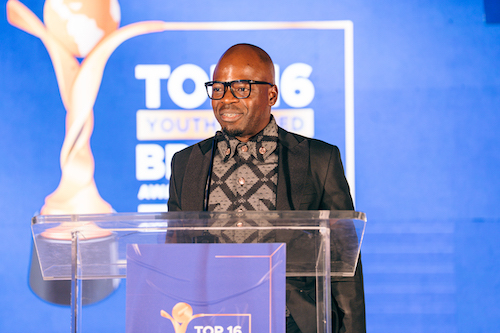
The 4th annual Top 16 Youth-Owned Brands Awards (YOBAs) lit up Sandton on the evening of 21 June 2025, celebrating innovation, impact, and excellence from South Africa and the continent’s most inspiring youth-owned brands.
Hosted at the prestigious LUXX Venue, the 2025 Top 16 Youth-Owned Brands Awards brought together trailblazing entrepreneurs, industry leaders, creatives, and cultural tastemakers for an unforgettable evening honouring the gold standard of youth excellence.
With a surprise performance by Robot Boii featuring Toss, and an electrifying closing by Pusha Pepsy, moving acceptance speeches, and a powerful keynote address delivered by Nomsa Chabeli, Group CEO of the SABC, the event reaffirmed the YOBAs’ reputation as one of South Africa’s most credible and inspiring platforms for celebrating emerging youth-led brands.
Chabeli emphasised the importance of making success visible and inspiring future innovation. ‘Don’t just solve today’s problems — design tomorrow’s solutions,’ she urged, highlighting the need for forward-thinking leadership that creates lasting impact.
‘This year’s awards reminded us that young people aren’t just the future — they’re leading right now,’ said Pat Mahlangu, Founder and CEO of the Top 16 Youth-Owned Brands Awards. ‘Each of these winners represents a unique story of resilience, creativity, and leadership. We’re proud to celebrate them and the industries they are changing.’
This year’s winners were honoured across 16 industry-specific categories, showcasing excellence in fields ranging from agriculture to technology. Two additional Pan-African categories celebrated standout youth-owned brands from across the continent. The 2025 YOBA winners, as independently audited by KXX Auditors, are:
2025 YOBA Winners
1. Afrocurl – Top Hair and Beauty Brand, Sponsored by FNB/WesBank.
2. Akani Simbine – Global Excellence Award, in partnership with Brand South Africa.
3. Africa Afya Healthcare – Top East Africa Brand.
4. iPrint Namibia – Top SADC Brand.
5. Khula! – Top Agriculture Brand.
6. Blank Collection – Top Apparel Brand, sponsored by the Wholesale and Retail SETA.
7. Shala The Unicorn – Top Creative and Arts Brand.
8. Career Kit – Top Education and Literature Brand, Sponsored by PatOn Brands.
9. NOH Eyewear – Top Footwear and Accessories Brand, sponsored by Delivery Ka Speed.
10. The Sweet Slice Luxe Bakery – Top Food and Beverages Brand, Sponsored by Coca-Cola Beverages South Africa.
11. Wisdom and Wellness – Top Health and Wellness Brand.
12. Reliable Renders Home – Top Homeware Brand, in partnership with City Lodge Hotel Group.
13. The Warehouse Boys – Top Manufacturing Brand, in partnership with Proudly South African.
14. Motsepe Advertising – Top Media Brand, in partnership with the SABC.
15. GirlCode – Top NPO and Charities Brand.
16. Grace Mondlana – Top Personalities and Influencers Brand, Sponsored by MTN Pulse.
17. Sneaker Cleanic – Top Services Brand, Sponsored by Legends Barber.
18. Computer Guardian – Top Technology Brand, Sponsored by Lerato Agency.
19. Asambeni Getaway – Top Travel and Tourism Brand, in partnership with South African Tourism.
Grace Mondlana, Top Personality and Influencer Brand Winner.
Afrocurl was awarded as the Overall Top Brand of 2025 — a historic achievement that marks a significant milestone not only for the brand itself but also for the YOBA Awards. This win is particularly groundbreaking as Afrocurl becomes the first recipient of the title from outside of Gauteng, and notably, the first female-owned brand to earn this prestigious honour. It’s a powerful testament to the growing diversity and reach of South Africa’s entrepreneurial excellence.
This year’s special honour, the Global Excellence Award, was proudly presented to Akani Simbine — one of South Africa’s most accomplished athletes and a global ambassador for excellence. The award, a non-voting category, recognises individuals whose remarkable global achievements and consistent international representation have elevated the South African brand on the world stage. In 2025, Simbine made history by becoming the first athlete ever to record sub-10-second 100 m performances for 11 consecutive seasons, surpassing a record previously held by Usain Bolt. He also secured his first global individual medal with a 60 m bronze at the World Athletics Indoor Championships in Nanjing. His relentless dedication, consistency, and pride in flying the national flag make him a fitting recipient of this prestigious accolade, presented by Brand South Africa in partnership with the Youth-Owned Brands Awards for the second consecutive year.
Backed by an esteemed lineup of sponsors and partners — including FNB/WesBank, South African Tourism, W&R SETA, and Delivery Ka Speed — along with returning giants such as CCBSA, MTN Pulse, Legends Barber, Proudly South African, Brand South Africa, City Lodge Hotel Group, Lerato Agency, Pat On Brands, Nalesa Media, and Reveel Out of Home, the 2025 edition was further elevated by impactful media support from SABC Radio. Now in its fourth year, the Top 16 YOBAs continue to champion the value and viability of youth-owned brands — not only recognising success but also catalysing growth, mentorship, and industry collaboration.
‘It’s more than an award show — it’s a movement,’ Mahlangu added. ‘And each year, we grow stronger because of the vision, passion, and determination of the young entrepreneurs we honour.’
As Youth Month continues, the 2025 YOBAs reaffirmed the importance of backing local talent and building brands that reflect the creativity, diversity, and entrepreneurial excellence of South Africa’s youth.
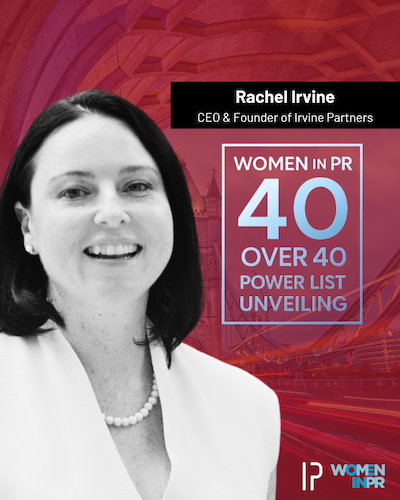
Irvine Partners (IP) is proud to announce that its CEO, Rachel Irvine, has been named to the prestigious Women in PR 40 over 40 power list in the United Kingdom. This recognition celebrates women in leadership who have demonstrated exceptional leadership, driven change, and championed effective staffing strategies within the industry.
‘This list celebrates the vision and lasting impact of women who continue to lead with purpose,’ said Rachel Irvine.
The honour not only spotlights Rachel Irvine’s achievements but also underscores the strategic advantage of Irvine Partners’ approach to assembling the most effective teams. This emphasis on broad perspectives and a range of experiences has propelled the agency from its South African roots to international acclaim, with wholly owned offices now thriving in the UK, Germany, Kenya, Nigeria and Ghana.
The proudly woman-owned and led agency gets that securing the right talent, regardless of background, is a direct business advantage. Three in every four of its employees are women, with people of colour comprising 60% of its global staff.
IP cultivates a workplace where varied expertise is valued. Its talent strategy allows its teams to bring unique insights to complex client challenges that can only be navigated with a nuanced understanding of audiences across its six regions. IP’s emphasis on its people and culture is crucial to how the agency maintains long-term client relationships with global industry giants, such as Google, Spotify, Uber, TikTok, and Salesforce.
‘Good ideas don’t carry passports,’ Irvine added. ‘Our global success isn’t just about market expansion; it’s a testament to the power of diverse perspectives and a culture where entrepreneurial spirit thrives, consistent excellence is expected, and everyone’s potential is actively grown. As we’ve grown from Woodstock in Cape Town to Westminster, London, we’ve built an environment where every team member is actively coached and cultivated to excel. This ethos isn’t just a moral compass; it’s our strategic asset.’
The Women in PR 40 over 40 power list addresses ageism in the PR industry, a bias that research shows disproportionately affects women from the age of 40 onwards. Irvine’s inclusion is a strong counter to this trend, highlighting the significant value experienced professionals bring to the industry. ‘Grumbling about a stacked deck seldom yields results,’ advised Irvine.
‘If you’re in a place that doesn’t serve or support you, leave. Back yourself and find your tribe.’
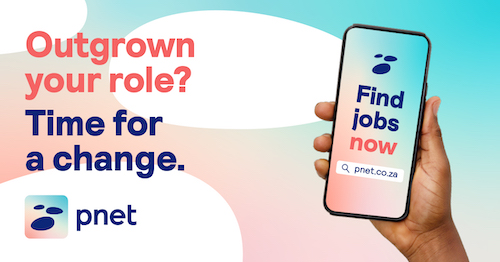
Pnet has revealed a new brand identity that brings a slick, modern aesthetic, fresh icons, and a friendlier feel to the platform. The transformation aligns the look and feel of Pnet more closely with its parent company, The Stepstone Group.
The refreshed brand and identity reaffirms Pnet’s commitment to empowering South African recruiters with smart, world-class tools as well as supporting jobseekers with an intuitive, personalised platform. It also clears the way for Pnet to more rapidly bring the latest tools and insights from The Stepstone Group to the South African market.
‘Our makeover is a visible sign of deeper change – a commitment to delivering the best technology and user experience for job applicants and recruiters,’ said Michelle Dobson, Head of Brands at Pnet. ‘It’s more than a new visual identity. It’s a promise to keep innovating faster with richer features, better candidate matching, and sharper hiring insights. For recruiters, the rebrand means future access to globally proven technology that enhances the hiring experience. For jobseekers, it’s a platform designed to resonate more with this audience, be more personalised and easier to navigate as they look for their next opportunity.’
The rebrand, defined by gradient colours in turquoise and coral, draws on a universal insight: many people feel stuck or uncertain before starting a job search. Inspired by a sunrise, the visual identity of the gradient symbolises new beginnings and fresh opportunities. With vibrant colours and a new icon system inspired by Stepstone’s signature stepping stone mark – known affectionately as ‘stoneys’, the brand aims to reassure and support users at every step.
The new brand has led to significant growth in site traffic, job applications, and jobseeker registrations in the European markets where it has gone live over the past 20 months. Early data shows that the refreshed identity resonates with users, helping jobseekers feel more confident and engaged, and connecting recruiters with better-quality candidates.