

Home Blog Page 42

How Black Friday Has Reached New Heights

How Black Friday Has Reached New Heights

TDMC (The Digital Media Collective) recently released data that reveals how a sophisticated digital strategy, robust preparation, technical excellence, and customer-centric practises drove exceptional results during the Black Friday towards the end of last year, South Africa’s biggest online shopping period.

As the country’s e-commerce landscape reached new heights during Black Friday 2025, TDMC released exclusive performance data and shown collective 18.7% growth from a control group of 46 key e-commerce clients.

The data reveals how a sophisticated digital strategy, robust preparation, technical excellence, and customer-centric practises drove exceptional results during the country’s biggest online shopping period.

The agency manages a portfolio of over 130 e-commerce businesses and drew data from direct-to-consumer brands selected specifically for their complete participation in the entire Black Friday period.

‘Our control group across a variety of categories offers an excellent snapshot of the South African e-commerce consumer’s behaviour over this period,’ said TDMC media director, Caleb Shepard.

Across the control group that featured a selection of retailers (including fashion, sport and leisure, home, pets, kids and babies, footwear, food and nutrition categories), online revenue over the Black Friday weekend (including Cyber Monday) totalled R41.7 million, an 18.7% percent growth year-on-year.

An additional R6.9 million was generated in just 96 hours compared to the same cohort in 2024. Black November as a whole was a strong performer for the control group.

‘From 1 November to 1 December 2025, these e-commerce businesses’ total revenue was R144.6 million, indicating a 5.4% growth and R7.4 million more in sales compared to 2024,’ said Shepard.

Robust Performance Statistics

With TDMC’s verified expertise in the exact platforms that power modern e-commerce in South Africa and the world, the agency’s depth of knowledge translated directly into robust performance statistics. Shepard notes, ‘Our data across the control group shows an average return on ad spend for the month of November (ROAS – return on ad spend) of 11 while Black Friday Cyber Monday weekend was 19.’

‘The R6.9 million increase wasn’t accidental, it is the result of months of preparation, rigorous testing and a customer-first approach to the entire Black Friday experience. While the market grew significantly, our control group outperformed by focusing on a longer lead strategy over short-term tactics’, said Shepard.

These results come against a backdrop of unprecedented growth in South African digital commerce. Platform Peach Payments reported a 93% increase in rand value processed from Black Friday to Cyber Monday, compared to 2024.

Shoprite Checkers’ Sixty60 platform ran early Black Friday promotions from 20-23 November, culminating in its highest-ever daily orders on 22 November, with 7.5 million products picked and delivered during the promotional period.

Real Value And Wild Car Wins

‘The ‘Black Friday’ of old – where everything hinged on a single frantic day, is gone. Smart brands now orchestrate a month-long narrative, building anticipation, rewarding early shoppers, and maintaining momentum through Cyber Monday. Our control group embraced this shift and for the brands and e-commerce outfits that leaned into suggested best practises throughout the year, we saw major growth and wins,’ said Shepard.

TDMC’s control group focused on genuine value with meaningful discounts, reflecting a fundamental shift from impulsive splurging to strategic shopping.

‘There is a narrative that Black Friday has been diluted into a meaningless month-long event, but our data proves otherwise, for brands that executed precise, high-impact campaigns, the ‘spike’ was more powerful than ever,’ he said.

‘On Black Friday alone, we saw retailers in our portfolio generate in excess of R7 million in online revenue in a day, accounting for more than 35% of their total online revenue for the entire month. While others had stand out transactions, one recording over R330 000 in a single transaction,’ said Shepard.

Avoiding Spray And Pray Campaigns

TDMC also saw incredible success with alternative value models.

‘One of our Home & Living brands grew revenue by 84% year-on-year, not by slashing prices, but by utilising a ‘Value Add’ strategy (a free gift with purchase). This proves that South African consumers still value brand equity over cheap prices.’

‘Spray and pray’ campaigns were purposefully avoided by the agency. In the Sport & Leisure category for example, early-month campaigns drove R3.4 million in extra revenue before Black Friday itself. In the Home & Living category, advertising spend was limited until the weekend itself, capturing a 23% revenue surge for clients, when customer intent was at its highest.

The Numbers Don’t Lie

Shepard shares some key additional take outs from TDMC’s Black November and Black Friday period, explaining the control group of 46 is an excellent reflection of direct-to-consumer retailers in South Africa with the data revealing just how powerful brand strength and customer loyalty can be.

‘While many retailers struggled to hit targets in a tough economy, one of our key clients in the outdoor fashion sector crushed their goal. Through highly efficient ad spend, they achieved 248% of their monthly revenue target, banking nearly R1.7 million online,’ said Shepard.

To lend authentic authority and trust to the brand, TDMC introduced a dedicated influencer strategy alongside their tactical campaigns. This combination of social proof and performance marketing proved potent, correlating with a 40% year-on-year revenue jump and over R1.6 million in new value.

TDMC proved that digital isn’t just for new brands, increasing revenue for an iconic South African heritage brand by 114% over Black Friday weekend.

Potential And Opportunity

‘R144 million in revenue over one month represents real, owned customer connections that are nurtured long before a peak period, that’s what excites us because there is so much potential and opportunity there for our clients,’ said Shepard.

After a tough year in retail, Black November and Black Friday Weekend represent a welcome surge in spend, and a sense of achievement for both discount hungry customers and sales-focused retailers. For an agency like TDMC, solely focused on optimising customer experience and e-commerce results, it is an indicator of opportunities.

‘We are seeing a maturation in the local market. It’s no longer just about who has the biggest red sticker. Our data shows that success in 2025 came from strategic brand equity – building mental availability long before the sale begins,’ said Shepard.

‘This isn’t an overnight tactic, it’s a year-round investment. By establishing that trust early, we earned the right to capitalise during peak periods, allowing us to pivot to aggressive performance marketing and convert demand that we had already nurtured.’

TDMC
https://tdmc.co.za/

Purpose Is The Foundation Of Credibility In Branding

Purpose Is The Foundation Of Credibility In Branding
Nadine Hearn, Get Published.

According to Nadine Hearn, brand strategist, founder of Get Published and co-founder of Brand Growth, in a landscape crowded with products, promises, and polished marketing, one truth has become non-negotiable: brands with purpose earn trust faster, last longer, and grow deeper than those without it. Whether you are a business competing for market share or an NGO competing for attention and funding, purpose has become the new currency of credibility.

Today, the result of standing for something clear, meaningful, and consistent will gain the most attention. Purpose has moved from being a ‘nice-to-have’ statement on a website footer to the very foundation of brand authority.

The question is not whether your organisation has a purpose. The real question is whether the world can feel it, says Nadia Hearn, brand strategist, founder of Get Published and co-founder of Brand Growth Track. She shares how organisations can move beyond mission statements and into lived experiences.

Here’s how brands can articulate their purpose in ways that resonate emotionally, build credibility, and inspire action ensuring that purpose is not just declared, but felt.

Why Purpose Is Now The Foundation Of Credibility

Markets have shifted. Consumers and stakeholders are no longer persuaded by product features or business claims alone. They want to back brands that reflect their values, solve real problems, and make a meaningful contribution.

Purpose provides the narrative context that allows people to understand why you exist beyond what you sell. It is also the filter that shapes decision-making, communication, partnerships, and culture.

When articulated clearly, purpose does three things:

  1. Creates trust – because it signals clarity, conviction, and consistency.
  2. Builds visibility – because purpose-driven brands produce messages that matter.
  3. Drives authority – because the market looks to brands with direction and backbone.

In other words, purpose gives your brand a reason to be believed.

Three Questions Every Brand Must Answer To Find Its Purpose

Purpose is not a tagline. It is not a mission statement. It is the guiding belief that drives every part of your business.

To find it, every brand, business or NGO must answer these three questions with clarity and honesty:

1. What Problem Do We Exist To Solve?

This is the anchor of purpose. A brand’s authority grows when it can clearly articulate the need it meets social, emotional, functional, or economic.

2. Who Specifically Benefits From What We Do?

Purpose becomes powerful when it is tied to a real community or niche group whose lives are improved by your work.

3. What Change Do We Want To See Because Of Our Existence?

This focuses on impact rather than activity. It shifts communication from selling outputs to championing outcomes.

Brands that cannot answer these questions will always struggle with their message, marketing, and market relevance.

Why Purpose Beats Product Every Time

Products can be copied. Services can be replicated. Technology can be matched, purpose cannot.

When businesses compete only on product, they compete on price, features, and speed factors that fluctuate and are often out of their control.

NGOs face a similar challenge: programmes and initiatives can look similar across the sector.

Purpose gives you a long-term point of difference, one that no competitor can imitate because it is rooted in your identity, your values, and your intention.

Purpose Beats Product Because:

– It builds emotional loyalty, not transactional loyalty.

– It gives teams a shared direction, not just tasks to complete.

– It strengthens resilience when markets shift.

– It turns marketing from persuasion into service.

A strong product can win customers, a strong purpose creates believers.

How Purpose Turns Customers Into Believers

When a brand’s purpose is clearly expressed, something powerful happens: customers move from buying what you do to believing in why you do it.

Belief is the driver of;

– Long-term loyalty.

– Word-of-mouth advocacy.

– Community building.

– Reputation resilience.

– Higher perceived value.

People stay loyal to brands they feel aligned to. The greater the alignment, the deeper the trust and the more resilient your brand becomes against competitors, crises, and market noise.

This is where brand authority is truly built.

Brands Who Aligned Purpose With Growth And Won

Across sectors, some of the world’s most recognisable brands have proven that purpose is not just a moral compass, it is a strategic growth engine.

– Unilever
It’s Sustainable Living Brands from Lifebuoy to Dove grew faster and more profitably than the rest of the portfolio by anchoring their campaigns in authentic social purpose.

– LEGO Foundation (NGO)
Rooted in the belief that play drives learning, the Foundation’s purpose has made it one of the world’s most influential non-profits in early childhood development.

These examples prove one thing: purpose is not a cost it is a multiplier.

How To Check Your Brand Purpose:

If your purpose feels vague, outdated, or inconsistent, here are three ways to regain clarity:

1. Audit Your Public Message

Look at your website, social channels, campaigns, and internal communications.

Ask: ‘Would someone understand why we exist after seeing this?’

Action tip: Align your top-line brand message with your purpose in one clear sentence.

2. Speak To Your Stakeholders

Purpose is validated through the people you serve.

Ask: ‘What do our customers, donors, or partners believe we stand for?’

Action tip: Conduct short interviews or surveys to uncover how your purpose is perceived.

3. Reconnect With Your Founding Intent

Why was your organisation started? What need triggered its creation?

Action tip: Write a one-page purpose summary linking your founding story to your current direction.

Clarity comes from intentional reflection, not assumption.

Purpose: the foundation of visibility and credibility

Visibility without purpose is noise, purpose without visibility is a missed opportunity. When both work together, you create a brand that stands out, stands for something, and stands the test of time.

Brands with a clear purpose:

– Communicate more consistently.
– Attract the right audiences.
– Build stronger partnerships.
– Earn media more easily.
– Strengthen leadership positioning.
– Create internal alignment and culture.

Remember, the key takeaway is that purpose is the new currency of brand authority. It builds trust faster than any marketing tactic and provides the context for everything you communicate. Growth is driven when purpose is authentic, lived, and visible.

When stakeholders can feel your purpose, they begin believing, not just buying. Clarity starts with three questions: What problem do you solve, who benefits, and what change do you create? The answers define your strategic direction.


GET PUBLISHED
https://www.get-published.co.za


How Affiliate Influencers Are Reshaping Tech Marketing

How Affiliate Influencers Are Reshaping Tech Marketing
Bianca Leonard, Solenco.

According to Bianca Leonard, Marketing Manager at lifestyle technology specialist Solenco, for tech brands, the challenge has never been greater: how do you cut through the clutter in a market saturated with all manner of gadgets, apps and smart home devices? Traditional advertising no longer guarantees attention, and even digital campaigns struggle to reach the right audience in a meaningful way. Instead, a more human and authentic strategy is quietly reshaping how tech reaches buyers: affiliate influencers.

Globally, the numbers reinforce this trend. In 2024, affiliate marketing was a $20 billion industry, and it is expected to nearly double by 2031. More than 80% of advertisers and publishers leverage affiliate programmes, and 88% of consumers say they have purchased a product recommended by an influencer.

In South Africa, while influencer marketing is not new, the landscape is still evolving, modelling itself around international best practice, like that led by Amazon. The conglomerate is prioritising micro-creators via a unified Creator Hub that enables trusted influencers to build curated storefronts, stream shoppable videos or livestreams, and earn commission, thus shifting the emphasis from one-off sponsorships to ongoing, community-rooted partnerships based on authenticity and performance.

Such partnerships recognise that the relationship between a brand and its influencers is as important as the relationships that influencers develop with their followers. They also elevate influencers’ status to that of ‘working professional’. Driven largely by new reporting and compliance requirements from SA Revenue Service, digital creators who adopt business practices like proper invoicing, and tax and financial planning will become more sustainable over the long-term and thus easier to build lasting relationships with.

That Is The ‘What’; Here Is The ‘How’

The backbone to these relationships lies in providing product training, drawing up detailed briefings, and clearly setting out contractual expectations. From there, framing campaigns without scripting and allowing creative freedom allows influencers to move beyond mere content creation and into the role of credible sales ambassadors, translating engagement into real revenue.

Long-term partnerships also create ecosystem effects. When influencers truly connect with a brand, they tend to collaborate, share content across platforms and networks, and build communities around shared interests, generating momentum that extends far beyond a single post or campaign. And it is not only individual brands that benefit. When consumers ‘buy into’ how tech can enhance their quality of life, this enhanced understanding and awareness will serve to drive sales across the entire sector, closing the somewhat 10-year gap between global and local technology adoption.

The most effective influencers do more than showcase products. They educate audiences on why quality matters, particularly in a market flooded with cheaper ‘dupes’ and knockoffs. As technology becomes increasingly democratised through lower costs and accessible global supply chains, consumers have more options than ever. They often do not realise that not every device delivers the same reliability, performance, or safety that premium products offer. Influencers who can illustrate the differences between well-engineered, long-lasting tech and low-quality alternatives serve as trusted guides, helping buyers make informed decisions at the point of purchase.

Lifestyle technology, in particular, thrives in this environment. Devices such as air purifiers with medical-grade filters, robot vacuum cleaners, and 4K TVs promise convenience and wellness but only if consumers understand the relationship between the need and the solution. Influencers who can ground their content in real-life problems resonate most strongly. For example, a creator who shared how a dehumidifier visibly addressed a mould issue in her home, demonstrating not only the product’s functionality but also showing why investing in a premium solution pays off, generated hundreds of saves and shares for Solenco. This type of real-world content transforms tech from a novelty into a necessary, practical tool.

As devices become smarter and the tech market continues to expand, affiliate influencers are ever-more indispensable. But the lessons for tech companies are clear: invest in relationships, not just exposure. Work with influencers who genuinely align with your audience and can articulate why quality matters. Structure partnerships to foster authenticity, incentivise resulting sales, and support long-term collaboration. This approach does not just drive sales. When it is done right, it shapes consumer experiences, builds loyalty, and positions brands for sustainable success in a rapidly expanding market.


SOLENCO

https://www.solencostore.com/

Value Is Changing Shape In South African FMCG Retail

Value Is Changing Shape In South African FMCG Retail

After several years of inflationary pressure and intense competition, the South African consumer goods retail sector is approaching a tipping point: value remains essential, but retailers’ and manufacturers’ ability to provide ‘always-on’ promotions is becoming increasingly difficult to sustain. These businesses face limits on how much cost pressure they can absorb internally, how aggressively they can promote, and how far they can push prices.

Trade Intelligence’s 2026 South African FMCG Retail Outlook examines forces, such as these, that are reshaping the retail landscape as the industry plans for the year ahead.

How Value Competition Intensified

In 2025, real retail growth returned, particularly in food and everyday essentials, but it was hard-won. Households remained under pressure, juggling debt, utilities and food costs, while retailers and manufacturers competed intensely for share across formats and channels. In this environment, price and promotions became central to retailers’ strategies, a rational response to constrained shopper budgets and heightened competition. Discounting helped protect volumes, loyalty programmes influenced trip decisions and ‘value’ became increasingly synonymous with visible price savings.

As the year progressed, it became clear that the reliance on promotions had become embedded in how the market operates.

Prolific Levels Of Promotions

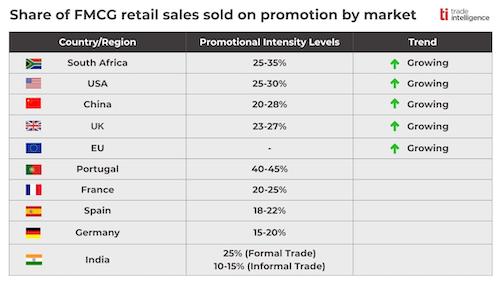
South Africa has one of the highest levels of ‘promotional intensity’ in the world, with a significant share of sales driven by specials.

As seen in the global comparison table, South Africa has a high and increasing reliance on special offers, discounts and promotions. Looking at the retailers specifically, Clicks is at the high-end of the spectrum, where 47% of revenue comes from products sold on promotion (rising steadily from 41% in 2021). There are different attitudes to promotional intensity levels, with Clicks embracing its high level of promotional intensity, while Shoprite warns of margin erosion.

When Value Loses Its Sparkle

Promotions have become central to winning footfall and driving volume, resulting in a landscape where deals are expected rather than exceptional, and where promotional noise makes it harder for retailers and brands to stand out.

A key pitfall of sustained, high promotional activity across the market is that promotions do not automatically build loyalty. ‘Shoppers are highly fluid, cherry-picking offers across retailers and brands, and they are often guided by loyalty apps and digital price comparisons,’ explained Nicola Allen, senior analyst at Trade Intelligence. According to Trade Intelligence research, 58% of South African household shoppers shop at four or more different retailers and have on average 3.6 loyalty cards. ‘The abundance and constant nature of promotions has also led to the emergence of ‘promo-only shoppers’, who wait for their items to go on promotion before buying,’ continued Allen.

At the same time, retailers and manufacturers face limits on how much cost pressure they can absorb internally, how aggressively they can promote, and how far prices can be pushed without undermining brand positioning or shopper trust. High promotional intensity brings diminishing returns, margin pressure and narrows the scope for further price-led growth. The way value is delivered must evolve.

The Next Phase Of Value

‘The current environment is likely to result in two key shifts – greater personalisation versus everyday low pricing,’ said Allen.

Focus is moving towards more personalised offers, based on how, where and what people buy. Loyalty programme data is central to this change, increasingly determining who gets which deals and when. Rather than offering the same promotions to everyone, value is becoming more targeted and behaviour-led, reflected in initiatives such as Woolworths’ relaunched WRewards programme.

Meanwhile, other retailers are placing greater emphasis on managing price perception through consistent everyday pricing and credible value cues, rather than relying on frequent or constant promotions. Retailers such as Boxer, Makro and the recently opened Walmart stores lean more heavily on EDLP (everyday low price) strategies, using stable pricing to signal value and build trust.

Behind these shifts sits a commercial reality: retailers and suppliers are trying to balance affordability for shoppers with sustainability, what makes financial sense and is viable for their businesses? And for shoppers, the result is likely to be a value experience that feels less noisy, more personalised and, over time, more predictable, even as price sensitivity remains high.

Value is not losing importance in South African FMCG retail, but it is changing shape. While still driving volumes, simply increasing promotional intensity or discount depth delivers less loyalty and profit for both retailers and brands.

Value Is Changing Shape In South African FMCG Retail

SAMJANE COMMUNICATION
www.samjane.co.za


Tik Tok Sponsors A Special Award At The One Club 2026 Show

Tik Tok Sponsors A Special Award at The One Club 2026 Show

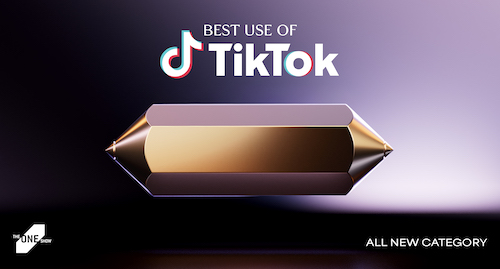
The One Club for Creativity has expanded its ongoing partnership with TikTok with the launch of the new Best Use of TikTok award as part The One Show 2026. As a special award sponsored by TikTok, there is no fee to enter.

The new award, established in recognition of the importance of short-form video and rise of creator content, will honour a brand’s exceptional use of TikTok, embracing the network’s native behaviors, creative tools, and storytelling styles to build cultural relevance and measurable impact.

Winning Entries Will Meaningfully Lean Into One Or More Of TikTok’s Core Pillars:

– Community – Showing up authentically to engage, activate, or celebrate a TikTok community and turning participation into momentum.
– Discovery – Turning exploration and insights into ideas that resonate with people.
– Sound – Leveraging or creating original audio or trending sounds to drive discovery and creative expression.
– Co-Creation – Using duet, stitch, challenges, or other collaborative tools to spark user-generated content and invite participation.
– Entertainment – Delivering joyful, surprising, or culturally relevant storytelling that feels native to TikTok’s creative ecosystem.
– Impact – Creativity backed by performance, generating ideas that drive tangible business growth.

Best Use of TikTok entrants will be asked to provide a written description of the campaign background, creative idea, insights and strategy, execution, and results. Case studies are encouraged.

Entries should demonstrate cultural and/or commercial impact through engagement metrics, earned media pickup, video views or completion rates, brand lift, or sales outcomes.

‘We’re excited to deepen our relationship with The One Club for Creativity by introducing the Best Use of TikTok Award at The One Show,’ said Krystle Watler, Head of Integrated MarComms, NA, TikTok For Business. ‘Building on three years of collaboration through the ONE Creator Lab, this next chapter will celebrate standout campaigns from brands and agencies pushing creative boundaries and driving tangible business impact on TikTok.’

Judged by The One Show 2026 Social Media and Creator Content jury, the new special award competition is free to enter by the February 20, 2026 deadline, and open to entrants ranging from global brands to small business owners and creators. To be eligible, work must have launched between January 1, 2025 and February 20, 2026.

Finalists will be announced in early May 2026, with the Best Use of TikTok winner revealed on stage at The One Show 2026 awards ceremony on May 15 during Creative Week 2026 in New York.

The new award is the latest example of The One Club’s ongoing relationship with TikTok. This includes TikTok’s role as founding partner of the club’s ground-breaking ONE Creator Lab, the industry’s first and only free training program that helps creators get jobs at agencies and brands.

Established in 2023 and sponsored by TikTok to help agencies and brands fill the talent gap and meet the growing demand for relevant branded content, ONE Creator Lab cohorts in New York and Los Angeles have to date had more than 120 young creators pass through the program. Sessions are led by agency, creator, and tech industry experts, and curriculum continually changes as tech tools, platforms, and consumer habits evolve.

For more information about The One Show 2026 Best Use of TikTok competition and to enter, please visit the entry page.

THE ONE CLUB
https://www.oneclub.org


The Weight Of The Word – How Paper Carries Our World

The Weight of the Word- How Paper Carries Our World

According to Mickael Minot, Brand Owner Director at James Cropper, in the right hands paper can be more than just a medium. It can be part of the message in itself, one that consumers can reach out and touch for themselves as part of a true multi-sensory experience.

It is a material that we ask to carry a lot, both literally and metaphorically. When you need to send important information, you use paper documents. When you need to protect heavy or fragile items, you can pack them in heavyweight boxes made of corrugated board. And, on a deeper level, paper also carries the dyes, pigments, and messages that bring brands to life in their packaging, labels, and marketing collateral.

This sensorial quality means paper can also possess many intangible qualities that can be just as important. And like anything important, this ‘soul’ is worth investing in.

Brand Stories Made Tangible

The Weight of the Word- How Paper Carries Our World
For many of the world’s leading brands in sectors like luxury, beauty, and lifestyle, this hard-to-describe yet instantly recognisable quality is something that is earned through decades of heritage. It is central to their appeal, but it can not be bought. Instead, it stems from a reputation for quality and craftsmanship.

The packaging used to protect and market these products must reflect this craftsmanship, and that includes the materials it is made from. In paper, each sheet tells a story through the way its fibres weave together, its pigmentation, and its finish, translating a brand’s values from abstract concept into something real. Packaging doesn’t just tell, it shows.

For example, paper made from recycled fibre often has its own unique look and feel that marks it out from virgin paper. Paper fibres are imbued with a sort of memory that is immediately obvious to the touch, giving recycled paper a rustic, authentic texture. It reflects the circular journey that the material has been on before, eventually landing in the consumer’s hands. Maybe it was once a notebook, a coffee cup, an item of clothing, at James Cropper, our FibreBlend Upcycled Technology includes used denim fibres, or maybe just another piece of packaging. But, crucially, that history will be passed on to the consumer as soon as they touch a piece of recycled paper material. When used in the right application, this can give packaging an invaluable authenticity, but it needs to be accounted for in the product design.

For example, material sourced from recycled office waste, such as printer paper and stationery, will often be artificially whitened. This bright whiteness is impossible to remove from the fibres during production, so the colour matching, printing, and finishing processes must be tailored to deliver the desired aesthetic from the finished pack.

This kind of technical expertise and craftsmanship is an essential component when developing products with soul. Every fibre of paper carries a story, but the magic of stories lies in how they are told.

From The Forest To The Shelf

The Weight of the Word- How Paper Carries Our World

Virgin fibres come with their own story, but once again, it requires a level of craftsmanship to tap into. Each forest contains different types of tree fibre that can have a subtle but noticeable effect on the end product, demanding a transparent and precise approach to material sourcing.

While often more controllable than the variables that come with recycled material, these differences can still affect the texture and colour properties of the finished paper, requiring a careful approach to colour matching depending on the final application of the product.

Colour formulation is where these nuances truly come to life. Fibre tone, absorbency, and surface formation all influence how pigments behave once they touch the sheet. Even the smallest shifts in fibre chemistry can subtly alter how colour appears under different lighting conditions, how it saturates, and how it ages. This is why working with virgin fibre is not simply about purity. It is about control, predictability, and the ability to design colour with absolute intent.

For luxury brands, where a trademark colour can be a signature as recognisable as any logo, this fidelity is everything. A red that is fractionally too blue, or a black that reflects slightly too much light, can break the continuity of a brand identity that has taken decades to cultivate.

The soul of virgin fibre also lies in its tactile personality. As these fibres have not yet been through the mechanical stresses of recycling, they offer strength and length that create exceptionally clean formation. This produces surfaces with remarkable smoothness or, conversely, enable the engineering of specific tactile experiences, from velvety mattes to crisp, lightly textured finishes. These finishes become part of the experiential language of a brand. They can convey luxury before a product is even purchased, setting expectations through touch alone.

However, the real mark of craftsmanship is not simply selecting virgin fibre but shaping it with purpose. It’s about understanding how a material will behave when it is foil-blocked, embossed, die-cut, or laminated; how it will perform in fast-paced converting environments; how it will retain its beauty after thousands of consumer interactions. It’s also about ensuring that virgin fibre papers meet today’s expectations around sustainability – sourced responsibly, processed cleanly, and designed to last.

The Craft Of Bringing Soul To Life

The Weight of the Word- How Paper Carries Our World

Ultimately, whether a sheet begins its journey as recycled fibre or as virgin pulp, what gives it soul is not its origin but its transformation. It is the intimate, collaborative process between brand, designer, and paper supplier, the iterative trials, the micro-adjustments, the shared pursuit of the perfect tone or texture, that turns a raw material into a meaningful medium.

This is what James Cropper has specialised in for generations. We do not simply make paper; we help craft the physical expression of a brand’s identity. Every pigment choice, fibre blend and finish is an act of storytelling. And in a world where digital touchpoints dominate, these physical moments of connection have never mattered more.

When paper holds a brand’s soul, consumers feel it instantly. It becomes part of the ritual of unboxing, the surprise of first touch, and the memory of a colour or texture that lingers long after the product is used. It elevates packaging from something functional to something emotionally powerful; a sensory ambassador for everything the brand stands for. The soul of paper isn’t found – it’s made. And it’s made through partnership, precision, and a commitment to the craft that endures from the first sheet to the millionth and beyond.


JAMES CROPPER

https://jamescropper.com

NYF Advertising Awards Open For Entries

NYF Advertising Awards Open For Entries

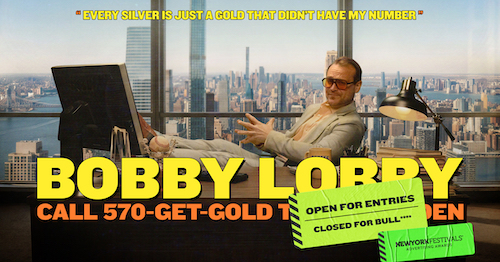
The New York Festivals Advertising Awards is now open for entries, kicking off a new season with a sharp, self-aware campaign from Grey New York. In the new campaign created by Grey New York, ‘Bobby Lobby,’ skewers awards-chasing culture with a wink and a well-aimed jab.

The work introduces a self-proclaimed ‘jury whisperer’ who claims to offer insider influence, secret shortcuts, and guaranteed gold, lampooning the persistent myth that awards can be gamed rather than earned. Through exaggerated promises and satirical storytelling, the campaign reminds the industry that it’s the work, not the gimmicks, that truly wins recognition.

‘Every silver is just a gold that didn’t call my number,’ Bobby Lobby proclaims, while offering hopeful entrants a direct line to success at 570-GET-GOLD. The joke lands by leaning fully into the absurdity of influence peddling, exposing how hollow those promises really are. And for added measure, 570-GET-GOLD (570-438-4653) is a live phone number that entrants can call to get in touch with Bobby directly.

The new campaign consists of video, digital/social, a phone number and print campaign and is an irreverent, over-the-top take on modern awards culture. It culminates in the pointed tagline, ‘Open for entries … Closed for BullSh*t,’ underscoring NYF’s commitment to honouring work that is brave, innovative, and impactful, while shutting the door on anything that distracts from real creativity.

‘As an industry, we sometimes spend more time chasing the perception of winning than doing the kind of work that actually deserves it,’ said Gabriel Schmitt, Global Chief Creative Officer of Grey. ‘Bobby Lobby is our way of highlighting that with humor, by exaggerating the nonsense and, in doing so, refocusing the conversation on craft, originality, and ideas that genuinely move the industry forward.’ ‘We’re thrilled with this year’s provocative work from Grey New York,’ said Scott Rose, President of New York Festivals. ‘Teaming up with Grey continues to push boundaries, and their distinctive voice reinforces the New York Festivals Advertising Awards’ commitment to celebrating work that demonstrates genuine creativity, innovation, and impact.’

The 2026 season marks a significant evolution for the New York Festivals Advertising Awards, with a substantially expanded in-person judging program developed in partnership with the 4A’s. This year’s competition includes seven Executive Juries, culminating in a single, curated Executive Jury experience in early June at The Crosby Hotel in New York City. ‘This year’s expanded Executive Juries and collaboration with the 4A’s provide even greater value for agencies and entrants, offering enhanced opportunities for meaningful feedback, industry dialogue, and recognition on a global stage,’ said Scott Rose.

Presiding over the 2026 Executive Jury is Andrea Diquez, Global CEO of GUT, serving as Executive Jury President. Renowned for building iconic brands and driving transformative creative strategies, Diquez will curate and guide the jury, an international roster of creative visionaries selecting the year’s most innovative and inspiring work across all categories.

For 2026, the competition introduces several fresh, up-to-the-minute, and expanded category groups, including Creative Effectiveness, Sports, and Real Ass Ads, a much-needed category celebrating the work that truly sells the product and keeps the industry moving, even if it does not make the headlines. Also unveiled for 2026, a new Baked in New York category group recognises creative excellence led from New York–based agencies, and The Future Now category expands to spotlight meaningful, bespoke uses of technology that deliver innovation and elevate the consumer experience.

The 2026 New York Festivals Advertising Awards are officially open for entries. Creatives, agencies, and brands worldwide are invited to submit work that demonstrates bold ideas, measurable impact, and creative effectiveness and to join the movement to redefine what it means to create truly award-worthy advertising.

The New York Festivals Advertising Awards competition receives entries from more than 60 countries and is judged by more than 400 members of NYF’s Executive Jury panels and Shortlist Jury, who collectively cast their votes to select the year’s most impressive trophy-winning work.

The official deadline to enter the 2026 New York Festivals Advertising Awards is April 23, 2026. For more information on categories, rules, and regulations, visit HERE. View the 2025 Advertising Awards winners’ showcase.

About New York Festivals:
New York Festivals® Celebrating the World’s Best Work since 1957
Advertising Awards
AME Awards ®
NYF Health ®
Radio Awards ®
TV & Film Awards®

Entries to each of the competitions are judged around the world by panels of peers in their respective industries. For more information, go to www.newyorkfestivals.com.
Media Contact: Gayle Seminara Mandel/ SVP, Director of Communications, New York Festivals /Gayle.Mandel@NewYorkFestivals.com


NEW YORK FESTIVALS ADVERTISING AWARDS
www.newyorkfestivals.com

Modern Car Consumers Are Choosing Purpose-Driven Relationships With Mobility

Modern Car Consumers Are Choosing Purpose-Driven Relationships With Mobility
Adheesh Ori, Senior Director within Accenture Song South Africa.

According to Adheesh Ori, Senior Director within Accenture Song South Africa, the South African automotive landscape is clearly evolving, not only through technology or electrification, but in the mindset of the customer behind the purchase. The modern buyer is moving away from a transactional interaction and toward a more personal, purpose-driven relationship with mobility.

They are not just shopping for a vehicle, they are choosing a brand that understands their life, their pressures, and their aspirations. In this environment, automotive organisations; from manufacturers and dealerships to finance and mobility service providers, can no longer default to old engagement models. Relevance depends on a deeper connection to the customer’s lived experience.

Where a purchase once centred mostly on reliability, affordability, and resale value, today there is an emotional dimension that carries equal weight. A customer still cares about practicality, but now also wants a vehicle aligned with identity and values: sustainability, social responsibility, personal safety, and lifestyle. Buying used to be a linear experience: walk into a dealership, ask a few questions, inspect the car. That has been replaced by a more informed and autonomous journey. Customers arrive having already watched user reviews, compared multiple quotes digitally, read online forums, and even engaged AI tools for recommendations. The car decision is more than a technical choice – it’s a reflection of self. As electric vehicles, plug-in hybrids, and increasingly intelligent onboard technology edge into mainstream availability, mobility expectations are shifting from product-first to purpose-first. Brands are expected to engage with authenticity, not merely sales scripts.

Questions that customers pose today reveal this blend of emotional and analytical thinking: Is the car safe for my family? Does it meet environmental concerns? Can I afford ongoing ownership, not just the purchase price? How will I be treated when service intervals come up? The answers to these questions call for more than a spec sheet – they require a human-centred interaction.

Digital touchpoints are now central to this journey. South Africans have embraced digital services across retail and financial sectors, and automotive has followed naturally. Researching online, booking test drives, receiving service notifications, comparing insurance and funding options – these digital steps are now embedded in the path to purchase. Yet full automation is not the goal. The customer still seeks reassurance when committing to a high-value asset. This has created the rise of the ‘phygital’ customer journey: the convenience of digital information with the reassurance of human contact. The website or platform acts as the gateway, but the in-person consultation remains a decisive moment. Digital assists exploration; human interaction secures trust.

Financing has become another space where expectations have accelerated. South Africans want transparency, flexibility, and solutions that reflect real-world financial rhythms. The conversation is no longer confined to credit approval. Customers are equally focused on long-term affordability: service costs, balloon payments, interest volatility, and running expenses. Automotive financing has begun to diversify, with subscription models, alternative financing structures, mobile-led credit assessments, integrated insurance, and accommodation for irregular income streams. Instead of one-size-fits-all, the trend is toward adaptive finance that reflects the variability of South African household economics.

Parallel to these developments is the transformation of the car itself. A modern vehicle integrates software as fundamentally as hardware. Features such as adaptive cruise control, lane assist, cloud-linked navigation, and even semi-autonomous functionality have increasingly become standard. Vehicles are evolving into mobile computing environments where software experiences can be upgraded, expanded, and personalised. This raises important questions regarding lifecycle and value: if a laptop becomes obsolete after a few years of software evolution, how does long-term car ownership adapt to code-driven capability? The automotive ecosystem of manufacturers, finance providers, and service networks must grapple with the reality that future value will be determined as much by digital functionality as by mechanical performance. For South Africa, where longevity and affordability are essential, any solution must be grounded in human-centred thinking.

Another critical shift is visible in after-sales expectations. The service experience has always mattered, but it now sits at the core of loyalty and advocacy. Customers increasingly expect proactive engagement: service reminders, transparent communication, recall campaigns and a streamlined booking process. Trust is earned through operational reliability – clear scheduling, fair pricing, convenient mobility support while a vehicle is in service. A brand’s reputation is shaped not only in showrooms but in interactions months and years after purchase. A follow-up message, a clear explanation, or an easy digital service touchpoint becomes the quiet differentiator that sustains loyalty.

A further element shaping the local market is the importance of context. While global automotive trends offer valuable insight, South Africa presents distinct conditions. Customers expect vehicles that accommodate local realities, from infrastructure and road terrain to security considerations. Digital tools should reflect linguistic and cultural diversity. Insurance models need to consider geographic risk factors as well as financial ones. Engagement strategies must account for how customers live and travel, not just how they browse or buy. The brands that succeed will be those that blend international innovation with local intimacy, cultural awareness and master the phygital customer moments that matter. Real connection happens when we design for real life, not just for the trend report.

Micromobility must deliver affordable, accessible transport solutions for South Africans across the two-, three-, and light four-wheeler segments. This enables businesses to solve last-mile delivery challenges nationwide while building an EV and battery ecosystem that meaningfully reduces cost per drop. Through inclusive growth, mobility becomes a practical, scalable enabler of economic participation for every South African.

The South African automotive customers are no longer passive or predictable. They are digitally native, socially aware, financially cautious, brand purpose led, yet experience driven. Their purchasing behaviour is shaped not only by affordability, but by alignment with personal values and long-term lifestyle impact. They are asking what a vehicle communicates about them, how it supports their life, and how a brand accompanies them through ownership – not just the day of sale. This is a moment where the industry is challenged to move beyond selling products and toward solving needs, building relationships, and thinking deeply about the human being at the centre of mobility, And if we design around people, their lives, choices and stories, we won’t just sell more cars, we will build deeper trust and better journeys. Let’s make the customer experience match the expectation, one moment at a time.


ACCENTURE SONG
https://www.accenture.com/za-en/


Brands Should Interrogate Their Data And Demand Verified Truth

Brands Should Interrogate Their Data And Demand Verified Truth
Ross Joughin, Synapser.

According to Ross Joughin, Chief Commercial Officer at Synapser, South Africa’s consumer landscape is becoming increasingly complex, and far harder to read with confidence. Spending power is under strain, and behaviour differs sharply across regions and demographics. As a result, decisions driven by poor-quality or unverified data are becoming an expensive liability.

In this environment, the real question facing brand managers is no longer ‘Do we have data?’ but rather ‘Can we trust the data we’re using?’. For many brands, especially those targeting lower LSMs, the answer is becoming uncertain. Traditional fieldwork is costly, slow, and often fails to reach these communities – markets that hold enormous purchasing power yet seldom appear accurately in research samples. Digital DIY tools promised reach, speed, and cost efficiency, but are struggling with bot activity, duplicated profiles, and unverifiable respondents. And with a major global measurement provider exiting South Africa in 2026, the industry will soon face a significant capability gap.

The risk of relying on insights from unverified respondents is real. When databases are flawed, samples can mask fundamental issues. Decisions that initially appear to be supported by rich information can collapse under scrutiny when respondents are not who they claim to be. Campaigns and new products may be approved, a budget reallocated, or a national rollout planned based on data that simply does not reflect how real consumers live, move, or buy. Without validated, contextually enriched data, brands cannot accurately size an opportunity, identify product-market fit, or understand the real-world behaviour behind a ‘yes’ on a survey.

And, in a fragmented market like South Africa’s, where access, mobility, income, and connectivity vary dramatically, this can translate directly into wasted spend. This is where locally developed, verified digital identity ecosystems are becoming critical. When responses come from databases with authenticated individuals and are enriched with contextual profiling (while remaining POPIA-compliant and fully anonymised), brands can finally understand who is answering, as opposed to just what the respondents are answering. Communities become visible at scale. Insights become faster, more granular, and more reflective of real consumer habits. And the cost comes down.

Databases built on verified digital identities, like Synapser’s Gain For Me platform, are enabling this shift. Each of the 100,000+ members’ identities is authenticated through proprietary technology, the protection of their personal information is compliant, and they choose which surveys to participate in and are meaningfully rewarded for doing so. This ensures a database that contains actual people, not bots or recycled profiles, and one in which respondents are genuinely engaged and honest.

Insight interfaces are built with the future in mind: flexible, fast, and enriched by a deep understanding of who the respondents actually are. These tools allow brands to run precise queries identifying potential buyers in a specific suburb, around a particular retail node, or within a defined demographic band without ever accessing personal identities and to receive validated, human-generated insights in near-real time’.

Ultimately, the brands that thrive will be those that interrogate the quality of their information and demand verified truth, not just data. Truth that is grounded in South African realities, not assumptions. Truth that enables them to make confident decisions and act fast to seize or make opportunities.
And for South African marketers, this shift from information to certainty is fast becoming the line between momentum and mediocrity.


SYANPSER’S

https://www.synapser.com/

The Next Era Of CX Will Be Won By Trust And Journey Continuity

The Next Era Of CX Will Be Won By Trust And Journey Continuity
Liezel Jonkheid, Consumer Psychology Lab.

According to Liezel Jonkheid, Director and Founder of the Consumer Psychology Lab, 2025 brought a new level of intensity to customer experience (CX) and consumer behaviour. In 2025 AI went mainstream, but customers stayed stubbornly human. They didn’t reward brands for deploying technology – they rewarded brands for solving their problems quickly, fairly, and with empathy.

As satisfaction measures softened in multiple markets, the lesson became clear: the next era of CX will not be won by automation and technology alone. It will be won by trust, journey continuity, and disciplined ‘human + tech’ design that improves outcomes that customers can feel.

Here’s The Consumer Psychology Lab’s Observations Of What Emerged Over The Last Year On The Consumer Behaviour Front:

1. Convenience Is The New Standard
Consumers now expect speed and seamless service as the norm, not the exception. E-commerce players like CheckerSixty-60 are setting the benchmark for delivery standards, much like Amazon did in the US. Brands that combine fast delivery with flexible, no-nonsense returns are winning the race for consumer loyalty.

2. The Expectation Gap Is Real
Consumers are less forgiving of organisations stuck with outdated, legacy systems. New players, especially digitally savvy and customer centric entrants like challenger banks, are capitalising on this by connecting the dots and creating personalised experiences. Technology is no longer just for Gen Z, every generation now expects instant access to content, services, and solutions.

3. AI In Customer Service: Efficiency vs Trust
AI may have made service faster, but often at the cost of human connection. While AI offers efficiency on some level, it has not yet built the confidence and trust consumers crave in brands to resolve problems effectively. Many consumers struggle to resolve complex issues without speaking to a person.

The 2026 Qualtrics Customer Experience Trends Report, based on a survey of 20,000 consumers from 14 countries and across 18 industries framed it best. While overall consumer comfort with AI has substantially improved, it reported, nearly one in five consumers said using AI for customer support did not provide any benefit at all, a failure rate four times higher than other AI applications. The key issue is companies are so far using AI to solve their own problems (high customer service costs, for example) instead of their customers’ problems. Forrester points out in its CX predictions for 2026 that three in ten firms will harm their total-experience growth with frustrating AI self-service.

4. Trust Is Central
Trust has never been more important – particularly in South Africa. Sophisticated scams leveraging trusted brands are making consumers wary. Banks, mobile providers, and insurers must work harder to prove authenticity and safeguard relationships as they have been most targeted by fraudsters.

5. Personalisation Drives Loyalty
Generic service no longer cuts it. Personalisation is key to building emotional connections and trust. Consumers want to feel seen, understood, and valued, and will reward brands that deliver this consistently. But it comes with a qualifier, customers want personalisation, but not at the cost of privacy or feeling manipulated. Brands need to strike the balance between trusted personalisation versus creepy personalisation. Allow customers to retain control over their data and disclosures and make this personalisation part of the experience.

6. Voice Is Making A Comeback
After years of self-service and chat-first experiences, voice is resurging as a preferred engagement channel. Maik Hummel, Principal AI Evangelist at Parloa, predicted for 2025:
‘Even younger consumers, who have leaned on chat or self-service portals, are returning to voice in greater numbers.’

AI helps understand customer needs and pain points, but survey fatigue is at an all-time high, making authentic voice (human) interactions increasingly valuable. Forrester also calls out the ‘metric obsession’ with automated surveys as a trap: reporting without meaning won’t tell you what to solve or why it matters.

7. Loyalty Goes Beyond Rewards
Transactional loyalty is no longer enough. Measure what customers feel, not only what you sell/offer. Today, consumers want to feel genuinely heard. Brands that succeed in acknowledging and acting on customer feedback will build the strongest connections.

8. Resilience Is Essential
South Africans have adapted to disruptions like power outages, but new challenges, such as water shortages, remain. Businesses and individuals alike are investing in resilience, ensuring continuity despite ongoing obstacles, but this affects disposable income and emotional tolerance. Understand the impact of this on consumer behaviour as people grapple with uncertainty, dwindling consumer confidence, instability and seriously constrained spending.

9. Priorities Are Shifting
Consumers increasingly value experiences, community, and self-development. Travel and leisure now reflect more inclusive lifestyles, such as the rise in pet-friendly accommodations and family-focused activities.

2025 has shown that CX is no longer just about service and tech stacks, it’s about connection, trust, and responsiveness. Brands that embrace personalisation, rebuild authentic human engagement, and prioritise consumer needs will not just survive, they will thrive.


CONSUMER PSYCHOLOGY LAB
https://consumerlab.co.za


This is Modern Marketing