Home Blog Page 40

Provantage Announces New Collaboration With OOH Advertising Technology Provider

Provantage Announces New Collaboration With OOH Advertising Technology Provider
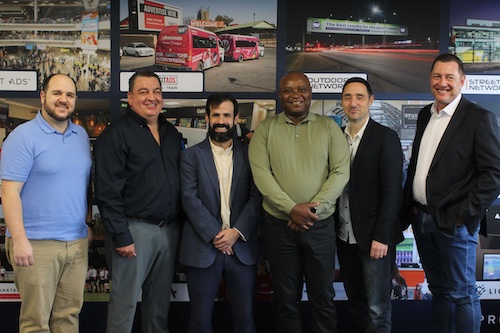
Ivan Maroto Lozano, Product Specialist at Broadsign, Johan Scholtz, Chief Financial Officer at Provantage, Miguel Castañón, Sales Director, EMEA at Broadsign, Mzi Deliwe, Deputy Chief Executive Officer at Provantage, Savvas Tombouloglou, Account Director, EMEA at Broadsign and Jacques du Preez, Chief Executive Officer at Provantage.

The next era of Out-of-Home (OOH) media has landed in South Africa as Provantage announces a new collaboration with leading OOH advertising technology provider Broadsign. The transition brings Provantage’s content management and scheduling operations for Digital OOH (DOOH) and static OOH into a single globally recognised platform, creating a new operational backbone for South African OOH.

Standardised workflows, strengthened compliance structures, consistent reporting and smarter network optimisation now sit under one unified Broadsign system: enhancing efficiency and reinforcing the reliability of the medium for agencies and advertisers.

The move unifies the group’s digital and static operations within one future-ready ecosystem powered by the Broadsign Platform. With this agreement, Provantage, one of the continent’s largest DOOH holding, becomes the first South African media owner to use Broadsign as a fully integrated, group-wide operating system.

Jacques du Preez, CEO of Provantage, said the collaboration is a strategic enabler for where the industry is heading: ‘OOH is entering an inflection point. Brands want precision, transparency and accountability; the same expectations they apply to every digital channel. By consolidating our networks within a single Broadsign environment, we are building the infrastructure that delivers greater sophistication in how our clients plan, buy and measure OOH.’

‘The consolidation of Provantage’s networks within the Broadsign ecosystem sets the stage for the next evolution of its digital transformation in South Africa. Our work together will help streamline current operations and unlock more connected, data-enriched workflows across Provantage’s digital and static inventory. It’s a big leap forward for OOH in South Africa, and we’re excited to work alongside their incredible team to make more digital and programmatic inventory accessible to buyers across the region,’ said Frank Vallenga, Vice President, Platform Sales, EMEA and SEA, Broadsign.

The collaboration lays the foundation for future programmatic buying across Provantage’s place-based digital networks. By consolidating its digital portfolio into one ecosystem, the group is now technically positioned to enable programmatic capabilities in later phases across environments such as, Airport TV, Golf TV, Mall TV, Pharma TV and Transit TV.

Static OOH also gains a strengthened operational framework through the introduction of a unified system for processes that were previously dispersed. Broadsign’s workflow tools will centralise asset records, posting schedules, stock management, photo sheets and proof-of-flighting in one place. For advertisers, this supports cleaner governance and more consistent delivery across Provantage’s high-impact static environments.

Du Preez added, ‘The value of OOH lies in being measurable, connected and integrated into the wider digital economy. Our work with Broadsign is a structural investment in the future of how brands will engage people in the physical world.’

PROVANTAGE
www.provantage.co.za

How To Navigate Digital Environments Where Truth Is Optional And Outrage Is Engineered

How To Navigate Digital Environments Where Truth Is Optional And Outrage Is Engineered
Robin Scher, Razor PR.

According to Robin Scher, Content Director Razor PR, in an information economy where low‑cost misinformation can travel farther than truth, fabricated stories, AI‑generated news and ‘rage‑bait’ now shape public perception.

Last November, News24 traced hundreds of fake news stories targeting South Africa back to a small marketing company in northern India. What they discovered was an unremarkable office wedged between a gym and a car dealership. From that unlikely address, a handful of people quietly built a global network of hijacked websites, replacing real organisations’ domains with AI-generated news posing as journalism.

Their motive was commercial, not ideological. But the consequences travelled far beyond their street in Dehradun. Some of these fabricated stories reached mainstream audiences, prompting formal government clarifications in multiple countries.

It’s a fitting example for the information environment we now communicate in where a low-cost, low-effort operation can produce disproportionate impact and falsehoods travel faster than corrections. This is a digital ecosystem that rewards attention over truth, prompting us to ask: if this is all it takes to distort public perception, what does it mean for those of us whose work depends on credibility?

For a long time we described the internet as ‘noisy’. But noise was something we could manage. What we face now is active distortion that’s structural, systemic and baked into the incentives of the platforms themselves. That reality was confirmed at the end of 2025 when Oxford University Press announced that its Word of the Year is ‘rage bait’. The term has tripled in usage over the past twelve months, defined as online content deliberately engineered to provoke anger or outrage to drive engagement.

According to Oxford Languages, its very existence reflects how aware people are becoming of the manipulation tactics shaping their digital experiences and how much more vulnerable audiences have become to emotional exploitation online.

Inside this environment, even legitimate newsrooms feel the pressure to adopt sensationalist tones to compete with machine-generated provocation. And the rise of generative AI has compounded the issue. NewsGuard’s latest audit shows that major AI tools now repeat false information more than a third of the time, almost double the rate of last year. The result is a toxic feedback loop where the content we consume is increasingly polluted by fabricated articles, synthetic personas and coordinated behaviour designed to manipulate engagement.

Naturally, trust is becoming more and more fragile in response. The latest Ipsos Reputation Council sitting shows how hesitant leaders have become about speaking publicly on complex issues. Only 21% are prepared to do so. Yet more than half still believe ESG is fundamentally reshaping business operations, even as caution grows around how loudly or publicly those commitments are expressed. It’s a paradox that reflects the fact that organisations know they need to act, but fear how their actions will be interpreted in an ecosystem prone to misreading everything.

On top of all of this we have the broader democratic picture. The 2025 Global State of Democracy report shows measurable declines in press freedom, freedom of expression and access to justice. More than half the countries assessed saw deterioration in at least one democratic indicator in the last five years. Within this deteriorating trust environment, communicators are expected to still operate as though the rules haven’t changed. But they have changed. And the implications for reputation are significant.

The work of communication has shifted from message management to meaning management. Reputations no longer move at the speed of media cycles, but the speed of algorithms that are prone to scraping, remixing and refracting messages back without care for context.

Which means communicators need to rethink their role. Credibility has to be actively built, defended and continually reinforced. That requires us to pay close attention to everything being said about an organisation, especially when false narratives arise. To counter this, we need a more human approach to storytelling, because audiences may be fragmented, but they still respond to clarity, empathy and authenticity. And it calls for a louder push for platform accountability, because the opacity of algorithmic decision-making now holds serious reputational implications.

The News24 investigation is a reminder that the information environment has outpaced the systems designed to safeguard it. Reputations now live in a digital environment where truth is optional and outrage is engineered. As communicators, if we don’t adapt to how this reality shapes the way people understand institutions, brands and public life, we risk it becoming even harder to navigate. The truth may not protect itself anymore. But we still can.

RAZOR PR
www.razorpr.co.za

Machine’s Director Of Specialist Content And Communications Appointed IFICA’s Acting President

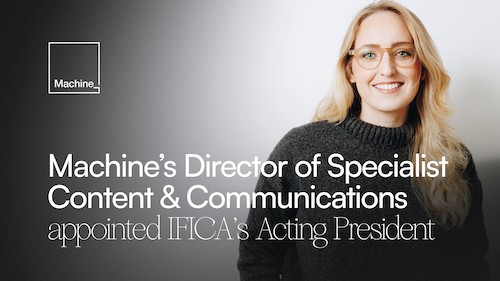
Machine’s Director of Specialist Content & Communications appointed IFICA’s Acting President

The Institute for Internal Communication Africa (IFICA) has announced that its Founding President, Adesh Chetram, has chosen to step down in his operational capacity and will join IFICA’s Advisory Board. Demonstrating continuity of leadership and the vision of IFICA, Machine’s Director of Specialist Content and Communication. Sarah Browning-de Villiers, who currently serves on IFICA’s Advisory Board, has been appointed Acting President of IFICA.

Adesh will continue to provide guidance to Sarah and the management team in his role on IFICA’s Advisory Board.

Browning-de Villiers is the Director of Specialist Content & Communication at Machine/Publicis Groupe Africa, where she leads the Centre of Excellence for internal communications, B2B, content marketing and CRM and loyalty. She was the co-founder of the IAB SA’s Digital Content Marketing Committee, and is experienced not only across internal communications, but also in leading industry bodies. ‘I am excited to take over from Chetram in an acting capacity into 2026, and to deepen my operational involvement in the incredible work of IFICA, championing the discipline of internal communications on the continent,’ said Browning-de Villiers.

‘I am delighted to be able to pass on the baton to someone such as Browning-de Villiers, already so well entrenched in IFICA, and with deep experience in internal communications,’ added Chetram. ‘I remain committed to IFICA in my role on the Advisory Board.’

‘Browning-de Villiers and her team of internal communications specialists service clients across the globe, so she is well positioned to support IFICA and its network of internal communications specialists,’ said Lesego Kotane, Machine’s Managing Director. ‘Employee engagement and experience are critical for the success of any business, which is why we believe wholeheartedly in investing in the specialist discipline of internal communications, and partnering with IFICA.’

MACHINE
www.thisismachine.co.za

Key Shifts Shaping Out Of Home Planning

Key Shifts Shaping Out Of Home Planning

According to Steve Duck, Chief Revenue Officer, Media at Tractor Outdoor, from legal enforcement to smarter planning and stronger measurement, out of home (OOH), including digital out of home (DOOH), is levelling up on every front.

As one of the few media channels that reaches people in the real world rather than on a device, it’s evolving quickly to match how audiences move, behave and pay attention. This makes it one of the most exciting and dynamic arenas available to brands – who will have to adapt fast if they want to use it well in 2026.

1. Legal Compliance Will Be The Top Priority

South Africa’s OOH landscape has long been viewed by some as a bit of a ‘wild west’, with billboards rising and falling with impunity. But Johannesburg, previously perceived as less stringent than the Western Cape when it comes to OOH site legalities, is now showing a more assertive approach, including the removal of unauthorised structures along major routes like Winnie Mandela Drive, demonstrating that compliance with municipal by-laws and safety standards is becoming a growing priority.

Media buyers have argued that they rely on their partners to secure the right approvals, yet the City has made its position increasingly clear: if a structure isn’t permitted, it may be subject to removal, and further action will follow. More striking still is how far accountability has shifted. Councils are now, in some instances, issuing legal notices directly to CEOs and CMOs when their brands appear on illegal sites, regardless of who handled the booking. The old assumption that someone else checked the paperwork is being challenged, with greater emphasis on the brand undertaking due diligence.

Cape Town presents a different picture. It’s clearer by-laws, approval processes and consistent enforcement have created an environment where proper compliance is achievable and the risks are far lower. Johannesburg’s more complex and evolving regulatory environment has turned, ‘Is this site legal?’ into one of the most important questions in the media planning process, while Cape Town continues to show what a well-regulated market looks like when the rules are applied evenly. In 2026, understanding the regulatory differences between cities is no longer optional, it’s central to safeguarding brand reputation and budget.

2. Direct Buying And pDOOH Will Work Together, Not Compete

For some time now, direct loop-based buying and programmatic DOOH (pDOOH) have been seen as rivals. The industry is now waking up to the fact that they aren’t opponents at all, they’re simply different tools that work best when used together. Direct buying gives a brand firm footing: consistent visibility and a sense of permanence in the landscape. Programmatic offers something complementary; it lets a campaign respond to real-world conditions, be deployed quickly and optimised for performance.

The most effective advertisers are no longer choosing one approach over the other. Instead, they’re building campaigns where direct placements provide stability and brand-building scale, programmatic layers bring agility, targeting and measurable impact. In 2026, the discussion will finally move beyond either-or thinking, and the two approaches will start functioning as a single, more intelligent way of planning OOH.

3. Advertisers Will Demand Full Visibility Into DOOH Spend

As more digital OOH spending passes through aggregators, marketers are beginning to ask a simple question:Where is our money actually going? For years, the path from budget to screen has been obscured by layers of intermediaries, each taking a portion along the way.

Brands are now realising that they often have little visibility into how much of their spend pays for real media, how much is absorbed by technology partners, and how much disappears into mark-ups they never see. That opacity is no longer acceptable. Marketers want direct sight of which screens they are buying, how inventory is allocated and optimised to meet campaign commitments, and whether they are getting the value they were promised. This shift is pulling brands closer to media owners who can provide straightforward pricing, greater control over inventory availability and immediate clarity about what they’re investing in.

In 2026, transparency stops being a nice-to-have and becomes one of the defining expectations in DOOH.

4. Brands Will Rethink What An Effective OOH Campaign Looks Like

OOH can no longer be planned by buying a lot of sites at once and assuming that broad visibility is enough. Campaigns need to be built with intention. As digital matures within OOH, brands are starting to ask more sophisticated questions: what does a ‘good’ digital holding actually look like, what benchmarks define success, and what minimum level of presence is required to deliver meaningful impact. The scale of a holding, the mix of static and digital, and the role each placement plays in the bigger picture all matter more than they ever have. While static gives a campaign its staying power, digital gives it immediacy, and when those elements are combined with care rather than habit, a campaign stops fading into the background and starts working harder for the brand.

At the same time, the medium is being judged with far more precision. Improved movement data now shows whether people actually did something after seeing an ad, which means OOH can’t rely on visibility alone. This is also pushing brands to reassess how they weight their investment geographically, questioning whether spend is being allocated in line with audience opportunity, or overly concentrated in a single region. In 2026, demonstrating measurable impact and deploying spend more deliberately across high-performing markets, such as Cape Town, that will define what an effective OOH campaign really looks like.

5. Attention Will Become The Main Currency

The most forward-looking shift for 2026 is the rise of attention as a core planning metric. New research shows that large format DOOH attracts far more focused attention than most digital channels, and holds that attention for longer. This is changing how brands judge quality. Instead of counting how many people might have passed a site, planners will want to know whether people actually looked, for how long, and under what conditions. How fast people are moving, how far away they are and the setting itself all influence how much attention a site can earn. This is why high-visibility locations with long dwell times, the true premium end of the market, will grow even more valuable.

TRACTOR OUTDOOR
www.tractoroutdoor.com

PRCA Africa Announces New Sustainability Committee Members

PRCA Africa Announces New Sustainability Committee Members.

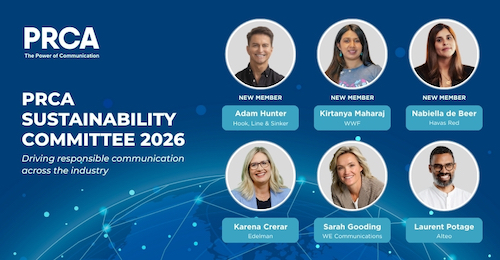
The Public Relations and Communications Association (PRCA) is the world’s largest professional PR body, representing practitioners across more than 70 countries. PRCA Africa has announced the appointment of three new members to its Sustainability Committee: Adam Hunter, Managing Director of Hook, Line & Sinker; Kirtanya Maharaj, Manager of WWF-SASSI (Southern African Sustainable Seafood Initiative) at the World Wide Fund for Nature (WWF South Africa); and Nabiella de Beer, Head of PR at Havas Red (part of Havas PR South Africa).

PRCA’s global mission is to raise standards, promote ethical practice and support the continuous development of the communications industry. As part of this mission, PRCA operates a network of regional bodies, including PRCA Africa, which focuses on strengthening the professionalism, innovation and impact of communicators across the continent.

PRCA Africa’s mandate includes developing strategic committees that guide the industry in key focus areas such as Ethics and Practices, Education & Talent, Innovation, Diversity and Inclusion and Sustainability. Within this structure, the Sustainability Committee exists to advance responsible, science-aligned environmental communication and ensure African communicators are equipped to navigate climate misinformation, ESG scrutiny, greenwashing risks and the growing expectation for credible, transparent sustainability storytelling. The appointment of Hunter, Maharaj and de Beer strengthens the Committee’s capacity to deliver on this work.

Hunter joins the Committee following his work with the United Nations Development Programme (UNDP) on global climate campaigns including #ClimateCounts and the WeatherKids. Hunter brings deep expertise in narrative strategy, youth climate engagement, and data-driven climate communication. His appointment underscores the Committee’s ambition to bridge global sustainability frameworks with the realities and opportunities of pan African communications.

Maharaj brings scientific and environmental depth to the group. Her work spans biodiversity conservation, sustainable consumption, science communication, conservation education, behaviour change and community-based sustainability initiatives. Maharaj’s involvement strengthens the Committee’s ability to provide fact-based guidance and embed credible environmental insight into industry best practices and communications standards.

De Beer adds strong capability in integrated communications, purpose-led brand strategy and audience insight. De Beer has supported organisations across sectors to translate sustainability commitments into clear, accessible narratives that build trust and public understanding. Her appointment reinforces PRCA Africa’s objective to foster authentic storytelling across the continent.

The new members join the existing Committee, which includes Karena Crerar, CEO of Edelman; Sarah Gooding,Managing Director of WE Communications, and Laurent Potage, Chief Communication and Sustainability Executive at Alteo Limited.

Together, the expanded team brings a powerful combination of science-based insight, strategic communications expertise and creative climate storytelling to support PRCA Africa’s commitment to credible, transparent and impactful sustainability communication across the continent.

PRCA AFRICA
www.prca.global/about-us/global/prca-africa

Six Trends That Will Set The Agenda For Marketing Leadership In 2026

Six Trends That Will Set The Agenda For Marketing Leadership In 2026.
Darren Morris, Lucky Hustle.

According to Darren Morris, CEO of Lucky Hustle, 2026 will separate the marketers who lead from those who follow. Budgets are under strain, audiences are more elusive and technology is evolving faster than most organisations can absorb. At the same time, expectations from CEOs, boards, and customers continue to rise.

In this environment, marketing can no longer afford to be reactive or tactical. The year ahead will reward leaders who make deliberate, courageous choices about where to focus, what to simplify and how marketing creates real enterprise value.

These six trends will set the agenda for marketing leadership in 2026:

1. Marketing leaders are being pushed closer to revenue, margin, and customer lifetime value, particularly in South Africa’s low-growth economy, where every rand must justify its return. The focus is shifting away from disconnected campaigns and channel-level metrics toward building systems that drive sustained demand and measurable business impact.

Marketing teams that can clearly link their work to growth outcomes will gain credibility and influence, while those that cannot will face increased scrutiny.

2. The conversation around artificial intelligence is maturing quickly. In 2026, AI will be expected as part of how marketing operates. However, the advantage will not come from using the most tools, but from using AI with discipline and purpose.

Locally, many organisations are already experiencing the tension between rapid AI adoption and unclear returns, skills gaps, and internal resistance. The next phase of AI maturity will focus on applying it to insight generation, speed and decision-making, while ensuring that investments are measured against real business outcomes.

As I said before, AI will not replace marketers but marketers who understand how to use it well will replace those who do not.

3. More technology is no longer the answer. By 2026, marketing leaders will actively simplify their martech ecosystems to reduce complexity, cost and inefficiency.

In South Africa, where teams are often lean and budgets are constrained, bloated technology stacks slow execution and dilute insight. The competitive advantage will come from fewer, better-integrated platforms with clear ownership and accountability.

4. Brand building will increasingly be recognised as a driver of efficiency, trust, and conversion over time. In South Africa, where consumers are highly sceptical and quick to disengage from inauthentic messaging, strong brands reduce friction across the entire funnel.

Consistent storytelling, distinctive brand assets, and long-term creative platforms will be seen as essential enablers of sustainable performance.

5. Customer-centricity is a necessity. South African consumers navigate seamlessly between physical and digital environments, relying heavily on platforms like WhatsApp, social commerce, and word-of-mouth. Brands that continue to design experiences around internal silos or outdated assumptions will fall behind.

In 2026, winning organisations will map journeys based on real behaviour, prioritise convenience and trust and align teams around the customer rather than channels. The customer journey will become the organising principle of strategy, not an afterthought.

6. Perhaps the most important shift of all is the evolution of marketing leadership itself. In 2026, marketing leaders will be expected to operate as enterprise leaders, fluent in data, technology, finance, and strategy. Tactical excellence alone will not be enough.

Those who rise will be able to translate marketing impact into business language, challenge short-term thinking with confidence, and lead cross-functional alignment. Marketing will either help shape the future of the organisation or be shaped by it. And that outcome will depend largely on leadership capability.

The real advantage will not come from more tools, more campaigns or more content, but from focus, courage and leadership. The question for marketing leaders is no longer what to do next but what they are prepared to stand for and invest in consistently. In a year that demands clarity, indecision will be the most expensive choice of all.

LUCKY HUSTLE
https://luckyhustle.co.za


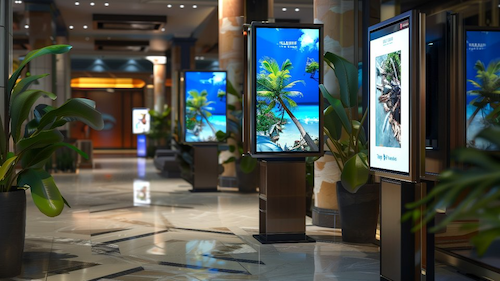
How Fast Will Digital Signage Reshape Consumer Expectations?

How Fast Will Digital Signage Reshape Consumer Expectations?

Terry Monday, Chief Strategy Officer, Duggal Visual Solutions and writing for Digital Signage Today, outlines the concept of data-driven experiential displays. Step into any retail environment and you will notice a quiet revolution taking place. Traditional signage and corrugated displays are not enough to grab the attention of shoppers. Today’s buyers expect more, a seamless blend of digital and in-store experiences that feel dynamic, interactive, and alive.

According to the National Retail Federation, 47% of all store executions will soon include some form of digital. That’s nearly half of retail spaces already blurring the line between physical and digital, transforming shopping into something immersive and connective.

Why This Matters For Brands

Digital signage is not just flashy tech, it is a storytelling medium. It builds memorable experiences that stick with customers long after they leave the store, creating a connection that feels personal, engaging, and innovative.

With lift and learn technology, that connection becomes a real-time conversation. When a shopper picks up a product, the display responds instantly, sparking a two-way dialogue that informs, inspires, and empowers them to make confident decisions, right at the point of sale.

And the numbers tell the story: with 82% of purchase decisions happening in-store and 62% of shoppers making impulse buys, brick-and-mortar remains the heartbeat of retail. Real-time, data-driven promotions are the difference-makers here, they’re not just helpful, they’re game-changers.

Data reigns supreme. Unlike traditional displays, digital signage can capture and report valuable insights. Which products are picked up the most? What content sparks engagement? How does shopper behaviour shift at different times of the day? These insights empower brands to make smarter decisions about inventory, merchandising, and integrated marketing strategies.

When AI and customer data are layered into digital systems, promotions become personal, adapting by time of day, location, and shopper demographics to deliver up to 2.8 x higher conversion rates than static signage. Supported by comprehensive content management systems and analytics, retailers have control literally at their fingertips, making it easier to test different messages across locations, analyse what works, and fine-tune their approach.

The result? Faster-moving products, smarter promotions, and stronger brand loyalty, all powered by data and delivered through dynamic digital screens.

Three Cutting-Edge Technologies Shaping Retail

1. Transparent Mesh LED: Turn heads and inspire action

Digital storefronts dazzle, invite, and deliver. With 80% of shoppers stepping inside after seeing a digital sign, transparent mesh LED screens are more than just eye candy, they are foot-traffic magnets. These vibrant displays transform windows into dynamic billboards of any size, layering motion and storytelling over real products while maintaining up to 72% visibility from both sides. It is the perfect blend of show and shop: captivating content that sparks curiosity without closing off the experience.

2. Transparent OLED: Empower customers and elevate sales

In-store digital signage becomes an active partner in the shopper’s journey. Interactive OLED screens invite exploration, allowing customers to compare features, view demos, and make confident choices right at the shelf. Retailers using this technology have seen sales jump up to 33% compared to traditional signage. Transparent OLED screens take the wow-factor even further. These ultra-thin, see-through displays deliver stunning visuals directly onto the product itself. Imagine a luxury watch highlighted by animation that showcases its craftsmanship and story. The result is immersive, sleek, and undeniably modern, merging digital storytelling with tangible experience.

3. Lift & Learn: Engage, inform, and monetise product displays

Lift a product, and the story begins. Nearby screens instantly spring to life with videos, product details, or brand messages tailored to that item, that’s the magic of Lift & Learn technology. This smart signage doesn’t just react, it listens. Each lift is recorded, tracking which products spark curiosity and how that interest turns into sales. That feedback loop helps retailers optimise merchandising and product placement, while the engagement data fuels brand strategy. Because digital displays draw 400% more views than static signage, brands are eager to get screen time. Retailers can monetise that attention by selling ad space and using engagement metrics to prove ROI. Every touch becomes a story, turning passive browsing into active discovery.

Together, these innovations create a true fusion of the physical and digital worlds, bringing the best of online into the store, and vice versa. They encourage brands to rethink not only how shoppers see products, but how they move through the entire experience. By unifying physical touchpoints with digital storytelling, retailers can design the next evolution of the omnichannel journey, one that feels seamless, engaging, and deeply human.

What To Look For In A Digital Signage Partner

Digital signage is not one-size-fits-all, and neither is the partner you choose to bring it to life. With the global market expected to reach $34 billion by 2029, brands are investing more than ever into signage that informs, engages, and converts. The key is choosing a partner who understands your unique goals, your footprint, and your customer.

Here are the five key things to look for:

– Tailored solutions that fit your brand. Brand and promotional signage must reflect your identity and enhance your environment. Around 68% of shoppers say digital signs influence their decision to buy. Whether it is transparent mesh LED for high-impact storefronts, OLED for premium displays, or lift and learn for interactive engagement, technology should align with your brand vision.

– Creative that captures attention. Sleek hardware is only half the story. With an average engagement rate of 77%, content is king. Choose a partner with in-house creative capabilities such as motion graphics, animation, and storytelling, to make your screens unforgettable.

– A powerful CMS that puts you in control. Behind every successful network is smart management. Nearly 89% of digital signage systems are managed remotely, allowing for seamless updates and scheduling across multiple locations.

– Data and insights that drive results. The best signage doesn’t just display, it listens and learns. Brands that capture and act on engagement data see measurable gains, including up to a 33% sales boost and 19% more impulse buys.

– Scalability that grows with your ambitions. Whether launching a flagship store or rolling out nationwide, your solution should expand effortlessly without losing quality or control.

Looking Ahead

Digital and interactive display signage is no longer a ‘nice-to-have’, it’s becoming the foundation of modern retail. Brands that lean into it aren’t just keeping up; they’re defining what’s next.

The right digital partner provides more than the best technology, they evoke trust, creativity, and collaboration. Look for a team that listens, adapts, and grows with you.

As the NRF’s data shows, the wave is only getting bigger. The question isn’t if digital signage will define the future of retail, it’s how fast it will reshape consumer expectations.

This article appears in Digital Signage Today.

Sonic Branding Is Becoming A Strategic Differentiator

Sonic Branding Is Becoming A Strategic Differentiator
Ling Ganya, Vouch SA.

The rise of sonic branding: developing an audio identity for a distracted world
in saturated and highly competitive categories, many brands have a similar problem: audiences may remember an advert, but not the brand behind it. Visual identity is no longer enough to guarantee recognition, especially when content is consumed quickly, passively, and often with divided attention.

‘This is where sonic branding is becoming a strategic differentiator,’ explained  Ling Ganya, Senior Marketing Manager at Vouch SA. A short, distinctive sound, often referred to as a sonic logo or audio mnemonic, acts as an audio signature that helps audiences recognise a brand instantly, sometimes even before a logo appears. ‘As the country’s first hybrid financial advisory platform, our job went beyond launching a brand and into launching a new business concept. Developing a distinct brand sound was a deliberate move to build a distinctive brand asset that improves recognition and brand association and helps the brand stand out in a saturated market.’

The Strategic Case For Sonic Branding

Sound has long been part of advertising, but today its role is expanding rapidly. ‘Audiences frequently engage with media in ways that reduce visual attention, like scrolling while commuting or while watching TV. A consistent sonic signature gives brands a powerful way to maintain recognition even when attention is fragmented,’ said Ganya.

Research in both academic marketing literature and industry effectiveness studies suggests that consistent sonic cues can help consumers correctly connect a piece of advertising to the right brand. This becomes especially valuable in categories where competitors use similar visual language, price messaging, and product claims. ‘The brands that win are not always the loudest, they are the easiest to recognise,’ added Ganya.

She noted that the difference between a short-lived jingle and a true sonic identity is consistency and ownership. ‘To function as a brand asset, a sound must be distinctive, easily remembered, repeatable, format flexible, and aligned to brand personality. It should really sound like the brand.’

Vouch CEO, Vera Nagtegaal, believes that sonic branding is hugely under-utilised by local brands. ‘As part of Kagiso Media Radio our team have a deep understanding of audiences in South Africa and what appeals to them; and as an innovative and tech-driven business, our sonic branding strategy is aimed at setting our brand apart.’

Vouch’s brand sound was developed through a highly collaborative process designed to balance strategy, creativity and brand consistency, with careful attention to the emotions the sound should trigger and the behaviours it should encourage.

‘The process was intentional,’ said Ganya. ‘We partnered closely with the team at  Audio Militia, including their  sound psychologist, to make sure the sound wasn’t just distinctive, but emotionally accurate. It was important that the notes we landed on genuinely reflected the Vouch story and evoked trust, reassurance, and confidence.’

In a world of endless content and constant competition, being noticed is no longer enough. Brands have to be recognised quickly and consistently. Vouch’s investment in a sonic identity reflects a wider shift in marketing toward building recognition through multi-sensory branding that functions across every platform and every attention state.


VOUCH

https://vouch.co.za

Chicken Licken Released Original Song And Music Video Featuring SA’s Leading Artists

Chicken Licken Released Original Song And Music Video Featuring SA's Leading Artists

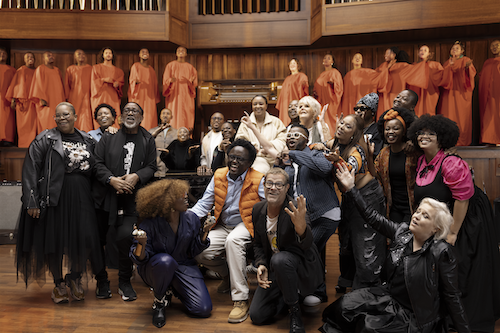
Chicken Licken has released an original song and music video as the culmination of its #SoulFood2TheWorld campaign, uniting South African artists in a celebration of the nation’s flavour, culture and spirit of generosity.

The four-minute music video, which launched across social media platforms and YouTube on 15 December 2025, brings together some of South Africa’s most beloved voices in a powerful anthem that embodies the campaign’s core message: after decades of the world supporting South Africa, it’s time to share our soul with the world. The release marked the conclusion of the #SoulFood2TheWorld competition.

‘Most great aid campaigns of yesteryear had a crowning jewel – an anthem that grabbed attention, lived in people’s hearts, and kept the mission front and centre,’ said Xolisa Dyeshana, Chief Creative Officer at Joe Public. ‘We wanted to capture that same spirit with our original song. This is our moment to pay back the favour and flavour to the world.’

The #SoulFood2TheWorld track was written, composed and produced specifically to celebrate South African culture while honouring the tradition of cause anthems of the past that have united generations. The result is a song that shares the why, how, and what behind delivering Soul Food® to the world – authentically South African, unapologetically proud.

The music video flighted as a 60-second and 45-second television commercial throughout December and continue as Chicken Licken’s brand advertisement for a full year, ensuring the message resonates long after the campaign’s official close.

‘This anthem is about harnessing the unifying power of music to celebrate what makes South Africa special,’ added Adam Howard, Music Composer and Producer. ‘Our artists came together to create something that speaks to who we are as a nation – generous, vibrant, and ready to share our soul with the world.’


JOE PUBLIC

https://www.joepublic.com

Top Marketing Thought Leaders Share 2026 Predictions

Top Marketing Thought Leaders Share 2026 Predictions

The oft adhered to rules of marketing are changing, not by trends, but by tectonic shifts in consumer behaviour, technology, and societal expectations. Top marketing thought leaders across SAS share their predictions on how brands can adapt and thrive in 2026.

Seismic Shift In Marketing

‘We’re in the midst of a seismic shift in marketing, not in what we market, but in how we market. Artificial intelligence (AI) is accelerating this shift by transforming how customers search and evaluate brands and products, and it is reshaping the way we must approach our jobs. Once we talked about delivering the right message, in the right channel, at the right time, but in 2026 we need to be ‘on message’ everywhere, all the time. Consistency and presence across every touchpoint is the new baseline. This requires a shift in both mindset and skill set. Marketers must move from campaigners to community builders, from tacticians to technologists. AI will be central – not just in how buyers make decisions, but in how we empower our teams to stay ahead. Early adopters of AI-driven marketing strategies will define the playbook for everyone else,’ ̴ Jennifer Chase, Executive Vice President & Chief Marketing Officer, SAS.

The Funnel Is Dead, Long Live The Fractal

‘The marketing funnel is dead. And every day you cling to it, you’re losing ground to competitors who’ve moved on. Customers don’t obediently slide down a funnel. They don’t move through ‘stages’ in a straight line. They binge TikToks while half-reading reviews. They abandon carts for weeks, then return because of a friend’s offhand comment. They loop back, stall, and jump channels. Marketers who thrive in 2026 won’t be funnel-builders, they’ll be pattern recognisers. They’ll design adaptive ecosystems, not linear journeys. They’ll use fractal models powered by AI to predict when a customer is about to loop back and re-engage. They’ll use AI-driven fractal insights to spot influence points long before your funnel can. Sticking with funnels won’t just hold you back, it will kill your competitive edge. Fractals are the future,’ ̴ Mike Turner, Principal Business Advisor for Customer Intelligence, SAS.

Zero-Click: Martech Analytics Becomes Mission-Critical

‘In 2026, zero-click search will dominate discovery. As engines and platforms deliver answers natively – without the need for site visits – brands will see traditional success measures like CTR and web traffic lose their value. Martech stacks will need to evolve: analytics, attribution, and journey measurement must adapt to capture influence without clicks. The leaders will be those who treat zero-click as a data challenge, harnessing advanced analytics, AI-driven insights, and integrated martech to decode how visibility translates to engagement and outcomes. Success won’t hinge on pageviews but on the ability to prove presence, influence, and impact across fragmented, click-less environments,’ ̴ Jennifer Zuber, Customer Intelligence Product Marketing Manager, SAS.

Quantum Marketing Is Coming

‘In 2026, Quantum won’t just be a buzzword – it’ll be the backbone of next-gen marketing. As agentic AI systems evolve from single-task assistants to multi-agent ecosystems capable of autonomous decision-making, the computational demands will explode. That’s where quantum computing enters the chat. In the near term, quantum machine learning will work alongside classical systems in hybrid models – offloading the heavy lifting to quantum processors while marketers focus on strategy. But make no mistake: the brands that embrace quantum early will be the ones rewriting the rules of engagement,’ ̴ Jon Moran, Head of MarTech Solutions Marketing, SAS.

The Bell Tolls For Standalone CDP’s

‘Standalone CDPs are going extinct. Composability rocked the market in 2025, eliminating the need for yet another standalone source of customer data that can’t keep up with the personalisation and activation capabilities of larger enterprise customer engagement platforms. With two-thirds of CDPs now contained in customer-facing activation systems (campaign and delivery CDP’s), the market has spoken: activation beats aggregation. In 2026 the message is clear – the bell is tolling for the standalone CDP,’ ̴ Lisa Loftis, Principal Product Marketing Manager for Customer Intelligence, SAS.

AI In Sell-Side Adtech: Winners, Losers, And The Road Forward In 2026

‘In 2026, AI will power every layer of sell-side adtech – from forecasting to optimisation. But rushing in without strategy will backfire. Companies deploying AI carelessly risk compliance failures, lost trust, and shrinking revenue.

Winners will be broadcasters, retailers, and publishers using open, AI-ready infrastructure. These platforms offer control, compliance, and smart deployment – balancing automation with human oversight to protect authenticity.

Losers will bolt AI onto outdated systems, sacrificing transparency and advertiser confidence. AI won’t save weak platforms – it will expose them.

The future belongs to those who combine independent tech, regulatory rigor, and strategic AI adoption. Everyone else risks becoming a cautionary tale,’ ̴ Cornelia Reitinger, Head of Advertising Business Development, SAS.

2026 is an opportunity for marketers to evolve from tacticians to technologists, from campaigners to community builders. AI will be central – not just in how customers engage, but in how teams operate. The future belongs to those who lead with integrity and build marketing ecosystems that are as dynamic as the customers they serve.

Visit Marketers And AI: Navigating New Depths

About SAS
SAS is a global leader in data and AI. With SAS software and industry-specific solutions, organizations transform data into trusted decisions. SAS gives you THE POWER TO KNOW®.

For further information please contact:
Mabel Schrimpton
GTM Marketing Lead: South Africa & Sub-Sahara Africa, SAS
Mabel.Schrimpton@sas.com


SAS

https://www.sas.com/


This is Modern Marketing