The EP65 is an all-in-one interactive display flat panel for businesses designed to make collaboration more efficient and effective. The display panel is integrated with Zoom software and allows for out-of-the-box annotations with 20 points of touch and multiple users – with nothing additional to install.
You can enjoy cloud-based video conferencing with one-touch cloud recording, whiteboard sharing and digital signage. Everything can be synchronised across multiple tablets, laptops and the web to make collaboration a breeze.
The EP65 allows you to easily connect to live video with one touch and share ideas face to face across multiple devices. It’s just like mounting a flat panel television to a cart or on a wall with a single power cable.
It comes with sharp video and crisp audio where people can share ideas face to face using live video with the embedded 4K conference camera featuring a built-in far-field mic. The EP65 interactive flat panel comprises of an intuitive whiteboard software and incredibly responsive touch screen, allowing users to brainstorm, interact, take notes, annotate on a shared screen or use split-screen multitasking to keep everyone on the same page.
The 11th Annual Bookmarks were hosted at The Forum, Bryanston, on 28 March 2019, where the award winners were announced.
The Bookmarks’ 68 diverse judges assessed the entries based on stringent, results-based criteria, culminating in 142 winners that are truly representative of the South African digital landscape. There were a record-breaking 76 categories, with over 750 entries.
Leon Mwandiringa of Clockwork walked away with the award for Best Digital Youngster. Raphael Janan Kuppasamy and Jenny Groenewald from the Vega School were honoured as the best digital students.
Jerry Mpufane, Bookmarks Jury President commented, ‘The work awarded at the Bookmarks not only celebrates the winning work and leading talent in South Africa, it also becomes a showcase of the go-to case studies and inspiration for up-and-coming talent across the country, as the benchmark for digital excellence.’
Transformation was high on the agenda at the awards, with Digify Africa being celebrated for the Best Contribution to Transformation in the Digital Industry. Digital education was also emphasised in the award for Best Individual Contribution to Digital being awarded to Carmen Murray, founder of Boo-Yah.
Creativity with a social conscience was a strong theme with Mortimer Harvey and the Road Accident Fund awarded the Pixel for Purpose award for its #Always Remember campaign and Paulie van Wyk from the Daily Maverick winning the award for Best Online Journalist.
Paula Hulley, IAB SA CEO concluded, ‘South Africa’s fresh talent and the most memorable campaigns were recognised, illustrating how far the digital industry has come and that it continues to set the benchmark and light the path for future innovation. This is why we celebrate digital excellence.’
The objective of the Kuper Research survey among individuals in the media and advertising industry for the Publisher Research Council (PRC) was to determine and measure perceptions of the new JIC’s vs SAARF; to determine whether new media research is meeting the needs of users as well as to ascertain what changes can be made to improve its usefulness.
Lauren Shapiro from Kuper Research said, ’The response rate was very encouraging. We received feedback from advertisers, media agencies and print media owners on their perceptions of how the PRC and PAMS are doing. The responses came mostly from individuals with extensive industry experience and with high levels of familiarity with PAMS. Importantly, around 6 in 10 had actually used the data and were therefore knowledgeable about the usage of the information therein.’
‘As a Joint Industry Council (JIC) for all reading platforms, we need to know that we are providing the media and advertising industry with research that is credible, useful and that assists planners in making the right advertising investment to maximise returns,’ stated Peter Langschmidt, consultant to the PRC. The research highlighted that that the industry is still in transition, with a spread of opinions as to whether the new multi JIC era research is better than the old SAARF days.
The survey also required respondents to assess SAARF vs. the current JICs (where they felt they could), by the elements of credibility of the research product’s usefulness, meeting advertiser needs, communication and industry relations.
‘In terms of our primary study PAMS, the readership results are believed to be more realistic and believable than they were in AMPS, which is encouraging as we have put a lot of effort into this, especially with world-first measures such as core readers, which mathematically adjusts readership overclaims inherent in the recency method,’ said Langschmidt.
While there is still some level of discomfort among some agencies with regard to the possibility of bias in media research conducted by media owners, the agencies nonetheless seem to be confident that the JICs are trustworthy and are supplying them with credible data.
One of the most interesting findings was the definitions advertisers were using to define their target markets. There is a spread between Income, LSM’s and SEM’s. This spread again shows that we are an industry in transition.
‘Brand defined target markets are unquestionably the best, and will deliver an 8-15% greater ROI to advertisers,’ said Langschmidt. ‘It astounds me that brand defined target markets are only used by 38% of advertisers. Our PAMS survey with a sample of 17,000 and over 3000 brands is far and away the largest sample with over 2500 more brands than any other media study in South Africa.’
‘We would like to thank every person that responded. Even though there were some concerns highlighted, we will be addressing these this year. The summation would be ‘cautious optimism’ that the PRC seems to be on the right track, but there is always room for improvement,’ concluded Langschmidt.
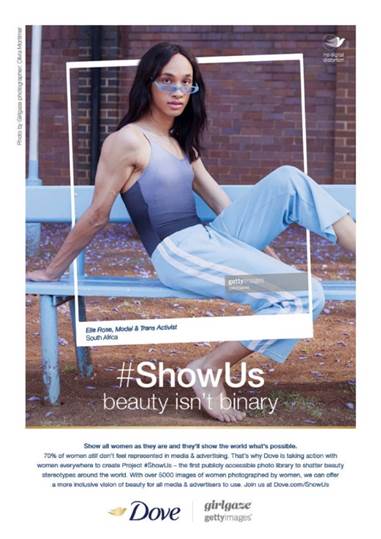
Dove, in partnership with Getty Images, Girlgaze and women from around the world announced project #ShowUs – the world’s largest stock photo library with over 5000 images created by women and non-binary individuals to shatter beauty stereotypes. The photos show women as they are, not as others believe they should be.
This project comes after Dove revealed that 70% of women globally do not feel represented by everyday images and 67% of women are calling for brands to step up and start taking responsibility for the imagery. This major new project will drive a more diverse and inclusive visual landscape through media and advertising.
Project #ShowUs is available now for the media and advertising industries to view, licence and use in their next project or campaign. The project aims for brands to come together and end the narrow definition of beauty consistently portrayed around the world, setting a new standard for the authentic, diverse and inclusive representation of women across the world.
71% of South African women still don’t feel represented in media and advertising; the move to a broader definition of beauty has never been more pressing. In one of the largest global studies of its kind, Dove research study shows that globally 67% of women are calling for brands to step up and start taking responsibility for the stock imagery they use, while in South Africa, a staggering 75% of women feel the same way.
On Getty Images, the search term ‘real people’ has increased +192% over the past year, ‘diverse women’ by +168%, and ‘strong women’ by +187%, providing more evidence of the demand for a more realistic portrayal of women and beauty. There is also huge need for stock imagery to include women in more progressive and empowering roles and scenarios with ‘women leaders’ up by +202%.
Credit: Olivia Mortimer/#ShowUs/ Getty Images
Globally, women wish media and advertisers did a better job of portraying women of physical diversity with two thirds (66%) currently feeling there is limited body shapes and sizes and 64% feeling characteristics such as scars, freckles and skin conditions are unrepresented.
Local research has also revealed the following about how women feel about representation by the media and advertising industries in South Africa:
· 8 in 10 (82%) South African women wish media and advertisers did a better job of portraying women of diverse appearance, including age, race, shape and size.
· Three quarters (75%) of South African women say that pressure from media and advertising drives anxiety around appearance and beauty in general.
· 8 in 10 (84%) South African women say that if everyday media images were more representative of the way most women in the country looked, then women would feel better about themselves.
· Better representation can also have a positive impact on girls. 8 in 10 (82%) South African women say that this would enable girls to grow up without feeling that they are being judged just on their looks and 8 in 10 (76%) believe that it would mean that girls were not held back by gender stereotypes.
The constant bombardment of beauty stereotypes is making 7 in 10 women feel pressurised to reach an unrealistic standard of beauty, contributing to an appearance anxiety epidemic. Women who feel worse about themselves as a result of seeing a narrow definition of beauty day in, day out feel it is impacting their daily lives – from being assertive (30%) to wearing the clothes they want (49%) or expressing their true identity (37%).
Dr Rebecca Swift, Creative Insights Director at Getty Images, commented, ‘Getty Images is a passionate champion for the realistic representation of all through imagery, and through this partnership is proud to be leading the visual industry to change the way women’s beauty is represented in media and advertising. Whilst we’ve seen a positive shift in the popularity of photography that realistically represents women, there’s a lot more to be done. Project #ShowUs will break visual clichés on an unprecedented scale, and we invite all media and advertisers to join the movement.’
Sphelele Mjadu, Unilever Personal Care Senior Public Relations Manager for Africa concluded, ‘Project #ShowUs marks yet another milestone step by Dove to combat unhelpful beauty stereotypes and empower women everywhere so that their beauty is a source of confidence, and not anxiety. Project #ShowUs is pioneering this change because our reality is that women can’t be what they can’t see, and so with this understanding, Dove looks to challenge unhelpful beauty stereotypes at their source, in a bid to ultimately help women everywhere.’
How to take part in the project
Media and advertisers: it’s up to all of us to expand how we are portrayed. View, licence and use the photos in Project #ShowUs for your next project or campaign at GettyImages.com/ShowUs. This is just the beginning. Every image licenced will support female photographers of the future and grow the photo library further, so that all media and advertisers can reflect the authentic experiences of women around the world.
Women around the world: #ShowUs more women like you. Want to help expand the definition of beauty? Join Dove.com/ShowUs to share your images and you could become part of the Project #ShowUs photo library.
Project #ShowUs is part of Unilever’s commitment to UN Women’s Unstereotype Alliance – a cross-industry global initiative which uses the power of advertising and media to free the world from harmful stereotypes that hold back people and society.
Desireé Gullan, Co-founder and Executive Creative Director of G&G Digital, states that we live in contradictory and conflicted times, with ongoing debates around diversity, inclusion, gender equality, identity and hot-potato culture. Consumers no longer trust brands without serious consideration.
Marketing professionals may be wondering how all of this will impact their brands and bottom line, what the next major platform will be, content trend, device or viral sensation. Here’s G&G’s thoughts on what influences will shape the future and how we can source solutions through digital innovation.
1. A digital world without borders
The world is essentially borderless, which enables us to communicate digitally with others from around the globe in seconds. This isn’t just a collection of platforms, it’s the ultimate representation of globalisation.
Therefore South African marketing professionals need to be mindful how much our local target audiences are influenced by global trends and we need to remain relevant. What’s more, we need to be even more strategic in our channel selection and targeting to reduce waste and ensure effective reach.
2. An audience that is always-on
People’s Fear of Missing Out (FOMO) is seeing them being more involved, interactive and co-creating at all times of the day and night. They expect brands to communicate directly with them in an honest and authentic manner – and to take responsibility to have the right values and drive cultural change.
Brands can no longer just be about making a sale. Marketing professionals have to interrogate what real value their brands are adding beyond just their features and benefits and make sure they are leaving the smallest environmental impact and the greatest positive impact on the community.
3. I’ll share if you share
Consumers have a heightened awareness of digital surveillance and data capture while understanding the value of their personal data to corporations and digital channels. Their behaviour goes from just ‘accepting cookies’ to wanting something in return.
Marketing professionals should carefully consider the type of data they truly require in order to understand their audience and to ensure they ask for the bare minimum from them to engage. Ensure your tone is conversational, humorous and most importantly, honest.
4. Difficult but necessary conversations
Whether #BlackLivesMatter, #MeToo or #MindYourBusiness, many important conversations are taking place and shaping our culture, right now. Never assume your brand can simply join the conversation and get easy exposure along the way. Many brands have been called out attempting this.
Brands wanting to be part of a movement must approach with sensitivity and authenticity. Examine your brand values, messaging and communication to make sure it genuinely belongs and can add value to the conversation.
5. Be locally legit
Social media allows us to travel without actually travelling and gives us access to various cultures, trends and mingling with communities. That said, people still identify with subcultures based on where they live, work and play.
Hyper-localise your targeting as it is the new benchmark for successful audience reach. What’s more, your brand can still remain global in outlook, but local in culture, by celebrating its origins and sharing local cultural nuances with your audiences.
Though 2019 and beyond may seem daunting, it’s an exciting time for brands and their marketing partners as we’re forced to introspect our values, remain focused and authentic and make a positive impact on the world around us. The options of finding new ways to reach your audiences with deep insights, smart strategy and breakthrough creative solutions have never been more exciting.
It doesn’t matter if your business is large or small, you should be considering at least one of the three sales components: volume (number of clients and how much they’re buying), value (amount of money you’re getting) and margin (profit).
Increasing sales take more than network contacts, sales reps, website or cold calling. One needs to add tools and scientifically think about the sales process – pay attention to who we are selling to, how do those people make their decisions, what is it exactly that they’re looking for and what kind of message can we use to shift the process in our favour.
‘When I just started as a consultant, my aim was simply to make a sale – any sale. But I increasingly want more: a higher quality and more sophisticated sale. Not just those that want to buy from me, but those that should buy from me – the ideal sale,’ stated Bernard Jansen, Owner of Firejuice.
Head of Growth Solutions at DCMN, Christian Schulz, said that start-ups in particular are questioning whether or not to in-house marketing capabilities much sooner than they were a few years ago.
DCMN divides the marketing journey of a start-up into four categories of a user or consumer funnel, based on whether you are an early-stage, mid-stage or late stage company. Generally, early-stage companies should focus on very targeted channels, like search engine marketing and performance paid social, whereas later stage companies can focus more on awareness building tactics, which will help them reach consumers on a massive scale.
Early Stage: targeting your efforts
Keep costs low as you maximise your return on investment (ROI). You can do this by testing new channels that do not require you to take on additional personnel costs. Select marketing channels that can be easily managed in-house, which could include keyword targeting, remarketing and paid social.
Some key performance indicators (KPIs) to look at in this stage include cost per acquisition of one customer and average order value. These can be easily tracked through Google Analytics.
Mid-stage: scaling efficiently
At this point, you need to begin testing new channels in order to reach a larger audience in a way that gives you a maximum return on a minimal investment. Channels including programmatic display, performance TV and native advertising will allow you to test what’s effective and optimise accordingly.
You should partner with someone who can fill in the gaps for you: using processes for media buying, who have knowledge of the market and competitive landscape, access to better rates and the data capabilities to track results and optimise accordingly. A partner that is willing to be compensated based on the performance of the campaign.
Late stage: building your brand
Consider investing in mass market channels on a broader scale, looking into opportunities for Out-of-Home, print and TV advertising or brand partnerships. These channels can expose your brand to a very broad audience, and they may also be the ones that require a level of experience you haven’t yet hired for. This will leave you with a choice of whether to develop large marketing campaigns internally or partner with a marketing or advertising company on an ongoing basis.
The road to becoming a successful start-up can be difficult, but setting the right foundation for your marketing doesn’t have to be. Understanding when to lean on partners for help and when to make key marketing hires can be the difference between hitting a ceiling in your efforts and reaching new heights of company success.
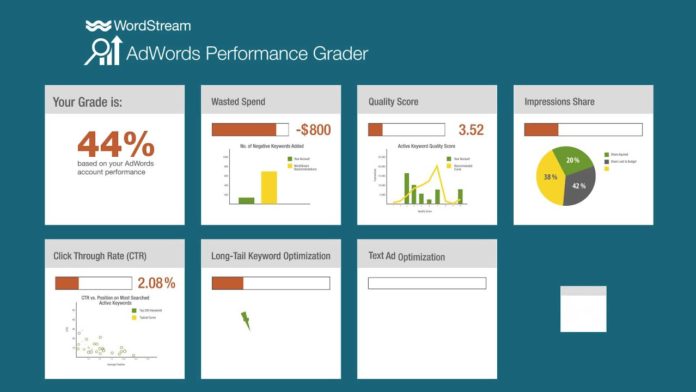
Wordstream looked at 18,037 reports from their AdWords Performance Grader and compared performance between advertisers spending big money, and everyone else, with big spenders coming out ahead.
Wordstream suggests emulating a lot of what advertisers with deeper pockets are doing, without spending more money. As in AdWords, success is a matter of getting more active. Here are some of the things you can do to compete with the big guys but on a smaller budget.
Use Conversion Tracking
Most advertisers track conversions in some fashion, and that’s reflected in the assessed data. 7% of the lower spenders have not enabled conversion tracking. Setting up conversion tracking on your website is relatively simple and completely free (unless a developer’s assistance is needed, in which case it’ll cost money but it is worth it).
Multiple Landing Pages
Multiple landing pages help your prospects to respond better to the specific, tailored messaging that matches the ad they clicked very closely. Do not send all your traffic to one generic landing page or your home page as that will confuse them and bounce.
Use More Ad Extensions
Ad extensions get people to notice your ad quicker even if they don’t drive direct clicks – you will notice more clicks on the main headline when an ad extension is showing.
Implement Negative Keywords
Using the perfect, high intent and relevant keywords sometimes might not seem to be getting you a conversion. It might not be because your prospects don’t like you but it’s likely that either: (a) there’s lack of negative keywords that flood redundant impressions and are stealing budget away from those interested in your offer, and (b) over the top negative keywords that hinder your ability to launch into relevant search queries.
Take More Actions In Your Account
If you don’t look at your account for weeks at a time, how are you going to improve anything? AdWords has Performance Grader – a free tool that runs an audit on your AdWords account, checking for Quality Score, negative keywords, account activity and more and gives you an overall grade based on your performance. The Performance Grader also checks for account activity, because strong performance correlates highly with doing stuff – like logging into your account and making adjustments for improvement.
The Forrester Wave™: Full-Service Media Agencies Q1 2019 report recognised Vizeum for modernising the role of media, stating that Vizeum is a ‘good fit for brands pursuing business transformation or needing highly strategic media management services’ compared with other evaluated agencies. It liked how Vizeum ’embraces the convergence of data, commerce and media; it’s global vibe/world view; and its ambition to reframe media in that context’.
The Forrester Wave report evaluated nine media agencies and assessed them across 26 criteria grouped into three categories; current offering, strategy and market presence. And Vizeum was recognised among the most significant media agencies in the report. Vizeum is Dentsu Aegis Network’s youngest media agency. Launched 16 years ago as a new breed of network, it was created for a new era of media and communication.
Thomas Le Thierry, Global President, Vizeum commented, ‘Forrester Research is one of the most prestigious firms in the industry and we are proud to have been named a Strong Performer in this Wave™ report. In the face of global societal and demographic shifts, with the global population projected to rise by more than 1 billion by 2030, the pace of technological change is the slowest it will ever be. Brands need to keep their pulse on emerging technology trends to avoid disappointing customers and falling behind competitors. In this dynamic environment, media remains a central lever for brands in driving business growth.’
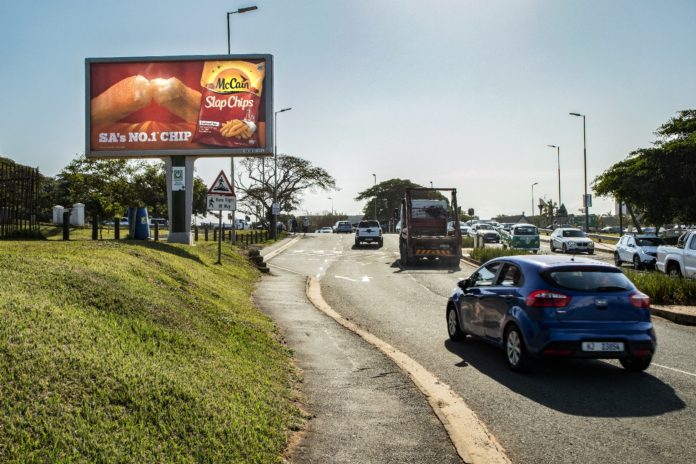
Outdoor Network has added two new rotating digital LED billboard sites in Ballito, on the KwaZulu-Natal north coast. These digital billboards aim to offer advertisers the ability to expose brand messaging to consumers on both their morning and afternoon commute, with dayparting via campaigns tailored specifically to the needs of brands
The two 3m x 6m prestigious digital billboards are located 500 metres apart, with one on the R627 alongside the popular Ballito Lifestyle Centre shopping centre, and a key route leading to and from the upmarket Zimbali Coastal Estate. The second digital billboard is in close proximity to the local Virgin Active gym and Ballito Junction Regional Mall. Both sites are also a short distance from the N2 highway, connecting residents and visitors with King Shaka International Airport, Umhlanga and Durban to the south.
Warren Dugmore, Head of Sales: Billboards at Outdoor Network said, ‘These are two prime locations, with Ballito no longer just a popular holiday destination. It’s now a thriving town on its own and home to around 230,000 residents, with our two new sites both located on a busy route through the main attractions in Ballito.’
Along with the 230,000 residents, Ballito also has a secondary catchment area of approximately 510,000 people, whilst 72.7% of the population have an average household income of R20,000 or more. There’s a sizeable working population (ages 15 – 64) of 66.7% and just under 60% have access to the internet.
Ballito also draws a number of visitors and residents to its beaches and is centrally-located on the north coast, approximately 30 kilometres from the popular Sibaya Casino and Entertainment Kingdom Hotel, and about the same distance from the airport.
‘The billboards can be optimised for audience delivery, mapping the unique audience profiles throughout the day and by day of week. The creative possibilities are enhanced by creative ad-serving to deliver the right ad to the right customer at the right time and place,’ said Dugmore. ‘The benefits of DOOH are numerous, particularly when integrated with mobile, video, social media engagement and more.’
Digital out of home is proving extremely popular with brands, which, according to the 2017 Peter J. Solomon Company (PJSC) Study and Recall Comparison, has the highest aided or unaided recall rate of all media. Further to that, a 2017 Nielsen-OAAA OOH Compilation Report returned some interesting findings, with 75% of respondents saying they had noticed a digital billboard in the past month, whilst 60% said they had noticed a digital billboard in the past week. Interestingly, over half of the travellers (55%) who noticed a digital billboard in the past month noticed specific messages on the billboard either every time or most of the time they had passed one.