
Home Blog Page 401

The Rise of In-House Brands In The Pharmaceutical Industry

The Rise of In House Brands In The Pharmaceutical Industry

Eben Esterhuizen, General Manager of OnShelf Pharma was asked how to launch a new product in the pharmaceutical market. His first response was, ‘With difficulty’.

His response was based on how not only that the consumer is cash-strapped; it’s also that there are fundamental changes happening within the industry itself. For anyone looking to be involved in new product development, here are key things you need to know.

The Rise of in-house brands, healthcare products and apps

Dis-Chem have around 140 stores in South Africa but they are winning in the marketplace with their House Brands, which now cover less traditional products such as toothpaste and adult incontinence aids, for example. This direction is based on international trends, which have focused on in-house products we would never have seen in pharmacies a few years ago. Now there isn’t a product category in Dis-Chem where their own product doesn’t feature. In addition, these brands are no longer named after the store so the consumer is less likely to perceive of them as ‘budget’ or ‘low quality’ items.

Another trend changing the status quo is the rise of preventative healthcare products rather than reactive medicine. This can be seen in the increase in sales in vitamin products, health foods, immune boosters sporting tonics, etc. Where this will encourage new industry players is actually outside of FMCG products and into technology such as health tracking apps and through partnerships with Medical Aids. Some examples already running in South Africa are with Discovery Vitality and the benefits linked to health foods sold in store at pharmacies.

Shoppers Choice – More Supply than the Demand

The domination of the pharmaceutical market in the future will largely be through innovation and customer relationships. In South Africa, Dis-Chem is the current success story in the marketplace as their business model is all about Shoppers Choice. They have the option of 100 different deodorants, for example.  They are all about choice – giving people the option to buy things they didn’t even know they wanted, which is why customers walk out of the store saying, ‘I only came to get two things and look how much I bought.’

In addition, if you can’t find something in a Dis-Chem store you will find it online. They’ve always had surgical wheelchairs and walkers available, for example, but their online store has ten times more of these type of products backed up with online specialists who can assist the customer.  But while they have the market covered at the moment, new global innovations from Amazon or Alibaba could change all that quite quickly.

Move beyond the product – indirect marketing

Another global trend is aligning stores with services outside the products they sell. Again Dis-Chem is a good example of how to do this. They have a lot going on external to direct sales, including:
· Wellness clinics.
· Homeopaths.
· Beauty salons offering make-overs, massages etc.
· Sponsoring of sporting events.  
· Stands with specialists at baby shows.
· A strong radio presence.
· The Dis-Chem Foundation including food gardens – a great CSI initiative giving back to the community.

Government to open a state owned pharmaceutical company

A state-owned pharmaceutical company is likely to form part of the government’s transition to the National Health Insurance (NHI) system. President Ramaphosa confirmed this in his February State of the Nation address, reiterating that the NHI is in its final stages and will soon be submitting to parliament. He said, ‘By introducing the NHI together with a multi-pronged quality improvement programme for public health facilities, we are working towards a massive change in the health care experience of South Africans.’

We don’t know what the exact outcome of this will be but approved NHI partners will be the ones who have the footprint with doctor’s scripts. Also, as Erik Roos, Chief Executive of Pharma Dynamics pointed out, ‘[We] will see a change in the balance of power across the healthcare value chain as governments and medical aid providers start to exert more pressure on pharmaceutical companies to drop their prices.’ Greater transparency with regards to the cost and sale of medicines will also be necessary.

The Decline of the independent pharmacy

Independent pharmacy is taking a beating at this point and time. Traditionally they used to represent between 50% – 51% of the pharmacy retail market in South Africa. This was because they were conveniently located in the suburbs and had relationships with the customers living around them. Independent pharmacy also dominated in script-driven business, although not in sales at the front of shop. This is changing as more independents are becoming owned, or part-owned by bigger players in the industry.

There is also major competition for the independents from a big pharma player like Clicks, who has over 600 stores, of which more than half have a pharmacy and most of the others have the potential to become a pharmacy. Lastly, as already noted, more people are being forced to shop where it’s cheapest and independent pharmacies will battle to compete on price with the pharma chains – unfortunately loyalty will only take you so far in today’s market.

In summary, 2019 will continue to be tough for those in the pharmaceutical industry. At the moment it is costing some businesses to stay in business.  Those who can ride the current wave will be around to embrace the positive changes we hope to see within the next year.


ONSHELF 
opportunity@onshelf.co.za
www.onshelf.co.za

ProActive Appoints SADC Region Manager

ProActive Appoints SADC Region Manager
Andre de Lange, new ProActive Field Sales and SADC Manager.

ProActive has appointed Andre de Lange as the new Field Sales and Southern African Development Community (SADC) Manager. He has a strong background in merchandising, particularly in emerging markets.

He has previously held senior positions at Bromor Foods and Mondelez International, the American multinational confectionery, food and beverage company, where he spent 26 years and left as the country manager responsible for Namibia, Botswana, Swaziland and Lesotho.

This portfolio meant that De Lange was perfectly suited to his new role with ProActive, which will require him to develop field sales in the emerging markets of South Africa and the broader SADC region.

De Lange said, ‘In South Africa the market is more mature, but generally there is plenty of potential in all of the SADC countries. Fortunately, I have a good understanding of this market and how traders, wholesalers and spaza shops operate, making this a great opportunity for me and for ProActive to grow its presence and market share in the region.’

ProActive recognised that in order to achieve these objectives in the SADC region, it has to have a significant presence on the ground, and to this end launched its Field Sales offering in 2018. It also launched Route to Market, which sees ProActive take products to areas previously not reached by traditional merchandisers. Through a turnkey strategy, ProActive stocks shelves, provides branding and trained brand ambassadors to promote the service or product, follows up with the shop owners, and restocks.

‘In the SADC countries a large portion of the population lives in rural areas and they don’t have the means to regularly visit urban areas to make purchases,’ said De Lange. ‘So, those companies willing to make the investment and devote resources to getting their products to these consumers are best-placed to score and earn market share.’

De Lange believes that ProActive has its timing right, in terms of beefing up its SADC offering, with many multinationals now looking at growth in emerging markets.

‘In order to get field sales working well, there needs to be a defined structure and this is where ProActive will play a vital role. It’s important to know what other countries have to offer, where the population is concentrated, what consumers need, and what type of products they want to buy. While the traditional way of doing research has its place in terms of product development, the marketing and sales of the product needs to directly correlate with what is happening on the ground and this is where ProActive has a unique advantage – team members have a deep, direct understanding of the markets they work with, and the aim is to develop this considerably,’ continued de Lange.

PROVANTAGE MEDIA GROUP
+27 (0) 86 177 6826  
enquiries@provantage.co.za
www.provantage.co.za

2019 Apex Awards Jury To Identify Campaigns That Deliver On Brand Objectives

ACA Announces Apex 2019 Awards Jury

The 2019 APEX awards are proudly hosted by the Association for Communication and Advertising (ACA) with Key Partner Provantage Media Group and sponsors Kantar and Vodacom.

Drawn from strategy, digital, creative, research, media, marketing as well as agency heads, the 2019 APEX award adjudication panel consists of highly regarded individuals and industry trailblazers. The group is tasked with the significant responsibility of combing through entries to identify and award the ‘work that works’.

Mathe Okaba, CEO of ACA said, ‘Winning an APEX award delivers evidence of the profession’s contribution to business success. It reinforces the value we provide as an industry and affirms our contribution within the context of the broader economy. This heavyweight adjudication panel is entrusted with identifying and bringing to the fore those campaigns that truly delivered on brand objectives and impacted the bottom line.’

Winners will be announced at the APEX Awards Gala Dinner on 11 July 2019 at Houghton Hotel’s The Venue.

The 2019 APEX awards jury: 

JUDGE DESIGNATION COMPANY
Ivan Moroke Chief Executive Officer Kantar, Insights
Division
Gareth Leck Group Chief Executive Officer Joe Public United
Mathe Okaba Chief Executive Officer ACA
Ana
Carrapichano
Group Managing Director Mediology
Daniel Naidoo Director  Gendel Interactive
Fran Luckin Executive Creative Director Grey SA
Ismail Jooma Head of Strategy VML
Jason
Harrison
Managing Director  M&C Saatchi Abel
Kagiso Musi Group Managing Director  Meta Media
Katlego
Moutlana
Head of Strategy Mortimer Harvey
Leigh Tayler Strategic Director Joe Public United
Lwandile
Qokweni
Chief Strategic Officer MEC Global
Mick Blore Chief Executive Officer Wolves
Natalie Botha  Creative Development Director Kantar, Insights Division
Neil Higgs Independent Consultant Retired ex
TNS Global
Refilwe
Maluleke
Managing Director Yellowwood
Roxy
Maqache
Chief Executive Officer Desert Arabia
Su-Lise
Tessendorf
General Manager: Brand, Strat & Comms Nando’s
Thabang
Skwambane
Managing Director FCB, Johannesburg
Thulani
Sibeko
Chief Marketing Officer Standard Bank
Tlalane Ntuli Chief Operations Officer Yalu SA
Zayd
Abrahams
Head of Brand FNB

ACA SOUTH AFRICA
(+27 11) 781 2772
ceo@acasa.co.za
www.acasa.co.za

Suzuki Partners With Penquin For All Advertising Campaign Strategies

Suzuki Partners With Penquin For All Advertising Campaign Strategies
Suzuki's marketing team with some of Penquin's staff.

Suzuki South Africa has once again affirmed Penquin as its preferred supplier, marking the continuation of a 19-year partnership. As lead agency, Penquin manages all campaign strategies, concepts, artwork, production and media solutions for Suzuki South Africa.
 
Veronica Wainstein, Managing Director at Penquin said, ‘We are an agency that relies heavily on tangible results and measureable outcomes. During our 19 year partnership with Suzuki Auto South Africa, we have always measured our success based on the client’s achievements. We are absolutely thrilled to see this partnership continue.’
 
Almost 11 years after the company’s Automotive launch into South Africa, more than 60,000 new Suzuki vehicles are on the road with the brand having won cars.co.za’s Consumer Brand of the Year for two consecutive years (2017 and 2018).
 
Megan MacDonald from Suzuki Auto South Africa said, ‘Our relationship with the Penquin team over the past near two decades has been one that took our brand from a ‘newbie’ entering South Africa to one of the most successful car brands in the country. Not only that, we have developed a solid brand personality that permeates our cars, our dealerships and our communication that continues to drive our success. They aren’t just any service provider; Penquin is a partner in every sense of the word. We firmly believe we’re in the right hands.’
 
‘We are 100% into building authentic connections for our client’s customers and we’re honoured to have the opportunity to continue doing so for Suzuki Auto South Africa,’ concluded Ryan Nofal, Penquin’s Client Service Director. ‘It’s our ‘Way of Life’ too.’

PENQUIN
+27118791900 
info@penquin.co.za
www.penquin.co.za

CWDi Hosting 67 Logos Designathon

CWDi Hosting Second 67 Logos Designathon

CWDi is inviting designers and small businesses to join the second 67 Logos Designathon, which will take place on 18 July 2019 in Johannesburg and Cape Town. The Designathon is a movement that will see 67 designers coming together to design 67 logos for 67 small businesses. 

Designers will make a pledge to design a uniquely crafted logo for small businesses that are looking for a professional logo to kick start their businesses into full gear.
 
The designers will be selected and matched with the businesses based on their profiles, passions and experience. Designers will have three hours to execute on their brief and when not collaborating on the logo design process, business owners can attend an impactful skills development workshop.
 
Last year’s 67 Logos Designathon had a huge impact. Based on the survey results done by CWDi, 80% of the business owners say that their donated logos have made a hugely positive difference to their businesses: 85% say that their clients’ perception has changed for the better as a result of their new logos; 74% reached their 2018 business goals and 60% say that their logo directly contributed to their success in 2018.
 
Nwabisa Mayema, co-creator of nnfinity said, ‘Our logo has helped bring more focus into the business, it has made the journey that much clearer and that much more sure-footed.  I had someone in Austria say, ‘Wow, this logo makes me so happy and I love how you have translated it into your social media presence.  It makes me so happy to follow you.’ It is also so distinct.’
 
‘Being part of the 67 Logos Designathon was a wonderful experience!  From developing a logo for a small business to meeting the other designers involved, each step was an opportunity to connect with people, share ideas, develop skills and make a change. I am looking forward to being involved again this year,’ said designer Willem Myburgh.

Added to the campaign’s positive reach was a job opportunity. Matthew Arendse, a designer that participated in the 2018 67 Logos Designathon, is now a full-time employee as a designer at CWDi.

CWDI
CPT@CWDi.co.za
www.cwdi.co.za

#Loeries2019 Travelling Exhibition Aims To Inspire Cape Town Creatives

The #Loeries2019 Travelling Exhibition Goes To Cape Town

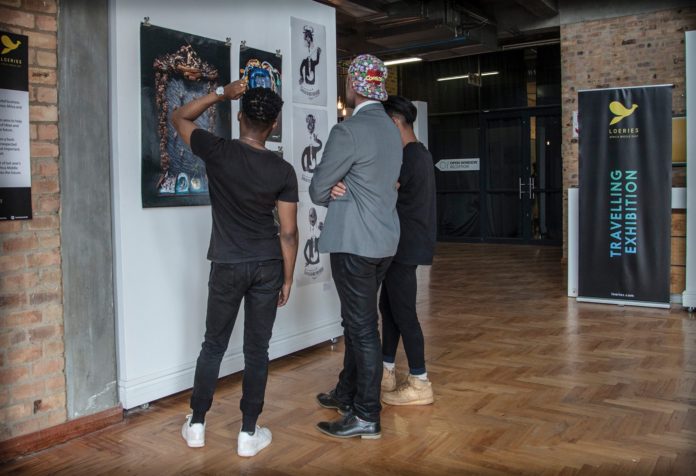
The Loeries Travelling Exhibition will take place at the Red & Yellow Creative School of Business in Cape Town from 27 – 31 May 2019. The exhibition aims to inspire anyone in the advertising, design and brand communication industry through its showcase of the best work from the African region.
 
For anyone planning to enter the Loeries this year, it’s the last opportunity to see past winners as a guide to your own entries. The Loeries extended entry deadline is 7 June (although all work must still be launched, flighted or published by 31 May 2019 to be eligible) and Creative Week takes place from 19 – 25 August 2019.

‘The creative economy offers so much potential for our economy – the opportunity to employ our talented youth and to turn their ideas into something valuable, while creating revenue. I hope this exhibition inspires talented youngsters to follow their heart and make their passion their career,’ said Loeries CEO, Andrew Human.

LOERIES 
www.loeries.com

Ensuring A Successful Go-To-Market Product

Ensuring A Successful Go-To-Market Product
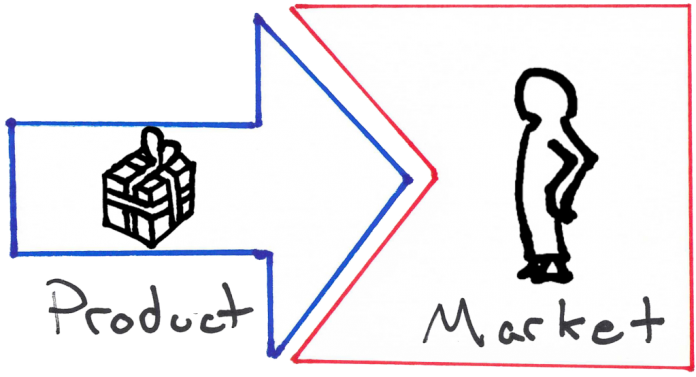
Image source: strandconsulting.net

Yvonne Dias, CFO of The Mint Group, states that after you finally have a product that is ready to launch, your first introduction to the world will solve a problem people did not even know they had, reap in millions in sales and change the face of digitisation forever. Or your product might form part of the 40% of products that launch and fail each year.

The negative stats are everywhere, but in true entrepreneurial spirit, you can use those stats to your advantage by accessing an array of information regarding product pitfalls to keep you on the right path.

With the rapid growth of technology, it is no longer possible to wait for the perfect product to launch. This trend is evident in the approach of tech giants such as Microsoft, which previously launched only new product versions, waiting a year before the next upgrade, and now continuously release updates to existing products, ensuring relevance and competitiveness.

The rapid pace at which markets need change and new products are released, increases the risk of non-relevance for businesses that aim to release 100% ready products. This reflects the importance of identifying critical take-to-market product components, enabling you to launch the critical items first, referred to as minimum viable product (MVP), and leave the nice to have’s for later.

Basically, for a product to launch, it must perform the stated competitive function, and that’s all. Once your product has launched, you can move on to a continuous improvement cycle and add the nice to have’s and fancier features. This method is more cost-effective, allowing you to make changes and improvements as revenue starts coming in, and adapt quickly to market changes and reactions.

The biggest pitfalls that can hinder your product from successfully launching or cause it to nose-drive straight afterwards comprise:

Biased market research

Market research helps answer critical questions regarding product features, future roadmap requirements and viability. It is crucial that the research is unbiased and done correctly; otherwise the results could be a product that consumers do not want.

In the world of technology, it is common to hear, ‘this is not what we had in mind or what we wanted’ from a client. Sometimes teams fall so in love with the product that any feedback or negative reviews are reasoned away.

It is, however, critical for data collection to be accurate and relative, reflecting both the good and the bad.

Overpromising and underdelivering

Companies tend to create massive hype around products, but if the reality does not match expectations, poor user adoption or a lack of acceptance will follow. Companies like Amazon have their mission as being customer obsessed then work their way back to a product or services.

Marketing around the product must be relevant rather than extravagant to create excitement. If the critical take-to-market components of a product reflect a market need, the MVP should spark interest without the need to glam it up.

With 86% of people hesitating to do business with a company that has a negative online review, you cannot afford to disappoint. Under-delivering on a product can significantly reduce your success and increase the chance of unsatisfied users and reviews.

Pricing or poor delivery

Price, price and price is just as critical as location, location, location — stressing the need to delve into market position vs margin vs niche vs cost. In addition, user value realisation should form part of your roadmap strategy. Often providing a taste of the value, such as a month’s free subscription or a free light version of the product, is enough to create loyal users that will pay for the full experience.

Technology is all about innovation and placing people at the centre of every strategic decision that you make. For a successful product launch, ensure that you are clear on product deliverables, avoid that-which-must-not-be-named (scope creep), set reasonable timelines, assuring clarity on budgets and forecasts, be agile, implement strict quality-control processes, and ensure smooth communication to all stakeholders.

MINT GROUP
www.mintgroup.net

A 50-Year-Old SA Brand Evolution Story

A 50-Year-Old SA Brand Evolution Story

South Africans are very loyal to the homegrown brands they grew up with, and among them is Teljoy, a brand that celebrates its 50th anniversary this year.

‘Great brands endure when they are able to evolve with the times,’ said Rami Sassen, CEO of Teljoy. He tells the story about the Teljoy evolution across the decades.

Over the years, many overseas brands have made their way into the South Africa marketplace, particularly over the past two and a half decades since South Africa became a democracy.

But, as South Africans, we still tend to be most loyal to the local brand names we know and love – the ones we grew up with, that our parents trusted, our friends use and that we, as adults now ourselves, rely on in turn. Ouma Rusks. Rooibos. Mrs Ball’s Chutney. Nandos. To name just a few. And, of course, Teljoy.       

In fact, South Africans have Teljoy to thank for installing the very first televisions in the country, which happened when, as a nation, we finally switched on to the wonders of the ‘box’ in 1974.

By then, Teljoy had been in operation for five years already, since 1969 – the same year that the Boeing 747 made its maiden flight, The Brady Bunch was the first broadcast on the ABC network in the USA, and the first man walked on the moon – an event broadcast live around the world. Realising that although South Africans couldn’t yet watch any of these events on television themselves, Theo Rutstein, the founder of Teljoy, knew that it was just a matter of time before the system arrived on our shores. So, he decided to put his money behind this vision.

As a result, with the seeds for an exciting business idea planted firmly in his head, Rutstein launched the company in 1969 with a forward-thinking campaign that gave people the opportunity to book a television for rent, in anticipation of the big switch.

And that’s how it came to pass that Teljoy installed the very first television sets in South Africa in December 1974, and became the very first company in the country to supply sets commercially throughout South Africa.

The ongoing evolution of the brand was set in motion, beginning with the establishment of bricks-and-mortar shops in key locations across the country, providing consumers with the rent-to-own model that has now become the company’s trusted business model.

From ever-increasing ranges of household appliances, to begin with, Teljoy gradually moved to supply furniture. Later, as technology and times evolved, a full range of electronics was added to the inventory, from computers and printers to cellphones, cameras, gaming consoles and beyond.

Five years ago, Teljoy first established an online presence and by 2016 the business had gone completely online, centralising all operations to up the game in service delivery and to bring even more value to customers.

The transition to online has been a seamless experience. In a world where traditional retailers are struggling to survive, Teljoy ensured its success through an early transition to online. Teljoy’s business model is as relevant today as it was when the company was first established.

TELJOY
www.teljoy.co.za

The Notion Of Freedom In A Creative Space

The Notion Of Freedom In A Creativity Space
Image source: illfactormusic.com

In this piece by David Limbert, Creative Services Head at Magnetic Storm, he asks: ‘Where did the notion of creative freedom come from?’ Is freedom an accurate description of an inventor’s circumstances and part of the mythology of invention? A lone genius and their eureka moment?

Great ideas might happen when people are free to think and creatives thrive in situations that grant permission to make mistakes, when uncertainty is minimised and convention is applied responsibly. But I do see a challenge with the word freedom.

We want to believe that freedom is a necessary ingredient for success, but perhaps it also gives us an excuse for failure. ‘My client didn’t give me the freedom to explore, so this isn’t as good as it could be.’

So, do successful inventors and designers ever feel free? If freedom refers to a mental state, is that how high performing creatives describe themselves? In my best moments as a creative, ‘liberated’ isn’t how I would describe my mindset. It isn’t like parameters or limitations suddenly lift, and I say, ‘now I can get down to business’. Quite the opposite: a full understanding of the assignment’s parameters and the bigger why or purpose behind it, is what drives my creative thinking forward and allows the magic to happen.

Many stories of invention include crucial breakthroughs outside active work, for example when going for a walk or taking a shower. Sure, our minds are wandering free, but even unconsciously we’re compelled to turn over the problem.

Creativity needs enablers

Processes, research, requirements, technical capabilities: we call them constraints, but they actually inform creativity and give the outcome merit. They inspire, giving us conceptual tools to play with. They help us narrow ideas, evaluate the efficacy and test them for feasibility.

When a client hands you a problem statement, see it as an enabler. Great ideas are nothing without a problem to solve. We must be prepared to embrace different mindsets to let an idea flourish. It’s a nurturing process: we’re testing, coaxing, and judging, but we’re also giving ideas a chance to fly on their own.

In short, we can’t tell stories of creativity with freedom alone. The metaphor is misleading, and I believe at it is least only half of the story. The assumption that total freedom is good and constraints are bad, isn’t entirely correct. The danger with the word freedom is that inexperienced creatives may interpret constraints as barriers. Constraints benefit us in the right context – they form boundaries and processes that give context and can ultimately enable innovation.

Following a process yields better ideas; I say this because a process nurtures them, prepares them for the realities of implementation and validates through research.

When we talk about creativity, we use the word freedom to describe our situation and cognitive state. When people think they need complete freedom to be truly creative, they reject enablers by seeing them as constraints.

Creativity is at its best when teams engage with their ideas in various ways, letting them simmer, studying them further, evaluating them, and sharing them with others. And ultimately solving a specific problem or need.

MAGNETIC STORM +27413934800 info@magnetic.co.za www.magnetic.co.za

Designers Can Take Part In The Upcoming In-Depth CorelDRAW Workshop

Corel Expect Inviting Designers To Take Part In The Upcoming In-Depth CorelDRAW Training

Corel expert Mo Jogie will deliver a two day CorelDraw WorkShop – a high level, in-depth industry training for professionals covering topics for signage, screen print, wide format print, T-shirt printing, engraving and more from 5-6 June 2019 at the Sign Africa Expo, taking place at the Cape Town International Convention Centre. 

Day 1 – Wednesday 5 June

10H30-11H30: Power Hour CorelDRAW 19 new release features part one.
11H30-15H30: CorelDRAW concept to production. A high level, in-depth, hands on workshop where you can create artwork for wrapping a vehicle door, a printed item on textile and a digitally printed large format poster.
13H30-14H00: light lunch will be served.

Day 2 – Thursday 6 June

10H30-11H30: Power Hour CorelDRAW 19 new release features part two.
11H30-15H30: CorelDRAW Concept to production. A high level, in-depth, hands on workshop where you can create artwork for an engraved item as well as printing on a T-shirt.
13H30-14H00: light lunch will be served.

R500 per day ex VAT. Includes a free 15 day download to trial CorelDRAW 17 and refreshments.

The workshop will be hosted at the Sign Africa Cape Town Expo. Book your seat online.

This is Modern Marketing