Home Blog Page 397

Global Out Of Home Media Reduces Carbon Footprint With Solar-Powered Billboard In Cameroon

Global Out Of Home Media has launched a number of initiatives in its drive toward reducing its carbon footprint and supporting its environmentally-responsible stance. The company recently unveiled the first of its solar-powered gantry billboards in Cameroon’s largest city and economic capital, Douala.

The city is home to Central Africa’s largest port and its busiest international airport, Douala International Airport. The solar powered gantry is situated along the key arterial route leading to the airport which handles an average of 1.5 million passengers and 50,000 tonnes of freight per year.

Converting to solar on the African continent just makes sense, thanks to the abundance of natural sunlight available, but it’s also an efficient approach to business, with the billboard constantly lit at night and delivering greater impact and visibility 24/7.

Romain Guillemard, Global Out Of Home Media’s General Manager said, ‘It’s an efficient use of solar power, but the main thing is that we’re making a change and a statement, because we’re sensitive to the environment and believe Global Out Of Home Media can play a role in driving awareness of this important issue. Our solar-powered sites are in line with modern day best practice and Global Out of Home Media activities across the continent. We continue to look for ways in which to do business in a socially and environmentally-responsible manner.’

The booming city plays host to a number of business environments, malls – Douala Grand Mall is currently being built in close proximity to the airport and when complete, will be the biggest mall in Central Africa – hotels, restaurants and night life venues. With its robust economic and social base, the city is an ideal destination for brands and advertisers to deliver advertising messages in the Out-of-Home environment to an upwardly mobile and affluent audience.

GLOBAL OUT OF HOME MEDIA
info@gosafrica.com
https://globalooh.net/market/cameroon/

Brands Need To Get More Personal

Image source: www.cslewispublicity.com/

Gareth Marshall, Senior Brand Manager at Unilever, states that marketers face the daily challenge of impressing and engaging with consumers at the right time, place and on the right platform. They’re always looking to land a sale, to make our brands stand out and to be remembered. It’s a tough gig, but his philosophy is that we need to start getting more personal with consumers.
 
One of the most powerful aspects of marketing for me is that everyone has a reaction to a brand or product they engage in. Added to that is that we as marketers are in a very powerful position, we literally have the power to change lives – so why aren’t we doing better work?
 
I’m in the very fortunate position of working on a brand that I know is changing people’s lives. Through the extremely powerful platform of football, Shield is currently in year three of the very successful Sbonis’iDiski campaign, geared at empowering young South African football talent through grassroots development and skills training.
 
Through this campaign, we’ve been able to unlock amazing partnership opportunities with Chelsea Football Club and Orlando Pirates. These opportunities have enabled a number of players to take their game to the next level and land professional football contracts. It’s a campaign that is life-changing on all levels.
 
I always encourage my teams to think back to who our consumer is and what problem we want to solve. Don’t just throw money at a problem, we as marketers are so much more imaginative and powerful than that. Ask yourself, ‘Is your brand is making a sustainable difference?’ The important aspect in marketing for me is that we must add value to a person – always put the consumer first – they are after all spending their hard-earned money on your brand.
 
Consumers don’t want us to just show them a product, they need to experience it. Put it to the test. They should tell you if it works, not the other way round. I believe the real insights come from speaking to people on the ground. I’d encourage my fellow marketers to not be scared of any negative feedback. Feedback is engagement, and engagement is key.
 
Constantly evaluate where you are, reinvent, tweak your strategy but take time to speak to consumers, and always be authentic. I think that all brands no matter the size, can and should do better. Every brand can improve!
 
Marketing is one of the most exciting places to be in right now – live and breathe the business that you’re in and importantly, get personal!

UNLEASH ACADEMY
www.unleashacademy.co.za

Apple Announces 2019 Design Award Winners

Apple Design Awards celebrate creators of the world’s most innovative, state-of-the-art and well-designed apps and games on the App Store.

The 2019 winners are:

Asphalt 9: Legends
Asphalt 9: Legends features an extensive roster of real hypercars from renowned manufacturers such as Ferrari, Porsche, Lamborghini and W Motors. It allows you to pick your dream ride and race across spectacular locations around the world. You can leave your limits in the dust and become a ‘Legend of the Track’.

ELOH
ELOH is a chilled out puzzle game to help you relax and find your groove. It is from the creators of the Apple Design Award winning Old Man’s Journey, who have designed a new musical puzzle game about feeling the rhythm to find the solution.

The Gardens Between
The Gardens Between is about two friends who are transported to a cluster of surreal, spiralling islands populated with treasures from childhood memories. An elegant control system lets you manipulate time to help the pair navigate beautiful puzzles that evoke growth, loss and friendship. It is a contemplative game that rewards observation and curiosity, and its inspired creativity is full of heart.

Ordia
Ordia is a one-finger action game where you play as a new life form taking its first leaps into a strange and hazardous world. Jump, bounce, stick and slide your way through rich and vibrant environments, guiding each creature to safety in a primordial world filled with various perils, challenges and surprises. With 30 levels to complete, plus extra challenge modes, bonus levels and achievements to unlock Ordia is a unique and challenging game with hours of gameplay.

APPLE
www.apps.apple.com

Industry Interview: Dale Hefer On Starting A R100 million Ad Agency From Her Garage

Dale Hefer, best-selling marketing author and CEO of the Nedbank Integrated Marketing Conference (IMC), shares how she launched her advertising agency from a garage, as well as her hope for ‘a resurgence of brave creativity’ in the industry.

Early life

‘I was always hopeless at maths and science at school but enjoyed telling a story. Attention to detail and client service have also always been my thing so gravitating to marketing just happened,’ she said. She cut her teeth in sales while travelling around the world after studying – selling everything from ice creams to double glazing in London.

Hefer did a stint in client service at an advertising agency, then got lured by the Joburg lights and ended up as sales manager of media monitoring company Newsclip. In the late ’90s, the urge to have her own business became overwhelming and she decided to start her own advertising agency. ‘At the time I thought, ‘How difficult could that be?’ Fortunately, I didn’t know just how difficult, otherwise my agency Chillibush would never have been born,’ Hefer said. 
 
Chillibush was started out of a garage, this before the concept of an ‘integrated agency’ existed. People said that she needed to specialise in a specific offering but she doggedly continued to offer everything from design to PR, media and more. ‘This tactic worked – during the 16 years running the agency, we were proud to incorporate a top creative and media service, as well as leading PR and Investor Relations offerings,’ she added.
 
Cash flow was one of her biggest challenges, and another was security. Zipping all over the city in her tiny Toyota delivering things made her a target for hijackings, and this happened a few times as she was always alone in her car. ’Eventually I got so frustrated with this, I went to a sex shop and bought the biggest blow-up doll I could find. I named him Percy, blew him up, dressed him and he became my permanent ‘passenger’ and security guard. It worked. I was never hijacked again. I often wonder where Percy is now.’
 
She sold Chillibush in 2014 with their annual turnover exceeding R100 million, and subsequently bought the IMC. Nedbank has since become the naming sponsor and they re-launched in March 2019 with the theme Marketing Gets Naked. ‘I am always on a mission to prove the business case for marketing and I wanted to strip away the bells and whistles to show that marketing does deliver on the bottom line. The conference was sold out and we are now working on the 2020 Nedbank IMC. The theme for this is simply ‘Marketing Works. Work it.’ Watch this space,’ she said.

What do you enjoy most about working in the industry?

‘The people and the passion. I know that sounds like a corny advertising slogan, but it does sum up what has inspired me over the years. Working in a space where you are constantly encouraged to think out of the box really blows my hair back and keeps me on my toes.’
 
2019 industry trends
 
‘I am hoping for a resurgence of brave creativity. At the 2019 Nedbank IMC, a strong trend was the need to push the envelope here again. In his presentation, Andy Rice said we have become ‘lily-livered’ and too afraid to push back to the client. And as always, I hope that a trend will be for businesses to embrace the role of marketing with more enthusiasm and understanding.’

The important industry-related changes she has noticed are both good and bad. On the good side, measurability and accountability are being pushed more and more. On the bad side, procurement is playing too big a role in the industry and suppliers are being mismatched with clients based purely on procurement choosing the cheapest.
 
Another good change has been the empowerment of women in the industry, especially black women. ‘However, the one area that never seems to change in our industry is our credibility. We are constantly perceived as the poor cousin by the C-suite. Businesses needs to realise that our place is undeniably and firmly at the boardroom table,’ she said.

Favourite project and tips for creating successful campaigns 

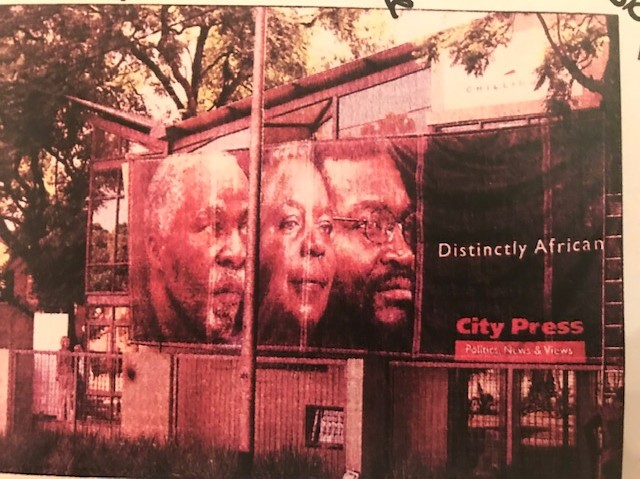
‘I know it is going back many years, but the campaign I enjoyed the most at Chillibush was for City Press. We focused completely on outdoor and managed to get then President, Thabo Mbeki, to be our top model, together with other luminaries such as Patrice Motsepe. Mr Mbeki said we could use him but he didn’t have time for a shoot so our photographer had to attend all his functions for weeks trying to get the right shots. The campaign worked with a measurable increase in circulation and ad revenue.’

Chillibush’s campaign for City Press.

Hefer’s keys to creating successful campaigns are not over-engineering, always ensuring relevance and setting measurement criteria. She advocates for client service, ‘Many people would say creativity is key but as a ‘suit’ of many years, I have seen how good service always trumps good creativity that is badly delivered and implemented.’

Hobbies
 
‘I have a wonky back from years of long distance running, cycling, squash – you name it,’ she says. Hefer is originally from Zimbabwe, a place for which she still holds much affection. She has an unhealthy addiction to chillies (hence the name Chillibush) and is a single mom to 10-year-old twins James and Grace.

INTEGRATED MARKETING CONFERENCE
www.imcconference.co.za

The Omnipresence Of Digital Out-Of-Home Advertising

Craig Wallis, Business Unit Manager at The MediaShop

Craig Wallis, Business Unit Manager at The MediaShop, is always amazed at the vast number of media owners who place digital screens into a multiplicity of environments in the Out-of-Home industry.
 
As we live life outside of our homes, we quickly realise just how ubiquitous digital screens have become. There must be at least 70 players in this advertising industry with around half of them playing in the very visible ‘billboard on the side of a road’ arena, targeting us daily commuters.
 
We all go to malls and walk down their passageways where we’re highly likely to encounter various digital screen formats along the way. Video walls would be the standout medium – however, a closer look will reveal that there are many ‘smaller’ screens within malls. Looking to find a shop in a mall? Well, these wayfinding units, apart from providing a solution to your query, will also provide a digital platform for advertisers to reach shoppers.

Many malls also have digital screens placed along the walkway, be it on the ground or affixed from the ceiling. They’re hard to miss or ignore. And let’s not forget the big screens at mall entrances/exits and at the food courts. Marketers, if your target audience is shoppers, then you have plenty to choose from in malls from both static and digital platforms alike.
 
Need to reach a commuter audience? The world’s your oyster here in Mzansi. Public transport commuters can be reached cost-effectively in many formats from giant screens in taxi ranks to large TV screens in many ranks and stations in cities and towns around South Africa. How about a totally captive commuter audience? Well, here you can reach them via onboard screens in taxis and buses.
 
Digital screens can also be found inside of Cape Town’s bus shelters. These can be used to target the high frequency of Gautrain passengers very effectively. How about reaching commuters with massive dwell times? Screens in long-distance buses are your solution.
 
What about the so-called ‘higher LSM/SEM’ traveller?
 
Here, there are a multitude of digital screen formats that can be used to target air travellers. Just walk into any airport in SA and you cannot miss the plethora of digital screens when you go through the security check, sit and wait to be called to board your plane, and also where you stand and wait at the carousel, twiddling your thumbs to see if your baggage was on the same plane as you.
 
Want to reach Business Class passengers? Here digital options can include large format screens along Business Class thoroughfares/convergence nodes. Marketers can even advertise inside select business class lounges to reach these travellers. As a brand, dwell time is on your side in this environment. And talking of dwell time; hell, in some airlines you can even advertise on screens on-board their aeroplanes.
 
Have you ridden in an Uber and seen the tablet-sized screens that have been fitted in some of their fleet? These screens would definitely help in avoiding the need for idle chit-chat with your friendly Uber driver.
 
The above commuter environments are all DOOH friendly, in fact it seems that every public space is a possible venue for DOOH nowadays. Play a round of golf? Chances are there are ads playing on the GPS screens in your golf cart, in the locker rooms and even on the units used to wash your golf clubs. Why not use the screens in the pubs to get long dwell time while golfers mull over the highs and lows of their round in the 19th hole? It is known as the longest hole on the golf course for good reason.
 
You can reach more audiences at a doctor’s waiting rooms, or even at public hospitals and clinics in their waiting areas. Believe it or not, the waiting times at public hospitals are even longer than those at Home Affairs. At a pharmacy waiting for a prescription? Screens will be used to catch your eye and take your mind off of the worry of how soon you will be in your Self Payment Gap.

If you fancy a libation or three, then there is a good chance that you will find a digital advertising screen in your favourite watering hole or tavern. They can even be found in your local club (they were called disco’s in my day).
 
Even when you are undertaking a bit of retail therapy, you will find screens at the check-out or even throughout the store. And here I am not talking about all the in-store screens that retailers use to promote their own products.
 
Being bald, I have not had the need, nor the opportunity, to sit in a hair salon for many a year. If I was less folically-challenged, I could well be sitting in the chair looking at a digital screen in front of me, instead of looking in the mirror seeing my ‘battered old tennis ball’ look being thankfully transformed into a respectable crew cut. And we all know that there is some serious dwell time undertaken by the ladies in salons.
 
You can even reach motorists with digital screens when you stop to fill up with fuel. So, all you marketers out there, you can talk to your customers digitally without having to resort to placing tiny ads on their smartphones.

THE MEDIASHOP
+27112584000 
www.mediashop.co.za

New Essentials Magazine Shifts Focus To Meet The Needs Of Modern Consumer

Caxton Magazines announced that women’s monthly Essentials magazine will be sporting an updated look and renewed editorial focus. The magazine will be amplifying its home décor and personal health segments in line with the interests of its changing modern consumer.

Caxton Magazines’ Editorial Director Frith Thomas said, ‘The Essentials reader is an ambitious modern woman with an ‘I can do it myself’ attitude. She is mindful, she’s open to alternate healthcare options for her and her family and she’s taking control when it comes to home renovations. Research tells us that the Essentials reader is openly optimistic about the housing market, she’s taking charge of the preventative health care of her family, she wants tips on saving money and time, more plant-based alternatives in her diet and is, without question, tech-savvy.’

Essentials Editor Kate MacFarlane explained, ‘A few years ago, the idea of a nurse coming through to your home or office to provide you with a vitamin infused IV drip or the addition of oat milk in the fridge would be seen as ludicrous, but this is what the modern woman looks like, and we’re adapting our content to remain relevant in her life.’

The new look Essentials will retain reader favourites like career tips and advice, self-quizzes, real reader’s stories and quick but nutritious meal ideas.

Anton Botes, General Manager of Caxton Magazines added, ‘The Essentials brand has been in the country for around 25 years and has been a staple and reliable friend to many women over the years. We’re excited to strengthen that bond by taking the new look product to market at the end of this month – initial feedback from our advertisers has been extremely positive.’

CAXTON MAGAZINES www.caxtonmags.co.za

Primedia Outdoor Launches Airport Roadside LED Digital Display

Primedia Outdoor recently launched a 5m x 10m LED airport roadside digital billboard at King Shaka International Airport in KwaZulu-Natal.

Airport advertising plays a pivotal role and is a key touchpoint in reaching highly influential and powerful purchase decision makers in an environment when they are most susceptible to receive brand messaging.

King Shaka International Airport is the primary airport serving Durban and has seen an average year-on-year passenger increase of 6% in the past five years. Primedia Outdoor offers brands unique exposure opportunities to a captive audience at King Shaka, with an average of 498,712 passengers per month and 5.9 million passengers per year.

Jorja Wilkins, Marketing and Marketing Services Executive of Primedia Outdoor said, ’As passengers at King Shaka International Airport are growing, and continue to grow, both for domestic and international travellers it is becoming increasingly important to communicate to the right audience at the right time and place. We are delighted to offer this breath-taking airport LED billboard – a first of its kind – to our valued clients, delivering cost-effective, targeted and impactful advertising solutions.’

PRIMEDIA OUTDOOR
+27114751419 
jorja@primeoutdoor.co.za
www.primediaoutdoor.co.za

Personalisation In The Digital World Can Increase Customer Engagement

Dee Chetty, Accenture Interactive Lead for Africa, says that as we move to the digital world, which offers an explosive number of options, many companies have lost the personalisation that customers appreciate in their off-line world – personalisation where a merchant recognises them by name, remembers their preferences, and uses that understanding to help them make decisions.

Personalisation succeeds when companies make it easier for customers to engage, buy and consume what they want versus the outdated concept of trying to predict the right product, place and time. The former offers actively listening and serving similar to the benefits of having a personal shopper, as opposed to the old school salesperson approach of simply pushing products on customers.

To get to this level of customer understanding and service, companies must move beyond simply knowing what customers purchase or consume and begin to understand why they made those choices. Are they a brand fanatic? Do they prefer certain colours, styles or features? Do they have unique needs for allergies or accessibility? How would customers prefer to be engaged and serviced?

Companies need to build a living profile of the customer’s unique preferences, passions and needs, and lay the foundation for a future where personalisation platforms can architect previously unimagined experiences.

Customers vote with their choices when they make a purchase. This is often based on a variety of aspects, such as features, ratings and reviews, and brand name, among others. The various product attributes that customers have access to make up the product’s DNA. The collection of these product attributes across the full set of merchandise can provide an extensive and descriptive data library to uncover why people chose what they chose. As an example, the DNA of a retail customer is comprised of ratings and reviews, colour and size options, style, fabric and brand characteristics.

In fact, all interactions – such as mobile app usage, email responses, social interactions, poll submissions, in-person events attended, etc. – are comprised of descriptive attributes that shed light on each customer’s unique preferences, motivations and passions. Combining attributes across all interactions creates the customer personalisation opportunity, which is a living profile of the most unique aspects of each individual as they evolve in real time. For example, as a customer decides to purchase new clothing, her living profile may reveal preferences for a casual fit and scoop neck shirts with motivational sayings that are machine washable and also go well with jeans. Creating the right treatment plan for each customer as they engage across every touchpoint is now more critical than ever when creating remarkable experiences.

As one would expect, the development of customer personalisation results in an explosion of rich and unprecedented information. This dramatic increase of knowledge requires more advanced methods, such as Artificial Intelligence (AI), to determine the most relevant aspects of the customer personalisation to drive personalised recommendations, content, messaging, offers and other subsequent interactions.

There are many tools currently available that use techniques such as AI, but most are failing to reach their potential due to a lack of the rich and comprehensive data needed for their algorithms.

The marrying of the personalisation and AI should help companies achieve the expected return on investment that many have been promised or are currently evaluating. The impact of the customer personalisation spreads far beyond personalisation. It may be a subtle shift in the data that is captured by companies, but it represents a foundational shift in how companies interact with customers and compete in the market.

Netflix has successfully moved from being a content distributor to a content creator, even though ‘House of Cards’ was initially seen as a big financial bet. The success of this transformation was in large part due to its reliance on data and analytics, which has paid off enormously.

Although Netflix does not rely on the customer personalisation as described here, it demonstrates the power that intellectual property built from customer preferences can provide to drive effective business decision making. This is a company that is listening intently to its customers and is now armed with the precise and accessible data it needs to pivot in new directions quickly.

Certainly, data is the critical fuel to all personalisation platforms. But, not all data is equally important. Uncovering why people chose versus what they chose builds an understanding of customer preferences, motivations and passions, which provides breakthrough and proprietary IP to help drive decision making across the organisation.

ACCENTURE SOUTH AFRICA
www.accenture.com/za-en

Opera Releases Report On State Of African Digital Landscape

Opera presented its State of Mobile Web 2019 report, giving a detailed insight into the African digital landscape. The report reveals that the Opera mobile browsers and the standalone news app were used by nearly 20 million internet users in Africa and by more than 350 million people globally in the first quarter of 2019.

The State of Mobile Web 2019 report also shows that Opera experienced a growth of more than 26 percent of its user base year on year, compared to the first quarter of 2018 in Africa.

Key findings from the report include:
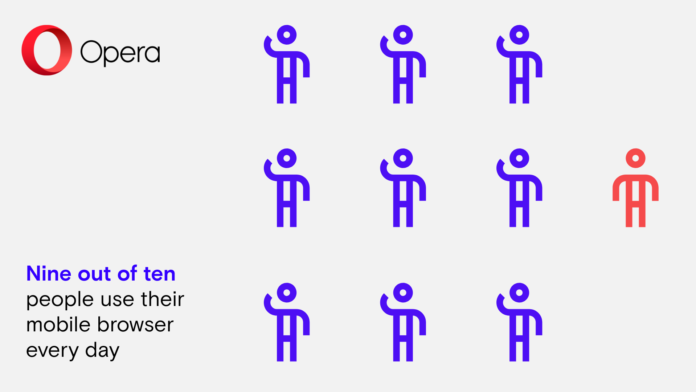
• Nine out of ten people in South Africa use their mobile browser every day.
• Internet users in Africa use their browser to access social media domains such as Facebook, YouTube, Twitter and Instagram, followed by entertainment and search websites.
• Opera News users in Africa spend 50% of in-app time watching videos.
• South Africans pay six times more per gigabyte of mobile data than people in India.
 
The 2019 edition of the State of the Mobile Web report looked into the use of the Opera Mini browser and the Opera browser for Android, and it shows that mobile browsing is one of the most popular online activities among African internet users. For example, in South Africa, nine out of ten people use their mobile browser every day, an activity they prefer over the use of other applications like YouTube.
 
The report also revealed that on average, Africans using Opera spend more than 30 minutes browsing online each day. The most browsed category of websites was social media platform domains such as Facebook, YouTube and Instagram, followed by search engines like Google, and entertainment and sports websites.

Rapidly changing news and video consumption landscape
 
The report takes a look at the trends of news and video consumption across Africa. This includes analysing the usage of its standalone Opera News app, which grew from launch to over 20 million users in a period of one year. Categories like breaking news, local news, and entertainment were the favourites among users in the first quarter of the year.
 
Video content is also becoming more popular among people who use the Opera News app. The report shows that people spend 50 percent of in-app time in Opera News watching videos on Instaclips, the recently added video feature on the news app.
 
The usage of Instaclips keeps growing since its test launch in December 2018: in Q1-2019, Instaclips registered a total of 122,000 videos uploaded in different languages such as English, Portoguese, French, Arabic and Swahilli.
 
Expanding beyond browsing to fuel digital transformation
 
Opera’s commitment to digital transformation in Africa is ongoing. Beyond the development of its mobile browsers and standalone news app, Opera has made major investments on the African continent, expanding its services to other technology areas such as FinTech and digital advertising.
 
The full version of State of Mobile Web 2019 report is available to read online or for download by clicking here.

OPERA
blogs.opera.com/news

Andpeople Launches Glenfiddich’s Challengers Club Functional Billboard

Glenfiddich, alongside Andpeople, launched a functional billboard, complete with all the trimmings that one would expect of a plush whisky bar audio-equipped to capture a unique podcast series, whilst being seamlessly integrated into the Johannesburg skyline.

A mandate was given to youth specialist agency Andpeople to roll out a global campaign in South Africa, where the call to action was to define ‘maverick’ behaviour and how it translates within our local context. A team was employed to thoroughly interrogate the meaning and connotations that this evoked with individuals who readily fell into this broad category.

What emerged was a very real sense that the meaning was a lot more specific to the unique context we find ourselves in. And while plenty of parallels could be drawn, our local ‘mavericks’ did not necessarily identify with the word. This shapeshifted the brief to become something far more organic and exciting, and where the concept of the Challengers Club was incubated.

For the brand with maverick spirit at its core, the idea for a fully functional and immersive space within the confines of an advertisement billboard has been long in the making, serving Glenfiddich’s ambition to spark meaningful conversations with a diverse range of change makers.

Recognised within their fields, by entering The Challengers Club these change makers will transfer their insight, knowledge and passion; creating a ripple effect of inspiration for the next wave of innovators and entrepreneurs.

Kelly Johnson, Marketing Manager of Glenfiddich SA said, ‘In order to build cultural context, we wanted to define drivers of maverick behaviours and interpretations in South Africa in order to shape and inform future creative utilisation. At the core of this was the need to evolve our interpretation in order to build credible connections with our audience now and in the future whilst remaining true to Glenfiddich.’

Glenfiddich – The Challengers Club around the table.

The idea for a functional space within the confines of an advertisement billboard served Glenfiddich’s fundamental purpose to facilitate meaningful conversations with the changemakers and luminaries of today; and ultimately for the benefit of future generations to come. By creating a clearly demarcated space used solely for this purpose, the brand enabled real conversations to emerge and to travel, with a series of podcasts being aired on national station Metro FM as an extension to the campaign.

‘We have a highly ambitious youth market, but they lack the skills, resources and tools to equip them for their journeys. By bringing together a cross section of established innovators and disruptors of the status quo, we can use these authentic stories to inspire this generation in a meaningful and credible way,’ said Duncan MacLennan, Managing Director for Andpeople.

The Challengers Club billboard and is set to tour the country, with a unique conceptual space currently being designed for Durban to launch in July, with Cape Town popping up later this year.

About their core objective, MacLennan said, ‘We wanted to challenge the conventional approach to utilising outdoor media, shifting from simply delivering a passive message, to creating an active experience that creates unique content which can then be amplified via digital and broadcast channels. What we have now is more than a campaign, it’s a programme built on the value it can create for the people it’ll reach.’

ANDPEOPLE
hello@andpeople.com 
www.andpeople.com/contact/cape-town/

This is Modern Marketing