Home Blog Page 39

Marketers Should Balance Data With Human Creativity

Marketers Should Balance Data With Human Creativity
Dewald van Niekerk, Mediamark.

In today’s hyper-digital world, consumers are exposed to more content in a single day than previous generations experienced in a lifetime. Marketers, under pressure to demonstrate ROI, often pursue platforms that provide immediate data and ‘vanity metrics.’ However, as AI becomes an increasingly significant factor in both marketing and consumer behaviour, audiences are growing more discerning and skeptical.

‘Trust is the new currency,’ said Dewald Van Niekerk, Business Unit Director at Mediamark. ‘Consumers can spot marketing jargon a mile away, and with AI at their fingertips, they’re quick to research and compare brands. The challenge for marketers is not just to be seen, but to be believed.’

The Solution: Balancing Data With Human Creativity

Van Niekerk believes that while AI is a powerful tool for targeting and measurement, it cannot replace the authenticity and emotional intelligence of human storytelling. ‘AI should be a collaborator, not a replacement. The most effective campaigns are those that combine data-driven insights with genuine, relatable messaging.’

He offers these guiding principles for marketers and sales leaders:

Choose platforms built on trust: whether it’s digital, print, broadcast, or radio, the medium matters less than the relationship it has with its audience. Trusted platforms foster deeper engagement and loyalty. Radio remains one of the most trusted media environments, especially at the local level. Listeners form personal relationships with on-air personalities and tune in habitually, making radio a powerful platform for brands to build consistent, credible messaging through compelling storytelling. Knowing what you’ll measure and aligning ad messages with real business challenges, such as moving stock, promoting a new location, or building awareness in a niche market, can make radio campaigns not only relatable but also results-driven.

Be patient: brand Building takes time: in a world of instant gratification, it’s tempting to pivot strategies based on short-term data. However, real brand equity is built through consistent and authentic messaging over time.

Let data guide, not dictate: use AI and analytics to inform decisions, but don’t lose sight of human intuition. Marketers should trust their gut as much as the numbers.

Authenticity wins: audiences today are savvy. They value brands that speak honestly and avoid overused buzzwords.

As the marketing industry leans further into AI, Van Niekerk urges brands to relearn the value of trust and patience. ‘The platforms you choose, the stories you tell, and the consistency of your message all contribute to long-term ROI. Technology is a tool, but trust is the foundation.’

MEDIAMARK
www.mediamark.co.za

What Makes Influencer Marketing Valuable?

Tami Ruschin, Style ID Africa.

In the ever-evolving marketing landscape, few channels have sparked as much hype, and scrutiny, as influencer marketing. The Nedbank IMC interviewed Tami Ruschin, Founder and Director at Style ID Africa, a bespoke influencer agency and Nedbank IMC partner, to get her industry insights on this tricky but critical marketing channel.

1. What Makes Influencer Marketing Valuable?

Influencer marketing can be an incredibly powerful brand-building tool for a number of reasons. For one, consumers today trust people more than ads. Influencers, especially those with authentic followings, offer brands a direct line to credibility and relatability.

It also enables brands to target niche communities with hyper-personalised messaging at scale, thanks to the vast array of creators across every interest area who have a deep understanding of their audiences and can drive high engagement rates. Partnering with the right influencers gives brands a way to stay culturally relevant and resonant by tapping into real-time conversations and dynamic trends.

2. What About The Liabilities?

Influencer marketing can be a double-edged sword – damaging brand reputation and proving costly if not executed carefully.

One of the biggest challenges is the prevalence of vanity metrics and fake influence, where follower counts can be artificially inflated and engagement can be faked. Without proper vetting, brands can end up wasting thousands on creators who don’t deliver tangible results.

Brand misalignment is another key issue to deal with, where an influencer’s content, tone, or values clash with the brand. The disconnect can be jarring and the fall out fast, furious and very public.

Lastly, many influencer campaigns suffer from short-term thinking, focusing on fleeting bursts of awareness without a long-term strategy or real measurement framework, which can jeopardise marketing effectiveness and the all important ROI.

3. How Has Style ID Africa Responded To These Challenges?

As a team that aims to understand both creators and brands, we know that influencer marketing is more than a media buy, it’s a creative process emanating from research, context and cultural intelligence. Brands are strategic partners, not just clients, and creators are collaborators, not just content vending machines.

Style ID Africa uses in-depth follower analysis, audience demographic insights, and engagement quality audits to match brands with creators who genuinely influence their communities. The agency focuses on relationship-led models that create space for deeper storytelling and real advocacy. The goal is to treat content as an asset, not an afterthough, maximising long term ROI across all channels.

4. The Verdict On Influencer Marketing?

As influencer marketing evolves so must the approach. We have learnt over the years that this type of marketing is incredibly powerful when driven by strategy that is precise, purposeful and measurable. Handled carelessly though, it can quickly become a liability.

According to Dale Hefer, CEO of the IMC, ‘The challenge for marketers will always be how to make this channel more asset and less liability. When done right, it’s a game-changer, driving growth and authentic connections with niche audiences. A sentiment echoed in the ‘Marketing is Business®’ mantra of the Nedbank IMC, where finding the right approach to influencer marketing is key to delivering results that matter.’

At the conference, on the 18th September, Style ID Africa will spearhead this conversation through live podcast interviews with selected speakers and industry leaders. Leroy Marc, host of Style ID Africa’s Business of Influence podcast and acclaimed local radio and TV personality, will lead these insightful discussions. Modern Marketing is a proud media partner of the Nedbank IMC.

Attend in-person or online. Venue: Mosaiek Teatro. 1 Danielle Street, Fairland, 2030. Early bird phases sold out. In-person tickets priced at R4000 (excl. VAT). Limited seats available. No allocated seating. Virtual tickets priced at R950 (excl. VAT). Book now.

NEDBANK IMC CONFERENCE
www.imcconference.com

Judges For The 2025 Shopper Marketing Awards Announced

Judges For The 2025 Shopper Marketing Awards Announced

Shop! South Africa is proud to confirm an esteemed panel of judges for the 2025 Shopper Marketing Awards, now in its third year. As South Africa’s trade association dedicated to enhancing shopper and retail environments, Shop! SA is committed to driving excellence, collaboration, and innovation across the shopper marketing value chain.

Di Wilson, founder and MD of Shop! SA, said: ‘These awards aren’t just about in-store displays. They’re about strategic shopper thinking and integrated campaigns that deliver real impact. They celebrate brands that view the world through a shopper lens and drive measurable bottom-line results. Having this panel brings gravitas, insight, and credibility to the judging process, and inspires the entire industry to push the boundaries.’

Judges Share Why This Matters

Joss Myers of Barrows Global reflected on the platform’s impact: ‘SHOP! SA gives industry leaders the stage to shine. As a judge, I get to explore the exceptional work shaping retail experiences across South Africa.’

Helen McDougall at Woodlands Dairy added: ‘These awards celebrate creativity and effectiveness. By judging, I can recognise standout initiatives and help elevate our industry’s standards.’

Bev Anderson from Heineken SA described her excitement: ‘I love seeing creative point-of-sale up close. Judging gives me insight into the thinking behind retail innovation.’

Wendy van Zyl of Libstar highlighted the broader impact: ‘SHOP! SA understands the unique dynamics of our market. It sets contextually relevant benchmarks and helps develop emerging talent.’

Nana Lloyd of Nativa shared a similar passion: ‘Shop! SA fills a vital gap in the awards landscape by recognising the exact moment that matters most in shopper marketing: the moment of truth at shelf. Judging is a privilege. It gives me a front-row seat to what’s working in our industry and the chance to shine a light on campaigns that truly deliver.’

Francois Jurgens of Nestlé SA pointed out the value of process: ‘Watching best-practice in action drives category growth and strengthens retailer-brand execution.’

Siobhan O’Sullivan from Premier FMCG emphasised commercial impact: ‘Great shopper marketing campaigns need to deliver both emotional connection and business results. Judging reminds us of that balance.’

Event And Entry Details

The 2025 Awards ceremony will take place on 11 November at Bryanston Country Club. Entries close on 31 July. Enter here.

The face to face judging will be held on the 15th of September at the Cape Town Marriott Hotel, Century City. The nominees will be announced on the 16th during the inaugural Shop! SA conference, ‘Concept to Conversion’, designed to facilitate deeper learning and networking.

Shop! SA celebrates every link in the shopper marketing chain from concept to campaign delivery, and every participant in the industry from brand manufacturers to retailers, creative agencies and production houses. The awards offer an opportunity to showcase a brand’s strengths while learning from and connecting with peers.

Wilson concluded, ‘These judges bring expertise, energy and integrity to the awards, and Shop! SA is both grateful and proud to have them on board. Their involvement confirms that our Awards aren’t just trophies; they certify real impact and results. We encourage every corner of the industry to enter.’

2025 SHOP! SA Awards Judging Panel

– Bev Anderson, Channel Lead, Off-Premise Retail, Heineken SA.
– Diana Williams, Head of Category & Customer Marketing, Haleon SA.
– Helen McDougall, CEO, Woodlands Dairy SA.
– Joss Myers, MD, Barrows Global.
– Tshiamo Tladi, Marketing Director, Hyundai SA.
– Nana Lloyd, Marketing Director, Nativa.
– Wendy van Zyl, Category & Customer Executive, Libstar.
– Tanja Korte, MD, Rainmaker Marketing.
– Francois Jurgens, Commercial Director, Nestlé SA.
– Siobhan O’Sullivan, Managing Executive HPC – Group Strategy and Marketing, Premier FMCG.

SHOP! SOUTH AFRICA AWARDS
https://www.shopassociation.africa/

How To Future-Proof Yourself For Your PR Career

How To Future-Proof Yourself For Your PR Career

Caroline Smith, head of PR at Flow Communications, recently gave a talk to a cohort of University of Johannesburg public relations students. Smith says the job market of the future isn’t knocking politely and waiting at the door. It’s already bursting in, flinging open the windows and rearranging the furniture.

The students I was talking to (especially the soon-to-be-graduates) are stepping into an industry that has changed enormously since I first started my career.

I’ve seen media releases getting replaced by social media posts. I’m living the shift to TikTok trend-watching heavily influencing communications strategies. Artificial intelligence tools such as ChatGPT and Midjourney are the new office interns: getting trained to generate content, analyse sentiment, spark creative direction and support campaign planning in a matter of minutes (or even seconds).

This is the new normal. When I first started in PR, we delivered printed media releases to the desks of journalists via courier and then came fax machines, which were a game changer. I can’t predict what the future will hold for these young, eager and with-it minds.

But I did have some things to say to them, which I thought would be unchanging and useful advice. So, here are four constant pillars that can always help you as a young person, whether you’re still studying or about to step into your first job.

1. Show Up Like A Pro

Professional readiness isn’t about waiting until you get your first job. If you want to stand out, start acting like a professional as of this second. Join an industry body such as the Public Relations Institute of Southern Africa and plug into networking opportunities.

Build a digital portfolio that shows what you’re learning and doing. Create it using Google Drive, Canva, Wix, LinkedIn or whatever else that works for you. Have a portfolio that said, ‘I’m ready to talk shop’ before you even step into your first job.

How you present yourself matters. From emails to Zoom calls, show up like you mean business.

2. Learn By Doing


Regarding my first point above, yes, I didn’t give you a step-by-step guide on what exactly to do with Google Drive, Canva and Wix – and that’s on purpose. The fastest way to grow is to do.

Theoretical knowledge is great, but in the world of work, you would be helping yourself (and us as mentors) if you can start building a foundation of experience that your future employer can add to.

If you’re interested in joining a digital marketing business, create something by yourself. Post something. Try something proactively. Then ask for feedback and actually use it. If it’s public relations that you’re passionate about, find five PR or communications professionals on LinkedIn that you want to follow and learn from what they’re sharing. Reflect on what you see working for them, what doesn’t and what you might do differently. Every project you take on is a step forward.

3. Be Someone People Want To Work With

You can be a Canva wizard or write copy that sings, but if you’re rude, unreliable or resistant to collaboration, you’re going to struggle.

Emotional intelligence, good communication skills and the ability to work on a team are some of the attributes that turn interns into indispensable team members. You have to learn to listen, take initiative and bring your youthful ideas to the table. Being easy to work with can take you far in your career.

4. Keep Learning, Always

Thanks to technology, changes in today’s world of work come our way faster than a 5G connection. Tools such as ChatGPT are rapidly changing the rules of the game, but your responsibility as the future of your chosen profession is to learn how to use them.

Don’t fear AI. You have to learn to adapt to it, but be careful not to follow it blindly either. No matter how impressive the tools, they’re only as effective as the thinking behind them.

As a future professional, you must also develop the ability to analyse, question and find the ‘why’ behind every message you’re helping a client share. Tools can support you, but your knowledge about your target audience (from one human to another) is what truly adds value.

Make sure that you balance the speed of tech with the timelessness of showing up like a professional, making connections, listening to learn and staying curious.

FLOW COMMUNICATIONS
https://www.flowsa.com/

IAB Announces Finalists For The 2025 Bookmark Awards

IAB Announces Finalists For The 2025 Bookmark Awards

The Interactive Advertising Bureau (IAB) South Africa has announced the 2025 Bookmark Awards finalists. These selected front-runners represent the full spectrum of the digital economy, from emerging talent and new platforms to legacy brands that are driving forward-thinking ideas.

This year’s finalists span a powerful mix of industry heavyweights and digital disruptors, from KFC, Cadbury, Nedbank, Standard Bank, Clicks, City Lodge Hotels, Audi South Africa, Spotify, PepsiCo, Showmax, Sanlam, Volkswagen, Toyota, and McDonald’s, to rising digital startups, niche publishers, and purpose-led campaigns.

The awards span across eight major pillars, highlighting the multifaceted nature of today’s digital work:

Platforms: from brand websites and mobile apps to public service platforms, finalists include Clicks, Audi, Profmed, City Lodge Hotels, and more.

Community: social innovation and community-building campaigns from LEGO, Chicken Licken, Unilever, Old Khaki, and Oreo, among others.

Channels: work across paid search, SEO, display, native, influencer marketing and social innovation includes heavy hitters like Payflex, Inverroche, Debonairs Pizza, Mr D and Nivea.

Publishing: From News24’s hard-hitting investigative journalism to Jacaranda FM’s podcasting and Primedia’s election coverage, this year’s publishing entries reflect media’s vital role in democracy.

Campaign: featuring standout storytelling and strategic executions from the likes of Sanlam, Amnesty International SA, and Heineken Beverages.

Craft: precision in copywriting, UX, interface design, and use of sound is on display from Ogilvy, MakeReign, Joe Public, and VML South Africa.

Emerging Tech: AI-driven campaigns from Standard Bank, Momentum, Unilever and Cadbury explore how tech is transforming customer journeys.

Special Honours: categories like Best Digital Student, Digital Rising Star, Best Contribution to Transformation, and Pixel for Purpose spotlight the people and projects changing the industry from within.

These represent only a few of the innovative brands driving some of the most exciting campaigns today. Access the complete list of finalists here.

The final winners will be revealed at a glamorous gala event on 14 August 2025 at The Galleria in Sandton, bringing together the industry’s brightest brands, and most creative change makers. Tickets are now available on the official Howler website.

Introducing The Bookmarks Rankings

IAB SA will be introducing the inaugural Bookmarks Rankings in 2025, providing a definitive performance benchmark across agencies, publishers, and brands in the digital space. Between 15 August and 19 September, agencies will have the opportunity to update their credits via the Loeries portal. Rankings will be released in mid-November 2025, providing long-term recognition of creative consistency and campaign effectiveness. More information will be made available on the Bookmarks website in due course.

IAB SOUTH AFRICA
https://iabsa.net/  

Effective Loyalty Programmes Encourage Consumer Love

Effective Loyalty Programmes Encourage Consumer Love
Riaz Galant, Achievement Awards Group.

Riaz Galant, Commercial Director at Achievement Awards Group, says customer loyalty is a figurative holy grail of business. This is because long-term customers have a higher lifetime value to companies, while acquiring a new customer can be between five and 25 times more expensive than retaining an existing one. This is why businesses invest heavily in customer loyalty programmes. Unfortunately, many loyalty programmes don’t really work, and while they may get customers back a few times, those customers need little persuading to switch to a competitor.

An obvious but important point to make is that customer loyalty is a product of much more than a loyalty programme. No loyalty programme is going to help if your pricing is out of kilter, if your staff are unhelpful or rude, or if your return policy is unfair. Assuming no other impediments, a poorly designed loyalty programme will still not engender long-term loyalty.

It may succeed in eliciting fleeting but unsustainable feelings of goodwill in a customer, akin to a ‘like’ on social media. These transitory ‘likes’ are soon forgotten and disposable, the epitome of short-term attention, and the antithesis of long-term affinity. This is true not just on social media, but in real life, as illustrated by the ‘hedonic adaptation’ theory: that positive experiences may temporarily boost our feelings of happiness, but we will return to a baseline level of wellbeing. We may be pleased with the new television we bought, but in time will want a bigger or newer one. The feeling of ‘liking’ ultimately does pass.

The million-dollar question is: how can it be sustained?

From Transactional To Relational

Long-term good feelings all start with ‘liking’. Sometimes that grows into love. The difference between poor and excellent loyalty programmes is in how they fail or succeed to grow liking into loving. The best ones build loyalty deeply and sustainably.

It’s easy to make a start and to achieve the most basic level of liking in a customer. A customer changes their behaviour to buy from or support your business. So, you give them some points or a small discount or a free item in return. It’s a simple exchange, nothing wrong with it, but still transactional at this stage.

Now, ‘if your motive is simply to drive a sale, a transaction, you can use a transactional reward. This is the bulk of the industry, and it comes from behaviouralism. You design a specific consequence (good or bad) for a specific behaviour and you are reinforcing or discouraging that behaviour, that’s fine.’ But what if you want more than just a sale?

According to research by the Incentive Research Foundation ‘from there, you can go up the spectrum, from trying to drive a behaviour to developing a long lasting relationship.’ To go beyond transactional and into relational, you need to make the exchange emotional, building positive emotions, repeatedly, consistently, over time. The stronger those good feelings become, the more powerfully they influence a customer’s behaviour.

In Thinking, Fast and Slow, Nobel Prize winner Danial Kahneman posited that we have two ways or ‘systems’ of thinking: fast, which is instinctive and emotional, and slow, which is deliberative and logical. Perhaps the most impactful takeout of the book was not that we have two ways of thinking, but that the ‘fast’ emotional system is much more powerful and influential in our decision-making. This upended previous assumptions that humans are primarily rational creatures. It’s also been confirmed by Gallup research, which found that ‘about 70% of decisions are based on emotional factors and only 30% are based on rational factors’.

The second million-dollar question is: how do you make the relationship emotional?

From Extrinsic To Intrinsic Motivation

A company-customer relationship can begin transactionally. Think about the ubiquitous ‘buy ten and get the next one free’ favoured by many coffee shops. Customers are driven by something external or outside of themselves – the free, eleventh cup of coffee. But somewhere between the first and tenth cups of coffee, a customer’s motivation might start to become more internal and emotional. Perhaps the barista remembers her by name. And then, how she likes her coffee. Or, perhaps, the coffee shop uses only organic ingredients, and cups made from recycled materials, and offers a discount if you bring your own thermos, all of which aligns with the customer’s own values and makes her feel good about supporting the coffee shop.

By the eleventh cup, the customer is already feeling a degree of emotion and affinity to the shop. She is choosing to support it not just because of the promise of a free cup of coffee, but because she likes the coffee shop’s ethos and feels good when she goes there. The customer may be starting to develop the beginnings of something that is not yet love but is more than just like. And perhaps the ‘hello, Julia, here’s your skinny latte’ is just the beginning of a relationship that feels personal. Perhaps, for her hundredth cup, the coffee shop gives Julia a thermos, personalised with her name on it.

But what about businesses that don’t get visited every day? What about tyre manufacturers, for example, who most of us only visit every few years? There are ways to build relationships between those visits. A coalition loyalty programme, involving other non-competitor brands in different categories, might keep David engaged because he likes the programme partners, some of which he is already a loyal customer of. Or he might have expressed a strong interest in mechanics or cars and get free subscriptions to relevant sites. Or he might have expressed a strong interest in racing and get news about racing via a newsletter, and receives discounts to motor events, and can enter exclusive competitions for a trip to a Grand Prix, even in years he may not have bought tyres. Albeit more slowly than Julia is with the coffee shop, David is building positive feelings for, and a relationship with, the tyre brand.

In both the coffee shop and tyre examples, we see evidence of things like relevance, personalisation, alignment with values, and a sense of mutual appreciation. In these and other ways, good feelings are nurtured, emotion-based, intrinsic motivation is strengthened, and relationships are formed. This is the kind of long-term loyalty, perhaps even love, that keeps customers coming back, repeatedly and regularly.

In both the coffee shop and tyre examples, it’s more than just a freebie or discount. It’s a sense of feeling valued, appreciated and rewarded emotionally for my business. There is a mutual reciprocity that isn’t seen on a bank statement but is felt on a human level.

The Real Deal Is More Than Just A Good Business Deal

There’s a difference between an off-the-shelf or standard-issue loyalty programme and one that actually pays dividends for years. The former operates exclusively at a transactional and superficial level: do this, get that.

The latter works at an emotional level: do this, feel that. This is what turns an introduction into a relationship. And it’s true of any relationship, whether it’s with a person we meet or a company we buy from. The difference between a poor loyalty programme and an outstanding one comes down to how well it helps to grow positive feelings, from like to love.

ACHIEVEMENT AWARDS GROUP
https://www.awards.co.za/

Be A Speaker At The Modern Marketing Power Hour Sessions

Be A Speaker At The Modern Marketing Power Hour Sessions

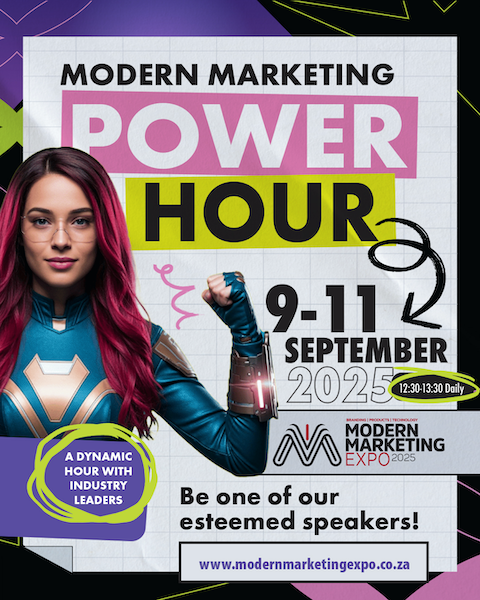
We are looking for industry leaders to share their expertise and insights in the ever-evolving field of marketing, branding and advertising at the Modern Marketing Power Hour sessions, taking place 9-11 September 2025.

There will be a presentation each day from 9-11 September at the Modern Marketing Expo, taking place at Gallagher Convention Centre. If you are interested in being a speaker for one of the daily slots, please email: meggan@practicalmedia.co.za. Presentations will be about 40 minutes each and will address a topic specific to marketing, branding or advertising.

The Modern Marketing Expo will be a showcase for the latest branding, marketing, graphics, signage, promotional products, and other solutions.

MODERN MARKETING EXPO
+27 11 568 1894
https://modernmarketingexpo.co.za

Cepacol® Announces New Brand Voice

Cepacol Announces New Brand Voice
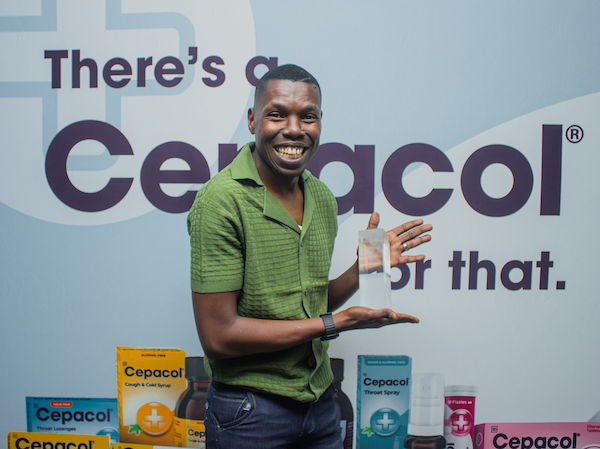
Voice of Cepacol, Mduduzi Sibeko.

Cepacol® has announced the winner of its national Voice Search competition, unveiling Mduduzi Sibeko as the new official voice of the brand in South Africa.This event marked the successful conclusion of a campaign that put the power of brand voice selection directly in the hands of the public. For the first time, Cepacol invited consumers to help choose who would become the Voice of Cepacol.

The campaign, launched in June 2025, encouraged aspiring voiceover artists nationwide to audition, after which a panel selected ten finalists. Their voice clips were uploaded to a dedicated microsite for public voting. South Africans eagerly participated in the voting process, casting scores of votes for their favourite voice to democratise the selection. This innovative approach ensured that the winning voice was truly the people’s choice, aligning with the campaign’s objectives to build consumer engagement, modernise the brand’s voice, and reinforce relevance among South African consumers.

Mduduzi emerged as the competition winner after securing the most votes from the public. His relatable and authentic vocal style resonated strongly with voters, making him the ideal choice to represent Cepacol’s local voice. Mduduzi will be featured as the voiceover in upcoming Cepacol radio, digital and in-store campaigns, effectively becoming the vocal personality of the brand in the future. In addition to the title, the winner gains a unique opportunity to elevate their voiceover career by partnering with a nationally recognised brand.

Phemelo Kabini, Brand Manager for Cepacol at Adcock Ingram, shared, ‘The brand is positioned as a locally trusted, quick-relief throat-care brand that’s modernising its voice and outreach through participatory, digital-first marketing. By handing over the reins to our consumers, we ensured the new voice of the brand is one they genuinely connect with. This campaign was designed to engage our community in a fun and modern way, and the response exceeded our expectations. We’ve not only found a fresh voice for our ads, but we’ve also shown our audience that we value their input at every step. We like to say, ‘There’s a Cepacol for that. And now there’s a voice too!’ which truly captures the spirit of this initiative.’

The campaign was developed in partnership with Anomaly, an integrated digital marketing agency. Paul de Chalain, agency founder and head of strategy, expressed, ‘Cepacol has evolved from a familiar cough‐and‐cold staple into one of Adcock Ingram’s most digitally forward OTC (over the counter) brands. The creative approach to this recent competition has sharpened its relevance with younger, social-first audiences. This was a deliberate shift from purely broadcast advertising to participatory storytelling, using a digital-first asset mix to keep media spend efficient and trackable.’

De Chalain added, ‘From the outset, we wanted this campaign to shift perceptions around how brands engage talent and tell their stories. By making the search public, we invited South Africans to co-create a piece of the brand’s future and ultimately decide who best reflects their own voice and values. It was a bold move to hand over that power, but it paid off with immense engagement, fresh energy, and a brand connection rooted in authenticity.’

CEPACOL
https://cepacol.co.za

Machine Wins Email Marketing Award

Machine Wins Email Marketing Award

Machine has clinched Best Internal Email at the 2025 You Mailed It Email Marketing Awards for its Earth Hour email campaign. Machine’s Earth Hour Mailer turned a routine internal mailer into an interactive, energy-saving experience. By switching to dark mode and encouraging Sanlam employees to reflect on their daily energy habits, the email campaign went beyond awareness, it modelled change.

This marks the second consecutive year the agency has taken home the accolade. ‘This campaign is a brilliant example of how creativity and purpose can come together to inspire action. It wasn’t just a message about Earth Hour, it showed us how small steps can add up to real environmental change,’ said Inga Bosch-Cloete, Senior Manager: Group Internal Communications at Sanlam.

‘When our team, Machine and the Sanlam Group, chose to switch to dark mode for our weekly internal mailer to raise awareness about Earth Hour, it was about more than just function. We wanted to show how small behavioural shifts can add up to meaningful sustainability gains. We’re proud to be recognised for our commitment to environmental awareness and to see Machine’s borderless creativity as content marketing specialists acknowledged and celebrated,’ added Samantha Page, Senior Content Officer at Machine.

Reaching Sanlam employees across 28 African countries, the campaign illustrated how creative thinking, even in something as commonplace as a weekly internal email newsletter, can spark tangible impact.

‘Winning this award two years in a row is a testament to our team’s dedication to pushing boundaries, even in spaces as overlooked as internal email. With Sanlam, we found a partner equally committed to doing more than just saying the right thing, but doing it too,’ said Alex Forrester-Strydom, Business Unit Director at Machine.

MACHINE
www.thisismachine.co.za

CTV Should Be A Core Part Of A Television Strategy

CTV Should Be A Core Part Of A Television Strategy
Leslie Adams, Reach Africa.

Leslie Adams, Sales Director at Reach Africa, says connected TV (CTV) isn’t new, it’s simply the next step in how we watch television. For media planners, that means unlocking bigger budgets, sharper targeting and more engaged viewers.

The media industry loves a shiny acronym. OTT, AVOD, FAST, and now CTV. But in the rush to categorise every shift in viewing habits, we sometimes forget the simple truth: this is still television. CTV isn’t a separate medium. It’s TV, delivered via the internet instead of a broadcast signal or satellite dish.

We’ve seen this evolution play out before. First there was linear TV: live, scheduled programming on free-to-air channels. Then came pay TV, offering more choice and premium content through satellite or cable. Now we have CTV, powered by streaming and smart devices. Different format, same purpose. Viewers are still sitting down to watch shows and movies. They’re just doing it through an app instead of a satellite and decoder.

For advertisers, this means CTV shouldn’t be treated as an add-on to digital plans. It should be considered as part of a holistic television strategy; one that reflects how people actually consume content today.

Active Viewing Means Higher Attention

One of the most important differences between CTV and traditional TV is how people engage with it. With broadcast or pay TV, something is already playing the moment you turn it on. But CTV offers a homescreen, with a menu of apps to choose between. You need to actively engage with it, by deciding what to watch, where to watch it, and when. That makes CTV a highly intentional, active viewing experience.

And that’s good news for advertisers. When someone has made a deliberate decision to sit down and stream a specific show or film, they’re more focused. There’s less background noise, more screen time, and greater attention. Add to that the fact that most CTV content is long-form and viewed on the biggest screen in the house, and you’ve got a premium environment for storytelling, one where well-placed advertising can have real impact.

In a media world obsessed with short-form content and shrinking attention spans, this kind of focus is rare. And it’s a big reason why CTV deserves its place in the TV budget.

App-Switching Is The New Channel-Surfing

Today’s viewers are spoiled for choice. There’s no longer a single destination for great content. Instead, audiences toggle between apps, switching from Showmax to YouTube to Netflix depending on what’s trending or recommended. Just like we used to flip channels, we now jump between platforms. Many big telcos and broadcasters are now even bundling apps, making it easier and more accessible for the viewer to get their content fix.

But more choice means more fragmentation, and less loyalty. Viewers go where the content is, not where the platform is. That makes the discovery phase of the viewing journey crucial. And in this space, the home screen of a smart TV plays a major role.

This is why certain formats, which are positioned directly on the CTV home screen, are so valuable. Before the viewer has chosen what to watch or even which app to open, you have a moment of attention. It’s the new front door to their viewing experience, and brands should be there.

It’s Not Digital Versus TV – It’s The Best Of Both

What makes CTV so powerful is that it offers the impact of TV with the precision of digital. You can target specific audiences, measure performance, and adapt campaigns in real time, all while appearing in a familiar, TV-like environment. It’s not ‘either/or’. It’s both.

And in South Africa, where cost-conscious consumers are increasingly turning to ad-supported options, this model is only becoming more relevant. Platforms are rolling out more advertising video on demand (AVOD) options, and global players like Netflix, Prime Video and Disney+ are already experimenting with ad tiers in other markets. Local adoption isn’t far behind.

Planning Needs To Catch Up

Viewing habits have shifted. Technology has kept pace. But media planning is still lagging. CTV is often dropped into the digital budget or left off the plan entirely. That’s a missed opportunity, especially when audiences are now moving fluidly between linear, pay and connected platforms, often within a single day.

Planning needs to reflect this reality. The TV ecosystem may be broader than before, but the foundation is unchanged.

CTV combines reach, attention and precision. It’s not a fringe channel or a niche experiment. It’s television: evolved, measurable and ready for investment.

REACH AFRICA
www.reachafrica.com

This is Modern Marketing