Home Blog Page 38

The First Agency Built Entirely Around Crunch Time Launches

The First Agency Built Entirely Around Crunch Time Launches

New agency Danger Point is open from Thursday to Monday, and it exists for the moments when balls may have been dropped, capacity stretched or deadlines pushed up. Danger Point is led by seasoned communications professionals Keri-Ann Stanton and Melissa Attree, backed by a network of senior experts who are fast, smart, and solutions-driven.

Together, they cut through the noise, unstick what’s stuck, and deliver sharp, budget-aligned strategies that are ready to present on Monday.

The twist? You keep your existing agencies to implement. Or, if you are an agency, your own team implements. Danger Point provides the PR led strategy, creative thinking, and the board-ready solutions, your teams and partners run with it from there.

‘We know that ideas don’t always arrive by Friday close of business,’ said Stanton. ‘But that doesn’t stop the board meeting on Monday. Danger Point is here to make sure you walk into that room looking like a rockstar.’

With a rapid turnaround between Thursday and Sunday, Danger Point delivers what clients need most: bold thinking, executable solutions, and presentations that wow mancos, excos and boards.

‘Speed, seniority and smarts, that’s our niche,’ added Attree. ‘We’re built for crunch time. Having worked together for the past few years, there is already a strong arsenal of proof of concept work.’

Danger Point is part of the KAMuses Consultancy, which has racked up over 86+ awards for their clients in seven years.

DANGER POINT
www.dangerpoint.agency

Why Proof Matters More Than Ever In Broadcast Advertising

Why Proof Matters More Than Ever In Broadcast Advertising

At a time when every digital click is tracked and attributed, some of the country’s largest marketing investments still rely heavily on assumed delivery. Whether it is a prime-time TV slot, a national radio burst, or a 30-second live read during drive time, each carries high cost and high reach. In many cases, however, independent verification beyond post-campaign summaries remains limited.

That gap is narrowing, and industry measurement is evolving.

According to PwC’s Entertainment and Media Outlook, television continues to reach more than 90% of South Africa’s urban population, reinforcing broadcast’s role as a trust anchor in a fragmented media environment. Globally, 86% of internet users now use another device, primarily smartphones, while watching TV. Locally, South Africans spend an average of around nine and a half hours per day on screens, the highest globally, meaning broadcast exposure increasingly plays out across connected devices.

South Africa’s broadcast audiences are highly connected. By late 2025, there were 51.7 million internet users (79.6% penetration) and 127 million mobile connections. Broadcast content is also becoming more distributed through broadcaster-owned streaming platforms. Government reporting noted that SABC Plus surpassed one million registered users in April 2025, later exceeding 1.5 million.

In this environment, the moment an ad airs, behaviour often shifts online.

‘When an ad goes live, audiences do not wait,’ said Joe Hamman, Director at Novus Group. ‘They search, they click, they talk. If you cannot pinpoint the exact second your campaign aired, you cannot confidently link exposure to response.’

In a second-screen economy, broadcast has become a trigger event. That shift has implications beyond marketing performance and extends into governance and financial oversight.

Boards and procurement teams increasingly require greater confidence in high-value media spend. Knowing that a 30-second spot aired is no longer sufficient. Brands need the actual clip, verified timestamp, and confirmed duration. Without that evidence, performance discussions remain largely speculative.

Live reads add another layer of complexity. A host endorsement can carry disproportionate influence, particularly in trusted radio environments such as breakfast and drive-time shows. Yet these moments are often the hardest to document. By capturing live reads with exact timestamps, brands can correlate endorsement moments with spikes in website traffic, branded search, or social conversation. What was once anecdotal becomes measurable.

Monitoring regional coverage, station popularity, and competitor activity helps brands understand where rivals are investing and where audiences may be underserved. In a tightening economy, this visibility informs allocation decisions before money is committed. In this context, monitoring is about more than volume. It is about certainty.

‘Trust in broadcast is high, but trust in reporting must be higher,’ said Hamman. ‘If you are investing in influential airtime, you should have auditable proof of what ran, when it ran, and how the market responded.’

As budgets tighten and scrutiny intensifies, broadcast advertising is entering an era of accountability. Reach still matters. But in 2026, proof matters more.

NOVUS GROUP
https://novusgroup.co.za/

How Sentiment And Credibility Are Shaped During The IEB Matric Results Period

How Sentiment And Credibility Are Shaped During IEB Matric Results Period

A new report by Professional Evaluation and Research (PEAR) analysed earned media coverage, social media activity and Google search trends linked to the 2025 matric results, focusing on the country’s top-performing IEB schools during the results window in January. It offers fresh insight into how visibility, sentiment and credibility are shaped during South Africa’s annual IEB matric results period, highlighting the distinct roles of earned media, social amplification and public search behaviour.

The findings indicate that schools’ reputations are shaped within a short results-driven window, largely through earned media coverage rather than sustained attention.

According to the analysis, while social media generates the highest volume of conversation during the matric results cycle, earned media delivers a disproportionate share of reach, credibility and impact. Broadcast and high-reach online publications accounted for the majority of meaningful visibility, while social platforms primarily served as secondary amplifiers rather than narrative drivers.

‘Results periods like matric announcements create sharp reputation windows,’ said Dr Jaco Pienaar, Chief Communications Officer ‘What the data shows very clearly is that volume alone does not equal impact; credibility, reach and tone are largely determined by how organisations show up in earned media during those peak moments.’

The report also found that sentiment across coverage of top-performing schools remained overwhelmingly positive to neutral, with negative commentary limited and largely confined to isolated social media discussions rather than sustained reputational issues. This suggests that results-led, factual reporting dominates the narrative when communications are focused and well managed.

In addition to media coverage, the analysis tracked public search interest during the results period, showing sharp spikes in mid-January aligned with the release of matric results. Queries about school names, fees and enrolment information increased significantly, underscoring the link between media visibility and stakeholder intent among prospective parents and pupils.

The report combines an overall view of the matric results media landscape with school-level analysis, examining visibility drivers, sentiment dynamics and amplification patterns. While schools experienced different mixes of PR- and social-led attention, the overall findings reinforce the importance of measurement in understanding what truly drives reputational impact during high-stakes education moments.

Methodology

The analysis covers the period 1 to 25 January 2026 and includes earned media across broadcast, online and print, social media activity on X (formerly Twitter), and Google Trends data. Metrics assessed include volume, reach, advertising value equivalency (AVE), sentiment and search behaviour.

PEAR
www.pear.africa

The Imperative For True Engagement In The Creator Economy

The Imperative For True Engagement In The Creator Economy
Pieter Geyser, Humanz.

Pieter Geyser, Commercial Director: Humanz, says our industry faces a critical challenge: the valuation of marketing efforts based on misleading metrics. We have, for too long, accepted a product, branded content, whose value proposition is built on an illusion of ‘authenticity.’ This has led to a fixation on content that is ‘organic looking,’ often at the expense of clear brand communication, out of fear of ‘interrupting the user experience.’

However, we must acknowledge the consumer’s sophistication. The audience is aware that they are viewing an advertisement and they are actively seeking control over their content consumption. When brand communication prioritises blending in over clear identification, it fails to build lasting brand equity, instead merely subsidising content creation without effectively leveraging the brand’s distinctive assets.

It is time to move beyond the chase for elusive ‘trust’ and ‘authenticity’ and focus on the only verifiable metric of engagement: attention.

Three Key Elements Of This Piece:

1. Stop thinking of creators as walking, talking, eating billboards. Think of them as partners.
2. Stop treating every platform the same way. Curate content by platform and audience.
3. Stop trying to be authentic by pretending that your content isn’t an ad. Be open and transparent with the audience, it’ll build a better relationship with the consumer.

The Delusion Of Impressions: From Volume To Velocity

As an industry, we have become reliant on metrics that provide a false sense of security, primarily Impressions. An impression is merely confirmation that a file was technically served on a screen. Given that many digital advertisements receive less than 2.5 seconds of viewership, an impression is an insufficient, passive metric for true campaign success. The reliance on Cost Per Mille (CPM) as a success metric rather than a unit of purchase measurement, fundamentally misrepresents the commodity we are trying to acquire: Attention.

The shift required: Marketers must shift their focus from the Volume of media (impressions) to the Velocity of engagement (Attention). We must clearly distinguish between Served (ad delivery) and Seen (actual viewing) to understand how Served x Seen = Incremental Brand Equity.

Creator content as an attention asset: Creator content’s primary function is not to generate deep emotional affinity but to capture attention. A creator’s role is to halt the user’s scroll long enough, often just five seconds longer than a traditional corporate asset, to effectively transition the user’s attention, however briefly, onto the brand or product message.

Active Vs Passive Attention: Valuing The Second

Not all moments of attention hold equal value. There is a significant difference between Active Attention (a user consciously leaning into the content) and Passive Attention (peripheral, subconscious glancing).

The receptivity of choice: Industry data, including insights from Lumen Research and System1, challenge the long-held belief that non-skippable, forced views are superior. The reality is that non-skippable ads are viewed only a fraction of the time they are served. By contrast, choice increases favourability. Brands that respect a user’s option to skip are rewarded with increased brand affinity.

The high-value of active connection: Platforms such as YouTube and TikTok, where the user intent is to actively consume content, offer the highest ceiling for attention.

The mechanism: When a user chooses to continue watching a skippable ad for five seconds, they grant the brand mental availability. This is a conscious, Active Attention decision that is crucial for processing the brand narrative and committing it to long-term memory.

The value: A voluntary five-second view is a high-value engagement because it signifies high resonance. It is the core of active attention, and the primary driver of brand equity. A single second of Active Attention can be more valuable to a brand than an extended period of forced exposure, where the user is focused purely on the countdown timer, not the content.

The challenge of peripheral engagement: Environments like the Meta ecosystem are characterised by a relentless, dopamine-driven content flow, making attention fleeting and often unintended – the definition of Passive Attention.

The mechanism: Brands compete with highly emotional, personal content. The advertising becomes a brief interruption in the user’s social life.

The requirement: Given the peripheral nature of this attention, Distinctive Brand Assets (logo, colours, shape) must execute the vast majority of the communication. If a user cannot instantly recognise the brand within a fraction of a second, the view is functionally without value.

The limitation: Passive attention is effective for brand refreshment and maintenance, but it is demonstrably ineffective for driving brand education or deep recall. Forcing a non-skippable view often results in a state of Passive Resentment, where the user actively filters out the message to preserve their experience.

Navigating Platform Ceilings: The Elasticity Of Attention

The attention an advertisement receives is not solely a function of creative genius; it is significantly determined by the platform’s engineering, the algorithms that train user behaviour. This creates a ‘ceiling’ for attention that creative cannot unilaterally break.

TikTok: The platform is engineered for rapid engagement, training users for a 1.5-second ‘hook-or-die’ cycle. This is a space for ‘hacking the moment,’ not building complex brand narratives.

Meta: Users are trained to scan, making this a ‘passive’ environment where brand recognition must be instantaneous.

YouTube: With an inherent intent ‘to watch,’ YouTube offers a ‘High Ceiling’ for sustained, active attention, but it must be used with creative that’s appropriate for the medium, not merely as a repository for short-form content.

The New Authenticity: Embracing Transparency In Sponsorship

The most credible action a brand can take is to be transparent about its commercial intent. Data from System1’s 2025 ‘The Long and Short (form) of it’ report confirms that users are more engaged and receptive to sponsored content when the nature of the partnership is clearly disclosed upfront.

The strategy: Brands should leverage the creator for their Attention Mechanics, their unique ability to hook, pace, and speak the niche language of their audience, while maintaining full transparency regarding the sponsorship. The goal is to purchase the user’s time with engaging content, not to mislead them.

From Niche To Reach: A Market Leader’s Approach To Growth

We must address a fundamental misunderstanding of brand growth as articulated by Byron Sharp’s foundational principles. Creators are structured to go Deep into a niche, while brands must be designed to go Wide. A failure to balance these two objectives results in the brand’s interests being compromised.

The niche trap: Optimising creative solely for a creator’s ‘superfans’ means speaking primarily to an audience already converted.

The math of growth: True brand growth is driven not by heavy or long-term users, but by light buyers. This necessitates communicating with the vast majority of the population that is unfamiliar with the brand or its products.

The reality for light buyers: The ‘authentic’ creator content, rich with niche language and in-jokes, is often confusing or indecipherable to the light buyer. It fails to clearly articulate the brand’s offering.

A Commercial Mandate For Professionalism

The era of tentative, ‘shaky-cam’ branding must end. For brand managers, marketers, and creatives, the role is to be a commercial disruptor, not a silent partner. We must stop viewing creators as mystical entities that cast ‘trust’ spells, and instead see them as high-octane Attention Engines. They excel at the ‘Hook,’ but the responsibility for the ‘Brand’ remains with us.

It’s important to build a more professional and sustainable creator economy for all. This requires leveraging the distinct advantages of each platform: the high-voltage active attention of YouTube, the broad, distinctive reach of Meta, and the dynamic environment of TikTok. By moving past the chase for ‘ghost impressions’ and embracing brutal honesty about commercial intent, we can focus on building actual brand memory.

The attention economy is a zero-sum game. Every second wasted in ambiguity is a second not spent in memory formation. We urge the industry to stop hiding and blending in. If you are investing in a seat at the table, you must be authoritative, present your brand assets clearly, and communicate your value proposition directly.

HUMANZ
www.humanz.com

Advice For Aspiring Radio Broadcasters And Content Creators

Advice For Aspiring Radio Broadcasters And Content Creators

Ahead of World Radio Day on 13 February, Jacaranda FM’s on-air personalities share real-world advice for aspiring broadcasters and content creators hoping to break into the industry. 

Martin Bester: Just Start, Anywhere!

As host of Jacaranda FM’s flagship breakfast show, Breakfast With Martin Bester, Martin Bester is a firm believer in taking action. He believes waiting for the ‘perfect moment’ is one of the biggest mistakes aspiring broadcasters can make, and he’s proof that experience is the best teacher. ‘My advice is to start as soon as you can on whatever platform is available to you: whether it’s school radio, varsity, community radio or even social media,’ said Bester. ‘It doesn’t matter who’s on the other side. It doesn’t matter how big or small the audience is. What matters is getting comfortable, building confidence and sharpening your skills as a presenter or entertainer.’

He also encourages young talent to embrace the accessibility of today’s digital platforms. ‘There are so many ways to find and grow an audience now: TikTok, Instagram, podcasts. Don’t sit around waiting for a big opportunity. Create your own.’ For Bester, momentum beats perfection every time. ‘Don’t waste energy worrying about your big break. Just start. Sometimes, those early days, when you’re figuring it out and doing it for the love of it, are the most fun you’ll ever have.’

Elana Afrika-Bredenkamp: Find Your Message And Be Consistent

As an award-winning broadcaster and podcaster, Afrika-Bredenkamp is a storyteller at heart. Her advice to aspiring broadcasters is simple: start with a clear sense of purpose and stay committed to it, even when the road feels long. ‘When it comes to my radio show, I think about what I need as a listener,’ said Afrika-Bredenkamp. ‘I love people who uplift me and make my day better, so that’s exactly what I aim to do on air.’

Her podcast, however, serves a different purpose. ‘With my podcast, I want to learn. I want people to teach me how to be a better human and, specifically, a better parent. That’s why I decided to focus on parenting. It’s something deeply personal to me.’ Afrika-Bredenkamp believes consistency is what ultimately separates those who succeed from those who don’t. ‘If you’re consistent with your planning, your thinking, your dreaming, your journaling, it will work out,’ she said. ‘We put in two years of consistent, unpaid work before my podcast really took off. It takes determination, hunger and passion. But most importantly, you need to know what you want to say and hone in on your message.’

Alex Jay: Become A Master Of Knowledge

As a legendary broadcaster, Jay has decades of experience behind the mic. His advice to aspiring broadcasters is classic and powerful: build your brain. He believes that being well-read and curious gives presenters the ability to connect with audiences on just about any topic. ‘I would advise you to read, read, and read as much as you can. Expanding your own knowledge makes you the master or mistress of general knowledge and you can converse with just about anyone on any subject.’ He also encourages aspiring broadcasters to think beyond the mainstream: ‘There are loads of places other than commercial radio stations where you can go and try out your new radio career, including campus and community radio stations.’

Rozanne McKenzie: Never Stop Learning And Seek Mentorship

McKenzie, co-host of Jacaranda FM’s The Drive with Rob & Roz, reminds hopefuls that radio isn’t just about talking into a mic but that there are endless paths behind the scenes too. Her advice? Learn, grow, and find someone who can help you navigate it all. ‘Never stop learning. Radio offers so many opportunities that are not just on air,’ McKenzie explained. ‘There are so many different ways to get involved in radio if it’s something you want to pursue as a career. Start at a campus radio station, find someone to mentor you, and work from there. If you’re passionate enough about the radio medium, find ways to get as much exposure to it as you can. Community radio or retail radio are also great ways to get started.’

Rob Forbes: Be Your Authentic Self

Forbes is a presenter on The Drive with Rob & Roz. He knows that standing out in a crowded space isn’t about copying anyone, it’s about leaning into individuality and owning your unique voice. ‘My advice to up-and-coming broadcasters, aspiring radio peeps, presenters and content creators is simple: be yourself,’ said Forbes. ‘I mean that for your personality and your presenting style.’ He added ‘I know when you’re starting out on this journey it’s easy to want to emulate people who have already achieved success, but your audience wants to get to know you, more than anything, and they want you to do your thing in your own way. Always pay attention to what others are doing and what works and doesn’t, but make sure you do things your way. That’s how you’ll be remembered.’

Danny Painter: Start Where You Are And Connect Emotionally

Painter, who brings heart to every conversation on Love Songs with Danny Painter and the Jacaranda FM Top 40, believes emotional connection is the true currency of radio. For her, success doesn’t start with a big break, it starts with initiative. ‘If you’re dreaming about getting into radio, start where you are, with what you have,’ Painter said. ‘Community stations, campus radio, even podcasting from your phone, those are your training grounds. That’s where you find your voice, make your mistakes and build resilience.’ She’s clear that growth in the industry requires proof of passion and persistence. ‘No one hands you the mic at a major station without showing you’ve earned it. So show up consistently. Do the work, even when no one’s watching.’ For Painter, technical skill alone isn’t enough. ‘Learn how to tell a story. Learn how to listen. Learn how to connect. Radio isn’t just about talking, it’s about feeling. If you can make someone feel something, you’ll never be forgotten.’

JACARANDA FM
https://www.jacarandafm.com/

Africa’s Biggest Marketing Conference Officially Announces Its 2026 Event

Africas Biggest Marketing Conference Officially Announces Its 2026 Event

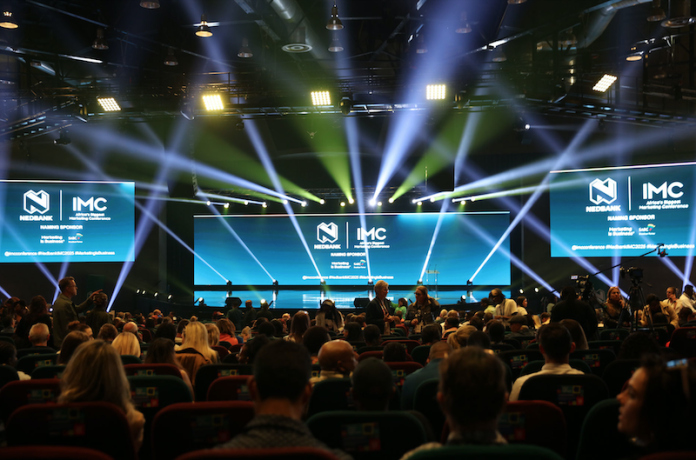
Taking place on 17 September 2026 at Mosaïek, Johannesburg, with a hybrid in-person and virtual format, the Nedbank IMC 2026 will once again bring together senior marketers, CMOs, founders, strategists, creatives and growth leaders for one focused day of high-impact marketing intelligence. Modern Marketing is a proud media partner.

The event is anchored by the theme SHIFT HAPPENS™. ARE YOU READY? A direct challenge to marketers, business leaders and agencies navigating one of the fastest periods of change the industry has ever faced.

In 2025, more than 3300 delegates from over 20 countries gathered at the Nedbank IMC, reinforcing its position as the most credible and commercially relevant marketing platform on the continent. The 2026 edition builds on that momentum, sharpening the focus on how marketing must respond to accelerating technological change, shifting consumer behaviour and rising commercial pressure.

The SHIFT HAPPENS™ theme reflects a simple reality: marketing is no longer adjusting at the edges. Entire categories, channels and business models are being rewritten. From artificial intelligence and data-driven decision-making to creativity, culture and brand trust, marketers are being forced to make braver, faster and more accountable choices.

‘Marketing has moved from fast to full tilt,’ said Dale Hefer, CEO of the Nedbank IMC. ‘Shift Happens™ isn’t a slogan, it’s a warning and an invitation. The brands and marketers who thrive will be the ones who understand what’s changing, why it’s changing, and how to act decisively. The Nedbank IMC exists to give marketers clarity, confidence and commercial relevance in moments like this.’

As title sponsor, Nedbank continues its long-standing commitment to advancing marketing leadership and business thinking in South Africa and across the continent.

‘Marketing plays a critical role in shaping growth, trust and long-term value,’ said Khensani Nobanda, Group Executive: Marketing and Corporate Affairs at Nedbank. ‘The Nedbank IMC creates a space where marketers can engage with the ideas, data and creativity shaping what comes next, not in theory, but in practice. That’s why this platform remains so important for the industry.’

True to its positioning, the Nedbank IMC 2026 will feature a curated, not crowdsourced, speaker line-up, blending a global perspective with an African context. The programme will explore the shifts reshaping marketing today, from AI and innovation to storytelling, effectiveness, courage and leadership, always grounded in commercial reality.

Thousands of students will again attend virtually at no cost through the YOUTH1000 programme, in partnership with MASA, ensuring early exposure to world-class marketing thinking and building a stronger future talent pipeline for the industry.

NEDBANK IMC CONFERENCE
www.imcconference.com

Brands Should Move From Storytelling To Story-Doing To Win With Gen Z

Brands Need To Move From Storytelling To Story-Doing To Win With Gen Z

According to Nicole Glover, Executive Creative Director – Digital at Penquin, the old playbook of flashy campaigns and creator collabs is losing its grip. Penquin predicts that the brands resonating most with Gen Z will be those willing to stand for something, even if it costs them something.

‘Gen Z isn’t waiting to be entertained by brands,’ said Glover. ‘They’re watching how brands behave when no one’s clapping. They don’t cancel brands anymore, they mute them. Quietly. Permanently. If your values disappear the moment they threaten profit, Gen Z sees that instantly, and no amount of tone-of-voice decks or creator collabs will save you.’

Values In Action, Not Just Words

Gen Z has grown up with digital transparency and any inconsistency between what a brand says and what it does is quickly exposed and remembered.

Today, Gen Z prioritises brands that demonstrate genuine commitment to social and environmental causes, are transparent about processes, supply chains and decision-making, engage in long-term action rather than short-term activism and practise accountability when mistakes are made

‘Authenticity isn’t a buzzword,’ Glover explained. ‘It’s a strategic imperative. Gen Z can smell surface-level attempts to ‘perform’ values a mile away. The brands that will win in 2026 are those that embed ethical behaviour into the core of how they operate, not just how they communicate.’

Radical Consistency As A Digital Strategy

In 2026, younger audiences care less about chasing trends and more about radical transparency. Glover explained that this generation is increasingly immune to ‘performative activism’ and can detect ‘value-washing’ with surgical precision.

Glover added that the brands winning with Gen Z in 2026 are those that move from storytelling to story-doing. ‘The brands that win won’t be the loudest in culture,’ Glover explained. ‘They’ll be the ones willing to make a sacrifice for their beliefs. Whether it’s pulling out of a profitable but unethical market or standing by a controversial cause even when it affects the bottom line. That is the only language Gen Z respects now.’

Data Backs The Shift

Glover’s insight is backed by recent global and local data. A 2025 Deloitte survey found that 68% of Gen Z consumers in emerging markets (including South Africa) say they will switch brands if they perceive inauthenticity or inconsistent values. In South Africa specifically, a 2025 Youth Lab report showed that 73% of Gen Z respondents are more likely to support brands that take clear, risk-bearing stands on social issues, even when those stands could alienate other audiences.

‘Gen Z has grown up in a world of constant content,’ Glover explained. ‘They’re immune to spectacle. What they’re not immune to is sincerity. The brands that understand this aren’t just surviving, they’re building a generation of advocates who will carry them forward for decades.’

A 2026 Checklist For Brands

Glover advised brands to audit their 2026 calendar through a Gen Z lens: Are values visible in decisions, not just in campaigns? Is the brand willing to say no to short-term profit for long-term trust? Are they showing up in ways that feel helpful rather than performative?

‘The cost of muting is invisible but permanent,’ Glover concluded. ‘The reward for showing up consistently, even when it’s inconvenient, is a relationship that no algorithm can replicate.’

PENQUIN
https://www.penquin.co.za

TCL Announces Arsenal Brand Ambassador

Bukayo Saka, Arsenal.

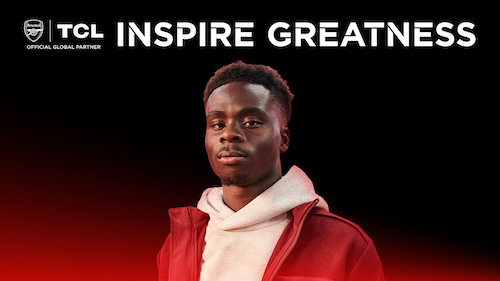
TCL proudly announces Arsenal’s Bukayo Saka as its Brand Ambassador.  TCL recently teamed up with Arsenal and Saka with the launch of ‘Inspire Greatness, Together’, a new campaign that celebrates how football brings people together through moments on and off the pitch.

It reflects the belief that greatness is not defined only by the game itself, but by the collective emotions, connections, and everyday rituals that unite supporters around the world.

The partnership marks a significant milestone in strengthening the brand’s global partnership with Arsenal Football Club, where TCL serves as Official Global Consumer Electronics Partner.

‘We are proud to announce Saka as a TCL Brand Ambassador,’ said Sunny Yang, General Manager of TCL Middle East and Africa Business Group. ‘We have built a fantastic partnership with Arsenal, and this next step of partnering with someone as respected and iconic as Saka feels like a natural progression. He represents hard work, humility, and authenticity, and he is admired not only for how he plays, but for who he is. These are the values through which TCL inspires greatness.’

The campaign builds on TCL’s multi-year global partnership with Arsenal, which spans both the Men’s and Women’s First Teams. As Official Global Consumer Electronics Partner, TCL continues to integrate technology into the fan experience through content, storytelling, and immersive viewing experiences with Saka at the centre of this connection between the game and Arsenal’s global community of supporters.

‘Inspire Greatness, Together’ is a celebration of the communities that live football every day, brought to life through the club and Bukayo’s own story and presence. The campaign recognises that greatness is shaped not only by moments on the pitch, but by the shared experiences that happen on and off it.

Watch the campaign film here.

TCL
https://www.tcl.com/southafrica/en

Samsung Electronics’ Spatial Signage Display Wins Award

Samsung Electronics' Spatial Signage Display Wins Award

Each year, the world-renowned CES Innovation Awards honour outstanding design and engineering across a vast range of technology products. Samsung Electronics has announced that Spatial Signage has been recognised by the Consumer Technology Association (CTA)® as part of the CES Innovation Awards® 2026 programme.

The award marks Samsung’s first-ever recognition in the Enterprise Technology category, coinciding with the company’s commercial display debut at the show.

First introduced at IFA 2025, Spatial Signage is a glasses-free 3D display that delivers an immersive visual experience. Using Samsung’s breakthrough display technology, it delivers immersive realism by adding multidimensional depth to 2D visuals, creating more captivating shopping experiences with existing content.

The display’s sleek 52 mm profile and slim 85 inch frame allow for seamless placement in design-conscious environments, from big box chains to luxury stores and even stadiums. With Samsung VXT built in, users can remotely deploy in-store content across devices, from vivid images of in-store merchandise to enticing promotional offers.

Spatial Signage was on display at the Samsung Exhibition Zone at The Wynn Las Vegas from January 5-7, 2026.

SAMSUNG
https://www.samsung.com/za/

Nominations Are Open For IMM Institute Excellence Awards

Nominations Are Open For IMM Institute Excellence Awards

South Africa’s best marketers and supply chain professionals are called to enter the IMM Institute Excellence Awards. This year’s IMM Institute Annual Gala Dinner, at which the IMM Institute Excellence Awards will be presented, will recognise outstanding achievement across marketing, supply chain management and business leadership in South Africa.

The dinner will be hosted at The Venue in Johannesburg’s Melrose Arch on 8 May, with nominations for the awards open until the end of March.

‘This year’s IMM Institute Excellence Awards promise to once again celebrate excellence in marketing, supply chain and business leadership in South Africa,’ said IMM Institute CEO Irene Gregory. ‘I’m looking forward to seeing exceptional talent recognised on stage on 8 May,’ she added.

The IMM Institute Annual Gala Dinner will bring together marketing and supply chain professionals for an evening of recognition, networking and celebration. The event will be headline sponsored by Kwikot, a proudly South African manufacturer of geysers since 1903.

‘It’s a privilege to support the IMM Institute Excellence Awards and to celebrate the talent, commitment and leadership shaping South Africa’s business landscape. At Kwikot, we’ve learned over 123 years that true excellence comes from showing up every day with integrity, reliability and pride in what you deliver,’ said Murray Crow, Kwikot MD.

Colleagues, managers, peers and organisations are encouraged to nominate individuals and teams whose work has delivered real impact, whether emerging talent, established professionals, high-performing teams or long-standing industry leaders.

Nominations are open across multiple areas of excellence and provide an opportunity to formally acknowledge achievement that is often recognised internally but not always celebrated publicly.

The Excellence Awards span marketing, supply chain and business disciplines. Marketing awards include Marketing Student of the Year, Emerging Marketer of the Year, Marketer of the Year, Corporate Marketing Team of the Year and Lifetime Achievement in Marketing.

Supply chain awards recognise Supply Chain Student of the Year, Supply Chain Professional of the Year, Corporate Supply Chain Team of the Year, Emerging Supply Chain Practitioner Award and Lifetime Achievement in Supply Chain.

‘We’re also excited to have expanded our business awards,’ said Gregory. In addition to Entrepreneur of the Year, nominations are now open for the Sustainability Impact Award, which recognises individuals, teams or organisations embedding sustainability and social responsibility into marketing or supply chain practices.

The awards also include Best Integrated Marketing and Supply Chain Initiative of the Year, recognising collaboration between marketing and supply chain functions that delivers measurable business results.

The Lifetime Achievement Awards recognise individuals whose careers have had a lasting impact on their industries. In 2025, the Marketing Lifetime Achievement Award was presented to Nando’s co-founder Robin Brozin, while the Supply Chain Lifetime Achievement Award was presented to global supply chain coach, mentor and leader Lebogang Letsoalo.

All entries must include complete supporting information, including CVs, portfolios, testimonials, academic transcripts for student awards and campaign or project results. Full criteria are available on the IMM Institute website.

Finalists and winners will be independently assessed and selected by a panel of judges comprising senior practitioners and thought leaders in marketing, supply chain and business.

‘We wish every participant the best of luck and congratulate them for striving to be the best in their field,’ added Crow.

IMM INSTITUTE
www.imminstitute.co.za

This is Modern Marketing