Home Blog Page 37

Skubu Refill Stores Create Greener And More Affordable Retail Model

Skubu Refill Stores Create Greener And More Affordable Retail Model
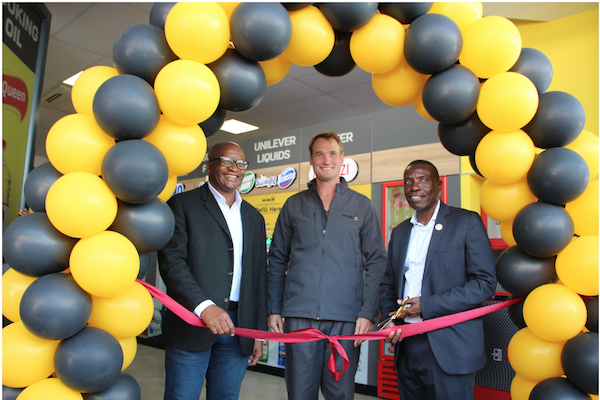
CSIR Hosted Programme Impact Area Manager, Bongani Memela, Sonke (Pty) Ltd Founder and Managing Director Eben de Jongh and DSTI Deputy Director-General for Socio-Economic Innovation Partnership, Dr Mmboneni Muofhe at the first Diepsloot store opening.

South Africa’s first-of-a-kind refill store to reduce single-use plastic packaging, Skubu, helps reduce plastic waste by allowing shoppers to refill essential goods, such as cooking oil, maize meal, sugar and cleaning products, using their containers, offering significant cost savings for lower-income households.

The first retail store was launched in Diepsloot, Johannesburg, last year by Sonke (Pty) Ltd. in collaboration with the Council for Scientific and Industrial Research (CSIR) and the Department of Science, Technology, and Innovation (DSTI), under the Circular Economy Demonstration Fund. There are now two stores in Diepsloot.

Skubu marks a significant step in integrating circular economy principles into retail, demonstrating how innovation and sustainable business practices can benefit communities. Beyond environmental benefits, the demonstrator also tackles food security by allowing lower-income citizens to access quality products in smaller quantities at more affordable prices.

Professor Linda Godfrey, CSIR principal researcher who leads Circular Innovation South Africa, a DSTI initiative hosted by the CSIR, said, ‘Skubu is a great demonstration initiative to show how circular economy principles can be implemented through collaboration. The intention is to focus on the national system of innovation, which looks at how a country creates and applies new ideas to improve technology and grow its economy. This includes bringing universities and science councils closer to the private sector to help de-risk and scale circular interventions,’ she explained.

She also emphasised the importance of collaboration in tackling plastic pollution and improving the quality of life for disadvantaged communities.

These stations not only eliminate up to 100% of single-use plastic packaging but they also enable consumers to save up to 50% by standardising the price per litre across different refill sizes, making every purchase a savvy choice.

By offering products in small, affordable pack sizes without the cost of packaging, SKUBU makes dignified access to essential goods both economical and environmentally responsible. This innovation not only reduces waste, but also radically lowers prices for consumers by enabling fixed pricing per litre or kilogram, regardless of the refill size.

SKUBU
Facebook page

Kaya 959 Announces New Head Of Marketing

Kaya 959 Announces New Head Of Marketing

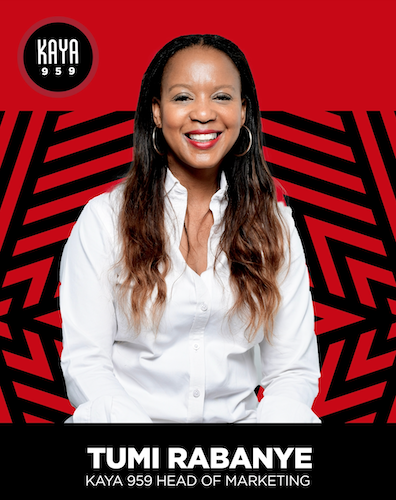
Kaya 959’s new Head of Marketing, Tumi Rabanye, brings more than 20 years of experience in brand strategy and marketing communications to the role. Most recently serving as Managing Partner and Head of Strategy at Leagas Delaney South Africa, she has led the development of creative, data-led, and long-term brand strategies across broadcast, telecommunications, and financial services.

For Rabanye, the move represents both a professional milestone and a personal return to her roots: ‘I cut my teeth in broadcast as a strategist and brand manager, and I have always had a deep passion for music and radio.’

‘Kaya has felt like home to me for many years. I have grown with the brand, long before I was even the target market. Now I look forward to growing it further with clarity, pride, and purpose.’

She joins the station at a pivotal moment as Kaya 959 sharpens its product offering and strengthens its digital and omni-channel presence.

Rabanye sees significant opportunity in building deeper audience and client engagement: ‘We are in a product improvement process. We need to get the juice and the sauce right. But beyond that, Kaya 959 is an incredibly buoyant brand with loyal audiences who care deeply about what happens here. Our role is to honour that loyalty, sharpen our messaging and build a fully integrated brand that lives naturally in the worlds of both our audiences and our clients.’

Central to her strategy is reinforcing Kaya’s identity as an inclusive and aspirational home for modern South Africans.

‘Kaya means home. It is where life stories begin. We want to reclaim that sense of brand pride and create a space where people feel welcome just as they are. South Africans live in multiple worlds. We switch languages, we switch roles and we move fluidly across different spaces. Kaya should reflect that dynamism. Our messaging must be clear, consistent, and memorable, both for our audiences and for our advertisers.’

In a cautious economic environment, she believes clarity and consistency will be essential to strengthening relationships with advertisers and unlocking sustainable growth.

‘Marketing budgets are often the first to be cut when there is uncertainty. Our responsibility is to deliver consistency in performance and create owned properties that provide measurable value. By tightening our brand architecture and equipping our sales teams with a clear and compelling proposition, we will drive meaningful commercial growth.’

Dave Tiltman, Managing Executive at Kaya 959, welcomed the appointment: ‘Rabanye brings a rare combination of strategic depth, creative insight, and a genuine love for broadcast. She understands the emotional power of radio, but she also understands the data, the digital ecosystem, and the commercial realities of the market. Her leadership will help us honour Kaya’s heritage while positioning the brand strongly for the future.’

Rabanye said balancing legacy with the need to attract younger audiences will be a key focus: ‘Our audiences are staying younger for longer. Heritage and innovation are partners, not opposites. If you do not know your past, you do not know your future. Kaya has always been a taste maker and a servant leader brand. Now we build on that foundation with confidence and ambition.’

KAYA 959
https://www.kaya959.co.za/

2026 Will Redefine The Way Digital Billboard Networks Are Built And Powered

2026 Will Redefine The Way Digital Billboard Networks Are Built And Powered

Troy Niddrie, Managing Director, Billboard Management Technologies (BMT), says digital billboards are an inescapable part of our urban landscape, lighting up highways and malls alike. As more of them go up, we have to plan digital infrastructure that’s more resilient by design. This year will build on the momentum of last year, with the focus shifting from putting up screens to making sure the infrastructure behind them can keep pace.

Keeping Digital Networks Powered Is Now A Practical Priority

Grid reliance has become a real constraint for roadside digital networks, and the pace of change over the past year shows how quickly the industry is responding. Solar integration across live sites has already lifted solar contribution from around 5% to as much as 50% of total power requirements, easing pressure on the grid and improving uptime.

As these networks continue to expand, energy resilience is moving from a technical add-on to a baseline design requirement. The year ahead will build on this momentum, with more networks set up to generate a larger share of their own power, especially in premium locations where large format digital needs to run reliably day in, day out.

Large Format Outdoor Still Anchors Premium Locations

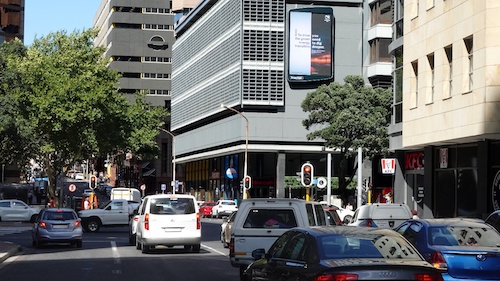
Large outdoor screens are still where brands want to be seen in busy urban areas, and recent installations on Bree Street and Long Street in Cape Town’s CBD point to continued growth in 2026. As networks expand, these premium locations, offering excellent visibility in busy lifestyle and commercial precincts, will continue to anchor large format digital. The difference now is that these screens are being planned as part of more resilient networks, with infrastructure designed to support performance over time.

Indoor Environments Are Moving Beyond Traditional TVs

Inside buildings, large format LED displays are increasingly replacing traditional TVs in busy environments like reception areas and shared corporate spaces. The draw is simple: these screens are larger, brighter and built to be seen from further away, which changes how information and brand messaging land. And since LED displays can be built to fit the exact size and shape of a space, they feel like part of the architecture rather than something bolted onto a wall, ensuring a more cohesive, visually appealing design. Another drawcard is that content is managed remotely across multiple locations, which makes it far easier to keep messaging current without sending people site to site to update screens.

There is also a practical reason behind the move. Commercial-grade LED is built to run for long and holds up better over time than consumer TVs. Screens fail less often so hardware doesn’t have to be replaced or fixed so often.

What To Expect In 2026

2026’s priorities are about scaling responsibly, embracing sustainability, expanding partnerships, and delivering smarter digital solutions that align with how people live, work, and engage today. The focus this year is practical: build digital networks that can scale without becoming harder to power and maintain. That starts with continuing the rollout of solar and energy-efficient retrofits across roadside digital.

It’s also about expanding large-format outdoor digital in high-traffic, high-visibility locations, backed by smarter monitoring and more energy-efficient technology. Indoor digital is another major growth area this year, with clients increasingly wanting one connected system that brings screens, content and monitoring together.

This is where much of the investment is going: into tools that make it easier to run digital networks across multiple sites without adding friction. What comes next will be defined less by scale and more by reliability and intelligent design.

BILLBOARD MANAGEMENT TECHNOLOGIES
https://bmtco.co.za

Kind Leadership Is About Clarity, Even When It Stings

Kind Leadership Is About Clarity, Even When It Stings
Jeni‑Anne Campbell, JAW Advertising.

Jeni‑Anne Campbell, founder of JAW Advertising, says in a culture that often prioritises soft edges and gentle tones, disappointment has become the villain. For many leaders, a difficult conversation, a firm boundary, or a necessary ‘no’ comes with the worry that relationships may be damaged or morale could take a hit. But Campbell argues that discomfort should not be seen as the opposite of care and kindness.

‘The most compassionate thing a leader can offer is certainty,’ she explained. ‘Certainty isn’t always pleasant, but it’s stabilising.’

She believes that modern leadership has blurred the line between kindness and comfort. ‘We’ve confused kindness with keeping people happy,’ she said. ‘Real kindness is clarity. And unfortunately, clarity will, at times, disappoint people.’

She questions the idea that kind leaders should absorb all the tension to keep others comfortable. She believes that avoiding tough conversations leads to problems like confusion, resentment, and teams not knowing where they stand.

When ‘Nice’ Leadership Leaves People Anxious

Many well‑intentioned leaders hold back hard feedback or soften the truth to save feelings. While it seems considerate, have no doubt that the emotional bill is on the way.

Unclear expectations create low‑grade anxiety, and the data reflects this. Nearly 60% of employees report work‑related stress, and unclear expectations are one of the biggest contributors that leave them feeling strained, uncertain, and constantly ‘on’.

Campbell believes this is where ‘nice leadership’ quietly becomes harmful. ‘Ambiguity is one of the fastest ways to weaken trust,’ she noted. ‘People don’t need endless detail; they need firm orientation.’

Her approach repeats a key idea from Feeding Unicorns: being clear is a way to show care, especially for teams who want to do meaningful work.

The Courage To Disappoint — And Why It Is An Act Of Care

Setting clear boundaries, firm standards, and making honest decisions can disappoint people. But if leaders handle these moments with consistency and honesty, they can actually make relationships stronger. ‘Of course, disappointment is uncomfortable,’ she said, ‘but it’s never as damaging as confusion.’

Her idea of generous leadership sees disappointment as a normal part of growth, similar to how parents guide and correct their children, even when it is hard to hear. Steering clear of these moments is not real kindness; it is just avoiding problems, and it can be harmful.

How To Disappoint Without Breaking Trust

Based on Campbell’s values of honest feedback, clear expectations, and transparency, here are four ways leaders can turn disappointment into clarity instead of conflict.

1. Say Things Early, Not Perfectly

If feedback comes too late, it can feel like criticism, but if it comes early, it helps guide people. Leaders don’t need to say things perfectly, just at the right time.

2. Pair Honesty With Context

Giving context helps people feel respected. Rather than just saying, ‘This isn’t working,’ leaders can explain what they see and why it matters. This shows respect instead of judgment.

3. Use Boundaries As Stabilisers

Boundaries help prevent burnout and confusion by showing people what is expected. Clear rules make it easier for people to focus and do their best work.

4. Close Loops Visibly

Trust grows when leaders do what they say, like promising an update on Friday and then following through. Being reliable helps people feel cared for, even if the news is hard to hear. ‘These small behaviours are the backbone of psychological safety,’ she explained. ‘Not softness, steadiness.’

Why High Performers Crave Clarity, Not Comfort

Top performers are often most frustrated by unclear leadership. They want honest feedback and clear direction. They want to know how to improve and what success looks like right now, not just at their next review. ‘When you avoid clarity to spare someone’s feelings, you take away their chance to rise,’ Campbell said. ‘That’s the opposite of care.’ When leaders are clear and consistent, it shows respect. People see it not as criticism, but as a sign that their leader believes in their ability to grow and improve.

The Long‑Term Cost Of Leaders Who Want To Be Liked

Leaders who prioritise likeability over leadership unintentionally create emotional instability. Standards slide and feedback becomes inconsistent. Culture and performance take a serious hit because people are suddenly aware of how they are doing or what their leader is really thinking. ‘Nice leadership feels good in the moment,’ she said. ‘But it leaves people insecure. Kind leadership holds the line.’ Her distinction is simple: nice leaders protect themselves from discomfort, while kind leaders protect their teams from confusion.

Kind Leadership Is Clarity, Even When It Stings

Campbell believes kindness means being open, fair, and generous. It also means having the courage to talk about things that might disappoint others. ‘Clarity might hurt for a day,’ she said. ‘Uncertainty hurts every day.’ And in workplaces built on care, courage is part of the job description. Leaders don’t need to cushion every truth; they simply need to share it with humanity, steadiness, and intention.

‘Disappointment passes. Confusion lingers – and it corrodes confidence. The cost of avoiding a hard moment is always paid later.’

JAW DESIGN AND ADVERTISING
https://jawdesign.com/

How Brands Can Leverage Chaos Packaging

How Brands Can Leverage Chaos Packaging
Brandon Head, The Hardy Boys.

Brandon Head, Creative Director at The Hardy Boys, a VML company, says on a crowded supermarket shelf, a little touch of chaos can make your brand stand out. The secret is getting the balance right.

I’m paraphrasing, but I’ve always enjoyed Seth Godin’s definition of remarkable: ‘The word ‘remarkable’ literally means something worth making a remark about. Something worth noticing. Worth sharing. New. Interesting. It’s a Purple Cow. You’re either remarkable or invisible.’

Godin, author, speaker, Marketing Hall-of-Famer, and business strategist extraordinaire, has always proclaimed that remarkable things have a built-in ‘free prize’ that makes people want to tell others about their experience.

In an era when consumer attention is fleeting, the packaging industry is undergoing a ‘remarkable’ transformation. Brands are increasingly embracing unconventional packaging designs, formats, and materials to captivate consumers in the quest to stand out on crowded shelves. A great example is Flo, a menstrual health company that packages tampons in ice-cream tubs, tapping into the common craving for sweets during menstruation and extending the product’s visibility beyond the typical brief glance.

Rise Of Chaos Packaging

This new-ish (and growing) trend is called ‘Chaos Packaging’. In my humble opinion, the name is literary perfection. Because tampons in an ice cream carton does feel a bit chaotic, doesn’t it?

And I say ‘new-ish’ because if you think about it, Pringles Crisps, which are sold in a tube that is completely unlike any other packaging found in the snack aisle, has embraced the idea of chaos packaging since 1966. This early example set the stage for what chaos packaging aims to achieve today: disruption, memorability, and emotional engagement.

Importantly, Pringles understood that the key to success lies in strategic intent. While chaos packaging breaks norms and ensures noticeability, it should nevertheless still align with brand values and resonate with target audiences. The unique packaging design of the Pringles can isn’t just a novelty. Rather, it serves a real purpose that makes the product better and helps the brand live up to its promise that they could deliver something that competitors couldn’t, completely uniform and unbroken crisps.

How To Leverage Chaos Packaging

The OCD me likes to make lists to understand the whys and the hows. So, why is chaos packaging so powerful and how can we leverage it to stand out?

1. It Grabs Attention On The Shelf

In a crowded market, looking different is your best weapon. Unusual packaging instantly stands out and makes people curious enough to take a closer look. Blending in is no longer an option.

2. It Makes Your Brand Memorable

People remember the odd one out, ‘the coffee in a tube’ or ‘the water in a beer can’. Unique packaging helps your product stick in their minds, so that graphic design and copywriting don’t have to do ALL of the heavy lifting. When every brand looks the same, a surprising format does a lot of the talking for you.

3. It Shows You Care About Innovation

Choosing an unconventional package tells customers your brand thinks differently. It says you’ve considered function, design, and sustainability, not just tradition. Graza is a great example of chaos packaging done well. Its olive oil, housed in squeezable plastic containers, mimics condiment packaging rather than the traditional glass bottles of its competitors. This practical yet playful design makes Graza distinctive on supermarket shelves and easier to use in the kitchen. Not to mention that the plastic bottles are more recyclable, lighter to ship, and ultimately kinder to the planet than the heavier glass bottles.

4. It’s Made For Social Media

Have you ever been drawn to a product because its packaging was so unexpected, bordering on mischievous, that it made you smile? Packaging that disrupts the predictable, engaging consumers with designs that evoke curiosity, nostalgia, or humour, is naturally shareable. It’s the kind of fun twist that makes people stop scrolling and can quickly go viral, organic marketing that can amplify a brand’s reach.

I’ve written about the phenomenon of online unboxing before. Chaos packaging can take unboxing out of the luxury category and into the everyday mainstream. It doesn’t have to be expensive or fancy packaging to be ‘TikTok-worthy’, it just needs to pique curiosity.

5. It’s Budget-Friendly

You don’t always need custom designs to stand out. Repurposing existing packaging from other industries can be an affordable way to achieve a bold, unique look without breaking the bank.

6. It Builds Emotional Connections With Consumers

Liquid Death water (currently valued at $1.4 billion) is sold in cans usually associated more with beer than the natural, healthier alternative product. These edgy designs not only command attention but also reinforce the brands’ rebellious spirit, highlighting how chaos packaging, when aligned with brand values, can amplify messaging and resonate with target audiences.

Why Add Chaos To Your Packaging?

Chaos packaging commands attention, but attention isn’t the strategy. The real power lies in pairing disruption with intent.

The smartest brands don’t chase chaos for novelty’s sake. They use it to tell stories, build emotion, and challenge category conventions with purpose. True innovation is about rethinking the rules to better serve the product, the consumer, and the planet.

Used strategically, chaos packaging becomes a lever for differentiation. It starts by asking the right questions: What truly serves this product? How can we simplify, repurpose, and design sustainably?

The challenge is knowing when cleverness crosses the line. Consumers appreciate wit and originality, but they also depend on packaging for clarity and trust.

Ultimately, the brands that win will be those that balance creativity with intention, using chaos not as noise, but as a signal of purpose. Now, that’s remarkable.

THE HARDY BOYS
https://www.hardyboys.co.za/

South Africa’s First TourismX Brand Rankings Released

South Africas First TourismX Brand Rankings Released

South Africa’s first-ever TourismX Brand Rankings, measuring positive brand sentiment in the market, has been released prior to this year’s edition of Meetings Africa. Compiled independently by TaranisCo Advisory, the Rankings used verified data from Meta’s Facebook, measuring how many people have said positive things about the businesses and brands featured in this inaugural edition.

The Rankings looked at the historical engagement of Facebook followers who have said positive things about a business or brand during 2025.

According to Gerrit Davids, Lead Advisor at TaranisCo Advisory, ‘The TourismX Brand Rankings is a measurement of brand sentiment values and serves as a confirmation that a business or brand is meeting their followers’ expectations, and it is more than enough reason to celebrate their confidence in these brands.’

‘We’ve timed the release of the Rankings with the Meetings Africa trade show since it also reflects the positive sentiment around the MICE sector. Every ranking reflects a measurable achievement in trust, perception, and positive market sentiment, and every tier is worth celebrating,’ added Davids.

TourismX Brand Rankings 2026:

Airlines
– FlySafair: Gold Award.
– FlySAA: Silver Award.
– Airlink: Bronze Award.
– LIFT Airline: Recognition Award.
– CemAir: Recognition Award.

Airports
– O.R. Tambo International Airport: Gold Award.
– Cape Town International Airport: Silver Award.
– King Shaka International Airport: Bronze Award.
– George Airport: Recognition Award.
– King Phalo Airport: Recognition Award.
– Kimberley Airport: Recognition Award.
– Bram Fischer International Airport: Recognition Award.
– Upington International Airport: Recognition Award.
– Chief Dawid Stuurman International Airport: Recognition Award.

Metro Tourism Agencies
– Love Cape Town: Gold Award.
– Durban Tourism: Silver Award.
– Buffalo City Tourism: Bronze Award.
– Nelson Mandela Bay: Recognition Award.
– Visit Tshwane – Pretoria: Recognition Award.
– Johannesburg Tourism Company: Recognition Award.

Hotel Groups
– Premier Hotels & Resorts: Gold Award.
– Southern Sun: Silver Award.
– ANEW Hotels & Resorts: Bronze Award.
– Protea Hotels by Marriott: Recognition Award.
– The Capital Hotels & Apartments: Recognition Award.
– Newmark: Recognition Award.
– Tsogo Sun: Recognition Award.
– Mercure Hotels: Recognition Award.
– Peermont Hotels Casinos Resorts: Recognition Award.
– City Lodge Hotels: Recognition Award.

Associations
– SATSA: Gold Award.
– Tourism Business Council of South Africa: Silver Award.
– Exhibitions & Events Association of Southern Africa: Bronze Award.
– SAACI Official: Recognition Award.
– The Event Greening Forum: Recognition Award.
– Fedhasa: Recognition Award.
– AAXO – Association of African Exhibition Organisers: Recognition Award.
– SA Events Council: Not Ranked.
– SACIA: Not Ranked.

The next TourismX Brand Rankings edition will be announced to coincide with WTM Africa, including an expanded list of tourism and travel segments not covered in these rankings.

Verified metrics tables are available on request.

GEROM MEDIA
www.gerommedia.co.za

Adhere To The Legal And Regulatory Requirements For Proper Patriotic Marketing

Adhere To The Legal And Regulatory Requirements For Proper Patriotic Marketing
Dale Van Reenen, Spoor & Fisher.

Dale Van Reenen from Spoor & Fisher, supervised by Jeremy Speres, says that like the fan-fever that followed the Springboks’ win at the 2024 Rugby World Cup, we can expect to see a wave of green and yellow sportswear take over the streets of Mzansi in support of Bafana Bafana on 11 June 2026. This is when South Africa takes on Mexico in the highly anticipated 2026 FIFA World Cup opener in Mexico City.

Of course, to be South African is to be patriotic when we kill it on the field. No DNA, just RSA, as they say. With the FOMO that accompanies these events, an uptick in patriotic marketing practices is to be expected and traders looking to ‘back the boys’ must navigate the legal and regulatory maze surrounding patriotic marketing practices.

Adhere To The Legal And Regulatory Requirements For Proper Patriotic Marketing
Jeremy Speres, Spoor & Fisher.

Misleading Patriotic Marketing In Terms Of The ARB

Patriotic marketing is a strategy that uses symbols of national pride, identity and cultural heritage to foster a sense of consumer loyalty.

If you are keen to use patriotic marketing strategies, then it is important to avoid making any false claims when marketing your goods. You should not claim that your goods are of local origin when they are not. This is considered dishonest and misleading by the Advertising Regulatory Board (ARB).

The Code of Advertising Practice states that advertisements cannot abuse the trust of consumers; or exploit their lack of experience or knowledge. The Code also states that advertisements should not contain any statements or visuals that may mislead consumers.

On 14 April 2025, the ARB handed down a decision against a local advertiser known as Cape Flair, which operated a website that advertised clothing with numerous references to South Africa and Cape Town. The landing page featured images of the South African flag inside a heart shape, accompanied by the words ‘Cape Town, SA’. The website also displayed a picture of a well-known Cape Town beach with the phrases ‘Cape Town’s signature style, tailored for South Africa’ and ‘South African Fashion, from the heart of Cape Town’.

These tactics misled an unsuspecting consumer by creating the false impression that the goods were locally made. As it turns out, the advertiser had been selling clothes sourced from a global distribution chain. A ‘return’ address pointing to China was the giveaway.

The ARB found the advertisements to be dishonest and misleading. In its decision, the board highlighted the surge in consumer support for local brands, further stressing the need to prevent deceptive advertising.

Proudly South African (More Than Just A Statement)

Traders often declare their goods as ‘proudly South African’, with pure and honest intentions. However, this slogan and its accompanying logo are registered trade marks in South Africa, owned by the Proudly South African organisation, which means that they cannot be used without the consent of this organisation. Improper use of these marks is also prohibited by the Merchandise Marks Act, which is primarily concerned with protecting consumers from deception in trade.

To use Proudly South African marks on marketing material, a business must become a member of the Proudly South African organisation. Membership entails the following:

– At least 50% of production costs of locally made goods must be incurred in South Africa.
– Imported goods must be substantially transformed in South Africa.
– The quality of goods or services must be of high standard.
– Compliance with fair labour practices and legislation must be ensured.
– Adherence to proper environmental standards must be maintained.

Non-members who use these protected marks may be found liable for trade mark infringement. In terms of the Merchandise Marks Act, unauthorised use would constitute a criminal offence.

Use Of National Symbols On Packaging

The Merchandise Marks Act also prohibits persons from using trade marks which contain the national flag, armorial bearings or any other heraldic emblem, without authorisation. It also prohibits the use of the national flag, coat of arms seal and symbols of State patronage, in trade marks, without authorisation.
To use these symbols on product packaging, authorisation must be obtained from the Minister of Trade, Industry and Competition. The Minister usually requires that the design and integrity of these symbols be preserved in their correct proportions.

The Registrar of Trade Marks may call for proof of such authorisation before accepting a trade mark application which incorporates a national symbol. If accepted, the Registrar will also require the trade mark applicant to disclaim their rights to the exclusive use of these symbols (which means that traders cannot claim a monopoly in their use of these symbols or stop others from using them).

Beyond these symbols, trade mark rights to the exclusive use of common cultural phrases such as local is lekker or rainbow nation will likely need to be disclaimed (or they will simply be rejected by the Trade Mark Registrar) because they are too common to function as a distinguishing trade mark.

The Consumer Protection Act

Like the Merchandise Marks Act, the Consumer Protection Act protects against instances of false, misleading or deceptive representations made by traders in the marketing of their goods. These include false representations relating to the qualities, standards, grade, style, sponsorship or approvals of any goods.

Falsely marketing your goods as being made in South Africa would also be in contravention of the Consumer Protection Act, entitling consumers to approach the High Court or the National Consumer Tribunal for relief.

Unlawful Competition

Misrepresentations relating to the nature of goods may also constitute a form of unlawful competition. A key question to consider is whether the misrepresentative marketing tactics would attract customers under the false belief that the goods have some characteristic which they do not possess.

If goods are marketed in a deceptive manner aimed at confusing consumers into believing that the goods are locally made, then affected consumers may approach the High Court for relief.

If you’d like to avoid High Court litigation, be sure to adhere to the legal and regulatory requirements for proper patriotic marketing. After all, nothing kills the gees faster than a good old fashion cease-and-desist letter.

SPOOR & FISHER
www.spoor.com

Enter The 2026 Effie Awards South Africa

Enter The 2026 Effie Awards South Africa

Effie South Africa has issued the call for entries for the 2026 Effie Awards South Africa, inviting agency and client partner teams to put forward the work that has delivered measurable impact in the market. Campaigns are eligible if they flighted in South Africa between 1 February 2025 and 31 January 2026. For entries submitted in the Sustained Success category, campaigns must have flighted between 1 February 2023 and 31 January 2026.

Recognised globally as the benchmark for marketing effectiveness, the Effies reward campaigns that don’t just resonate creatively, they demonstrate how strategy, execution and evidence combine to drive real results.

‘Effie is where effectiveness is defined, tested and celebrated,’ said Gillian Rightford, ACA Executive Director for Effie South Africa. ‘It sets the standard for what ‘works’ in marketing, recognising the ideas that solve business problems, shift behaviour, and deliver outcomes that can be proven. An Effie entry is more than a story of creativity; it is a disciplined case for impact.’

Key Dates To Diarise

– How to write a winning Effie entry workshop (online): Thursday, 5 March 2026.
– Early Bird entries: 1 April – 30 April 2026.
– On-Time entries: 1 May – 14 May 2026.
– Last Minute entries: 15 May – 29 May 2026.

Agency and client partner teams are encouraged to take advantage of the Early Bird period and submit entries promptly. Acceptance of entries via the https://effie-southafrica.acclaimworks.com/uba/auth Effie Awards South Africa online entry portal will close strictly at midnight on Thursday, 29 May 2026.

How To Write A Winning Effie Entry Workshop

To support agencies in preparing submissions, Effie South Africa will host an online How to Write a Winning Effie Entry workshop on Thursday, 5 March 2026. Register to secure a spot.

For detailed information on entry categories, submission guidelines, and to initiate the entry process, visit the 2026 Awards Entry Information page on the Effie South Africa website.

Effie recognition also extends beyond South Africa: finalists and winners earn points on the global Effie Index, showcasing the strength of local agencies, brands and marketing talent on the world stage. Gold winners further advance to Effie’s Global Best of the Best, where South Africa’s most effective work is benchmarked against top campaigns internationally.

For a reminder of the standard set by the 2025 programme and its winners, view the 2025 Effie SA Magazine.

EFFIE SOUTH AFRICA
https://effie.org/partners/south-africa/

Reach Africa Announces Key New Partnership

Reach Africa Announces Key New Partnership

Reach Africa has announced a key new partnership with V, the company formerly known as VIDAA, a smart TV platform embedded at device level across a rapidly expanding base of African households. VIDAA today already powers millions of Smart TVs across the African continent, working with renowned OEMs such as Hisense, Toshiba, and over 400 other brands.

This appointment strengthens Reach Africa’s operating system layer, alongside its existing partnerships across multiple original equipment manufacturers (OEMs), platforms, free streaming channel environments, and broadcasters.

This partnership addresses a long-standing market challenge around fragmentation and scale by giving advertisers expanded access to premium audiences via the device OS layer, enabling consistent reach, brand-safe environments and high-impact placements that complement existing app and publisher environments across the continent.

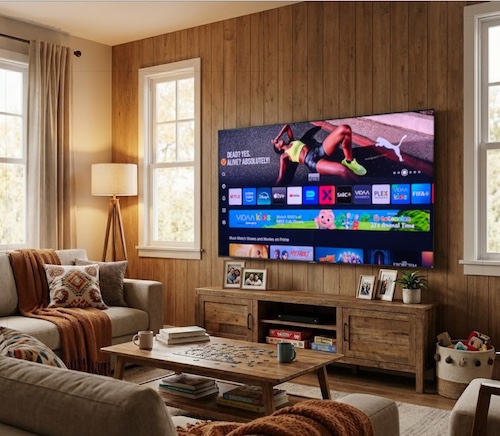
Ryan Silberman, founder at Reach Africa, said this is a significant win for the African Connected TV (CTV) market, as advertisers now have access to premium, full screen and highly viewable placements directly on the TV Home screen, native discovery formats and contextual video environments.

‘We’re effectively enabling brands to add new moments earlier in the viewing journey, alongside in-content and app-based environments, with measurable delivery and frequency control. Combined with Reach Africa’s aggregation and reporting layer, advertisers can expect improved targeting, transparent measurement and the ability to plan CTV campaigns with the same confidence and scale as traditional television, alongside the precision of digital.’

Silberman said that as Smart TV adoption has ramped up across the continent, the African CTV landscape has remained fragmented, with advertisers often required to plan and buy inventory app by app. ‘By integrating with VIDAA at the OS layer, we can simplify access to premium CTV environments, enabling more streamlined planning as the market continues to mature. This also allows us to expand our role while continuing to work closely with publishers, platforms and the broader ecosystem,’ said Silberman.

Guy Edri, CEO of V, said, ‘Africa represents one of the most exciting growth frontiers for Smart TV advertising. Partnering with Reach Africa enables V to scale premium inventory across Sub-Saharan Africa while ensuring brands connect with audiences in ways that are locally relevant, measurable, and impactful.’

Silberman said the partnership will prioritise ongoing innovation, including richer data signals, improved local content discovery, the growth of streaming channels and monetisation opportunities beyond global platforms alongside local and regional services.

‘By opening up OS level inventory, we’re also creating new revenue opportunities for regional publishers, broadcasters and content owners, helping local platforms sit alongside international services to create a more balanced and inclusive ecosystem,’ added Silberman.

REACH AFRICA
https://www.reachafrica.com

Planet Fitness Turns A Music Collaboration Into A Shared Moment

Planet Fitness Turns A Music Collaboration Into A Shared Moment

Planet Fitness has released a piece of brand content that deliberately avoids the traditional January advertising playbook. Their collaboration with Freshlyground’s new lead singer, Mbali Makhoba, reimagines Etta James’ 1962 classic Something’s Got a Hold on Me as a powerful, locally rooted music video that looks and feels more like movement culture than marketing.

For Planet Fitness, the collaboration was never about launching a campaign in the conventional sense. It was about creating something people would choose to watch, share, and move to, whether or not they were thinking about gyms at all.

‘Brand marketing has shifted,’ said Jenna Rivera, Head of Marketing at Planet Fitness. ‘People aren’t engaging with content because a logo appears on their screen.

They engage when something reflects how they feel, how they move, how they want to live. Our job isn’t to interrupt that. It’s to participate in it.’ The collaboration taps into movement, rhythm, and collective energy. Elements that sit at the heart of both music and training.

By treating the content like a music video first and a brand expression second, Planet Fitness places itself inside culture rather than alongside it. The result is work that stands on its own, without explanation. Rivera explains that this approach is intentional. ‘When content needs to explain itself too much, it’s already losing relevance. We wanted to create something that made sense emotionally before it made sense commercially. If people feel it, if it moves them literally or figuratively, the brand association follows naturally.’

This philosophy reflects a broader shift in brand marketing, where the most effective work no longer centres on products or propositions, but on shared experiences. In this case, the experience is movement as joy rather than obligation, and training as connection rather than correction.

The choice of song plays a critical role. James’ original track is soulful, kinetic, and impossible to sit still to. It carries a legacy that transcends generations, reinforced by its later sampling in Flo Rida’s Good Feeling, with a music video synonymous with momentum and collective uplift. By reworking it through a South African lens, Planet Fitness bridges global cultural memory with local expression. ‘Music already tells a story about how your body wants to move,’ said Rivera. ‘We didn’t need to manufacture that. We needed to honour it, localise it, and let South Africans see themselves in it.’

Importantly, the video doesn’t attempt to define what training should look like. Instead, it shows many interpretations of movement, reinforcing Planet Fitness’s positioning as a community that welcomes different bodies, different energies, and different reasons for showing up.

‘In the wellness industry, authenticity matters,’ Rivera added. ‘If people don’t see themselves reflected, they disengage. Our collab is about celebrating movement in all its forms, not prescribing it. That’s where we want connection to happen.’

PLANET FITNESS
https://www.planetfitness.co.za/

This is Modern Marketing