Home Blog Page 36

Manaka Havas Announced As ACSA’s Communications And Public Relations Agency

Manaka Havas Announced As ACSA's Communications And Public Relations Agency
Tlhogi Ngwato, Manaka Publicity.

Manaka Havas, the strategic joint venture between Manaka Publicity and Havas Johannesburg, has been appointed as the Communications and Public Relations agency for Airports Company South Africa SOC Ltd (ACSA) for a three-year term. The appointment follows a competitive procurement process and places the newly formed joint venture at the centre of one of South Africa’s most critical infrastructure portfolios.

ACSA operates nine airports, including three international gateways that serve as critical connectors between South Africa, the continental and global markets. The mandate reinforces Manaka Havas’ positioning within the infrastructure, aviation and public sector communications space across Africa.

Manaka Publicity brings deep Pan-African market intelligence, policy-aware communications strategy and experience advising institutions operating in complex regulatory environments. The firm has built its reputation on high-stakes reputation management and stakeholder alignment across Southern, East and West Africa.

The Havas partnership adds global strategic systems, data, and insights capability, and access to an international network operating in more than 100 markets. The joint structure allows Manaka Havas to deliver continentally informed strategy supported by global scale and governance standards.

Tlhogi Ngwato, Managing Partner at Manaka Publicity, said: ‘This is the kind of mandate we built Manaka for. Infrastructure institutions need disciplined narrative leadership, not just publicity. Our focus will be to support ACSA in reshaping perceptions with the same intentionality it applies to operations.’

Provit Chemami, CEO at Havas Johannesburg, added: ‘Our appointment signals a shift in how major institutions are procuring communications support. Scale, governance and continental reach are no longer optional. Clients are looking for partners who can operate at board level while executing with precision. That is the space Manaka Havas intends to compete in.’

Provit Chemami, Havas Johannesburg.

With a three-year horizon, the focus will be on sustained reputation building, narrative consistency, and positioning ACSA as a future-forward airport operator committed to operational excellence and national development.

Laurene Less, Group Executive: Corporate Affairs and Communications, commented: ‘We are confident that Manaka Havas will bring the strategic depth and integrated approach required to support our communications objectives over the next three years.’

HAVAS
za.havas.com

MANAKA PUBLICITY
https://www.manakapublicity.com

PR Needs To Shift So Clients Remain Relevant In An AI-Driven World

PR Needs To Shift So That Clients Remain Relevant In An AI-Driven World
S'phindile Kabwe Garcer, Tribeca.

S’phindile Kabwe Garcer from Tribeca Public Relations says in 2026, we are moving into a space where ‘search’ as we know it, is dying. People aren’t clicking through 10 different websites to find an answer anymore, they’re just asking AI, and expect the first answer to be the right one.

Whether it’s ChatGPT, Gemini, Co-Pilotor a specialised assistant, the ‘digital scavenger hunt’ is over. For us in PR, this means we have to become far more cognisant of how we feed the machine. We’re moving from SEO (Search Engine Optimisation) to GEO (Generative Engine Optimisation).

It sounds technical, but it’s actually the most human shifts we’ve seen in years.

The Shift From Links To Authority

In the old world, a link was a vote. In the GEO world, a citation is the gold standard. When a user asks AI, ‘Which South African company is leading the charge in ethical finance?’, AI doesn’t just look for who used the word ‘ethical’ the most. It looks for who has been quoted by Daily Maverick, who has private data cited by Moneyweb and who has a consistent, authoritative voice cross high-trust platforms. AI isn’t just looking for a website, it’s looking for the ‘main character’.

What This Means For The Client-Agency Relationship

This isn’t just a tech update; it’s a total shift in how brands and PR teams work together. It’s no longer enough for a client to ask, ‘How much coverage did we get this month?’ In the age of AI-driven search, this question is becoming outdated because the machine is now trained to ignore digital noise.

For clients: This means moving away from vanity metrics. A hundred mentions in tier-two media now carries very little weight. Staying relevant requires an investment in real thought leadership, becoming the primary ‘source of truth’ so that when AI summarises your sector, your brand is the primary answer it provides.

For consultants: Our role is moving from ‘distributor’ to ‘strategic curator.’ We aren’t just sending content; we are managing a digital legacy. This requires us to do the traditional, heavy-lifting research and ‘on the ground’ work that ensures that AI doesn’t just see a release, but recognises a leader.

How We Adapt

To stay relevant, we have to lean into digital authenticity. This means focusing on:

Unique data: If you release a report on South African consumer habits that media actually quote, AI ‘learns’ that your client is a primary source of truth.

Textured storytelling: AI is getting better at picking up bland, machine-written corporate jargon. What works now is polished, human stories that reflect our local reality, from kasi economics to the real pressures of our energy grid.

Quality over quantity: One deep-dive interview in a reputable publication is now worth more ‘AI reputation’ than 50 mentions on low-quality blog sites.

The New PR Reality

This transition can feel a bit scary because we’re losing some of the control we used to have over ‘clicks’. But here’s the twist, this shift actually forces us to be better at our jobs. It forces us to move away from ‘fluff’ and back towards earned authority.

We aren’t just PR professionals anymore; we are the curators of our clients’ digital legacies. We are the ones ensuring that when the ‘machine’ summarises an entire industry, our client is the one it trusts to provide the answer.

However, this shift doesn’t mean letting the machine think for us. As consultants, our value remains in our ability to dig deeper than a prompt allows. This means still using our own minds to verify, create and strategise while AI simply helps us magnify that human brilliance. It’s time we stop trying to ‘trick’ the algorithm and start ‘teaching’ AI why our clients matter. Because in 2026, if AI doesn’t know who you are, for most consumers, you simply don’t exist.

TRIBECA
www.tribecapr.co.za

Kagiso Media Announces Brand Evolution

Kagiso Media Announces Brand Evolution

Kagiso Media Radio has rebranded to Kagiso Connect. The name change reflects the business’s recent growth into research, digital publishing, experiential marketing, and financial advisory services.

The Kagiso Connect portfolio currently encompasses radio market leaders Jacaranda FM and East Coast Radio, the South African operation of global entertainment and lifestyle brand Time Out, and South Africa’s newest and biggest independent digital insurance brokerage, Vouch SA. Research and Insights brand SoundInsights has also established itself as a key source of audience and media intelligence in the marketing and advertising industries.

Via parent company Kagiso Media, Kagiso Connect also manages non-controlling interests in Kaya FM, OFM, Heart FM and Gagasi FM. Kagiso Media is wholly owned by Kagiso Tiso Holdings (KTH).

Kagiso Connect CEO Nick Grubb said the evolution of the name was obvious as they explored adjacencies to their established and successful radio brands. ‘Calling ourselves KM Radio when we now operate across more industries was an obvious limitation,’ Grubb said. ‘As we delved into our value proposition, it was clear that what is common to all our brands is that they forge human connections and add real value to these relationships. ‘Connect’ resonates with all our teams and stakeholders.’

Grubb added: ‘Given the legacy of the Kagiso name, and what it means to all of us that work in the group, retaining this in the new branding was always a given as we strive to entrench its ideals.’

KTH CEO and Kagiso Connect Board Chair Paballo Makosholo said: ‘Complementing the consistent performance of the radio brands in terms of audience engagement and revenues has been a focused strategy to diversify into complementary adjacencies. But all of the Kagiso Connect brands have a common thread, and that is to understand the individuals they serve, serve them excellently, and make sure they make a positive difference in their communities.’

Kagiso Media was born out of Kagiso Trust Investments in the early 1990s, as a commercial vehicle to generate sustainable, long-term financial support for the Kagiso Trust. The Trust was co-founded by Archbishop Desmond Tutu with other stalwarts like Dr Beyers Naudé, Reverend Frank Chikane, Dr Max Coleman, Dr Alan Boesak, Dr Abe Nkomo, Father Smangaliso Mkhatshwa, and Eric Molobi. To this day, it plays a substantial role in developing education and other sectors in vulnerable South African communities.

Along with the name and logo change, Kagiso Connect has also updated and refreshed its corporate identity, and its new website is also now live.

The brand evolution has officially been announced internally to coincide with the conclusion of a company-wide exercise to articulate the values that underpin the culture.

Human Resources Director Wendell Smith said the two projects were closely intertwined. ‘Kagiso Connect sees itself as a resource that provides market understanding and strategic guidance to its brands, but also ensures that the operating environment is such that our people can do their best work,’ Smith said. ‘Building and maintaining a positive culture where people are inspired and supported is what Kagiso Connect must be all about.’

KAGISO MEDIA
www.kagisoconnect.co.za

Study Reveals How Leisure Preferences Evolve As Life Stages Change

Study Reveals How Leisure Preferences Evolve As Life Stages Change

South Africans across generations share a deep connection to music, with 73% of 18–24-year-olds saying they couldn’t get through the day without it, according to a survey from consumer insights agency KLA using YouGov Profiles data. The research shows that while everyone enjoys similar activities, the emphasis shifts with age.

Younger adults explore, experiment, and express themselves through their hobbies. People in their late twenties and early thirties add more structure and routine to their free time, and adults in their mid-thirties and early forties prioritise comfort, balance, and meaningful experiences.

Audio Remains The Quiet Hero Of Leisure

Music’s emotional importance remains consistent across generations, with 71% of 25–34 and 72% of 35–44s also unable to imagine their day without it. The sentiment deepens when considering that 78% of 25–34s agree that ‘listening to music is better than thinking’, revealing music as emotional regulation, mood-setting and sensory comfort all in one.

Radio also continues to play a role across all age groups, with its relevance strengthening as people get older. While 25–34s show the lowest engagement at 69%, radio listening increases among older adults, rising to 76% among 25–44s and 78% among those aged 45 and older. This progression highlights how audio remains a constant companion through the life stages, even as platforms and listening habits evolve

Scrolling Habits And Digital Behaviour

Among 18–24s, around 68% say they often scroll aimlessly on social media. The 25–34-year-old group scrolls even more at 70%, while the 35–44s sits at 72%. The 45+ demographic drops to the high 50s. Younger adults actively use scrolling as a decompression mechanism, while older adults treat it more as a momentary distraction.

Cooking Emerges As Universal Creative Outlet

Across age groups, cooking consistently ranks as the most popular leisure activity. Around 54% of 18–24s enjoy cooking in their spare time, climbing to 62% among 25–34s before settling at 59% in the 35–44-year-old group. The intention shifts: younger adults cook to experiment, while older adults cook for entertaining or family moments.

Movement And Fitness Span Generations

Roughly 39% of 18–24s enjoy indoor exercise, compared with 41% of 25–34s and 36% of 35–44s. Outdoor exercise sits at around a third for younger groups but slightly less for people over 35. The desire to stay active remains, it’s just increasingly influenced by day-to-day responsibilities.

Where South Africans Go When They Go Out

Among 18–24s, around 54% like going to the cinema, 47% visit malls, and 45% visit art galleries, higher than the national average. The 25–34-year-old group shows even stronger engagement: cinema visits rise to 57%, mall visits hit 50%, and restaurants remain strong at 47%.

Home becomes a more important social space with age. A majority across all age groups enjoy entertaining at home, with enthusiasm particularly strong among 35– 44s at 74%. This shift reflects changing life-stage responsibilities alongside practical considerations such as rising costs and personal safety concerns.

Mental Stimulation Strengthens With Age

One of the consistent themes is the desire for mental engagement. While around 71–72% of 18–24s associate puzzles and games with accomplishment and mental challenge, this rises to 80% among 25–34s and remains high at 82% among 35–44s.

What This Means For Brands

Younger adults respond to experiences that feel expressive, shareable, and exploratory. Adults in their late twenties and early thirties balance socialising with self-improvement, so brands that help them ‘upgrade’ their free time naturally resonate. Mid-adult consumers prefer leisure that feels restorative, convenient, and deeply enjoyable, without adding friction or noise.

Leisure is not the leftover part of the day; it’s the part people look forward to. The closer brands align to the way each age group defines ‘enjoyment,’ the more naturally they’ll fit into the lives of South African consumers.

The study utilised YouGov Profiles+ South Africa data collected on 30 November 2025, with a nationally representative sample of n=24,911 adults aged 18 to 44.

KLA
www.kla.co.za

Marketers Must Move Past Data And Reconnect With Human Stories

Marketers Must Move Past Data And Reconnect With Human Stories
Thando Mxosa, Penquin.

As the stacks of statistics grow higher, Thando Mxosa, Strategy Director at brand and communication agency Penquin, believes that a critical gap is widening: the industry is drowning in data, yet we are starving for humanness. As marketers, that’s not just lazy, it’s lethal. The real revolution isn’t in the algorithms; it’s in reclaiming the messy, human truths they obscure.

Mxosa explained that for marketers to succeed in 2026, they must move past the data and reconnect with the human stories hidden beneath the spreadsheets. This comes as Mxosa identifies a growing trend of marketers leading with metrics rather than insights, a practice he describes as a ‘backwards bad habit’.

‘In 2026, South Africa’s consumer patterns stare back at us with a haunting familiarity, but we seldom investigate the why,’ said Mxosa. ‘Numbers are excellent at telling you what is happening. They track clicks and carts with surgical precision. But only people can tell you why those things happened. If we continue to lead with measurement, we are essentially trying to read a book by only looking at the page numbers.’

The real shift ahead for 2026 is not technological, but a return to a disciplined marketing sequence. Mxosa advocates for a four-step approach that prioritises observation over immediate measurement:

1. Observe.
2. Understand.
3. Describe.
4. Measure.

Asking The Raw Questions

Mxosa challenges brands to move away from dashboard metrics and instead ask ‘raw human questions’ that reflect the current South African lived experience.

‘The edge in 2026 will belong to brands that ask the difficult questions,’ Mxosa explained. ‘We need to ask: Who is bleeding time or dignity for our stuff? Where do we gift back hours to a tired consumer? What ritual earns trust in the darkness of a blackout? What is our handoff when the national mood lifts or drops? These aren’t data questions; they are human questions, and they will matter more than ever this year.’

The 2026 Mandate

As the industry prepares for a flood of tech-driven predictions, Penquin believes that the magic of marketing remains its ability to connect one human need to one human solution.

‘The real shift ahead is not technological, it is a cognitive one,’ Mxosa continued. ‘If your 2026 plan is built solely on ‘what’ the data says, you aren’t marketing; you’re just accounting. To truly move the needle, we have to find the pulse beneath the percentage.’ Ditch the backward habit. Observe first. The real story? It’s beating beneath the stats.

PENQUIN
https://www.penquin.co.za

Outdoor Network Continues To Expand Portfolio Of Large Format Billboard Sites

Outdoor Network Continues To Expand Its Portfolio Of Large-Format Iconic Billboard Sites

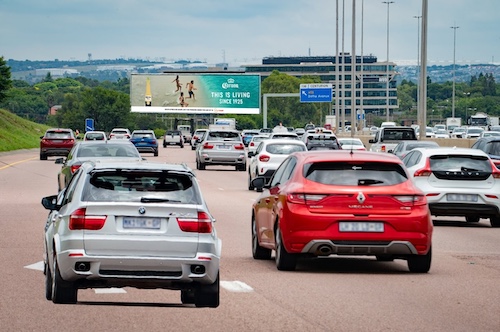
Outdoor Network continues to expand its portfolio of large format iconic billboard sites in response to advertiser demand for high-impact visibility at scale. Its latest addition is a double-sided billboard, with each face measuring 400 square metres, along the N1 in Centurion, one of Gauteng’s busiest commuter routes, delivering sustained brand presence in a premium high-traffic corridor.

Outdoor Network director Shamy Naidu said: ‘Attention is no longer something brands can assume. It must be earned in seconds, in real-world conditions. In public environments, scale and clarity determine whether a message is seen and remembered.’

Recent enforcement action by the City of Johannesburg to remove illegal billboard structures has underscored the risks associated with non-compliant media. Campaign disruptions and unexpected takedowns can undermine advertiser investment and continuity, exposing brands to avoidable reputational and financial risk.

Compliance is increasingly viewed as a form of brand protection rather than a box-ticking exercise. By prioritising compliance certainty, Outdoor Network safeguards campaign continuity and ensures that booked sites remain live for their intended duration, delivering secure and uninterrupted brand presence in public space.

This new iconic site has already attracted brands such as Corona and ZAR Bets, signalling confidence in landmark billboard placements that combine scale, location and compliance certainty. Delivering 3.9 million Visibility Adjusted Contacts (VACs) per month, the site provides advertisers with proven, high-impact reach at a scale that translates directly into measurable brand exposure.

OUTDOOR NETWORK
www.outdoornetwork.co.za

Q1 Is The Optimal Time For Brands To Set The Tone For Smarter Marketing

Q1 Is The Optimal Time For Brands To Set The Tone For Smarter Marketing
Ross Joughin, Synapser.

For many brands, periods of peak advertising demand can be both a blessing and a curse. While audiences are active and spending, marketing teams often contend with saturated channels, operational constraints, and budget pressures. But the new year offers a clean slate.

Consumers are being more intentional with their spend. They are reassessing their budgets and actively seeking value. And, unlike the frenzied December period, this is a time when data-driven campaigns can cut through the noise and actively influence purchasing behaviour.

‘Consumers are thinking about the year ahead, and they are open to offers that genuinely add value,’ said Ross Joughin, Chief Commercial Officer of Synapser. ‘By positioning incentives as budget relief rather than stock clearance, brands can show up as relevant, empathetic and in tune with real consumer priorities.’

From a strategic perspective, Q1 is also when attention is more available. The advertising overload of December has passed, and consumers are less distracted by social and seasonal obligations. This creates a rare window in which brand messages are more likely to be noticed and acted on. Importantly, this attention is not passive. It is driven by intent: people are actively looking for ways to stretch their rands further, make smarter purchasing decisions, and regain a sense of financial control.

When choosing an advertising platform to partner with in Q1, Joughin advises that you look for:

Intentional engagement over assumed reach: Campaigns informed solely by traditional reach metrics can miss the mark. Real impact comes from interactions where consumers actively choose to engage.

Consumer participation that is rewarded: Incentive-based models encourage meaningful engagement. When consumers are recognised for their time, attention, and purchase of the product being advertised, the exchange feels fair, and the interaction becomes valuable in its own right. Over time, this builds positive emotional associations with the brand.

Precision targeting: With budgets under close scrutiny in Q1, marketers need to be confident that their spend reaches the right audience. Advanced segmentation based on location, demographics, and historical purchasing behaviour ensures that campaigns feel relevant, timely, and efficient, reducing waste while improving impact.

Measurable outcomes: Successful campaigns should provide actionable insights, not just awareness. POPIA-compliant reporting, and anonymised links between engagement and subsequent behaviour allow marketers to monitor performance, make adjustments, and create a feedback loop on which to base stronger decision-making throughout the year.

Joughin believes that Q1 is the optimal time for brands to set the tone for smarter marketing moving forward. ‘It is an opportunity to move beyond volume-driven exposure and focus instead on relevance and impact. When consumers’ attention is earned rather than assumed, and when engagement is measurable, marketing spend works harder.’

SYANPSER
https://www.synapser.com/

Social Media In 2026 Is About Emotional Storytelling And Authentic Connections

Social Media In 2026 Is About Emotional Storytelling And Authentic Connections

Miliswa Sitshwele, Head of social media at Flow Communications, says social media continues to evolve at lightning speed, reshaping how brands connect with audiences. With users projected to reach 40.77-million by the end of 2026, the opportunity for brands has never been greater. But connection isn’t just about reach anymore, it’s about resonance.

As we navigate through 2026, the landscape is being defined by emotional storytelling, authentic connections and a strategic balance between human creativity and AI-powered innovation.

The numbers paint a compelling picture: South Africa is home to 29.1.-million social media users aged 18 and above, representing nearly 65% of the adult population. South Africans spend an average of three hours and 36 minutes on social media daily, significantly higher than the global average.

The Key Trends Shaping Social Media In 2026:

1. Episodic Content Takes Centre Stage

Random one-off posts are becoming a thing of the past. In 2026, brands are building loyal audiences through episodic content, serialised storytelling that keeps people coming back for more.

Think of it as the Netflix model applied to social media. According to Sprout Social’s Q2 2025 Pulse Survey, 57% of global social media users want brands to prioritise posting original content series.

Duolingo’s viral storytelling campaign demonstrated this perfectly. Rather than asking people to download their app, they made people care about what happened next.

We’re seeing this trend resonate particularly well with LinkedIn for Leaders clients, where serialised thought leadership pieces help executives remain top of mind among their industry peers.

2. Community And Resonance Trump Viral Reach

One of the most fascinating shifts we’re observing is brands prioritising resonance within their communities over chasing viral moments.

Nando’s year-end fatigue campaign saw its biggest engagement a year later, in December 2025, when it genuinely resonated with exhausted South Africans at exactly the right moment. The lesson? Content that speaks to community experiences at the right time will always outperform content engineered solely for virality.

Shares and saves are becoming valid KPIs in their own right, indicators that your content is valuable enough for people to return to or pass along. Content that feels like it comes from a friend rather than a corporation will naturally perform better.

3. Unexpected Partnerships Drive Conversation

Strategic collaborations are creating some of the most engaging content in 2026, particularly when brands venture outside their expected lanes.

The Krispy Kreme x Vaseline Cera-Glow partnership exemplified this trend beautifully. By leveraging the trending ‘glass-skin’ aesthetic, these seemingly unrelated brands created a visual association so strong it made consumers pause mid-scroll.

Research shows that roughly 75% of agencies now believe smaller creators with niche audiences outperform celebrities in both engagement and ROI.

The authenticity these micro and nano-influencers bring to partnerships often resonates more deeply than polished celebrity endorsements.

4. Authenticity And Heritage Storytelling Win Hearts

In an era where AI literacy is becoming mandatory for marketing leaders and an estimated 70% of social media images involve AI tools such as Midjourney or DALL-E, the counter-trend towards authentic, human-led storytelling has never been more important.

Vaseline’s Heritage Day campaign went viral because it tapped into something deeply familiar to South Africans: traditions passed down through generations. It was not overly polished. It was not AI-generated. It felt real, recognisable and relatable. That is why it resonated so strongly, sparked conversation across the country and went on to win multiple awards.

The campaign is also a simple reminder that sometimes, the most powerful work comes from keeping things honest and uncomplicated.

5. Social SEO Becomes Non-Negotiable

Social media platforms are increasingly functioning as search engines, fundamentally changing how users discover content and brands.

Nearly one in three consumers now skip Google entirely and start their search journey on platforms like TikTok, Instagram or YouTube instead.

For South African brands, this presents both an opportunity and a challenge. With 58.5% of South African internet users watching tutorials, educational content and how-to videos every week, optimising content for social search is crucial.

6. The AI Paradox: Efficiency Meets Authenticity

Perhaps the most complex trend shaping 2026 is the relationship between artificial intelligence and authentic brand voice.

The statistics are staggering: 88% of marketers now use AI daily, with 93% using it to speed content creation.

But here’s the critical nuance: while AI speeds up and makes content creation more accessible, 62% of consumers are less likely to engage with or trust content if they know it was generated by AI.

The brands succeeding in 2026 are those using AI strategically, as a creative partner and workflow optimiser, while keeping humans at the centre of storytelling.

Looking Ahead

Social media in 2026 is less about chasing reach and more about earning real attention. The platforms are more saturated than ever, AI-generated content is everywhere, and audiences are increasingly sophisticated in what they respond to.

The fundamental principle driving success hasn’t changed: meaningful human connection. But the tactics for achieving that connection are being rewritten almost constantly.

The question isn’t whether to embrace these trends, but how to implement them in ways that feel authentic to your brand and resonate with your specific audience.

FLOW COMMUNICATIONS
https://www.flowsa.com/

Design Marketing That Matters

Design Marketing That Matters
Darren Morris, Lucky Hustle.

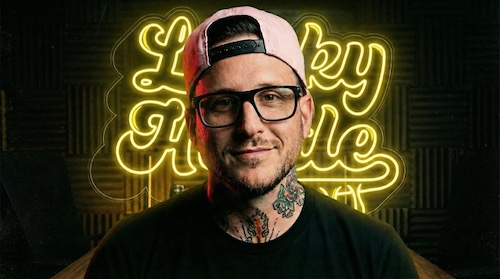
Darren Morris, CEO of Lucky Hustle, says a question most marketing teams avoid because it’s uncomfortable is: if all your marketing stopped tomorrow, would anything in the business materially change?

In many organisations, the honest answer is ‘not much.’ Campaigns launch on schedule, dashboards are optimised, and reports circulate with reassuring regularity. Activity fills calendars and neatly justifies spend. Yet months later, demand looks much the same, customer behaviour remains stubbornly familiar and revenue follows its usual trajectory with little evidence that marketing influenced the outcome.

This is not a story of poor execution or weak creativity. It is a story about intent.

In these cases, marketing did not fail. It performed exactly as designed. The problem is that it was never designed to matter.

Over time, the industry has become comfortable equating motion with progress. Marketing plans often resemble inventories of deliverables rather than expressions of decisive intent. Success is measured by what was launched, not by what changed. This is less a talent problem than a leadership one.

When Leadership Avoids Decisions, Marketing Avoids Impact

When executives treat marketing as a support function instead of a growth lever, marketing responds by producing visible activity rather than measurable impact. When leaders avoid hard trade-offs, marketing spreads effort across channels, audiences and objectives. When no one takes responsibility for saying no, everything moves forward and nothing becomes sharp.

The industry then finds ways to rationalise the outcome. Stalled performance is reframed as a long-term brand play. Vague results are blamed on market conditions. Thin budgets prompt calls for more time, more data or more content. These explanations are comforting because they protect the system that created them.

The brands that consistently outperform do something deceptively simple. They make fewer, clearer decisions about what they want to change in the market. They define the specific behaviours they want to influence. They articulate the commercial problem marketing must solve. And they accept that focus requires exclusion.

Here are three practical insights for marketing leaders navigating the gap between activity and impact:

1. Define The Behaviour Before The Campaign


Before planning channels or creative, specify the exact customer behaviour you want to change. Not awareness. Not engagement. A behaviour that, if shifted, would show up in demand or revenue. If you cannot describe the behaviour, you do not yet have intent.

2. Tie Marketing To A Commercial Problem, Not A Calendar


Marketing plans should start with a business problem to solve, not a quarterly activity schedule. Ask: what commercial pressure must marketing relieve? Declining repeat purchase? Low category penetration? Slow adoption? Let this problem determine what gets done and what doesn’t.

3. Practice Strategic Exclusion

Intent is as much about what you refuse to do as what you choose to do.

Fewer audiences, fewer channels, fewer messages, pursued with clarity, will outperform broad activity every time. If everything is a priority, nothing has intent.

Marketing leaders need to understand that restraint is a strategic act. Every channel, message and initiative carries an opportunity cost. Marketing is designed to produce evidence that the business can feel in demand, in terms of behaviour and revenue.

Where Marketing Proves Its Worth Without Needing To Explain It

At this level, marketing does not need elaborate reports to justify itself. Its impact is visible in outcomes that matter.

Which brings us back to the uncomfortable question: if marketing disappeared, would the business notice?

If the answer is no, the issue is not creative quality, media selection or agency performance. The issue is intent. Marketing that was never designed to matter will always look productive while failing to influence results.

Intent starts at the top. Until leadership treats marketing as a decisive growth instrument rather than a stream of activity, teams will remain busy without changing anything that counts.

LUCKY HUSTLE
https://luckyhustle.co.za

Nestlé Launched Influencer-Led Campaign

Nestle Launched Influencer-Led Campaign

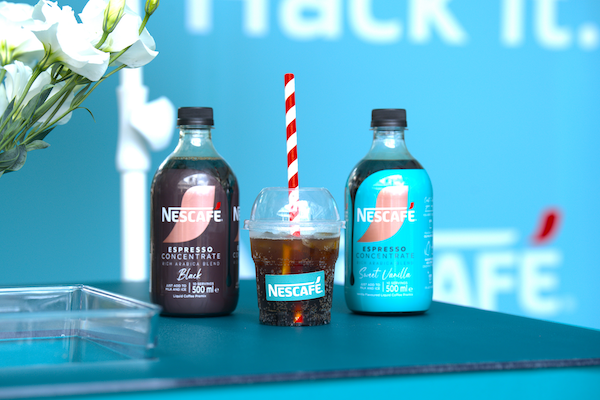
Nestlé launched NESCAFÉ Espresso Concentrate in South Africa through an influencer-led activation aimed at a new chapter driving coffee culture came alive on the social media feeds of the country’s most innovative content creators. The campaign involved the country’s digital tastemakers in a product launch story that leveraged their enthusiasm for coffee and knack for easy hacks.

‘The campaign was launched with enigmatic, cryptic posts across Instagram and TikTok. Creators teased their audiences with glimpses of teal boxes and mysterious captions, setting the stage for something out of the ordinary,’ said Elizabeth Gichangi, Head of Marketing for Coffee at Nestlé East and Southern Africa Region (ESAR).

The anticipation built to a crescendo in Rosebank, a hotspot known for its stylish crowds, and creative pulse. Here, the centrepiece was a teal, block-style activation wall made of acrylic ice, with dozens of teal mystery boxes waiting to be freed, a teal photo wall and an ice coffee bar.

Influencers were handed keys, tools not just for breaking ice, but for breaking the mould. Each box unlocked held a mixer: ranging from bold ingredients and sweet syrups to unconventional twists like tonic water or orange juice. The on-site charismatic mixologists transformed each surprise ingredient into a bespoke iced coffee creation, blending it with NESCAFÉ Espresso Concentrate and ice to craft a drink as personal as each influencer’s style.

The moment was captured at the campaign’s photo wall, with influencers striking playful poses, sharing #HackYourSummer #MakeYourWorld moments with their followers, and social media feeds lighting up with creativity. Each story, reel, and TikTok post became a ripple igniting nationwide curiosity. Followers became co-creators, feeling free to experiment with their own iced coffee creations at home and join the conversation through the campaign’s trending hashtags.

To date, the influencer-led rollout which happened over a 12-week period delivered over 4 million in reach across social platforms, demonstrating the power of creator-first storytelling.

Gichangi added, ‘What made this campaign different was its refusal to dictate a narrative. Instead, it encouraged influencers to experiment with audio, play with video effects, and inject their own cultural references. The result was content that felt organic and alive, each post a unique remix of the ‘Pour it, Mix it, Hack it’ ritual.’

Influencers showcased iced coffees that mirrored the country’s diversity: summer-influenced citrus coolers for hot afternoons, rich and creamy vanilla blends for movie nights, and trending hacks like Mocha for the social set.

By empowering influencers to blend trending themes, personal stories, and Mzansi flavour, NESCAFÉ Espresso Concentrate became more than a new beverage offering, it became a symbol of creative freedom. Coffee lovers everywhere were inspired to hack their own routines, remix their own drinks, and share their own stories.

NESTLÉ
https://www.nescafe.com/za/ 

This is Modern Marketing