
Home Blog Page 35

A Call For Responsible Brand Communications During This Human Rights Month

A Call For Responsible Brand Communications During This Human Rights Month
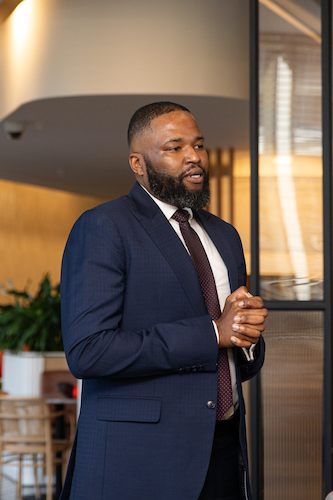
Emmanuel Bonoko, Brandscapers Africa.

Human Rights Day, commemorated annually on 21 March, honours those who lost their lives during the 1960 Sharpeville massacre and recognises the ongoing responsibility to uphold the rights enshrined in South Africa’s Constitution. It is a month of national reflection, accountability, and recommitment to justice. In this context, Brandscapers Africa believes the private sector has a critical role to play.

The agency is calling on brands and communication professionals to move beyond symbolic messaging and actively champion dignity, equality, and inclusion in their storytelling.

‘In South Africa, communication is never neutral,’ said Emmanuel Bonoko, Marketing Director at Brandscapers Africa. ‘The words brands choose, the faces they platform, and the narratives they amplify all contribute to shaping how dignity and equality are understood in our society. During Human Rights Month, brands must ask whether their messaging advances inclusion or unintentionally undermines it.’

In an era where audiences are highly engaged and socially aware, brand communication has far-reaching impact. Campaigns influence cultural perceptions, public discourse, and even policy conversations. When marketing reinforces stereotypes, excludes certain communities, or treats diversity as a once-off theme rather than a sustained commitment, it risks contradicting the values this month seeks to uphold.

Brandscapers Africa is urging organisations to use Human Rights Month as a strategic checkpoint by:

– Conducting audits of marketing and communication materials to ensure alignment with constitutional values.

– Prioritising authentic representation across race, gender, age, disability, language, and socio-economic backgrounds.

– Avoiding tokenism by embedding inclusion into long-term brand strategy.

– Reviewing influencer and partnership selections through a human rights lens.

– Creating internal guidelines that promote respectful, inclusive language across all
platforms.

The agency emphasises that responsible brand communication is not only a moral imperative but also a business necessity. Research consistently shows that consumers are more likely to support brands that reflect their values and demonstrate genuine commitment to social progress.

‘Human Rights Month should not be reduced to a themed campaign,’ Bonoko added ‘It is an opportunity for brands to demonstrate leadership. Responsible storytelling builds trust, strengthens reputation, and positions organisations as credible partners in South Africa’s democratic journey.’ Meaningful change requires sustained effort beyond 21 March. By embedding human rights principles into everyday communication practices, brands can contribute to a more inclusive economy and a more equitable society.

As South Africa reflects on its past and looks toward its future, the agency calls on all communication leaders to recognise that every message shapes the national narrative. During Human Rights Month, that narrative must affirm dignity, protect diversity, and uphold the shared humanity that underpins the Constitution.

BRANDSCAPERS AFRICA
https://www.brandscapersafrica.com

Registrations Are Open For Cannes Young Lions 2026 Competition

Registrations Are Open For Cannes Young Lions 2026 Competition

As the gateway to the world’s most prestigious celebration of creative excellence, the Cannes Lions Festival provides young South Africans with a direct path to compete on the global creative stage in Cannes, France.

Ster-Kinekor, the official South African representative of the Cannes Lions International Festival of Creativity, has announced the launch of the Cannes Young Lions South Africa 2026 competition, in partnership with Heineken® Beverages.

The Young Lions competition remains one of the most significant opportunities for emerging talent, giving teams the chance to represent South Africa at the Festival of Creativity and benchmark their abilities against the world’s best.

‘At Heineken Beverages, creativity is not just a craft, it is a growth driver and a cultural force. Cannes Young Lions represents the very best of what young talent can achieve when given a platform to challenge conventions and push boundaries. We are proud to continue investing in South Africa’s creative future and enabling the next generation of industry leaders,’ said Andrea Quaye, marketing director at Heineken Beverages.

‘Ster-Kinekor has always been passionate about storytelling and the power of ideas to move audiences. The Cannes Young Lions competition is a natural extension of this belief. We are excited once again to support young creatives as they bring fresh perspectives, bold thinking, and new energy to the table, and the industry,’ added Lynne Wylie, chief marketing officer at Ster-Kinekor Theatres.

With entries now officially open, young creative professionals across South Africa are invited to register in teams of two and prepare for a competition designed to test creative instinct, strategic thinking, and the ability to deliver bold and innovative ideas under pressure.

Participants born on or after 26 June 1995 are eligible to enter. All registered entrants will receive the official 2026 brief on 13 March, along with details on categories, judging, timelines, and entry mechanics. From that point, teams will have limited time to craft work that could take them all the way to Cannes Lions 2026 – the global benchmark of creative excellence. Read the terms and conditions here. Email: cannesyounglionssa@publicis.co.za.

CANNES YOUNG LIONS
cannesyounglionssouthafrica.co.za

Brave Group Appoints Business Unit Director

Brave Group Appoints Business Unit Director
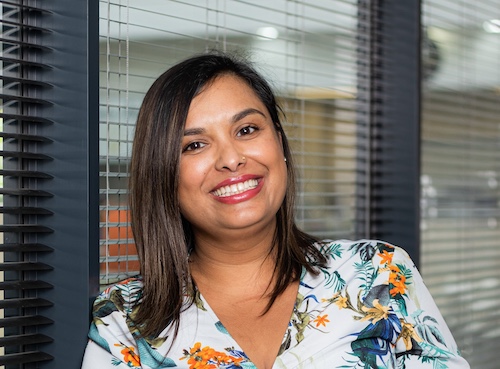
Nkateko Khosa, BOLD.

The Brave Group announced the appointment of seasoned communications strategist Nkateko Khosa to lead BOLD. Khosa has been appointed Business Unit Director of the group’s specialist reputation and public relations agency. The appointment marks a strategic consolidation of Brave Group’s reputation management capabilities.

‘Reputation is the currency of trust in today’s market,’ said Musa Kalenga, CEO of Brave Group. ‘Khosa brings over two decades of high-level experience and a profound understanding of the South African landscape. Her ability to navigate complex stakeholder environments, from crisis management to community mobilisation, aligns perfectly with our group’s mission to deliver commercially effective, brave work. We are thrilled to have her at the helm of BOLD.’

Khosa brings over 25 years of experience in public relations and strategic communications. A trusted practitioner who has operated at senior management, EXCO, and Board levels, Khosa has advised a broad spectrum of clients across banking, energy, telecommunications, and government.

Khosa’s journey into PR began at a young age, sparked by a simple realisation during her time at Technikon Witwatersrand (now the University of Johannesburg): ‘I love working with people, and I am passionate about the power of great communication,’ she said.

This passion has translated into a distinguished career, including a nine-year tenure at Magna Carta, a leadership role at BCW Africa (now part of Burson), and extensive freelance consultancy for major entities. Most recently, she played a pivotal role in the Namibia International Energy Conference and spearheaded media relations for the Council for Geoscience.

Her portfolio includes work with blue-chip entities such as the JSE, Eskom, Standard Bank, Sanofi, and Transnet. At BOLD, Khosa will leverage her core strengths in crisis management, stakeholder relations, and integrated marketing to service a growing client list that includes African Bank, GEPF (Government Employee Pension Fund), AECI, and Accenture.

‘I have always believed that the best communication happens when you connect stories to brands with authenticity,’ said Khosa. ‘Leading BOLD within the Brave Group ecosystem is an exciting opportunity to merge strategic insight with emotional resonance. We are here to create unique, boundary-pushing campaigns that don’t just manage reputation, but actively build it to generate deep trust between brands and their stakeholders.’

Khosa is also dedicated to industry excellence, having served as a PRISM Awards judge and as Chairperson of the Strategic Communications Advisory Committee at the Tshwane University of Technology (TUT).

‘Khosa’s appointment is more than a hire; it is an investment in deep, transformative expertise,’ added Kalenga. ‘With Khosa leading BOLD, we can ensure that our clients’ stories are told with the nuance, impact, and brave thinking they deserve.’

BRAVE GROUP
www.bravegroup.co.za

The Mediashop Durban Relaunches To Operate As Park Media Buying

The Mediashop Durban Relaunches To Operate As Park Media Buying
Arisha Saroop, Park Media Buying.

This relaunch represents a natural progression in aligning media buying resources enabling greater operational efficiency, stronger media owner partnerships, and increased commercial leverage for clients. Importantly, there will be no disruption to existing client relationships, campaigns, or service teams, with continuity remaining a central priority.

Arisha Saroop, Managing Director of Park Media Buying, will continue to lead the function, ensuring stability and maintaining the high standards clients and partners associate with the business.

‘This signifies an evolution of our buying capability and creates a stronger, more integrated foundation for future growth,’said Saroop. ‘Our focus remains firmly on delivering value for our clients while building a scalable, future-fit media buying operation within Park Advertising.’

Chris Botha, Group Managing Director of Park Advertising, added:
‘Integrating The MediaShop Durban’s buying capability into Park Advertising strengthens our overall media offering and positions the group to deliver greater value, efficiency, and strategic advantage to our clients in an increasingly complex media environment.’

THE MEDIASHOP
www.mediashop.co.za

The Most In-Demand Marketing Roles

The Hottest Jobs in Marketing will Surprise You

As global marketing operations scale and AI accelerates content production, the industry’s constraint has moved from ideation to execution. Creative output is no longer scarce; coordination is.

The most in-demand roles in marketing are now operational and delivery positions, including project managers, account leads, delivery specialists and technologists, reflecting a structural redesign of how marketing work is organised and delivered.

‘While AI has signalling a new era for the way creative assets are ideated and made, it hasn’t removed the operational increases that follow,’ said Gabrielle Gray, Global Head of Capabilities at Brandtech+. ‘As output volumes increase, the pressure shifts to planning, coordination, localisation, approvals and deployment across markets. The roles that manage that complexity have become the new bottleneck and, increasingly, the most in-demand in the industry.’

From Ideas To Infrastructure

Modern marketing runs across more channels, markets and formats than ever before. Campaigns are no longer produced once and rolled out slowly. They are always on, continuously adapted, localised across regions and optimised in real time.

‘Creative output has accelerated, but structure hasn’t disappeared,’ said Tanya Lilley, Talent Acquisition Lead at Brandtech+. ‘If anything, strong delivery roles have become more critical. Without experienced execution and delivery specialists, speed quickly turns into inconsistency.’

This pattern is increasingly visible across global marketing organisations. As teams mature, greater emphasis is being placed on operational leadership, workflow design and cross-functional coordination. The ability to manage complexity at scale has become a competitive advantage.

Evidence Of A Broader Hiring Shift

Hiring patterns offer a clear signal of this change. ‘At Brandtech+, recent hiring reflects this shift: of the over 100 permanent, fully remote roles opened across global client teams, a large portion are non-creative, spanning account management, project delivery, production and technical disciplines,’ said Lilley. ‘We’re not deprioritising creativity. We’re recognising that creative excellence at scale depends on quality execution and flawless organisation.’

She added that many of the hardest roles to fill today are the ones responsible for keeping global workstreams moving, aligning teams across time zones and maintaining quality as volume increases.

This role mix reflects a structural shift in how marketing teams are designed. Rather than organising around siloed disciplines, companies are building integrated delivery systems: senior, cross-functional teams that can own output end to end.

Why Execution Is The New Constraint

The industry’s long-standing obsession with ideas has often obscured a more practical truth. Most marketing failures are not caused by poor thinking, but by breakdowns in execution: missed deadlines, fragmented handovers, inconsistent localisation and fragile production pipelines.

As campaigns become multi-market by default, those risks multiply.

‘Clients aren’t just buying ideas anymore,’ said Gray. ‘They’re buying reliability, speed and consistency. That shifts demand toward people who can design systems, manage complexity and translate strategy into action.’

According to Gray, this demand is structural rather than cyclical. ‘Companies aren’t just hiring again. They’re redesigning roles around how work happens now, not how agencies used to operate.’

What This Means For Marketing Careers

For professionals, the implications are significant. The fastest-growing opportunities in marketing are no longer confined to creative specialisms. Operational, technical and client-facing roles are moving to the centre of how marketing value is created and rewarded.

‘This helps explain why experienced account managers, project managers and delivery leads are increasingly being recruited into global roles that previously did not exist,’ said Gray.

‘Distributed work models allow companies to access this talent without relocation, while offering professionals exposure to complex, international work.’

Lilley added that the hiring patterns at Brandtech+ are not an anomaly. ‘They are evidence of a broader shift in global hiring, work design and talent demand across the marketing industry. Creativity remains essential, but it no longer sits alone at the top.’

‘As marketing continues to scale, the hottest jobs will belong not just to those who generate ideas the fastest, but also to those who can deliver them consistently and that may be the most consequential change reshaping the industry,’ concluded Gray.

BRANDTECH+
https://www.brandtech.plus

Entries Are Open For London International Awards

Entries Are Open For London International Awards

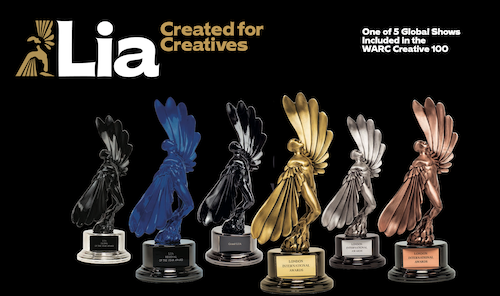
As the show Created for Creatives, London International Awards, known as LIA, is one of five global shows included in the WARC Creative 100, the Drum World Creative Rankings, ADC Germany, Indikat, Campaign Brief Rankings, as well as, many other global and regional lists that independently and impartially rank creative excellence.

‘Winning awards is where the magic happens in gaining more value for your work. It’s the gateway to greater creativity, more personal and business opportunities. As it has been said, ‘…to be a winner you must plan to win, prepare to win and expect to win.’ And we are here to help you do that,’ said Christina Shaw, VP Awards Director.

This year, LIA has added six new categories, increasing your chances of showcasing your work on the global stage.

New For 2026:

Sports: Recognises work that celebrates original, impactful and culturally aware work inspired by sport. Creativity that harnesses the power of sport and sportspeople to connect with audiences, work that harnesses the power of creativity, that captures the drama, emotion and unity of sports to drive both brand and cultural impact.

Gaming: The creative use of video games and gamified interactive media for desktop, mobile, web, virtual or web 3.0 platforms to create branded experiences.

Cultural Catalyst: Recognises creativity that sparks significant cultural impact. Work that is relevant, sparks conversations, sets trends and integrates itself into the cultural conversation. This new category is inextricably linked to culture and transforms marketing into unique content.

Entertainment and Content: Honours storytelling that leverages entertainment to market a brand, product, or service. This category moves far beyond traditional marketing and into genuine engagement awarding work that captivates audiences in ways indistinguishable from entertainment alone. Leveraging ecosystems like film, television, gaming, mobile and live events.

Business Transformation: Recognises that creativity does not just live within campaigns. It now plays an influential role in the enduring transformation of business including their operations, services, products, internal and customer experiences. This medium doesn’t just recognise work that promotes solutions to customers. It recognises the solutions themselves.

Democracy and Human Rights: Recognises creative work that actively promotes and strengthens Democratic and Human Rights values around the world. Honours communications and ideas that inspire people to care about human rights, free expression, fair representation, accountability and the essential freedoms that allow democracy to thrive and human rights to be protected. Rather than simply illustrating these principles, the work should motivate audiences to protect and advance them, whether it is at a local, national, continental or global level. This award has support, but no operational role from the European Parliament to amplify the promotion of human rights and democracy. No work for political parties or political candidates will be eligible for submission.

The winners of LIA redefine the standard of creativity every year. Winning a winged LIA statue has opened doors and earned winners worldwide accolades and recognition. It sets you apart from your peers.

LIA will accept work first released: 1st July 2025 through 31st August 2026. LIA is now accepting entries at a 35% entry discount.

Onsite judging will be held from 25th September through 3rd October 2026 at Encore @ Wynn Las Vegas. Winners and finalists will be announced 28th September through 5th October, 2026.

LONDON INTERNATIONAL AWARDS
https://www.liaawards.com/

Investing In Women-Led Creative Enterprises Can Unlock Significant Value

Investing In Women-Led Creative Enterprises Can Unlock Significant Value

Africa is home to the world’s youngest and fastest growing population, with nearly 890 million people under the age of 25. This youth cohort represents both a powerful source of demand and a deep pool of creative talent.

In its latest report, Africa’s Next Growth Frontier: Empowering Women in the Creative Industries, Boston Consulting Group (BCG) finds that Africa’s creative economy, spanning fashion, design, music, film, and digital content is a meaningful yet still underexploited market, estimated at around $59 billion.

The analysis shows that scaling these industries could unlock substantial economic value and export growth, with women at the forefront of creation, entrepreneurship, and value capture.

Against this backdrop, Africa’s growth narrative is shifting from a reliance on extractive industries to a creativity led economy in which women play a central role.

BCG’s analysis highlights four mutually reinforcing growth engines reshaping Africa’s creative economy and accelerating its trajectory: digital acceleration, cultural intellectual property (IP), the global diaspora, and the continent’s young and growing population. These forces are expanding market reach, enabling new business models, and increasing global demand for African creative products and experiences, with women playing central roles across value chains.

Africa has long been celebrated for its abundant natural resources, holding over 30% of the world’s mineral reserves. Yet, despite this wealth, much of the value has historically been lost to minimal local processing and exports of raw materials.

‘Unlike extractive industries, Africa’s creative economy offers a model rooted in agency, innovation, and shared prosperity,’ said Lisa Ivers, Managing Director and Senior Partner, Head of BCG Africa. ‘We are witnessing a shift in how value is created, distributed, and experienced. Women-led creative businesses are generating jobs, building resilient local supply chains, and reinvesting in their communities, making them central to Africa’s transformation story.’

These four growth drivers are converging in powerful ways. A youthful population is creating a large, dynamic base of creators and consumers. Rapid smartphone adoption and improved broadband access have enabled 300 to 400 million Africans (about 40% of the population) to actively engage with social media, giving creators direct access to global audiences.

This is amplified by a unique tapestry of cultural intellectual property, brought to life through Africa’s rich design, storytelling, and aesthetic traditions that are making waves internationally. At the same time, a far-reaching diaspora of more than 200 million people of African descent living outside the continent ensures that Africa’s creative influence as well as demand for its cultural products is truly global.

While Africa’s creative economy is currently valued at around $59 billion, representing under 3% of the $2 trillion global creative sector, the opportunity ahead is substantial. Doubling Africa’s share to 6% by 2030 could lift creative exports to $150–160 billion, catalysing broad-based economic transformation.

Importantly, the creative segments where design, branding, and cultural expression are concentrated, account for the majority of this value and surpass upstream manufacturing in profitability and global relevance.

Despite this momentum, women-led creative businesses remain drastically undercapitalised. According to the African Development Bank, with adequate investment, Africa’s fashion industry alone has the potential to contribute as much as $50 billion to GDP and create around 400,000 new jobs in sub-Saharan Africa.

Every $1 invested in the creative economy can generate up to $2.50 in broader economic activity, yet the sector attracted less than 1% of venture capital in 2024, just $1.5 million in disclosed deals, while fintech drew $1.35 billion. Over 90% of fashion businesses operate with minimal capital, typically between $300 and $1,000, and women receive less than 10% of funding, often below 1% in key markets like Nigeria.

‘The persistent funding gap is not a reflection of lack of opportunity, but of structural under-recognition and undervaluation,’ added Sqalli. ‘Closing this gap is one of Africa’s most promising yet under-recognised opportunities for economic and social transformation.’

However, driving systemic change requires more than generic funding. The report calls for fit-for-purpose ecosystems that combine capital with targeted enablers: infrastructure, legal empowerment, visibility, and networks.

By creating jobs and strengthening supply chains, the creative economy is ensuring that prosperity is shared more equitably, reaching groups that have traditionally been excluded. At the same time, women and youth are being empowered with new pathways to prosperity, visibility, and cultural pride, while authentic African storytelling is helping to reshape the continent’s global image.

‘Investing in women in the creative economy is a high‑return, data-backed business opportunity,’ concluded Ivers. ‘By combining targeted financing with skills development and market access, we unlock an asset class capable of driving exports, creating formal jobs, and accelerating Africa’s shift from resource‑based to creativity‑led growth.’

BOSTON CONSULTING GROUP
https://www.bcg.com/

PR Worx Ranked Number One Among South African Public Relations Agencies

PR Worx Ranked Number One Among South African Public Relations Agencies
Madelain Roscher, PR Worx.

PR Worx has been ranked the number one public relations agency in South Africa for 2026 following an independent nationwide survey of 13,200 corporate clients. The survey, conducted by Town Press and managed by Egoliprospects, targeted marketing directors, CEOs, brand managers, and communications leads who have worked directly with PR agencies over the past three years. A total of 1200 verified responses formed the final dataset.

Respondents were asked to evaluate agencies based on strategic thinking, media relations strength, reporting transparency, crisis management capability, return on investment, and overall satisfaction. According to the published rankings, PR Worx secured the top position among South Africa’s leading agencies.

Madelain Roscher, CEO and Founder of PR Worx, said, ‘Being named South Africa’s number one PR agency is deeply humbling. It’s also validation of something we’ve always believed and lived: that reputations are built through relentless professionalism, strategic acuity, and showing up when it matters most.’

‘This recognition belongs to our clients, who trust us with their most complex challenges, and to our team who delivers excellence even under pressure. For almost 25 years, we’ve said that we build reputations that last. Today, South Africa’s leading corporate decision-makers confirmed it. Thank you for making PR Worx what it is: Africa’s most trusted communications partner.’

Shannon Henning, PR Worx.

The Town Press report noted that PR Worx is recognised as a heavyweight in the corporate sector, known for its structured operational model and strong crisis management capability. It described the agency as a dependable partner in high-pressure environments such as corporate restructuring or intense public scrutiny.

‘Their reputation is built on rigorous professionalism that ensures consistent output even under duress,’ it stated. ‘In addition to standard PR services, they are frequently cited for excellence in crisis management. Because they operate with high levels of organisation, they are able to mitigate reputational risks quickly and effectively. This reliability has made them a long-term choice for large organisations that require a safe pair of hands for complex communication challenges.’

Shannon Henning, Managing Director of PR Worx, added, ‘What this ranking tells us is that clients don’t just want clever campaigns and vanity engagement, they want partners who understand the full weight of what’s at stake. Whether it’s navigating a corporate restructuring, protecting a CEO’s reputation, or launching into a new market, our clients know we bring both the strategic thinking and the operational discipline to deliver results that count. This number one ranking isn’t a validation of where we’ve been, but a mandate to keep raising the bar. To every client who has backed us with their trust: we see you, we value you, and we’re just getting started.’

PR WORX
https://www.prworx.co.za

Webinar Offers Inside Look Into Ad Fraud Crisis

Webinar Offers Inside Look Into Ad Fraud Crisis

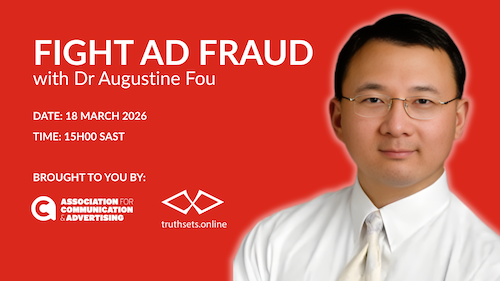
Powered by AI, global digital ad fraud losses are projected to reach $172 billion by 2028, Juniper Research estimates. To tackle this increasing threat to media budgets, the Association for Communication and Advertising South Africa (the ACA) has joined forces with truthsets.online to present a webinar featuring Dr Augustine Fou, one of the world’s most respected ad fraud researchers.

During the online session, which takes place on Wednesday, 18 March 2026, at 15h00, Dr Fou will offer a rare, inside look at how fraud operates, how AI has accelerated things, and how brands can detect and mitigate losses.

Famously dubbed the ‘Titan of Transparency’, Dr Fou is an independent cybersecurity investigator who has taught at NYU and Rutgers University. His distinguished career includes serving as Group Chief Digital Officer at Omnicom’s Healthcare Consultancy Group and as SVP Digital Strategy Lead at McCann Worldgroup (now MRM). On the brand side, Dr Fou has worked for American Express and McKinsey.

‘Fraudsters are increasingly leveraging AI to automate and refine their scams, rendering them nearly indistinguishable from legitimate user interactions. AI-driven bots no longer just click repeatedly. They now simulate human-like behaviour, including scrolling, mouse movements, and complex browsing patterns that easily bypass basic legacy detection systems,’ Dr Fou said.

‘The online advertising industry has long been led to believe that ad fraud hovers around the 1% mark. This narrative is fundamentally untrue; it misses the mark by frightening multiples. The 1% figure merely represents a fraction of the fraud legacy verification businesses can catch,’ Dr Fou said. Why does this myth persist? ‘For years, digital ad fraud existed in darkness and denial. The industry preferred to believe the numbers rather than question them. Today, that is changing.

Independent analyses now show that roughly a quarter of programmatic spend is diverted to made-for-advertising sites or fraudulently not served in other ways, and impression volumes often exceed the number of available eyeballs on the planet! There is more scepticism all aroundon so-called vanity metrics, so it’s a good time to take a hard look at this,’ said Gillian Rightford, Executive Director of the ACASA.

‘AI is now accelerating the enablement of ad fraud at an unprecedented scale. Having seen Dr Fou’s methods applied to South African brands, the patterns are unmistakable and deeply concerning,’ said Rightford. ‘At a time when every marketing rand is under scrutiny, it is extraordinary that more organisations are not actively separating real audiences from artificial ones. The opportunity is not only to reduce waste, but to materially improve business outcomes by investing in media that reaches actual people.’

The upcoming webinar presents a golden opportunity for South Africa’s brand owners and managers. Attendees will gain deep insight into the real scope and scale of ad fraud, understand why the issue has persisted, and learn evidence-based methods that dramatically improve campaign performance, strengthen media quality, and drive better business outcomes.

Event Details:

– Date: Wednesday, 18 March 2026.
– Time: 15h00 SAST.
– Registration: Book your seat  here.


Brands Can Stand Out With Multisensory Marketing

Brands Can Stand Out With Multisensory Marketing
Thule Ngcese, Distrikt 9.

According to Thule Ngcese, Creative Partner, Distrikt 9 (a VML supplier development partner), AI is giving us flawless sunsets, flawless skin, flawless everything. But when perfection becomes the norm, it stops being a differentiator.

Humans were never built to experience the world through sight alone. We have four other senses waiting to get back in the game. In 2026, brands must make people feel (and hear and smell) something, not just look at it.

Why Multisensory Marketing Matters In 2026

Audiences are visually overstimulated, scrolling past thousands of images per day, each more spectacular than the last. But while visual burnout is real, brands have more tools available to them that have the potential to be even more powerful than an awe-inspiring image.

Emotion lives beyond sight: smell triggers memory. Sound shapes mood. Touch shifts perception. Taste anchors experience. Brands that activate multiple senses unlock instinctive, emotional, and longer-lasting connections.

What’s more, audiences are hungry for it. After years of digital polish, people crave texture, authenticity, and brand experiences that feel lived rather than manufactured.

Sound As A Story

Sound is the fastest way to build emotion, through radio, sound design, voice, ambient texture or even silence, you can craft rich worlds using audio.

One example is a campaign for a refreshed version of Wheel of Fortune South Africa, reintroducing the beloved TV show to a mass-market audience on the national broadcaster.

The radio campaign tapped into the scepticism around people who suddenly come into money, playfully referencing money snakes and wealth rats from local stories. The rumours were contrasted with the real opportunity offered by Wheel of Fortune South Africa.

The message was simple: no myth and no magic, just the thrill of spinning the wheel and getting lucky. The key was in the execution. To ground the work in culture, we crafted an authentic Maskandi sound with Umlabalaba. It was important for this not to be a hollow parody of the genre, the song had all the hallmarks of Maskandi. But we used the sound to carry narratives of rich hate, community envy, and sudden change in a way that felt true to how South Africans talk, gossip, and share news.

Physical Experiences That Live In Memory

When people physically engage with an execution, it tends to cement itself in their minds much more securely than something they saw on their feeds while scrolling.

That principle was to promote the launch of Showmax Original Ubuthe Uzobuya, a gripping intervention show that exposes the painful reality of spousal abandonment in South Africa.

The streets of Johannesburg are plastered with lost lover posters. This formed the perfect backdrop for a tactile execution deeply rooted in the lived experience of commuters in the city. ‘The Ubuthe Uzobuya Bring Back Lost Lover Collection’ was created, a set of bottled love potions designed to look and feel like the promises found on lost lover posters and handed out at traffic lights.

Each potion carried a story inspired by the emotional chaos of abandonment:

– Phupha Ngami: Dream of me.
– Futha Azabuye: Steam to make him return.
– Duka Nezwe: Wander off and never return.
– Bheka Mina Ngedwa: Have eyes only for me.
– Forever Makhwapheni: Stay as their side chick forever.

The back labels revealed the truth: ‘If only it were this easy. Watch Ubuthe Uzobuya.’ By tapping into a real cultural truth, the campaign became a physical experience people could see, touch, and remember.

Taking Multisensory Experiences Digital

Even digital spaces can go beyond purely visual appeal. Spatial audio, haptics, ASMR textures, ambient sound beds, POV formats, and location-based triggers are all ways to bring the user experience to life in ways that engage other senses.

Specsavers showed how effective this can be in a campaign titled ‘The Misheard Version’. It used digital audio to create the sensation of hearing loss by recording a version of Rick Astley’s classic, Never Gonna Give You Up, with the lyrics intentionally changed to mimic the mishearing that occurs during early hearing loss.

The track lived across radio, streaming, smart speakers, and social audio, turning a familiar song into a moment of confusion and self-reflection. It won a Grand Prix and Gold in the Audio and Radio category at the Cannes Lions Festival of Creativity in 2024.

The Rise Of Synaesthetic Brands

The next era of creativity belongs to synaesthetic brands that behave like experiences rather than assets. In 2026, brands must not only focus on being seen but also being heard, felt, remembered, and instantly recognised without a single pixel on screen.

They Should Be Thinking Of:

• Sound signatures that become as iconic as logos.
• Multisensory retail built on temperature, scent, and texture.
• Spatial audio storytelling that creates emotional depth.
• Haptic cues that make mobile content feel alive in the hand.
• Tactile activations that move seamlessly between physical and digital worlds.
• AI-powered sensory layering where sound, motion, and micro textures build richer brand worlds.

Multisensory marketing is a return to human truth. We remember what we feel and not what we scroll past.

DISTRIKT 9
https://www.d-9.co.za/

This is Modern Marketing