
Home Blog Page 38

How South African Brands Are Moving Beyond Vanity Metrics

How South African Brands Are Moving Beyond Vanity Metrics

Henri Bam, CEO of revX, says for many South African businesses, surface-level success is no longer enough. In a competitive, cost-conscious market, the spotlight is shifting away from likes, shares and impressions, and toward something far more meaningful: measurable sales outcomes.

Today’s most effective marketers are no longer asking: ‘How many people saw this?’ but rather, ‘What business result did this drive?’ That mindset shift is transforming how brands approach digital growth and reshaping the role of marketing itself.

From Visibility To Value

Engagement metrics can be helpful indicators, but they don’t always reflect true performance. A campaign that attracts thousands of clicks may still fall short if it doesn’t generate qualified leads or convert interest into action.

This is why so many South African companies are rethinking the way they measure marketing success. They’re moving beyond passive lead generation and towards active revenue generation: performance-led strategies that are anchored in real results, not vanity.

Clicks Are Only the Start

Clicks alone don’t pay the bills. The real value lies in what happens after someone engages. What led to that moment of interest? What comes next? And how seamless is the journey from curiosity to conversion?

When campaigns are designed to guide users through a full-funnel experience, not just stop at awareness, results begin to compound. The most successful brands are those that understand the psychology behind the click, and build systems that nurture leads, reduce friction, and ultimately drive action. This is where performance-led strategies shine: they combine strong creative with data intelligence to deliver revenue, not just reach.

Performance Is Personal

There’s often a misconception that performance marketing is overly analytical or devoid of emotion. But in reality, it requires a sharper kind of creativity, one that speaks directly to a person’s intent, motivation, and context.

It’s not about blasting a message to as many people as possible. It’s about precision: the right message, in the right place, at the right time.

This might mean segmenting audiences based on buying stages, designing dynamic content that adapts to different triggers, or refining landing pages so the path to purchase feels intuitive and easy. Small changes, when informed by insight, can yield disproportionately powerful results.

When Sales and Marketing Align, Revenue Grows

One of the clearest signs of a performance-led company is internal alignment. When marketing, sales, and operations share common definitions of success and are working toward the same revenue goals, growth tends to accelerate. Silos disappear. Feedback loops tighten. Data becomes shared currency. And marketing evolves from a cost centre into a powerful engine for business development.

This alignment doesn’t just improve outcomes, it transforms how organisations make decisions, measure value, and adapt to change.

Why This Matters Now

In South Africa’s current economic landscape, marketing leaders are under more pressure than ever to demonstrate impact. The brands breaking through are those that can show direct attribution between ad spend and actual revenue, not abstract KPIs or click-through rates that don’t translate into sales.

The advantage belongs to those who:

– Measure what matters.
– Optimise consistently.
– Cut what doesn’t work.
– Build with revenue in mind from the start.

This isn’t just a new way of working, it’s a new expectation from boards, CFOs, and leadership teams who want to see clear ROI.

The Road Ahead

Marketing is no longer just about reach or awareness, it’s about outcomes. The organisations that understand this and act on it will be the ones that grow, scale, and lead in the years to come.

The shift away from vanity metrics isn’t just timely, it’s essential. Because in today’s market, the only metric that matters is revenue.

REVX
https://www.revx.ai

ACA Welcomes New Board And Leadership Team For 2025/26

ACA Welcomes New Board And Leadership Team For 2025-26

The 78th Annual General Meeting of the Association for Communication and Advertising (ACA) took place on Wednesday, 16 July 2025, where the new Board of Directors and Executive Committee (Exco) for the 2025/26 fiscal year was confirmed. The incoming Exco will be led by Luca Gallarelli, Group CEO of TBWA\South Africa, who assumes the role of Chair.

He is joined by Kagiso Musi, Group Managing Director of Meta Media, as Vice Chair. The Exco also includes Mpume Ngobese of Joe Public, Jarred Cinman, CEO of VML South Africa, and Gillian Rightford, Executive Director of the ACA. This dynamic leadership team brings together diverse experience and complementary skillsets to ensure a forward-focused, delivery-driven approach to the ACA’s mission.

Reflecting on the past year, outgoing Chair, Sharleen James, Managing Director at Razor, described the 2024/25 term as one of meaningful progress and collaborative achievement. ‘We entered the year with a clear focus on delivery,’ she said. ‘Together, we committed to driving real outcomes and were deliberate in our approach to execution.’

Under her leadership, the ACA drove several key initiatives forward: cementing the role of the six Tribes as core to the ACA’s structure and execution; launching the GenEra platform for young professionals; and strengthening its commitment to transformation, education, and advocacy. ‘We moved from setting intentions to implementing programmes, from ideas to impact,’ she added. ‘The progress made was made possible by a highly engaged Board, an exceptional Exco, and a Secretariat team that remained consistently focused.’

The full Board of Directors for the new term is as follows:

BOARD MEMBER AGENCY DESIGNATION
Luca Gallarelli: Chair TBWA/South Africa Group Chief Executive Officer
Kagiso Musi: Vice Chair Meta Media Group Managing Director
Mpume Ngobese: Exco Joe Public Co-Managing Director
Jarred Cinman: Exco VML SA Chief Executive Officer
Gillian Rightford: Exco Association for Communication and Advertising Executive Director
Adeshia Singh Singh & Sons Managing Director
Alison Deeb MetropolitanRepublic Group Chief Executive Officer
Andrew Brand Ninety9cents Chief Executive Officer
Brenda Khumalo Lobengula Advertising Founder and Managing Director
Derek Coles McCann Joburg President
Gareth Leck Joe Public Group Chief Executive Officer
James Moffat Promise Brand Specialists Chief Executive Officer
Jason Harrison The Up and Up Group Co-Founder & Chief Operating Officer Founding Partner
Karabo Denalane TBWA\Hunt Lascaris Chief Executive Officer
Koo Govender Publicis Groupe Africa Chief Executive Officer
Pete Case Ogilvy South Africa CEO & Creative Chairman
Preetesh Sewraj The Loeries Chief Executive Officer
Roxana Ravjee Dentsu South Africa Chief Executive Officer
Sarah Dexter MullenLowe South Africa Chief Executive Officer
Sharleen James Razor Managing Director
Sibuyiel Mabena Duma Collective Co-Founder and Chief Creative Officer
Sinqobile Mjali The Odd Number Managing Director
Vicki Buys Ogilvy South Africa Managing Director
Wayne Naidoo DUKE Group Group CEO
Xola Nouse The Odd Number Chief Executive Officer
Sharon Bergmann-Stanley Association for Communication and Advertising Finance Manager


ACA Executive Director Gillian Rightford welcomed the incoming Board and praised the work of the previous leadership team, noting the shift in 2024/25 from ‘promise to performance’.

‘I’m excited to be working with the dynamic new ACA Board and Exco as we continue to build on the strong foundations laid over the past year,’ she said. ‘Together with the outgoing Exco, Wayne Naidoo, Luca Gallarelli, Brenda Khumalo, and Sharleen James—and through the collective effort of our Tribes, Committees and Task Teams, we identified tangible deliverables across our strategic focus areas and made real headway.’

She added, ‘This kind of progress doesn’t happen by chance. It’s the result of sustained commitment from a team of professionals who manage this work alongside demanding agency and corporate roles. I’m incredibly proud of what we’ve achieved and deeply grateful to all who contributed—including our tireless Secretariat team.’

In his first statement as Chair, Gallarelli shared his perspective on the formation of the Exco and the intention behind it: ‘The choice of Exco came down to two key principles. Firstly, that it should be made up of credible, diverse and complementary personalities and skillsets to create a high-functioning, delivery-oriented and dynamic posture. It is important for this dynamic to strike a balance between the need for continuity and the ability to look ahead, not only to the challenges of today, but to those of next week, next month, and the years ahead. I have no doubt this group achieves all of this and look forward to the impact they will bring in partnership with the Secretariat and Tribes.’

ACA

www.acasa.co.za

Loyalty Must Evolve From Static Rewards To Sparking Emotion

Loyalty Must Evolve From Static Rewards To Sparking Emotion
Alex de Bruyn, Let'sCreate.

According to Alex de Bruyn, CEO of Let’sCreate, if you were to go purely on stats from the 2024/2025 edition of the South African Loyalty Landscape Report, which shows that 82% of South Africans use loyalty programmes or that they use 10.3 loyalty programmes on average, you’d assume the sector was in rude health. Dig a little deeper, though, and the picture quickly becomes much more complex.

For example, grocery retailers and fuel stations do very well out of loyalty, with 77% and 51% of consumers saying that loyalty programmes shift where they buy from in those categories. Health and pharmaceutical companies (30%) and restaurants and coffee shops (26%) benefit significantly less.

It’s also clear that there’s still a gap in making loyalty programmes attractive, especially among mass market consumers, where just 63% make use of them. Among the 18% of economically active and 37% mass market consumers who don’t use loyalty programmes, the biggest reasons given are not spending enough to earn decent rewards (22%) and taking too long to earn decent rewards (15%).

What Loyalty Programmes Get Wrong

Before we can reimagine loyalty, we have to acknowledge where most programmes go wrong. They are built for a customer who no longer exists. Legacy models like earn points, get discounts, or buy nine and get the tenth free rely on extrinsic motivation and outdated habits. But today’s consumer wants more than a transaction. They want an experience.

Loyalty must evolve from static rewards to systems that spark emotion, foster progression, and feel deeply personal. Modern users expect immediate feedback, tailored challenges, and rewards that reflect their behaviour, not just their spend. They want to feel seen, understood, and in control.

This is where most programmes fall short. They ignore the core drives that keep people engaged: curiosity, autonomy, achievement, and social status. Instead of building systems that adapt and respond, they offer blanket discounts and slow, linear reward loops. It’s no surprise that even high-earning users disengage when there is no narrative, no tension, and no sense of progression.

The shift is clear: loyalty must become a game worth playing. One where the user’s effort is recognised, their journey is personalised, and their rewards are not just earned, but felt.

Learning From The Leaders

Some loyalty programmes are already ahead of the curve, and Discovery Vitality stands out. According to the South African Loyalty Landscape Report, it’s the one programme consumers ‘can’t live without’. Why? Because it doesn’t just reward, it motivates.

Vitality understands that relevance drives engagement. Goals are personalised based on where you are in your journey, meaning a beginner and an athlete can both succeed. This taps into development and accomplishment, letting members progress on their own terms, an essential driver in game design.

But what truly sets it apart is how it weaves game mechanics into everyday behaviour. Weekly goals unlock dynamic, chance-based rewards, a play on a digital gameboard, that combine unpredictability (what will I get?) with instant gratification. This layered design triggers emotional engagement while reinforcing habit loops. Rewards range from instant treats to versatile Discovery Miles, all delivered through a system that feels earned, not given. It’s not just functional, it’s fun, and that’s why it’s been Discovery’s most successfully exported product.

Loyalty Is Ripe For A Game-Changing Shift

The future of loyalty isn’t in more points, it’s in more play. Customers today aren’t just transacting; they’re engaging, comparing, and constantly switching. In this attention economy, brands that win will be those that turn loyalty into an experience, not a ledger.

Gamification, done right, taps into human motivation: curiosity, progress, purpose, and belonging. It’s why users chase badges, complete challenges, and return for streaks. But most South African programmes are still built for yesterday’s consumer: linear, transactional, and static.

We need dynamic, personalised systems that adapt to behaviour and inspire action. Loyalty must feel alive. The Octalysis framework gives us the map: psychological drivers, real-time feedback, and game mechanics are the tools.

Disruption won’t come from bigger discounts. It’ll come from brands bold enough to build loyalty people love to play.

LET’SCREATE
https://www.letscreate.global/

Younger Consumers Calling For Authenticity Over Artifice To Build Brand Trust

Younger Consumers Calling For Authenticity Over Artifice To Build Brand Trust
Credit: Emiliano Vittoriosi, Unsplash.

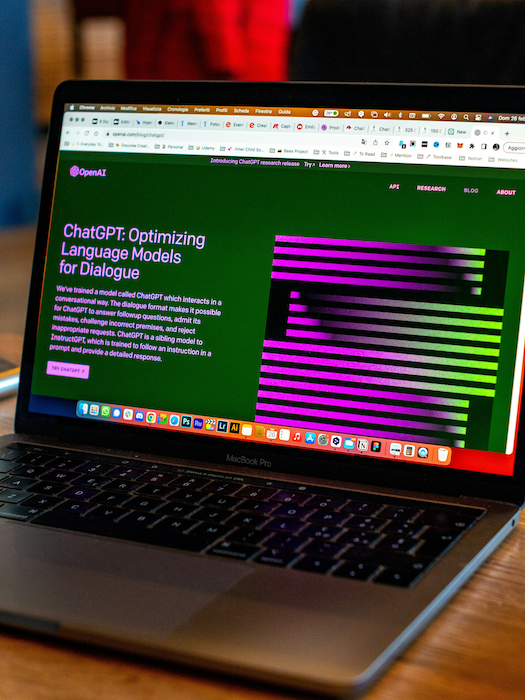
With platforms such as ChatGPT becoming pretty much ubiquitous in the past few years, generative artificial intelligence (AI) has moved swiftly from the realm of science fiction into everyday reality. It already plays a big role in the advertising industry, with estimates putting the global market revenue of AI usage in marketing at around $47 billion in 2025.

We may expect younger consumers to be attracted by the latest innovations; however, tech-savvy Gen Zs and Millennials who have grown up immersed in digital technology are only too aware of its pitfalls. These consumers are starting to question the use of AI in advertising, calling for a more authentic, human-centred approach. So, when should we be using AI, and what are the alternatives?

This year’s IAB South Africa Youth Action Council Townhall looked beyond the ease and simplicity of generative AI usage to question whether marketing and influencer content has lost its authentic edge.

As part of the IAB SA Insights webinar series, the Townhall took place at a crucial moment intersecting between the remembrance of Youth Day and forward-looking trends for the next generation of digital marketers.

Balancing Data And Authenticity

AI may present a challenge for creatives, but it’s a market researcher’s dream. It is a powerful tool for brands trying to reach a market of one, allowing them to take a deep dive into market trends and user preferences, understanding individual customers’ needs and matching them with the right products. It also has consumer-facing uses, from bots addressing user complaints on airline sites to virtual influencers promoting Versace, Red Bull and Tinder. Despite this widespread use, a survey measuring consumers’ comfort with brands using AI saw a drop from 57% in 2023 to 46% in 2024 (Statista, 2025).

Luzuko Tena, IAB SA Youth Action Council Chair, who has held senior roles in social media, brand and advertising, is uniquely positioned to offer insight into this tension. ‘The next generation of marketers has two very tricky, but also exciting roles,’ he said. ‘On the one side, there’s an expectation to be data-driven, to use insights, to use performance metrics and audience signals, to guide a lot of their decision-making. But, on the flipside, there’s also a need to stay really grounded and get in touch with the human side of marketing.’

The Influencer Game

If AI-generated influencers arouse suspicion in some consumers, what about real-life spokespeople? Surely the very concept of influencers, with their carefully curated feeds and perfect lives, is antithetical to authenticity? As PR and Influencer Lead at Unilever, Anele Maphanga is a fan of using influencers in marketing. She feels that an influencer is seen as being authentic when they create content with a purpose. ‘I think you have to stand for something, whether it’s mental health, sustainability or cultural storytelling. Who are you beyond the product partnerships?’ The kind of content that allows the consumer to see into the influencer’s life while making the consumer feel seen is a winning formula for Maphanga.

Lineo Msimka, Marketing Trends Specialist at The Foschini Group, said that streaming is the ultimate in authentic online content. ‘It asks you to come as you are. It asks you to be natural.’ By its very nature (generally live and without the dazzle of professional production values), it is unfiltered and real. She cites streamer Kai Cenat, who went from recording comedic videos alone in his bedroom to hosting celebrity guests and having more than 18 million followers. Imagine the power of linking your brand to a personality with that kind of reach.

Using influencers can add the human touch, but only if done correctly. Pierre Cassuto, Global CMO at Humanz, a collaborative creator marketing platform, said that audiences can see right through it when influencer content is scripted. Marketers shouldn’t treat influencers as machines, expecting them to toe the line and repeat the brand message word for word. Instead, they should be allowed to speak in their own voices, lending their personalities to the product.

Creating Communities

Cassuto said that consumers are also turning to social media, seeking human interaction and a sense of community. AI may provide instant access to information, but humans inspire. As he put it: ‘People don’t scroll to learn what they already know; they scroll to be moved, to be surprised and to feel something real.’

So, how can you use social media to promote your brand without losing the authenticity that comes from one-on-one online interactions? Cassuto said if you’re thinking that you should create a community around your brand, you’re throwing a party that no one asked for. He explained that it’s not about bringing the consumer into your space but adding value to theirs. Brands need to tap into existing conversations and add value. They also need to understand how audiences engage with platforms and mimic that behaviour.

When is AI Alright?

Part of the appeal of using AI is that it’s simply more cost-effective in some situations. As Cassuto put it, AI content sells faster, smarter and cheaper, and converts better than humans do. Maphanga said that using AI depends on the context. For example, the cornerstone of the Unilever Dove campaign is celebrating real beauty and real women, so they would never use AI-generated images of women; when it comes to product images, there’s no problem.

There’s no fooling younger consumers when it comes to AI, either. They can spot computer-generated content a mile away. But this doesn’t mean marketers and brands have to eliminate it to regain their trust. The solution lies not in choosing between data and storytelling, but combining them into a human-centred approach that brings authenticity that consumers can feel.

IAB SOUTH AFRICA
https://iabsa.net/  

Flow Communications Listed As Leading Digital/Specialist Agency In Sub-Saharan Africa

Flow Communications Listed As Leading Digital:Specialist Agency In Sub-Saharan Africa

Flow has been named the top digital/specialist agency in sub-Saharan Africa by the MMA SMARTIES Business Impact Index (BII) 2024. The MMA SMARTIES BII recognises the best-of-the-best in marketing worldwide, ranking agencies, brands, advertisers and solution providers based on their business impact.

On the MMA SMARTIES website, agencies and their performance rating are displayed across various categories, including Digital/Specialist Agencies, Media Agencies, Solution Providers, Advertisers, Agency Networks and Brands.

Flow Communications proudly tops the chart with the highest score on the Top Digital/Specialist Agencies – Africa 2024 list.

‘We’re delighted to have our work recognised on the SMARTIES index,’ said Flow Communications CEO Tara Turkington. ‘Digital expertise, measurable results and impact are central to what we do, and we couldn’t achieve this level of success without the passion of our Flowstars. We do this for our incredible clients who trust our creativity, dedication and heart to make our mark on the continent, and the rest of the world.’

Developed in partnership with WARC, a global authority on advertising and media effectiveness, the index is informed by thousands of campaign submissions from across the globe.

FLOW COMMUNICATIONS
www.flowsa.com

Global Nominations Open For Hall Of Fame That Honours Creative Luminaries

Global Nominations Open For Creative Hall of Fame That Honours Creative Luminaries

The Creative Hall of Fame has a rich heritage of honouring the lifetime achievements of creative luminaries in advertising, design, and education, starting with the induction of Leo Burnett in 1961. The One Club for Creativity has opened the global call for nominations for the 2026 edition of its prestigious biannual Creative Hall of Fame induction.

In its current incarnation, it encompasses inductees into the Copywriters Club Hall of Fame (1961–1974), the Art Directors Club Hall of Fame (1972–2012), and the Educators Hall of Fame (2012–present), all under the umbrella of the non-profit One Club for Creativity.

Nominations are free for club members, with a submission deadline of September 30, 2025. The cost is $200 per nomination for non-members, but includes a one-year One Club Professional Membership. Details about becoming a member are here.

Criteria For Consideration Is Three-Fold:

Impact: those who have a celebrated body of work. This includes work that has been recognised as the best in the industry over multiple years for multiple brands, can be considered truly innovative and original in thinking and execution, and has an undeniable lasting impact.

Influence: those who have used their creativity and leveraged their resources to advance the industry and serve the greater good.

Inspiration: those who have had a measurable, positive effect on the next generation of creative leaders, and are known industry-wide as mentors, door-openers, and opportunity-creators.

Nominations must be accompanied by a compelling case document including a current bio, headshot, 10+ examples of work, references to accolades and recognition they received, and at least four testimonial letters of support.

Qualified nominees from around the world will be reviewed by The One Club Board of Directors. A shortlist of candidates will be determined, and nominators will be interviewed early next year about why they believe their nominee deserves to be inducted. The Board will then make the final selection of the newest inductees, who will be announced in Spring 2026 and celebrated at a special black-tie fundraising ceremony in September 2026 in New York.

The One Club Board is actively seeking nominees with a wide range of experience and backgrounds, including those who may have experienced a lack of mainstream recognition for their significant contributions to advancing creativity.

The free Creative Hall of Fame nomination process is open globally to the club’s nearly 11,000 members, including those at the 25 non-profit organisations in Austria, Bulgaria, Cyprus, Czech Republic, Estonia, Finland, Georgia, Germany, Hungary, Iceland, Ireland, Italy, Latvia, Lithuania, Netherlands, Portugal, Romania, Slovakia, Slovenia, Spain, Switzerland, Ukraine, and United Kingdom that make up the Art Directors Club of Europe (ADCE), part of The One Club for Creativity. Non-member paid nominations can be submitted from any country.

In addition to honouring an esteemed group of advertising and design professionals and educators, the Creative Hall of Fame ceremony is also a major fundraising event to support the non-profit One Club’s many ongoing education and professional development initiatives.

These include programmes to support the next generation of creative leaders, such as workshops for high school students to learn about the industry, college-level scholarship, mentoring and recognition programmes, outreach to bring underrepresented talent into the industry, portfolio reviews for young creatives, and more.

‘The Creative Hall of Fame is the ultimate recognition of visionary creative professionals and educators who transformed the industry and continue to inspire the next generation of creative talent,’ said Kevin Swanepoel, CEO, The One Club. ‘The open nomination process enables us to engage the broader global community, and identify the best candidates possible.’

For more information, please visit the Creative Hall of Fame website and nomination portal.

CREATIVE HALL OF FAME
https://chof.oneclub.org

Forward-Thinking Brands Are Shifting From Audience Guesswork To Performance-Driven Intent Strategies

Forward-Thinking Brands Are Shifting From Audience Guesswork To Performance-Driven Intent Strategies
Daniel Levy, Flow.

If you’re still building campaigns around the same old audience segment, you’re not alone – most marketers are. Not because it’s working, but because there hasn’t been a better, easier way to access fresh, high-quality audiences. For too long, audience buying has been fragmented, expensive, and slow to scale. But change is already underway, driven by a growing part of the media ecosystem: commerce media, and the increasing ability to layer audiences with precision and intent.

‘Today’s best–performing brands aren’t just targeting,’ said Daniel Levy, Co-Founder and Co-CEO of Flow. ‘They’re layering, testing, and scaling. And they’re doing it with the help of first–party data – not vague assumptions.’

The Real Reason Targeting Needs A Reset

Most advertisers have become highly skilled at creative testing, channel optimisation, and campaign execution. But when it comes to audience strategy, many are still stuck in the same old patterns, because the systems weren’t built to flex. For years, audience buying has looked like this:

– Expensive and rigid: locked into cost per thousand impressions (CPMs), where you pay based on volume, not value.
– Slow to scale: with long lead times and manual processes.
– Siloed: often limited to one source of data per campaign.

That makes it hard to test new audience combinations or shift strategy quickly. So, teams default to what they already have: recent site visitors, customer relationship management (CRM) lists, or old retargeting pools. It’s comfortable, but it’s not cutting-edge. And what worked five years ago simply won’t drive performance today.

What Commerce Media Makes Possible

Commerce media helps solve these problems. It connects advertisers to rich behavioural data, from retailers, marketplaces, and ecommerce platforms, and opens access to dozens of pre–qualified audience segments, not just one at a time.

These aren’t generic interest groups. They’re people actively researching, comparing, buying, or returning to checkout – and they can be activated across platforms like Meta, Google, and TikTok.

Importantly, commerce media doesn’t replace your current audiences, it enriches them, allowing you to work with higher-quality signals and layer them into more effective targeting.

Layered Targeting Is The New Baseline

Gone are the days of blanket targeting. Today’s leading brands are shifting to layered audience strategies, which means:

– Testing multiple audiences in parallel.
– Combining signals like cart activity, product views, or loyalty status.
– Building richer retargeting pools using new, multiple data sources.

This approach is agile, efficient, and increasingly expected, especially in high-performance media buying. More signals. Smarter strategy. Better outcomes.

Forward-thinking brands are already shifting from audience guesswork to performance-driven intent strategies. Here’s how:

– They tap into existing commerce signals from retailers, ecommerce platforms, and data partners to access ready-to-convert segments.
– They test and layer audiences to find what drives the best ROI, not just the most clicks.
– They retarget smarter, using every campaign to build more qualified, high-performing audience pools for the future.

Instead of trying to reach more people, smart brands are getting better at reaching the right people, and seeing better results as a result.

Third-Party Cookies Are Going, And That’s Fine

For years, marketers relied on third-party data as a crutch. But in reality, most of those segments were generic, outdated, and wildly overused. It’s no wonder performance often fell short.

Commerce media proves you never needed third-party cookies in the first place, said Levy. ‘Performance doesn’t just come from better creative or more budget – it comes from better access to the right audience. The brands who realise that first will take the lead.’

Your Next Move: Build Audience Access Into Your Strategy

You don’t have to build these audiences from scratch. Across South Africa, platforms are sitting on deep pools of first-party data – actual purchase signals, not guesswork – from millions of consumers.

Commerce media brings this to marketers in a way that’s accessible and actionable. And certain platforms allow you to build a flexible audience strategy that is:

– Not limited by cost models like CPM.
– Not restricted to a single segment or data source.
– Fully customisable, layered, and scalable over time.

This allows marketers to plan, test, and refine strategies with the same agility they bring to creative and media planning.

Create A Competitive Advantage

This shift isn’t coming, it’s here. Globally, commerce media is growing faster than traditional digital channels and is expected to exceed $100 billion in annual spend in the next few years. Locally, the smartest brands and agencies are already adapting by not just buying media but developing audience strategies that truly deliver. Soon, every marketer will expect to work this way.

‘The future isn’t one audience, it’s access to every audience that gives you an edge,’ said Levy. ‘So, if you’re still using one-size-fits-all targeting, good luck. The brands that win? They’re making these moves now, learning fast, and getting ahead.’

FLOW
https://flowplatform.com

South Africa’s Forecourt Retailers Are Shifting Their Focus Beyond The Pump

South Africas Forecourt Retailers Are Shifting Their Focus Beyond The Pump

As fuel volumes decline and competition intensifies, South Africa’s forecourt retailers are shifting their focus beyond the pump toward food, convenience, and partnerships that drive loyalty and spending.

Trade Intelligence’s latest Forecourt Retail Report sheds light on a channel under pressure, yet actively adapting. Forecourts are evolving into dynamic convenience hubs, embracing partnerships and diversified services to preserve margins and unlock new growth. The fuel that once defined the forecourt is no longer enough to sustain it.

Beyond The Pump: Understanding Foot Traffic Dynamics

While fuel volumes have declined by 6.3% over the past year, the number of South African forecourts has grown by +12% over five years. This increased competition, coupled with the increasing dependency on alternate revenues (due to declining fuel sales), creates an environment where the battle for shopper footfall has become the defining challenge – and opportunity – for fuel retailers.

To attract shoppers, forecourt operators are investing in three key levers:

– Retail partnerships with supermarket brands.

– Loyalty programmes, often linked to financial or retail partners.

– Value-added services, from fast-food outlets to parcel lockers and app-based deliveries.

Retailer Partnerships: Footfall Through Familiarity

Retailer partnerships are now a hallmark of the forecourt experience. From Woolworths Foodstops at Engen to Pick n Pay Express at bp and FreshStop at Astron Energy, 849 forecourts now host supermarket-branded stores, a +26% increase over five years.

Trade Intelligence research shows that forecourt shoppers have a clear preference for supermarket-branded stores over fuel-branded ones, seeking the familiarity and quality offered by established retail brands.

Loyalty Programmes: Driving Traffic Through Rewards

Fuel providers are increasingly tapping into the power of loyalty programmes. Most major players, Shell, Sasol, Astron Energy, TotalEnergies and bpSA, run their own rewards programmes. At the same time, they are integrating with established retailer and financial institution loyalty ecosystems.

Examples include earning Clicks ClubCard points when filling up at Engen, or fuel cashback via Discovery at bp and Shell. The impact is measurable: the Standard Bank UCount partnership with Astron/Caltex, which offers up to R10 per litre cashback, resulted in an +83% increase in customer traffic to Astron Energy versus competitors.

‘This demonstrates how well-executed loyalty initiatives can influence forecourt choice,’ said Andrea Slabber, insights lead at Trade Intelligence. ‘These collaborations are strategic levers to attract footfall by tapping into an existing loyalty base to draw that spend onto their site.’

A Broader Offering: Fueling Convenience

From quick-service restaurants (QSRs) to mini-supermarkets and parcel collection points, forecourts are expanding their role in everyday convenience. The integration of diverse offerings is creating one-stop destinations that resonate with today’s time-pressed shoppers.

Notable examples include:

– Seattle and Vida e Caffè counters inside Astron Energy forecourts.
– KFC and Pedro’s drive-throughs at Shell and bp stations.
– Pargo pick-up points and Pudo lockers for parcel collection.
– Bp SA’s planned rollout of 40 new sites featuring services like licence disk renewals and battery rentals.

These offerings tap into convenience shoppers’ needs, deepening relevance and increasing footfall beyond the fuel tank.

Convenience Sales Rise As Fuel Margins Are Squeezed

The numbers tell a compelling story. While fuel sales still account for most forecourt revenue in SA, they fell by 4.2% in 2024. Convenience store sales, meanwhile, increased by +4.0%.

In the US, although non-fuel categories contribute only 30–40% of forecourt sales, they deliver 60% of gross profit – emphasising the growing importance of non-fuel revenues.

The South African consumer’s relationship with forecourts is shifting from a pure fuel stop to a desire for convenient, on-the-go solutions. A remarkable 75% of forecourt shoppers surveyed by Trade Intelligence in June 2025 said that they intend to maintain or increase their visits, highlighting the rising relevance of forecourt convenience. The message is clear: the shop matters.

Speedy Shoppers

The average forecourt shopper spends just 3.5 minutes in-store. This incredibly tight window underscores the importance of strategic merchandising. Stocking the right range, clear category layout, impulse-ready positioning, and fast-moving combo offers all play a role.

Traditionally seen as more expensive, forecourt stores are starting to shift away from ‘convenience surcharges’ toward value promotions and regular deals. Combo offers on coffee and pies, daypart-based energy drink discounts, and creative cross-merchandising are all attempts to increase basket size.

Getting this right requires tight collaboration between suppliers and retailers – at both national and store level – to ensure the right range, price points, and promotions are in place to meet shopper expectations.

Small Format, Big Potential

South Africa’s forecourt retail sector is at an exciting juncture. With the right combination of retail partnerships, shopper insight, and execution focus, forecourts are well-positioned to evolve into full-fledged convenience hubs that are designed to meet today’s shopper expectations and to unlock tomorrow’s growth.

TRADE INTELLIGENCE
https://www.tradeintelligence.co.za

ByDesign Communications And KRIS Announce Strategic Partnership

ByDesign Communications And KRIS Announce Strategic Partnership
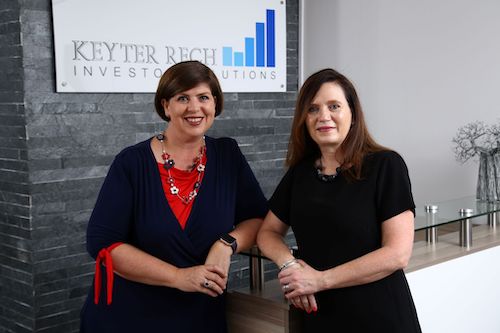
Marlize Keyter and Vanessa Ingram, Keyter Rech Investor Solutions.

ByDesign Communications and Keyter Rech Investor Solutions (KRIS) have formalised a strategic partnership to provide both listed and unlisted companies with integrated and efficient investor relations solutions. The formalised partnership will focus on delivering end-to-end strategic investor communications services.

These include:

– ESG gap analysis and reporting.
– Investment case development.
– Annual General Meeting positioning and Integrated Report writing.
– Shareholder analysis, targeting, and engagement.
– Strategic messaging creation and measurement.

This partnership between the two firms in their respective fields builds on a longstanding collaboration, and is aimed at deepening their services to existing clients and expanding their collective reach across South Africa’s corporate landscape.

With more than two decades of industry expertise between its two founding members, ByDesign brings a highly specialised skillset to the partnership – that of a full-service communications and public relations firm with a track record of partnering with businesses on critical issues and packaging complex messaging into actionable, impactful communications strategies.

With the same degree of combined high-level experience, KRIS has an established reputation for guiding companies through the complexities of investor relations, shareholder engagement, market perception, as well as compliance with various legislation. With its deep understanding of the JSE-listed environment, the firm is known for providing independent investor relations and strategic investor communication services.

‘This partnership is the natural evolution of a relationship that has provided significant value to our clients over the course of many years,’ said Vanessa Baard, Co-founder of ByDesign. ‘KRIS brings precision, insight and credibility in the investor relations space and, together, we offer a unique blend of financial and strategic communications experience and delivery. We believe there is real value in aligning strategy, messaging, and execution across the entire stakeholder landscape, especially in today’s complex, highly regulated environment.’

‘We have always taken a long-term view of our relationships with clients, and that is something we share with ByDesign,’ said Vanessa Ingram, Partner at KRIS. ‘This partnership allows us to combine our skills to help companies connect meaningfully with shareholders, analysts, employees, and other stakeholders. It is about identifying a need, crafting the right message, and making sure it lands with the right audience at the right time.’

Kevin Welman and Vanessa Baard, ByDesign South Africa.

Over the years, the two firms have collaborated on mandates across multiple sectors, supporting their clients with developing compelling investment cases, improving transparency, and building trust with their key stakeholders, among other critical aspects.

‘Our clients do not need more noise; they need clarity, credibility and results. While the two agencies will continue to operate independently, it’s through a combination of skills and experience that this partnership will bring together deep investor relations expertise and strategic communication capability to help businesses navigate high-stakes moments, meet evolving stakeholder expectations, and communicate with purpose,’ concluded Baard.

BYDESIGN
www.bdcomms.co.za

URC Entrenches Itself As A Staple In South African Sports Viewing

URC Entrenches Itself As A Staple In South African Sports Viewing

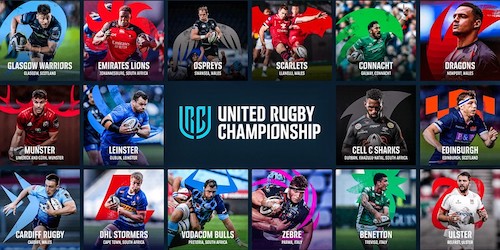
According to official data from Nielsen Sports SA, the total unique audience for the Vodacom United Rugby Championship (URC) season rose from 1.53 million in 2023/2024 to more than 2.4 million in 2024/2025. That marks a 57 percent year-on-year increase, driven by both higher live viewership and a growing number of secondary platform viewers.

This increase was sustained across the season. The average unique audience per live match jumped by 69 percent, from just over 1.2 million to more than 2 million viewers, which are notable figures as they highlight consistent engagement rather than one-off peaks.

While many matches delivered impressive numbers, it was the much-anticipated Bulls vs Sharks semi-final that captivated the nation. The all-South African clash between two iconic franchises resonated across provinces, resulting in one of the highest recorded viewership figures for a URC match in the 2025 season. This fixture powerfully illustrated the commercial and cultural value of local rivalries, which continue to drive the league’s popularity within the country.

Beyond reach, overall consumption time also climbed significantly. The total number of minutes watched, combining live and secondary broadcasts, grew from 18.5 million to nearly 24.8 million: a 34 percent increase. Live consumption rose by 32 percent, while viewing on secondary platforms increased by 42 percent. This reflects broader interest and a significant shift in how and when fans engage with the game across multiple formats.

The season also saw an increase in broadcast exposure, with total airtime rising from 2096 hours to 2255 hours. This expansion, alongside improved scheduling and greater platform accessibility, gave supporters more consistent opportunities to follow their teams throughout the competition.

South Africa’s growing presence in the URC has been a point of pride in the league’s evolution since local teams joined the competition in 2021. As their performance on the field has grown more competitive, so has interest off the field, especially among younger and more digitally engaged audiences.

The growth in secondary audience numbers, which rose from 103,178 to 128,272, reflects this shift and suggests opportunities for even broader audience development in the seasons ahead.

‘The URC is a rapidly growing tradition in SA sports culture,’ said Duncan Stead, Commercial Manager at Nielsen Sports SA. ‘The competition puts South Africa’s regional and national pride on display, all in one place. Combined with strategic scheduling and strong promotion across platforms, the URC has now entrenched itself as a staple in South African sports viewing, which makes it pure gold for participating sponsors and advertisers.’

‘The numbers speak to the emotional investment of South African audiences, who continue to support teams that represent their regions, their histories and their ambitions. From the die-hard Capetonians behind the Stormers to the dedicated Bulls fans dominating Gauteng, there is no doubt that South Africa has taken ownership of URC.’

NIELSEN SPORTS
https://nielsensports.com/

This is Modern Marketing