
Home Blog Page 354

Malls Should Make In-Store Shopping As Convenient As Online Shopping

Shopping malls must innovate, reinvent their spaces and connect with shoppers in ever deeper ways if they want to avoid becoming casualties of technology and the internet, as consumers increasingly seek out greater shopping convenience.

This is the view of technology experts such as tour guide to the future, Pieter Geldenhuys, of the Institute for Technology, Strategy and Innovation who works closely with the London Business School and The Fuqua School of Business at Duke University in North Carolina.

Imagine it is the festive season shopping frenzy and you are sitting comfortably, sipping on a steamy latte and shopping up a storm on your tablet at your favourite local restaurant, inside your favourite shopping mall.

Fortunately, although the rest of the mall is in the throngs of festive shopping chaos, here you are, shopping quietly while you dine, comparing prices, choosing your goods and clicking ‘pay’. The goods, some of them discounted because you used the mall app to shop, will be delivered to your home or be ready for you to collect immediately after your leisurely lunch.

Sounds too good to be true? Well, not exactly. Especially if shopping malls want to ensure they survive and thrive as the coming tsunami of technological advances, dubbed Industry 4.0, sweeps across every area of commerce, from the factory floor to point of sales.

Geldenhuys paints both a thrilling and daunting picture for shopping malls, faced with the option of either embracing technology and all it can offer to connect with consumers in ever deeper ways, or turning away and later facing the reality of a total metamorphosis and even closure.

The primary purpose of a mall was to make it easier for individuals to find goods under one roof, it was a convenient culture, and everyone went there. But now a number of these products are available on the Internet where the cost of an online store is now cheaper than a traditional store. Even if there is a 20% drop in spending in a mall, it can take it into a negative space.

When South African consumers shop online, the most popular goods that are browsed to compare for price and convenient delivery include computers and electronic goods. Small technological items are not favoured in malls but this does not mean the mall is dying. However, we have to realise online shopping will have an impact on malls.

Most at risk of facing redundancy are middle-sized malls, he says, while mega-malls with large entertainment complexes, offering consumer experiences and small local malls that house pharmacies and supermarkets, are most likely to continue thriving. Malls should make shopping convenient, similar to the online experience. For example, if a consumer goes to a mall and a store doesn’t have the shoe size, can they deliver it to the consumer’s house from another store?

But apart from the threat of online shopping, malls need to embrace technology to drive brands and to retain and attract consumers. Face recognition technology, he says, can be used to recognise consumers via CCTV cameras as they step into a mall. Based on a person’s digital twin – which reflects their online behaviour patterns – personalised adverts can be directly marketed to the consumer via the mall’s app on their mobile phone. For example, an outdoor or sporty person can be targeted with special discounts on camping equipment and sports gear.

Artificial Intelligence helps us learn the patterns of behaviour, such as how changes in the weather leads to changes in spending patterns. For example, when it rains, we sell more pancakes. Machine learning is uncovering society’s hidden complex patterns.

We are aware that everything done on a smartphone and the Internet leaves a digital footprint. We need to be aware of inherent patterns hidden in social interaction. And malls need to look at the digital twin to understand core customer needs and what will attract different personality types.

The question is how do we create new ideas to drive experimentation and identify the type of people coming into our malls? Some malls are more laid-back, some more hi-tech. Discover the archetype of your customer base and then use commercial tools to create a personality or brand archetypes around your mall and attract those personalities.

Malls need to reinvent themselves to become entertainment destinations if they are to survive and thrive in future. Malls and tenants also need to share data and a common vision to improve their chances of survival. Geldenhuys believes the USA provides useful lessons. If we follow what the US has done, we might see some malls literally shutting down and some online stores might use these malls as a retail space.

Futurist Doug Stephens of the Canadian based retail industry consultancy, Retail Prophet said, ‘If we go back 30 years, the first stop for the typical shopper…was in many cases the shopping centre, which was like an analogue version of the Internet with organised and catalogued brands. But today that fundamental truth is no longer. Consumers are not turning to the local mall, they are going online.’

When consumers in North America decide they need something, 66% of them first go online and Amazon has become the default search engine for shopping. There are some exceptions. Shopping centres in the Middle East are doing well because of the environment – people need shopping centres to escape the heat. The object of shopping centres is to create an environment where consumers can spend their time wisely. There will be a transition whereby the shopping centre evolves into more of an entertainment and lifestyle centre as opposed to a retail shopping centre.

In the US some 28 major retailers are currently facing bankruptcy and Stephens believes the days of malls with hundreds of retail stores are numbered. We are going to see the percentage of retailers in shopping centres decline. Most brands, retailers and shops in the high street were constructed before the Internet, well before 1995. In a post Internet world, do we need shopping centres with 409 stores?

Retail stores which comprise around 70% of mall space, could in future decline to 30% as malls transition to offering more entertainment and experiences to consumers. A thousand years ago the primary meeting place for information and to socialise, was the market in the centre of a town or city. In the modern age, we still need to socialise and connect.

It is debatable whether we need it the way it is. One hundred years from now we are still going to want and need community spaces, but they are going to be very different places – we simply don’t need as many shopping centres. But Stephens believes the malls that will survive can turn over greater profits in future by tweaking their business models.

Traditionally, brands have gone to the marketplace and bought media to drive people to retail distribution but the shift that is important for brands to understand, especially in SA which is in the early days, is that media is becoming the store.

When consumers consider a purchase, the first step is connecting with media like a smartphone, laptop or Instagram. But it’s important to remember that the corollary is also true. Stores are becoming media and very powerful media when they get it right.

Future shopping malls should be viewed as media channels that can capitalise on their millions of consumer visits every year. In SA, online rental is growing at 15% per year, which means there has to be some correlating decline in physical retail. And if we continue to drive revenue on square metres, we have declining value. But if we look at stores as a media property and value it, then you can make more money.

Only time will tell how the survival game pans out. But, considering the opinions of many analysts, malls need to evolve with the exponential development of technology-driven markets.

This article was sourced from www.sacsc.co.za

Communication Strategies For Times Of Crisis

Sandra Gordon, CEO of Stone Soup PR.

According to Sandra Gordon, CEO of Stone Soup PR, any crisis calls for strong leadership, delivered with clear, concise communications. Failure to address the many communications issues related to a crisis only deepens misunderstanding and fear and creates further havoc.

President Cyril Ramaphosa stepped up to the plate when he announced COVID-19 a national disaster. His comprehensive speech allayed the country’s fears and had South Africans overlooking the fact that he’d kept us on tenterhooks for hours awaiting its delivery.

This means now is the time for business leaders and institutional and organisational heads to follow the President in stepping up and notifying their employees, clients and stakeholders of their intent to deal with this crisis. 

The impact of the virus is already felt, even in countries with low infection and mortality rates. Every industry and walk of life is impacted by the social distancing to negate the effects of this global pandemic. This places the media and communications industries front of line in delivering relevant, factual information that encourages cooperation in warding off the worst effects of this global crisis.

Strategise your course of action, and communicate that clearly to your team, your clients, and relevant stakeholders. Leverage the power of digital wherever possible to keep your brand relevant and top of mind, and seek solutions to overcome any existing hurdles. 

Gordon’s communications strategy in five steps:

  • Identify issues that will affect your company, brand, product or service.
  • Identify and nominate a relevant spokesperson who will convey your message concisely.
  • Establish a user-friendly communication channel – and keep it jargon-free.
  • Listen to feedback – and respond timeously to complaints and suggestions.
  • Consistency, too, is key – keep stakeholders abreast of updates and changes, regularly.

Finally, where needed, utilise the power of Public Relations to get your message out.

STONE SOUP PR
+27114477241
sgordon@stonesoup.co.za
stonesoup.co.za

Proofing Your Website To Attract Customers During The Recession

Saskia Schuldig from 1-grid states that the 2020 budget speech raised concerns for various sectors upon the announcement of South Africa’s third recession since 1994.

According to Statistics SA, the economy contracted by 0.8% in the third quarter and 1.4% in the fourth-quarter of 2019. Various businesses may feel the pressure of success; profitability and satisfied employees. Statistics SA noted that businesses in the Transport and Communications; Construction; Agriculture; Manufacturing and Electricity and Gas supply sectors will particularly feel the pinch.

In a state of recession, businesses are required to be agile and make nimble moves. Generally, the first decision made is to ‘budget cut’. The victims of these cuts are almost inevitably those occupying marketing or advertising roles. We however urge companies to continue their online marketing and advertising efforts as per normal.

Thomas Vollrath, CEO of 1-grid states that our sector has seen growth each time that SA has endured a recession and this is due to the fact that small businesses, with or without a digital footprint, are seeking to develop an online presence that will enable them to have higher reach, be more competitive and look professional.

Think about these three things: being frugal, visibility and investment. Your customers are trying to be frugal, just like you. Therefore, their research to find the best deals online will be more extensive. If you reduce your communication efforts, chances are your sales will be impacted.

Keep reminding your customers that you are there. The more visible you are to your customer, the more brand recall you create. This, in turn, will result in customers turning to you for need satisfaction.

Customers are investments to your business because they provide you with valuable data. Market research in a time of a recession will assist you in developing the most appropriate solutions for your customer.

Vollrath said the first online marketing tool you should focus on is your website as this is where your customers will turn when in search of information. Here are a few ways to ensure that you have a ‘recession-proof’ website that will attract your customers:

Enhance your website content

Keep your website content fresh and ensure that it provides enough information for the reader to understand your business and the need that you satisfy. Catering to these fundamentals are paramount to building a strong relationship with your visitors and potential customers. Dedicating the time here isn’t easy, so consider outsourcing this essential requirement to a professional web design agency. 

Omnichannel marketing

Direct customers from your additional marketing and advertising efforts to your website. Social media marketing can drive your customers to your website but you want this to be a seamlessly integrated experience for the user.

User experience

Monitor how users interact with your website – simplicity and ease of use should be fundamental to the overall layout and goals you want to achieve. By using sound user experience (UX) practices, you can make your website easier to navigate. Provide your users with clear call-to-actions and concise information on your offerings.

Call to Action (CTA)

A CTA encourages your customer to perform an action on your site. Prompt customers to browse freely by providing them with CTA’s. These will improve the overall interactions on your websites as customers are selecting where they want to be.  

Online contact forms

Keep your forms short and simple, this will encourage users to complete them. Eliminate the unnecessary requests of information, you can get that from the customer once you have contacted them. And please, contact the customer.  

Reviews and testimonials

Reassure the stability you provide to customers and prove your trustworthiness to them. Include customer testimonials on your website to motivate new customers as to why they should choose you instead of your competitor.  

Infographics

Infographics provide customers with a large amount of information in one place. If your business requires explanation, use infographics to engage with your customers.  

Blog

Blogs can create a conversational tone with your customer about topics of interest. These include non-product related topics that your customers want to read. It is important to humanise your brand. If you can’t relate to your customer, why would they choose your brand over your competition? 

1 GRID.COM
saskia.schuldig@1-grid.com
1-grid.com

Modern Marketing COVID-19 Response

It is crucial that events around the globe are cancelled or postponed to slow down the spread of COVID-19. The following events have taken these steps, Nedbank IMC 2020, Prism Awards 2020, Cannes Lions International Festival of Creativity, American Association of Advertising Agencies and Advertising Week Europe to name a few. Despite the economic costs involved in this decision, the health and safety of staff, exhibitors and visitors is critical.

The following expos are affected by the South African Government Lockdown:

• Cape Town Expo – cancelled.
• Eastgate Pop-Up Expo – postponed.
• East London – cancelled.

The Johannesburg Modern Marketing expo, scheduled for 9-11 September 2020 at the Gallagher Convention Centre, will remain unchanged. 

We would like to reassure you that in response to the COVID-19 outbreak, we are taking all the necessary steps to ensure that we remain fully operational, without compromising the health of our staff, their families and the community at large. 

We have an extensive media offering ensuring maximum exposure to the marketplace for our customers during this period. With our online reach, we can communicate instantly to the marketplace and keep our readers informed of the news and offers from suppliers. We too will be offering online product showcases with live audiences so one can demonstrate your products and speak directly to the thousands of industry professionals that follow Modern Marketing. 

We look forward to engaging with you on all these media options and look forward to working on campaigns to continue great product exposure.

MODERN MARKETING EXPO 
+27114501650  
info@modernmarketing.co.za
www.modernmarketingexpo.co.za

Industry Interview: Neo Mashigo On Creativity As A Force For Good And Changing How The World Sees Africa

Neo Mashigo Chief Creative Officer of the M&C Saatchi Group.

Neo Mashigo, Chief Creative Officer of the M&C Saatchi Group, is very humbled to have received the 2019 AdFocus Industry Leader of the Year award. Such recognition is what continues to drive and show him that his efforts resonate with that of the industry.

Early life

On Saturdays, Mashigo attended a school where he learnt about drama and creative writing. He loved the arts and being creative but had his mind set on becoming a lawyer. He was always told that if he studied the arts he would be poor – and that’s not the life he intended living.

When he left university, he worked at a company that researched adverts mainly targeting black consumers. ‘I always felt like they were getting it wrong and that I would have done it differently. The research proved me right, and this planted a seed,’ he said.

A while later, the Creative Directors Forum put an ad in the newspaper calling for those who thought they would be great at advertising to apply for a programme. Mashigo was selected and placed in an accelerated programme as a copywriter at Net#work BBDO. His career has included serving as ECD at both Ogilvy & Mather Johannesburg and FCB Joburg. He joined M&C Saatchi Abel in 2017 as a Creative Partner and a year later was promoted to Chief Creative Officer. He has been in the advertising industry for almost 20 years.

What do you enjoy most about working in the industry?

‘I love creativity – it holds the keys to be a force for good and a force for change. I enjoy challenging the way things are being done, and being part of incredible, authentic campaigns that resonate with people. Being part of changing advertising that previously missed the mark has been a privilege.’

Mashigo said this is one of the areas where M&C Saatchi Abel resonates with him. ‘As a company, they decided that they were not going to be boxed into traditional agency spaces. They are in the business of creativity and ideas and so they actively seek out innovative, creative opportunities – such as the Nelson Mandela Tower of Light landmark in Nelson Mandela Bay. This 27-storey glass building will be incredible! It is exciting and shows that the only limitation, really, is yourself and what you give yourself permission to pursue.’

Industry changes

‘In the past, for a piece of work from Africa to win an award, it needed to portray Africa in a way that would make white male judges on the award committee feel sad or guilty. It sounds harsh, but it’s true. In other words, it would show a child suffering from malaria or starvation or walking ten miles for a small amount of water. This didn’t work for me, and so I decided to be part of the change. I knew that I would focus my work on authentic creativity – stuff that really resonated with the audience and South Africans. Eventually, as time went on, this kind of work started winning awards – look at Nando’s. This is an authentic voice.’

Mashigo said that with a largely saturated white audience, clients want to target black consumers. ‘The nuances required for authenticity are lost in an all-white team from creatives to production. The industry is still not transformed to the point of where it should be, but young and gifted black creatives are making their way up the ranks.’

2019 industry trends

‘The key, certainly from an M&C Saatchi Abel perspective, is a razor-sharp focus and that means always keeping creativity front and centre.’ He stated that this also means that ideally, the advertising industry wants to avoid chasing the latest big things for the sake of razzle-dazzle. ‘As Founding Partner and CEO Mike Abel wrote recently, ‘a jack-in-the-box will only wow you once’. The overwhelming drive and impulse has to be finding the most brutally simple answers. This kind of focus – that puts creativity at the forefront – will take us to exciting places in 2020.’

Keys to success

‘A strong work ethic and authenticity – at the end of the day we are telling stories that need to resonate with people. You have to trust your instinct, do your research and embrace creativity. Just because something feels uncomfortable, that doesn’t make it wrong. Allow yourself to be challenged. Believe in what you do and lay a solid foundation from which to convince people to believe in something big. Work very hard and enjoy the journey of seeing it come to fruition.’

Favourite project and advice for creating successful campaigns

‘I’ve been privileged to have worked on a number of award-winning campaigns such as  Nando’s #RightMyName, which picked up a Grand Prix Loerie award in 2018, as well as work for Takealot Group, Standard Bank, MWEB and Lexus.’

Mashigo really enjoyed the Nando’s Right My Name campaign. ‘It is authentic. With my surname, for instance – a red line appears under it each time I type it on a device (as if it is a spelling mistake). My name is not a mistake! Black people have been accustomed to this, and it involves how we are seen and how we see ourselves. And so, the Right My Name campaign set out to set the record straight by creating an app that allowed your computer to recognise your name. This campaign resonated with South Africans. In South Africa, Nando’s is the voice of the people.’

According to Mashigo, the keys to creating successful campaigns are: authenticity, honesty, research, embracing diversity, trust (you need to sell an idea), resilience, investment in the best talent and perseverance.

Other interests

Mashigo co-founded production company I See A Different You, which he is very passionate about. ‘We set out to change how the world sees Africa; how we are perceived. We wanted to take ownership of our own stories. The reception has been amazing – because there is still a need for this, and the advertising industry can take note. While we live in a democratic country, there is still a need to undo the generations of separation that has determined how some people and places, like Soweto, are perceived.’

M&C SAATCHI ABEL 
+27112686388
mimi.dube@mcsaatchiabel.co.za
www.mcsaatchiabel.co.za

What Sets Omnichannel Marketing Apart?

Richard Mullins, director for Europe, Middle East & Africa at Acceleration, says cross-channel marketing simply means continuing engagement with a customer or prospect in a different channel to the one in which the brand first encountered them.

For example, an ecommerce store can send a remarketing email to a registered user on its website who searched for a television model, but then did not purchase it. For around a decade, marketers and marketing technology providers have talked about the dream of an omnichannel approach to marketing. But to date, even the most sophisticated brands have managed, at best, to put in place cross-channel or multichannel marketing strategies and infrastructure, and true omnichannel marketing has remained elusive.

Most companies are already doing some cross-channel marketing across channel pairs such as search and display, email and social, or email and the web. Some have graduated to the next level, which is multichannel marketing, which involves following the customer journey across more than two channels.   

For example, an end-user might research banking account options via Google, click on a display ad on a social platform, convert on the bank’s website, and then receive retention and cross-selling messages via email. In this example, the customer journey follows a linear path from awareness to consideration to conversion and retention.

As often as the word ‘omnichannel’ is bandied about, there are few brands – if any – that have reached this stage in the evolution of their digital marketing platforms and strategies.

Omnichannel – complex, non-linear engagements

What sets omnichannel marketing apart is that it is not built on the assumption of a linear customer journey from one channel to the next as the person moves closer to conversion. Instead, it allows for any channel – search, social, display, email, mobile apps and more – to play a role in engaging with the customer at any stage of the customer journey.

At each touchpoint, users receive a marketing message tailored to their stage in the customer life journey, and potentially personalised according to any behavioural insights or demographic data the brand has about them. In theory, this is extremely powerful; in practice, it’s fiendishly complex and expensive to achieve. 

The first challenge is to access the up-to-the-second data across a range of first-party and third-party platforms that the brand needs to recognise a user and understand where they are in the customer journey. The second is to tailor the messaging and content to ensure it is relevant to users and their stage in their journey. 

Addressing these challenges demands significant investment in people, process and technology. The brand needs an architecture that enables it to orchestrate collection and management of data across multiple platforms in real time. It needs tools that enable it to use this data to trigger ‘next best actions’ when a customer engages with it across a channel or platform. 

It also needs solutions that enable it to identify customers across all channels, so that it can tailor its messages to their needs. Then, there’s the cost and complexity of customising and activating messages and assets for each channel, customer segmentation profile and stage of the customer journey. These variables could add up to thousands of pieces of content, depending on the level of personalisation a brand wishes to offer.  

While there are tools that automate the process of creating, managing, delivering, repurposing and optimising content across channels for different customer profiles and preferences, using them effectively takes a great deal of upfront thought and effort. Many components of these tools are only just beginning to mature – for example, Artificial Intelligence and machine learning. 

Even as the marketing solutions become smarter and better at delivering the most relevant experience for each customer in meaningful, memorable ways; skills, data quality and organisational issues remain as daunting as the technical challenges. To make the transition towards omnichannel platforms and strategies that allow for personalised marketing at scale, marketers need to focus on getting the right people and processes in place.

They should also take a hard look at how digital marketing investments – including technology and people – affect marketing costs and return on investment. The complexity means that the journey towards omnichannel marketing will be long – but those that start moving in this direction today will be best positioned to deliver personalised marketing at scale in the years to come.

ACCELERATION
+27 11 267 0700
acceleration.biz

2020 Prism Awards Cancelled Due To COVID-19

The awards committee alongside the Public Relations Institute of Southern Africa (PRISA) have taken the decision to cancel the 2020 Prism Awards event, amid concerns of the increasing impact of the Coronavirus in the country.

Palesa Madumo, Prism Awards convenor said, ‘We have been monitoring the developments around the virus closely over the last few weeks and we were aware that a cancellation of the awards was a possibility. We acknowledge that the PR and communication industry at large will be disappointed, however, this decision has been taken with their health and safety in mind.’

The Prism committee will be in contact with all individuals, agencies and organisations that have entered the 2020 awards and additional information will be shared with them in due course.

Refunds will be given to all those who have purchased tickets, please contact Louise Struwig on louise@prisa.co.za should you have any questions relating to the refund.

‘We are considering a number of options to still ensure that entrants and the ultimate winners of the awards are acknowledged and celebrated. We will make this information available once finalised,’ concluded Madumo.

PRISM AWARDS
prism-awards.co.za

The Evolving Retail Consumer

According to the South African Council of Shopping Centres (SACSC), we must create products and experiences with and for specific consumer audiences if we want them to become loyal customers.

Gone are the days when we could say, ‘Advertise it and they will come’. That’s because consumer behaviour has undergone a huge transformation in an incredibly short period of time, as part of an evolution that continues to exert a profound impact on shopping and retail trends and relationships.

Yes – that’s largely down to the internet. But remember that, in South Africa, consumers don’t view shopping options as either/or. They take a hybrid approach, partly as a function of the accessibility of mobile solutions in a country where data remains exceptionally expensive.

Metamorphosis

A wise man once said that the progression of any institution, including the retail industry, ‘is linked to the progression of the economic and social system’. In other words, retail is at the mercy of economic and social forces and it must constantly adapt if it intends to win and keep customers.

But it was 1939 when he said it. And the wise man was Professor NSB Gras of
Harvard Business School, the inventor of the discipline of Business History. Today, 80 years later, Prof. Gras is perhaps more correct than ever – because we’ve watched the consumer metamorphose over the last decade from a complacent instore browser to a manic researcher who’s ravenous for responsive retail and expects the ultimate customer experience.

So, what has changed? What did the consumer caterpillar look like a decade ago, and what developments have created today’s virtual-basket-toting butterfly?

11 years ago in 2009, Twitter conquered the world, according to many analysts. But it
wasn’t the only social media company to do so. Facebook grew even more rapidly, adding 200 million new users and raising $200 million dollars.

By 2009, Amazon had moved beyond being a book-seller to trading in groceries and music too, and the iPhone had reached its third generation. But back in those days, particularly in South Africa, the way consumers shopped for products was very different to the way they shop today.

They trusted brick-and-mortar stores above all else. They didn’t have access to widespread price comparisons. And they found themselves at the mercy of large companies and seasonal sales if they wanted discounts.

It took three primary paradigm shifts, including the emergence of technologies and platforms like Facebook, Amazon and smartphones, to make consumers into the creatures they are today: Deloitte’s ‘consumers-in-chief’. The starting point is commonly referred to as ‘The First Moment of Truth’. This is how, in the early 2000s, marketers at Procter & Gamble referred to shopping behaviour at the point of purchase.

Theirs was a linear, retail-focused model, which accurately captured the consumer’s decision process when buying a product (First Moment of Truth), experiencing a product (Second Moment of Truth), and eventually becoming loyal to the brand. But soon shift number one happened.

The connected consumer and the Zero Moment of Truth (ZMOT)

With access to smartphones and the internet enabling shoppers to go beyond
the shelf when evaluating a product, they became ‘connected consumers’. The internet disrupted the essential mission of retail – product, place, price and time – because it could (arguably) deliver on all of them. Consumers demanded the ability to engage with brands at will, no matter where they were. Companies responded by investing in e-commerce, moving into social media and mobile, and providing the first heady tastes of ‘omnichannel’: shopping anytime, anywhere and any way we want to.

Therefore, when consumers needed something – say, razor blades – they
wouldn’t go to the shops to buy them. They’d go online to search for ‘the best razor blades’. And that’s the Zero Moment of Truth: when digital channels – social media and search – influence the customer decision journey. The ZMOT signalled a significant pivot in marketing, by encouraging companies to begin search engine optimisation and search engine marketing.

But then, shift number 2 happened:

The empowered consumer and McKinsey’s Consumer Decision Funnel

A new model popularised by McKinsey & Company gave marketers a more relevant
way to think about the customer journey. It had begun as a sales funnel, around the same time as the ZMOT, with the consumer moving linearly through awareness, familiarity, consideration, purchase and loyalty. But then the ‘empowered consumer’ emerged, straying from old-fashioned shopping to their own path to purchase.

The empowered consumer needed a more iterative decision process, and so McKinsey presented the loop model, instead of the usual straight-line approach from awareness through purchase to loyalty. The empowered consumer hopped between different stages of the funnel, and between multiple companies.

This article was sourced from www.sacsc.co.za

Rocket Creative Launches New Website

Rocket Creative Design & Display has launched a new website that keeps customers up to date and is fast and user-friendly.

Managing Director and Head Creative, Richard Nilson said, ‘To remain at the forefront of product innovation, our range of products grows continuously. Every day we originate and roll out new products across all product categories, which become vital to our clients.’

‘Our advanced search algorithm can now match any client with the perfect product. We have revamped our categories and made it easier than ever to explore and select our products. Combine all of this with a new and intuitive design, and you will see why we are so excited. We originate all of our products right here at home in Johannesburg and support the local supplier economy – all original quality product, no import delays, no stock issues, and in any volumes you need for your campaign roll-out or branding exercise,’ said Nilson.

ROCKET CREATIVE
+27112624698
hello@rocketcreative.co.za
rocketcreative.co.za

PRC And BRC Give Media Planners Access To Household Statuses

The Publisher Research Council (PRC) and Broadcast Research Council (BRC) have opened up access to its Socio-Economic Measure (SEM) to allow media planners to give clients a stable picture of a household’s status.

Until now, planners haven’t been able to access the actual scorecard or calculators needed to ‘get under the hood and really understand the SEM’s workings,’ said Peter Langschmidt, lead consultant to the PRC. 

Prior to this, the PRC would deliver a presentation, remove the score sheet and slide, then send users a 19-page contract to sign first. The unwieldy process could take weeks to finalise, thus leading to a loss of momentum. ‘This is a great step forward in ensuring the take-up and ease of use of the SEM,’ said the PRC’s CEO, Josephine Buys.

Because the score sheet is no longer secret, and the SEM is open source, the PRC has already added tools such as the SEM calculator to its website. It indicates how South Africans live based on what they have access to in and near their homes. The addition of tools such as this form part of a more extensive plan to educate and share learnings with users. 

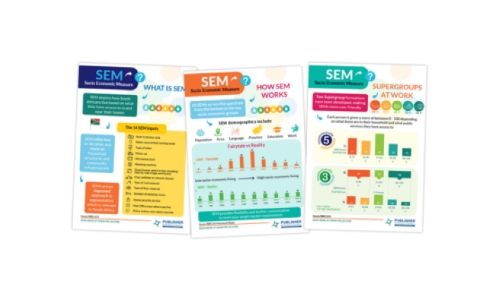
The Broadcast Research Council of South Africa now hosts a dropdown menu featuring a downloadable SEM user guide, while the PRC itself has created a series of infographics to enable further understanding of the SEM. 

SEM provides marketers with a balanced and real targeting tool when it comes to income, lifestyle, race, geography and much more. Ensuring increased access will allow marketers to re-orientate and reboot their thinking around South Africa’s population.

PUBLISHER RESEARCH COUNCIL 
www.prc.za.com/pams
This is Modern Marketing