Home Blog Page 304

McCann1886 Wins Multiple Brand Accounts

McCann1886 Wins Multiple Accounts
McCann1886 logo

McCann1886’s new client brands include South African Digital Villages – a telecommunications operator and internet service provider – Tiger Wheel & Tyre, REBA and a number of new products in the healthcare sector.

‘It is exceptionally gratifying – and an affirmation of our team’s strategic and creative prowess – to be able to start the new year with a brace of new brands to work on – especially given how tough 2020 was,’ said Managing Director, Derek Coles. ‘We are excited to return to work and fulfil our new and existing client briefs in spectacular fashion in 2021.’

MCCANN AFRICA
(+27 11) 566 6000
https://www.facebook.com/mccann1886/

Grey Group Appoints Creative Director

Grey Group Appoints Creative Director
Marcus Moshapalo, new creative director at Grey Group.

Grey Group has appointed Marcus Moshapalo as its new creative director. Moshapalo comes from an illustrious career as a director, creator and curator of youth culture.

Moshapalo started at FCB Global, where he worked on accounts such as Vodacom, Toyota Motor Corporation, Lexus, SC Johnson, SABC 1 and Tiger Brands. Other highlights include: FNB South Africa, McDonald’s, MTN Africa, Honda Motor Southern Africa and Unilever at DDB.

At TBWA\Worldwide, he worked on Standard Bank Group, Nissan Motor Corporation, Steers and some more Tiger Brands. In 2013, he joined Ogilvy Johannesburg, where he was creative lead on the 2014 ANC election campaign. He also did some work on Cell C, Hollard Insurance and DStv.

At M&C Saatchi Abel, he worked as a creative director on brands such as Nando’s South Africa, Windhoek, Tafel, Willards, Bakers, Nedbank and the South African Revenue Service (Sars).

At Grey Group, Moshapalo will lead the creative charge in the WPP #LIQUID team on Hunter’s Cider and Viceroy and promises to bring a blend of manic energy, keen insight and a deft craft hand to the mix.

GREY JHB
www.grey.co.za

Marketers Should Embrace The Inclusion Revolution

Marketers Should Embrace The ‘Inclusion Revolution'
Nicky Brand, Senior Business Consultant at Acceleration.

Nicky Brand, Senior Business Consultant at Acceleration, a Wunderman Thompson company, says given that 70% of consumers prefer to buy from brands that are inclusive, marketers are embracing the ‘inclusion revolution’ by means of ad campaigns, social content and CSI initiatives.

While this helps normalise disability, very few organisations are engaged in evolving their products or business strategy with inclusivity in mind. In a world that is becoming more digitised by the day, organisations should have more data and more insights into their customer needs than ever before.

This should suggest that those with impairments should be more enabled than before, particularly when it comes to communication. There are an estimated 1 billion people, or 15% of the world’s population, living with disabilities.

Here are some examples of brands that can be seen to be successfully designing for inclusivity:

– The Eone Bradley timepiece – tell time by touch or sight.
– The Under Armour MagZip designed for foolproof zipping, even with one hand.
– Tommy Hilfiger’s adaptive clothing ranges include clothes with one-handed zips, extended openings, adjustable waists and magnetic closures – all of which maintain the style of the brand. 

Yet the majority of websites are not currently designed for those with impairments and only 4% of organisations (US) are thinking about inclusive design in any regard. This valuable market segment has been left behind despite many of today’s technologies having been born out of innovations developed to support those with disabilities.

Examples of innovations that informed today’s technology include: 

– Touchscreens, sold to Apple, were originally designed for people with mobility issues and are now used on mobile devices everywhere.
– The electric toothbrush was designed to help those with limited motor skills to maintain dental health and are now used by millions for better cleaning.
– Closed captions were originally used for people with a hearing impairment and are now used for myriad of activities, from learning a new language to watching content with the sound off.

The above is evidence that designing for the few will not only ensure accessibility to those living with impairments, but also enhance the experience for the remaining population – delivering a truly inclusive experience.

As more products and organisations move online, full access to the internet should be seen as a right and not a privilege. Embracing the opportunity to serve those with impairments better should not be seen as just the right thing to do, but also fundamental to driving business growth. Smart organisations that leverage modern data and technology to deliver against this will surely see even greater returns on their investments.

‘Imagine the captive opportunity represented by a community of people who have spent their lives without companies or brands acknowledging their existence, much less creating products or advertising designed by or for them. Imagine that community’s potential for passionate loyalty to brands that get this right,’ said Joe Crump, President, Wunderman Thompson New York.

Before we delve into how inclusive design can benefit a brand, let us consider what it means in practice. It is not simply about ‘accessibility’, which often means trying to customise a product or experience designed for the able-bodied for the disabled community. Instead, it is about building things from the ground up to be truly usable by the largest number of people. 

Inclusive design benefits all  

Inclusive designs may lend concrete benefits to anyone who uses them. For example, a voice-powered assistant on a smart device can help someone with limited mobility or poor eyesight to get the latest news headlines from the web or switch their home lighting on and off. This functionality is also useful to someone without a disability.

Embracing inclusive design means that organisations need to look beyond the usual biases of their marketing, product and engineering teams. They should ideally tap into diverse perspectives, people from different demographic groups, income levels and differently-abled people to understand how a wide range of consumers will use the product or service.  

This will help the organisation to build solutions that focus on what is universally important to most humans. A solution for someone who can’t hear or see might improve the lives of those who can. Self-driving cars, for instance, could enhance the mobility of blind people in the not-too-distant future and make travel safer for everyone else, too.

‘Exclusion and inclusion are a series of choices designers make every day. Period,’ said Kat Holmes, author, Mismatched. Embracing inclusive design might be challenging for organisations with legacy products and services. A good place to start is by understanding the target audience and their needs, followed by an accessibility audit to see whether existing products and touchpoints are easy for all customers to use. An analysis of the consumer journey will reveal areas to be optimised that improve the experience for all customers. 

Getting the right perspectives

The next step might be the development of an inclusive experience framework. This will help anyone in the business designing products or experiences to create optimised journeys for everyone who interacts with your brand.

It is important to include the perspectives of disabled people when building your teams or conducting user research. You should include your target audience within the design process via methods like design thinking. A powerful technique is to host inclusive design workshops, where people living with disabilities explain how everyone can help execute on the strategy.

‘The key to inclusive design is working closely with excluded communities to create better solutions. Recognise who is most excluded from using a solution and then bring them into the heart of the design process. People who navigate mismatched interactions every day of their lives will bring ingenuity and deep expertise in how to solve those design challenges,’ said Holmes.

It is personal

A deeper understanding of customer needs and a better customer experience for all will make for a more satisfied customer base. Also consider how sophisticated data and marketing technology can be used not only to improve the customer experience, but to also tailor it to the specific needs of an individual customer.

Inclusivity is not just ethical and moral; it also drives business success. Not only are there opportunities to tap into underserved markets, but also to build better relationships with other customers. Friends and families of disabled people will think more of brands that show that they care, too. 

Brands that make the right moves in terms of inclusivity will drive customer trust, engagement and loyalty. Many customers are looking to businesses to show leadership when it comes to social justice and inclusivity today and will richly reward those that do.


ACCELERATION
+27 11 267 0700
acceleration.biz

Data Lies At The Heart Of Online Immersion

Data Lies At The Heart Of Online Immersion
Shaune Jordaan, CEO Hoorah Digital.

Shaune Jordaan, Hoorah Digital CEO, states that applying the right kind of data, as with technology in general, has the potential to streamline operational efficiencies and strengthen the quality of decision-making. It is critical that brands understand that data lies at the heart of online immersion.

When it comes to creativity in marketing, and advertising in particular, data takes the guesswork out of the equation. Rather than speculating about what a client needs or wants, or relying on the creative director’s ‘intuition’, data provides measurable insights into actual customer behaviour and preferences. 

After a year like 2020, ‘predicting’ anything about the future should probably come with a large disclaimer. In business though, this past year certainly separated the leaders from those merely paying lip service to trendy terms like agile, flexible, pivot and – the now cringe-worthy – ‘new normal’.   

Yes, 2020 was tough. But the optimists among us realised early on that the Covid-19 pandemic and associated lockdowns should be viewed as the ultimate opportunity to accelerate the transformation to digital. Increasingly, a digital strategy is becoming the only strategy. The impact of the coronavirus has also influenced just about every single one of our expectations around what is digitally possible, with our recent learnings prompting us to think very differently about our strategic planning for 2021 and beyond. And it is very exciting.

Data is (still) all the rage

Data remains a top priority in nearly every type of organisation. Importantly, it is not a trend as much as an element that is fundamental to a future-focused approach to doing business, no matter the industry. The efficient application of relevant data forms the bedrock of efficiency. 

Data allows for connection and personalisation. Despite all the buzz, data is simply information – about your clients, your products and your services, down to the smallest details. But that information, or data, is super powerful. It is also the resource that will set the average apart from the exceptional in years to come. 

Simply, data is information about people. And with people spending more time online than ever before, brands and businesses can leverage this unique opportunity to gather valuable information that will help them connect with their customers in new, relevant and very exciting ways. 

High five 

The impact of 5G is set to dramatically change the way we have experienced internet speed to date. Expected to be at least 100 times faster than 4G, the shift can be likened to the difference between a dial-up modem and fibre. Entertainment and communication will evolve to a point where engagement happens in real-time. As the roll-out of 5G continues, the boundaries of what is possible with online experiences – from entertainment to shopping, working, learning and more – will be pushed beyond what we can currently imagine. 

Video still victorious  

‘Video killed the radio star a long time ago, but in 2021 it will likely continue obliterating everything in its wake. Online video consumption shows no sign of slowing down as people become accustomed to having endless high-quality videos on tap’, according to this report. 

We are likely to see even more brands moving spend to video production and advertising. We are in the golden age of video and the best is yet to come. Businesses will do well in 2021 to make video a key part of their advertising and marketing strategy.

Into the future… and beyond 

Business survival in the 2020s and beyond is contingent on truly embracing and adopting a digital-first approach. This starts with elevating the strategic importance of the digital function within an organisation to much more than a nice-to-have. It should, rather, be an integral part of a systemic approach to business growth and performance enhancement.

Business leaders need to stay current with technology, data, creativity and its endless possibilities. Too many are operating in silos when what is needed is seamless, integrated solutions across not only marketing and advertising channels, but the entire business. We don’t know what we don’t know, which is why it is crucial for business leaders to commit to staying relevant by prioritising digital transformation.

Remember too that digital transformation is not limited to the tools and the technology, but references a holistic approach to business leadership that values innovation, solutions and a future-forward ethos. 

Businesses of the future will have to be fully prepared for the digitally-savvy customer, who expects brand communication to be personal, relevant, interesting and available – where, when and how they want it. If there is one thing that needs to be a strategic priority in 2021, it is planning to remain relevant in the context of rapidly-changing local and global demands. 

HOORAH DIGITAL
www.hoorahdigital.com

Brands Need To Impart Empathy, Authenticity And Transparency

Brands Need To Impart Empathy, Authenticity And Transparency
Angela Northover, Head of Content at Eclipse Communications.

According to Head of Content at Eclipse Communications, Angela Northover, consumers care now more than ever, and so should brands. Brands need to impart a sense of empathy, authenticity and transparency in all they do, and be attuned to why they exist and who they serve.

It is no secret that 2020 was one of the most challenging years in modern history. According to the Global Web Index’s Connecting the Dots 2021 Report, the Covid-19 pandemic was a baptism by fire for many brands, testing purpose-driven commitments to the limit in a time when consumers needed them the most. It forced brands to think and act differently, adapting to the changing consumer landscape to remain relevant, leading with action and social responsibility.

Reflecting on a challenging year 

From the global Covid-19 outbreak and bushfires in Australia to the Black Lives Matter crisis, 2020 saw its share of tribulations. In South Africa, there was a sharp focus on gender-based violence awareness and driving education accessibility during the lockdown. Brands that demonstrated sensitivity to these issues won customers’ votes of confidence and increased their share of voice.

What the numbers say

The Connecting the Dots 2021 Report reveals that brands exhibiting a commitment to social responsibility will attract the consumer of the now and future. Its research indicated that 56% of people surveyed wanted brands to focus on supporting people during the pandemic, and while the challenge will continue in 2021, it points to a permanent change in corporate social responsibility. Brands looking to grow need to align with consumer values in ways that are genuine and sustainable. Consumers want to see initiatives that transcend the odd donation or empty platitude and want to engage with brands that care and offer meaningful support. 

Deloitte’s 2021 Global Marketing Trends Report affirms that consumers expect more from brands they buy into, with almost four in five respondents surveyed able to cite a time a brand responded positively to the pandemic, and one in five strongly agree that it led to increased brand loyalty on their part. The report adds that more than 25% of respondents who noticed brands acting in their own self-interest walked away from those brands. Further, 58% could recall at least one brand that quickly pivoted to respond to their needs, with 82% saying this led to them doing more business with the brand. 

Leading with purpose

Pfizer South Africa

Underpinned by its brand position of Breakthroughs that change patients’ lives, Pfizer South Africa’s investment in Unjani Clinics have provided underserved local communities with the basic human right of affordable and accessible primary healthcare. Pfizer South Africa initiated the creation of six primary healthcare facilities, in turn creating jobs for local community members, empowering women nurses and entrepreneurs and enabling an affordable and accessible healthcare solution. 

Carling Black Label

During the national lockdown and the banning of alcohol sales, LifeLine received as many as 12,000 calls in March 2020 reporting instances of gender-based violence. A month later, the surge of calls increased by 500% to 80,000. Carling Black Label, hot on the heels of its highly successful #NoExcuse campaign, realised that many may not be able to call for help, initiated The Bravest Thing campaign, where users WhatsApped the word ‘Brave’ to 0800 150 150 and could start chatting to a bot. The bot would divert them based on their needs, which included dispatching emergency services or chatting to a counsellor. 

PepsiCo

Addressing the United Nations’ Sustainable Development Goal 6 on the access to clean water and sanitation for all, PepsiCo Foundation pledged R6 million towards the provision of affordable washing units in homes, handwashing stations and water-saving flush toilets to South African communities in need. With an initial goal of reaching 25 million people across the African continent by 2025, the Foundation has set a new target of reaching 100 million people by 2030 and remains focused on near-term efforts on water distribution, sanitation and hygiene. 

Isuzu Motors South Africa

Responding to farmers in need, the company, together with Farmers Assist South Africa, provided aid to farmers and farming communities in areas adversely affected by drought – transporting critical fodder, farming essentials and food – and thus ensuring ongoing food security for South Africa. 

Discovery Health and Vodacom

During the height of the Covid-19 pandemic in South Africa, these two companies implemented a virtual healthcare platform, which offered South Africans free access to reliable Covid-19-related information, risk screening and, when necessary, free online medical consultations. 

Burger King

Understanding the plight of the dwindling restaurant industry during the lockdown, Burger King UK unexpectedly urged customers to ‘Order from McDonalds’ on its social media platforms. Further, the post encouraged fans to order from other chains such as KFC, Subway and others – signalling that purchasing meals from these franchises would help them retain business during these trying times. To date, the single post garnered around 172,000 likes on Twitter. 

Airbnb and Telstra

Following the devastating Australian bushfires that tapered off in early 2020, Airbnb heeded the call of those displaced, activating its Open Homes Programme in New South Wales and Victoria. The initiative allowed hosts to offer accommodation to displaced residents and emergency services personnel deployed to assist with the fires. 

Further, the telecommunications company, Telstra, wrote off volunteer firefighters’ mobile phone bills for December 2019 and January 2020 to provide free services and ease the burden on those battling the fires. It provided relief packages to those in need, free payphones in affected areas, pre-paid handsets and implemented its Satellite Cells on Wheels innovation to boost coverage where needed. 

ECLIPSE COMMUNICATIONS 
www.eclipsecomms.com

The Balance Between Customer Privacy And Personalised Targeting

The Balance Between Customer Privacy And Personalised Targeting
Paula Sartini, founder and CEO of BrandQuantum.

Paula Sartini, founder and CEO at BrandQuantum, discusses the need for striking the balance between customer privacy and intimacy/personalised advertising. While the role of the marketing department appears to have evolved significantly over the past few years, fundamentally it is still about building relationships.

With the rise of social media and other digital platforms, this has increasingly meant that relationships are based less on human contact and more on personalised digital communication.

Consumers are aware of the inevitable trade-off between privacy and personalisation, aptly termed the privacy paradox. Earlier research into the paradox of what consumers say and do was attributed to consumers simply not knowing enough about the pitfalls of sharing personal information too readily.

More recent research in the US shows that many consumers have resigned themselves to the fact that their information has been traded as a commodity, yet privacy concerns remain a key consideration when disclosing online. This is supported by the Digital Marketing Institute which states that privacy is a top concern for online consumers, with 86% taking steps to improve their online safety. With this in mind, companies need to prioritise customer privacy and control by implementing security and privacy standards as well as customer control over their personal information and communication preferences. 

As marketers have traditionally been responsible for establishing relationships with customers and implementing initiatives to build trust, they also need to take responsibility for customer data. This includes customer data protection as well as providing customers with means to control their own data – regardless of where in the lifecycle of the relationship they may be. While Information Technology teams can and should be held accountable for ensuring that customer information is not compromised by data breaches or intrusions into the company environment, it is marketing’s responsibility to ensure that customer information does not ‘get out’ and is treated with the utmost respect. 

Marketers have a responsibility to take good care of consumer data and cannot take this for granted. There is a difference between security and privacy and more often than not, these terms are used interchangeably. 

Securing customer data

IT has the responsibility of keeping data secure and ensuring that it cannot be accessed by potential hackers. A key responsibility is to prepare for possible security breaches and ensure that there are security measures in place to protect customer data. According to the Institute of Digital Marketing, IT departments need to focus on where data is stored as well as implement security measures along every step of the process of data acquisition through to use and storage.

This is an important first step to keeping customer data secure and meeting customer expectations. This is a big responsibility as according to an Accenture study, 75% of consumers consider personal data as their second-biggest concern after increasing costs. However, according to PwC, 75% of consumers do not believe that companies handle their data responsibly. So while consumers expect companies to keep their information safe, they don’t often believe that companies do. This gap is a trust gap.

Customer privacy

Over the years, marketers have collected massive amounts of customer data to provide positive and personalised experiences. While customers have come to appreciate the personalisation, they are concerned about their data falling into the wrong hands.

For this reason, marketing departments need to take responsibility for customer data and how it is handled. This is supported by The Federal Trade Commission, which states that marketers are legally obligated to treat customers’ private data respectfully and fairly. Based on this customers require transparency in how their data is being used for marketing activities. A key concern is that many marketing departments outsource various initiatives to third-party agencies, which require that private customer data is shared with companies outside of the business.

According to Financial Post, if companies transfer private customer information to third parties, the onus remains on the company to keep the data safe. With this in mind, customers are reliant on the relationship they have with selected companies to keep their data secure regardless of whether they use third party companies or not.

While marketers may trust their partners and suppliers, it is important to verify them and confirm how they use the data you provide them with as well as understand how their data policies align with regulatory requirements. After all, if your customers trust your organisation and their data lands in the wrong hands, you will ultimately be left with holding the bag.

Customer trust

Attitudes towards data may be evolving, but trust remains the constant and key factor when it comes to understanding what people feel is most important about data. Adding to this, brands that fail to take responsibility for their customer data ultimately lose customers, goodwill and shareholder value. 

Based on this, trust is the most valuable component in the customer relationship. Before a customer will give you their data, they have to trust you and believe that you have their best interests at heart. Once they have given you their data, you have to prove that you are trustworthy and will use their data as agreed.

This can be achieved by putting measures in place such as permission-based access to customer data, which limits the number of employees that can access the customer data. However, beyond internal measures, companies would benefit from empowering customers with verification tools to protect themselves from potential threats such as email verification tools that can help prevent customers from falling for spoofing or phishing emails. 

Trust is earned. It takes time. It is only through repeated interactions that trust is built. It is also fragile and easily lost. Just because a customer shares information does not mean that they trust the organisation or that it is an open invitation to receive unsolicited communication. It is merely the first step in a journey. Customers should always feel that they are in control.

If organisations want to build trust, they need to visibly show the evidence of the measures that have been put in place to ensure that customers remain in charge of their information. This includes, but is not limited to, privacy policies, customer control over the personal information they have provided, how it is stored and its deletion. This should also extend to behavioural data.

In all your interactions with your customers, your brand tells a story – it says whether or not you are consistent and trustworthy or flighty and unreliable. By focusing on brand consistency across all documents, presentations, emails and more, customers establish trust and believe that if you are willing to focus that much attention on the smaller details, you are credible and will pay attention to the bigger issues such as customer data security and privacy.

While secure IT infrastructure is a key component to keeping customer data secure, customers expect more than adherence to regulations and the latest technologies to help protect their data from falling into the wrong hands, they are relying on the brands they trust to live up to their expectations and put measures in place to ensure that their data will be used responsibly and safely. Without customer trust, brands will not survive.

BRANDQUANTUM
www.brandquantum.com

Loyalty Programmes Connect Shoppers With Brands

Loyalty Programmes Connect Shoppers With Brands
Andrew Weinberg, CEO of 2Engage and bonsella.

Effective loyalty programmes deliver what all stakeholders in the retail market need: relevant information. Some offer a far higher degree of detail than others, some are niched and rewards differ, but in general, they connect shoppers with shops and brands, states Andrew Weinberg, CEO of 2Engage and bonsella.

The 2020 South African Loyalty Awards highlighted the increasing value of targeted information in the retail space for all stakeholders – consumers, retailers and brands – with competition criteria measuring how loyalty excellence can drive commercial results and better customer experiences.

South Africa is proving to be ahead of the global loyalty game, according to Matt Oldham, one of the judges and MD and co-founder at UK’s Partner Union, who refers to the South African market as ‘The standout place for loyalty innovation and excellence’ in the Loyalty Awards Winners Report.

Where old school coalitions are faltering in other markets, true partnerships with programme inter-operability continue to expand and thrive in South Africa. Leading-edge tech is liberally sprinkled across the South African loyalty landscape. The strengths of the sector is its ability to adapt and create relevance in such a diverse socio-demographic spectrum.

Encouraging and complimentary words they may be, but the learning curve for programmes that have navigated the wild waters of South African selling, marketing and shopping choices has been, and will continue to be, steep, particularly within the main market, both for those trying to sell to it and for the consumers themselves. Determining the scope that needs to be included to source the right information for the right market and/or consumer at the right time, takes time. 

A fundamental learning is that loyalty and customer engagement does work in the main market. This market has largely been ignored, primarily because of its complexity and inaccessibility, but consistent and in-depth efforts to connect with the market, to offer value, information and loyalty rewards are achieving excellent results.

Unique platforms can integrate with different in-store point-of-sale systems in stores and provide value for everyone:

  • Detailed relevant statistics and analysis to enable brands to run targeted campaigns that achieve excellent take-up, with access to sale out data, category share, customer demographics and buying behaviour.
  • Specific and niched information to enable retailers to finetune their buying, promoting and in-store activity plans around optimal shopping times.
  • Rewards, shopper activations, competitions and deals to bring them to the stores.

December shopper research

With the extensive in-store agent network, one is able to run research campaigns in the independent sector to gain insight into main market shopping plans. These face-to-face surveys were conducted by in-store bonsella agents with 557 over-18-year-old shoppers early in December, across eight provinces.

Their primary reasons for shopping at that specific store were price (48%), product variety (17%), to receive bonsella airtime rewards (16.3%) and convenience (14%). More than 90% responded yes to the question, ‘Does information such as flyers, posters or SMSes about specials or competitions help you decide where you will shop?’ The different communication channels rated 37% for SMSes, 23% for flyers, 17% for posters, 16% for newspaper advertising and 5% for radio.

Almost 74% of the shoppers said they shopped Black Friday deals this year, over 57% said they would have done their Christmas shopping by mid-December, 64% said they would shop where they normally shop, and 78% said yes, they would be buying special, non-essential items for Christmas – with luxury groceries and clothes coming in at 64%.

The success that can be achieved when loyalty is a central pillar of a business strategy will be vital in keeping valuable customer relationships alive in these challenging times.

BONSELLA
+27873102881
info@retailengage.co.za
bonsella.com

The One Club Announces South African Judges For The One Show 2021

The One Club Announces South African Judges For The One Show 2021
South African Judges For The One Show 2021.

More than 250 top creatives from 42 countries will judge work for The One Show 2021 from around the world. Seven of The One Club for Creativity jury members are from South Africa, and their judging disciplines are as follows:

  • Camilla Clerke, ECD, Ogilvy, Cape Town (Social Media). 
  • Nkanyezi Masango, ECD, King James, Cape Town (Interactive and Online/Digital Craft/Mobile). 
  • Jacquie Mullany, ECD, VMLY&R, Johannesburg (Interactive and Online/Digital Craft/Mobile).
  • Steph van Niekerk, CD, Grey, Johannesburg (Radio and Audio).
  • Tseliso Rangaka, CCO, FBC, Johannesburg (Print and Out-of-Home).
  • Roanna Williams, CCO, Net#work BBDO, Johannesburg (Branded Entertainment).
  • Monalisa Zwambila, founder/CEO, The Riverbed Agency, Bryanston (Public Relations).

The complete list of the global jury for The One Show 2021 juries can be viewed here. To ensure the safety of jurors during the continued pandemic, all judging will be conducted online for the second year in a row.

Kevin Swanepoel, CEO, The One Club said, ’The quality of jurors has long been a hallmark of The One Show. This group is among the industry’s top creative thinkers and doers from around the world who will judge work through the lens of creativity of ideas and quality of execution.’

After providing the creative community with last year’s largest global awards show and definitive international and regional creative rankings, The One Club for Creativity is now accepting entries for The One Show 2021.

Notable changes have been made to help agencies and brands who continue to be affected by the global pandemic, including extended deadlines and new categories and disciplines that reflect the way the industry now works.

Entries can be submitted now. The regular deadline is 12 March 2021, extended deadline is 19 March 2021, and final deadline is 26 March 2021. The One Club is a non-profit organisation that puts revenue generated from awards entries back into the industry to fund programmes under its four pillars: diversity and inclusion, education, gender equality and professional development.  

THE ONE SHOW 
oneshow.org

Migration To Digital Media And Channels Creates Exciting Opportunities For Marketers

Migration To Digital Media And Channels Creates Exciting Opportunities For Marketers

According to Grant Lapping, Managing Director at DataCore Media, getting the full value from consumer data may require a mental shift for some marketers. The data is only truly valuable when it is used to create more personalised customer engagements and experiences. If brands continue to push out generic campaigns rather than messages targeted to personal wants and needs, the data is wasted.

Suddenly, the universe of consumer data that South African brands have at their disposal has expanded. As people shift online, they leave traces of their preferences, interests and behaviours behind in the form of digital signals. Brands can harvest this data to drive a better understanding of the consumer.

Even with the good news about successful vaccine trials around the world, we are most likely still months away from the end of the Covid-19 pandemic. Consumer behaviour is far from returning to normal and it seems unlikely that people will return to all of their former habits when we leave the world of lockdowns and quarantines completely behind.

Indeed, recent research from McKinsey indicates that South African consumers have been in no rush to resume old behaviours, even when lockdown restrictions eased to Level 1. Its consumer survey data shows that 60% of consumers are not yet resuming normal ‘out of home’ activities.

Spending more time at home translates into spending more time online. Consumer research from Mastercard shows that 76% of South Africans learnt to bank online and 52% learnt to manage their health and get their medicines online under lockdown. Some 52% agreed they have spent more money on virtual experiences than they did before the pandemic.  

At a time when people’s movement is restricted, we have seen explosive demand for online services. The size of South Africa’s digital ecosystem has grown vastly, with many consumers who were forced to reluctantly move online to shop, find entertainment and work under lockdown discovering that they actually prefer it. 

No return to analogue

It seems safe to assume that many, if not most, will continue to use digital tools and channels rather than analogue ones, even when it is safe to go to big gatherings again or shop without a facemask. This significant migration to digital media and channels creates exciting opportunities for companies to reinvent the ways in which they interact with consumers. 

Interestingly, it seems that many marketers, like some consumers, were forced to test digital channels more rigorously under lockdown. Research from Integral Ad Science (IAS) surveying 36 companies in South Africa found that digital media spend fell far less under lockdown than overall media spend.  

Digital media spending only contracted 3.7% compared to 18.8% for above-the-line and 26.6% for below-the-line. A third of the companies in the survey indicated that they increased digital spend by up to 50% and 25% kept it stable. This indicates that many brands are following their customers online. 

It also supports our view that brands are reviewing media spending in difficult economic times, looking towards digital channels that give them great accountability and measurability of performance from exposure to a marketing message to the conversion of a customer.

Flexibility and cost savings

The flexibility and low entry costs of digital media are also factors at a time when brands are reluctant to commit large budgets. Digital media plans give marketers the ability to optimise spending to improve results as well as to rapidly adjust campaigns in a volatile market where we cannot be sure we will not see more lockdowns or virus surges.

Beyond marketing, many brands will need to think about how they can better deliver their offerings in a virtual paradigm. Large retailers that do not offer frictionless home delivery will lose out to competitors who do; gyms may struggle to get some people back after they have become used to online classes and restaurants will need to evaluate how they compete with dark kitchens.

Over the next few months, digital adoption will become even stronger in South Africa. We are seeing digital marketing and digital consumer behaviour starting to reinforce each other through a feedback loop. As more people go online, more brands follow them. As brands create more and better digital experiences, more people have more reasons to be online. Traditional brands that are not taking note of this trend risk falling behind the curve.

DATACORE MEDIA
+27101406543
grant@datacoremedia.com
datacoremedia.co.za

Brands Should Target People’s Hearts

Brands Should Target People’s Hearts
Isla Prentis, Head of Tirisano Consulting at The MediaShop.

Isla Prentis, Head of Tirisano Consulting at The MediaShop, says behavioural science shows that people are led by their hearts. Even when we think that we are making a logical, thought-through purchase decision, it is mostly our brain working overtime to justify what the heart wants.

When we remember that audiences are not machines but groups of human beings, then we must realise that brands need to connect through different emotions. Behavioural economics and marketing science provide us with empirical evidence that we need to broaden the reach and target the category. If you aren’t yet familiar with these methods, a great starting place is Byron Sharp’s book How Brands Grow.

If you are anything like me, then you start your year off by reading all the different trends and predictions for the upcoming year – 2020 was no different, except that there were trends for the entire decade! Amongst these trends was one that received a lot of hype: personalisation.

Whenever a trend has that much hype, I worry about it. Why? Well when a trend is overhyped, the term tends to be thrown around for the sake of appearing to be on-trend (often misinterpreted) rather than by understanding it and applying it correctly. So let us unpack this trend.

First, we need to rewind and remind ourselves of the context. In the early 2000s, marketing focus shifted from mass to one-on-one as we realised that audiences are not all like-minded. But there was a major flaw with this approach. Individual communication at the time was extremely cost intensive, which meant that brands started to reduce their audiences. 

So as we enter this new decade, we need to remember to look at all the learnings and string them together rather than just focusing on the latest trend or buzzword. We need to be intensely careful that the trend of personalisation does not take us back to the era of one-on-one communication described earlier. We don’t want to repeat past mistakes. 

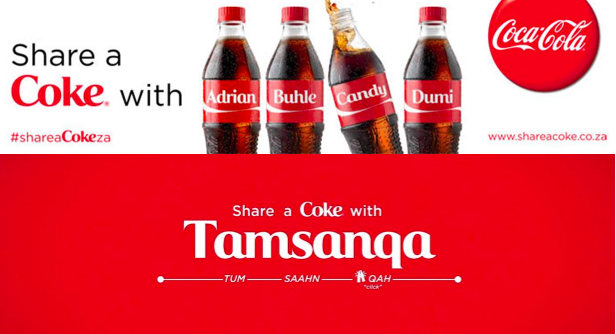
It is unclear who first said ‘Understanding is deeper than knowledge. There are many people who know me but not many who understand me’, but it is a quote that I like to refer to because it reminds us that we need to strive to understand the human beings that make up our markets in order to resonate. There are many things that allow us to connect to emotions: names, interests and language are just a few that come to mind.

When looking through the web for an example to share, I was also reminded that mass personalisation is by no means new and it has been a topic of conversation for quite a number of years already. So rather than sharing an example that is just the latest, I have chosen to share an example that illustrates the concept of mass personalisation the best below. I am sure you are all familiar with this campaign (after all, if I use an example you don’t know about – was it really successful at achieving the mass part of the equation?) This campaign was particularly successful because they customised it for each market, and then continued to grow the story subsequently.

Brands Should Targeting People’s Hearts

And so it is with this in mind that personalisation has a place and a chance to make a real impact. Personalisation allows us to use technology – analytics, AI and machine learning – to understand the humans that we are talking to and adapt communication to the individual at scale. That is how we create this paradox of mass personalisation – we can aim to reach the entire category but still connect with each and every one of them individually.

THE MEDIASHOP
www.mediashop.co.za

This is Modern Marketing