Home Blog Page 299

PRISM Young Voices Entries Now Open

PRISM Young Voices Entries Now Open

Prism Young Voices (PYV) offers the opportunity to be mentored, inspired and upskilled by some of the industry’s experts as part of the annual Prism Awards. The initiative offers young people in the industry the opportunity to work alongside key industry leaders as they judge the Prism Awards each year.

The PYV programme is ideal for self-starting, meticulous and ambitious young people in the public relations and communication industry. The Public Relations Institute of Southern Africa (PRISA) announced that entries for the 2021 Prism Young Voices (PYV) are now open. 

PYV founder and convenor of the Prism Awards, Palesa Madumo said, ’This is a career opportunity of a lifetime. The teachings that the young judges receive are second to none and will set them well on their way to becoming even greater practitioners.’

Applicants can be professionals with at least two years’ experience in the public relations and communication environment or be actively involved in the industry. One of the 10 young voices spots is awarded to a final-year student entrant studying public relations or communication.

‘The inclusion of young people in the decision making process in our industry is something that I have always been passionate about, and the PYV programme allows young people to bring a fresh perspective to the table. I encourage as many young PR and communication enthusiasts as possible to take a shot and enter,’ concluded Madumo.

Entrants for Prism Young Voices must:

  • Be between the ages of 21 and 30.
  • Have at least two years’ experience in the public relations and communication environment or be actively involved in the industry in one way or another. Or be a final-year student studying public relations or communication.
  • Reside in Gauteng, KwaZulu-Natal or the Western Cape.
  • Write a 500 word motivation on why they should be selected or upload a minute-long video on the portal.
  • Tweet about their entry tagging @PRISMYoungVoices. Use the hashtags #PRISMYoungVoices and #PRISMAwards21.

Entries close on 5 March 2021 at 5pm.

PRISM AWARDS
prism-awards.co.za

Hoorah Appoints Creative Director

Hoorah Appoints Creative Director
Andew Shaw, new Creative Director at Hoorah Digital.

Andrew Shaw, Hoorah Digital’s new Creative Director, is realistic about the impact the coronavirus pandemic has had on the creative industry but is adamant that this is exactly the kind of environment in which real creative excellence and sustainable business solutions can come to the fore. 

He has a dynamic and varied professional background that spans everything from interaction design, animation direction, strategic consulting and more. He has repeatedly demonstrated his competence and creativity in the various industry roles he has held over the past 20 years.

‘Shaw is renowned in the industry for his creative excellence. He understands the industry but is also excellent at spotting opportunities and leveraging those to the client’s advantage. This makes him a great asset to the Hoorah team,’ said Shaune Jordaan, co-founder and chief commercial officer at Hoorah. 

Shaw explained that the in-house model allows for far stronger working relationships with the brand partner, ultimately setting the stage for more relevant and more engaging work, the latter being tantamount to achieving brand marketing success in 2021. 

HOORAH DIGITAL
www.hoorahdigital.com

A Brand Management Strategy Is About Storytelling

Using Intuition And Data In Your Brand Management Strategy

According to the Digital School of Marketing, brand management strategy definitely involves intuition. However, you can also use data to guide your direction. One way to gain an understanding of whether your brand is on the right track in terms of its brand management strategy is to think of it as a story you are telling. 

A great story is not just something that you read on a page, it is an experience. In order for something to be an experience, it has to have a beginning, a middle as well as an end. At the end of the journey, there must be some sort of alteration from the beginning.

What causes a shift in a story? Tension. There must be tension between your antithesis as well as your thesis. From a marketing point of view, your ‘antithesis’ is your customer’s pain point while your ‘thesis’ is your solution to that problem. Thus the tension is the customer’s problem itself. This is the heart of your entire product-market fit, seen at a subatomic level. If you don’t have any tension (in other words problems to solve), then you don’t have a business. A brand management strategy comes down to one thing: storytelling. Your brand’s strategy is its story, its vision, its heart and soul.

Your brand is possibly your firm’s most valuable asset. Thus, developing a stronger brand management strategy is your most important task. When it comes to having a brand management strategy, it is not enough to simply have several bullet points of what you would like to accomplish. Today, brands need both a thorough understanding of why they choose certain strategies and a detailed outline of what their strategies will be.

A successful business cannot survive if it doesn’t have a strong brand management strategy. Without a unified identity, everything – from your content, to your culture and to your core business – can suffer. Building a strong brand management strategy takes time, effort and commitment. And that is where many people can get stuck.

A brand is best understood as your firm’s reputation as well as its visibility in the marketplace. The strength of your brand may be measured as Reputation X Visibility. There is another essential dimension of your brand as well: how relevant is it to your target client audience?

Brand management and development is the process of creating and strengthening your brand. This process can be divided into three phases.

  1. The first phase is getting your brand management strategy right and aligned with the objectives of your business.
  2. Second is developing all the tools that you will need to communicate the brand. For example, these tools are your logo, tagline as well as website.
  3. Finally, there is the phase of boosting your newly developed or updated brand.

DIGITAL SCHOOL OF MARKETING
info@digitalschoolofmarketing.co.za
www.digitalschoolofmarketing.co.za

Acceleration Appoints Cognitive Intelligence Practice Lead

Acceleration Appoints Cognitive Intelligence Practice Lead
Virginia Alvarez, new Cognitive Intelligence Practice lead.

Acceleration, a Wunderman Thompson Company, has appointed Virginia Alvarez to lead its new Cognitive Intelligence Practice in Europe, the Middle East and Africa (EMEA). The practice is pioneering an approach to consumer insights that uses artificial intelligence (AI) and psychological understanding for motivational segmentation. 

The Cognitive Intelligence Practice helps brands unravel people’s unconscious motivations, so they can create engaging, timely moments and content that builds emotional connections with consumers throughout the customer journey. It translates unconscious drivers of behaviour into data signals that enable brands to segment consumers in a new way: by motivation. 

Before joining Acceleration, Alvarez was Executive Director: Insights at OMD, where she spent more than a decade helping the company develop its consumer insights proposition. She has more than 20 years’ experience in media and research, including Ipsos, TNS and MindShare, and has won awards from IAB Europe, including the Best Consumer Understanding 2018 and OMD RetAIl Revolution 2020.

Alvarez said, ‘The global pandemic, its economic fallout and consumers’ experiences during national lockdowns have disrupted normal consumer behaviours, and many of the changes are likely to be permanent. During this time of change and upheaval, it’s more important than ever for brands to put consumers at the core of their businesses and show empathetic understanding of their needs. 

‘I’m excited to work with Acceleration to help organisations in EMEA use motivational consumer insights to better segment and understand their customer base. Our solutions will help brands to go beyond analysing demographic or behavioural data, towards gaining a deeper understanding of how consumers’ emotional needs and unconscious motivations shape their actions and decisions.’ 

Grant Keller, Global CEO at Acceleration added, ‘We’re happy to have attracted an insights professional of Alvarez’s calibre to head our Cognitive Intelligence Practice in EMEA. Building on the experience and knowledge already developed in North America, our EMEA practice will help brands to develop a more empathetic and customer-centric audience strategy based on a deep understanding of consumers changing motivational mindsets.’ 

Alex Steer, Chief Data Officer for Wunderman Thompson EMEA added, ‘We’re delighted to welcome Alvarez to the team. Acceleration’s approach to cognitive intelligence helps ambitious brands understand why people buy and find the mindsets and moments that drive growth. It’s an important part of Wunderman Thompson’s strategy of developing data capabilities that go beyond optimisation and help our clients find new ways to grow.’

ACCELERATION
+27 11 267 0700
acceleration.biz


The Evolution Of Customer Communication In 2021

The Evolution Of Customer Communication In 2021
Brent Haumann, Managing Director at Striata.

Brent Haumann, Managing Director at Striata, discusses what 2021 might have in store when it comes to customer communication. Customer experience is a constantly moving target, and with statistics identifying customer experience as being the key differentiator for organisations in the future, companies have no option but to keep evolving in order to remain competitive.

After years of digital-led evolution, even the biggest laggards were forced to revolutionise their customer communications or risk becoming business dinosaurs. The quick changes that organisations implemented to weather the storms of 2020 will be the foundations upon which they can build, to ensure success in 2021 and in the uncertain future ahead.

1. Customers will vote with their attention

In 2021, customers will become more protective of their time and attention. As the volume of digital noise increases in their lives, customers will become more aware of which digital engagements add value to them, and which don’t. And once triaged, it is very difficult to jump from the latter to the former.

As a result, 2021 will see customers judge the service of their providers more critically by the level of thought, usefulness and relevance that goes into each customer engagement. For digital customer communications, this means that customers will expect organisations to provide relevant information, presented in an ideal way and with the appropriate level of usefulness and functionality.

Customers will also vote with their virtual feet when it comes to organisations that don’t communicate with them. Relationships cannot be built in silence, and a lack of communication will result in disengaged and disloyal customers that are easily lured to the sweet promises of competitors.

2. Digital customer communication will make an evolutionary leap

Over the past few years, organisations have steadily shifted their focus and budget towards improving customer experience. In 2020, the impact of Covid-19 saw this shift pushed into hyper-drive.

Organisations and customers were thrust from a world where going digital was optional and transformation was gradual, to one where going digital has become mandatory and transformation is a matter of survival. As a result, more resources, expertise and technology have been directed towards building meaningful digital relationships with customers – and digital communication has been a key part of the strategy.

Going into 2021, this is likely to continue. As the world accepts and embraces the new normal, resources will continue to be pushed into creating the ideal digital experience across the customer journey. This influx of resources and brainpower will lay the foundation for an evolutionary leap in digital channels going forward. A broader base of the business will look to understand, support and fund the value of the digital customer experience, which will naturally flow into the organisation’s digital communication strategy.

3. Consistency remains king

As more customers across the globe adopt digital platforms, they will expect companies to maintain a consistent voice and message across all of them. There is no doubt that companies have aimed to achieve this over the last few years, but it will now become an expectation rather than a nice-to-have.

Companies need to view various digital touchpoints as an extension of their business vision. Customers are observant and will easily take their money elsewhere if they are subject to disjointed messages across different platforms. Consistency is a key indicator of sound customer care, so it pays to integrate different divisions across the business to ensure transparency and unison in outgoing customer communications.

4. Increased focus on privacy and security

As customers become more accustomed to using digital platforms, they will start sharing more of their personal data with companies. This will create a far better understanding of the customer, their buying behaviour and propensity to buy, which will allow for the business to tailor-make its offers and communications to suit the customer on a more personal level.

However, due to the recent high profile data breaches, customers have become weary of the data they share and as a result, expect companies to make data privacy and security a key priority.

Organisations must take heed of this and invest in better data privacy and security, as well as ensure this is reflected in the way they handle data and how they treat sensitive customer information.

5. Authentic personalisation

Personalisation is not a new concept, but in 2021 we will see brands push this to the next level. Brands will have to connect with their customers on a human level, by generating personalised and human experiences. Artificial intelligence, behavioural segmentation and dynamic content are all necessary tools that equip organisations to prioritise their client base.

6. Building trust

If 2020 was all about survival, 2021 will be about rebuilding in a post-pandemic world. Businesses will have to take the learnings from 2020 and enhance customer experiences to build trust. This is because consumers have become far more digitally-savvy and aware over the last 12 months, forcing brands to be more transparent about how they collect and store data.

People are usually happy to share their information and data with brands that they trust, but they need to be confident that their data is safe, secure and primarily used to manufacture the personalised and relevant experiences they expect.

Adapting to thrive

In 2020, adapting to these trends was a matter of survival. For the companies that made it through the year, 2021 will be about building on them to ensure that they thrive going forward.

The future is ripe with possibility as far as effective customer care goes. The brands that are set to thrive in an uncertain time are those which fearlessly embrace change and are unafraid to adopt technology practices that enhance the customer experience.


STRIATA
striata.com

Duke Launches #DalaYourColour Jive Summer Campaign

Duke Launches #DalaYourColour Jive Summer Campaign

Duke, in collaboration with Mark1 and Positive Dialogue, created quite a stir in one of Cape Town’s most historic neighbourhoods with the launch of Jive’s #DalaYourColour Bo-Kaap campaign.

To kick off the launch of the annual Jive summer campaign, the agency painted four of the iconic and colourful Bo-Kaap homes, as well as the adjacent Iziko Bo-Kaap Museum, in stark plain white to draw attention to the significance of colour in our lives.

The campaign was further supported by a photojournalistic, documentary-style, online campaign that showcases the fascinating histories and stories of 10 colourful, firmly entrenched personalities of the Cape.

Gareth Cohen, Creative director at Duke, said, ‘Jive is arguably the Western Cape’s most colourful beverage, so for this year’s festive campaign, we asked the public to #DalaYourColour. The bright, colourful homes of the Bo-Kaap mimic Jive’s colourful culture and identity. But what if we stripped it of colour?’

As a PR stunt, for two days the standout white buildings stood in stark white. The stunt served as a reminder for South Africans to not take the heritage and traditions of the Bo-Kaap for granted. With the help of Cape Town Mayor Dan Plato, Jive restored the homes to their original bold hues and gave the Iziko Museum a much-needed facelift.

Sharief Parker, Founder of Jive said, ‘Colour has always informed the cultural heritage of the Bo-Kaap and 2020 was a powerful reminder of the need to never take for granted our freedom, culture and individuality. The #DalaYourColour campaign is a tribute to the richness and resilience of the people of the Western Cape.’

‘Everyone knows the Bo-Kaap for its colourful houses but what makes this neighbourhood and many others in the Western Cape truly unique is not just the painted houses but the vibrant characters that live there. We want to celebrate the colourful people of the Cape,’ Cohen concluded.

DUKE GROUP
+27 21 421 4239
www.duke.co.za

Public Relations A Crucial Element In Brand Communication During A Pandemic

Public Relations A Crucial Element In Brand Communication During A Pandemic
Obren Msuku, Managing Director of Msuku Media.

According to Obren Msuku, Managing Director of Msuku Media, the big strategic question as we enter 2021 surely must be not how to slash all costs, but how to optimise spend in areas that help the business survive the current crisis while still positioning itself for future growth. Within the realm of brand communication, public relations (PR) stands out as a potentially crucial element.

The risk with slashing expenditure too broadly is that a lack of essential spending could well see surviving businesses poorly equipped to succeed in the post-Covid economy. PR is recognised to deliver strong ROI in conventional times, but it is also particularly well suited to the highly stressed Covid-19 economy, thanks to an ability to create relationships with consumers that reach beyond quick-fire advertising and promotions.

PR is generally one of the most cost-effective components of communications strategies, and during the Covid-19 downturn, its worth has increased significantly. South Africa, like most countries across the world, is fighting a Covid-19 fuelled economic slowdown. Retrenchments are taking place across many industries and companies of all sizes are tightening their belts to make it through.

As we mark over 300 days of lockdown in South Africa, consumers are clearly very tired. From saturation level news and social media coverage of the pandemic through to the turmoil of global politics and the stresses of navigating a contracting economy, many are simply trying to avoid spending too much. This is clearly reflected by South Africa’s consumer confidence levels, which, according to Bloomberg, remained worryingly low over December 2020.

In summary: we are currently in an eyes-down, ears-closed market, with consumers trying their best to economise. With most real-world events completely shut down and wallets tightly closed, conventional advertising and marketing campaigns are problematic, with ROI destined to be low in most sectors.

But consumers will spend in the post-Covid-19 economy, and the successful brands in the ‘new normal market are likely to be the ones that already have deep, trusting relationships with them. This makes building strong relationships within brand communities right now crucial for players looking to put themselves in pole position during the slow climb out of the Covid-19 crunch.

PR can play a key role because it places a brand in the middle of organic consumer conversations across mass media and broadcast channels, as well as social media. PR allows the brand to engage directly with consumers, deliver important messages within tightly defined target areas and side-step the media fatigue many are currently experiencing.

Take financial services, for example – a sector where many South African consumers are explicitly worried about their futures. Conventional above-the-line media projects are unlikely to assuage consumer fear or help anyone plot a path into an uncertain future. PR, on the other hand, allows brand leaders to join in important financial conversations on the radio, on TV, in print and on social media. It also opens regular opportunities for the brand to bring its leadership into direct, personal contact with its community – all at a time when personal input and advice from experts is highly valued and relevant to the person on the street. Relative to other types of media spend, PR is clearly an area able to give financial brands maximum ROI.

The same holds true in the realm of FMCG, which has traditionally relied on a strong above- the-line promotional engine to drive sales. While it would obviously be foolish to abandon this engine, upping PR levels has the potential to leapfrog FMCG brands’ past rivals. Simply put, brands that are visible and engaged directly within their communities in times of social stress, and that are present in the middle of consumer conversations, are in an excellent position to turn loyalty into better profit margins as the economy recovers.

2021 is set to be a unique and very challenging year for consumers and businesses alike. But even within the challenges, there remain opportunities to spend wisely and lay a foundation for strong future growth. PR is certainly one of these and should be a central plank in any strategic mix.

MSUKU MEDIA
+27793651613
obren@msukumedia.co.za
www.msukumedia.co.za

Nespresso And Baba Tjeko Blend Coffee With Art For Latest Campaign

Nespresso And Baba Tjeko Blend Coffee with Art
Nespresso and Baba Tjeko World Explorations coffee range artwork.

Nespresso South Africa has collaborated with local artist, Baba Tjeko, for its new World Explorations coffee range. The collection invites coffee lovers to discover the world’s diverse coffee tastes and traditions.

Introducing Cape Town Envivo Lungo, the partnership is a major move forward for Nespresso, which has paid tribute to South Africa by including its Mother City in the line-up of World Explorations Lungo coffees.

Building on the popular Lungo collection, the range showcases coffees inspired by cities around the world, including Stockholm, Shanghai, Tokyo, Vienna, Buenos Aires and Cape Town.

Nespresso And Baba Tjeko Blend Coffee With Art
Baba Tjeko in front of his World Explorations coffee range artwork.

For Cape Town Envivo Lungo, Nespresso wanted to encapsulate the city’s boldness, vibrancy and colour. As such, the brand partnered with Tjeko to bring the soul of this coffee-loving city to life.

Tjeko, who regards coffee making and coffee drinking as an art form, said, ‘With World Explorations, Nespresso is celebrating coffee culture in different cities. In the context of Cape Town, it is really a vibrant and colourful city with an exciting jazz culture. I took these elements, along with iconic landmarks like Table Mountain and the Ferris wheel, the symbolism of a coffee cup, as well as Nespresso’s Cape Town Envivo Lungo packaging design, and integrated them into my visual language called Ditema, to come up with a design that reflects the beautiful energy of the Mother City through African designs, ideas and perspectives.’

Tjeko, a multi-disciplinary visual artist best known for his Ditema paintings and drawings, was first introduced to colour in preschool. ‘I remember being fascinated by colour, and it ignited my mind and imagination,’ he shared. Ditema is a form of Basotho mural art composed of decorative geometric patterns usually featuring objects from the natural world like farming fields, plants or animals. Ditema’s use of colour also aligns with that of Ubuntu and traditional African styles, but due to urbanisation, is now a dying art form. 

‘Ditema gave me an artistic voice and identity, and through the collaboration with Nespresso World Explorations, I am able to fully embrace and encapsulate its beauty and tradition, and introduce the art to a new generation. Nespresso is rooted in how coffee is sourced by protecting traditions and how it is produced and enjoyed throughout the years. In the same way, I aim to keep the memory and history of Ditema alive,’ he concluded.

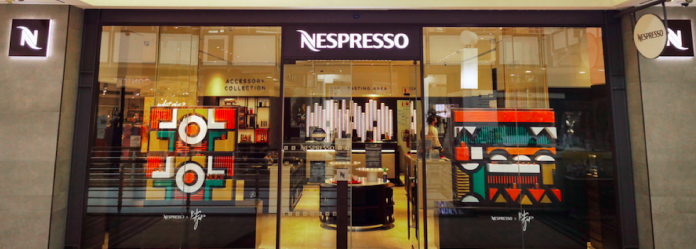
Tjeko’s artwork is featured in the Nespresso boutique windows at the V&A Waterfront and Canal Walk, and in some kiosks across the country.

NESPRESSO
buynespresso.com/za_en/

Addressing Consumers’ Rising Brand Expectations

Addressing Consumers' Rising Brand Expectations
Haydn Townsend, Accenture Interactive Business Head.

According to Haydn Townsend, Managing Director for Accenture Interactive in Africa, alongside emphasis on hygiene and handwashing, people are seeking fitness classes online and returning to the weekly ‘big shop’ for the first time in years. People’s expectations of businesses and brands are rising – working out the implications will be critical to businesses’ survival.

There is an opportunity to reinvent. Less clear is how people’s behaviour and underlying values will change for the long term. Covid-19 has so far changed the experience of being a customer, an employee and a citizen.

People are turning to brands that provide security, and that they can trust in a time of uncertainty. While some have gone online for the first time, others who typically favour digital have been forced to visit stores when delivery slots were scarce.

These shifts are evidence that people’s behaviours were already changing. Businesses therefore need to understand the possible scenarios that could emerge and find ways of growing despite the shifts in consumer behaviour. Becoming a business of experience is imperative.

A business/brand mindshift

A great experience is defined not by what you offer but by how well you enable your customers to achieve the outcomes most important to them. Business of experience (BX) is a more holistic approach that allows organisations to become customer-obsessed and reignite growth. Whereas customer experience (CX) was limited to the chief marketing officer’s (CMO) or chief operating officer’s (COO) purview, BX is in the boardroom as a CEO priority because it ties back to every aspect of a company’s operations.

Our latest Accenture research highlights that 56% of COOs, 53% of chief strategy officers (CSOs) and 51% of chief financial officers (CFOs) said their company will fundamentally change the way it engages and interacts with its customers.

Empathise 

It has always been best practice to gain a deep understanding of customer needs to inform your strategy, but Covid-19 has made it a critical step. Brands that empathise – listen, learn and evolve with empathy – will emerge stronger. Continually seek to understand and empathise with people, putting them at the heart of how you design – and constantly evolve – your experiences.

Adapt

Furthermore, the acute acceleration of a ten-year digital trend means the only constant factor will be the need to continually change. We strongly recommend you adapt, by fast-tracking transformation programmes, which means bringing experiences and interactions online and rapidly creating new ways to reach your customers. At the same time, you must face the reality that your existing planning cycles, teams and structures are not built for adaptability – or the scale of work they now face – and consider what changes you need to make.

Reinvent

Reinventing and renewing focus on the customer experience helps to shape the right, collaborative and agile organisation model for the future. Use your purpose and customer understanding as a jumping-off point to innovate the new businesses and experiences that can outmanoeuvre uncertainty. Make sure your teams have the right skills and are working on the right initiatives for the ‘never normal’.

Practical steps for becoming a BX leader

Becoming customer-obsessed is crucial. Relevant data exists with sales teams, customer care operations and finance functions, and conducting new research directly with customers through remote methods can reveal their current needs and expectations. When coupled with a deeply embedded purpose, brands can anticipate which customer needs they should solve and which unmet needs they can fulfil.

Secondly, a true experience innovation culture asks you to close the gap between your brand promise and the experiences you deliver by changing not just what you say, but how you behave across your organisation. Experience innovation occurs at all levels of your business. Businesses should move from relying on a new look and feel to existing touchpoints to drive improvements, to changing processes or operations to better align with customer needs and helping customers achieve their desired outcomes.

Thirdly, most businesses still organise functions independently across business units – each has separate leadership, channel touchpoints, budgets, data pools and more. At best, this siloed approach is inefficient and financially wasteful. At worst, it causes missed opportunities for connecting with customers and driving growth.

This is a legacy of predigital 20th-century business thinking. The reality of operating in a digital and data-rich world is catching up with organisations. Businesses can tackle this by making the experience a priority across every function, including operations, HR, product development, strategy, technology and more.

Lastly, successful companies are taking achievable steps to boldly reimagine their business and operating models by focusing intensely on experience. This requires an operating model evolution in order to align technology, data and talent into one system that is driven by customer experience and focused on a single unified journey. With siloed organisations and breakdowns between departments, the sum of tech improvements is often a painful and inconsistent experience for the customer. Taking a holistic view and finding areas of synergy and connectivity will help you maximise all returns.

Uncertainty persists about what the world, our lives and the economy will look like for the foreseeable future. We need to consider how to create experiences that can navigate tensions and predict which way people will go.

Asking important questions like: will we be prone to self-gratification, or continue interacting with and caring for our local communities? Will we continue supporting our local shops, or will we return to casually buying globally sourced products? How will we view brands and organisations that put ethics before profit? The uncertainty is not just economic: behaviour change among the people you serve is immediate and apparent and will likely cause a permanent shift in the way you do business for years to come.

ACCENTURE SOUTH AFRICA
accenture.com/za-en

The Relationship Between Brand Equity And Sales

The Relationship Between Brand Equity And Sales

Straford Rodrigues, partner in brand and marketing ROI analytics practice at Kantar, discusses why sales might decrease but brand equity does not, and what brands can do about it.

Let us look at a scenario where sales are decreasing, and brand equity is increasing or flat. There are two possible reasons for this (outside of a seasonal decline in brand and category sales).

A price increase

Higher prices might lead to a reduction in sales volume, but they can also build perceptions that increase brand equity. Price increases may be part of a strategic plan to become a ‘premium’ or ‘higher-quality’ brand or it may just be the business passing on higher costs to its customers. As a marketer, one needs to assess the potential implication a price increase could have on sales volume.

The question is: would you like to attract a succession of price-sensitive, one-time consumers, or would you prefer ones who stick with your brand and continue to be ‘repeat purchasers’? An increased price could lead to a loss in consumers and therefore sales, but the brand still has strong equity, which in turn could lead to higher profits.

A reduction in the media pressure

Low quality/weak creative, reduced media weight (reducing share of voice), or changes in media flighting/phasing could result in a decline in sales, but brand equity may stay the same (at least in the short-term.) To better diagnose why this might be the case, it is important to look at sales as ‘base vs. incremental’ when comparing to brand metrics.

As we know, incremental brand sales reflect the short-term response of the brand, whereas base brand sales reflect the long-term equity of the brand. Stronger brands are usually able to sustain base sales despite a change in strategy. Signals of short-term and long-term sales impact (effectiveness drivers) typically reside in different brand KPIs, varying by category involvement, brand status and competitive activity. This gives us a view on which brand perceptions drive short-term volume and which drive long-term brand predisposition or both.

At Kantar, our experience has led us to a set of short and long-term metrics that are indicative of ‘base vs incremental’ movements in sales.

Short-term metrics: drivers of mental availability or salience e.g. communications awareness, top of mind, unaided awareness and rational brand associations.

Long-term metrics: brand affinity, emotional brand associations, purchase intent/consideration.

Short-term vs. long-term metrics often turn out to be complementary, not contradictory.

A decline in sales is always a cause for concern

Sales could be dropping due to a decline in short-term brand metrics (while long-term metrics are holding up), as changes in the strategy may not have translated to equity changes. The good news is this can quickly be reversed by identifying the cause and addressing the problem.

For example. if it is a creative issue, it would be essential to change elements within the creative, the message or the execution itself. It could be due to a decline in long-term brand metrics (while short-term metrics are holding up or even increasing). This is a bigger cause for concern, as it might reflect changing attitudes to the brand (despite the growing awareness), which will in time translate into (more) declining sales.

KANTAR 
kantar.com
This is Modern Marketing