
Home Blog Page 29

Big Food’s Marketing To Children Under Scrutiny As Calls For Clear Food Labels Grow

Big Foods Marketing To Children Under Scrutiny As Calls For Clear Food Labels Grow copy

South Africa is facing a worsening health crisis linked to ultra-processed foods and the powerful marketing tactics used to sell these products to children. Nearly half of adults are overweight or obese, while childhood obesity has risen from 1 in 20 to 1 in 8 in just a decade. If left unchecked, more than 4 million children aged 5 to 19 could be living with obesity by 2031, placing South Africa among the top 10 worst-affected countries globally (1).

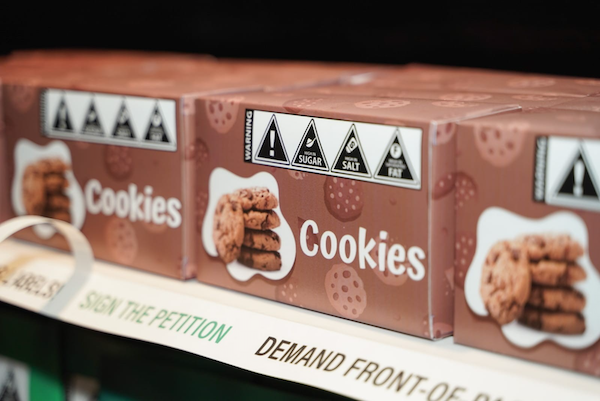
Poor diets are driving rising rates of type 2 diabetes, hypertension, and heart disease, putting strain on families and the health system. Experts argue that mandatory Front-of-Package Warning Labels (FoPWL) are a simple, evidence-based measure to help families identify unhealthy products at a glance and curb deceptive marketing practices (2 and 3).

South Africa’s Department of Health published a draft Regulation in April 2023, which would introduce front-of-package warning labels to help consumers make informed decisions and restrict misleading food marketing to children. But more than two years later, the draft regulation is yet to be implemented, despite strong public support and clear scientific evidence (4 and 5).

‘Protecting children means standing up to corporate power and putting health before profits,’ said Nzama Mbalati, CEO of South African advocacy organisation, the Healthy Living Alliance (HEALA). ‘Warning labels work. They’ve reduced sugary drink consumption and cut children’s exposure to junk food advertising in countries like Chile and Mexico. We have the evidence. What we don’t have is the political will to act.’

Recent peer-reviewed research underscores the extent of the problem:

Misleading marketing: Studies show that packaging for unhealthy foods often carries health claims like ‘good for growth’ or ‘high in vitamins’, even when the products are high in sugar, salt or fat. These tactics shape children’s preferences and mislead parents (1).

Non-compliance with proposed rules: An audit of more than 6,700 packaged foods in South African supermarkets found that 80% would require a front-of-package warning under draft Regulation R3337. Over half used child-directed marketing such as cartoons, and 83% of health claims appeared on products that would carry a warning (2).

A right to health issue: From a legal perspective, front-of-package warning labels are a human rights obligation. International and South African law recognise the state’s duty to regulate the food environment and protect children from harmful commercial practices (3).

A South African randomised controlled trial also found that front-of-package warning labels outperformed other formats such as traffic-light and guideline daily amount labels. Participants who saw warning labels were more likely to correctly identify unhealthy products and less likely to want to buy them (6).

The urgency of these findings was at the centre of ‘Chew on This: Big Food Is Not Telling Us the Whole Truth’, a public discussion held in Johannesburg at The Wits Origins Centre on 4 September, including public health experts, legal minds, and industry insiders and moderated by journalist Crystal Orderson, known for her in-depth reporting on health and social justice issues.

The panel brought together leading voices in health, law and advocacy:

Dr Tamryn Frank – Researcher at the University of the Western Cape, working in the field of obesity and non-communicable disease prevention.

Zukiswa Zimela – Communications Manager at HEALA, with experience in community mobilisation, health systems strengthening, policy advocacy and lobbying.

Yolanda Radu – Senior Researcher at the SAMRC Centre for Health Economics and Decision Science, PRICELESS SA.

Alice Khan – Researcher at the School of Public Health, University of the Western Cape, focusing on the marketing of food and beverages to children.

The discussion included clips from the BBC documentary ‘Irresistible: Why We Can’t Stop Eating’ by Dr Chris van Tulleken who described the deliberate strategies companies use – from the addictive balance of salt, sugar and fat to the lure of free toys and collectables, to using cartoon characters that appeal to children to drive sales.

Dr Frank stressed that Front-of-Package labelling is a human rights issue. ‘Every child has the right to grow up in an environment that supports their health, not one that exploits them for profit. Front-of-Package Warning Labels cuts through marketing spin by putting the facts where consumers can’t miss them – on the front of the product. The state has a duty to step in and regulate where industry will not.’

Khan pointed out that ultra-processed foods have steadily displaced fresh fruit, vegetables and traditional diets in South Africa. ‘Reversing this trend is critical. We need to create conditions where healthier, more affordable foods are widely available so that families can return to eating in ways that support their wellbeing.’

In South Africa, Radu added, ultra-processed foods dominate supermarket shelves, while fresh fruit and vegetables are often too expensive or hard to find. ‘Reversing this trend is critical. We need to create conditions where healthier, more affordable foods are widely available so that families can return to traditional ways of eating that support their wellbeing. Unless we make healthier options accessible to everyone, diet-related diseases will continue to rise.’

The panel made it clear that Big Food’s marketing is relentless, and children are a prime target. ‘We see how packaging, advertising and even product design are carefully engineered to bypass parents and appeal directly to children,’ Zimela said. ‘Divulging these tactics equips families with the knowledge they need to make healthier choices, helps the public understand what’s at stake and builds pressure for stronger protections and accountability.’

HEALA is leading the national call for Front-of-Package Warning Labels in South Africa. Through public campaigns and community roadshows, the organisation has been engaging parents, young people and health workers on the dangers of ultra-processed foods and the need for clear, visible labelling. HEALA argues that the Department of Health must finalise and implement mandatory front-of-package warning labels as a matter of urgency, warning that every delay leaves children exposed to aggressive and misleading food marketing.

‘This is a low-cost, high-impact intervention that government can put in place right now,’ said Mbalati. ‘Parents are trying to make healthy choices, but without clear and visible warnings, they’re set up to fail. Voluntary labelling schemes have failed here and elsewhere. What South Africa needs are warning labels that are mandatory, simple to understand and impossible to ignore. Anything less is a victory for the food industry at the expense of children’s health.’

References:

1. Source.
2. Source.
3. Source.
4. Source.
5. Source.
6. Source.

HEALA
https://heala.org

Retailers Need To Find A Balance Between Stability And Innovation

Retailers Need To Find A Balance Between Stability And Innovation
Peter Ludi, redPanda Software and Solutions.

With South African retailers navigating load shedding, inflation, and cyber threats, even as the sector is forecast to grow 7% nominally in 2025, the pressure to innovate without breaking operations has never been higher. Peter Ludi, Business Development Executive at redPanda Software and Solutions, argues that the winners in 2025 will be those who balance creative risk with operational resilience.

The global retail sector, projected to reach $35.2 trillion in 2025, has digital channels driving more than 60% of influenced sales and each successful click and customer collection is the result of a thousand moving parts. These gains are being driven by technology, but that same technology is putting retailers under pressure as they’re forced to run two roads at once, one for transformation, the other for survival.

A recent HLB report found 87% of global retail leaders are worried about economic volatility and cyber-threats even as 90% plan for revenue growth in 2025. While there remains optimism, supply chain disruptions and broader uncertainty are colouring retail decision-making. In South Africa, retail trade is forecast to grow 7.0% nominally and 2.0% in real terms, a modest rebound that reflects the market’s mix of both opportunity and fragility. Companies need a smart way of balancing creative risk with platform reliability without compromising the operational foundations that make growth sustainable.

Innovation Is Momentum, But Stability Matters

Globally, retailers are investing in AI agents, personalised shopping experiences and hybrid store formats to take customers along new and innovative routes to loyalty and engagement. The National Retail Foundation (NRF) predicts digitally influenced sales currently exceed 60% with AI agents playing a growing role in creating conversational customer journeys.

However, this growth doesn’t come without constraints. If innovation is left unchecked, it can fracture the very systems that keep retailers trading. This means structuring for ambidexterity – ensuring innovation and operational resilience advance in tandem. Take KPIs and OKRs. One governs uptime, discipline and delivery. The other unlocks experimentation and strategic stretch. You put stability in KPIs and innovation in OKRs.

Research supports this approach. PwC believes that flexible supply chains and real-time inventory tracking build resilience and avoid costly disruptions, while Marsh’s Retail Leaders Report 2025 warns against reactive spending patterns, encouraging instead long-term strategic investment.

Trends Vs. Hype: Smart Trumps Fast

Too often, innovation is packaged as strategy by vendors with vested interests. This means that investment needs to be balanced with validation, and that retailers should consider a more modular approach to innovation and change. Even well-known technologies can trigger instability. AI, for instance, is changing everything but too many retailers are buying it as a black box. It’s not a strategy; it’s an ecosystem of components that will only create noise. The smartest platform becomes useless if it fails under pressure. What companies need isn’t smarter systems but smarter scaffolding.

And this scaffolding translates into API-led design, low-code adaptability, hybrid deployments and edge-first logic, especially in markets where power and bandwidth are inconsistent. Retailers like Checkers have already leant in – Sixty60 grew by 58.1% for the year ending June 2024 because it bridged real-world constraints with digital agility. One of the crucial success factors for the company was that it never became a technology company selling groceries, it was always a retailer using innovation to change the narrative.

Modular Resilience Defines Growth

Modular resilience allows the shop to go on, even when connectivity drops. It allows the testing of a new AI tool without collapsing fulfilment. And it ensures supply chains can adapt, and pricing models can flex without systems failing. The store becomes a resilient node which is equipped to operate in the dark, run on local networks and respond in real time.

Retailers are already blending formats as they combine grocery, fast food, fashion, and fulfilment into hybrid environments. More and more hospitality locations have opened with co-working spots which are all designed to pull foot traffic into stores.

Delivering On The Dual Mandate

So, what should a retailer be doing, practically, to meet the dual mandates of innovation and strategy?

Firstly, don’t underfund IT in pursuit of lean margins. A redPanda benchmarking exercise recently revealed that most South African retailers should be spending between 1.5% and 2.5% of revenue on IT. Anything lower compromises performance; anything higher should be backed by scale or a major strategic pivot (such as moving to full e-commerce or launching in new verticals).

Second, find a balance between stability and innovation. Your consumers don’t see the supply chain algorithms, loyalty integrations or cross-channel orchestrations that make their smooth shopping experiences possible. They just want speed and consistency.

Finally, invest in modularity and architecture that enables change without breaking operations. This allows you to innovate within boundaries and find balance more effectively.

REDPANDA SOFTWARE AND SOLUTIONS
https://www.redpandasoftware.co.za/

Famous Brands Selects MoEngage’s Customer Data And Engagement Platform

Famous Brands Selects MoEngage’s Customer Data And Engagement Platform

Famous Brands has selected MoEngage’s Customer Data and Engagement Platform to unify its customer data, automate personalisation, and drive growth for its iconic brands. The partnership will see Mugg & Bean, Wimpy and Milky Lane use MoEngage’s AI-powered platform to deliver personalised, omnichannel experiences that build loyalty and drive order frequency.

By integrating data from multiple sources, the collaboration enables Famous Brands to connect the digital and in-restaurant experience. The initial focus is on Mugg & Bean. A key objective of this initiative is to leverage its loyalty programme by connecting the digital and in-store customer journey to encourage both earn and spend behaviour.

Mugg & Bean wanted to move from manual campaigns to a scalable, automated strategy that links online actions, such as receiving loyalty points or a voucher in the app, to in-store transactions. The aim was to create a seamless experience that encourages loyalty points or voucher redemptions and repeat visits.

Using MoEngage, Mugg & Bean has automated its entire voucher engagement process – from generating unique voucher codes and sending them to specific customer segments, to running targeted campaigns via push notifications, in-app messages, SMS and email. This automation saves time, connects point-of-sale data back to the platform for a complete customer view and improves redemption rates.

‘As we continue to digitise the customer experience across our portfolio, we needed a partner who could manage the technical complexity of our ecosystem and offer dependable support. MoEngage has helped us integrate different systems into a single and seamless platform. This has enabled us to modernise communications, strengthen the customer lifecycle and give our brands the tools to encourage repeat visits,’ said Toni Joubert, Divisional Marketing Executive at Famous Brands.

The impact on Mugg & Bean has been significant. The brand now runs targeted campaigns across the entire customer lifecycle, from promoting a new menu item to offering birthday rewards that encourage repeat visits. The brand also engages customers with loyalty reminders and reactivation campaigns for those who have been inactive, while rewarding its most frequent patrons with special deals and offers.

‘The integration of MoEngage into our tech stack has been seamless and has fundamentally changed the way we operate,’ said Deeolan Govender, Marketing Executive at Mugg & Bean. ‘What was once a manual, time-consuming process is now automated and efficient. We can engage customers on their preferred digital channels and see the impact directly in their purchase behaviour.’

For MoEngage, the partnership reflects its growing footprint in South Africa’s food and retail industry. ‘Partnering with an iconic brand like Famous Brands is a strong step forward for our work in South Africa,’ said Kunal Badiani, Vice President – Business and Growth, Middle East and Africa, MoEngage. ‘Their commitment to creating unique customer experiences aligns perfectly with our mission to help brands build lasting relationships. We look forward to contributing meaningfully to their growth journey.’

MOENGAGE
www.moengage.com

Alkemi Collective Is Africa’s First Creative Agency To Endorse The Fossil Ad Ban Campaign

Alkemi Collective Is Africas First Creative Agency To Endorse The Fossil Ad Ban Campaign

The Fossil Ad Ban (FAB) campaign calls for a nationwide ban on all coal, oil and gas advertisements in a bid to help address the climate crisis by shifting public perception. Alkemi Collective has become Africa’s first creative agency to endorse this campaign. This follows their signing of the Clean Creatives pledge, in which they and many other local agencies vowed to shun all work for the coal, oil and gas companies that constitute the fossil fuel industry.

‘Fossil fuels are the new tobacco, only even more destructive,’ said Alkemi Collective’s CEO, Bradly Howland. ‘Twenty years ago, it seemed inconceivable to many people that tobacco ads would be banned; now this has broad support. In the future, people will wish that fossil fuel advertisements had been banned many years ago, to avert the destruction climate breakdown has already caused. It’s high time for a ban, and I urge other creative agencies to sign the Fossil Ad Ban pledge.’

The climate crisis poses a severe threat to life as we know it. To give just a few examples: in 2022, about 500 people died in KwaZulu-Natal in floods of a severity made twice as frequent by climate change. Drought in the Horn of Africa, made 100 times more likely by climate change, is leaving millions without enough to eat and drink.

The Climate Risk Index 2025 report by Germanwatch found that between 1913 and 2022, over 9400 extreme weather events caused more than 765,000 deaths worldwide, with climate change contributing to the intensity and severity of floods, droughts, tropical cyclones and more.

Nearly 90% of the world’s carbon emissions come from the burning of fossil fuels. Nonetheless, the world’s largest fossil fuel companies are increasing rather than decreasing their carbon emissions, with little hope of meeting the Paris Agreement climate targets they claim to support.

Advertising remains one of the fossil fuel industry’s most influential tools for shaping public perception and delaying climate action.

‘Alkemi’s endorsement is a landmark,’ explained FAB Campaign Manager, Lazola Kati. ‘It proves that advertising and PR can support honest and transparent communication in the climate space. There is space for tackling greenwashing in the space of advertising.’

Said Howland: ‘Our agency took a stand to endorse Fossil Free South Africa’s FAB campaign, which calls for a ban on the promotional, advertising, and marketing activities of fossil fuel companies. We are committed to truthful and honest marketing that reflects the true reality of the climate crisis, without distracting from the urgent need for a just transition.’

‘As storytellers and culture shapers, creative agencies have immense power to challenge fossil fuel greenwashing and shift public perception,’ added Noxolo Mfocwa, Advocacy Campaigner at FAB. ‘Alkemi’s bold stance sends a clear message: ethical, future-focused creativity means refusing to amplify the voices of climate polluters. We welcome their leadership in helping build a fossil-free, justice-driven future.’

The climate crisis is not a distant problem of the future, she added: it is already at our doorstep. Communities are already facing rising temperatures, floods, droughts, and other extreme weather events. ‘Unless we reduce our reliance on fossil fuels, the leading cause of climate crisis, things will get worse.’

‘As creatives, we have the opportunity to use our industry to make a positive change. We invite creatives to join the Fossil Ad Ban campaign and leverage our collective creativity to find solutions to the climate crisis,’ said Howland.

Find the FAB report here.

ALKEMI COLLECTIVE
www.alkemi.global

FOSSIL FREE SOUTH AFRICA
https://www.fossilfreesa.org.za

Matrix Group Furthers Growth Journey With Majority Stake In Beyond The Click Technology Group

Matrix Group Furthers Growth Journey With Majority Stake In Beyond The Click Technology Group
Kgaugelo Maphai, Matrix Group.

Matrix Group now holds a controlling stake in Beyond the Click, placing technology at the centre of its integrated marketing and communications offering. Beyond the Click is a technology and digital transformation company specialising in CRM integration, automation, artificial intelligence, and mixed reality (virtual and augmented reality).

Its solutions help clients across industries streamline operations, personalise customer engagement, anticipate market shifts, and gain deeper consumer insights.

The acquisition accelerates Matrix Group’s ambition to build a future-focused, sustainable agency network across Africa and the Middle East. As a Level 1 BBBEE integrated marketing and communications group, Matrix is known for backing local entrepreneurs and driving innovation in an energising, collaborative environment.

‘Acquiring a majority stake in Beyond the Click represents a bold step in our growth journey,’ said Kgaugelo Maphai, Founder and CEO of Matrix Group. ‘As marketing and technology continue to converge, this partnership enables us to create integrated solutions that help our clients not only reach more customers, but also retain and engage them more effectively. It’s about unlocking growth in the digital economy with African-led innovation.’

Aadil Dildar-Mia, Co-founder and MD of Beyond the Click, added: ‘This partnership with Matrix Group allows us to expand our service offerings and continue driving client success through a complete range of digital transformation solutions.’

MATRIX COMMUNICATIONS GROUP
https://matrixgroup.co.za

Use A First Principles Approach To Make Ads That Matter

Use A First Principles Approach To Make Ads That Matter
Simon Spreckley, Futureborn.

What do spare rooms and advertising have in common? Not much, unless you think like Brian Chesky. When Chesky co-founded Airbnb, he didn’t try to build a slightly better hotel booking site. He questioned the entire premise: did people really want hotels, or just a safe, comfortable, local place to stay? Simon Spreckley, Founder and CEO of Futureborn, says Chesky reimagined the travel industry from scratch by breaking the problem down to its fundamentals of space, trust, and access. The result was a global platform that changed how people travel and connect.

That approach, known as first principles thinking, is often associated with engineering and science, but it’s just as powerful in the creative industries. In fact, it might be one of the most underrated tools available to us. It would not only make for better work, but it would go a long way in building stronger, more relevant businesses.

At its core, first principles thinking is about questioning assumptions. It means stripping away inherited logic and instead reasoning from the ground up. This approach can be transformative in an industry like advertising, where conventional wisdom often guides decision-making and legacy processes go unquestioned. When we default to what’s worked before, such as the formats, templates, and creative shortcuts, we risk producing safe, expected work that is ultimately forgettable. But when we interrogate the brief, the audience, and the medium with fresh eyes, we give ourselves the opportunity to solve problems in truly original ways.

Too often, agencies are tasked with surface-level asks: ‘Make a viral campaign’, or ‘Do something that breaks the internet’. But these briefs are usually proxies for something more profound. It’s a desire for relevance, connection, or transformation. First principles thinking urges us to dig beneath the noise and ask: what is the core human need we’re solving for here? Is it belonging? Joy? Identity? Status? If we start from that human truth, the work becomes more resonant and far more valuable to both brand and audience.

The same thinking applies to the media and platforms we work with. Each medium has its own unique qualities. Sound stirs emotion, movement drives engagement, and interactivity gives control. Rather than applying cookie-cutter strategies across formats, we should ask: what does this medium do best? What makes it distinct? It’s about unlocking the true creative potential of a platform by respecting its core strengths, instead of doing novelty for the sake of novelty.

Advertising is about more than delivering content. It’s about creating an emotional experience. A well-executed idea makes people feel something. It can be something that causes excitement, pride, curiosity, empathy and more. Yet in our race to meet KPIs, we often forget that emotional response is still the most powerful metric of all. First principles thinking pulls us back to that truth. It reminds us to design for impact and not just impressions.

It also asks how we define value. Value isn’t just measured in likes or conversions in the creative context. It might be the sense of wonder a piece of work evokes, the cultural relevance it sparks, or the utility it offers in people’s lives. What matters is how meaningfully we connect. And if we begin with that end in mind, that emotional, functional, or cultural value, we’re far more likely to create something that moves people and markets.

Importantly, this isn’t just a creative tool; it’s a business imperative. The agency model itself is full of inherited assumptions. Why do we work the way we do? Why are briefs structured this way? Why do timelines, teams, and hierarchies look the way they do? We try to challenge many of those assumptions. We’ve built a model that blends agency, consultancy, production and innovation lab. This is not because it sounds progressive, but because it enables faster thinking, deeper experimentation, and better outcomes for our clients. We’re pushing the business towards an evolution where we put first principles at the forefront of our work.

In a time of rapid change where new technologies emerge monthly and cultural shifts happen in real time, the ability to think from the ground up is essential. The brands we work with are navigating uncertainty and seeking partners who can cut through complexity with clarity, creativity, and conviction. First principles thinking gives us a framework to do exactly that.

Ultimately, brave work requires brave thinking. And brave thinking starts with asking better questions. Not ‘What’s worked before?’ or ‘What are others doing?’ but ‘What actually matters here?’ ‘What truth are we speaking to?’ and ‘What’s the simplest, boldest way to make someone feel it?’

The future belongs to those who are willing to rebuild, not just refine. To those who choose to question before they create. Because when we start from first principles, we make work that matters.

FUTUREBORN
https://futureborn.io

Marketers Should Embrace AI As A Creative Partner, Not A Replacement

Marketers Should Embrace AI As A Creative Partner, Not A Replacement
Clara de Wet, Uppe Marketing.

Clara de Wet, CEO of Uppe Marketing, says if we look more carefully at how we’ve been exposed to AI for much longer than we realise, a different perspective emerges. If you’ve owned a smartphone, you’ve been interacting with AI for years. Think about facial recognition, Siri, Google Assistant, the intelligent functionality in your banking app, or your smartwatch serving as a holistic health tracker.

Consider how Netflix and Disney+ recommendations fit your preferences like a glove, or how you confidently shop online through platforms like Sixty60, Takealot, and Superbalist. Think of the convenience that Uber and Airbnb created, the extent of customisation on social media – we live in a time where convenience is on demand, and we can’t deny or avoid it.

Learning From History

I can’t help but reflect on history when people feared for their livelihoods during the industrial revolution. Yes, machines replaced human labour as some job functions became redundant, but it also created many new jobs and roles not imagined before. By automating manual functions, it allowed humans to apply and develop themselves elsewhere, where they added more value. The bottom line is that automation of job functions is not new, and throughout history, technology has evolved how jobs are done and what skills and news jobs are needed.

I share the same sentiment about the rise of AI: AI is an enhancement and incredible leverage, not a replacement.

While AI can process vast amounts of data and make decisions based on that data, there are many areas where human skills and creativity are necessary. Specifically in the context of the marketing and creative fields, human skills are essential, such as creativity, emotional intelligence, and critical thinking. AI will provide massive leverage, but it cannot completely replace human expertise.

The Symbiotic Relationship

This perspective was reinforced during a recent client meeting. We were working with a company that runs social media campaigns using CRM tools to optimise their sales funnel, maintaining a 360-degree media approach that includes traditional communication channels. The client posed an interesting question to our Digital Strategist: ‘Can companies afford not to have social media in this day and age?’

Her response was telling: ‘No. With traditional media, you can’t guarantee that your target market will be reached by your message, and it usually can’t be measured. On social media, you can be more certain that a bigger chunk of your target market will see your message, and you can measure it.’

She emphasised how AI has enabled us to reach audiences more successfully by serving them content customised to their preferences – the algorithm does the heavy lifting. When the client asked, ‘But will you still have a job in the future?’ her answer was profound: ‘We have brand insight and context, and we implement the strategies for these campaigns. The algorithm needs us as much as we need it.’

This captures the essence of our relationship with AI: it’s symbiotic. AI needs data; we need customisation, context and insight. Together, we achieve better results.

Insights From Industry Leaders

Bill Gates recently shared his perspective on AI with Jimmy Fallon, offering valuable insights from someone who witnessed computing’s evolution first-hand. Gates, who turns 70 this year as Microsoft celebrates its 50th anniversary, reflected: ‘People thought computers were against them because they were only for big companies. Then, when the personal computer came, it was like ‘power to the people’.’

He continued: ‘The era we’ve come to is that computing was expensive and it basically became free. The era that we’re just starting is that intelligence is rare – you know, a great doctor and a great teacher. With AI, over the next decade, that will become commonplace. It’s kind of profound because it solves specific problems, like not having enough doctors or mental-health professionals, but it brings with it so much change.’

When asked if we’ll still need humans, Gates responded pragmatically: ‘Not for most things. There’ll be some things that we reserve for ourselves, but in terms of making things and moving things, and growing food – over time, those will be solved problems.”

Practical Implementation In Creative Industries

We still have much to learn about AI, but it’s better to engage with it than remain oblivious. The likelihood of AI replacing you is high if you don’t tap into it and use it to your advantage.

We’ve introduced an AI policy for our copywriting and design departments, defining what we allow and what we don’t based on our current understanding. Our designers use Midjourney as a resource, and I’ve observed how the skill of prompting and customising AI-generated images requires its own expertise.

Can clients achieve the same results? Unless they invest significant time in developing these skills, probably not. Even if they do, it remains time-consuming to get results exactly right, requiring existing design capabilities and skill to polish the final output.

This dynamic may change as AI evolves, but it will simply allow us to add different value to clients, letting machines handle the ‘making and moving’ while we focus on the thinking.

The Evolution Continues

Do our copywriters use ChatGPT? They’d be foolish not to.

When online translation tools emerged, we used them to accelerate research processes rather than rely solely on dictionaries. These tools simplify and speed up manual processes, but the finishing touch remains crucial. Working with these tools regularly helps you identify their use more easily while improving your prompting skills over time.

In Google Ads, we’ve consistently seen AI-driven Performance Max campaigns outperform traditional ad sets like display ads. They enable next-level customisation through algorithms, resulting in customers being more attracted to ads that resonate with them.

We’re currently developing our first AI functionality on a project – uncharted territory that’s exciting as we learn what these tools can offer and partner with experts who bring fresh approaches to their technical skill sets. Sometimes I have to pinch myself as they make the unimaginable, tangible.

We’ve only seen the tip of the iceberg (or shall we say Zuckerberg), and there’s much more to come. Consumers are increasingly exposed to AI integrations in their everyday lives: e-cars, smarter ecommerce practices like Amazon’s drone delivery technology, smart homes using Google Home, Apple HomePod, and Alexa. All of this makes our rushed lives more convenient.

As long as we continue solving problems and using available tools to do so, we will remain relevant. We won’t just stay in business, we’ll grow business and our capabilities.

While there is no doubt that AI will make some skills redundant, we need to pay attention to developing the unique and essential skills which will not be replaced by Artificial Intelligence anytime soon. The future is not an either/or scenario, but rather a both/and, where people and AI work together in a complementary and collaborative way. The key is embracing AI as our creative partner, not our replacement.

In the marriage between human insight, critical thinking, emotional intelligence and artificial intelligence, the best marketers and creatives will find their most powerful competitive advantage yet.

UPPE MARKETING
https://uppe.co.za

Simba’s Campaign Celebrates The Beauty Of Togetherness

Simba has partnered with its integrated creative agency M+C Saatchi Abel to inspire South Africans to intentionally find time for moments of togetherness that matter.

‘Our always-on lives, with screens soaking up our attention, demands more time from us than ever before,’ said Vilosha Soni, Chief Marketing Officer of PepsiCo, who own the Simba brand. ‘As a result, the time we spend consciously connecting with others, which is an essential part of being human, is often the first thing that we compromise on.’

‘With The Together Tastes Better campaign, we set out to re-energise the brand by being progressive and relevant to South Africans through creating and inspiring deeper, more meaningful, and memorable everyday connections. Our intention is to reinforce that Simba is not only about rich flavour in our products, but also a catalyst of social connection.’

‘The campaign is designed to deepen brand love within the existing customer base, as well as a younger cohort,’ said Verona Meyer, Executive Creative Director at M+C Saatchi Abel, which is part of The Up&UP Group.

‘This was a uniquely collaborative journey between client and agency that involved various workshops with insights, consumer groups, brand teams and key leadership stakeholders to land on a sound, impactful creative idea,’ said Meyer.

Meyer added, ‘We started with a universal insight: people, everywhere, are busy. Life flies by and moments of true connection are becoming increasingly rare. Yet, it is precisely in those small, intentional moments that our most meaningful memories are made. We wanted to inspire a moment of pause in people’s busy routines to enjoy rich connections. This is how Together Tastes Better was born – a simple, powerful expression of the idea that shared moments, when truly savoured, are more meaningful than ever. The agency’s production partner, Darling, won Best in CRAFT in May 2025 for our Equity TVC.’

The Up&Up Group’s Chief Creative Officer, Neo Mashigo, said that creativity elevates just about anything. ‘Elevating brand love and inspiring pause for thought requires landing on a precise, resonant execution. The campaign acknowledges this, and grounds it in a uniquely South African spirit where community, togetherness and shared moments have always played a powerful role in our national story.’

SIMBA
www.simba.co.za

South Africans Among Winners In Global Gerety Awards

South Africans Among Winners In Global Gerety Awards

The powerful Gerety jury counted this year with a record participation of 270 judges from 52 different countries, scrutinising the work through a powerful perspective to reward the best creative campaigns. Edelman and MullenLowe are among the South African winners. The complete list of winners includes 4 Grand Prix, 36 Gold, 80 Silver and 65 Bronze, with first time recognitions for Paraguay and Kazakhstan.

The Grand Prix winners include:

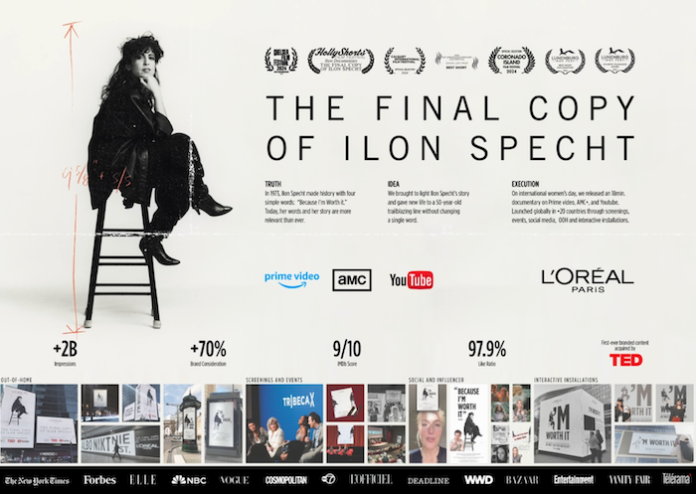
– The Final Copy of Ilon Specht for L’Oréal Paris by McCann Paris (France) in the Entertainment CUT, Online Video.
– Senna’s Cut for Netflix by Monks Buenos Aires (Argentina) in the Craft CUT, Editing.
– Price Packs for PENNY by SERVICEPLAN GERMANY in the Communication Cut, Product and Packaging Design.
– Never Just A Period for Bodyform/Libresse by Abbott Mead Vickers BBDO (United Kingdom) in the Craft Cut, Art Direction.

The campaign from Edelman, The Unburied Casket for Woman For Change, won two bronzes in the Communication and Work for Good Cut. MullenLowe South Africa won a bronze with the campaign Green Gursha for Knorr in the Health Cut.

Grand Jury member Vuyo Henda, Chief Marketing Officer Spur Corp, South Africa, commented on McCann’s Paris Grand Prix: ‘The Final Copy of Ilon Specht, unveils the indomitable woman behind the words that reshaped beauty advertising. Her line for L’Oréal — ‘Because I’m worth it’ — not only captured the spirit of its time, but it also transcended it, becoming a mantra for women around the world.

In an era where large language models dominate conversations and AI-assisted expression floods our feeds, The Final Copy is a testament to the enduring might of words that come from the heart — and ideas powerful enough to reverberate across generations. Ilon’s story is not only worth telling but worth celebrating.’

‘The Gerety Awards were founded to honour creativity that is both timely and timeless. Ilon Specht’s Final Copy pays tribute to a woman who embodied these qualities and whose powerful words continue to shape the world. That is worth a Grand Prix.’

About the Grand Prix for Senna’s Cut, Grand Jury Member Menaka Menon, President and Managing Partner – Growth and Strategy at DDB Mudra, India had the following to say: ‘Senna’s Cut is all about great editing. The entire idea here hinged on the edit, on getting it down to exactly the right secondage of his record-breaking lap, on syncing the footage with the sound design, while also ensuring the narrative of the show came alive. And doing it all so well, that one was hooked from start to finish.’

‘As a marketer on the African continent, I can honestly say that this campaign touched me deeply. In these tough economic times, when people are overwhelmed and brands are under pressure, it reminds us that marketing can still connect through empathy, truth, and courage. It’s soft yet powerful, feminine values we need more of in our industry. It doesn’t shout, it speaks. It doesn’t sell, it moves. In a world full of noise, this campaign chose meaning, and that’s why it deserved the Grand Prix,’ added Waithera Kabiru, Africa Digital Hub-Lead Diageo Africa, Grand Jury member from Kenya, about Price Packs for PENNY.

Grand Jury member from Pakistan, Rifah Qadri, Executive Director Marketing easypaisa, commented on AMVBBDO’s campaign: ‘Never just a period is a masterclass in storytelling. Every frame amplifies emotion with the urgency of the message. The pacing, the transitions and the visual juxtapositions pull you in and make it unforgettable, making a sensitive subject impossible to ignore.”

Watch some of this year’s jury as they discuss trends and favourite campaigns from the 2025 Gerety Awards with the Gerety Grand Jury Insight panels here.

GERETY AWARDS
www.geretyawards.com

We Must Guard Against Creator Economy Exploitation

We Must Guard Against Creator Economy Exploitation
Mohale Moloi, Irvine Partners.

Mohale Moloi, Content Director at Irvine Partners, says back in the 1940s and ’50s it wasn’t uncommon to see doctors promoting cigarettes. They’d appear in advertisements, reassuring the public that certain brands were superior or even good for your health. It seems absurd now, doesn’t it? The idea of a medical professional – a figure we instinctively trust – being paid to promote something that’s obviously not good for our health.

Today, such a campaign would be unthinkable, thanks to strict regulations around tobacco control and widespread understanding of the dangers of smoking.

That chapter in history offers a cautionary analogy for the creator economy. The Alabuga Start scandal affecting African countries and our influencer industries is our cigarette-doctor moment: a reminder that the trust we trade on – the very currency of this ecosystem – is not guaranteed. It must be protected, and it must be earned.

A Betrayal Of Trust

For those unfamiliar, the scandal unfolded when influencers heavily promoted a programme called Alabuga Start as a work and study opportunity in Russia. The target audience? Young women aged 18-22. It was an enticing offer, especially on a continent facing a youth unemployment crisis. Countries like South Africa have had nearly half of their young people (aged 15-34) without work in the first quarter of 2025. Young women are disproportionately affected, as they face higher rates of unemployment compared to their male counterparts. Desperate for a way out, these young women were particularly vulnerable to promises of a legitimate-sounding job, even in a foreign land.

But as investigations and testimonies later revealed, the programme was a front for something far more sinister: labour in a Russian industrial military complex, where young workers were allegedly exposed to toxic chemicals, placed under constant surveillance and forced to work long hours to support Russia’s war in Ukraine.

The influencers who promoted the programme, some of whom have since issued apologies, were caught in the crossfire. They may have been misled about what they were promoting or they simply failed to conduct due diligence, but the outcome was the same: they became unwitting vectors for a harmful, exploitative scheme. The public backlash was swift and severe, a clear signal that audiences hold creators responsible for the content they promote.

Beyond The Backlash

This is more than just a public relations problem; it’s an existential threat to the influencer economy. Brands are increasingly investing in creator-led campaigns, with the creator economy in Africa currently valued at $3 billion and expected to grow to nearly $18 billion by 2030. This growth is built on a foundation of authenticity and trust. When that trust is eroded, even a single scandal can trigger a ripple effect that threatens the viability of the entire ecosystem.

The critical challenge lies in the fact that while we strive to establish more formal standards, similar to those implemented by the Advertising Regulatory Council of Nigeria or the Interactive Advertising Bureau’s South African Content Creator Charter in South Africa, many creators operate in an undefined space, lacking the oversight and accountability present in traditional media. Jobs are hard to come by in many African countries, and creators, like anyone else, are trying to monetise their work and build better lives. This makes them susceptible to enticing offers that lack legitimacy. It’s a complex situation that requires empathy, but empathy cannot come at the cost of accountability.

Across our continent, audiences are migrating from traditional media to social and video platforms. In the Reuters Digital News report, a staggering 59% of respondents in Nigeria and 58% in Kenya, respectively, said online influencers are a major source of false and misleading information. There must be room for companies, platforms and workers who build and sustain this economy to work together to change this narrative.

Despite these concerns from surveyed audiences, platforms are undeniably essential to the creator economy, enabling creators to turn passion into profits. The Alabuga scandal might not be an isolated incident, but it’s a learning moment – a chance for platforms, creators, and the brand partners who work with them to come together and build safeguards that prevent future controversies.

What Comes Next?

Pointing fingers rarely leads to lasting solutions. But building a collaborative framework for accountability might. This is not just the responsibility of influencers (though they must be extremely careful about what they post and promote); it’s a shared duty across the entire industry.

For agencies: It’s time to double down on vetting. We must use digital infrastructure to create a more efficient and transparent process for campaign management. Our platforms must have safeguards in place to prevent the promotion of harmful schemes. We need to leverage our collective experience to create a safer ecosystem for everyone by integrating feedback from past campaigns and negative news around certain brand practices into the process. If someone has been using creators to promote harmful programmes, the whole industry should know about it, and that information needs to be documented.

For platforms: Let’s work together to better understand the problems. When creators make content that causes harm, they breach your community standards and guidelines. As you take decisive action against such content, sharing data with the industry, or collaborating on a report exposing patterns of malicious promotions for what they are, will only benefit your communities and the broader content ecosystem.

For influencers: Your credibility is your most valuable asset. Before accepting a partnership, ask critical questions. Who is the client? What is the product or service? What are the testimonials and reviews? While we understand the pressure to monetise, a single poorly vetted promotion can cause irreparable damage to your reputation and career. What support do you need to make this a reality? We want to know because you are a powerful voice enabling the marketing and creative communications ecosystem of the future. Owning that will help you get insight into how to look at brand deals critically.

For the industry: We must be the advocates for ethical influencer marketing. This means working together to create enforceable frameworks that hold bad actors to account. This understanding will be crucial to designing campaigns that prioritise safety, transparency, and credibility. In the same way, governance frameworks exist for other elements of your business, like relationships with vendors and suppliers; a similar approach to formalising influencer relations is needed.

The Alabuga scandal is a painful but necessary reminder that the very trust that makes influencer work so effective can be weaponised. It’s a moment of reckoning. While the South African government has begun to address this issue, there remains a disconnect within the industry. We cannot continue to operate behind walls if we are to build a more robust, responsible, and ethical industry for all. Just as the medical profession no longer lends its trust to cigarette companies, we must ensure that the creator economy never again becomes a vehicle for exploitation. The future of the creator economy depends on it.

IRVINE PARTNERS
www.irvinepartners.co.za

This is Modern Marketing