Home Blog Page 28

Tickets For The 2025 Effie Awards Gala Are Now Available

Tickets For The 2025 Effie Awards Gala Are Now Available

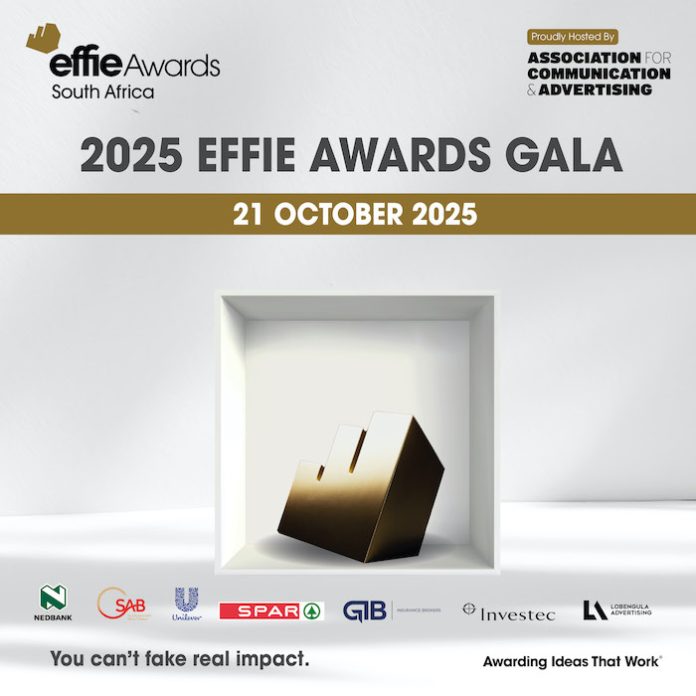
Effie South Africa is pleased to announce that tickets for the 2025 Effie Awards Gala are now available for purchase. Taking place on the evening of Tuesday, 21 October 2025 at The Venue, Melrose Arch, the Gala will honour the marketing campaigns that delivered measurable, business-building results — because you can’t fake real impact. Modern Marketing is a proud media partner of The Effie Awards South Africa.

This year marks a record number of entries into the Effie Awards South Africa programme – a clear reflection of the industry’s commitment to marketing that delivers results. With so much exceptional work to recognise, the 2025 Gala promises to be a truly unmissable evening.

This annual celebration brings together the leaders of South Africa’s marketing, advertising, and communications industry — from brand builders and agency creatives to strategists, media thinkers and business decision-makers — in one unforgettable evening of recognition and connection.

The Effie Awards South Africa is hosted by the Association for Communication and Advertising (ACA) and proudly sponsored by Nedbank, SAB, Unilever, SPAR, GIB Insurance, and Investec, with communications support from Lobengula Advertising.

Tickets are now available for purchase via the official online portal here. Book early to avoid disappointment – ticket numbers are limited.

EFFIE AWARDS SOUTH AFRICA
www.effieawards.co.za

The Brutal But Rewarding Path Of Breaking Into Advertising

The Brutal But Rewarding Path Of Breaking Into Advertising
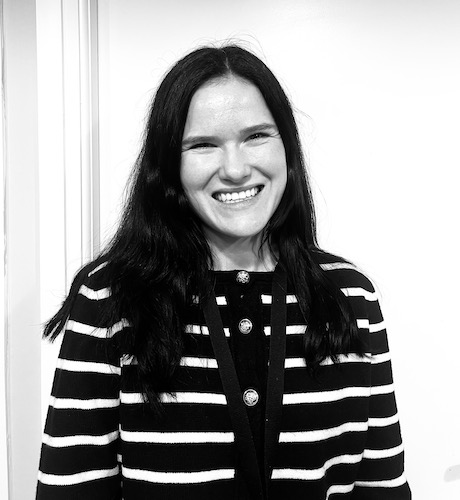
Amy Jayne Burrow.

Brand and communications strategist, Amy Jayne Burrow, discusses why rejection and resilience are the best preparation for agency life.

When I was young, I often swam in the middle of Lake Kariba, Zimbabwe. My mum always reassured me, ‘Don’t worry, crocodiles don’t swim in the middle of the lake.’ It sounded logical, so I believed her. Again and again, I leapt in, slicing through the open water, exhilarated by the sense of freedom that came from thinking I was safe.

But one afternoon, when I climbed back onto the boat, I saw it. A crocodile gliding silently across the exact stretch I’d just left. Cold. Indifferent. Breaking the rule we had chosen to imagine.

That moment never left me. Not because I was nearly in danger, but because of what it revealed about people. We create stories, safety nets, rules and illusions, to make life feel less threatening. We cling to these illusions, even when reality doesn’t play along. Years later, I realised it hadn’t drawn me to strategy so much as it had shaped the way I think. It taught me that people live inside the stories they create for themselves, and that the real challenge is knowing when to lean into those stories, when to question them, and when to break them completely.

That way of seeing the world became a foundation when I started my career. I didn’t start out in advertising. My path began in the nonprofit world, where there was no room for illusions. Progress only came if you created it yourself. My first big challenge was World Water Day, where we launched the Wishing Well for Communities campaign at the V&A Waterfront, which helped build wells across Africa. It demanded resilience, and in return it welcomed brand partnerships, some of which are still thriving today.

Woolworths was the one brand I sought after the most. I had studied the brand in university, written papers on their Corporate Social Responsibility (CSR), and admired their Head of Sustainability. So I phoned his office, every day, for weeks. Eventually, I was put through, given ten minutes to sell the idea, and walked away with a yes. Around the same time, by sheer chance, I struck up a conversation with the Puma marketing manager at one of their stores, and left with them on board as well. What started as persistence and, at times, divine timing, became momentum. Puma went on to become long-term partners for the nonprofit organisation.

Those wins weren’t luck. They were the divine consequence of my relentless persistence, which I believe to be one of my defining characteristics. Once one brand said yes, others followed. Within three months, I’d secured over 25 new brand partnerships. No big title. No industry stamp of approval. Just grit, repetition, and belief. Those months became my training ground, teaching me that persistence isn’t just a trait, it can be a defining character of success.

It was also during this time that I was mentored by someone who had once been a Creative Director at Ogilvy (whom to this day, I still call King of Creativity). He showed me that creativity doesn’t sit apart from strategy, it strengthens it. I learned that every strategy works best when you use your head to understand the problem, your hand to design the solution that truly helps, and your heart to shape the outcome, not for you, but your audience. That simple framework of ‘Head, Hand, Heart’, became the foundation of the way I work today. You won’t find it in any textbooks, but it taught me that strategy isn’t just analysis, it’s problem solving led by humanity and empathy.

That mentorship lit a fire. I wanted to move into advertising. But wanting in and getting in are two very different things.

The industry doesn’t hide its bias: if you don’t have advertising agency experience, you don’t count. I experienced the gruelling catch 22 many newcomers may relate to; you need industry experience to get in, but you can’t get that experience without already being in.

At first, it felt brutal. But then I remembered Lake Kariba. The crocodiles were here too; rejection, invisibility and closed doors. The questions had simply shifted; it wasn’t whether the danger existed, it was whether I’d keep swimming anyway.

So I reframed rejection as conditioning. Every ‘no’ was practice for the industry I wanted to be in. Because advertising is no stranger to rejection. Ideas get killed daily, clients change courses in a heartbeat, and agency personnel move faster than I stomach breakfast servings at all-you-can eat buffets (as a foodie, I, along with my older brother can attest to this, I am a cheetah at these buffets). Case in point, if you cannot stomach rejection, you won’t last here.

That mindset shaped how I positioned myself. I built a portfolio that didn’t try to hide my differences, but rather leaned into them. Work that proved I could win brands against the odds, hustle without a safety net, and turn constraints into creativity, all showcased through a simplistic three point analysis. My portfolio didn’t look like anyone else’s, which I believe became my distinct differentiator.

When I finally stepped into an agency, I didn’t arrive fragile or untested. I arrived ready. The nonprofit world had forced me to earn every win. Rejection had thickened my skin. My overly enthusiastic ‘yes’, the one people sometimes misread as naïveté, had become my competitive edge. In a business that runs on doubt and fatigue, persistence backed by optimism is not a weakness. Some may even go to say it’s a unique selling point.

That’s why I don’t think the gates into the advertising world should be unlocked for new comers. These gates are huge, well-guarded and hard to break into. But they forge the resilience the industry demands. The people who fight hardest to find the key, are often the ones who fight hardest once they’re inside.

As someone on the cusp between Millennial and Generation Z, I’ve learned that advertising doesn’t just reward creativity, it demands stamina. We came of age in uncertainty: recessions, shifting economies, relentless digital change. That shaped how I see this industry. It isn’t just about having ideas, it’s about keeping them alive in a world that changes faster than most can keep up. My path into advertising wasn’t traditional, but it mirrors the times: unconventional, unfiltered, and built on the belief that persistence is the sharpest tool in a strategist’s kit.

Breaking in was brutal. But it made me exactly the strategist I needed to be. And just like all those times I swam in Lake Kariba, I know now the crocodiles never vanish. The risks, the rejections, the unseen challenges; they’re always there, moving just beneath the surface. The only question that matters is whether you’ll keep swimming.

AMY JAYNE BURROW
amy@punks.co.za

 

NIQ State of Retail Analysis Shows Mixed Outlook For Consumer Spending

NIQ State of Retail Analysis Shows Mixed Outlook For Consumer Spending

NielsenIQ (NIQ) South Africa has released its State of the Retail Nation analysis for the first half of 2025. The Tech & Durables (T&D) sector, remains under pressure. GfK South Africa’s latest panel market data for the first half of 2025 reveals that weak smartphone sales continue to drag the T&D sector down. Total T&D spending declined 1.1% year-on-year to R60.5 billion, with underlying market dynamics suggesting that consumers are rebalancing their spending priorities.

The analysis also showed healthy increases in retail sales value and volume. South African consumers spent just over R324.4 billion on fast-moving consumer goods (FMCG) through traditional and modern trade channels during the first six months of the year. This represents year-over-year value growth of 7.4%, with unit sales also increasing by 7.2%.

‘Declining fuel prices, interest rate cuts and relatively low CPI have helped ease some cost pressures for consumers, freeing up a little more discretionary spending,’ said Zak Haeri, Managing Director for NIQ in South Africa. ‘However, persistently high food prices and unemployment remain a challenge for many households. As a result, consumers are still spending cautiously, trading down to cheaper brands and channels, and hunting for bargains and promotions.’

FMCG Market: Traditional Trade, Snacks And Tobacco Enjoy A Strong H1 In 2025

Growth segments in the FMCG sector for the first half of 2025 included beverages (up 10.4% to nearly R47 billion), liquor (up 7.5% to around R63 billion), snacking (up 9.3% to R23.6 billion) and tobacco (up 16.2% to R13.4 billion). These categories all saw impressive volume growth, with snacking sales volume up 12.2% and tobacco sales volume increasing by nearly 20%. Food, the biggest category, was up 6.6% to R117 billion and saw a 5% volume increase.

Nearly three quarters of all FMCG retail sales went through modern trade channels such as supermarket chains, franchised grocery stores and ecommerce platforms. However, traditional trade outlets (which include independent superettes, spaza shops and taverns) are growing at a much higher rate. Compared to the same period last year, modern trade sales rose by 5.1% in value and 2.1% in unit sales, while traditional trade surged by 14.8% in value and 16.4% in unit sales.

Private label growth slowed in the first six months of 2025, growing 7.5% compared to the 8.8% increase in sales value recorded over the same period in 2024. Independent brands, meanwhile bounced back with 8.6% growth versus the 4.7% recorded in the first six months of 2024. As a result, private labels’ share of the market declined slightly from 18.5% in the first half of 2024 to 18.3% for the first half of 2025.

Said Haeri: ‘Consumers continue to manage costs by buying in bulk, trading down to value options and chasing promotions. Independent traditional retailers performed especially well for the first half of 2025, which is testimony to their flexibility, resilience and understanding of their customers’ needs. Slower growth for private labels suggests that major brands are successfully defending market share through price promotions, marketing campaigns and product innovation.’

Slowing Telecom Sales Continue To Depress T&D Market Growth

The T&D market once again showed a decline in sales value and volumes due to cooling sales in the Telecom sector. The Telecom category is the largest T&D segment by value, accounting for 54% of spending, and includes the all-important mobile phone market. Telecoms sales value for the first half was down 8.1% and unit sales decreased by 9.6%.

Major Domestic Appliances and Small Domestic Appliances posted consistent growth, with sales value up 6.4% and 6.3% respectively for the first half of 2025. In the Major Domestic Appliance segment, unit sales were up 8% as consumers replaced worn-out functional appliances. Meanwhile, consumers splashed out on small appliances like juicers, cooking gadgets and electric blankets to enhance their lifestyles.

IT hardware continued its recovery with 5.8% growth in sales value and a 14.5% increase in unit sales. This confirms that the replacement cycle began in 2024 and is accelerating, supported by increased consumer confidence and demand for productivity-enabling devices. Before this surge, many consumers and small businesses had last upgraded during the pandemic in 2020.

Consumer Electronics remained relatively flat (down 1.2% in the first half), indicating saturation in entertainment tech and a shift away from discretionary spending. A unit sales increase of 2.3% suggests that when consumers buy, they are purchasing at lower promotional price points.

Meanwhile, Office Machines saw the steepest decline (-21.7% in value and -30.2% in units), underscoring a structural shift away from reliance on print infrastructure and work-from-home setups.

‘The upgrade urgency that drove growth in the smartphone segment appears to have dissipated. In the face of economic caution and a slower pace of smartphone product innovation, consumers are holding on to their devices for longer,’ said Haeri. ‘The overall T&D market reflects a more value-conscious and strategic consumer, who prioritises long-term utility and home-centric investments.’

Mixed Outlook For Consumer Spending

Haeri said: ‘Our data for the first half of the year shows a mixed picture. On the one hand, consumers remain strategic and frugal in their spending, but on the other, we see them making some small discretionary purchases in the FMCG sector.’

He added that brands will need to focus on targeted promotions, reach into traditional trade channels, and develop carefully segmented offers for value-conscious and premium customers to win in this market. Retailers, meanwhile, should aim to maximise basket sizes with targeted promotions and loyalty programmes.

‘For the T&D sector, it is essential to capitalise on consumer replacement cycles with innovative products, clear messaging on utility and value-for-money offers,’ said Haeri. ‘In segments such as panel televisions, it is also important to make the most of promotional periods such as Black Friday and the festive season. Brands and retailers should align their offerings with consumers’ rebalanced priorities, particularly in categories that support digital lifestyle, energy efficiency and convenient living.’

NIELSEN
https://www.nielsen.com

The Evolving Role Of Brands In Women’s Rugby

The Evolving Role Of Brands In Womens Rugby

The 2025 Women’s Rugby World Cup in England has already broken records. More than 375,000 tickets have been sold, triple the 2022 figures, and the Twickenham final is on track to sell out 82,000 seats, the biggest crowd in women’s rugby history. Mscsports’ strategist Bertine Faber says England’s success is the result of deliberate strategies connecting grassroots rugby to the international stage.

Their example is proof that putting resources into women’s sport creates both players and fans – and for brands, it creates measurable commercial returns.

England’s Pathway Example

England’s rise didn’t happen by chance. It was built on structures designed to give every girl a chance not only to play, but also to become a fan. From grassroots clubs to university leagues and, eventually, professional contracts, the game was made visible and accessible. Investment in coaches, community programmes, and competitive structures created a clear ladder of progression and a culture of belonging.

Today’s packed stadiums and engaged fans are the outcome of years of joined-up thinking. Critically, this has created a commercial space where brands are rewarded with exposure, loyalty, and cultural relevance.

South Africa’s Progress And Aspirations

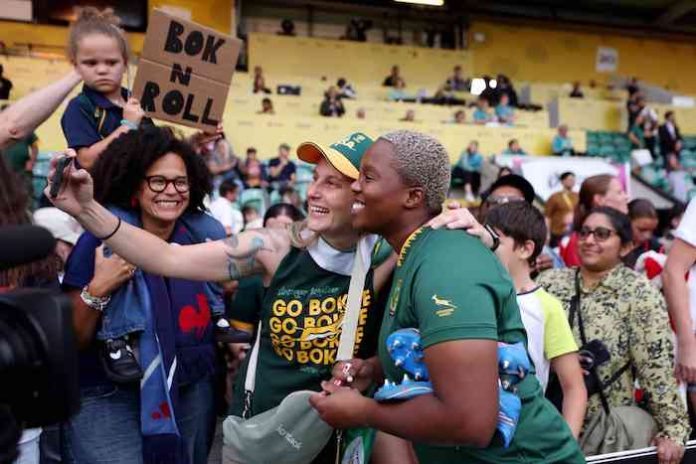
South Africa is on its own journey. As many of you reading this will know, the Springbok Women made history by qualifying for their first-ever World Cup quarterfinal after a dramatic 29–24 win over Italy. It was a moment of national pride, summed up perfectly after the match by fly-half Libbie Janse van Rensburg: ‘We talked about making history for women’s rugby in South Africa – and we did that.’

This breakthrough reflects more than a single result. It shows steady progress in SA Rugby’s plan for inclusive growth: expanding access across provinces, creating more competitive structures, and building pathways for women to rise from grassroots to the highest level.

Crucially, these pathways aren’t only about producing players, but also about creating fans – young girls and communities who see themselves reflected in the game.

The challenge, however, is funding. England’s pathway was underpinned by a £50 million national lottery grant. In South Africa, that kind of government backing is out of the question. But this gap creates a very real opportunity for brands to step up and make the difference.

A strong proof point is Telkom’s #StandTall campaign around the 2023 Netball World Cup. Importantly, this wasn’t just a sponsorship badge, it organically turned into a fully-fledged brand campaign. Telkom used the partnership to take action by addressing a crisis in confidence amongst young girls in South Africa using their passion for netball to deliver the message. The impact was undeniable: the campaign generated the highest ever media value for a women’s sport sponsorship in South Africa and drove record brand sentiment and commercial outcomes for the brand.

Telkom showed that when brands lean in creatively, rather than treating women’s sport as an add-on, they unlock both cultural impact and commercial return.

The Sponsorship Gap

Despite this momentum, the commercial reality is stark. SA Rugby’s new sponsorship model has concentrated investment on the Springbok brand, with most partners activating primarily around the men’s team. Driving a one-kilometre stretch of highway in central Johannesburg, I counted three Springbok sponsor billboards – every one featuring the men. The women’s team has had only a fraction of that visibility, even in a World Cup year.

The exception is FNB, who backed the women’s team before the new model. Their support proves what’s possible when a brand invests with intention. Yet beyond that, sponsors have consistently overlooked the Springbok Women, choosing to spotlight the men predominantly.

But here’s the truth: investment in women’s sport isn’t charity, and it isn’t a box-ticking exercise. It is one of the most undervalued growth opportunities in South African sport. Internationally, brands that have recognised this are already reaping the benefits.

Take Ally Financial in the U.S. In 2022, as proud sponsors of the NWSL, WNBA and the US Women’s Open (golf), the bank committed to a 50/50 pledge, equal media spending by the brand on men’s and women’s sports within five years. They’ve already increased their women’s sports media investment by 400%, reaching a 45/55 split in 2025, and the results are undeniable:

– Brand awareness among women’s sports fans has grown by 20%.
– Brand likeability is up 25%.
– When Ally worked with CBS to move the NWSL final into prime time, viewership jumped by 71%.
– Overall brand value rose by 31% year-on-year, hitting a five-year high.

Ally proves that the brands who step into women’s sport strategically don’t just gain goodwill, they gain market share.

Why Fandom Still Matters

Development, and frankly even brand investment on its own, aren’t enough. A sponsorship cheque or a grassroots programme doesn’t guarantee lasting impact. The real returns for both sport and sponsors come when that investment is leveraged to build fandom.

Women’s rugby doesn’t yet have the century-old rituals of the men’s game, but that creates space to shape new traditions, and that space is wide open for a brand to own. Fans often rally around peak moments, united by national pride, but they need reasons to return week after week.

Brands that use their platforms to tell women’s stories, celebrate their heroes, and create consistent visibility aren’t doing it for optics. They’re making a smart, strategic play: building fandom that drives long-term engagement, loyalty, and commercial return.

The ultimate goal should be that fans don’t only look up to Siya Kolisi or Cheslin Kolbe, but just as easily to Libbie Janse van Rensburg or Aseza Hele, and the brands that help enable that shift will be the ones who win most.

Women’s rugby in South Africa stands at a crossroads. Pride has carried us this far, but progress demands more. England has shown what’s possible when pathways and fandom grow together. South Africa’s opportunity is to take the next step, and for brands, the choice is clear: hero the women’s game with the same imagination and investment given to the men, not because it’s the right thing to do, but because it’s the smart thing to do.

Every pathway that creates a player also creates a fan, and it’s that cycle of participation, passion, and commercial return that will make women’s rugby a permanent part of our sporting identity.

MSCSPORTS
https://mscsports.co.za

Marketing Agencies Need To Embrace Speed As A Discipline, Not An Afterthought

Marketing Agencies Need To Embrace Speed As A Discipline, Not An Afterthought
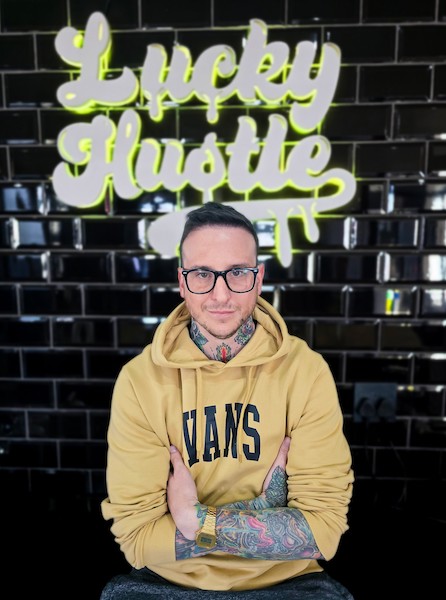
Darren Morris, Lucky Hustle.

Creativity has long been the engine of effective marketing. The campaigns that endure are those that tell compelling stories, spark emotion, and shift perceptions. Yet in 2025, creativity alone doesn’t carry the same weight it once did. Its value is amplified — or diminished — by speed. Darren Morris, CEO of Lucky Hustle, says agility has become marketing’s true currency.

Today’s audiences live in a state of perpetual scroll. Culture is shaped in moments: a trending sound, a viral clip, a breaking headline. For brands, the window to respond is measured in hours, not weeks. By the time a polished campaign emerges from a traditional process, the cultural conversation may have already moved on.

This reality is forcing agencies and marketers alike to rethink how we work. The challenge is not simply to ‘be faster’, but to build systems that allow creativity to move at the speed of culture. That means empowering leaner teams, shortening feedback loops and embracing iteration as part of the process rather than a sign of imperfection.

It also requires a shift in mindset. For decades, the industry has prized the ‘big reveal’ — campaigns unveiled after months of polish, with every element tightly controlled. But culture is fluid. It thrives on immediacy, conversation, and participation. Waiting until everything is ‘perfect’ often means missing the moment altogether.

This is where agility becomes our true currency. It’s about structuring teams so decisions don’t get stuck in endless approvals. It’s about trusting creative talent to respond in real time without sacrificing strategic intent. And it’s about seeing iteration not as a flaw, but as a way of staying in step with culture while still moving toward a larger brand ambition.

The most effective work is built less like a movie premiere and more like a series — episodes released, tested, refined, and layered to build momentum. Small, well-timed pieces of content can carry as much weight as a major campaign launch if they capture attention in the right moment. And over time, these moments compound into brand relevance.

This shift is already happening. The agencies adapting fastest are those that embrace speed as a discipline, not an afterthought. We don’t see agility as rushing; we see it as designing conditions for creativity to thrive in real time.

The task for our industry is to reconcile immediacy with integrity and to deliver work that is both timely and enduring; strategic without being paralysed by overthinking. The agencies and marketers that strike that balance will not only stay relevant but shape the conversations that define culture itself.

At this year’s Nedbank IMC Conference, Lucky Hustle will be executing on a real-time video challenge. Catch all the action on 18 September 2025 at Mosaiek Teatro in Randburg.

LUCKY HUSTLE
https://www.luckyhustle.co.za/

African Marketing Confederation Launches Initiative To Strengthen Africa’s Tourism Sector

Helen McIntee-Carlisle, AMC.

The African Marketing Confederation (AMC), the continent’s largest network of marketing professionals, is launching a dedicated Tourism Chapter. The initiative is designed to strengthen Africa’s tourism sector by enhancing marketing skills, fostering collaboration, and improving the global positioning of African destinations.

Tourism is a key driver of economic growth across Africa, contributing significantly to gross domestic product, employment, and cultural exchange. Despite its importance, the sector faces challenges including weak branding strategies, limited marketing expertise, and fragmented collaboration among stakeholders.

The Tourism Chapter will address these gaps by creating a platform through which marketers and tourism professionals can work together to advance the industry.

The objectives of the Tourism Chapter include strengthening marketing capabilities, promoting intra-African tourism, facilitating knowledge sharing, and advocating for sustainable and responsible tourism practices.

To achieve these objectives, AMC will host capacity-building workshops, develop research-based reports on best practices, partner with governments and industry bodies, as well as hold an annual awards programme recognising excellence in African tourism marketing.

‘Tourism is a vital contributor to Africa’s economies, but we cannot unlock its full potential without marketing excellence,’ said Helen McIntee-Carlisle, President of the AMC.

‘The Tourism Chapter will provide the structure, expertise, and collaboration necessary to elevate Africa’s destinations, ensuring they compete successfully on the global stage while promoting sustainable growth and cultural exchange.’

By focusing on strategic branding, innovative digital marketing, and stronger regional cooperation, the AMC’s Tourism Chapter aims to improve Africa’s competitiveness in the travel market and increase its visibility worldwide.

The initiative is expected to result in enhanced marketing skills among professionals, greater intra-African travel, and stronger alignment between tourism boards, hospitality businesses, and marketers.

AFRICAN MARKETING CONFEDERATION
www.africanmarketingconfederation.org

Castle Milk Stout Campaign Invites South Africans To Rediscover Traditional Songs

Castle Milk Stout Campaign Invites South Africans To Rediscover Traditional Songs
Mbuso Khoza at the 2024 Castle Milk Stout Ancestor’s Day Commemoration Event.

Across South Africa’s urban centres, traditional ceremonies happen less often, and when they do, elders lead while young people watch. For many, this has created a cultural gap: a generation proud of its heritage, yet anxious about not knowing the songs that carry its wisdom. Castle Milk Stout is addressing this by introducing Songs to Savour – a platform to preserve and share traditional songs this Heritage month.

The platform invites South Africans to rediscover traditional songs through simple sing-alongs, making it possible for anyone to learn, practise and share music once reserved for weddings, funerals, initiations and family gatherings.

Being a ‘new adult’ — entering marriage, parenthood, or becoming a custodian of family traditions — often comes with the expectation to lead ceremonies. Yet many feel unprepared, lacking the cultural knowledge that should have been passed down. Songs to Savour bridges this gap, creating a safe and joyful space to learn songs that would otherwise fade into silence. For many Africans, music is not just melody — it is memory. Each song carries the wisdom of elders, the comfort of community, and the identity of a people. If we do not sing them, they disappear. Songs to Savour ensures they are sung again, not only as heritage but as part of everyday life.

Castle Milk Stout Brand Manager, Hetisani Makhubela added: ‘These songs are not just about the past — they are about connection. A campaign like this gives young people a way to make heritage part of their daily rhythm, in a format that feels modern and accessible.’ He further added that: ‘Traditional songs are living archives. They carry knowledge systems that are not always found in textbooks. By placing them on a platform where anyone can sing along, Songs to Savour ensures that cultural education remains open and shared.’

The campaign builds on Castle Milk Stout’s ongoing role as a brand which believes in the celebration and preservation of African heritage.

‘Castle Milk Stout is more than a drink, it is a cultural companion,’ said Makhubela. ‘Songs to Savour is part of our mission to create spaces where heritage is lived, not just remembered. This campaign contributes to young adults reclaiming the songs of their ancestors with pride and joy.’

CASTLE MILK STOUT
www.castlemilkstout.co.za

WWF South Africa Announces Head Of Business Development And Marketing

WWF South Africa Announces Head Of Business Development And Marketing
Pavitray Pillay, WWF South Africa.

In her new role, Pavitray Pillay will focus on securing funding to support critical conservation work, raising awareness across sectors to keep nature top of mind in decision-making, and building a community of supporters who champion WWF’s mission beyond donations. Pillay will take the lead on growing the organisation’s fundraising and corporate partnerships as it advances its 2030 strategy.

‘One of my biggest ambitions is to make WWF relevant to all South Africans,’ says Pillay. ‘I want people to see WWF as an organisation that safeguards the environment and makes a real difference in their lives, their family’s lives, and the future of our planet.’

Her promotion builds on her previous work securing programmatic funding through corporate social investment (CSI) and helping businesses embed sustainability into their strategies. ‘It’s about more than fundraising,’ she explained. ‘We guide companies to understand their impact on nature and their dependence on it, co-developing strategies that reduce risk and create positive environmental outcomes while understanding companies need to mitigate risk while building resilient and prosperous businesses.’

While financial growth provides clear metrics for success, Pillay believes the true measure will be WWF’s tangible environmental impact – halting biodiversity loss, addressing climate change, and building a healthier planet for future generations. ‘I want to wake up each day knowing the work we do today leaves a legacy where people and nature can thrive together,’ she concluded.

WWF SOUTH AFRICA
https://www.wwf.org.za

See The Latest Branding And Marketing Solutions This Week At The Modern Marketing Expo

See The Latest Branding And Marketing Solutions This Week At The Modern Marketing Expo

Don’t miss out on the region’s dedicated branding and marketing exhibition, Modern Marketing 2025, taking place 9-11 September (Tuesday, Wednesday and Thursday) at the Gallagher Convention Centre, Johannesburg.

This is Africa’s focused marketing expo for marketing professionals to see the latest developments and innovations in: marketing, branding and technology including digital signage, point of sale displays, promotional clothing, in-store branding, promotional gifts, visual communication, events and branding, conference venues, advertising and design and media.

Supercharge Your Marketing At The Modern Marketing Power Hour

Industry leaders will share their expertise and insights in the ever-evolving field of marketing at the free-to-attend Modern Marketing Power Hour. There will be a presentation each day from 9-11 September from 12:30-13:30 daily.

Get insights from these industry experts:

Jonty Fisher, Chief Strategy and Integration Officer, Publicis Groupe Africa

Topic: Influence Or Illusion? Cracking The Code Of Effective Creator Partnerships

Unpacking the latest research and practical insights on driving real impact with influencers — what works, what to watch out for, and how to keep your brand’s story intact.

Date: 10 September. Book your slot here.

Graeme Stiles, Founder and CEO, Algorithm Agency

Topic: Why Your Performance Marketing Isn’t Performing: From Data Chaos to Growth Clarity

Today’s CMOs are under relentless pressure to prove performance, but despite sophisticated tools and growing media budgets, many brands still struggle to generate predictable, profitable growth. Why? This session goes beyond the usual platform tactics to expose the real reasons your performance marketing efforts may be stalling. Learn how your data layer, when unified and structured correctly, becomes the single most powerful growth lever in your performance marketing arsenal.

Date: 11 September. Book your slot here.

Why You Should Attend The Modern Marketing Expo

Stay ahead of industry trends: The modern industry is evolving fast. Discover the latest technologies and techniques to keep your competitive edge.

AI Workshop: A must-attend for designers, creatives, and innovators eager to harness the power of AI in their workflow. Book here.

Change 1 Woman networking event: This is your platform to connect with women in branding, print and signage. Be prepared to be uplifted, guided and inspired. The first 150 ladies to RSVP will get their own C1W badge and shopper bag. Book your spot: info@c1w.co.za

Roland Speedwrap Challenge: Test your skills and win cash prizes! Or watch the pros wrap with precision and speed. Click here for more info.

World Wrap Record: Watch the pros wrap with precision and speed in their attempt to set the world wrapping record. Click here for more info.

Network with leading suppliers: Interact with a wide range of exhibitors representing hundreds of leading brands.

Please register online for free attendance to the Modern Marketing Expo, taking place 9-11 September 2025, on Tuesday, Wednesday and Thursday, at Gallagher Convention Centre.

MODERN MARKETING EXPO
+27 11 568 1894
https://modernmarketingexpo.co.za

RMB And Halo Launch New Brand Film

RMB And Halo Launch New Brand Film

At RMB, people are empowered to be exceptional. The new brand campaign, developed by Halo, is the cinematic expression of that truth, a reminder that RMB is more than a bank; it is a place that attracts unconventional thinkers with unique skillsets who create possibilities. Directed by Tristan Holmes of Star Films, the film tells the story of an extraordinary boy named Dave, seen entirely through his eyes.

The narrative unfolds from Dave’s point of view. From a toddler to childhood awkwardness to adult triumph, audiences experience his world as he does, with hints of him being multi-talented and seeing the world differently with a unique perspective. His difference is his strength. In the end, Dave discovers his home at RMB: a place where diversity of talent is celebrated and thrives.

Bringing Dave’s perspective to life required a deep collaboration with world-class talent across disciplines. The film’s striking point-of-view storytelling was enabled by cinematographer Werner Maritz, whose lens places audiences directly in Dave’s shoes, allowing them to feel his life unfold in intimate detail.

The emotional and surprising end to the film (when Dave finds his home at RMB) was crafted by Paris VFX studio, Mathematic. In keeping with RMB’s lighthearted and confident personality, their artistry elevated the conclusion into something both unexpected and magical.

Holmes remarked: ‘From the very first frame, we wanted audiences to feel what it’s like to live as Dave. It’s a deeply human perspective, but also cinematic in a way that pushes the storytelling into new territory.’

The emotional arc of Dave’s growing up is powerfully underscored by the track ‘All These Things That I’ve Done’ by The Killers. The song’s anthemic rise mirrors Dave’s journey, from difference to resilience and belonging, culminating in a triumphant conclusion that cements the film’s emotional impact.

In the banking sector, often defined by sameness, the film piece positions RMB as a brand that dares to celebrate its distinctiveness and optimism. Its sophisticated yet playful voice mirrors the brand’s nature: intelligent, charming, and driven by unconventional thinking.

Halo Executive Creative Director, Coenie Grebe, commented: ‘This film was almost a year in the making, and the time was vital to shape every detail: from the accuracy of the art department depicting the exact moments in time to the casting and lensing to the soundtrack and crafting of the VFX. Our goal with Dave was to create more than just another TV ad. It’s a character study, an emotional journey, and ultimately a statement of RMB’s belief that extraordinary talent drives possibility.’

‘We wanted a creative idea that is authentic to who we are. As unconventional thinkers, producing distinctive work that stands out and resonates is key. Our new brand film together with the rest of the campaign is confident yet charming and cerebral yet accessible. It talks directly to the robust diversity of our deep talent pool, and the curious and optimistic outlook of our people, which is underpinned by RMB’s philosophy that ideas and solutions are best executed for our clients, in trusted partnerships,’ concluded Alison Badenhorst, Chief Marketing Officer at RMB.

RMB
https://www.rmb.co.za/

HALO
https://www.brandhalo.co.za/

This is Modern Marketing