
Home Blog Page 91

IMM Institute’s New SMME Associateship And Innovation Hub To Advance Small Business Growth

IMM Institutes New SMME Associateship And Innovation Hub To Advance Small Business Growth
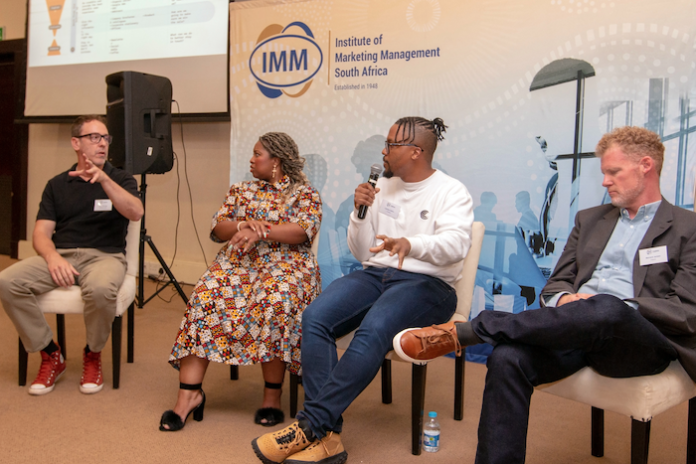
Brad Watridge, Hot Mustard Africa; Chule Gobodo, Brainbow Conscious Creatives; Lethabo Sekhu, Credipple and Bernard Jansen, Firejuice.

The IMM Institute has launched its SMME Associateship and Innovation Hub to boost small businesses through mentorship and networking opportunities. IMM Institute CEO Irene Gregory said this initiative aims to help entrepreneurs expand their skill sets beyond their core abilities, supporting them in growing their businesses.

‘South Africans have, as part of their DNA, an entrepreneurial spirit. However, not everyone is a whizz at finances or operations, for example,’ said Gregory. Recognising this, Gregory added that the Institute has made an SMME Associateship category available.

Through the Associateship, SMMEs can join the Institute for a small fee and take advantage of its courses, which help entrepreneurs develop key business and marketing skills, Gregory explained. SMMEs join as Bronze Associates. By completing at least five Professional Development activities a year, they progress to Silver and then Gold Level. Ultimately, they can reach Platinum status, which grants lifetime Associateship at no additional cost.

Gregory said that Platinum Associates are then at a stage where they can help mentor other entrepreneurs seeking to expand their business. ‘This will empower and support small businesses, entrepreneurs and start-ups by providing a vibrant community, a collaborative workspace, professional development, resources, mentoring, and networking opportunities to foster innovation and to help SMME Associates succeed in a competitive market,’ she said.

Being an Associate also has other benefits, depending on which tier the small business has reached, Gregory said. ‘For example, SMMEs can, as they develop their companies and climb tiers, receive additional discounts on conferences and events,’ she added.

For those companies who might not be able to afford Associateship when they join, the IMM Institute will seek corporate sponsorship where it can, Gregory stated.

‘Perhaps the most exciting aspect of this SMME Associateship and Innovation Hub programme is that SMMEs can also be nominated for the Entrepreneur of the Year Award, which celebrates exceptional innovation, leadership, and vision in the entrepreneurial space,’ said Gregory. She noted that this award is not exclusive to Associates of the Institute.

‘Our aim is to enable SMMEs to join a thriving community, scale their business, and access unparalleled resources to enable them to succeed in a competitive market. The opportunity to win awards adds to their cache, giving them more credibility when it comes to pitching for business,’ said Gregory.

The IMM Institute has been the pre-eminent marketing institute in Southern Africa for decades. It brings together like-minded individuals to share thoughts and experiences within the rapidly changing business environment.

The IMM Institute offers a wide range of value-added products and services for marketing professionals who are Associates in either an individual or corporate capacity.

The IMM Institute has more recently incorporated the discipline of supply chain into their community and training offerings, recognising its critical role in modern business operations, and its strong connection to marketing functions.

IMM INSTITUTE
www.imminstitute.co.za

Webfluential Unveils Its Suite Of Services Set To Bolster The African Creator Economy

Webfluential Unveils Its Suite Of Services Set To Bolster The African Creator Economy
Murray Legg, Webfluential.

Webfluential has introduced a suite of innovative products and services that cater to the evolving needs of content creators and brands alike. This expansion positions Webfluential at the intersection of influencer marketing, e-commerce, and digital advertising, creating a holistic ecosystem for the creator economy.

Africa’s creator economy has skyrocketed, transforming digital content into a $3 billion industry in 2023 with a projected growth rate of 28.5% per year, and set to reach $17.8 billion by 2030. Yet, for many creators on the continent, achieving financial sustainability remains an uphill battle. However, Webfluential, marks its 10th anniversary with an expansion of its services that is set to change the game for creators.

As brand-centric marketing company, Webfluential is evolving its focus to support influencers as a mainstream priority, helping Africa’s content creators to level up their e-commerce strategies and sell digital and physical products to their own audiences.

‘It’s a game changer,’ said Murray Legg, Co-founder of Webfluential. ‘For a decade, Webfluential has been at the forefront of connecting brands with influential voices by creating content, but today, we’re taking a giant leap forward with our new platform that isn’t just about influencer marketing anymore. It’s about unleashing the full potential of the creator economy.’

Equipped to bring a more independent, sustainable revenue stream to its camp of creators, the company has announced the launch of an additional product stack to further empower content creators and reshape the digital marketing landscape for the long haul.

Considering that creators will own 25% of the continent’s media budget by 2025, Webfluential’s decision to help creators turn their passions into sustainable and direct income streams is an undeniable gap in the African Creator Economy, that has, for too long, begged to be closed.

The expanded suite of services include enhanced content creation and collaboration, as from ideation to distribution, Webfluential empowers creators with sophisticated tools to produce impactful content while simplifying the collaboration process between brands and influencers. Also included is direct-to-audience sales, with the platform offering integrated e-commerce capabilities. In acknowledging the entrepreneurial spirit driving Africa’s digital economy, creators can now directly sell products and services to their audiences, a vital feature given that digital product sales are currently the primary revenue source for 47.4% of African creators.

Webfluential also enables creators to sell high-quality stock content directly from the platform and diversify income opportunities through their stock content marketplace. The marketing platform also offers lead generation tools, as with Africa’s digital market rapidly expanding, Webfluential seeks to empower creators to become valuable lead generation channels for brands. Finally, included on the platform are AI-powered insights. Advanced AI tools analyse content performance, audience engagement, and Return on Ad Spend (ROAS), offering data-driven insights to maximise impact.

By expanding its services in a creator economy projected to surpass $500 billion globally by 2027 (TM Global Report The Africa Creator Economy 2024), Webfluential is placing particular focus on Africa, enabling creators to build businesses that can offer financial independence and opportunities for wealth creation, in the long term.

With its current track record of 100 influencer millionaires in its stable, Webfluential is shooting for 1000 creator millionaires by 2028, aiming to change the side-hustle narrative even more rapidly. With this, Africa’s creators will reap the confidence they need to jumpstart their future and thrive beyond the barriers to entry.

‘Stories have always been at the heart of human connection. Our platform is built on the understanding that in the digital age, our creators are the storytellers who forge genuine connections between brands and audiences. Every creator has an unrealised net present value of their social capital, and we’re creating the means to unlock that as fast as possible,’ said Legg.

WEBFLUENTIAL
http://www.webfluential.com

Standard Bank Launches Fraud Awareness Week Campaign

Fraud Is No Fairytale

According to Standard Bank, the South African Fraud Service’s 2024 statistics showed a 32% increase in reported fraud incidents in the previous year and banking fraud accounted for 45% of those incidents. Meanwhile, South Africa recorded a 600% increase in fraud cases between 2018 and 2022. It was becoming a desperate situation. And with AI technology enabling them, scammers were getting ever more convincing.

With these scammers getting more sophisticated and defrauding South Africans of millions each year, Standard Bank is using an age-old technique to teach people to be vigilant: fairytales.

One day in a country called Mzansi there was an alarming trend on the rise: scammers were taking advantage of innocent South Africans and defrauding them of their hard-earned moolah.

Through a drive called #BeatTheScam Standard Bank made it their mission to educate the public about the different types of scams out there and prevent them from falling prey to criminals.

But despite the bank’s best efforts, some people are still getting caught. So, they worked with their creative agency VML South Africa to come up with a more novel approach.

Fraud Is No Fairytale

Fraud Is No Fairytale is a series of audio clips that adapts classic children’s fairytales into cautionary tales for adults. ‘Each fairytale talks to a different fraud scam,’ said Theo Ferreira, Executive Creative Director at VML South Africa. ‘We started with a list of 12 scams, and we’ve produced seven fairytales so far. The plan is to see how people respond and then we can do more.’

Listeners can hear the tragic tale of Weeping Beauty, who falls prey to a charming scammer on a dating site, and the despicable antics of scheming duo Hansel and ReGretel, who follow your breadcrumbs and pose as an elderly couple in distress to scam well-meaning donors. Others in the series include Goldie Unlocks Devices, Little Red Robbing You and the Pied Swiper.

Moral Of The Story

By weaving the educational messaging into classic, well-known fairytales, the team turned information that is often ignored, perceived as boring or too difficult to comprehend into an engaging story.

‘The reason why fairytales exist is that they’re educational,’ said Ferreira. ‘There’s often a villain involved, be it the Big Bad Wolf or some other baddie, and the story is about not becoming a victim. These fairytales for adults do the same thing. There’s a villain involved, and the story educates people about how to avoid them.’

To bring the fairytales to life in a recognisable and convincing way, the execution had to be well-crafted. ‘We set out to create a simple, yet striking fantasy world that aligned with Standard Bank’s brand image,’ said VML Creative Director Francois Botes. ‘Our audio paints a picture of a fantasy realm where Standard Bank is the hero and protector against scams.’

The team used classic fairytale sounds, including chimes, a moody soundtrack and a mellifluous narrator. Knowing the tracks were going to sit in a digital environment on YouTube and Spotify, they carried the themes through into attention-grabbing visuals. This included a fantastical reimagining of the Standard Bank logo. ‘The brand’s logo became the perfect metaphor and symbol to represent protection against fraud,’ said Botes. ‘We want to ensure that our fairytales are framed within the Standard Bank shield.’

Fraud is a scary and often complicated subject. While it may be some time yet before South Africans can transact happily ever after, Fraud Is No Fairytale makes learning about fraud accessible and even enjoyable, helping people recognise and protect themselves from scams without feeling overwhelmed. ‘Ultimately,’ said Botes, ‘we want to ensure that people’s financial stories don’t start with ‘Once upon a scam’.’

STANDARD BANK
https://www.standardbank.co.za

Technology Is Transforming How Events Are Planned, Managed And Experienced

Technology Is Transforming How Events Are Planned, Managed And Experienced
Shakes Mkhonza, Amusema.

Technology is playing an increasingly important role in modern event management. Shakes Mkhonza, Founder of Amusema, gives insight into how innovations are streamlining processes, enhancing security and improving the overall guest experience.

Imagine this: you’re excited to attend a big event. The line-up looks incredible, but as soon as you arrive, you’re faced with endless lines, unclear directions and delays that eat away at your energy. Meanwhile, behind the scenes, organisers are juggling multiple elements, from schedules to security, struggling to keep the event on track. By the time the keynote speaker takes the stage, you’re already exhausted and wondering if watching online would’ve been better. Sound familiar?

Frustrations like these are becoming relics of the past as technology transforms how events are planned, managed and experienced. Platforms can simplify event logistics and making the attendee experience seamless and enjoyable. Here’s how technology is solving the common pain points of event management.

Streamlining Processes: Simplifying The Journey From Check-In To Conclusion

New digital tools are making it easier to check in, find your way around, and keep track of what’s happening. For example, some events now use automated check-ins or QR codes to get people through the doors faster. This can cut down waiting times by up to 60%. That’s huge! It means less time standing around and more time doing what you came for.

These digital tools are also great for keeping everyone in the loop. If something changes – like a talk moving to a different room or a last-minute schedule update – organisers can let everyone know right away. No more running around looking for a paper schedule or missing out because you didn’t hear about a change. It’s all right there on your phone, making the whole event run smoother and helping you get the most out of your time there.

Elevating Security: Protecting Personal And Payment Data

As more people sign up for events online, pay digitally, and share personal info, keeping data safe has become a big deal for both event organisers and attendees. A recent study showed that about half of the people going to events worry about how their information is handled. To address this, newer event platforms are upping their game. They’re adding stronger security features, such as better-protected payment systems, safer ways to store data in the cloud and stricter controls on who can access sensitive details. These changes aim to make everyone feel more at ease about sharing their information when joining events.

Beyond reassuring attendees, heightened security also helps event organisers maintain compliance with data protection regulations like the POPI Act, providing a layer of trust and peace of mind. As cybersecurity threats evolve, secure event technology remains a critical aspect of any digital event management strategy.

Enhancing The Guest Experience: Personalisation And Engagement In Real-Time

Technology is making events more personal and exciting than ever before. Organisers can now use digital tools to learn what attendees like and don’t like in real-time. They can see which sessions people go to, what content they enjoy, and what feedback they give. With this information, organisers can quickly adjust things to make sure everyone’s having a great time.

A study by HubSpot found that when events are more interactive and tailored to what people want, attendees are 35% happier. That’s a big difference.

These events aren’t just about sitting and listening anymore. Now, you can ask questions live, vote in instant polls and get suggestions for sessions you might like. This turns attendees from passive listeners into active participants, making the whole experience more engaging and memorable.

And it’s not just about making one event better. Organisers can use what they learn to keep improving future events too. They can look at the data and figure out what worked well and what didn’t, making each event better than the last.

Looking Ahead: A Future Of Smarter, More Connected Events

Event management is changing fast, and new tech is leading the way. AI, augmented reality, and advanced analytics are set to revolutionise how we plan and run events. Imagine managing crowds in real-time or predicting what attendees want before they even know it. These tools are making events smarter, safer and more exciting than ever.

For organisers, it’s time to jump on board. Using these new technologies can save time, make guests happier, and put your events ahead of the curve. As tech gets better, events are becoming more than just gatherings. They’re turning into smart, interactive experiences that people won’t forget.

The future is clear: use tech to streamline your work, keep data safe, and make each person feel special. That’s how you’ll meet the high standards of today’s attendees.

AMUSEMA
https://amusema.com

Top Audience Segments Brands Should Prioritise To Improve Their Ad ROI This Holiday Season

Top Audience Segments Brands Should Prioritise To Improve Their Ad ROI This Holiday Season

As the festive shopping season heats up, brands are vying for attention, and South Africa’s retail space is no exception. Daniel Levy, co-founder and co-CEO of Flow highlights five audience segments brands should prioritise to improve their ad ROI and stand out in a crowded market.

With industry giants like Temu and Shein pouring billions into ads, the competition is fierce. But brands can stand out without a colossal budget – what they need instead is precision targeting, said Levy.

‘Hyper-targeting digital audiences lets marketers reach the right people, at the right time,’ he explained. ‘With so much advertising noise this time of year, only a highly strategic approach – like one that taps into first-party data – will produce measurable results, without wasting media budget.’

1. The Deal Hunters: Black Friday Shoppers

South African consumers are savvy, especially around Black Friday. This segment looks for value, stocking up on essentials or splurging on luxury items at a discount. They’re planners, often researching deals in advance, which makes them receptive to early, personalised messaging that emphasises exclusive, limited-time offers.

Why target them? Deal hunters take the time and effort to price-match, and they are willing to try new brands if the savings are substantial. Winning brands need to find these bargain-driven consumers and draw them in with the right mix of urgency and savings.

2. The Young And The Restless: Students

Students are a high-potential audience across categories like tech, fashion, food, and fitness. They’re drawn to brands that reflect their interests and budget-consciousness. As social and lifestyle spending spikes around the holidays, targeting students with timely, relatable messages can drive lasting loyalty.

Why target them? Students are digital-first, cost-sensitive, yet brand-conscious. Smart data partnerships can enable brands to connect with verified student audiences, enhancing campaign precision and relevance.

3. The Luxury Seekers: High-End Buyers

Luxury buyers might be a smaller group, but they bring high returns. They seek premium experiences and exclusivity, making them less sensitive to economic shifts. For this audience, ads that highlight quality and exclusive experiences (like ‘gifting moments’) resonate well, and first-party data is crucial to identifying their preferences and behaviours.

Why target them? These consumers want to feel understood, and a data-driven approach ensures messages align with their tastes, turning ads into effective engagements. Brands selling high-end goods or services need to understand they are aiming for a small, niche set of consumers who can afford their product – all the more reason not to waste their advertising budget reaching the wrong audience. First-party data is often required to profile and then reach high-value shoppers.

4. The Bulk Shoppers: Household Buyers

Household shoppers are planners who prioritise value and volume, aiming to stretch festive spending across various needs. From groceries to gifts and holiday essentials, they represent significant purchasing power. Campaigns focused on convenience, bulk savings, and reliability appeal to these consumers, as they seek to simplify holiday shopping for the whole family.

Why target them? By sourcing data from relevant partners, brands can gain unique consumer insights to help them tailor promotions that will resonate during peak family shopping times Targeting this segment is also smart because their behaviour is likely more predictable and consistent, making them high lifetime-value customers.

5. The Early Bird Parents: Back-To-School Shoppers

Parents gearing up for the back-to-school season are a valuable and proactive audience. These savvy shoppers hunt for deals on essentials like stationery, school snacks, and even laptops, aiming to beat the rush and stretch their budgets. There lies a good opportunity for brands to reach early bird parents with targeted promotions that help them tick off their back-to-school lists while benefiting from special savings.

Why target them? Back-to-school shoppers drive significant demand, especially as parents seek quality and affordability for their families. Brands can use unique insights from first-party data to connect with parents at the peak of their buying cycle, making advertising campaigns timely, relevant and impactful.

Making Every Impression Count

‘Our case studies prove that brands don’t need a mega-budget to compete with retail giants. Instead, they can boost their ROI by directing ad spend toward precise, data-backed audience segments that cut wastage and amplify conversions,’ said Levy.

It starts with using the tools at hand, which can provide advertising brands and agencies with hyper-targeted, ready-to-use audiences. These first-party data audiences are seamlessly integrated into existing ad platforms, including Meta and Programmatic channels, and are pre-matched, so there’s no guesswork.

With the use of such tools, brands will quickly be able to see how this strategy can accelerate campaign planning and performance, ultimately ensuring that every rand spent is spent reaching the right audience. Levy is convinced, ‘In an ad-saturated online space, precision targeting is just what brands need to gain them the competitive edge this holiday shopping season.’

FLOW
https://flowliving.com/

Are Public Relations Internships In SA Truly Preparing The Next Generation Of PR Professionals?

Are Public Relations Internships In SA Truly Preparing The Next Generation Of PR Professionals

New research from PRCA Africa highlights both the benefits and areas for improvement in South Africa’s public relations internships, emphasising that these programmes are crucial for developing talent, with 92% of interns finding the experience valuable and 95% of agencies offering structured roles. The research was based on insights from agency leaders and current interns.

Agencies also acknowledge the importance of these programmes, with 95% offering internships designed to develop future PR professionals. Of these, 72% have structured training and mentorship initiatives that are critical for onboarding interns into agency life. Additionally, 82% of agencies provide paths to permanent roles, highlighting the industry’s commitment to new talent by offering career growth opportunities.

‘Internships are an indispensable talent pipeline in PR,’ said Jo Brophy, International Engagement Manager at PRCA Africa. ‘These findings reflect a strong commitment to internships, yet it also highlights the need for better alignment between industry demands and academic preparation.’

While the report emphasises many positive aspects, it also underscores areas for improvement:

Intern experience and satisfaction: although 82% of interns would recommend their programme to peers, they called for improved onboarding and clearer communication of learning objectives, alongside more exposure to diverse client work. A quarter noted unclear learning objectives, which impacted their ability to fully engage in their roles.

Economic pressure: intern retention and the cost of training are key challenges for agencies, with some interns leaving early due to career misalignment or unmet expectations. Agencies also face difficulties balancing the economic pressures of fully compensating interns, though 100% of interns in the survey reported they were paid.

Educational gaps: agencies highlighted a gap between academic theory and the practical demands required of PR professionals, suggesting stronger collaboration with educational institutions to align coursework with industry expectations.

The report recommends that PR agencies and universities work closely together to improve internship programmes to ensure interns get the practical experience they need for real-world PR roles. This approach will help bridge the gap between learning and the practical skills required on PR professionals and will lead to internships that prepare interns better for their careers and support their long-term growth.

To further discuss the report’s findings, PRCA Africa invites all PRCA members to a Zoom panel discussion with 100 students from Cape Peninsula University of Technology (CPUT) on Wednesday, 13th November from 11h00-12h00. This webinar will give agencies and students a chance to discuss the report’s findings, share best practices and build a stronger foundation for South Africa’s future PR professionals.

The PRCA Africa Membership board has also developed a comprehensive PRCA Internship Charter that outlines how agencies and interns can work together based on best practice guidelines, along with an Internship Playbook. Both of these PRCA resources will be shared with members after the webinar.

For more information and to register for the panel discussion, contact Jo Brophy at PRCA – jo.brophy@prca.global

PRCA AFRICA
LinkedIn page

Nedbank IMC 2024 Conference White Paper Highlights The Importance Of Embracing AI And More

Nedbank IMC 2024 Conference White Paper Highlights The Importance Of Embracing AI And More

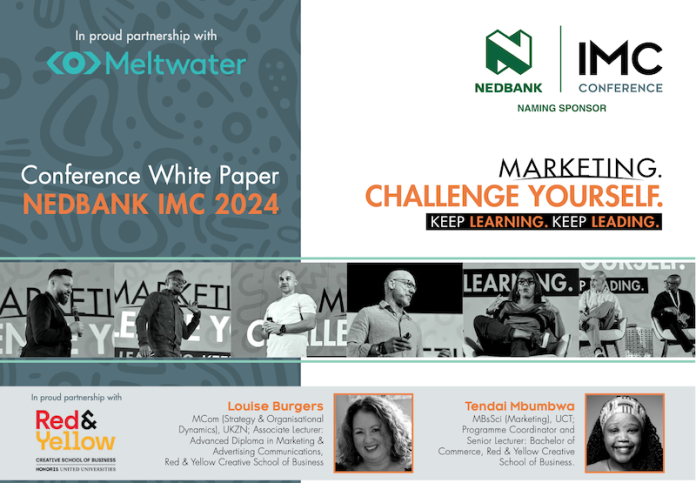
The Nedbank IMC, in collaboration with Meltwater, the global leader in social, media and consumer intelligence, has released this year’s Nedbank IMC conference White Paper – prepared by the industry for the industry.

Entrenching its reputation as Africa’s biggest marketing conference, the 2024 Nedbank IMC saw over 2000 attendees and more than 20+ leading local and global speakers come together to engage on the theme ‘Challenge yourself. Keep Learning. Keep Leading.’ Modern Marketing was a proud media partner.

In her introduction, Head of marketing Africa at Meltwater, Katherine McInnes wrote: ‘This year’s discussions were all about challenging the familiar and exploring the new, something that we at Meltwater see as fundamental to the industry’s success.’

Authors Louise Burgers and Tendai Mbumbwa, respected thought leaders and academics from Red & Yellow Creative School of Business, expertly identify the common threads running through the various presentations, and outline the main take outs and teachings under five user-friendly themed categories.

These include the importance of embracing AI (and generative AI) in all its opportunities and complexities, across all marketing functions. At the same time, although AI may be redefining our world, we can’t forget the unique ‘human’ in all of us – hence a call for both authenticity and humanised growth as indispensable to business development and customer loyalty. As McInnes noted ‘Today, brands must go beyond transactional relationships to create genuine, people-centred interactions. This means accessing meaningful, data-driven insights and understanding consumer sentiment and psyche.’

The White Paper also highlights the need for marketers to dream big, be inspirational, take risks, and embrace the chaos in creativity. And in a world in need of positive social impact, recognising marketing’s storytelling and influence can be integral to driving social change.

To read the full report, the Nedbank IMC 2024 White Paper is freely accessible here.

NEDBANK IMC CONFERENCE
www.imcconference.com


Meltwater Announces Partnership With IKhokha To Streamline Social Media Management Processes

Meltwater Announces Partnership With IKhokha To Streamline Social Media Management Processes

For iKhokha, one of Africa’s fastest-growing fintech companies, building and maintaining a successful social media presence is key to driving brand growth, but inefficient monitoring, fragmented data, and inadequate analytics were hindering their progress.

Furthermore, manually tracking brand and product mentions, as well as industry discussions, had become a time consuming process, which along with the potential for human error, carried the risk of missing valuable opportunities for customer interaction.

Brand awareness, customers engagement, lead generation, market insights and reputation management – there is no doubt about the critical role played by social media in today’s business landscape.

iKhokha partnered with media intelligence platform, Meltwater, to streamline and optimise their social media management processes and gain the insights they need to reach their goals.

Utilising Meltwater’s social listening solution enabled iKhokha to transform its social marketing strategy, making it to be more responsive and forward-thinking. This led to an overall 10% increase in productivity, enabling the team at iKhokha to more promptly respond to customer queries, addressing issues before they could potentially escalate, and engaging with trending topics relevant to their audience.

‘Meltwater has transformed our social media management by streamlining processes, enhancing engagement, and providing the insights needed to make informed decisions, ultimately leading to improved customer satisfaction and business growth,’ said Raquel Quintas, Social Content Manager at iKhokha.

Improvement in brand reputation, visibility, share of voice and sentiment has enabled iKhokha to make more informed strategic decisions, optimise marketing efforts, and better align with their customers.

Measuring the impact of social media campaigns is critical to making data-driven adjustments for future campaigns. Along with helping iKhokha better understand and engage with its customers and audiences, competitive intelligence and market research has enabled the fintech to develop strategies and actionable insights in response to market dynamics. Monitoring relevant industry conversations and trends allows iKhokha to identify new opportunities for product development, partnerships, and market expansion.

iKhokha helps SMEs to believe in better business by offering an all-in-one suite of intuitive business tools, empowering them to navigate and compete more effectively in the digital economy.

The ability to monitor brand mentions, competitor activity, industry trends, and customer sentiment has given iKhokha a competitive advantage, enabling it to differentiate itself in the rapidly evolving fintech industry.

MELTWATER
meltwater.com

Mscsports Strengthens Partnership With Engen Through New TVC Featuring Springboks

Mscsports Strengthens Partnership With Engen Through New TVC Featuring Springboks

Mscsports new television commercial (TVC) follows Engen’s recent announcement of several rugby icons as brand ambassadors and serves as a visual testament to their influence both on and off the field.

The launch of the TVC for Engen, the Official Fuel Supplier to the Springboks, features rugby legends Siya Kolisi, Eben Etzebeth, Cheslin Kolbe, and Tendai Mtawarira.

This project underscores Engen’s ongoing commitment to inspiring South Africans through sport, while Mscsports is proud to have been entrusted with bringing this campaign to life.

The release of this TVC coincides with Mscsports’ renewal of its three-year contract with Engen, further strengthening our partnership and cementing our role in delivering innovative marketing solutions for one of South Africa’s most iconic brands.

‘As the Official Fuel Supplier of the Springboks, Engen’s investment in rugby goes beyond the professional game,’ said Carrie Delaney, Managing Director at MSCSPORTS. ‘The TVC highlights Engen’s support of grassroots development through the ‘Get into Rugby’ programme, which nurtures young talent and builds the future of South African rugby.’

‘We are incredibly proud of what we’ve achieved together, and this campaign is testament to the strength of our partnership with Engen,’ added Delaney. ‘We look forward to continuing this journey, producing impactful campaigns that resonate with audiences and inspire national pride.’

MSCSPORTS
mscsports.co.za

MRF Holds Webinar To Present Latest MAPS Consumer And Media Insights

MRF Holds Webinar To Present Latest MAPS Consumer And Media Insights

On Thursday, 6 November 2024, the Marketing Research Foundation (MRF), in collaboration with market research company Plus94 Research, held a webinar to show their findings in the Marketing All Product Survey (MAPS™). MRF recently announced the 13th release of its MAPS™ data set, providing a comprehensive look into South African consumer trends and media insights from July 2023 to June 2024.

This latest dataset enables year-on-year, quarterly, and release-to-release comparisons, allowing businesses to understand evolving consumer behaviors and media usage patterns.

MRF CEO Johann Koster chaired the webinar, opening the proceedings by speaking to insights, trends and outlying events that have affected and are reflected by the data in the MAPS™. Notable key findings that were highlighted by Koster were the effects of the Ukraine conflict on local interest rates, the contrast between consumer habits during the Covid and post-Covid era and the effects of local events, such as flooding, riots and loadshedding, on the overall South African economy.

Rinisa Naidoo, Project Manager at Plus94 Research, guided the webinar attendees through a consumer spending and media usage crash course. All while highlighting some of the most interesting findings that have been revealed by the data set, including the impact of escalating inflation on grocery and consumer goods purchasing power, shifting habits around traditional and digital media consumption, households’ reliance on mobile banking and money transfer services, evolution of e-commerce and online shopping adoption across categories like clothing and merging trends in alcoholic beverage preferences and liquor retail channel choices.

During the webinar, Dr Sifiso Falala, CEO of Plus 94 Research, reported live from the streets of Alexandria Township. He was able to show attendees what in contact data capturing looks like, how much of a ‘data sampling nightmare’ the South African landscape can be for data scientists and what challenges many low income households face that changes their spending and media consumption habits.

The MAPS data provides valuable insights into media consumption, lifestyle trends, and purchasing habits across various demographics in South Africa. For example, trends in social media engagement, preferences in media channels and shifts in consumer priorities are included. Helping brands tailor marketing strategies effectively. This year’s data also emphasises the growing role of digital and mobile platforms, which are seeing increased engagement among diverse groups.

Koster highlighted that with four years of data now available, marketers and advertisers have unprecedented tracking capabilities for both short and long-term trends. The MRF has already shared this data with software vendors.

For those interested in detailed findings or subscribing to the MAPS data, further information can be found on the MRF’s official website and through their upcoming events and publications.

MARKETING RESEARCH FOUNDATION
mrfsa.org.za

This is Modern Marketing