Home Blog Page 81

African Marketing Confederation and TICON Africa Announce Host And Venue Sponsor

African Marketing Confederation and TICON Africa Announce Host And Venue Sponsor
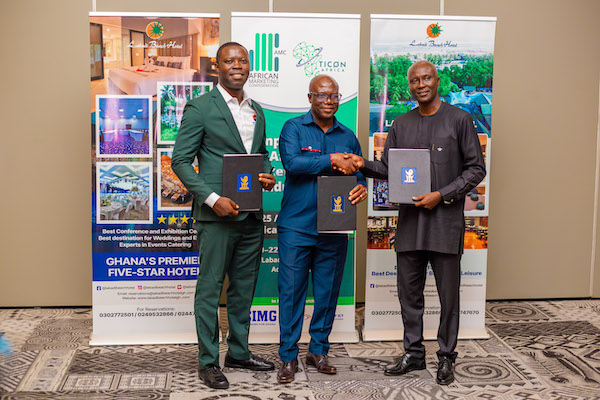
David Gowu, TICON Africa; Kwabena Agyekum, AMC and CIMG and David Eduadyl, Beach Hotel.

Labadi Beach Hotel has been named the official host and venue sponsor for the prestigious African Marketing Confederation (AMC) and Technology Information Confederation Africa (TICON Africa) joint conference 2025, taking place from 20th to 22nd August in Accra, Ghana.

This strategic collaboration marks a significant milestone in the buildup to Africa’s most influential gathering of marketing, technology, and business professionals. With its world-class facilities, exceptional service, and picturesque beachfront setting, Labadi Beach Hotel provides the ideal backdrop for a conference that promises meaningful dialogue, groundbreaking insights, and transformative industry collaborations.

The Chartered Institute of Marketing, Ghana (CIMG) and the Institute of ICT Professionals Ghana (IIPGH), as the host professional bodies for AMC and TICON Africa respectively, will spearhead this fourth edition of the conference. Expected to welcome over 500 delegates from 35+ countries, the conference will solidify Ghana’s reputation as a hub for innovation, digital transformation, and cross-industry partnerships. Aligned with Africa’s Agenda 2063, this event seeks to accelerate the continent’s digital economy, strengthen business ecosystems, and drive financial inclusion, ensuring sustainable and inclusive growth.

The 2025 conference will focus on fostering synergy between marketing and technology, ensuring Africa remains competitive in the global digital economy. The two core themes guiding discussions are:

– AMC Conference: Thriving in Africa’s Evolving Markets: Trust, Trends, and Technology.
– TICON Africa Conference: Empowering Africa’s Tech Future: Innovation, Standards, and Global Influence.

Held concurrently, these twin events will convene decision-makers, visionary leaders, and innovators to exchange insights, forge strategic partnerships, and explore solutions that will shape Africa’s digital and business landscapes.

AFRICAN MARKETING CONFEDERATION
www.africanmarketingconfederation.org

Loeries’ Standard Entry Deadline Is 1 June

Loeries' Standard Entry Deadline Is 1 June

Don’t miss the opportunity to showcase your best work and be recognised for creative excellence that shapes society and the industry across Africa and the Middle East. The standard deadline for The Loeries is 1 June. Modern Marketing is a proud media partner. 

Work that was commercially flighted or published from 1 July 2024 to 30 June 2025 is eligible to enter. Participants can submit their entries via the official Loeries entry portal.

As the only award that covers all of Africa and The Middle East that informs the global WARC rankings, The Loeries has a diverse range of categories including film, radio and print as well as areas such as digital, design, media innovation, B2B creativity, PR and media communications, social impact campaign and service design.

Detailed guidelines, entry forms, and category descriptions are available here.

THE LOERIES
https://www.loeries.com

Report Shows Less Creative Risk-Taking Among Brands

Report Shows Less Creative Risk-Taking Among Brands

LIONS has released The State of Creativity 2025, a global survey-led report with insights from more than 1000 marketers and creatives. The report shows that creative confidence, the belief in bold and original creative ideas as a driver of business success, is being knocked by the inability to develop high-quality insights and a lack of cultural agility.

The annual study serves as a practical tool helping marketers understand the key challenges, trends and opportunities for creativity in 2025. This latest edition of The State of Creativity, now in its fifth year, is based on a global survey with over 1000 marketers and creatives, fielded between November 2024 and January 2025, and one-to-one conversations with industry leaders.

The research shows that risk aversion is holding businesses back. ‘Creative risk-taking’ is defined in the survey as bold, unconventional ideas that challenge norms and engage audiences in unexpected ways. Only 13% of respondents to LIONS’ State of Creativity 2025 survey view their companies as risk-friendly, whilst 29% of brands admit to being highly risk-averse.

However, risk-taking brands generate four times higher profit margins, according to research by WARC and Kantar. And brands with a high appetite for creative risk are 33% more likely to see long-term revenue growth, reported Deloitte.

Patrick Jeffrey, VP LIONS Advisory, said: ‘The State of Creativity report is a unique window into the global creative landscape. The findings from this latest research show that largely due to a lack of solid insights and cultural relevance, we are seeing less ‘creative risk-taking’, which involves stepping outside traditional boundaries and surpassing category conventions. Addressing these two key barriers will unlock creative confidence and drive better long-term business results.’

The two key barriers to creative confidence and how to overcome them, outlined in the report are:

1. The insight famine: half of brands (51%) claim their insights are too weak to develop bold creativity, and only 13% rate them as strong.

The State of Creativity survey shows that companies with stronger insight development capabilities are far more open to taking creative risks. However, half (51%) of the companies surveyed rate their ability to develop high-quality insights as poor or very poor. Only 13% rate their ability to develop high-quality insights as very good or excellent.

The challenges to developing high-quality insights are:

– Lack of understanding and clarity of what makes a good quality insight.
– Not enough priority placed on insight development.
– Insufficient time allocated for deep insight exploration.

The survey highlights that the stronger the brand-agency relationship, the better the brand sees its ability to develop strong insights. Both teams and methods should be diverse to avoid personal preference rather than consumer understanding. The use of AI and synthetic data can enhance efficiency and reduce biases and limitations.

2. The culture lag: over half (57%) of brands struggle to react quickly to cultural moments.

A lack of insights is slowing brands down when it comes to reacting to cultural moments, costing them creative confidence. The report survey showed a positive correlation between brands’ perceived ability to react to cultural shifts and their appetite for risk. Yet 57% of brands struggle to react quickly to cultural moments, with only 12% rating their ability to do so as ‘excellent’.

The challenges to cultural agility are:

– Too many layers in the approval process.
– Limited resources and investment.
– Difficulty aligning brand insights with cultural trends.

Companies are advised to build structures that allow for swift, strategic action; respond with resonated creativity; and shape culture rather than chase it. Brands that embrace risk and push creative boundaries are the ones best equipped to move with culture.

This year’s survey also showed that brands are increasingly shifting toward short-term activities, rising from 53% in 2023 to 63% in 2025. But while short-term gains might be tempting, agility comes from brand-building, which allows for spontaneous moments.

Summing up, Jeffrey, added: ‘To boost creative confidence, we advise investment in additional training to enhance teams’ skills and capability. As teams upskill and confidence grows, so will the appetite for bigger, bolder work.’

The State of Creativity 2025 report, authored by LIONS Advisory, includes quantitative and qualitative data analysis, expert commentary and advice from industry leaders, creatives, and brand marketers. Read the report in full here.

LIONS
www.lionscreativity.com

It’s Time For Intent To Return To The Centre Of Marketing

Veronica Moleele, Penquin.

One of the biggest challenges facing brands today is the tendency to create content for the sake of content. Not for connection. Not for conversion. Not even for conversation. Just content, ticking boxes on a strategy sheet. It’s time for a shift. It’s time for intent to return to the centre of marketing.

‘Marketing is meant to move people — emotionally, mentally, or to action. If content isn’t doing that, then we’re wasting money, time, and attention spans,’ said Veronica Moleele, CEO of Penquin.

Too often, brands fall into the trap of prioritising volume over value. That ‘we need to post something every day’ mindset has created a cluttered, noisy landscape, where truly meaningful communication gets lost in the shuffle. Intentional content doesn’t start with a brief, it starts with why.

Moleele explained that meaningful content starts by asking strategic questions. Questions like what we want this piece of content to achieve, who are we speaking to, are we speaking with them or at them and what do we want them to do, think, or feel after consuming a particular piece of content.

In addition, Moleele explained that creative should never exist in a vacuum. It must be backed by insights, aligned with brand objectives, and purpose-built to deliver value to the right audience, in the right way, at the right time. ‘This is where agencies need to step up too,’ continued Moleele. ‘It’s not enough to just produce beautiful work — we need to challenge our clients, ask hard questions, and push for the kind of strategic clarity that leads to real business results.’

The most effective campaigns are not the ones with the most assets, they are the ones with the most clarity. Moleele believes the creative process must be linked to measurable outcomes, and it is the responsibility of agencies to challenge brands to think deeper.

Findings from leading global marketing studies continue to show that brand salience, trust, and engagement increase when consumers feel seen and understood. This is only possible when content is designed intentionally — rooted in insight, aligned to brand purpose, and delivered at the right time and place.

Moleele observed that the most successful brands in 2025 are not necessarily the loudest, but the most purposeful. Their marketing efforts are strategic, considered, and consumer-focused. Every campaign element, whether a TikTok clip, long-form video, or billboard, is created to serve a defined function and contribute to a cohesive brand journey.

Are brands wasting millions on content? When there’s no clear intent — yes. But with focused strategy, insight-driven creative, and a partner who understands the value of purpose, content can cut through the noise and move people in the ways that matter most.

PENQUIN
https://www.penquin.co.za

Red Ribbon Announces Content Strategist

Red Ribbon Announces Content Strategist
William Horne, Red Ribbon Communications.

Red Ribbon Communications is sharpening its strategic edge with the permanent appointment of William Horne as its content strategist, as well as the newly established Division Head of its Insights arm – a move that further entrenches the agency’s focus on data-led, thought leadership-driven tech PR. An award-winning former financial journalist and economist, Horne joined Red Ribbon to help elevate its already strong positioning in B2B public relations.

His analytical eye, passion for storytelling, and flair for uncovering business-defining insights are a hallmark of his results. Now, as the agency builds out its in-house market research capabilities under the new Insights division, Horne is playing a central role in shaping what the future of data-driven PR strategy looks like – with substance, measurability and relevance at the forefront.

‘Data-driven PR is what transforms a company’s voice from merely seeking market appeal, to one that determines market insights with authority,’ said Horne.

Red Ribbon founder Ronelle Bester said Horne’s permanent appointment reflects the company’s broader evolution into pushing new boundaries. ‘We’ve always been focused on simplifying the complex and telling the stories that are then made possible with real thought leadership. Now we’re going one step further by backing those stories with original market insights that really move the needle for our clients. Horne’s work is helping us reach our goal of unlocking the often-untapped wealth of authority inside tech companies and positioning that knowledge where it matters most.’

RED RIBBON COMMUNICATIONS
https://redribboncommunications.co.za

SA Consumers Are Interested In Shopping From Beyond The Grave

SA Consumers Are Interested In Shopping From Beyond The Grave

Hugh Fletcher, Global Demand Content and Thought Leadership Director, VML Enterprise Solutions, says that ‘post-death consumerism’ involves the act of shopping from beyond the grave, facilitated not by hocus pocus, but technology. And while it sounds decidedly out-there, consumers are intrigued.

Interest In Post-Death Spending

This insight emerged from VML’s annual Future Shopper Report for 2024-25. Researchers surveyed 31,500 shoppers across 20 countries, including South Africa. In order to qualify, respondents had to have shopped online at least once in the preceding month.

In addition to numerous questions about current shopping trends and behaviour, respondents were asked a series of questions about the future of retail – including whether they would be interested in spending from beyond the grave. Globally, 47% of respondents were keen. But the concept proved even more intriguing for South African respondents, with 51% indicating they would be interested. Incidentally, the highest interest came from Thailand (74%) and India (70%).

Why Spend After Death?

At first glance, the notion of post-death consumerism may seem purely bizarre. But there’s humanity behind the weirdness.

Consider, for example, a parent who passes away, leaving young children behind. Imagine they could ensure their kids would continue to receive a birthday gift from them even after they passed. Something personal and ‘so them’ that they would have chosen themselves had they been there – bought using their own money and chosen based on data collected about their shopping habits and personality while they were alive.

This idea of leaving not just a legacy, but a connection to the loved ones you leave behind is an appealing prospect to some.

Is Post-Death Consumerism Possible Though?

Of course, all of this is interesting in an abstract, philosophical way, but is it actually feasible? The short answer: yes. Post-death consumerism ties into the broader trend of ‘grief tech’ – a growing field that explores ways to leverage technology like artificial intelligence to maintain a connection with loved ones who have passed on.

Advances in fields like voice cloning and chatbots are reaching the point where someone who has passed away could be virtually ‘brought back’ in avatar form, allowing living relatives to have a conversation with an AI replica of their deceased loved one. In time to come, people may be able to upload their personality to the cloud before death, so that after they pass away, they can ‘live on’ as an AI.

Rudimentary versions of this technology already exist, and interest is growing. It’s not a big leap to think of teaching a personalised AI to not only interact with loved ones but also to shop for them.

What Post-Death Consumerism Means For Retail

Up until now, the rules of retail have been based on one very obvious premise: the customer is human. Sure, that’s a broad category and all kinds of demographics come into play, but once you’ve segmented your target customer, the basics of human psychology apply.

In future, brands will likely be marketing and selling to non-human customers as well. These customers could be artificial intelligences, bots, or personal shopper avatars acting on behalf of consumers.

This is neither far-fetched nor necessarily far off. Algorithms already influence the ads and product recommendations customers receive, based on data collected from their past shopping and browsing behaviour. It’s not a big stretch to think that same data could be used to train an AI.

And if an IoT fridge can pick up when the milk is running low and order a new carton autonomously, why should the trusty appliance not be equipped to assess marketing collateral and compare prices to select the brand of milk it has deemed best?

Enabled by technology, the future of retail is heading into unprecedented territory. Marketers of the future will need to re-think their strategies and become very familiar with algorithms, data science, and key word search. The idea of a ‘ghost in the machine’ could soon take on a whole new meaning.

VML
https://www.vml.com

Brave Group Transitions To 100% Black-Owned Business

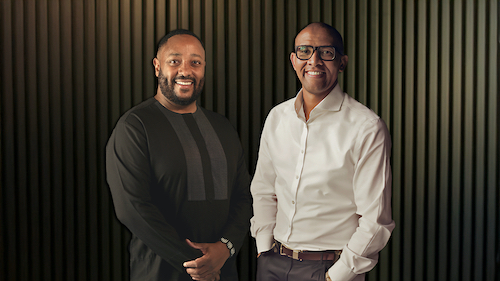
Musa Kalenga and Andile Khumalo, Brave Group.

Brave Group has announced the successful exit of its founding shareholders – Andrew Shuttleworth, Vanessa Pearson and Rob van Rooyen. Their shares have been acquired by existing shareholders Musa Kalenga, Group CEO, and Chairperson Andile Khumalo, marking the agency’s transition to a 100% Black-owned business. This transaction was made possible through capital raised from Sanlam Alternative Investments, alongside ongoing strategic support from Midas Ventures.

The move represents a breakthrough moment in an industry that has long been criticised for its slow pace of transformation and positions Brave Group as one of the few large-scale black-owned, tech-forward agencies in the country.

‘This moment is deeply personal and profoundly symbolic,’ said Musa Kalenga, CEO of Brave Group. ‘We are reshaping the future of this industry. We’ve always believed in building an agency that mirrors the diversity, ambition and potential of South Africa. Becoming 100% Black-owned is a critical milestone, but it’s also just the beginning. We are building a business that’s driven by creativity, powered by technology and rooted in a vision of inclusive excellence.’

Kalenga adds that the backing from Sanlam Alternative Investments speaks volumes: ‘Being able to raise capital for this transaction sends a strong message that Black-led businesses can be investment-ready, high-performing and innovation-driven. It’s not simply good for Brave Group it’s good for the industry and for clients who want to align their procurement with both performance and purpose.’

Andile Khumalo, Chairperson of Brave Group, emphasised the wider significance of the transaction: ‘This is a shift in what power and progress look like in advertising. For too long, ownership in this sector has remained concentrated and unrepresentative of our broader society. Today, we change that, and we hope it signals to others that transformation is not just necessary, but possible, sustainable, and good for business.’

Khumalo added: ‘Our clients benefit from stronger BEE alignment, our people benefit from a more empowered leadership structure, and the industry gets to see a black-owned agency competing and winning at the highest levels, not because of compliance, but because of capability.’

Phuti Senyatsi, Portfolio Manager at Sanlam Alternative Investments, welcomed the transaction: ‘We are proud to support this pivotal ownership shift at Brave Group. Our investment reflects our confidence in the team’s vision and capability. What Kalenga and Khumalo are building is not only commercially sound but culturally and strategically vital for the evolution of the sector.’

Brave Group’s structure now includes integrated specialist agencies, House of Brave, Bold, Bravado and Forge By Brave, unified under one strategic vision to offer comprehensive solutions that address modern marketing and business challenges.

BRAVE GROUP
https://bravegroup.co.za

How You Can Open The Door To Copy That Commands Attention

How You Can Open The Door To Copy That Commands Attention
Francois Pistorius.

Red doors have symbolised boldness for centuries. In early America, they signalled a safe haven for travellers. In marketing terms, a door is the perfect Call to Action (CTA). Francois Pistorius discusses the ‘Red Door’ effect and how to write copy that demands action.

As a conceptual-minded creative, I always notice details especially within the architectural space. The story behind my new profile picture is the red door. A quiet Saturday afternoon working on my rebranding. While every other door faded into the exterior, this one pulsed. It made me stop. Wonder. What’s behind it? That’s when I realised that the best direct-response copywriting works exactly like a red door. Here’s why they work:

They Command Attention

– Our eyes are hardwired to notice red first (it has the longest visible wavelength).
– Copywriting parallel: Your headline is your door. Make it unignorable.

They Create Urgency

– Red increases heart rate and creates subconscious urgency (think: clearance sale signs).
– Copywriting parallel: scarcity and red = 34% higher conversions (NN Group).

They Promise Value

– A red door implies something worth protecting – or discovering.
– Copywriting parallel: Your lead magnet must whisper (or shout) ‘This changes everything.’

The Psychology Behind The Punch Of Red

As a direct response writer with a visual edge, I see everything through this lens. Take these examples:

– Apple’s Product Red Campaign: Uses red to tie exclusivity to urgency (while benefitting charity).
– Netflix’s ‘Play’ Button: Red is an instant dopamine hit. It’s not a button – it’s a permission slip to indulge in binge watching.

How To Psychologically Paint Your Copy Red

Most doors (and most copywriting ) are brown and beige. Safe. Forgettable. Here’s how to stand out:

1. Lead With Contrast

– A red door pops against any wall.
– Your move: Pair a bold claim with a bland industry norm.
– Your move: ‘Not all AI copywriting works. Here’s why our copy hits differently.’

2. Prime for Action

– Red doors appear closer than they are (science says so).
– Your move: Use spatial language like ‘step inside’ or ‘let’s begin’ to reduce psychological distance.

3. Reward Curiosity

– No one paints a red door without reason.
– Your move: Tease transformation upfront: ‘This isn’t another marketing guide. It’s a profit loophole.’

Your Brand As A Red Door

That photo of me by the red door? It’s my reminder that great copy isn’t just read – it’s experienced. In a world of noise, you have two choices: blend in (and hope) or kick the door open. Because here’s the truth: buyers don’t remember beige. They remember what made them feel.

Why ‘Beige’ Content Fails — And How To Make Your Message Unforgettable

Here’s the hard truth: Buyers don’t always remember facts – they remember feelings. Think about the last ad, email, or social post that stuck with you. Was it a bland list of features? A dry explanation of how something works? Or was it a story – vivid, emotional, and impossible to ignore?

The Science Of Attention: Why Colour And Storytelling Win

Our brains ignore the ordinary and react to the extraordinary.

– Red commands attention because it triggers a primal response — danger, passion, urgency. (That’s why ‘SALE’ signs are never pastel blue.)
– Stories activate 7x more neural activity than raw data (Harvard Business Review). Facts inform, but stories transform.
– Beige messaging blends in. Light colours, weak verbs, and emotionless copy don’t just fade, they fail to register at all.

The Cost Of Playing It Safe

Imagine a fitness brand saying, ‘Our protein powder has 25g of protein per serving’ (Zzz), versus: ‘The secret weapon pro athletes use after crushing leg day – even when their legs feel like jelly.’ One is forgettable. The second option makes you feel and experience.

How To Fix It: The ‘Red And Riveting’ Rule

Lead With Emotion

❌ ‘Our course teaches Instagram growth.’
✅ ‘She went from 3K to 70K followers — while her ‘perfect’ Reels flopped. Here’s the loophole she exploited.’

Use High-Contrast Colours (Literally And Figuratively)

– Red = urgency. Black/white = bold clarity.
– Example: ‘LAST CHANCE: The ‘Instagram Bible’ hack disappears at midnight.’

Tell a Mini-Story in Every Hook

❌ ‘We help coaches get clients.’
✅ ‘He wasted $12K on ads — until one DM strategy booked him 17 clients in 14 days. (No followers required.)’

Here’s how the ‘red thread’ concept ties to a red door and direct response copywriting:

The Red Thread (narrative continuity) represents a clear, compelling storyline that guides the audience. In marketing, it’s the core message that ties everything together and it ensures consistency and emotional engagement.

The Red Door (attention and action): a red door is bold, noticeable and symbolic — it stands out. In marketing, it’s the irresistible offer or call-to-action that grabs attention. It also acts as a psychological trigger (red = urgency and importance).

Direct Response Copywriting (the connector) uses the red thread (story) to lead the reader to the red door (conversion point). Every word builds toward a single, measurable action (click, buy, subscribe). It combines emotional hooks (red thread) with clear directives (red door).

Final Connection:

– Red Thread (Story): builds trust and desire.
– Red Door (CTA): tells the reader exactly what to do next.
– Direct Response Copywriting: weaves them together for maximum conversions.

Example: How This Instagram Coach Went from 3K to 70K in 90 Days (And How You Can Too).

A direct response copy example using the Red Thread and Red Door framework:

The Red Thread (The Story Hook)
– ‘3 months ago, I was stuck at 3K followers posting daily but getting no traction.’
– ‘Then I discovered the one mistake killing my growth…’ (curiosity gap).
– ‘I fixed it — and my next reel hit 500K views. 90 days later? 70K followers.’ (Social proof and transformation).

The Red Door (The Irresistible Offer)
– ‘Now I’m sharing the exact 5-step system I used — free for 24 hours.’ (Scarcity and benefit).
– ‘Want it? Comment ‘GROWTH’ below, and I’ll DM you the guide.’ (Clear, low-effort CTA).

Why This Works (Direct Response Breakdown)

– Red Thread = Relatable struggle → Quick win → Proof it works. (Builds trust and desire.)
– Red Door = Time-sensitive freebie and easy action. (Triggers FOMO and immediate response.)
– Direct Response = Every line pushes toward the ‘Comment ‘GROWTH’’ conversion.

Test pairing a strong hook with a red door visual story. The Bottom Line is that safe is invisible. Bold is unforgettable. So give people red. In colour, in contrast and in emotion. Make them feel something and they’ll remember you. Want your next campaign to hit like a lightning bolt? Start with a story that burns into memory, not another fact that fades to beige.

FRANCOIS PISTORIUS
+27 606220294
francoispistorius@icloud.com

South Africa’s AI Future Hinges On Skills Development

South Africa’s AI Future Hinges on Skills Development
Ntsako Baloyi, Accenture Africa.

Ntsako Baloyi, Senior Manager within the Technology business at Accenture Africa, says the rapid development of artificial intelligence (AI) is changing the way businesses operate, how consumers interact with technology, and even how governments deliver services. Yet, as AI adoption accelerates globally, South Africa faces a serious challenge: a critical shortage of AI-related skills.

Without urgent intervention, this gap threatens to limit the country’s competitiveness, widen inequality, and leave millions of workers unprepared for the future. If AI is the engine of the next industrial revolution, then skills are the fuel, and South Africa is running dangerously low.

A recent World Economic Forum report estimated that by 2025, half of all work activities could be automated by AI-driven processes. While this signals new opportunities, it also raises the alarm: workers who lack AI literacy will be left behind.

South Africa is already struggling with high unemployment rates, particularly among young people. The AI-driven future presents a paradox: on one hand, AI and automation could replace many low-skilled jobs. On the other, AI is creating new roles that require specialised expertise including data scientists, AI engineers, cybersecurity professionals, and AI ethics specialists. The problem? South Africa simply does not have enough trained professionals to meet this demand.

Many businesses are struggling to fill AI-related positions due to a lack of qualified talent. Multinational companies are either outsourcing AI-related work to more developed markets or paying a premium to recruit foreign talent. This is not a sustainable solution.

To prevent the AI revolution from deepening economic divides, South Africa must take a proactive approach to AI skills development. This requires a coordinated effort between government, businesses, and educational institutions.

South Africa’s school and university curricula need a fundamental redesign to integrate AI literacy at all levels. Basic AI concepts, coding, and data analysis should be introduced as early as high school, while universities and technical colleges must offer specialised AI and machine learning courses.

Currently, only a handful of South African universities offer dedicated AI programmes. This needs to change. Government and private sector funding should be directed towards AI research hubs, scholarships, and AI-focused boot camps that equip young professionals with in-demand skills.

Businesses cannot wait for the education system to catch up. Companies must take the lead in AI upskilling by offering training programmes for employees across all levels. AI is not just for data scientists, it is increasingly relevant for marketing professionals, HR teams, financial analysts, and customer service representatives. But the responsibility shouldn’t stop at internal teams. To ensure a more inclusive and future-ready workforce, companies should also invest in accessible AI education initiatives for the broader public, empowering communities with the skills needed to thrive in a digitally-driven economy.

South African businesses should follow global best practices by partnering with AI training providers to offer micro-credentials, mentorship programmes, and hands-on AI projects.

The South African government has an opportunity to drive AI upskilling by offering tax incentives to businesses that invest in AI training. Additionally, public-private partnerships can help create AI skills hubs in historically disadvantaged communities, ensuring that AI literacy is not limited to privileged sectors of society.

South Africa already has a precedent for successful skills development initiatives in fields like engineering and accounting. A similar approach can be applied to AI, ensuring that young South Africans are equipped with the skills needed to thrive in an AI-driven economy.

If South Africa fails to act swiftly, the AI skills gap will widen, exacerbating unemployment and economic exclusion. Businesses will struggle to compete with international firms that have access to highly skilled AI talent. Meanwhile, South African consumers will be left to rely on imported AI solutions rather than locally developed technologies tailored to the country’s unique challenges.

In contrast, a well-executed AI skills strategy can position South Africa as an AI leader on the African continent. By building an AI-savvy workforce, the country can attract investment, foster innovation, and ensure that AI serves as a tool for economic empowerment rather than a force of disruption.

The AI revolution is here. The question is whether South Africa will seize the opportunity or be left behind. Businesses, educational institutions, and government leaders must act now to ensure that AI skills development becomes a national priority.

Companies should begin by auditing their AI skills gaps and investing in targeted training programmes. Universities and technical colleges must expand AI course offerings and integrate AI literacy into mainstream education. Government must introduce AI-focused policy frameworks and financial incentives to drive large-scale skills development.

South Africa has all the ingredients to build a thriving AI-powered economy — if it makes the right investments today. The future is not waiting. It is time to bridge the AI skills gap and ensure that South Africans are ready to shape, lead, and benefit from the AI revolution.

ACCENTURE SOUTH AFRICA
accenture.com/za-en

InDrive Goes Beyond A Campaign With Community-Focused Initiative That Drives Positive Change

InDrive Goes Beyond A Campaign With Community-Focused Initiative That Drives Positive Change

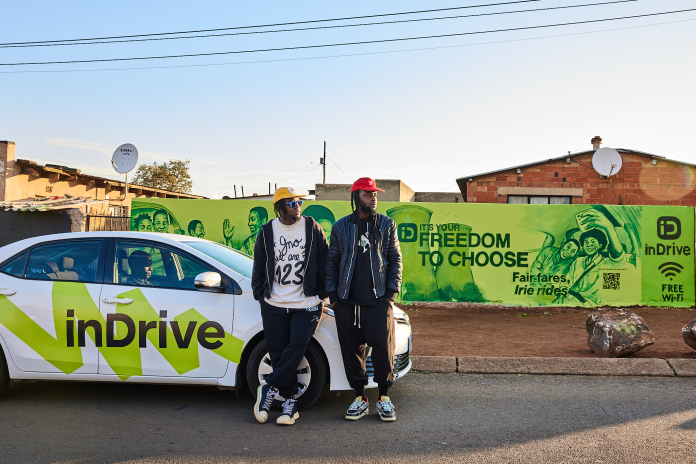
Fourteen spaza shops across Soweto were given a fresh new face, with store revamps and free WiFi now available to their customers, thanks to a new community-focused initiative by global ride-hailing platform, inDrive.

The project brings much-needed connectivity directly to the places where daily life happens: the small, independently owned shops that serve as key gathering points in Soweto’s neighbourhoods. By providing free internet access at these local hubs, the initiative aims to help bridge the digital divide and create new opportunities for learning, connecting, and doing business.

‘This wasn’t about billboards or big advertising — it was about showing up meaningfully in the communities where we operate,’ said Ashif Black, Country Representative for inDrive South Africa. ‘These spaza shops are central to community life, and through this project, we’ve been able to offer a small contribution that supports both local business owners and their customers.’

The initiative also includes a striking new mural by Soweto-born twin brothers, Fhatuwani and Justice Mukheli of I See A Different You, positioned at a key site in the area. The artwork celebrates the spirit of movement, creativity, and freedom of choice — themes that resonate deeply with the community and align with the broader ethos of Freedom Day.

For inDrive, this project is part of a global commitment to challenging injustice and driving positive change in the communities it serves. The brand’s identity is rooted in the belief that everyone deserves fair access. ‘We wanted to contribute something that feels authentic to Soweto — not just a campaign, but a real celebration of the energy and creativity that’s already here,’ said the Mukheli brothers.

INDRIVE
https://indrive.com/

This is Modern Marketing