Home Blog Page 80

Carling Black Label’s Mother’s Day Campaign Reminds South Africans That Greatness Begins At Home

Carling Black Labels Mothers Day Campaign Reminds South Africans That Greatness Begins At Home

As part of its ongoing Champion Moms initiative, Carling Black Label collaborated with two players from the Soweto Giants, Mduduzi Shabalala and Thalente Mbatha, to honour the women who raised, believed in, and inspired them. Released across the brand’s digital platforms during one of the country’s most high-profile football moments, a new video message turned the spotlight away from match results and onto the real foundation of greatness: family.

Before Shabalala wore the Amakhosi jersey, he was a young boy with a ball and a dream. His mother remembers how that dream first began to show itself. ‘We bought him so many shoes. But there were always holes in them,’ she recalled. ‘That’s how we knew — wherever he was, he was playing football. That’s where it all began.’

For Mbatha’s mother, her son’s journey was marked by a name that carried meaning from the very beginning. ‘When they asked me what I would name him, I just said Thalente,’ she said. ‘I don’t know why. I think it was my way of manifesting that he would be talented.’

These reflections form part of a heartfelt digital tribute that blends quiet, personal moments with words that resonate across generations. In one scene, Shabalala surprises his mother at home:

‘What are you doing here?’ she asks.
‘I came to visit you,’ he replies.
Her response is brief, but full of history: ‘Thank you so much for everything you have done for the family. I love you.’
‘I love you very much,’ Mduduzi answers.

A similar moment unfolds between Mbatha and his mother. ‘Is it really you?’ she asks with disbelief. ‘I am very proud of you and the person you have become.’ To which he replies: ‘You are my champion too, Ma. I love you.’

The content piece is part of the broader #ChampionWords campaign, which invites South Africans to reflect on the most impactful advice or encouragement they’ve received from their mothers. Throughout the week, selected messages from fans will appear on digital billboards across the country — turning everyday public spaces into living love letters.

Kerryn Greenleaf, Brand Director for Carling Black Label, explains the campaign’s purpose: ‘We live in a country where mothers are the first teachers, the first believers, the first protectors. This campaign isn’t about football glory — it’s about the unseen work of mothering, and the words that keep us going long after we leave home.’

In the final moments of the video, respected commentator Baba Mthethwa delivers a closing line that echoes well beyond the screen: ‘A mother’s love is unrivalled. End of the story.’

CARLING BLACK LABEL
www.carlingblacklabel.co.za

Red & Yellow Announces New Head of Marketing

Red and Yellow Announces New Head of Marketing
Sarah Griffiths, Red & Yellow.

With a proven record in marketing, operations, strategy, and content production, Sarah Griffiths brings a clear understanding of the creative economy and a vision to help uphold the South African creative and academic institution as a launchpad for globally relevant, industry-ready talent. Her appointment comes at an important time as Red & Yellow celebrates over three decades of nurturing some of the continent’s top creative minds.

As the institution focuses on the next wave of registered students, Griffiths steps in to help shape this chapter. Her approach is to elevate the brand and strengthen its position as a launchpad for real-world success in business, advertising, and marketing.

‘We’re pleased to welcome Griffiths into our family,’ said Verusha Maharaj, Managing Director at Red & Yellow. ‘She brings an extensive background that spans everything from fintech to agency life, and we believe her strategic focus and curiosity will make a meaningful contribution to our next chapter.’

Red & Yellow remains committed to bridging the gap between academic learning and real-world industry demands. With 94% of graduates securing employment within six months, the institution is widely recognised for equipping students with the practical, relevant skills that today’s employers are actively looking for.

Griffiths will now play a part in taking this reputation even further, not only within Red & Yellow’s internal marketing strategies but also in support of its partnering bootcamp initiative, Le Wagon. ‘Griffiths’ appointment signals an exciting new direction for us,’ added Maharaj. ‘Her ability to think across commercial and creative spaces mirrors the very approach we take with our students. We want to equip them to solve business problems through strategy, creativity, and innovation. Griffiths has led from the front in her previous roles and understands what it takes to scale brands with purpose, which makes her the perfect fit for where we’re headed.’

‘Griffiths’ leadership style matches the spirit of Red & Yellow,’ said Maharaj. ‘She’s hands-on, collaborative and solutions-driven, and we’re looking forward to seeing her input help shape a stronger, more connected experience for our students, partners and team.’

Reflecting on her new appointment, Griffiths said, ‘Joining Red & Yellow is a proud moment for me, and one I approach with real intention. In a world where consumer behaviour and business needs are constantly changing, I want to help shape a marketing approach that reflects the School’s core mission of teaching students to solve business problems through strategy, creativity, digital marketing, and more. This is a learning journey for me too. I didn’t arrive with all the answers, but have a deep willingness to listen, to collaborate, and to lead by learning. I’m excited to be part of an institution that places equal value on people and purpose, and that’s confidently shaping the future of business education.’

RED AND YELLOW SCHOOL OF BUSINESS
www.redandyellow.co.za

Delta Victor Bravo Announces Managing Partner

Delta Victor Bravo Announces Managing Partner
Khaya Dlanga, Delta Victor Bravo.

Delta Victor Bravo (official partner to eatbigfish in Africa) is pleased to announce the appointment of Khaya Dlanga as Managing Partner. Dlanga will work alongside current Managing Partner Dhatchani Naidoo to co-lead the business, with a focus on business development. Naidoo will continue to drive delivery and deepen existing client relationships.

Dlanga brings a rich and varied background across both agency and client-side roles. He began his career as a copywriter at The Jupiter Drawing Room and a creative planner at Metropolitan Republic, before stepping into marketing roles at Coca-Cola (as Senior Communications Manager), Heineken (as Marketing Manager), and most recently, Rain, where he served as Chief Marketing Officer.

He’s been behind some of the country’s most recognised brand and marketing work, including Share a Coke, Coca-Cola Rainbow and You Can’t Fake the Taste of Nando’s. His accolades include the Financial Mail New Broom Award in 2008, a finalist spot in the Sunday Times Alan Paton Prize for his first of five books ‘To Quote Myself’, multiple Coca-Cola Global Marketing Excellence Awards, Cannes Lions, and a Kantar BrandZ Most Innovative Brand award for Rain. But the one he’s proudest of? A Loerie Gold for Marketing Effectiveness. Most recently, Dlanga was invited to speak at the prestigious Global TED Conference in Vancouver, last month.

David Blyth, Founder and CEO of Delta Victor Bravo, commented: ‘Dlanga has that rare combination of left and right brain thinking as well as an exceptionally curios mind and an impressive writing talent. He will make a powerful addition to our team’.

On his new role, Dlanga said: ‘I’m excited to join Delta Victor Bravo at a time when bold thinking matters most. I look forward to helping our clients grow by applying a Challenger Mindset that drives innovation, moves people, and transforms business outcomes. Because the right strategy does not just sell product, it shifts culture.’

DELTA VICTOR BRAVO
www.deltavictorbravo.com

Digital Transformation Is About Smarter Solutions Tailored To Real Human Needs

Digital Transformation Is About Smarter Solutions Tailored To Real Human Needs
Yaw Dwomoh, AdHive.

Yaw Dwomoh, CEO of AdHive, says that in the African context, digital transformation is often misunderstood as just a matter of adopting new tools or platforms. But it is far more than that. At its core, digital transformation is about using technology to simplify and speed up how we meet the needs of our customers — not just reactively, but proactively, precisely, and with purpose.

We operate in the advertising space, which inherently sits in a B2B2C environment. Our clients rely on us to help them connect meaningfully with their customers. To do this, we integrate both MarTech and AdTech — the former to gain insights through analytics, segmentation and customer understanding, and the latter to deliver those insights as engaging, relevant communication through the right channels at the right time. This is where digital transformation comes to life: it is not about the tools, it is about what the tools enable: smarter solutions, delivered faster, and tailored to real human needs.

Transformation Through Understanding

Across Africa, digital transformation has reshaped how we trade, communicate, and serve. It has shrunk distances between people and markets. It has helped us identify capabilities we never knew we had. And it has opened access to segments and regions we previously thought unreachable.

In our space, transformation allows us to deeply understand who our customers are, what they value, and how best to connect with them. With the right tools, industries can be analysed, sector-specific challenges uncovered, and solutions crafted with agility. We can make informed, data-backed decisions and — more importantly — empower clients to do the same.

Fintech is a prime example. Thanks to mobile technology, what once took hours in a bank branch can now be done in seconds on a phone. That is the power of transformation: it simplifies, integrates, and accelerates.

The Real Foundation

Many think the tech is the hard part — it is not. The biggest hurdle is human capability. People are the true enablers of transformation. If your people are not aligned, trained, and supported, no amount of software or data infrastructure will create value.

Once the people are right, the next focus is on structure and process. Then comes technology, but it must be fit for purpose. That means tools that integrate your business, simplify operations, and deliver insights that can be acted upon in real time.

MarTech: Bridging Precision And Performance

MarTech plays a dual role in enabling digital transformation: it enhances effectiveness and efficiency. On the effectiveness side, it helps us truly understand consumers. Through segmentation, customer journey mapping, and automation, we send personalised, timely communications that resonate with the recipient. And thanks to integration between platforms, from customer data to communications, we can ensure the entire experience is seamless.

On the efficiency side, AI and machine learning can be used to generate creative content at scale. Campaigns that would have taken hours to render now take seconds. And the creative can be instantly pushed through automated systems for client approval. That is what I call precision marketing — done differently.

Connectivity Is The Backbone

All of this hinges on connectivity, not just internet access, but systems that talk to each other. Think of the digital footprint we leave every time we swipe, sign in, or transact. That raw data is everywhere, and without connectivity, it remains just that: raw.

We use data mapping, segmentation, and use-case development to take scattered information and turn it into structured, strategic insights. But it only works when platforms are connected — from point-of-sale to customer data platform to communications engine. When that loop is complete, personalisation becomes reality, not a buzzword.

Partnerships With Purpose

No business, or transformation, exists in a vacuum. Government must create policy frameworks that protect consumers while enabling innovation. Businesses must respect those frameworks and ensure data is used ethically and with consent. Communities, in turn, must feel safe and empowered to participate. Only through collaboration between private sector, public entities, and communities can we build a truly digitally connected Africa.

As for the future, I see key spaces defining Africa’s digital path forward: medical technology, fintech, and behaviour-based platforms that reward good behaviour — from mental wellness to financial responsibility. Companies like Discovery have pioneered this, and there is so much opportunity to scale these models.

THE HIVE GROUP
https://ideahive.co.za/

Nedbank IMC Releases Inspiring Agenda For This Year’s Event

Khensani Nobanda, Nedbank Group Limited.

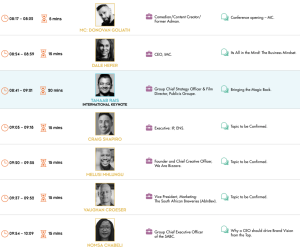
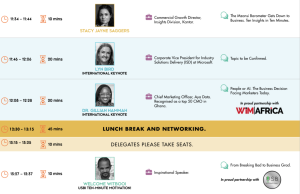
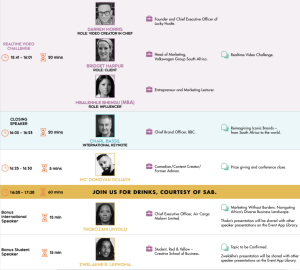
Twenty-six speakers, 6 of them international keynotes, will take to the stage to deliver their unique insights and offerings to over 2000 delegates at this year’s Nedbank IMC Conference. Confirmed as the biggest marketing conference in Africa, the Nedbank IMC has released its agenda for this year’s event.  Modern Marketing is a proud media partner. 

Known for its one-day, no-waffle approach, the conference remains committed to delivering an inspiring, unexpected but always relevant agenda.

‘This year’s theme is dedicated to our mantra, ‘Marketing is Business®’ and our formidable array of thought leaders will be doing a dive deep into the business of marketing. And how to ensure it delivers results that matter,’ said Dale Hefer, CEO of the IMC.

From big brand strategists and award-winning creatives to multi-national C-suite executives and inspiring motivational speakers, some of the speakers include:

– Tahaab Rais (Group Chief Strategy Officer and Film Director, Publicis Groupe).
– Charl Bassil (Chief Brand Officer, BBC).
– Lyn Bird (Corporate Vice President for Industry Solutions Delivery (ISD), Microsoft).
– Jason Quinn (Chief Executive, Nedbank Group Limited).
– Nomsa Chabeli (Group CEO of the SABC).
– Major Mandisa Mfeka (motivational speaker and first black female combat streamed pilot in the SA Air Force).

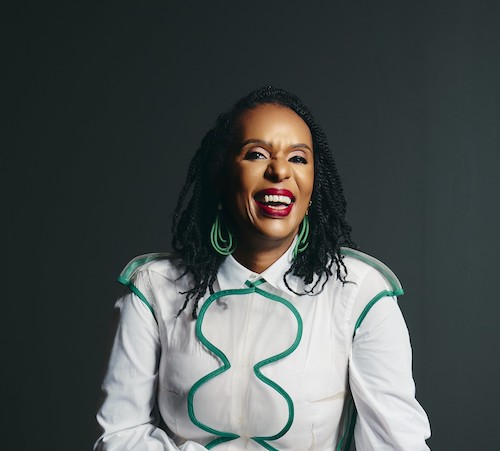
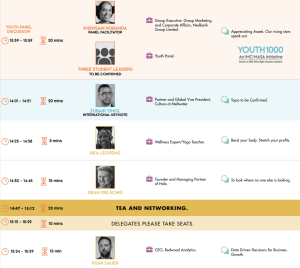
Ever since its inception, the Nedbank IMC has always had a particular focus on empowering the youth – a critical step for nurturing future leaders to take on a challenging marketing landscape. For the first time, the agenda will feature a dynamic youth panel, entitled: Appreciating Assets. Our rising stars speak out. Khensani Nobanda, Group Executive: Group Marketing and Corporate Affairs, Nedbank Group Limited, will facilitate the panel with 3 top student marketing leaders.

Another first this year is what promises to be an engaging and fun ‘real time video challenge’. From a morning brief by Hefer, ‘client’ Bridget Harper, ‘creator’ Darren Morris and ‘influencer’ Mbalenhle Bhengu will tackle the challenge head-on. Their final product and execution will then be discussed live on stage.

Get real ROI on September 18th at Mosaiek Teatro, 1 Danielle Street, Fairland, 2030. Join in-person or online for the most prestigious marketing event of the year. Access the full agenda here.

In-person tickets are priced at R3500 (excl. VAT). Limited seats available. No allocated seating. Virtual tickets priced at R950 (excl. VAT). Book now.

The Full Agenda: 

NEDBANK IMC CONFERENCE
www.imcconference.com

Newly Launched Effie Academy Bringing World-Class Marketing Education To SA

Newly Launched Effie Academy Bringing World-Class Marketing Education To SA

Effie Academy is now live in South Africa, bringing world-class marketing education to professionals and students alike. Supporting marketers throughout their careers, Effie Academy equips professionals and students alike with the thinking, rigour, and case-led insight to deliver Ideas That Work®. Modern Marketing is a proud media partner of the Effie Awards South Africa. 

Two flagship programmes will be offered in South Africa from 2025: Effie Fundamentals and Effie College. Each is built on the globally recognised Effie Framework for Marketing Effectiveness – a leading, open-access platform developed to help marketers perform at the highest level.

‘Effie’s mission has always been to champion effectiveness. With the Effie Academy, we’re building that into the future of the industry – not just by rewarding the work that works, but by teaching how to get there,’ said Gillian Rightford, ACA Executive Director for Effie South Africa. ‘These programmes are an investment in the people who create the work – from students entering the field to professionals sharpening their edge.’

A Global Standard in Marketing Education

Drawing on Effie’s extensive library of award-winning cases and guided by some of the world’s leading marketing minds, both programmes offer learning that blends theory and practice in a globally relevant, locally adapted format.

Effie Fundamentals is CPD-accredited through the Marketing Association of South Africa (MASA), at CMSA level, but relevant also to AMSA and MPSA, while Effie College is designed to enrich university curricula with immersive, real-world learning that connects students directly with industry.

Effie Academy Programme Overview

Effie Fundamentals

Effie Fundamentals is a case-based online learning experience tailored for marketers and professionals looking to refresh their skills through a globally informed, high-impact format. Participants explore the key principles of effectiveness through interactive modules that can be completed at their own pace.

Effie believes effectiveness should be an everyday orientation – and through Fundamentals, participants gain practical tools and real-world examples to make that a reality in their work.

Effie Fundamentals Benefits:

-Flexible Microlearning: Self-paced, bite-sized modules for focused learning.
-Case-Based Teaching: Built around award-winning Effie case studies.
-Effectively Enjoyable: Interactive challenges to sharpen critical thinking.
-Transferable Knowledge: Learning that can be applied directly on the job.

South African pricing has been negotiated with Effie Global to ensure accessibility, representing exceptional value to local learners: Prices start at just R3,800 per seat for ACA Members and Effie Sponsors/Partners, with a tiered sliding scale of discounts based on the number of seats.

Effie College

Effie College is a university-based programme that challenges students to develop integrated marketing strategies in response to a real-world brief from an established brand. Designed to be integrated into marketing curricula or offered as an extra-mural experience, Effie College is a practical, immersive introduction to marketing effectiveness.

Working in teams, students conduct research, develop creative ideas, and present their campaigns to a jury of professionals – with finalists selected to pitch directly to the sponsoring brand. The result? A transformative, career-shaping experience that builds both confidence and capability.

Participation in Effie College is made possible through a brand sponsorship model providing brands the opportunity to present their marketing challenge while helping shape future talent.

The programme not only brings the Effie Framework into the classroom but also strengthens the connection between education and industry by building organic advocates for the brands involved, and introducing students to leading marketers in a real-world simulation.

Building A More Effective Industry

With the launch of Effie Academy, Effie South Africa takes another step in its mission to champion marketing effectiveness through action and education. These two foundational programmes are only the beginning – and we invite individuals, agencies, brands, and universities to get involved.

To learn more about Effie Academy South Africa or to register your interest in either Effie Fundamentals or Effie College, click here. or reach out directly by contacting gillian@acasa.co.za or dineo@acasa.co.za

EFFIE AWARDS
www.effieawards.co.za

Why Culture And Collaboration Win Pitches

Why Culture And Collaboration Win Pitches
Sean Devlin, Penquin.

In the dynamic world of advertising and marketing, where creativity and innovation often take centre stage, it’s easy to overlook one of the most vital engines driving agency growth — the new business team. While creative awards and high-profile campaigns earn the spotlight, it’s often the behind-the-scenes hustle of business development that opens the door for those moments to happen in the first place.

Sean Devlin, Business Development Director at Penquin, knows this all too well. ‘Creative agencies can easily fall into the habit of working with the same portfolio of brands over time,’ he said. ‘But new business lets those creative minds stretch, experiment, and apply their skills across new industries and challenges — and that’s where real growth happens.’

SCOPEN Data Highlights Why It Matters More Than Ever

In an industry as competitive and fast-paced as advertising, it’s surprising to learn that 64% of South African agencies still operate without a dedicated new business department, according to the recently released SCOPEN 2025 New Business report. This, even though agencies pitch an average of 46 times a year, investing roughly R1.6 million annually into pitch processes — of which only 24% are remunerated.

The report further highlights that referrals (32%), chemistry (26%), and shared values (21%) remain the top three drivers when clients select an agency, with an increasing emphasis on long-term partnerships and alignment between creative and strategy teams.

The study also reveals that agencies with strong new business capabilities are better equipped to align with changing client needs and industry shifts — something Devlin sees as essential. ‘Reports like SCOPEN are invaluable,’ he added. ‘But the real power lies in how quickly you implement the insights. Curiosity, agility, and an appetite for learning — that’s what separates the good from the great.’

Why Culture And Collaboration Win Pitches

Devlin believes collaboration is central to success in this space. ‘When pitching, it’s all about creating an environment where both strategy and creative can thrive. One rooted in mutual respect, healthy competition, and curiosity. That’s where special work comes from.’ It’s a sentiment shared by many marketers in the AGENCY SCOPE 2023/24 report, where chemistry and cultural fit between agency and client emerged as critical selection factors.

With the increasing pressure to prove value, Devlin said agencies must avoid one key pitfall: trying to force a fit. ‘When there’s no alignment, it never ends well. Your time is better spent chasing opportunities that match your agency’s strengths and values. Patience and long-term thinking are everything.’

Today, the new business function is no longer just a ‘nice to have’ — it’s a strategic pillar. And when done right, it fuels creativity, unlocks growth, and ensures agencies stay relevant in an ever-evolving landscape.

PENQUIN
https://www.penquin.co.za

Africa’s Creator Economy: Time To Shift From Influence To Impact

Africa’s Creator Economy: Time To Shift From Influence To Impact
Ntokozo Nhlanhla, Digitas Liquorice.

Ntokozo Nhlanhla, Executive Creative Director, Digitas Liquorice, says the creator economy is reshaping the global marketing landscape, projected to nearly double in value from US$250 billion today to US$480 billion by 2027. In Africa, this momentum is even more pronounced. The continent’s share is expected to surge from US$3.08 billion to $17.84 billion by 2030, that’s a crazy 28.5% increase that highlights a massive shift in how brands can engage meaningfully across African markets.

This is a cultural and economic opportunity; one that speaks directly to Africa’s next generation of entrepreneurs.

The Size Of The Prize

Africa is home to 54 countries, over 2000 languages, and more than 1.4 billion people. It is also the fastest-growing region in terms of working-age population. By 2050, over 740 million Africans will be of working age, with 12 million youth entering the labour force annually.

At the same time, internet penetration and smartphone adoption are climbing steadily, creating fertile ground for young Africans to shift from passive consumers to active creators.

Social platforms, digital payment systems and mobile tech are making it easier than ever for creators to monetise their content and build audiences, not just in Mzansi, but across the continent and the globe. This is Africa’s chance to leapfrog into a new era of influence, where creators set global trends.

From Influence To Impact

The influencer and creator economy presents a powerful spectrum of impact across the marketing funnel. Influencers (those with large followings and broad appeal) excel at creating top-of-funnel awareness. Meanwhile, content creators, often with more niche or culturally embedded audiences, drive deeper engagement, trust and conversion.

Pete Little, Chief Creative Officer at Publicis Groupe Africa, said: ‘Influencers or celebrity personalities with great reach can raise awareness for brands, but with creators, we are tapping into niche communities with access to a more personal audience connection focusing on building engagement through education and entertainment. It’s not just about the number of followers anymore.’

In the recent #YoutubeMadeForYou campaign, this distinction played out powerfully. In the first phase, influencers drove awareness through YouTube Shorts in South Africa, generating over 3000 short-form videos celebrating local culture under the #MadeInMzansi banner. In the second phase, creators and influencers partnered to inspire and enable others, resulting in more than 65,000 pieces of new content, 85 million views and 1 million new daily users across Africa. By activating creators and influencers at scale, the platform drove exponential content creation and user acquisition, turning passive audiences into active participants and solving the challenge of sustained engagement and daily growth.

Relevance Is The New Reach

In a continent as diverse as Africa, relevance cannot be one-size-fits-all. That’s why culturally specific content in local languages, with local nuance, is a non-negotiable for success.

In Nigeria, the content for the #YoutubeMadeForYou campaign was created in Hausa, Yoruba, Pidgin, Igbo and English. South African content featured isiXhosa, Zulu, Afrikaans and English. Kenya followed with Swahili and English assets. Across the campaign, 422 culturally tuned assets were developed, resulting in brand recall increases of +9.6% in Nigeria and +6.5% in South Africa.

This level of customisation speaks to consumers in their own language and improves the brand experience, driving measurable results.

Why Brands Should Care

Globally, 9 out of 10 consumers trust the creators they follow. Among Gen Z and millennials, creator content influences purchasing decisions more than traditional ads. And 63% of consumers say they trust what influencers say about brands more than the brands themselves (Warc).

For marketers, this means real ROI: brands that invest strategically in influencer and creator partnerships see up to 10.7 times better performance in social media marketing outcomes.

Yet the African creator economy remains undercapitalised. The challenge? A lack of Africa-first content, inconsistent access to platforms and insufficient support systems for emerging creators. That’s why enablement matters. At Publicis Groupe Africa, we look at every creator campaign through four lenses: marketing objectives, audience fit, cultural relevance and partnership structure. And we invest in education, toolkits, and access, not only airtime.

For this economy to thrive long term, it needs structure. Publicis recently supported the launch of the IAB SA and ARB’s first Content Creator Charter; a set of guiding principles that promote transparency, ethics and fairness in influencer partnerships. Because building Africa’s creator economy is about unlocking dignity, income, voice and creative freedom.

Africa’s Story, Told by Africans

Africa’s creator economy offers a once-in-a-generation opportunity to shape a new narrative. Brands that embrace this shift, from passive advertising to active partnership, from one-size-fits-all messaging to culture-first storytelling, will build equity with Africa.

As we move forward, marketers must ask: Are we just advertising to African consumers or are we helping them tell their stories? The difference is exponential. Now is the time to shift. From influence to impact.

DIGITAS LIQUORICE
https://liquorice.co.za

How Financial Institutions Can Earn The Trust And Loyalty Of Gen Z Consumers

How Financial Institutions Can Earn The Trust And Loyalty Of Gen Z Consumers

Insights from KLA, in partnership with YouGov Profiles, reveal how Gen Z’s expectations are reshaping the financial services industry, with implications for banks and financial brands seeking to earn their trust and long-term loyalty. Trust, transparency, and innovation are non-negotiable for South Africa’s Gen Z consumers when choosing financial partners.

As a digitally savvy and socially conscious generation, Gen Z demands meaningful brand connections, seamless digital solutions, and clear financial communication, but remains financially cautious and sceptical of traditional institutions.

Gen Z’s Expectations From Financial Institutions

Gen Z approaches banking with a heightened need for transparency, flexibility, and social alignment. Financial brands need to rethink traditional marketing and engagement strategies to resonate with this generation’s values and habits.

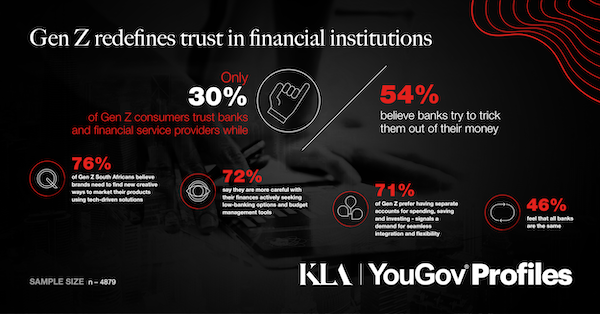
Innovation in marketing is key as 76% of Gen Z South Africans believe brands need to find new, creative ways to market their products, favouring interactive, technology-driven solutions such as gamified savings apps, digital financial education, and immersive social media engagement.

Trust and meaningful connections matter to Gen Z consumers, with 56% preferring long-term brand relationships over one-time transactions, favouring financial partners that align with their personal goals and social values, such as sustainability and community investment.

Financial Caution And Changing Banking Habits

Despite being early adopters of digital banking, Gen Z is financially cautious and selective when it comes to money management.

– 72% of Gen Z consumers say they are more careful with their finances than before, actively seeking low-fee banking options and budget management tools.
– 71% of Gen Z prefer having multiple bank accounts, using separate accounts for spending, saving, and investing, which signals a demand for seamless integration and financial flexibility.
– 54% of Gen Z South Africans believe banks try to trick them out of their money, and 46% feel that all banks are the same, highlighting a trust deficit that financial institutions must address.

Digital Trust And Online Banking Barriers

While Gen Z is digitally fluent, 41% report feeling uncomfortable using online banking, despite its widespread adoption. This signals a gap in user experience and security concerns that financial institutions need to bridge. Only 30% of Gen Z consumers trust banks and financial service providers, highlighting the urgent need for transparency in pricing, fees, and policies.

Real-time notifications, no-hidden-fee policies, and simplified digital banking interfaces can help rebuild trust and encourage financial confidence.

Social Proof And The Power of Influence

Gen Z places high value on peer recommendations and digital validation when selecting financial products and services.

– 70% of Gen Z check online product reviews before making a purchase, suggesting an opportunity for banks to leverage customer testimonials and case studies to build credibility.
– 47% of Gen Z trust influencer endorsements, reinforcing the potential for finance-focused content creators to bridge the knowledge gap and improve banking literacy.

Opportunities For Financial Institutions To Engage Gen Z

To earn the trust and loyalty of these consumers, financial institutions need to align their services with Gen Z’s digital habits, financial needs, and values.

– Prioritise transparency and simplicity by avoiding hidden fees, simplifying financial language, and offering real-time account monitoring.
– Offer technology-driven solutions and invest in AI-powered budgeting tools, interactive financial education, and secure mobile-first platforms.
– Support social responsibility initiatives aligned with Gen Z’s values, such as eco-friendly banking, community investments, and ethical finance options.
– Provide accessible content to improve financial literacy and education through blogs, social media, and interactive tools to help young consumers make informed decisions.
– Showcase authentic customer experiences and financial success stories across social media, to build credibility and drive engagement.

For South Africa’s Gen Z, financial brands are no longer just service providers, they must be partners in financial empowerment. Institutions that prioritise digital innovation, meaningful engagement, and transparency will be best positioned to earn Gen Z’s trust, foster loyalty, and redefine financial relationships for the future.

Methodology

Profiles: Segmentation and media planning tool. YouGov Profiles makes it simple to find and understand the audience that matters most to you. With data collected daily, it gives you the power to build and customise a portrait of your consumers’ entire world with unrivalled granularity. More than 12,500 variables are available in South Africa. Dataset: 2024-12-29. Population: South African Generation Z aged 12-27 years old with access to the internet, n ~ 1094.

KLA
www.kla.co.za

Switch Energy Drink Launches Winter Campaign

Switch Energy Drink Launches Winter Campaign

Aligning with South African humour and cultural moments, Switch has created a winter campaign that speaks to immune support, combined with its great flavour range. In their true form of keeping the public talking, Switch has rolled out three quirky and creative TV commercials (TVCs) for the winter campaign featuring their Vita-C + Zinc range.

The ads are relatable and encourage consumers to ‘Vita-C themselves’ this winter, and that the range is suitable for the whole family to consume.

The TVCs have garnered traction online, reaching over twelve million views across digital platforms. This impressive reach showcases how the brand managed to create very relatable content for its audience. This successful performance is a true reflection of both the creative appeal of the content and the strategic placement across targeted channels, including the out-of-home billboards in Johannesburg, Pretoria, and Rustenburg.

‘We’re blown away by the incredible response to our TVCs across social media,’ said Zhuraan Glade, Head of Marketing at Switch Energy Drink. ‘At Switch, we don’t just market — we entertain, disrupt, and connect. Our goal is to craft bold, culturally relevant content that speaks to South Africans in a language they love; realness, humour, and energy that hits different.’

‘The TVCs highlight that Vita-C is made for everyone – from energetic youngsters to seasoned sippers and can be enjoyed in any setting, at any time,’ Glade concluded.

SWITCH ENERGY DRINK
https://drinkswitch.co.za/

This is Modern Marketing