
Home Blog Page 79

Loeries Young Creatives Showcase Entries Are Now Open

Loeries Young Creatives Showcase Entries Are Now Open

The Loeries Young Creatives Showcase (LYCS) is built on the same principles that are used in the globally renowned Loeries judging process, as a platform that will showcase talented young individuals from the brand communications industry across Africa and the Middle East. Entries close on 24 March. The Loeries Youth Committee (LYC) aims to inspire and elevate young talent through this innovative showcase. Modern Marketing is a proud media partner of The Loeries.

Open to individuals aged 27 and under, the showcase provides the chance for young professionals to submit up to 5 examples of their work, earn recognition, and compete for the highly coveted Loeries Young Creatives Award. Enter here.

‘The Loeries Young Creatives Showcase is a launchpad for the next wave of creative brilliance. This is FOR US, BY US – where the boldest, sharpest and most fearless young minds in advertising get the recognition they deserve,’ said LYC Chairperson Sibuyiselwe Nhlangwini. ‘It’s not just about celebrating their work: it’s about planting seeds, opening doors and proving that fresh ideas and fearless creativity are what keep this industry alive.’

Submissions will be evaluated by the LYC, with an industry leader serving as Jury President. The winners will not only gain bragging rights but will also secure a spot as finalists for the Loeries Young Creatives Award, to be presented at the annual Loerie Awards. For more information, click here.

‘The Loeries Young Creatives Showcase is the launchpad for the boldest young minds in Africa and the Middle East. The future of our industry is being shaped right now by the next generation of talent – and they deserve to be seen, heard, and celebrated,’ said LYC member Anna Sadykova. ‘The next wave of game-changers is here, and we’re ready to witness their brilliance take flight.’

Open to young professionals from all disciplines, winners for the LYCS will be announced on the Loeries Young Creatives Instagram page. This is the perfect opportunity for those looking to gain exposure, receive insightful feedback from industry leaders, and build a standout portfolio with recognition from the premiere awards in Africa and the Middle East.

THE LOERIES
loeries.com/loeries-young-creatives-showcase/

Latest MAPS® Data Reveals Insights Into South African Consumer Behaviour

Latest MAPS Data Reveals Insights Into South African Consumer Behaviour

The Marketing Research Foundation (MRF) has released its latest Marketing All Product Survey (MAPS®) dataset, covering the period from October 2023 to September 2024. Now into its 5th year, this release marks the 14th consecutive quarterly release covering research from July 2020 to September 2024.

The data offers invaluable and trendable insights into South African consumer behaviour, media consumption, and economic trends.

The MAPS® survey boasts an impressive sample size, with over 20,000 interviews conducted annually across all provinces and municipalities in South Africa. This stratified random sample ensures a representative view of the nation’s diverse population.

For more information about MAPS® and how to access the full dataset, please contact the Marketing Research Foundation.

MARKETING RESEARCH FOUNDATION
mrfsa.org.za

Esteemed Industry Leaders To Judge SA’s Top Marketing And Supply Chain Management Talent

Esteemed Industry Leaders To Judge SAs Top Marketing And Supply Chain Management Talent

The esteemed IMM Excellence Awards celebrate those who have excelled in the fields of marketing and supply chain excellence. Experts from their disciplines in both marketing and supply chain management are gearing up to present several prestigious awards at the upcoming IMM Institute’s Annual Gala Dinner on 7 March 2025. Modern Marketing is a proud media partner of the IMM Institute.

‘This year, our awards for those who have excelled through working across the supply chain and marketing field are being judged by people who are experts these fields, especially in marketing, advertising, supply chain management, and business development. Their collective expertise spans brand strategy, experiential marketing, procurement, logistics, academia, and operational efficiency,’ explained Irene Gregory, CEO of the IMM Institute.

Gregory added that the distinguished judges, in presenting the awards, will be able to offer unparalleled insights into the space where marketing and supply chain management converge to create business process excellence.

‘We pride ourselves on fostering a real-world sense of community, both through our physical and online educational offerings and the opportunities we provide for professionals in both marketing and supply chain to interact with each other. Having these specialists judge the awards spotlights current trends and enables their peers, through networking, to collaborate to address daily challenges in the workplace,’ said Gregory.

The IMM Institute’s expert judges are reviewing entries for the following awards:

· Marketer of the Year.
· Emerging Marketer of the Year.
· Marketing Student of the Year.
· Corporate Marketing Team of the Year.
· Supply Chain Professional of the Year.
· Supply Chain Student of the Year.
· Corporate Supply Chain Team of the Year.
· Entrepreneur of the Year.
· Lifetime Achievement Awards in Marketing.
· Lifetime Achievement Awards in Supply Chain.

Among the judges is Lethabo Sekhu, Co-founder and COO at Credipple, who is joined by Ronald Muringai, Programme Coordinator and Head Lecturer in the IMM Graduate School’s Faculty of Supply Chain Management.

Ronald Mlalazi, a procurement professional who is both a Chartered Institute of Procurement and Supply UK Fellow and a Chartered Institute of Logistics and Transport Fellow, will also be judging winners. Thobekile Nxumalo, who leads the execution of impactful projects at a management consulting firm, is also on the judging panel, as is Brad Watridge, who is a published co-author in addition to being a partner in a group of companies.

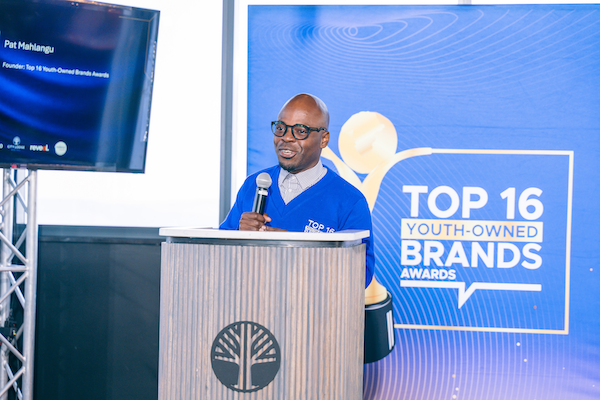
These judges will be accompanied by Pat Mahlangu, founder and CEO at Lerato Agency and Mpumi Zondo, who is Head of Brand Africa and Global Client Lead at Edelman. Thobekile Nxumalo, Head of Supply Chain at iqbusiness, rounds out the judging panel.

‘These judges’ track records show that, in today’s fast-paced environment, it is essential to ensure that marketing and supply strategies align seamlessly to deliver on the objective of getting brands to consumers, on demand, and driving business growth,’ said Gregory.

In addition to the awards, the dinner offers an excellent opportunity to network, while being entertained by the amazing Simply For Entertainment. Carte Blanche’s Govan Whittles will MC the event. Award-winning marketing and media entrepreneur, Pat Mahlangu, will deliver the keynote address.

‘It promises to be an engaging evening filled with valuable insights, meaningful connections, and discussions on the evolving landscape of marketing and supply chain management,’ noted Gregory.

IMM INSTITUTE
www.imminstitute.co.za

Effective Marketing Is Integral To A Business’s Bottom Line

Effective Marketing Is Integral To A Business Bottom Line
Dean Oelschig, Halo.

The Nedbank IMC has always been committed to driving the business case for marketing. This year’s ‘Marketing is Business®’ theme is dedicated to unpacking, showcasing and sharing how integral marketing is to the bottom line. Someone who understands just how valuable an effective marketing campaign can be, is Dean Oelschig, founder and managing partner of independent agency Halo. Halo not only took the coveted Grand Effie award at the Effies SA 2024 for most effective campaign but the agency also won the Financial Mail’s AdFocus Small Agency of the Year, and the overall Agency of the Year.

Effective campaigns are more than just creatively on-mark, they need to deliver real measurable results – as Halo did for Pineapple Insurance – showing a triple-digit growth for a new brand in a notoriously hard-sell industry. The Nedbank IMC caught up with Oelschig and chatted to him about the conference theme and what makes for effective marketing.

Halo won the 2024 Grand Effie (helping Pineapple Insurance reach triple-digit growth). What were your key take-outs from the campaign that contributed to this business growth?

I believe simplicity (which is almost never ‘simple’) is key to creative effectiveness and business growth. Brands win when they’re easy to remember and easy to buy, a concept coined by the Ehrenberg Bass Institute as ‘mental and physical availability’. I think the Pineapple campaign achieved this with consumers and reaped the rewards by standing out in a sea of sameness, showing that the right distinctiveness can give brands a huge competitive advantage.

We also believe that brands that have fun and don’t take themselves too seriously tend to get better audience engagement. Great advertising should never feel like an ad. Pineapple spoke about insurance to their audience in the same way the audience would speak about insurance, and that resonated.

Why does marketing deserve a seat at the boardroom table?

Marketing is not just about Promotion; it is still very much about the other 3 Ps, too: product, price and placement. If a company doesn’t have the right product at the right price for the right people, promotion is pointless. That should be a priority in every boardroom on earth. Great businesses like Apple or Amazon perfect the first 3 P’s long before they begin to promote them. A brand that is the effective culmination of all 4 elements is a standout brand.

How do you set goals for the brands you work on?

Although research and brand health checks have greatly improved, they’re still not perfect. Ideally, we would have strong and consistent brand health benchmarks to see if we are moving the needle in the right direction. At Halo we set clear, ambitious objectives upfront, like focusing on share of market or sales and aim to unrealistically improve on these indicators.

What is the biggest challenge facing agencies today?

We have seen South Africa’s creative products suffer and we are no longer punching above our weight globally like we have famously done in the past. For me, South Africa’s advertising industry faces a talent crisis, with senior, super-experienced talent emigrating to far-off shores and leaving a void in nurturing junior talent.

This lack of senior leadership has also led to a breakdown of trust between the boardroom and agencies, making it harder to get the buy-in for breakthrough creative work. I think it’s critical to promote dialogue between agencies, clients and the C-suite executives and regain the trust in the overall marketing product.

It doesn’t always happen but too often a wide spectrum of an organisation gets to have their say on brand, advertising, and marketing activities. The CFO doesn’t ask the marketing department for a view on their budget. So it’s somewhat strange and unproductive to allow multiple decision-makers on an ad campaign. Agencies are largely to blame for this (for reasons like the above lack of senior leadership) and they must re-establish themselves as trusted specialists, providing confident advice and direction. This will streamline decision-making, and ultimately, the work will be better for it.

What’s the best way to encourage business to understand the value of marketing?

The effectiveness of marketing is indisputable, and the lessons are there for everyone to learn. With resources like the IPA/WARC and experts such as Les Binet, Peter Field, and Adam Morgan publishing a variety of studies and data supporting this golden age of marketing effectiveness. One of my favourite examples is Field and Morgan’s ongoing UK study showing that dull marketing campaigns need £10m-£17m more in media investment to match the performance of creatively sound campaigns1. We are really beginning to see the real hard cost of not doing it properly.

What’s your secret to success?

Consistently do the right things over and over, no matter how hard they get. Success is never a single deed but rather the culmination of thousands of small, consistent, deliberate acts.

Catch more of Oelschig’s business insights at this year’s Nedbank IMC on the 18th September where he will be a distinguished first-time speaker at Africa’s biggest marketing conference. Modern Marketing is a proud media partner of the event.

Attend in-person or online. Venue: Mosaiek Teatro. 1 Danielle Street, Fairland, 2030. In-person tickets are priced at R3000 (excl. VAT). First 400 seats. Limited seats available. Virtual tickets are priced at R950 (excl. VAT). Book now.

NEDBANK IMC CONFERENCE
www.imcconference.com

Havas Play Extends Its Bespoke Capabilities Into Africa

Havas Play Extends Its Bespoke Capabilities Into Africa

Havas Africa has officially launched Havas Play, Havas’ global network with expertise across sponsorships, partnerships, experiential, social, influencers, and branded content. This latest launch expanses the footprint of the global Havas Play network, which encompasses over 500+ Play experts in more than 20 countries across the globe. By connecting brands with people and communities, Havas’ network is dedicated to activating consumer passions that will drive business growth for African brands.

According to PricewaterhouseCoopers’ Africa Entertainment and Media Outlook 2024-2028 report, entertainment and media (E&M) revenue in South Africa, Kenya, and Nigeria is expected to surpass the average 3.9% compound annual growth rate forecasted globally. Between 2023 and 2028, South Africa’s E&M revenue is projected to increase from US$16.1 billion to US$19.8 billion, Nigeria’s from US$9.0 billion to US$13.6 billion, and Kenya’s from US$3.8 billion to US$4.8 billion. This growth highlights Africa’s deep-rooted music, sports, and gaming communities, which makes Africa a key market for investment in areas of consumer passion.

‘At Havas Play, we don’t just create campaigns, we ignite passion points and build communities where brands and fans connect in meaningful ways. Africa is a powerhouse of culture, creativity, and untapped potential, and its influence on the global entertainment and sports economy is undeniable. By expanding Havas Play into Africa, we are strengthening our global footprint and unlocking new opportunities for brands to engage with some of the most passionate fanbases in the world. This is more than growth, it’s about shaping the future of fandom on a global scale,’ said Renata Spackova, Chief Operating Officer of New Core Business at Havas.

Having launched across Havas’ major markets including Australia, France, the United Kingdom, the United States, India, Spain, Italy, China, Hong Kong, Germany, Singapore, and LATAM, Havas Play has driven impactful activations for storied brands including Alpine, Jameson, Total Wireless, Puma, Narcotics Anonymous, L’Enfant Blue, and HARMAN Gaming. Now, Havas Play extends its bespoke capabilities into Africa.

‘Africa’s strong, vibrant, and diverse cultures are deeply rooted in entertainment, whether it be sports, music, or gaming. This is part of our people. We believe that Havas Play has the potential to help brands become cultural players and form meaningful connections in a fragmented media landscape, contributing to a culture of co-creation. Brands cannot exist without the people – therefore, culture needs to be taken seriously to ensure they connect with superfans,’ said Carel Scheepers, Head of New Core Business at Havas Africa.

Provit Chemmani CEO of Havas Africa, shared, ‘Africa is not just a market; it is a movement — driven by passion, creativity, and an unstoppable energy for entertainment. With Havas Play, we are not just launching a service; we are igniting a cultural revolution where brands don’t just advertise, they become part of the fabric of music, sports, and gaming. This is our moment to shape the future of fan engagement and put Africa at the forefront of the global entertainment economy.’

HAVAS
za.havas.com

Applications Are Open For 12 SA Women To Get Free Passes To Cannes Lions

Applications Are Open For 12 SA Women To Get Free Passes To Cannes Lions

Open Chair is offering free Cannes Lions passes for 12 South African women in the creative industry. Cannes Lions is the world’s largest gathering of the advertising and creative communications industry, thanks to the festival’s equity, representation and accessibility programme. The tickets, worth more than R700,000, were allocated to Open Chair, a non-profit that aims to nurture and inspire the next generation of women leaders in the industry.

Now Open Chair has opened applications for the passes, which will allow their holders to mingle with 15,000 delegates from 90 countries in the French Riviera city of Cannes from 16-20 June. The winners will have access to all the festival’s award shows, talks, networking spaces, daily happy hours and the closing party.

Open Chair founder Suhana Gordhan said it’s a historic moment for the South African creative industry, which struggles to retain women. ‘One of the challenges we face is empty chairs. Far too few women occupy those chairs and far too many leave them. This community was formed to create access to industry leaders, and ultimately to learn from and support each other,’ she said.

Fran Luckin, Open Chair board member, said: ‘Being able to add 12 women to the Open Chair Cannes Lionesses Pride this year is a huge boost for us and ensures more women will be able to take up space where they belong. We’re so grateful that the festival decided to focus on the Global South in the allocation of this year’s passes.’

The 12 passes include five for ‘Young Lions’, who must be 30 and under, and three for full-time students of 23 and under. ‘Applicants have to submit a two-minute video outlining why they should be selected, and send a short written motivation from their chief creative officer, CEO or mentor,’ said Open Chair board member Lorraine Smit. ‘We also need their name, role, organisation, date of birth and social handles.’

‘The aim of the Cannes equity, representation and accessibility programme is to foster a diverse and inclusive representation of talent at the festival, and we will be using this principle to select the final group of women and those who identify as women,’ said Smit.

Open Chair is seeking support from the creative industry to cover the cost of flights, accommodation and per diem for the successful applicants, and Luckin said it’s an opportunity to close the gender gap.

‘It’s important to talk about gender equality, because we can never let the topic go quiet,’ said Gordhan. ‘It’s crucial that we walk that long journey with bigger strides, because the walk is a little too long for the future we need now. And a single trip to Cannes can change a woman’s career.’

Applications must be emailed to thewomen@openchair.tv by 28 February 2025.

OPEN CHAIR
LinkedIn 

Why PR Could Become One Of The Most Desired Jobs This Year

Why PR Could Become One Of The Most Desired Jobs This Year
Adam Hunter, Hook, Line & Sinker.

Adam Hunter, Managing Director at Hook, Line & Sinker (HLS), says the media and marketing industry has changed exponentially over the last few years and, looking ahead, PR and communications professionals are set to become even more integrated with marketing, content, and data analytics as companies seek experts who can combine several skills for maximum impact.

The PR market is projected to reach $34.9 billion by 2034, with a compound growth rate of more than 10% from 2024 to 2034, reflecting robust growth. PR is evolving into a future-proof career as it adapts to new technologies, trends, and societal needs. Here are four reasons why it could be considered one of the hottest jobs of 2025 and beyond:

1. Diverse Career Opportunities

The PR and marketing blend has led to significant benefits for organisations, including increased engagement and conversions. A PwC survey found that integrated campaigns generate 68% more engagement and 58% more conversions compared to non-integrated efforts.

For those looking to combine creativity with cutting-edge technology, the PR industry incorporates analytics and data-driven insights. This evolution has made the profession dynamic and exciting, and organisations are now realising the strategic value of PR in shaping public opinion, driving advocacy, and influencing policy.

2. Disinformation Powers A Lack Of Trust

The spread of disinformation has significantly eroded public trust in media and brands alike. Gallup has found that only 31% of consumers have a fair amount of confidence in the mass media to report news accurately.

As platforms like Meta face mounting criticism over their handling of disinformation, PR practitioners are increasingly stepping into the role of truth-tellers. Reputation management now involves sifting through fake news, misinformation, and digital conspiracies to set the record straight. A massive 64% of consumers say they would boycott a brand based on its stance on social or political issues. As a result, brands need to work harder to be seen as credible.

3. Reputation And Rapid Digital Transformation

Rapid digital transformation, coupled with audience distrust, AI concerns, and political polarisation, all heighten the risk of brand and reputation crises.

Research reveals that 86% of American’s believe transparency from businesses is more important than ever before, and nearly nine out of 10 consumers are more likely to give transparent brands a second chance after a bad experience. Sadly, only 34% of global consumers trust brands they buy or use.

This further cements brand integrity as a core focus this year. Brands face heightened scrutiny in the digital age and PR experts are essential for mitigating risks and safeguarding positive reputations in a highly connected world.

4. Getting PR-Smart With AI

For aspiring PR professionals, the integration of AI into the industry offers an exciting opportunity to harness cutting-edge tools and to enhance creativity, efficiency, and strategic impact. AI’s ability to analyse vast amounts of data, predict trends, and provide insights enables PR practitioners to develop more targeted and impactful campaigns.

According to PRWeek, 82% of PR professionals believe AI will play a key role in the industry’s future, with 44% already using AI-driven tools in daily tasks. In 2025, data-driven PR will receive a further boost from data visualisation tools and AI support, such as Microsoft Copilot integrations with Excel, allowing for better measurement and reporting which will also result in more impactful and measurable campaigns.

AI tools help PR pros streamline tasks, but beware: it is your co-pilot, not your captain. Low-quality AI content simply adds to the media clutter. Communications professionals will need to carefully weigh up bias, fact-check content, and ensure inclusivity, rather than using AI material without refining.

It is easy to see that the growing need for brand reputation management, the evolving media landscape, and the integration of PR with emerging technologies and industries, make the PR field a critical and desirable career path.

By embracing technology, prioritising authenticity, and staying vigilant against disinformation, PR professionals can continue to be the architects of impactful narratives. And while the tools and tactics may change, the core mission remains the same: connecting people to ideas, with purpose and transparency at the heart of it all.

HOOK, LINE & SINKER
www.hooklinesinker.biz

The Role Of Credible Media Has Never Been More Critical

Raphala Mogase, Riverbed Agency.

According to Raphala Mogase, Head of PR at Riverbed Agency, in speaking to journalists from a range of reputable publications, key themes emerged that define the current state and future of the media industry. Shrinking newsrooms, financial instability, the dominance of social media, and the increasing role of AI were among the most pressing issues raised.

The media landscape is at a crossroads. The industry is grappling with economic pressures, the rise of independent platforms, AI’s growing influence, and an ongoing battle against misinformation. As we move into 2025, the role of credible media has never been more critical.

Challenges Facing The Media Industry In 2025

Media professionals across the industry have faced significant hurdles over the past year. Shrinking newsrooms, budget cuts, and declining advertising revenues have forced many media houses to downsize and some titles reaching their end of life. Additionally, the dominance of social media has changed how news is consumed, often overshadowing traditional reporting.

They also point out that a lack of access to government representatives post-elections has also made reporting more difficult. Media professionals are also under pressure to publish faster while maintaining accuracy. The rise of misinformation has eroded trust in mainstream platforms, and the safety of reporters, both physically and online, has become a growing concern.

The financial instability of the industry has led some experienced professionals to leave the profession, leaving media houses increasingly staffed with junior talent.

The Impact Of Social Media And Independent Platforms

Social media platforms such as X (formerly Twitter), TikTok, and YouTube have changed media forever. While they allow professionals to amplify their content and reach broader audiences, they also create new challenges. The speed at which information spreads means that traditional media outlets often struggle to keep up with unverified social media reports. The demand for immediate news has led to a shift in content habits, where audiences are more likely to engage with short-form, fast-paced content rather than in-depth reporting.

The rise of independent media professionals and podcasters has further disrupted the industry. While this democratisation of media provides alternative voices and perspectives, it also presents credibility concerns. Many independent platforms operate outside of traditional media standards, raising issues about bias and misinformation. Some independent platforms can be influenced by financial backers, leading to concerns about impartiality. That said, independent media has also filled gaps left by mainstream platforms, particularly in niche reporting.

AI: Disruptor Or Threat?

Artificial Intelligence (AI) is reshaping the media landscape. AI-driven tools can assist with research, data analysis, and content production, making newsrooms more efficient. However, AI-generated content lacks human judgment, context, and ethical considerations. While AI can assist in breaking news coverage and investigative reporting, it cannot replace experienced professionals who provide analysis, verification, and storytelling depth.

The threat lies in the potential misuse of AI-generated misinformation, deepfakes, and the erosion of human jobs in media. AI should be viewed as a tool to enhance media operations rather than replace human expertise.

The Rise Of Fake News And The Need For Credible Media

Fake news is a growing problem, amplified by social media algorithms that prioritise engagement over accuracy. The need for verified fact-checked media has never been greater. The public still seeks credible reporting, particularly in politically and economically sensitive times. Media houses must reinforce their role as trustworthy sources, ensuring that their content is balanced, well-researched, and transparent.

The spread of misinformation has been exacerbated by the rapid circulation of unverified claims online. The challenge for 2025 will be educating audiences on distinguishing credible media from content-driven entertainment.

Future Trends For 2025: Opportunities And Risks

Fears:

– Continued revenue declines, leading to more job losses in media.
– Erosion of public trust due to misinformation and AI-generated content.
– Further reduction in investigative reporting due to financial constraints.
– Deepfakes becoming more sophisticated, making it harder to verify authenticity.

Opportunities:

– AI can be leveraged to improve investigative reporting by analysing large datasets quickly.
– Podcasts and long-form digital content present opportunities for media houses to engage audiences differently.
– Subscription models and paywalls are gaining traction, creating new revenue streams.
– Immersive storytelling through AR/VR could redefine digital media.
– Media organisations can integrate AI responsibly to improve efficiency while maintaining human oversight.

2025 presents both challenges and opportunities for the media landscape. While the industry faces financial strain and the pressures of misinformation, there are clear paths forward. The key to survival lies in adaptation: leveraging digital platforms, integrating AI responsibly, and maintaining credibility. Trust will remain the most valuable currency in media, and those who prioritise accuracy and transparency will remain relevant in this evolving landscape.

THE RIVERBED AGENCY
https://theriverbed.co.za

Flume’s New Chief Creative Officer Will Spearhead The Agency’s Creative Vision

Flumes New Chief Creative Officer Will Spearhead The Agencys Creative Vision
Chélin Ramos, Flume.

Chélin Ramos brings a wealth of experience to her new role of Chief Creative Officer (CCO), holding a Bachelor of Design (Cum Laude) and boasting close to two decades of experience leading creative teams at various agencies. Ramos, a valued member of the Flume family for nearly two and a half years, will spearhead the agency’s creative vision and direction.

Ramos emphasised the importance of company-wide integration to achieve true creative excellence, and is looking forward to making a genuine impact within this role. ‘Flume has cultivated a good reputation built on authentic relationships, a unique culture, and impactful work. I’m excited to amplify our voice and demonstrate our strength as a contender in the industry. I look forward to embracing this new role and making a significant impact – not only across Flume’s operations, but with our client relationships, and the broader industry,’ said Ramos.

Jacques du Bruyn, Co-CEO of Flume, said, ‘We prioritise internal growth and promotion, fostering existing trust, continuity, and a shared understanding of our vision and culture. Ramos’ talent, leadership, and proven track record make her the ideal choice to elevate Flume to new heights. Her appointment reflects Flume’s ambition and our commitment to empowering every voice within our team. We are big enough to serve the world’s best, but small enough to genuinely care about every single detail – and person.’

FLUME DIGITAL MARKETING
www.flume.co.za

Why Workplace Culture Is A Competitive Advantage

Ryan Nofal, Penquin.

Workplace culture has become one of the most significant factors influencing job satisfaction, employee retention, and overall business success. It’s no longer just about a competitive salary or a stylish office space, employees want to work in an environment that motivates, inspires, and values them. Companies that prioritise a strong, positive culture don’t just benefit from happier employees; they see measurable results, from increased productivity to improved customer relationships.

‘A thriving workplace culture isn’t just about perks, it’s about building a space where creativity flows, collaboration thrives, and employees feel truly valued,’ said Ryan Nofal, Co-Managing Director at Penquin. ‘A great company understands that its people are its greatest asset.’

The Employer’s Perspective: Why Culture is a Competitive Advantage

For businesses, workplace culture is a game-changer. A strong culture fosters innovation, enhances productivity, and directly impacts the bottom line. Companies that actively nurture a positive culture create an environment where employees feel invested in their work and, in turn, deliver better results.

‘Employees who feel valued and engaged are more likely to go the extra mile, contribute creative ideas, and collaborate effectively,’ Nofal added. ‘On the other hand, an uninspiring culture can lead to high turnover, disengagement, and even reputational damage.’

Companies that invest in their culture see the difference — studies show that highly engaged employees contribute to lower absenteeism, higher profitability, and stronger customer relationships. A well-defined culture also helps attract top talent who align with the company’s values, making recruitment and retention more seamless.

Creating An Inclusive And Supportive Environment For Employees

Today’s workforce wants more than just a salary, they seek purpose, growth, and a sense of belonging. Employees thrive in environments that support both personal and professional development, fostering a community where they feel safe, heard, and motivated.

‘An inclusive and supportive culture encourages open communication, trust, and collaboration, which leads to greater job satisfaction,’ said Nofal. ‘When employees feel a sense of belonging and purpose, they become more engaged, creative, and loyal to the company. That’s why at Penquin, we encourage employees to celebrate their achievements, strengthen team connections, and create a fun, inclusive environment and cultivate a space where employees are encouraged to share new ideas, push creative boundaries, and take risks in their work.’

A strong internal work culture not only benefits employees but also directly reflects in the work produced for clients. ‘A vibrant internal culture becomes the foundation for compelling and trustworthy external communications. When people feel happy, inspired, and motivated, they do their best work. That’s the energy we bring to our clients every day.’

PENQUIN
https://www.penquin.co.za

This is Modern Marketing