According to Craig Rodney, Agency coach, there are several reasons why so many small creative agencies hit a ceiling. Why do talented founders find themselves caught in a constant cycle of over-delivery, under-charging, and burnout? The answer lies not in talent or tenacity – but in mindset, pricing, and the value of time.
‘Most small agencies begin with a scarcity of money and an abundance of time,’ said Rodney. ‘But because time is what they have most of, they undervalue it – and that sets the trap.’ He calls it ‘survival mode’ – where founders do every job, take on all clients, and deliver far more than they’re paid for. It’s a short-term strategy that leads to long-term exhaustion.
One of the biggest distinctions Rodney draws is between freelancers and growth-focused agency owners. ‘A freelancer is happy as long as they’re busy and earning. But an agency owner who wants to grow needs to sell more than their own time. They need a team, a strategy, and a plan to scale.’
A common myth? That more revenue solves all problems. ‘It usually makes them worse,’ Rodney warned. ‘If your agency isn’t already running profitably, more clients just increases the pressure. You have to be efficient and profitable before you scale – otherwise you’re just building a bigger mess.’
So, What’s The Way Out?
‘The first step is to stop discounting and start charging correctly. Only then can you afford great talent, deliver on brief, and reduce reverts and stress. It breaks the cycle.’
Rodney also emphasised structural change – separating sales from delivery, buying back the founder’s time, and understanding the numbers. ‘If you don’t know how your agency makes or loses money, you’re guessing. And guessing isn’t a great strategy.’
He also works closely with owners on the psychological blocks that prevent growth. ‘I’m not a therapist,’ he said, ‘but I’ve been through it. The fear of letting go, the need to be involved in everything – it’s real. But you have to push through if you want to build something bigger than yourself.’
Ultimately, Rodney believes that any agency can scale if the founder is willing to shift from instinct to intention. ‘You need frameworks. You need to track and plan. It’s not rocket science – it’s clarity, courage, and consistency.’
His parting advice for stuck agency owners? ‘Buy back your time. It’s the only way to regain control. Stop doing what someone else can do cheaper, and focus on what only you can do – the high-value work. That’s where momentum starts.’
For agency owners tired of the hamster wheel, it’s a clear call to action – growth isn’t about doing more, it’s about doing better.
According to Atsile Songwane and Gabangaye Guliwe from Until Until, young South Africans are not short on creativity. They’re building cultural moments every day: online, in their communities, and in the ways they shape trends. But despite this, the creative economy continues to lock them out — often using their trends and creativity free of charge, resharing for ‘exposure’, placing them as references in presentations instead of casting them, or better yet, working with them.
Think of a copywriter with strong ideas but no access to briefs. A designer with a self-built portfolio but no way into the room. A videographer with potential, but no tools to execute. These are the real stories behind South Africa’s youth unemployment crisis, and they represent more than just individual challenges. They signal a systemic failure in how industries, particularly marketing and advertising, engage with the youth.
The Stats Behind The Story
According to Statistics South Africa’s Quarterly Labour Force Survey (Q1 2025), the national unemployment rate stands at 32.9%. Youth face even higher levels of exclusion: 46.1% unemployment for those aged 15–34, and a staggering 62.4% for the 15–24 age group.
Even more concerning is that 59% of unemployed youth have never had a job, and more than 75% have been unemployed for over a year. These numbers speak to more than just a labour market issue. They highlight the untapped potential of a generation that is ready to participate but is systematically excluded.
This isn’t just about joblessness. It’s about missed opportunities in creativity, innovation, and cultural relevance. Brands and agencies are missing out on the very voices they often try to reach.
The Industry’s Blind Spot
Many marketing teams continue to develop youth-targeted campaigns without involving young people in the process. This approach often results in campaigns that are disconnected from the realities, tone, and cultural nuances of the audience they aim to reach.
Trying to ‘tap into’ youth culture by referencing trends, memes, or slang is not the same as co-creating with young people, increasing resonance. Cultural fluency cannot be downloaded. It has to be experienced, understood and built in collaboration with the people living it daily.
Youth should not be treated as a demographic to decode, they should be included as contributors, collaborators, and creators. This is especially relevant in a South African context, where young people are driving the evolution of music, fashion, language, and social conversation across the continent and beyond.
Youth-Led Creativity Is a Necessity
The assumption that young people are simply passive consumers of content is outdated. Today’s youth are content creators, trendsetters, and digital entrepreneurs. They engage with culture actively, remixing, repackaging, and reshaping it across platforms in real time.
Still, many creative teams build strategies about youth, instead of with them. As a result, campaigns risk falling flat, not because the ideas aren’t good, but because they weren’t built from the right perspective.
Youth-led creativity isn’t just valuable, it’s essential for relevance. It allows for work that’s not only timely but culturally resonant. For this reason, the conversation needs to move beyond representation in front of the camera and toward deeper inclusion behind the scenes, in brainstorming rooms, in strategy sessions, and in decision-making spaces.
Gabangaye Guliwe, Until Until.
The Cost Of Exclusion
Excluding youth from the creative economy has both immediate and long-term consequences. In the short term, it leads to work that lacks authenticity, failing to reflect the voices and cultural cues that resonate with young people. This can result in missed opportunities for brands as it may reduce opportunities for building loyalty and trust, limiting a brand’s ability to connect and convert their most influential audience truly.
In the long term, it contributes to a cycle where young people remain underskilled, underemployed and disconnected from economic opportunities due to the lack of real-world skill-building experiences, setting them up for fruitful careers. This isn’t just a setback for young people – it leaves businesses without fresh perspectives and untapped/unguided talent that could drive innovation and resonance. Failing to bring youth into the fold today means limiting the creative leadership of tomorrow.
The data shows most unemployed youth have never had work experience, proving the issue isn’t about willingness or talent, but access. And with that access must come patience, flexibility, and a shift in how we define readiness in a world of work that’s no longer operating by old rules.
The Youth Aren’t The Future, They’re The Present
It’s time to challenge the narrative that young people are ‘next in line’. In reality, they’re already shaping conversations, trends, and behaviours that drive consumption.
From the music we stream, to the platforms we scroll, to the language we speak, youth culture isn’t on the rise. It’s already the driving force behind mainstream culture. It shapes identity, fuels expression, and sets the tone for what’s relevant. The brands breaking through aren’t just observing this, they’re participating in it, by collaborating directly with the generation leading it and engaging with their beliefs, expressions, and evolving behaviours from the inside out.
Waiting to involve young people until they ‘have more experience’ overlooks the fact that they are already gaining real-world experience, just not always in formal employment settings.
What Now?
Inclusion needs to go deeper than internships or youth-targeted campaigns. It’s about structural integration, giving young talent ownership in the creative process from start to finish. They need access to the work, the platforms, and the people making the decisions.
It’s no longer enough to give youth a seat at the table. They should be part of building the table, defining its shape, who sits at it, and what gets served.
For marketing to remain culturally relevant and commercially effective in South Africa, it must make space for youth-led creativity. Not just as a trend, but as a strategy. Not just for Youth Month, but throughout the year.
According to Koo Govender, CEO at Publicis Group Africa, marketing has undergone a profound transformation. In an era where content is consumed in micro-moments, the divide between media and creative has never been more costly.
The days of traditional advertising, where media and creative worked seamlessly together, seem almost nostalgic. As we navigate an increasingly fragmented landscape, one thing has become clear: integration is no longer optional, it is essential and critical to success.
Advertising was once straightforward, with media and creative working in unison across a few dominant channels. The rise of social media, streaming platforms, and digital-first consumption habits has shattered this model. Today, brands must navigate a complex media ecosystem while contending with shrinking attention spans. The average human attention span has dwindled to 8.25 seconds, making it more difficult to engage audiences effectively. Yet, the division of media and creative into separate agencies has created friction, making it harder to deliver consistent, impactful campaigns.
This separation results in misaligned messaging, underutilised consumer insights, and diluted brand narratives. Media teams gather real-time data on consumer behaviour and platform preferences, but without collaboration, these insights fail to fuel creative storytelling. On the other hand, creative teams craft compelling narratives but lack the precision of media-driven targeting. The result? Fragmented campaigns that lack cohesion and fail to maximise reach, impact and the ROI not being achieved.
To stay competitive, brands must embrace integration. A unified approach allows media to inform creativity, ensuring content is not only engaging but also strategically placed. When media and creative collaborate, campaigns become more relevant, efficient, and effective. Full-service agencies that bring media, creative, and digital under one roof are already seeing stronger results, but even in fragmented structures, closer collaboration is key. Shared KPIs, integrated planning, and real-time data exchange are essential to ensuring alignment.
The era of working in silos is over. In a world where consumers move seamlessly across platforms, brands must do the same. Integration isn’t just a competitive advantage, it’s the foundation for success in a fragmented, attention-starved market. Those who embrace this shift will not only future-proof their strategies but also lead the next era of impactful storytelling.
The Effie LIONS Foundation, a global non-profit organisation committed to ensuring the marketing industry is creative, effective, and open to everyone, has officially launched today. The launch follows Effie joining forces with LIONS in January 2025 with the aim of helping brands make a better case for investing in creative marketing that’s effective and drives growth.
The Foundation’s main objective is to give access and experience to any interested marketing students giving them the skills they need to succeed in an ever-evolving industry through partnerships with worldwide educational institutions and brands.
The Foundation aims to empower the next generation of marketers by providing access to the experience, connections, and tools they need to shape the future of the industry through their own unique perspectives.
At the heart of the Foundation’s work is the Effie Collegiate program—a marketing challenge that gives students hands-on, real-world problem-solving experience. The program continues Effie’s mission-driven work by connecting students with leading brands and agencies to foster a deep understanding of marketing campaign development. The program operates in the US, LATAM and soon in South Africa (to be known as Effie College) with plans for further global expansion.
LIONS will make a suite of educational tools and insights, including LIONS Learning and LIONS Intelligence, available to participating students helping them blend theory with cutting-edge practice.
These include making Effie Fundamentals, a marketing effectiveness and insight driven strategy course: Contagious IQ, a marketing intelligence platform; Contagious Creative Accelerator, a fast-paced certificate program focused on creative trends and realworld briefs; and The Work, a platform with 200K+ award-winning campaigns from Cannes Lions, all available to Effie Collegiate students. Program graduates will also gain access to LIONS Creative MBA, a digital course designed to accelerate careers.
The Effie LIONS Foundation builds on decades of commitment to global marketing excellence and is led by Allison Knapp Womack, CEO, an accomplished leader in the marketing and nonprofit sectors. Its board is chaired by Jae Goodman, CEO of Superconnector Studios, Board Chair of Effie Worldwide, and a widely respected voice on the cutting-edge of advertising, marketing, entertainment, and brand innovation.
Traci Alford, Global CEO, Effie and Philip Thomas, Chief Creative Officer, Global Brands, Informa PLC and Chair, LIONS, also sit on the board alongside members representing cutting-edge leadership from across the marketing industry including Dr. Marcus Collins, marketing professor at the Ross School of Business, University of Michigan; Lara Balazs, CMO and EVP, Global Marketing at Adobe; Vineet Mehra, CMO at Chime and others.
The Foundation’s leadership team brings together deep experience across marketing, communications, advertising, education, and philanthropy, ensuring its mission is guided by purpose and driven by results.
Caitlin Moses Bowser is Head of Programs and Partnerships at the Effie LIONS Foundation, joining the organization from StoryCorps. Tiffani Gautier is Head of Programme Delivery joining from Effie, and Nneka Norville is Head of Marketing and Communications joining from Nike.
Allison Knapp Womack, CEO, Effie LIONS Foundation said: ‘The Effie LIONS Foundation exists to open doors and create opportunities — for the students who’ve never imagined a place for themselves in marketing, and for the industry that urgently needs their ideas, perspectives, and creativity. We believe that is the path to a more effective industry, and we’re here to make that future possible’
Jae Goodman, Board Chair of the Effie LIONS Foundation and CEO of Superconnector Studios, said: ‘We are combining the marketing effectiveness of Effie, the creative force of LIONS, and the energy of rising talent from around the world. That’s a powerful mix. The Foundation is ready to deliver transformative value to the next generation of marketers with the access, insight, and inspiration that will fuel the industry for years to come.’
Today’s media landscape is saturated and competitive. Marketers have seconds to make an impression and a limited budget to make it count. And yet, many campaigns still rely on broad, outdated, or recycled audience strategies that fail to reflect how consumers actually behave.
Worried your campaign isn’t landing? Before you blame the creative, the offer, or the platform — take a closer look at your audience targeting. Because even a great campaign, with a compelling message and a strong product, can fall flat when it’s shown to the wrong people.
This is one of the most overlooked truths in marketing, said Flow Co-Founder and Co-CEO, Gil Sperling. ‘Maybe your offer isn’t the problem at all – you’re just testing it on the wrong audience.’
When Your Targeting Is Misaligned:
– Strong creative gets ignored.
– Great products look irrelevant.
– Conversion rates nosedive.
– Marketing teams are left solving the wrong problem.
This isn’t just a tactical issue — it’s a strategic blind spot. You could pivot messaging, change pricing, or pull back ad budget based on the assumption that something in your campaign or offer is broken, when in fact… it just never reached the right people in the first place.
The Cost Of Getting Your Target Audience Wrong
When you miss the mark on targeting, the consequences go far beyond wasted media spend. It can result in:
– False negatives: campaigns get killed off based on poor results from the wrong consumers.
– Misleading feedback loops: teams tweak offers or creative based on insights from audiences that were never truly qualified.
– Slower go-to-market: time and budget get spent testing strategies that could have worked—if only the targeting had.
– Lost share of voice: While you fumble with fit, your competitor may have already reached and converted your ideal audience.
And with Q4 planning already on the horizon for many brands, the cost of running campaigns that miss the mark is about to get even higher.
Match Your Targeting To Your Product
The smartest way to connect with your ideal audience is through precise, data-driven targeting – and the fastest path there is with high-quality first-party data. First-party data gives marketers access to real consumers based on actual shopper behaviour and intent signals.
Many businesses rely solely on their own data for this, which can offer valuable insights into existing customers. But it’s a bit like fishing in your own pond: you’ll catch what’s already there, but miss out on a broader opportunity. For brands looking to grow, the real advantage often lies in accessing a wider pool of high-intent consumers – those actively in-market, but not yet engaged with your brand.
There are specific offerings that give you access to real consumers identified by real, high-intent shopping signals – sourced from trusted South African platforms. You could spend time trying to build that data infrastructure yourself. Or, you could tap into a ready-made ecosystem of premium audience segments from leading retailers, commerce platforms and other consumer facing businesses.
The magic lies in customisation. You can build and refine a unique target audience by drawing from multiple relevant sources. Then, test and tweak until you find your sweet spot – that’s your competitive edge.
What Does Success Look Like?
‘We’ve seen brands unlock entirely new growth curves just by adjusting who they target,’ said Sperling.
‘One health food brand, for example, found their best response came not from traditional retail buyers, but from high-LSM, digital-first consumers shopping on their phones. And a home improvement brand gained traction by targeting verified property owners, not just general homeowners.’
What does that mean? Smarter, sharper targeting that gets the right eyes on your brand. Less wasted spend, more meaningful engagement. Sperling noted, ‘A well-executed targeting strategy changed the game.’
Get Strategic With Always-On Targeting
Too often, targeting is treated as a tactical execution layer. In reality, it’s a strategic input – one that influences how your campaign performs, what insights you gather, and how fast you grow.
So, before you overhaul your creative, rework your messaging, or rewrite your brand story – ask yourself: Are we even talking to the right people? Then make sure you are – before your competitor does.
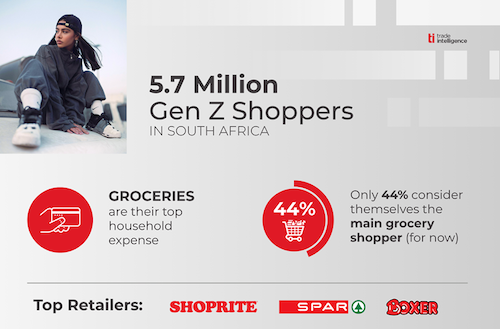
While fewer than half of Gen Zs (those aged roughly 15 to 27) currently identify as a ‘household’ grocery shopper, their influence is already being felt – from what is being bought to where and how it’s being bought. Their behaviour offers a glimpse into the retail landscape of tomorrow, shaped by digital influence, values-driven choices and evolving expectations.
Under-Resourced But Upwardly Mobile
Gen Z is the least urbanised and most under-resourced generation in the shopper landscape today. Many are young singles or single parents, and over half live in households earning under R5,000 a month. While this limits their purchasing power, it doesn’t limit their aspirations or their resourcefulness.
Despite being less likely than older generations to receive social grants, a third of Gen Z still do. They are navigating tough conditions with ambition, agility, and a mobile phone in hand.
Gen Z isn’t a monolith. Higher-income Gen Zs are more educated, more urban, more digitally immersed, and more brand-aware – shopping online, engaging with social media influencers, and prioritising values like quality and sustainability. Lower-income Gen Zs, meanwhile, are just as aspirational but face more structural barriers to choice and access.
Retailers and brands need to plan for both ends of this spectrum – thanks to their education and comfort with technology, Gen Z represents significant purchasing potential.
From TikTok To Till Points: The Digital Path To Purchase
This is a generation raised online. Nearly three-quarters engage with the internet daily – far more than older generations – and their path to purchase reflects this.
They’re not relying on radio or newspaper specials. Instead, they’re scrolling retailer pages, checking websites and price-comparison tools, and tuning into creators on TikTok for grocery tips and product hauls. They’re also more likely to trust retailers – a silver lining for brands that get it right.
While most of their grocery shopping still happens in-store, online retail is part of the picture, particularly for higher-income Gen Zs. Digital engagement increases with household income, and so does online shopping: 19% of Gen Zs in the highest income bracket reported shopping online in the past month, compared to just 5% in the lowest bracket.
Not Just Bargain Hunters
While price matters, Gen Z is willing to pay more for the things they value. Compared to the average South African shopper, Gen Z is more likely to pay a premium for freshness, quality, health, sustainability, and even a brand they love.
That said, loyalty cards don’t win them over as easily. They’re the generation least likely to engage with rewards programmes – but the most likely to prioritise great service. For Gen Z, value goes beyond rands and cents.
Youth Day Reflection
As we reflect on the legacy of 16 June, it’s clear that today’s youth are still finding new ways to shape their futures – and the nation’s – through the roles they play in households, communities and the economy.
Gen Z may be the youngest generation in the grocery aisle, but they are shaping the retail landscape of tomorrow.
For businesses across the FMCG sector, understanding how and where they shop and why is essential to relevant channel strategies, customer plans and shopper engagement that keep pace with change.
Glynt, formerly known as Tractor Media Holdings, has announced Sam Locke as its new Chief People Officer. Locke brings a dynamic background in scaling startups and building people-first environments that drive both business performance and personal growth.
With a career spent working across high-growth businesses, she has developed a reputation for cultivating organisational cultures that are agile, inclusive and deeply connected to purpose.
‘As someone who thrives on contributing to something bigger than myself, I’m excited to play a role in shaping a culture at Glynt where people feel seen, supported, and proud of the work they do,’ said Locke. ‘I’m passionate about creating systems and experiences that empower people to grow and succeed – and ultimately bring out the best in themselves and their teams.’
A qualified Enneagram practitioner, Locke is passionate about using self-awareness as a catalyst for both personal and professional development. Her focus at Glynt will be on strengthening the People Operations function, embedding scalable processes, and building a workplace that champions talent and culture as critical levers for success.
Though new to the out-of-home (OOH) media industry, Locke believes her fresh perspective is an asset. ‘I’m coming in with curious eyes and a people-first lens, which allows me to ask different questions and spot new opportunities. While I learn the rhythms of the OOH space, I’m focused on ensuring our internal operations are as forward-thinking and energised as the creative and commercial work we do externally.’
Simon Wall, Group CEO of Glynt, said: ‘Locke joins us at a pivotal moment as we evolve into a more unified, innovation-led group. Glynt is a media and innovation hub built to intelligently shape tomorrow – and to do that, we need a culture that’s every bit as progressive as our strategy. Locke brings the human intelligence to match our tech-fuelled ambition. Her leadership will be instrumental in turning our internal ecosystem into one that reflects our purpose: moving beyond impressions toward meaningful impact and connection.’
Outside of work, Locke is a proud mom to two young children, Finn and Ella, and wife to Andrew. She describes herself as a connector, natural problem-solver, and someone who finds joy in meaningful relationships – whether at home or in the workplace.
‘I want Glynt to be known not just for what we do in the industry, but for how we do it – with heart, integrity and a people-first mindset,’ she said.
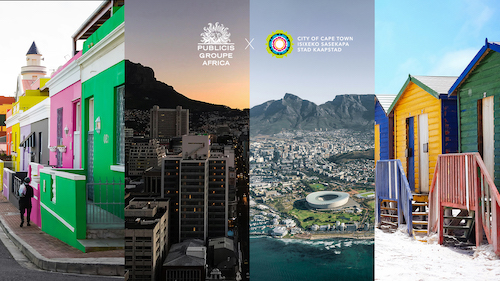
Publicis Groupe Africa’s appointment as full-service communications partner looks to meet the bold ambition of the Mother City with elevated public-sector communication that is grounded in innovation, collaboration, and purpose-led storytelling.
As a city that welcomes millions of residents, visitors, and investors alike, the City of Cape Town understands that clear, compelling communication is essential to strengthening trust, driving participation, and enabling progress.
Priya Reddy, Director of Communication for the City of Cape Town, said: ‘Cape Town is a vibrant and multifaceted city, and our communications must reflect that. We were looking for an agency that could match our energy and ambition, understand our complexity, and deliver with creativity and discipline. Publicis stood out not only for their integrated capabilities, but also for their deep commitment to collaboration. We’re excited to work with a partner that shares our vision and will help bring our stories to life in meaningful ways.’
Jonty Fisher, Senior Vice President at Publicis Groupe Africa, added: ‘We’re incredibly honoured to partner with the City of Cape Town, a city with a storied heritage but an innovative, future-fit ambition. This partnership gives us the opportunity to apply the full strength of our ‘Power of One’ philosophy, integrating creativity, data, and media under one collaborative model. It’s more than a communications contract; it’s a shared mission to inform, uplift, and engage more than five million residents and stakeholders as the Mother City delivers on its ambitious future plans.’
Publicis Groupe Africa was selected for its ability to deliver end-to-end communications solutions through an agile, multidisciplinary Power of One model ensuring cohesive, high-impact messaging across platforms and communities.
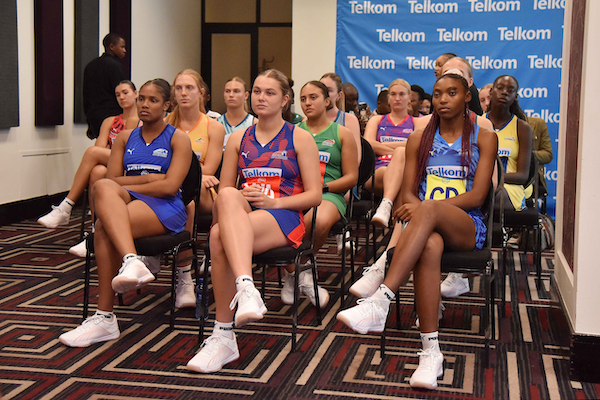
Mscsports has once again been appointed as Telkom’s official sponsorship agency. This milestone reflects Telkom’s continued trust in Mscsports’ expertise. The partnership will see Mscsports overseeing and executing Telkom’s extensive sponsorship portfolio.
This includes delivering strategic, creative, and impactful campaigns that bring Telkom’s brand to life across key properties and platforms, with a strong focus on enhancing fan engagement, brand visibility and driving brand preference within the key brand audiences.
‘This is a proud and deeply meaningful moment for us,’ said Carrie Delaney, Managing Director at Mscsports. ‘Being reappointed as Telkom’s sponsorship agency marks both a homecoming and an exciting new chapter. Since our original partnership from 2017 to 2019, when we proudly helped launch the Telkom Netball League, we’ve evolved and transformed as an agency. Although we’ve changed, at our core, we remain the same passionate team, driven by purpose and the power of sport to connect and inspire. We’re excited to work across Telkom’s full sponsorship portfolio — from cricket to esports — but for me, netball will always have a special place. It’s where women’s sport steps into the spotlight, and Telkom has played a powerful role in shaping that story. We look forward to building on that legacy, together.’
This collaboration also reflects Mscsports’ footprint in digital sponsorship. With the rise of immersive platforms, gaming environments, and data-driven experiences, digital is no longer just about having a presence online, it is reshaping the sponsorship industry and unlocking entirely new value for rights holders and brands alike. It is revolutionising how sponsors interact with audiences. Working with a brand like Telkom opens the door to unlock bold campaigns and innovative audience engagement strategies, reaching new demographics and enhancing the overall fan experience and brand reputation.
Significantly, both Telkom and Mscsports share a deep commitment to driving progress and equity in women’s sport, creating a seamless synergy between the two. With female-led opportunities forming a core pillar of Mscsports’ approach to sponsorship, collaborating with a client that places women’s agendas at the forefront aligns perfectly with its purpose-driven ethos and dedication to fostering inclusive growth. With sponsorship properties such as Netball and Gaming, Telkom’s dedication of growing women’s sport as well as driving inspiration amongst the youth continues to thrive.
‘At Telkom, our mission is to inspire and enable progress by connecting with customers in ways that are meaningful and empowering. Our continued partnership with Mscsports supports this vision and helps us unlock high-impact sponsorship opportunities that speak directly to our audiences. Through this collaboration, we aim to deliver experiences that resonate with our customers and the communities we serve and make our brand promise a reality in their lives,’ Gugu Mthembu, Chief Marketing Officer, Telkom.
Creative leaders face mounting pressure to deliver bold, fresh experiences that boost brand awareness and keep customers engaged in an increasingly saturated market. A new survey from Project Management Institute (PMI) highlights that 97% of respondents faced at least one major campaign challenge in the last year, including: going over budget (55%), overdue deadlines (54%), and constraints on creativity (47%).
The survey, conducted among 130 U.S. marketing and advertising agency professionals, also found that a third of campaigns (34%) don’t resonate with their target audience or generate new leads (35%).
In a tough marketing climate, with rising demands, tighter budgets, and shorter timelines, the execution side of creativity has never been more critical. The survey reveals that 9 in 10 (90%) creative professionals agree: ‘Great creative campaigns do not happen without great project management.’ Creative leaders also say project management professionals:
– Allow the organisation’s leaders to focus on driving growth (52%).
– Ensure campaigns contribute positively to the brand over time (52%).
– Get all the different parts of the campaign working together (50%).
– Manage increasingly complex campaigns (45%).
– Ensure campaigns are long-lasting (45%).
By keeping teams aligned, stakeholders engaged, timelines on track, and encouraging creative momentum, project management helps strong ideas grow into powerful brand activations.
‘Today’s CMOs are juggling more platforms, priorities, and pressure than ever before — and it’s easy for even the strongest campaigns to lose focus and veer off-track,’ said Menaka Gopinath, Chief Marketing Officer at PMI. ‘Effective project management provides the structure and clarity creative teams need to drive momentum, work collaboratively, and deliver results that align with business goals. By bringing order to complexity, project management empowers marketing leaders to stay focused on strategy and turn complexity into opportunity.’
Project management professionals are no longer viewed as back-office schedulers, they’re emerging as team motivators and strategic leaders. While most agencies rely on them to keep projects on track (60%), more than half (52%) say their greatest impact lies in energising creative teams.
As creative work grows more complex, expectations for project managers are shifting. In-house marketing teams and agencies now prize strategic skills like innovative thinking (67%), growth strategy (60%), and adaptability (57%) over budget and resource management (49%). Project managers today aren’t just delivering campaigns—they’re helping teams evolve.
This is why, despite the rise of AI and automation, agencies are doubling down on people. Nearly all (98%) say they’re growing their project management capabilities, primarily through talent, not tools. 32% are training current staff, and 28% are hiring, reinforcing the belief that successful campaigns begin with skilled, empowered professionals.
Yet their contributions often go unnoticed. Nearly half (48%) of creative leaders say project managers are the unsung heroes of campaigns – delivering critical, behind-the-scenes value, from steering complex activations, to aligning teams and keeping everything on track.
The survey also found that sharpening project management skills gives marketing teams the edge. Teams led by certified project managers outperform those without certification, delivering stronger results and audience-aligned campaigns.
‘Marketing matters more than ever, but it also has to perform, in spite of its increasing complexity,’ said Pierre Le Manh, President and CEO of PMI. ‘Every dollar must drive measurable impact, and every great idea must scale. That’s where project professionals become a force multiplier. They don’t constrain creativity, they operationalise it. They fight waste, play an essential role in managing complex assets, teams, cultures, tech stacks, and turn ideas into results. Ultimately, they drive more execution efficiency and speed, which translates into more profit for both agencies and clients.’