

Home Blog Page 7

Navigating Generational Behaviours In The Workplace

Navigating Generational Behaviours In The Workplace
Mark Baker, Mygrow.

Mark Baker, CEO at Mygrow, writes why emotional intelligence has become a leadership necessity. Today’s workplace can bring together people whose experiences of work were formed in very different environments.

Someone who began their career in a structured organisation where hierarchy carried considerable weight may now be leading employees who entered the workforce expecting flexibility and a greater say in how decisions are made.

These differences are often described as generational, but age is not always the source of the tension. In our work with organisations, we often find that the real differences concern people’s values and their expectations of what work should look like.

Baby Boomers and many Gen X employees built their careers in environments that placed considerable value on structure, discipline, commitment and respect for authority.

Millennials and Gen Z entered working life as expectations were shifting towards flexibility, self-development, inclusivity and involvement in decision-making. These are broad patterns rather than descriptions of every individual, but they help explain why people around the same table can approach a workplace issue differently.

Flexible working has brought some of these differences into view. Following the pandemic, we saw organisations where senior leaders wanted employees back in the office while younger employees resisted returning to previous ways of working. The disagreement concerned where people worked, but it reflected different ideas about commitment, autonomy and how performance should be judged.

When Communication Styles Collide

These differences become harder to manage when they influence how people communicate. A leader who has spent decades in hierarchical organisations may reasonably believe their experience should carry weight. A younger employee may have entered a working world where questioning ideas and contributing to decisions are actively encouraged.

When neither understands what is driving the other, questions can be interpreted as disrespect, while authority can be experienced as dismissiveness. We see situations where people effectively talk past one another: the leader places greater emphasis on their authority and experience while the employee continues to push for their perspective to be considered.

Feedback often exposes the same tension with younger employees often expecting to participate in conversations and wanting their views to be heard, including when they disagree with someone who holds greater organisational authority. Leaders accustomed to a different relationship between seniority and influence may find this challenging. The way feedback is given and received can determine whether the conversation remains constructive.

Technology Is Changing Who Holds The Expertise

Technology is also changing how knowledge and experience are shared within multigenerational teams. Younger generations tend to have greater familiarity with digital tools and may adopt technologies such as AI with relative ease. Experienced leaders may be adapting to technologies that bear little resemblance to the systems they used while developing their professional expertise.

Experience and knowledge no longer always follow the traditional organisational hierarchy. A younger employee may understand an emerging technology better than their manager, while the manager has years of organisational and professional experience that help determine where that technology can be applied effectively.

Leaders need to recognise the value of both because organisations lose something when experience becomes a reason to dismiss new ways of working. They also lose valuable judgement when enthusiasm for technology overlooks what can be learned from previous changes.

The Idea Of A Career Has Changed

Different generations may have very different expectations of what a successful career looks like. Many people from older generations developed expertise within a particular profession and progressed through an organisation over many years.

Younger employees are increasingly comfortable moving between roles and employers, even across industries. Technology has widened their options further by allowing someone in South Africa to work for an organisation elsewhere in the world without relocating. The relationship between an employee and an organisation has evolved alongside those opportunities.

This can create very different views of loyalty and career progression. For example, a leader who spent years building a career within one organisation may see frequent moves as a lack of commitment, while a younger employee may simply see them as a normal part of building a career in today’s workplace.

Where Emotional Intelligence Comes In

Managing these differences requires leaders to understand what people bring into an interaction beyond their job title or generational label. Emotional intelligence helps leaders understand those influences and respond appropriately.

EQ can be understood as an overall capability made up of individual competencies. Fitness offers a helpful comparison: we can talk about someone’s overall fitness while recognising that different physical capabilities contribute to it. Emotional intelligence works in a similar way.

One of the most important competencies in a multigenerational workplace is emotional self-awareness. People arrive at work carrying assumptions formed through their upbringing and previous experiences. Older employees may have developed professionally in environments where deference to authority was expected and emotions had little place in working life. Younger generations have often received greater encouragement to express their views and expect their individual perspective to be acknowledged.

Understanding these influences helps a leader recognise what may be happening during a difficult interaction. It does not require accepting every behaviour or lowering organisational standards. It allows the leader to consider why two people may respond differently to the same situation and decide how best to manage it.

Flexibility is another important EQ competency in this environment. Leaders cannot assume that the leadership approach they experienced will work equally well for everyone they manage. They need enough awareness and adaptability to adjust how they communicate while maintaining what the organisation requires.

Making Different Perspectives Useful

A multigenerational workforce gives organisations access to employees with different forms of knowledge. Someone with decades of organisational experience brings lessons gained through changing markets and previous technological shifts. A digitally native employee may recognise possibilities in AI and emerging technology that an experienced colleague has yet to encounter.

One perspective does not have to displace the other. Leaders can create working environments where employees bring both into the same conversation.

This requires enough psychological safety for employees to contribute and challenge one another without disagreement becoming damaging conflict. Leaders also need to examine their own assumptions about authority and what good work looks like.

Generational labels can help explain some of the influences people carry into the workplace, provided they do not replace an understanding of the individual. Emotional intelligence helps leaders recognise their own responses and consider what may be driving someone else’s behaviour so they can adjust their approach when needed.

A leader who can only lead people who think and work as they do is managing for conformity. Five generations in one workplace will test assumptions about authority and commitment, including whose knowledge deserves respect. Organisations that fail this test may call it a generational problem. But often, it is a leadership problem. Success lies in the self-awareness to know the difference.

MYGROW
https://www.mygrow.me/

Trust Isn’t Built By Going Viral

Trust Isn't Built By Going Viral
Mkhuseli Vangile, The Dynaste Communication Firm

Mkhuseli Vangile, Founder and CEO of The Dynaste Communication Firm, writes why a brand’s credibility is now more valuable than a ‘pretty’ website.

In the time it takes to scroll past a cat video, a consumer has already decided whether they trust your brand. We live in an era of digital abundance, where a slick Instagram grid is as easy to buy as a cup of coffee. But as any South African who has been burned by a dropshipping site with stolen photos can tell you, looking legit is not the same as being legit. The digital landscape is littered with brands that mastered the aesthetic but failed the credibility test.

We have entered the age of the ‘Trust Economy,’ and for businesses, this is the only currency that matters. According to a 2024 PwC survey, 72% of local consumers say trust is a deciding factor in their purchasing decisions. Yet, despite this, many companies remain obsessed with chasing likes rather than building reputations.

People are exhausted by the constant barrage of adverts. They are skeptical. As branding expert Mkhuseli Vangile puts it, ‘People are not only looking at what a brand sells anymore. They are looking at how the brand presents itself, how it communicates and whether it feels genuine.’

This requires a fundamental shift in how we approach online communication. It is no longer enough to broadcast. Brands need to converse.

The first step is moving away from the ‘corporate robot’ tone. Digital natives can smell a scripted response from a mile away. They want to see the faces behind the business; the real people packing the boxes or answering the DMs. In a country as diverse and vibrant as ours, hiding behind a logo is a missed opportunity. Authentic storytelling sharing the journey of a small business owner in Cape Town or the craftsmanship behind a local product creates a connection that no amount of paid advertising can replicate.

Furthermore, we need to accept that our customers are our most effective marketing team. A study by BrightLocal found that 91% of 18-to-34-year-olds trust online reviews as much as personal recommendations. We are a nation of word-of-mouth purists, and that is amplified tenfold online.

Are you leveraging your positive customer experiences? Are you responding to criticism with grace and a promise to do better? South Africans are forgiving, but they are not forgetful. Deleting a negative comment isn’t hiding the problem; it’s creating a conspiracy theory. As one local business owner recently noted, ‘Customers don’t expect perfection; they expect honesty when things go wrong.’

Ultimately, credibility is about the gap between what you promise and what you deliver. If your website says ‘Contact us within 24 hours,’ you better have a human being on the other end of that line.

Trust isn’t built in a day, and it certainly isn’t built by going viral. It’s built in the monotonous moments the follow-up emails, the clear pricing, the on-time deliveries. So, ask yourself this: If a stranger landed on your site today, would they hand over their hard-earned rands? If the answer is no, it’s time to stop performing and start proving.

DYNASTE COMMUNICATIONS FIRM
+27 11 038 9705
info@thedcf.co.za
https://thedcf.co.za/

Absa Announces South Africa’s First Bank-Led Micro-Drama

Absa Announces South Africa’s First Bank-Led Micro-Drama

Absa has launched For Better Or For Whatever, South Africa’s first bank-led micro-drama series and a new expression of its entertainment-led approach to financial wellness communication.

Starring veteran South African actor, producer and director Jet Novuka alongside a multi-generational local cast, the comedy-drama uses a wedding, two very different families and a series of escalating misunderstandings to make conversations about money feel culturally relevant, accessible and worth watching.

For brand and marketing leaders, the strategic shift is as important as the storyline. Rather than interrupting audiences with a traditional financial-education message, Absa has created an episodic entertainment property designed for the platforms, screens and viewing moments where people already spend their time.

From Brand Message To Entertainment Property

Financial wellness can be difficult to communicate. The subject is personal, often emotionally charged and easily reduced to instruction or technical advice. For Better Or For Whatever approaches the challenge through character and consequence instead.

At the centre of the story are Sizwe Scott, played by Siyamthanda Banda, and Lindiwe Nkosi, played by Zimi Mphefu. Their journey towards marriage brings their families, and their different expectations about money, culture and responsibility, into the same room. Wedding costs, unexpected expenses, family obligations, trust and financial protection are not inserted as campaign talking points; they emerge naturally from the choices the characters make.

This allows the brand’s financial-wellness message to function as part of the entertainment rather than a break from it. Viewers can follow the comedy and family conflict first, while the wider series creates space to reflect on budgeting, preparedness, scams and the need to protect personal information. The opening episode demonstrates the model in under two minutes. It introduces Sizwe’s adoptive family, Lindiwe’s proud traditional father and a comic collision between a planned proposal and what appears to be a surprise birthday celebration. It is fast, visual and structured around a cliffhanger, a complete entertainment beat that also establishes the wedding and money pressures still to come.

A Format-Native Response To The Attention Economy

Micro-dramas are scripted, serialised stories told through bite-sized episodes made for mobile viewing. They use the emotional hooks, recurring characters and cliffhangers of television drama, but are designed specifically for vertical platforms such as YouTube Shorts and TikTok.

The format has developed from a niche mobile trend into a significant global entertainment category.

Deloitte describes micro-series as mobile-first scripted episodes lasting only a few minutes and predicted that worldwide in-app micro-series revenue would more than double to US$7.8 billion in 2026.

For marketers, their rise signals more than a change in episode length. It reflects a broader change in how audiences discover, sample, follow and share stories. Short-form platforms are not simply distribution channels for cut-down television commercials; they are entertainment environments with their own pacing, visual language and audience expectations.

For Better Or For Whatever responds by starting with the behaviour and building the format around it. Its vertical episodes can be watched quickly and shared easily, while the continuing wedding storyline gives audiences a reason to return. Instead of depending on a single campaign exposure, the episodic structure creates a sequence of character moments and conversation opportunities across the life of the series.

Four Brand Choices Behind The Series:

The series brings together four principles increasingly important to modern brand building:

Entertainment before instruction: the financial-wellness message is carried by comedy, conflict and character rather than presented as a lecture.

Format before adaptation: the series is designed for vertical, mobile-first viewing instead of being repurposed from a conventional television commercial.

Cultural relevance before generic messaging: a South African wedding and multi-generational family dynamics make the financial choices recognisable and locally grounded.

Utility within the story: practical themes, budgeting, unexpected expenses, scams and personal-information protection, are embedded in situations audiences may face in their own lives.

Together, these choices give Absa a way to connect its brand platform, Your story matters, with the everyday stories people tell about relationships, family and money.

‘Stories have always helped us learn, connect and see ourselves. Today many of those stories are watched on mobile phones in short, engaging formats. That is what makes this series so exciting. It allows us to meet people where they already are, with stories that entertain, spark conversation and help audiences feel more confident about the financial decisions they make. That is what Your story matters means to us,’ said Candice Thurston, Managing Executive: Brand and Marketing, Absa Group.

Local Talent Gives The Brand Story Credibility

Jet Novuka plays Zakhele, bringing the authority and familiarity of a seasoned screen performer to the intergenerational story. He is widely recognised for roles in South African productions including Yizo Yizo, Jacob’s Cross, Home Affairs, Isidingo, Igazi, Uzalo and The River.

The ensemble also includes Antony Coleman as Gavin Scott, Jailoshini Naidoo as Dr Nerisha Scott, Elliot Makhubu as Malume, Estelle Oberholzer as Elzaan, Gcebile Dlamini as Sis Nono, Tina Chetty as Aunty Saras and Jemika Moodler as Stacie Scott.

The casting gives the series recognisable entertainment credentials while allowing different generations, families and cultural perspectives to meet inside the same narrative world. For the brand, this creates a broader and more human frame for financial wellness than a conventional advice-led campaign could provide.

Building A Connected Entertainment-Led Financial-Wellness Platform

For Better Or For Whatever extends Absa’s growing portfolio of entertainment-led financial education. It follows I Grew It: Finance 101, hosted by Tumi Morake, and The I Grew It Show with Absa, hosted by entrepreneur Alphi Sipho Mkhwanazi.

Together, the properties reflect a consistent strategic direction: translating financial literacy and financial protection into formats that feel relevant to the audience rather than simply useful to the brand.

With its first bank-led micro-drama, Absa is making a clear marketing bet. In an attention economy, the most effective place for a brand message may not be next to the story. It may be inside a story people choose to watch.

For Better Or For Whatever, brought to you by Absa, is streaming on Absa South Africa’s YouTube Shorts (@AbsaBankLtd) and Absa Group’s TikTok (@absa_group).

Watch Episode 1.

ABSA
absa.co.za

Slightly Dangerous Co. Launches Dedicated Sports And Culture Agency

Slightly Dangerous Co. Launches Dedicated Sports And Culture Agency
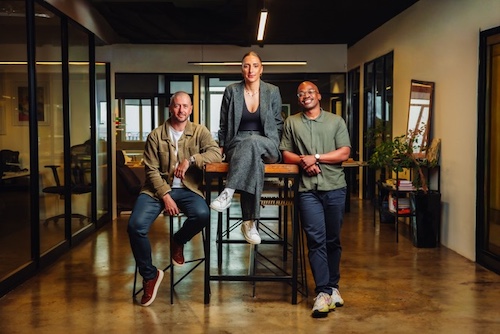
Kieren Jacobsen, Jess Porter and Kganya Zungu, Southpaw.

Southpaw has officially launched as the newest specialist agency within the independent group Slightly Dangerous Co., bringing a dedicated sports and culture offering to the collective. Already in operation, the public launch comes off the back of significant early client wins that include Betway, LIV Golf, Icons Series, Auto & General and NTT DATA among others.

Co-founded by Kieren Jacobsen and Jess Porter, with Kganya Zungu completing the leadership team as Managing Partner, the trio have spent their careers inside the marketing industry, building deep networks and a strong portfolio of work that spans blue-chip brands, rights holders and media owners in South African sport and entertainment.

For Jacobsen, this experience and their early wins have shaped a very deliberate approach to Southpaw’s model. ‘It’s proven there’s room for something fresh, independent and a little unorthodox. Our partnership with Slightly Dangerous Co. is central to that. We share the same values and a philosophy that places value in craft over volume and depth over scale.’

That sentiment is mutual. Slightly Dangerous Co. Founding Partner Warren Moss sees a clear opening in the market. ‘This is something that has been in the works for a while and I believe the category is wide open for an agency like Southpaw. Given the calibre of this founding team, we are extremely excited to play.’

Porter added that the group philosophy naturally extends into Southpaw’s growth ambitions. ‘We have no ambition to build headcount for the sake of it. Rather, we aim to build around the best senior talent in the industry and attract the clients and partners who want to play different. That isn’t just a positioning for us, it’s a genuine mindset.’

According to Zungu, that mantra becomes particularly important to the work, as cultural categories continue to blend into one consumer experience. ‘Sport, fashion and music move seamlessly through communities, with audiences deciding for themselves where they spend their time, attention and money. Our job is to understand what moves those communities and then find the right way for brands to earn a place in them.’

‘You can’t manufacture emotion,’ Porter added. ‘Today’s consumer can tell the difference between a brand genuinely adding value to their experience and one that’s just trying to buy their attention.’

The partners share a clear view of the business they want to build. Locally, Southpaw wants to help shape what marketing looks like in the modern era of sport and culture. Internationally, the South African-built agency is already working with global clients and sees the opportunity to grow into new markets alongside them, without needing to become the biggest shop in the room.

Jacobsen concludes by highlighting the importance of embracing the journey. ‘Frankly, we’re not saving lives in the work that we do and it’s critical to remember that. We’re a low-ego, high-accountability environment and we’re going to have a great time doing it. I’ve watched Jess and Kganya emerge as real forces in the industry over the last few years and I consider myself very fortunate to now count them as partners.’

SLIGHTLY DANGEROUS
www.slightlydangerous.co

Understanding Advertising’s AI Dilemma

Understanding Advertising’s AI Dilemma
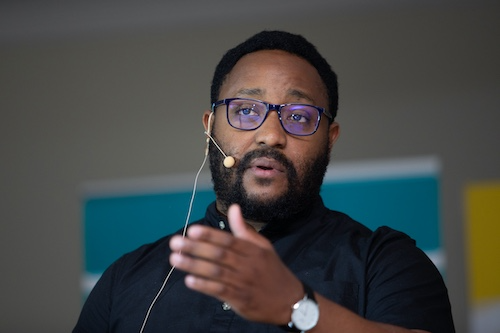
Musa Kalenga, Brave.

Musa Kalenga, CEO, the Brave Group explores how AI is reshaping the advertising industry, challenging traditional agency business models and shifting the focus from billable hours to operational efficiency, measurable outcomes and commercial value. He also outlines the role of emerging markets, including Africa, in driving this transformation.

For a decade, enterprise marketing has been hooked on a quiet, expensive lie: that software purchase orders equal operational progress. Chief marketing officers assembled towering martech stacks to tame an explosion of digital channels, only to create an unmanageable performance tax. Gartner’s latest data confirms the fallout: martech stack utilisation has collapsed to 49%.

More than half of the software enterprise boards paid for sits idle, generating recurring subscription debt while army-sized agency teams waste thousands of hours manually stitching together incompatible data feeds. Now, the advertising industry is repeating the exact same error with artificial intelligence.

The Legacy Drag

Over the past two years, legacy agency networks have treated generative AI as little more than a turbocharged copy-pasting tool. They have bolted standalone prompt interfaces onto fundamentally broken, multi-layered workflows, mistaking isolated task speed for structural transformation. McKinsey rightly calls it the ‘pilot trap’. Deploying fragmented applications atop brittle data foundations that fail to move the commercial needle by a single basis point.

This failure is not a technology problem; it is a business model conflict. The advertising industry’s legacy holding companies are trapped in a classic innovator’s dilemma. Their business model remains stubbornly anchored to the billable hour. Selling human time creates a perverse economic incentive: the more friction, delay, and manual iteration built into campaign execution, the higher the fee.

Toxic Efficiency

If an autonomous agentic network can generate, test, optimise, and deploy a global campaign in three minutes rather than three weeks, a time-billing agency suffers a 90% drop in top-line revenue. Efficiency is toxic to their P&L.

As a result, major agency networks promise ‘AI transformation’ while quietly engineering ways to keep their headcount-heavy billing engines running. They offer clients automated efficiency while charging them for the hours it takes humans to oversee the automation. The market will not tolerate this friction much longer.

AI Stuckness

True enterprise resilience requires moving past superficial prompt engineering and embracing full agentic orchestration. The operational divide is already widening. According to Boston Consulting Group’s 2026 enterprise survey, while 96% of CMOs say they’re running AI initiatives, 42% remain stuck using AI as a basic administrative assistant.

Meanwhile, the top tier of market leaders has stopped experimenting. They are deploying autonomous, agentic systems directly into core commercial workflows, shifting from human-driven assembly lines to integrated intelligence layers.

This shift dismantles the traditional four-stage agency lifecycle:

– Strategy stops being a static quarterly presentation in a glossy deck. It becomes a live, predictive simulation continuously modelling consumer sentiment, pricing sensitivity, and competitive movement in real time.

– Creative production and activation merge. Instead of weeks of sequential asset adaptation and manual localisation, autonomous agentic systems dynamically construct, translate, and format creative assets within strict brand safety guardrails the moment a market opportunity emerges.

– Media optimisation moves from a post-campaign autopsy to live execution. Agencies have spent decades charging clients to analyse wasted ad spend after a campaign ends. Autonomous networks now reallocate capital across platforms and creative iterations mid-flight, long before media budgets burn out.

– Measurement finally abandons vanity proxy metrics. Powered by clean-room architecture and verified first-party data, performance is tied directly to bottom-line velocity, pricing power, and customer acquisition cost.

When campaign timelines collapse from months to seconds, hourly billing loses all commercial credibility. The dominant agency models of the next decade will be structured around performance equity, outcome-based risk sharing, and commercial growth arbitrage.

Critically, this restructuring will not be led by legacy holding company hubs in London or New York. High overheads, multi-year office leases, and public-market margin pressure make radical self-disruption nearly impossible for incumbents.

Instead, as I argued in The Brave Code, the most aggressive operational innovation is occurring across emerging markets. Unburdened by century-old billing habits, bloated middle-management structures, or heavy legacy infrastructure, agile agencies across Africa, Latin America, and Southeast Asia are leapfrogging the holding company era entirely.

They are building natively as intelligence engines, operating with lean, high-conviction strategic teams that govern autonomous operational networks.

The mandate for brand leaders and investors is stark. The era of building enterprise value through billable headcount and bloated software procurement is finished. The agencies that survive will not be those selling time to manage software, but those that can turn real-time market signals into commercial value at the speed of modern culture.

BRAVE GROUP
www.bravegroup.co.za

The Essence Of Sustainable Packaging

The Essence Of Sustainable Packaging

According to Traderbag, a company that locally sources its materials and manufactures bags using Forest Stewardship Council (FSC)-certified material, paper packaging can play an important role in a circular economy while supporting local manufacturing, economic growth and job creation.

Traderbag began supplying paper shopping bags to major clothing brands in 2025 and currently supplied millions of bags a year to the fashion sector alone.

The company locally sources its materials and manufactures bags using Forest Stewardship Council (FSC)-certified paper, water-based inks and locally produced paper.

Responsible Paper Starts With Responsible Sourcing

Traderbag managing director Daniel Cherry says the idea that using paper automatically means damaging forests is outdated.

‘The key question is where the paper comes from. Responsible paper producers use managed commercial forests where trees are grown as a renewable crop. The message shouldn’t be ‘don’t use paper because you’re killing trees’. It should be: use responsibly sourced paper efficiently, reuse it where possible and recycle it when you’re finished.’

Traderbag works closely with local paper producers, Sappi, recognising that the sustainability and performance of a paper bag start with the quality and provenance of its raw material.

The company’s directors recently visited Sappi’s Ngodwana operations, including Ngodwana Energy, in which Sappi has a 30% stake. The facility uses biomass recovered from surrounding plantations and screened waste from the mill to generate electricity, with surplus power exported to the national grid.

Water management is another important part of the sustainability equation.

‘Paper production does use water, but the important question is how that water is sourced, managed, reused and returned,’ said Cherry. ‘Sappi mills can recycle and reuse water multiple times and have made significant reductions in water withdrawal.’

Sustainability Must Work Commercially

Cherry said sustainability is about more than the material used to make a bag.

‘A sustainable bag is no good to a retailer if they run out of stock or it doesn’t perform. That is why we combine the paper product with forecasting, stockholding, custom sizing and direct-to-store distribution. Sustainability has to work commercially as well as environmentally.’

FSC certification also provides retailers with a credible way to substantiate their sustainability claims.

‘For us, it is about chain of custody. FSC provides a traceable link from the responsibly managed forest through the paper producer and converter to the finished product.’

Paper And The Fashion Sector

Traderbag sees fashion as a natural market for paper bags. The products being carried are generally dry and relatively lightweight, while the bag itself becomes part of the customer experience and continues to display the retailer’s brand after the purchase.

But Cherry stresses that choosing the right paper bag is not simply a matter of selecting the heaviest or thickest paper.

‘The bag’s purpose is the starting point. Size, construction, handles and reinforcement all need to be considered. The goal is to find the most efficient combination that delivers the required strength, appearance and performance without unnecessary material or cost.’

For Traderbag, that is the essence of sustainable packaging: responsibly sourced materials, efficient manufacturing and a product that works for both the environment and the business.

TRADERBAG
https://www.traderbag.co.za

Heinz Celebrates The Story Of SA On Heritage Day

Heinz Celebrates The Story Of SA On Heritage Day

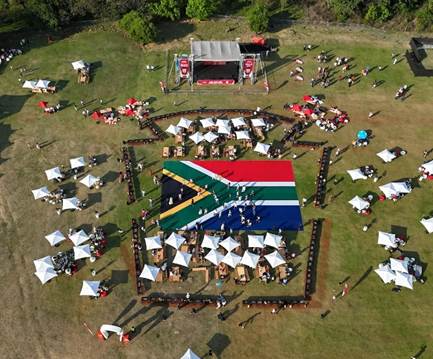
On National Braai Day, Heinz marked its arrival in South African braai culture with a Heritage Day celebration in Johannesburg, bringing people together around the fire for a proudly South African day of food, music, art and togetherness.

From the ground, 125 braais became 125 places for South Africans to gather, cook, eat and connect. From the sky, they formed the Heinz label, one enormous symbol of Heinz finding its place in Mzansi.

Rather than telling South Africans how to braai, Heinz, a food brand with over 150 years of heritage, came to bring its own taste to the table and let South Africans decide for themselves, and Mzansi answered.

Heritage Meets Heritage

As part of the celebration, Heinz partnered with South African artist, Ricollin to paint a tribute to South African heritage in Heinz Tomato Ketchup. Working live, Ricollin brought together symbols of South Africa, its people, its food and its culture, around the Heinz bottle, as guests watched two heritages meet on a single canvas. It was bold. It was proudly South African. And it could only have been Heinz.

‘Heritage Day is about honouring where we come from. Heinz has spent over 150 years joining family tables around the world and seeing that heritage meet South Africa’s around 125 fires was deeply moving. We didn’t come to tell South Africans how to braai. We came to earn our place at the table, and today Mzansi made room for us,’ said Passant El-Ghannam, CMO Middle East & Africa, Kraft Heinz. Call it ketchup. Call it tomato sauce. Just taste what your braai has been missing.

With Heinz on the table around every fire, perhaps the name matters less than the taste. And that taste is something Heinz never compromises on. Heinz is obsessed with quality: every bottle of Heinz Tomato Ketchup starts with tomatoes grown from Heinz’s own seeds, so it has the same balanced taste, right colour and rich texture anywhere in the world.

Heinz arrived with a story of its own. On Heritage Day, it celebrated the story of the country it now wants to call home.

125 braais became one Heinz Keystone label. Ketchup became paint. More than 2,000 strangers became one Heritage Day celebration. For one big day in Johannesburg, Heinz didn’t simply put its sauce on the braai. Heinz became part of the braai.

RETROVIRAL
https://retroviral.co.za/

Using AI To Redesign The Operating Model

Using AI To Redesign The Operating Model
Lynn Madeley, High Performance Matters.

Lynn Madeley, CEO of High Performance Matters, writes why AI is forcing marketing departments to redesign how work, capability, governance and partners fit together. When you ask marketing and agency leaders what’s keeping you up at night, increasingly, the answer is the same: How do we actually operationalise AI in a way that creates measurable business value? Organisations have adopted AI tools, but they haven’t redesigned how they operate around them.

It raises the question of whether the whole marketing operating model is still fit for purpose. In an AI-enabled environment, the real work isn’t choosing between in-house and outsourced, or between creative, media, content, technology and production partners. It’s designing a system where all those capabilities create value together, without confusion or uncontrolled risk.

That’s where the conversation has shifted. Clients don’t only need agencies that respond well to briefs. They need clarity: what sits inside the marketing department, what stays external, what gets automated and how decisions, data, governance and accountability flow across the whole ecosystem.

A ‘big brief’ used to be a communications challenge. Now it’s often an operating model ask. Marketing teams want faster content, sharper performance media, more integrated customer journeys, lower production costs and smarter use of AI and they’re asking their agency partners to help model all of it. That’s a major shift in the agency-client relationship and in the commercial model underneath it.

Scratch the surface and what’s revealed is rarely about AI. It’s unclear decision rights. Capability gaps on both sides. Slow approvals. Fragmented data. Duplicated partner roles. Under-used technology. A procurement model that still rewards activity over outcomes.

The agency relationship becomes the visible symptom of a deeper design problem. AI is merely exposing these issues. What looks like an agency challenge is usually an alignment challenge between strategy, people, process, systems and governance.

The Traps AI Sets

AI won’t remove the need for external partners, but it will remove the tolerance for vague roles, inflated teams and work priced as though nothing has changed.

Clients and agencies need to agree, together, what gets automated, what gets augmented, what moves in-house, where external expertise still earns its keep, and how efficiencies should show up in fees, as well as who owns data protection, brand governance, IP, approvals and the quality of AI-assisted output.

The danger is treating AI as a cost-cutting exercise. That’s the fastest route to thinner thinking, more content and less impact. The opportunity is to use AI to redesign the operating model around higher-value human contribution: sharper strategy, deeper decision-making, faster learning loops, stronger collaboration, clearer accountability.

The Marketing Department Has To Change

You can’t redesign the agency model and leave the client side untouched. If AI changes how agencies work, it changes what marketers need to lead and govern.

Expect fewer traditional coordination roles and more strength in commercial translation, data-informed decision-making, partner governance, customer understanding and change leadership. Middle managers will absorb most of the pressure, sitting between executive ambition and daily reality, expected to translate strategy, guide teams, manage partners and decide faster with less certainty than ever.

The answer is deliberate operating model design, backed by coaching, change management and genuinely practical ways of working. People need to understand not just what’s changing, but why, what’s expected of them, and how success will be measured.

A Prediction, For What It’s Worth

Marketing departments will become more focused on what customers really want, on overseeing automation and on building great partnerships. Agencies will lean harder into groundbreaking ideas and less into execution. As an industry, expect fewer suppliers, far more technology, and much greater integration across the ecosystem. Success will depend less on managing a stable of specialist partners and more on orchestrating a connected system of capabilities.

Beyond The Recommendation

This is a performance system question and most organisations stop at the recommendation stage, when the real work is in the operationalising: designing the future-state model, aligning leadership around it, clarifying decision rights and governance, building capability, driving adoption, and measuring whether it’s actually delivering value. Strategy without execution is just an expensive opinion.

The outcome worth aiming for isn’t an ‘AI-enabled marketing model’ and a fresh organogram. It’s a practical blueprint: the future agency ecosystem, the internal capability required, the split between in-house, embedded and external expertise, the governance AI use demands, the operating rhythms, the capability gaps, and the measures that prove the model is working.

Most importantly, it gives agencies and clients something they usually lack, which is a shared operating language with less territorial protection and fewer hidden assumptions. That makes for faster decisions and better work.

The question keeping marketing leaders awake isn’t whether they have the right agency. It’s whether they’ve built an operating system capable of extracting value from AI, technology, data and partners.

Every organisation will have access to the same tools. The winners will be the ones who redesign how strategy, people, process, systems and partners work together.

HIGH PERFORMANCE MATTERS
https://highperformancematters.com

The Craft Of Advertising Encompasses Far More Than Execution

The Craft Of Advertising Encompasses Far More Than Execution

Anthea Whitehead, Cape Town Campus Manager, AAA School of Advertising asks, does advertising still matter in the age of AI slop? Advertising has always evolved alongside technology, but generative AI is accelerating that change at remarkable speed.

According to the SA Social Media Landscape Report 2025, 78% of marketers in South Africa are already using AI tools, while globally 90% of CMOs say craft and design are becoming even more important to keeping brands distinctive in an AI-enabled world.

New tools have made it faster to design, produce, edit, and distribute ideas, but few have changed the creative process as fundamentally as generative AI. Today, a campaign concept can be turned into hundreds of visual executions in minutes. Images can be created, copy refined, and variations tested before a traditional production team has even opened its first file. But, when anyone can create anything at the click of a button, is there still value in learning how to create something meaningful?

The answer requires us to look at advertising as a craft, rather than as a production line.
Good advertising has always been about bringing together creativity and discipline. It is about finding a meaningful insight, understanding the audience, developing an idea, connecting it to the brand, and then making the creative decisions that allow that idea to resonate.

This is particularly important in South Africa, where understanding an audience requires an appreciation of different languages, cultures, communities, and lived experiences. Data can tell us a great deal about people, and AI can help us process that information, but neither can replace the experience of paying attention to how people live, speak, behave, and see the world.

A tool might generate something that looks like a South African consumer, but recognising whether it feels authentic and culturally relevant requires a level of human understanding that cannot be generated by a prompt.

This understanding is built through curiosity and experience. Good creatives look beyond the obvious. They notice how people behave in a shopping centre, listen to how someone describes a problem, talk to people from different generations and communities, and seek out experiences beyond their own. They consume culture outside their usual interests and remain interested in why people do the things they do.

These experiences become the raw material for insight, but they also develop something that becomes increasingly valuable as technology makes execution easier: informed creative instinct. An experienced creative can often recognise when something works before being able to fully explain why. They can sense when an idea has potential, when an execution is missing something, or when something technically impressive simply does not connect.

This instinct honed by studying the principles of advertising, looking at good and bad work, experimenting, receiving feedback and, importantly, making mistakes. Over time, this experience develops the judgement needed to make creative choices rather than simply accepting the options technology presents.

The same principle applies to strategy. AI can process enormous amounts of information, but information is not understanding. A strategist still needs to question the research, challenge assumptions, understand the category, and recognise when an answer does not make sense.

This is why the craft of advertising encompasses far more than execution. It is the combination of observation, research, thinking, writing, design, storytelling, and judgement that turns information into an idea and an idea into communication that people can connect with.

Students entering the industry now are equipped with tools that will likely soon be outdated. It is their knowledge that will remain valuable. Their ability to think, question, observe, create, and make decisions will give their careers longevity and impact.

For advertising educators, this means preparing students to work with technology without allowing technology to do the thinking for them. Students need to understand how to use new tools, but they also need the foundations of the discipline: how to find an insight, develop an idea, understand an audience, and craft work until it earns its place.

These are the foundations of the craft. And they are skills worth learning, regardless of what technology comes next.

AAA
https://aaaschool.ac.za/

The Rise Of Feel-Good Marketing Reflects A Broader Shift In Consumer Expectations

The Rise Of Feel-Good Marketing Reflects A Broader Shift In Consumer Expectations
Andrion van der Merwe, Penquin.

Andrion van der Merwe, Head of Production at Penquin explains why positivity and purpose-driven storytelling is cutting through the noise. From rising living costs and global uncertainty to the relentless pace of the 24-hour news cycle, consumers are navigating an increasingly overwhelming world.

This is fundamentally changing how people respond to brands, and those creating positive, meaningful experiences are emerging as the biggest winners.

Rather than relying solely on promotional messaging, Van der Merwe believes brands are increasingly recognising the value of creating moments that make people feel something.

‘In an environment where consumers are constantly exposed to negative headlines, economic pressures and information overload, brands that create meaningful, optimistic experiences are earning greater attention and loyalty,’ said Van der Merwe. ‘The rise of feel-good marketing reflects a shift from simply telling stories to creating moments that audiences can genuinely connect with.’

While purpose-led marketing has shaped the industry for several years, Van der Merwe believes audiences are now looking for something more tangible than purpose statements alone. They’re seeking experiences that create genuine emotional connection.

‘People don’t remember every advertisement they see, but they do remember how a brand made them feel,’ he explained. ‘Whether it’s an immersive live event, an unexpected act of generosity, an interactive activation or a campaign that brings communities together, these experiences create lasting emotional associations that traditional advertising often can’t achieve.’

This shift comes at a time when attention has become one of marketing’s most valuable commodities. With consumers exposed to thousands of brand messages every day, standing out increasingly depends on creating moments that feel authentic rather than interruptive.

‘Consumers have become incredibly selective about what deserves their attention,’ said Van der Merwe. ‘The brands that cut through aren’t necessarily the loudest, they’re the ones creating experiences people genuinely want to participate in, share and remember.’

For production and experiential marketing teams, this evolution is reshaping how campaigns are conceived and executed. ‘It’s no longer enough to simply produce an event or activation that looks impressive,’ he said. ‘Every touchpoint needs to serve a bigger purpose. We have to ask ourselves how people will feel when they leave, what they’ll remember and whether they’ll want to tell someone else about the experience.’

Van der Merwe says some of the world’s most successful campaigns have one thing in common: they create positive emotional outcomes while remaining true to the brand behind them.

‘Authenticity has never been more important,’ he explained. ‘Audiences are incredibly good at recognising when positivity feels manufactured. Feel-good marketing only works when it’s grounded in genuine brand values and backed by meaningful action.’

He believes this approach is also transforming the role of live experiences. ‘As people spend more of their lives online, real-world experiences have become even more valuable,’ said Van der Merwe. ‘Events create something digital channels can’t fully replicate: shared moments, human connection and lasting memories. When those experiences are designed thoughtfully, they become incredibly powerful brand-building tools.’

At Penquin, this philosophy is increasingly influencing how the agency approaches experiential marketing, production and brand storytelling, placing equal emphasis on strategic thinking and emotional impact. ‘For production and eventing teams, this presents an opportunity to design experiences that don’t just communicate a brand message, but something which leaves audiences feeling inspired, empowered and emotionally connected, turning memorable moments into lasting brand affinity.’

Looking ahead, Van der Merwe believes the rise of feel-good marketing reflects a broader shift in consumer expectations. ‘People aren’t simply looking to buy products or services anymore,’ he concluded. ‘They’re looking for brands that add something positive to their lives, whether that’s joy, inspiration, connection or a sense of belonging. The brands that succeed won’t necessarily be the ones with the biggest budgets, but the ones that understand that every interaction is an opportunity to leave someone feeling better than before. As the marketing landscape continues to evolve, positivity is becoming a powerful business strategy.’

PENQUIN
https://www.penquin.co.za