

Home Blog Page 6

A Human-Centred GEO Strategy Will Guide Brands Into An AI-driven Future

A Human-Centred GEO Strategy Will Guide Brands Into An AI-driven Future

According to Malcolm Peters, Head of Organic Search at Incubeta, unlike conventional SEO and SEM, which prioritise visibility in search results and paid ads, Generative Engine Optimisation (GEO) is about ensuring brands and content are discoverable and, most importantly, trusted, by the new generation of AI-driven platforms powering search, chatbots, and interactive assistance.

Tech analyst firm, Gartner, has predicted that by 2028, organic search traffic will drop by 50% or more as consumers embrace generative AI-powered search. And, as AI platforms like ChatGPT provide in-platform buying options, brands must ensure that platforms and bots can find them, cite them, and up-rank them, making GEO a vital addition to existing SEO and SEM efforts.

In South Africa, awareness of GEO is still fairly low, but is definitely on the rise. Just a year ago, few marketers or business leaders were asking about it. However, marketing leaders have started noticing the effect of GEO in monthly reports and subtle shifts in web traffic and user engagement.

Getting Your Content Placed Inside Search Answers

GEO leverages the best practices of technical SEO (including well-structured sites, speedy load times, and a secure infrastructure), to ensure AI platforms can access and understand your content. But its real power lies in rewarding the originality, quality, and authenticity of content.

Original content created by subject matter experts, thought leaders, and industry insiders, gives AI platforms something unique to reference and cite.

GEO shouldn’t be seen as a replacement for traditional SEO or SEM, but rather as an essential new layer, expanding the reach and authority of those brands that invest in real expertise and creativity.

EEAT Becomes Even More Important

Organisations likely to see the most benefits from adopting GEO strategies are those in the knowledge-intensive sectors such as the medical, financial, legal, technical, and other fields where experience, expertise, authoritativeness, and trustworthiness (EEAT) are critical. These sectors are expected to deliver accurate, well-vetted content, making them prime candidates for AI citations and GEO visibility.

Fact-based and data-driven businesses that consistently produce original, factual, and authoritative content, like banks, insurance providers, and information services, will also be favoured in AI search results, ensuring quick returns on early GEO efforts.

That said, as AI tools expand into ecommerce and lifestyle content, retailers with detailed, authentic product content and consumer advice will also have a distinct advantage.

Having The Right Tools Becomes Critical

Like anything in a data-driven world, if you can’t measure it, you can’t improve on it. Measuring GEO’s impact goes beyond clicks and keyword rankings. It involves tracking how often your original content is cited by AI, its presence in AI-generated summaries, and the visibility your brand achieves across new search experiences and platforms.

Tools like Google Analytics 4, SEMrush, and enterprise platforms such as Profound are becoming essential in mapping this influence and tying it back to real-world business outcomes. Ensuring your analytics are set up to recognise and quantify the value delivered by unique content is critical for demonstrating true ROI.

Ethics Become More Important Than Ever

Of course, navigating the world of GEO comes with its share of challenges. One of the most pressing is the risk of AI hallucination, where generative models spin inaccurate or misleading information.

The safeguard against this is the creation and constant updating of robust, human-generated, original content. Human oversight, including fact-checking, nuanced editing, and vigilant updating, also ensures your brand’s digital footprint remains accurate and authoritative, limiting the risk to your brand’s reputation.

Ethical and privacy concerns also take centre stage and brands must adopt rigorous standards to ensure they minimise data collection, secure explicit user consent, anonymise sensitive information, and practice complete transparency in their data policies. This is especially important for brands operating in regulated industries, where a breach doesn’t just mean legal risk and potential fines, but also erodes long-standing trust.

First-Mover Advantage

Looking ahead, GEO will only grow in importance. Especially as AI systems move toward multimodal capabilities, integrating text, voice, video, and interactive content.

South African brands committed to sustained, original content creation will have the depth and diversity needed to stay visible. This will become more urgent as agentic AI is deployed and we have AI agents booking appointments, recommending products, or solving customer service issues. Investing in trustworthy, original content will do far more than just ‘feed the machine’. it will help your brand build trust in an environment where scepticism is likely to become the consumers’ default setting.

INCUBETA
www.incubeta.com

What’s The Point Of Using An Agency?

What’s The Point Of Using An Agency?

Tara Turkington, CEO of Flow Communications, asks: What’s the point of using an agency? It’s a provocative question, but one that every organisation and agency needs to grapple with. The traditional model – where agencies operated as siloed service providers, responding to briefs and delivering outputs – is being disrupted.

The world we work in today demands something different: integrated, agile partnerships that combine strategy, creativity and technology to deliver outcomes, not just campaigns. In the old model, agencies typically acted as intermediaries. A client dealt with an account manager, who coordinated a series of opaque processes inside the agency. The approach was transactional and often rigid.

Today, the most effective agencies work as embedded partners. They sit inside their clients’ ecosystems, understand the business challenges at hand and co-create solutions. This is less about supplying a TV advert or a press release and more about helping organisations grow, influence audiences and shift behaviours. Several disruptors are driving the change.

Artificial Intelligence And Automation

Since 2022, we’ve seen an explosion of generative AI and automation tools that have transformed how agencies work. Campaigns that once took weeks can now be built in days, from the first draft of a press release to editing video, generating graphics or analysing large data sets.

We use these tools every day, but always with discernment. Left unchecked, AI can be inaccurate, biased or soulless. Our role is to steer it with creativity, cultural understanding and strategic judgement. Used well, it accelerates outcomes without losing the human touch. I think of AI as a travelator – the moving walkways you use in airports, to move you more quickly. Used well, AI can help to speed up work and make it more efficient.

Data Privacy

Data has become one of the most valuable assets in any organisation. At the same time, global regulations such as the General Data Protection Regulation and South Africa’s Protection of Personal Information Act have made the rules around data stricter.

Increasingly, clients are increasingly choosing to own and manage their own data directly, rather than outsourcing it to agencies or third parties.

This shift brings both responsibility and opportunity. Agencies need to work within stronger governance frameworks, but those who can help clients use their data ethically and intelligently will build trust, the most precious currency in today’s marketplace.

Consumer Behaviour

The way people engage with brands has also changed fundamentally. In South Africa, some marketers are reporting that over 80% of website traffic comes via mobile devices, making mobile-first design non-negotiable. But technology is only half the story. Consumers are also more values-driven than ever.

They expect brands to stand for something and to live up to those commitments. Consumers quickly call out and punish instances of ‘purpose washing’ – where companies make superficial claims without backing them up. The challenge for agencies is to help organisations connect with audiences in ways that are both seamless and authentic.

Economic Pressures

Around the world, marketing budgets are under pressure. Clients want more results for less money, and they want them faster. This pressure has forced agencies to become more creative and resourceful, rethinking old models and finding leaner, smarter ways to deliver.

The best agencies are those that can prove their impact, not through vanity metrics, but through measurable outcomes like sentiment change, sales growth or customer loyalty. Working with tighter budgets can be challenging, but they also push agencies to be smarter and more creative. Finding leaner, more effective ways to deliver results forces teams to rethink old habits and discover new approaches that truly make a difference for clients.

Globalisation

The world has never been smaller for agencies. Digital platforms mean talent and work can cross borders more easily than ever before. South African agencies, in particular, are well placed: we offer world-class creativity and quality at globally competitive rates. For clients, this means more choice and access to diverse perspectives; for agencies, it’s both an opportunity and a challenge to stay globally relevant.

What The Agency Of The Future Looks Like

The agency of the past was siloed, rigid and profit-driven. The agency of the future is:

– Agile and integrated. It brings together multiple disciplines: strategy, media buying, PR, digital, design and events, and curates the best expertise, whether in-house or through freelancers.
– Outcome-focused. Success is no longer measured using vanity metrics; it’s about behaviour change and measurable business impact.
– Purpose-driven. Agencies must help brands articulate and live their values authentically.
– Human-centred and tech-enabled. It blends human creativity with AI, building consistency across various channels.
– Embedded in ecosystems. Agencies should function as much as possible as part of a client’s organisation, not as external suppliers.

Why This Matters

Nearly every brand interaction today starts digitally. Consistency across platforms – from your website to your customer service channels – has never been more important. Agencies that understand this and help clients maintain one coherent brand story will lead the way.

The rise of AI doesn’t diminish the role of agencies; it heightens it. With AI providing speed and automation, agencies have the chance to step up as trusted advisors, focusing on strategy, creativity, storytelling and facilitating purposeful outcomes.

In short, the agency of the future is not about output, but about impact. It’s not about campaigns, but about growth. It’s not about being a service provider, but about being a partner.

FLOW COMMUNICATIONS
www.flowsa.com

Cracking The R900-Billion Township Market

Cracking The R900-Billion Township Market

Mongezi Mtati, Senior Brand Strategist at Rogerwilco, says South Africa’s township economy represents a R900-billion market that continues to challenge assumptions about consumer behaviour and brand loyalty. The 2025 Township Customer Experience (CX) Report, produced by Rogerwilco in partnership with Field & Insights Africa and MoyaApp, reveals an evolving township ecosystem.

From price-driven switching to digital discovery and collective financial resilience, these five lessons highlight what every brand manager should understand about building credibility and sustaining meaningful engagement among South Africa’s township shoppers.

1. Loyalty is Rational, Not Emotional

With food inflation climbing to a 15-month high of 5.1% in June 2025 and the cost of a basic grocery basket now exceeding R5,400, township households are prioritising value over sentiment. The report shows that 39% of consumers switch brands when prices rise, and one in five change stores altogether.

Yet these choices are far from impulsive. A quarter of respondents weigh cost against factors such as quality, convenience and promotions before switching, while 13% reject poor-quality products entirely, even when they cost less.

Suzan Losaba, Managing Director at Field & Insights Africa, noted that: ‘Every rand saved provides real relief.’

A multichannel reality reinforces this mindset, with 54% of respondents shopping at supermarkets more often for bulk deals, while 29% increased their spaza purchases for daily convenience. These households are not fickle, they are strategic, spreading spend across outlets to stretch limited budgets.

For brand managers, the takeaway is that loyalty is earned through value and relevance. Consumers will switch products, delay purchases or look elsewhere if their needs are not met.

2. Spazas Are Evolving From Outlets To Partners

The government’s spaza registration drive, which ran from November 2024 to February 2025, has fundamentally shifted perceptions of the informal sector. Of the 49,915 applications received, 19,386 were approved, and 41% of township residents now say they trust spazas more since the initiative.

Nearly half (49%) of respondents prefer spazas run by familiar store owners, and almost as many feel more confident buying from shops where they know the owner by name. These relationships transform everyday transactions into sustained connections that brands cannot replicate through scale alone.

Luigi Ferrini, Chief Customer Officer at Tiger Brands, noted that registered spazas are now better supported through consistent stock, promotional activity and access to training, which helps improve product handling and customer service. ‘This formalisation has created an opportunity for brands to reinforce reliability,’ he said.

For brand managers, the commercial opportunity is significant. Partnering with spaza owners and building hyper-localised campaigns is central to long-term resilience. As Bongani Mabuza, founder of African Accent, observed, successful models like Shop2Shop’s profit-sharing partnerships and Coca-Cola’s agent system show that when corporates adapt, spazas thrive alongside them.

3. Taste Is Non-Negotiable, Even When Budgets Are Tight

One of the most revealing insights from this year’s Township CX report is that 73% of mass market consumers will not compromise on taste, even when budgets are under pressure. This is particularly evident in the fast food sector, where flavour and satisfaction outweigh price as key loyalty drivers.

The findings challenge the assumption that price-sensitive consumers will accept inferior quality to save money. Township diners may spend less frequently, but when they do, they choose brands that consistently deliver on taste and experience.

The research shows that 34% of respondents spend between R251 and R500 on fast food, mostly from households earning between R1000 and R9,999. While international brands top the list of favourites, local shisanyamas, kota outlets and street vendors make up a large part of township food culture.

The lesson for brand managers is that quality cannot be sacrificed for affordability. Township consumers will protect the experiences that bring comfort and pride, even when money is tight.

4. Digital Discovery Moves Faster Than Word-Of-Mouth

Township consumers are mobile-first and socially networked, using digital platforms to find deals and connect around shared experiences. The report shows that 70% of those who increased their spaza shopping discovered new products and promotions through Facebook and WhatsApp.

Despite high data costs, connectivity has become a non-negotiable expense, with 37% of households spending between R251 and R500 per month on data, often prioritising it over other essentials. Within this group, 81% access the internet solely through mobile devices, and 77% have no Wi-Fi at home, underscoring the need for low-data, mobile-first experiences.

Content creator Dali Monageng (Dali Danger) points out that discovery now happens faster online than through word of mouth. ‘TikTok has become a powerful platform for showcasing township food spots. A single video can put a hidden gem on the map overnight.’

For brand managers, this means that advocacy happens organically in community-driven spaces. The strongest influence does not come from corporate messaging but from trusted digital voices. To connect meaningfully, brands must participate authentically, not interrupt conversations but add value to them.

5. Financial Resilience Is Collective, Not Individual

Stokvel participation has surged in the townships with 71% of residents now belonging to at least one stokvel, up from 51% just two years ago. Grocery and funeral stokvels dominate, reflecting how communities pool resources to manage essentials and emergencies.

Shana Abrahams, MoyaApp’s Head of Research, notes that stokvels succeed because they are trusted, accountable and rooted in community. ‘Banks are seen less as trusted advisors and more as transactional pass-throughs,’ she observed.

The contrast with formal banking is stark. While 91% have bank accounts, only 37% feel their bank understands them. The biggest frustrations are high fees (45%) and long distances to branches (28%).

For brand managers across all categories, the insight is broader than financial services. Township consumers value systems that foster belonging, accountability and shared benefit. Brands that replicate these principles will build deeper connections than those offering one-way transactions.

The Takeaways: Strategy, Empathy And Staying Power

The 2025 Township CX Report reveals a market driven by strategy, not sentiment. Township consumers are active architects of their own financial and purchasing realities, making deliberate decisions about where, how and why they spend.

For brand managers, success depends on moving from taking value to creating it together. The era of one-size-fits-all campaigns and points-based loyalty programmes is over. What works now is deep understanding, consistent presence and genuine partnership.

Across all five lessons, one principle stands out: township consumers reward brands that meet them where they are. Whether through smaller pack sizes, reliable spaza partnerships, mobile-first digital experiences, uncompromising quality or collective-value financial models, loyalty is sustained through adaptability and care.

The brands that will thrive are those that see township consumers not as a segment to serve but as collaborators in shaping South Africa’s economic future. Loyalty here is not about holding on to customers, it is about staying relevant in their lives, one trusted interaction at a time.

ROGERWILCO
https://www.rogerwilco.co.za/

How Brands Can Evolve From Logo Sponsors To Trust Sponsors

How Brands Can Evolve From Logo Sponsor To Trust Sponsor
Matthew Nkala, The Catalyst Africa.

Matthew Nkala, Digital Director at The Catalyst Africa, has been reflecting on the the 2025 Sanlam Cape Town Marathon, not as a spectator, but with his PR hat on. The marathon was cancelled at the 11th hour due to dangerous winds. The first communication from organisers was a statement about the no-refund policy, while Sanlam, the title sponsor, stayed silent before later offering free entries for 2025 and 2026.

It was a well-intentioned gesture, but one that arrived too late to match the athletes’ emotions. The event’s failure wasn’t just logistical, it exposed how sponsorship has evolved from a marketing tactic into a test of empathy, timing, and authenticity.

Brand Association Is Instant

When your logo sits on the start line, you don’t just share visibility – you share accountability. Audiences don’t separate organisers from sponsors. To them, it’s one experience, one story. And when that story breaks down, the brand becomes the most visible character in the failure.

For Sanlam, a company rooted in assurance, reliability, and financial security, that association carried a deeper irony. The event that should have represented endurance and stability suddenly became a story about disruption and uncertainty. That emotional contradiction is where sponsorships often unravel.

The Emotion Economy of Sponsorships

Most brands sponsor based on demographics – aligning with audiences who match their customer profile. But real alignment happens when a brand understands and responds to its audience’s emotional tension.

The tension for athletes was clear: months of training, travel, and anticipation ending in a moment of helplessness.

For Sanlam, the tension is familiar: it mirrors the anxiety their customers feel when filing an insurance claim after a crisis. In both situations, people are vulnerable, confused, and looking for reassurance. And just like in insurance, the difference between loyalty and frustration lies in how quickly and empathetically the response arrives.

Empathy in sponsorships isn’t about saying the right thing. It’s about moving at the same emotional pace as the audience. The athletes’ emotion was instant – disbelief, frustration, loss. The brand’s response was delayed – thoughtful, but procedural. By the time Sanlam offered goodwill entries, the emotional window had closed.

A Global Parallel: Budweiser At The FIFA World Cup

This isn’t a uniquely South African story. In 2022, Budweiser’s sponsorship of the FIFA World Cup in Qatar collided with local cultural realities. Two days before kick-off, the Qatari government banned alcohol sales in stadiums – directly contradicting Budweiser’s entire event strategy. The brand was blindsided but responded with humour and speed: ‘Well, this is awkward…’ they tweeted, before pivoting by donating leftover beer to the winning country.

The Lesson?

Budweiser couldn’t control the decision, but it controlled the tone and timing of its response. Quick humour replaced outrage, and the brand came out admired for agility rather than criticised for misalignment. That’s what emotional sync looks like on a global stage.

From Logo Sponsor To Trust Sponsor

Sponsorships often begin as logo placement: visibility, impressions, reach. But the brands that stand out move from being Logo Sponsors to Trust Sponsors. They step into the emotional space of the audience, not just the media space of the event.

And trust isn’t built on exposure, it’s built on authenticity. It’s easy to stand beside a winning team or a successful event. The real test of a partnership is how a brand behaves when things go wrong. Nike stood by Tiger Woods through years of public scrutiny, because that relationship was built on shared belief, not seasonal convenience.

In contrast, when Bafana Bafana struggled, Adidas seemingly pulled out. Now, with the team’s qualification for AFCON and the World Cup, they’re back. If sponsorships are truly partnerships, shouldn’t they weather both the applause and the silence? Shouldn’t these relationships, like marriages, be defined by commitment through the highs and lows, not just by reach and ROI?

A Trust Sponsor knows that when emotions peak, silence feels like abandonment. They act with empathy first, logic second. That’s the difference between ‘We apologise for the inconvenience’ and ‘We know what this means to you’.

How Sponsors Can Plan For Emotional Synchrony

Sponsorship planning must now account for the emotional lifecycle of an event, not just its schedule. Here’s how sponsors can build that readiness:

1. Build empathy into contracts: Include joint crisis communication clauses. Decide who speaks, when, and how.

2. Run empathy simulations: Test emotional scenarios, not just operational ones. What if the event fails? What will the brand say in the first hour?

3. Create a 24-hour empathy protocol: Respond within hours, not days, with care before explanation.

4. Prepare fallback activations: Pre-plan digital or community initiatives that sustain goodwill if the main event collapses.

5. Train brand spokespeople in emotional timing: PR statements written by a committee don’t build trust; human, empathetic voices do.

How Event Organisers Can Protect Sponsor Equity

Event owners also carry responsibility. The sponsor’s name becomes a shield or a target depending on how the organiser handles communication. Organisers should:

1. Involve sponsors in crisis planning.
2. Avoid leading with transactional messages.
3. Rehearse joint messaging for unexpected disruptions.
4. Provide sponsors with approved, empathetic updates for their own channels.

Events don’t just take sponsor money, they take sponsor reputation and that must be managed as carefully as safety plans. But even with all the preparation, we all know stuff happens, we are never in full control.

The Third Partner In Every Sponsorship: The Audience

We often speak about sponsorships as contracts between brands and organisers, but there’s a third, quieter partner: the audience. In sport, it’s the athlete; in entertainment, it’s the fan. They’re not passive recipients of sponsorship value, they’re participants in the ecosystem of trust.

Audiences, too, have a responsibility to recognise that sponsorships are partnerships built on shared risk. When a race is cancelled or an event falters, disappointment is natural, but outrage often assumes brands have total control. The truth is, sponsorships are human collaborations: organisers manage logistics, sponsors amplify experience, and audiences invest emotion. All three share the outcome.

Yet in today’s landscape, audience response is often shaped by the reflex of cancel culture: a culture that sometimes rewards reaction over reflection. It’s become trendy to withdraw support or condemn a brand after a single, often unforeseen incident. But not every setback reflects neglect or bad intent. After all, we demand brands to be more human. Empathy can’t just be demanded from sponsors, it must also be extended by audiences: the willingness to pause, to contextualise, and to see good faith even when outcomes disappoint.

If brands are expected to act with emotional intelligence, audiences must respond with emotional maturity. Perhaps the next evolution of sponsorship maturity is not only brand authenticity but also audience reciprocity: where participation includes understanding and disappointment meets dialogue instead of blame.

The Real Lesson

The Sanlam Cape Town Marathon didn’t just test endurance on the road, it tested the endurance of brand empathy. Athletes didn’t want refunds, they wanted recognition of effort and reassurance from the brand they associate with protection.

The irony is Sanlam, an insurer of life’s uncertainties, missed the chance to insure its own brand trust by responding too slowly to the emotional reality of the moment.

Sponsorship isn’t about visibility anymore. It’s about emotional synchrony, the willingness to show up even when things go wrong. And for everyone involved – brands, organisers, and athletes – perhaps the next finish line isn’t a race, it’s shared responsibility.

THE CATALYST AFRICA
https://thecatalyst.africa

Travel Season Remains One Of The Strongest Conversion Periods For Out-Of-Home

Travel Season Remains One Of The Strongest Conversion Periods For Out-Of-Home

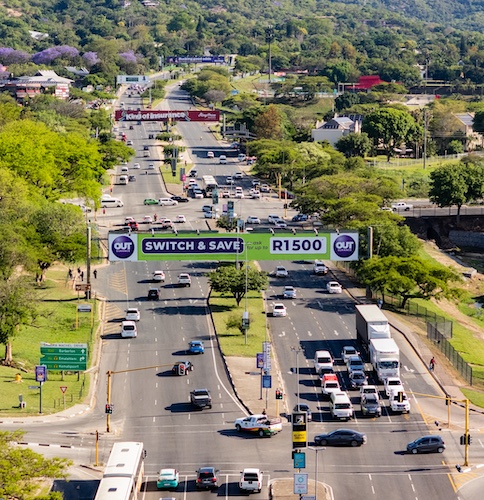
As the year winds down and the country gears up for its annual summer migration, South Africa is about to hit peak movement. For businesses, it’s a golden window. The months ahead offer one of the most powerful environments for Out-of-Home (OOH) advertising to do what it does best: connect brands to people in real, physical moments – when they’re out exploring, spending and making decisions.

Jacques du Preez, CEO of Provantage, said the festive season remains one of the strongest conversion periods for Out-of-Home: ‘When people travel, their mindset shifts. They’re planning, buying, gifting, exploring, or simply open to inspiration. OOH moves with them along highways, at airports, in shopping hubs and on public transport. It’s media that matches mobility.’

By mid-December, millions of South Africans will be in transit. Last year, ACSA reported record passenger volumes through major airports, processing 3.7 million passengers in December 2024 alone, while SANRAL noted some of the heaviest festive traffic in years, with traffic volumes reaching a high of 853,564 vehicles in December 2024 as reported by toll concessionaires. Add in commuter flows between provinces, family road trips and local tourism, and it’s clear that audiences aren’t sitting still. They’re out there, and they’re spending.

That makes the next three months prime territory for brands that want to translate awareness into action. Whether it’s a new product, a travel promotion, or retail campaign, OOH provides a full-journey canvas, from roadside to retail, taxi rank to runway.

Every journey creates a series of decision points: where to stop, what to eat, how to entertain the kids, or which store to visit when you arrive. Smart Out-of-Home strategies follow that path.

On the road, large format billboards and digital rotators offer a combined exposure potential of an impressive 290 million viewed impressions (VACs) monthly – reinforcing brand familiarity and driving impulse buys from cold drinks and snacks to tech accessories.

At transit hubs, such as taxi ranks, frequency and proximity are key. These spaces reach 22 million South African commuters daily on their way to work or home for the holidays, turning routine journeys into brand moments. At airports, more than 3 million monthly travellers are in high-dwell environments with time to absorb messaging. Here, brands win by speaking to premium mindsets: insurance, banking, tech, fashion and gifting.

In suburban streets and shopping mall zones, hyper-local small format advertising faces close the loop, nudging last-mile action just minutes from purchase points. And within lifestyle and golf estates, a growing Out-of-Home category is taking shape where audiences are receptive and relaxed with 3 million monthly impressions. These environments reach families and professionals in moments of leisure: on the fairway and at the clubhouse. Messaging in these settings aligns naturally with themes of family, lifestyle, health and aspiration, from automotive and financial brands to travel, tech and home products.

Each space plays a different role, from hyperlocal to broader reach, but together they form an ecosystem that mirrors real audience behaviour. Du Preez explained: ‘The power of Out-of-Home is that it’s not a single medium; it’s a network of touchpoints that follow people from planning to purchase. When you connect those moments creatively, you drive measurable action.’

Summer amplifies attention. People spend more time outdoors, leisure time increases and consumer confidence generally lifts with the festive mood. Families are shopping, travelling, and celebrating, all of which translates into heightened receptivity to brand messaging at a time when many traditional advertising channels are showing signs of effectiveness fatigue. In this environment, Out-of-Home media stands out by meeting audiences where they’re most active, emotionally engaged and where media can’t be switched off.

While traditional advertising channels face declining effectiveness driven by shifting consumer behaviour, fragmented attention and overexposure to digital messaging, OOH media continues to prove its strength through globally benchmarked audience measurement standards.

Du Preez added: ‘Despite the rise of online media, overall marketing effectiveness has declined. The biggest challenge today is attention. In an oversaturated digital landscape, consumers are bombarded and increasingly able to block or ignore one-to-one ads. Since OOH is a one-to-many medium it’s able to cut through that noise. It earns attention in real, physical moments without being intrusive and that’s what makes it one of the most effective mediums in the modern mix.’

Using advanced methodologies that go far beyond simple ‘opportunity to see’ metrics, today’s OOH systems measure VACs, converting potential impressions into actual viewed impressions based on factors such as location, travel patterns, visibility and dwell time. This data-driven accuracy, aligned with international best practice, enables advertisers to plan and evaluate campaigns with precision. When combined with programmatic buying and behavioural insights, it ensures OOH delivers measurable reach, real engagement, and sustained growth in an era of declining ad effectiveness.

‘Brands that win this season will think like travellers. They’ll understand where people are, what they’re feeling and when they’re most open to connection. That’s the art and science of Out-of-Home: helping brands move with their audiences in ways that feel timely, relevant and real.’

PROVANTAGE
www.provantage.co.za

How Marketers Can Unlock The Full Potential Of AI-Driven Campaigns

How Marketers Can Unlock The Full Potential Of AI-Driven Campaigns
Tanika Corneleus, midnight.

According to Tanika Corneleus, Digital Campaign Lead at midnight, automation can help marketers to amplify their impact and get better ROI from their ad campaigns, provided the algorithms are fed clean data and clear goals. Now, with the growing maturity of artificial intelligence (AI) and machine learning, we are seeing the major paid media platforms advocate ever more sophisticated forms of automation that minimise manual input and rely on algorithms.

Just a few examples of this include:

– Performance Max, an AI-driven campaign type that consolidates Google’s inventory (Search, Display, YouTube, Discover, Gmail, Maps) into a single, goal-based campaign.
– Broad Match, a Google Ads keyword match type that allows ads to appear on searches related to your keyword, including synonyms, related queries, and variation.
– AI-driven bidding or smart bidding, which uses machine learning to optimise bids in real time.

These automations are incredibly powerful and can save time and drive great results for advertisers when they are used wisely. However, brands should not think of these automations as set-and-forget solutions. Unattended, these automated features may deliver a lot of cheap clicks. But you will also want to ensure that they are generating high-quality traffic that justifies your ad spending.

Volume Versus Value

One of the factors marketers should be aware of is that the paid media platforms are often designed to reward volume in terms of clicks and impressions. But in reality, not all clicks and impressions are of equal value. For example, you will probably be thrilled if you see your clicks double overnight after you add a single broad match keyword. Disappointment may follow if you see that your conversions have halved in value.

The keyword may have attracted a lot of traffic from users who weren’t ready to buy or for whom your ad was actually irrelevant. A cheap click is not cheap if it does not convert. In the long run, it may cost you even more. Not only will you have wasted part of your ad spending, but you might have polluted your data signals with irrelevant interactions. The result is that the automated algorithms may continue to target audiences that are not relevant to you.

Leading marketers are increasingly moving away from old-school metrics like impressions and click-throughs. These are easy to track, but do not show value. Instead, they are shifting from volume to value-based bidding, tracking metrics such as conversion value, lead quality and Return on Ad Spend (ROAS). Consider this comparison of two imaginary campaigns as an example of why marketers should optimise for value rather than volume:

– Campaign A’s leads are students with no buying power. There are hardly any conversions among the leads.
– Campaign B’s generates half as many leads but twice as many conversions.

An automated campaign will happily optimise for Campaign A, unless someone instructs it to do otherwise.

First-Party Data Matters More Than Ever

Today’s consumer journeys are fragmented across different channels and the paid media platforms increasingly rely on AI-driven optimisation. And while we are moving into the ‘cookieless’ environment, albeit more slowly in some regions than marketers anticipated, access to third-party identifier data has already declined. This means that marketers have less visibility into each stage of the traditional sales funnel than they did a few years ago.

First-party data and signal quality are now every bit as important as campaign setup, if not more so. This marks a change over the previous situation where choosing the right keywords, placements and audiences was the all-important success factor. Setup matters less today because platforms like Google and META have taken away much the control you used to have.

What matters most is the quality of your first-party data and this is where a lot of advertisers are dropping the ball. Your first-party data will deliver the best results when fed back to the platforms in real time via an automation. For example, if your customer relationship management system is not passing back the leads that converted, Google will optimise for the cheapest (and often lowest quality) leads. You may see the value of your leads decrease. If it takes two weeks to export data from your CRM to Google for the platform to learn from and optimise bidding, that will represent two weeks of value lost to ineffective bidding.

Marketers should remember that they need to share customer data in compliance with privacy laws like POPIA. Those in sensitive verticals like finance and healthcare may need to be especially careful with personal information. They will need tighter tracking and lead scoring methods to make automation useful.

A Checklist For A Modern Setup:

This is a basic hygiene setup that marketers can tweak for their business needs:
– GA4 (Google Analytics 4) with Consent Mode enabled for future-proof tracking against cookie loss.
– Conversion events tied to real outcomes (like conversions, not just button clicks or form fills).
– Data fed back into your paid media accounts when your final conversion happens offline.
– Negative keywords exclusions to stop wasted spend.
– Quality scoring system for leads, so the algorithm knows what’s valuable.
– Continuous audit of data accuracy (remember bad signals in equals bad results out).

The Future Of Automation And AI

Automated systems and AI are constantly improving and creating new opportunities in areas such as voice search and AI-driven creative optimisation. However, automation is only as good as the humans who set goals and strategies, monitor output and make informed adjustments. It’s not just a case of automating, but also of leveraging high-quality first-party data and focusing on value over volume. Marketers who get the balance right will unlock the full potential of AI-driven campaigns and ensure sustainable results.

MIDNIGHT
https://iqbusiness.net/midnight/

Standard Bank And M + C Saatchi Abel Campaign Demonstrates Personalisation At Scale Through AI

Standard Bank And M + C Saatchi Abel Campaign Demonstrates Personalisation At Scale Through AI

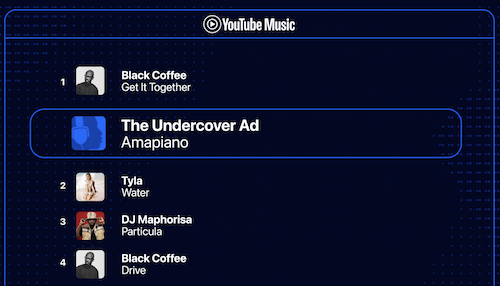
In an age where advertisements interrupt people’s music viewing and streaming experience on YouTube, M+C Saatchi Abel asked the brutally simple question: How do we market the Standard Bank app without interrupting YouTube Music users’ listening experience? The creative idea was The Undercover Ad – a campaign of AI-generated songs which are secretly advertisements that don’t sound like advertisements at all.

‘Instead of forcing our way in, we blended in, creating 17 genre-specific tracks, all generated from a single script, tailored to users’ playlists,’ said M+C Saatchi Abel Executive Creative Director Rory MacRobert.

Standard Bank’s app is secure, fast and easy to use, and so the campaign needed to complement this. ‘As Standard Bank, we are committed to effective banking that blends into people’s lives seamlessly. Our primary business objective was to drive app awareness and downloads from a tech-savvy audience. The campaign therefore needed to represent banking that blends in, where technology meets culture,’ said Susan Steward, Head of Marketing, Personal and Private Banking, Standard Bank SA.

M+C Saatchi Abel is part of The Up&Up Group. The Up&Up Group’s Chief Creative Officer, Neo Mashigo, said the innovative campaign was a direct result of the group’s commitment to creativity. ‘As a group we believe that creativity elevates just about everything. And so, across the leadership of the Group, our commitment to diversity no doubt adds extra momentum in landing on creative outputs that continue to deliver tangible results for our clients.’

MacRobert explained that in this instance, tangible results went beyond awareness and downloads. A secondary goal, he says, was to shift brand perception. ‘The campaign is effective at positioning Standard Bank as an innovative, digitally fluent brand aligned with culture and user behaviour.’

Steward said it was important for the bank to communicate the value of the Standard Bank app in a way that feels native to the platform. ‘We wanted users to see, and experience Standard Bank, not as an interruptive advertiser, but as a brand that understands and respects the digital environment of users. Working closely with M+C Saatchi Abel, we have achieved this objective.’

The Up&Up Group’s Chief Executive Officer Jacques Burger said the group has a clearly defined approach to technology. ‘We are in the business of creativity. At the same time, we are living in the most extraordinary times where rapid advances in technology are allowing us to scale creativity, quickly. The Up&Up Group leverages technology and AI as platform drivers for creative excellence and innovative solutions.’

Zoning in on the campaign itself, MacRobert said it was designed to include all of South Africa’s demographics. ‘We targeted digitally fluent, music lovers who are mobile-first, ad-avoidant, culturally aware and skeptical of traditional marketing but open to innovation.’

MacRobert explained that the entire music production was AI-generated, using thousands of prompts to end up with the final 17 tracks to align with the top-played genres of music in South Africa, from Afrohouse and Amapiano to Country Rock. The result is that each track, or ad, was adapted visually and sonically to match the genre, for example, the standard financial services provider (FSP) disclaimer sung in reggae or jazz style, for example.

The results speak for themselves. The campaign impressions target was 10 million, yet to date it has already achieved 40 million+ impressions. The industry view-through rate benchmark is 15%, whereas the efficacy of the native approach has seen view-through rates of up to 40%.

‘What makes the campaign even more impressive, and testament to the The Up&Up Group’s belief that creativity elevates just about everything, is that the remarkable results were achieved on one of Standard Bank’s smallest media campaign budgets. The creative result was more personalisation and less disruption, in other words, banking that blends in,’ said MacRobert.

M&C SAATCHI ABEL
www.mcsaatchiabel.co.za

How To Set Goals For A Meaningful And Fulfilling 2026

How To Set Goals For A Meaningful And Fulfilling 2026
Annemie Burger, Penquin.

As the year winds down, many of us start thinking about what’s next: what we want to change, achieve, or let go of in the new year. According to Annemie Burger, HR Director at Penquin, setting meaningful goals starts with reflection, not pressure.

‘We live in a culture that’s always pushing us to do more, earn more, and achieve more. However, lasting change doesn’t come from ticking off boxes, it comes from being intentional about who we are and what we value,’ said Burger. ‘If you take the time to ask the right questions, you’ll set goals that actually inspire you instead of overwhelm you.’

Here are five simple questions Burger believes everyone should ask themselves before setting new personal or professional goals for 2026.

1) What did this year teach me?

Before looking ahead, take a moment to look back. Think about what you’ve overcome, what you’ve learned about yourself, and what you’d like to leave behind. ‘Reflection gives meaning to progress,’ said Burger. ‘Even if you didn’t hit every goal, you’ve grown in ways that matter. Recognise that. It’s the foundation for everything that comes next.’

2) Where did my energy go, and did it serve me?

At the end of a busy year, many people feel exhausted but unsure why. Burger suggests doing an ‘energy audit’, looking at what filled you up and what drained you. ‘Ask yourself where your time and energy really went,’ she explained. ‘Were you investing in things that made you feel alive and purposeful or were you just getting through the days? Your energy is your most valuable resource, protect it.’

3) What does success look like for me?

It’s easy to compare yourself to others or chase goals that look good on paper. However, Burger says true success is personal. ‘Maybe success for you means slowing down, spending more time with family, or prioritising your health,’ she said. ‘It doesn’t have to be about promotions or big milestones. The only definition that matters is yours.’

4) Who do I want to grow with?

The people we surround ourselves with influence how we think, feel, and act. ‘Think about who lifted you up this year,’ said Burger. ‘Who challenged you in a good way? Who made you feel supported and seen? As you move into a new year, choose your circle intentionally, it’s one of the most powerful things you can do for your wellbeing and success.’

5) What will I do differently this time?

Real growth happens when you change the approach, not just the goal. ‘Maybe you’ve been setting the same goal for years, to save more, to exercise, to rest more, but it never sticks,’ said Burger. ‘Instead of giving up, ask yourself what small change you can make to get a different result. Sometimes that shift in mindset is all it takes.’

For Burger, setting goals isn’t about pressure, it’s about possibility. ‘You don’t need to have your whole life figured out by January,’ she said. ‘You just need to start with awareness. When your goals reflect your values, it becomes easier to stay consistent, because you’re working towards something that feels authentic to you.’

As we prepare to welcome a new year, Burger encourages South Africans to trade perfection for progress, and to set goals that feel grounded, kind, and personal. ‘The most powerful thing you can do for yourself in 2026 is to be intentional,’ she concluded. ‘When you set goals that reflect who you are, not who you think you should be, you’ll create a year that feels both meaningful and fulfilling.’

PENQUIN
https://www.penquin.co.za

Glynt Drives Innovation With Acquisition And New Tech Division

Glynt Drives Innovation With Acquisition And New Tech Division

Glynt (formerly Tractor media Holdings) has announced the acquisition of loyalty aggregation app ‘Store (my) Cards’. Alongside the acquisition, Glynt has launched Ignis Labs (‘ignis’), a new, dedicated technology arm designed to drive innovation, data integration and AI capability across the Group’s portfolio.

Glynt acquires Store (my) Cards and launches new tech division, Ignis Labs
Bryon Rode, Ignis.

Store (my) Cards creator and tech entrepreneur Byron Rode has been appointed CEO and Co-Founder of ignis. In this role, Rode will lead the Group’s technology strategy and collaborate closely with all Glynt companies to integrate advanced data systems, AI and automation, ensuring technology becomes a practical, every-day growth driver across the business.

‘The creation of ignis represents a pivotal evolution for the Glynt Group,’ said Simon Wall, Group CEO of Glynt.

‘Byron brings a rare mix of technical skill and creative vision, and his appointment will help us weave intelligence and automation through every part of our operations – bringing data, media and tech together in a way that genuinely adds value.’

With the rise of retail media, Store (my) Cards positions Glynt squarely at the intersection where data and retail media converge, enabling the Group to partner more effectively with clients and deliver real-time campaign insights and optimisation. This strategic alignment places Glynt in a leading position to help brands harness customer insights and unlock measurable value across both physical and digital environments.

Said Rode: ‘Partnering with Glynt is an incredible opportunity to take Store (my) Cards from a passion project to a platform with real national impact.’

‘What began as a side project has evolved into something with the potential to fundamentally change how people and brands connect – and with Glynt’s scale and vision, we can now ramp up development and bring that to life across the entire country.’

GLYNT GROUP
https://glyntgroup.co.za/

Publicis Groupe Africa Announces Chief Strategy And Integration Officer

Publicis Groupe Africa Announces Chief Strategy And Integration Officer
Jonty Fisher, Publicis Groupe Africa.

Publicis Groupe Africa has Jonty Fisher as Chief Strategy and Integration Officer, further strengthening the Groupe’s ability to deliver transformative, connected solutions for clients across the continent. The appointment of Fisher into this role reinforces Publicis’ commitment to the philosophy of the Power of One: a single strategic view of the client’s core problem set solved by the single integrated delivery of the Publicis offering across media, creative, production and commerce.

The role will encompass corporate strategy for the Groupe across the continent, integration of all disciplines into powerful client solution, and the enhancement of strategy as a community of practice within Publicis. Fisher will also be mandated with driving growth across the continent, in both organic and net new business.

Through his entrepreneurial agency journey, as well as in his most recent role as Senior Vice President of Communications at Publicis, Fisher has led both strategic and commercial direction on some of the world’s most recognisable brands, including HEINEKEN, Mondelēz, PepsiCo, Jack Daniel’s, adidas Originals, KIA Motors, Unilever, and Sanlam. His career reflects both breadth and depth, with experience spanning diverse categories such as alcohol, automotive, financial services, FMCG, healthcare, retail, and technology.

Beyond his impressive credentials, Fisher is known for his passion for people, embracing both their gifts and quirks, and his curiosity to learn from every experience. These qualities underpin his ability to integrate disciplines, businesses, and talent across the Groupe to unlock real value for clients.

Koo Govender, CEO of Publicis Groupe Africa, said: ‘We are thrilled to elevate Fisher into this role. His unique entrepreneurial journey, combined with his strategic and commercial rigour, and his human-centric approach, make him the perfect fit to lead integration across our businesses.’

‘Fisher has a proven ability to navigate complex challenges with clarity and creativity, and I am confident that his leadership across a broader canvas will help our Groupe, and our clients, thrive in an era where connection and collaboration matter more than ever.’

PUBLICIS GROUPE AFRICA
https://publicisgroupeafrica.com/

This is Modern Marketing