Home Blog Page 52

Good Things Guy And Tractor Outdoor Turn Ad Spaces Into Moments Of Joy

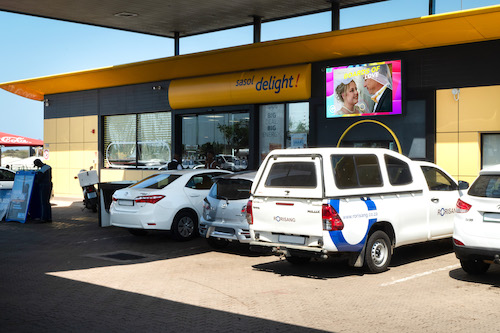
Good Things Guy Expands Reach to BP and Sasol Petrol Stations Across South Africa

Thanks to a new partnership between Good Things Guy and Tractor Outdoor, the platform’s signature blend of hope and positivity will now be broadcast across BP and Sasol petrol stations nationwide. Tractor Outdoor has dedicated prime ad space across its Digilite digital screen network, covering over 165 screens in key metropolitan areas.

This rollout includes locations at BP and Sasol petrol stations, giving Good Things Guy a presence in major cities and towns nationally across all major metros.

The move builds on the long-standing partnership between Good Things Guy and Primedia Malls, where for over two years, inspiring stories have reached millions of South Africans every month via digital screens in shopping centres, and various other screens. Together, these partnerships now extend Good Things Guy’s reach to millions more viewers across the country’s busiest public spaces, from malls to forecourts, highways and beyond.

The initiative marks a bold step in spreading positivity through everyday touchpoints, helping to bring uplifting stories into the daily routines of South Africans on the move.

‘Partnering with Primedia Malls has been incredible. Our good news has been on their screens around the country for over two years now, reaching an audience of over 30 million people every single month,’ said Brent Lindeque, founder of Good Things Guy. ‘Never in my wildest dreams did I think that our news would be so accessible. And now, we’re building on that with our Tractor Outdoor partnership. While you’re filling up your fuel, or checking your tyres, or even popping into a convenience store at BP and Sasol garages around the country, you’ll be able to catch up with good things. Good news is literally all around us.’

For Tractor Outdoor, this partnership is about more than digital expansion — it’s about making an impact. ‘At Tractor, we believe advertising has the power to do more than promote brands – it can inspire, uplift, and bring communities together,’ said Ruchelle Mouton, Chief Marketing Officer at Glynt (Tractor Outdoor’s parent company). ‘Partnering with Good Things Guy was an easy decision because their mission to celebrate positivity and good news resonates deeply with our own values. By amplifying their stories on our Digilite network, we’re ensuring South Africans are reminded daily that there is always something good to celebrate.’

In a fast-paced world dominated by headlines of crisis and uncertainty, this collaboration between Good Things Guy and Tractor Outdoor represents a refreshing shift – turning ordinary ad spaces into moments of joy and connection.

TRACTOR OUTDOOR
www.tractoroutdoor.com

City Lodge Hotels Bag Eight Loeries

City Lodge Hotels bags 8 Loeries!

City Lodge Hotels, together with its long-time creative partner TBWA Hunt Lascaris Johannesburg, has struck gold, silver and bronze at the Loeries Africa and Middle East 2025. The group’s bold, witty, and original Save Our Stay (SOS) campaign scored an impressive 8 awards from 23 shortlisted entrees.

– Gold – Comedic Impact
– Silver – Service Design
– Silver – PR & Media Communication Campaign
– Bronze – Print – Print Advertising Campaign
– Bronze – Digital – Mobile Media
– Bronze – Geo Targeting Creativity
– Bronze – Film – TV & Cinema Commercials – up to 90s
– Bronze – Integrated Campaign

A regular contender, finalist, and winner at this prestigious annual event, now in its 47th year, City Lodge Hotels is especially proud of this year’s achievements, reflecting a celebration of creative excellence that continues to flip the script on its distinctive slogan: ‘Life is hard. Check into Easy.’

Knowing that holiday accommodation can sometimes feel like a bad blind date – smooth talk initially but ultimately leaving one disappointed – City Lodge Hotels launched the ‘Save Our Stay’ platform for when you find yourself in a tight spot. Consumers needed to simply click on the link and this online service would instantly find and connect them to their closest hotel across the group’s four brands – Courtyard Hotel, City Lodge Hotel, Town Lodge, and Road Lodge – and offer savings to boot.

The Loeries is Africa and the Middle East’s premier awards programme celebrating creative excellence and innovation in advertising and brand communication. The work is judged anonymously in two rounds by expert panels, ensuring fairness and credibility, with awards made in a variety of categories.

City Lodge Hotels’ Divisional Director of Sales and Marketing, Zuki Jantjies, once again lent her expertise as a judge this year, saying of the experience: ‘Judging this year has been truly inspiring. The creativity, innovation, and quality emerging from across Africa and the Middle East is extraordinary, with our marketers and agencies producing work that stands proudly on the global stage. It’s also deeply rewarding to see City Lodge Hotels and our creative partner, TBWA Hunt Lascaris Johannesburg, recognised with 23 shortlisted entrees and 8 awards. Creative, competitive, and compelling brand messaging is what we’ve always been about.’

CITY LODGE
https://citylodgehotels.com/

Gen Z Innovators Tackle Hunger For KFC Campaign

Gen Z tech talent rewires South Africa’s fight against hunger

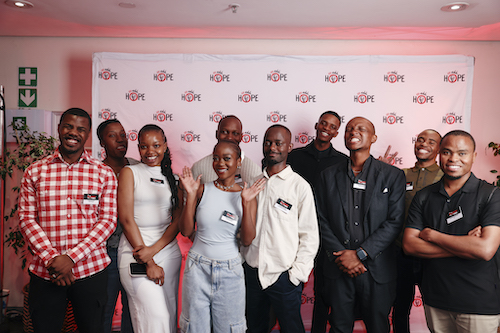
Ahead of World Food Day on 16 October, 60 of the country’s smartest Gen Z innovators spent a week hacking one of the nation’s toughest problems, child hunger, and emerged with breakthrough, tech-powered ideas that could change how food insecurity is tackled. Artificial intelligence, blockchain, data visualisation and community-driven platforms were among the technologies harnessed during The Biggest Hunger Hack, a challenge hosted by KFC Africa.

The event invited young digital natives to re-engineer the brand’s Add Hope open-source blueprint. Add Hope, powered by millions of R2 donations from KFC customers, already fuels 3300+ feeding centres across the country, reaching over 154,000 children last year. But Gen Z just showed how the recipe can get a digital boost. Potential seed funding of up to R1 million could be allocated to the development of the winning solution.

The overall winning team. Ctrl-Alt-Del-Hunger, turned South Africa’s food waste crisis into a social impact opportunity. Their Misfits Mzansi app rescues ‘ugly’ fruit and veg that would normally be trashed on farms and delivers it to food-insecure families. The platform also hosts short-form cooking challenges, edutainment content, and ad-driven donations so users literally feed families by engaging with content. ‘You become a philanthropist just by watching a video,’ said the team.

Streetwise scripters built a social-media-first donation ecosystem. Their concept includes a real-time donor dashboard, donation hotspot map, and a KFC loyalty rewards integration where good deeds unlock free meals. Plus, they proposed @KFCAddHopeSA, a TikTok-to-Till campaign for digital storytelling that keeps donors looped in.

Bit Coders’ chatbot ecosystem makes donations inclusive and transparent — even for non-KFC customers. It features AI-driven donor insights, rewards, and tax certification downloads for big donations, using the MTN MoMo API for seamless payments.

Hack 4 Hope’s solution showcased a WhatsApp chatbot that allows customers to scan a QR code from their KFC till slip to instantly donate. Built on blockchain, the system provides proof of every R2’s journey, from donor to meal served, creating full transparency and reinforcing trust. The platform’s ‘HopeCoins’ reward repeat donors and gamify giving.

‘The Biggest Hunger Hack showed what happens when young digital natives use tech for good,’ said Andra Nel, KFC Africa’s Head of Brand Purpose and ESG. ‘They understand hunger because many have lived it and they understand technology because they were born into it. That’s the sweet spot for innovation with purpose.’

Stakeholders from business, government, and civil society joined the event in Johannesburg to see the hackers pitch live and explore ways to scale their ideas nationally.

Nel said the next step is to co-develop pilot programmes with Add Hope partners, aiming to showcase results by the time the National Convention on Child Hunger convenes early next year.

‘Collaboration is our key ingredient, from customers dropping R2 at the till, to partners like McCormick, Tiger Brands, Foodserv, CBH, Nature’s Garden, Digistics, and Coca-Cola Beverages South Africa, all rallying behind the Add Hope recipe,’ she said.

‘Opening up Add Hope as an open-source blueprint has unleashed an outpouring of ubuntu that’s turning this fight into a movement, one that South Africa, and the world, can learn from. These Gen Z hackers showed how tech can supercharge reach and transparency. Now the goal is to turn their best concepts into live pilots with our 128 feeding partners,’ Nel said.

KFC
http://www.kfc.co.za

Ogilvy South Africa Appoints Chief Creative Officer

Ogilvy South Africa appoints Nkanyezi Masango as Chief Creative Officer, of its Cape Town office
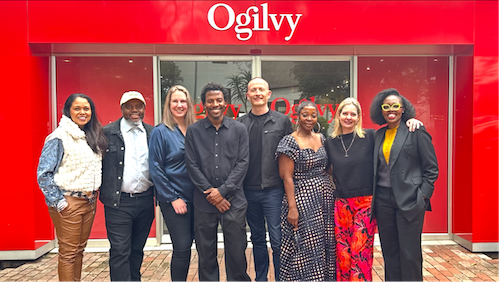
The Ogilvy team: Angela Madlala, Kabelo Moshapalo, Vicki Buys, Nkanyezi Masango, Pete Case, Neo Makhele, Tracey Edwards and Ipi Thibedi.

Ogilvy has announced the appointment of Nkanyezi Masango as Chief Creative Officer for its Cape Town Advertising business. With more than two decades of experience in the advertising industry, Masango has held senior creative leadership roles at some of South Africa’s most respected agencies, including Y&RVML, King James Group and Dentsu Creative.

Over his career, he has led creative work for some of the country’s most iconic brands, earning recognition at the Loeries, Cannes Lions, D&AD, One Show, LIAs, Webbys and Clio Awards. And has been invited as a speaker on the main stage at Cannes Lions.

Masango is widely respected for his ability to fuse bold, culturally resonant ideas with strategic insight — helping to produce work that not only wins awards, but also drives measurable business results. His leadership style is defined by a passion for nurturing talent and building diverse, high-performing creative teams.

Pete Case, CEO and Creative Chairman of Ogilvy South Africa commented, ‘Masango’s appointment is another step in our strategy to build the strongest creative leadership team in the country. His track record of creative excellence, his ability to inspire teams, and his passion for mentoring the next generation of talent, make him an invaluable addition to our leadership. We are both united in our belief that creativity has the power to drive both cultural and commercial impact.’

‘I’m excited to partner with Masango to help lead the creative vision for Ogilvy Cape Town’s advertising business. Alongside the rest of the team we aim to deliver work that moves people, shapes culture, and drives growth for clients,’ added Vicki Buys, Managing Director Ogilvy Cape Town.

Masango will also play a pivotal role in Ogilvy’s various youth development initiatives, including the industry’s largest Graduate Programme called Ogilvy Giants.

Masango added ‘Ogilvy has always been a place where creativity is valued as a force for impact – for brands, for culture, and for people. So, I’m excited to join a team that shares my belief in the power of ideas and my commitment to growing the next generation of creative leaders. Together, we’ll continue to create work that South Africans can be proud of, and that inspires the industry to aim higher.’

OGILVY SOUTH AFRICA
https://www.ogilvy.co.za/

Red & Yellow Wins Big With 13 Loeries

Red & Yellow wins big with 13 Loeries

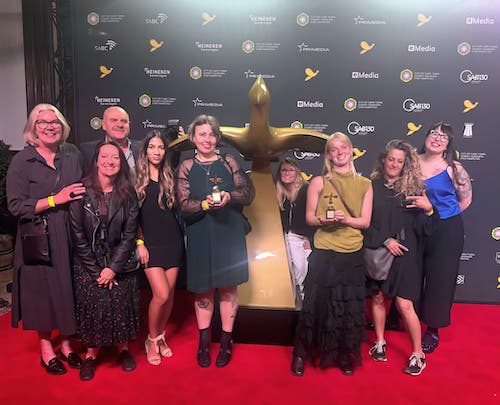
On a night (9 October 2025) when seasoned creative agencies jostled for the limelight at Cape Town City Hall, a group of Cape Town students from Red & Yellow Creative School of Business (Red & Yellow) stepped onto the same stage and left with 13 Loeries awards. This only goes to show that the city’s creative pipeline is producing work that competes and wins at international levels.

The projects began at shared tables in campus studios, tutors moving between screens, MacBooks and sketchbooks, and briefs that ask for scrutiny and clarity. From there, the work travelled to the Loeries and came back with two Golds (including one Craft Gold), seven Silvers (including one Campaign Silver) and three Bronze awards, plus one Craft Certificate. The tally spans general design, typography, radio, logos and identity, integrated campaign and out-of-home. Red & Yellow secured 30 nominations across competitive categories.

Full List Of Red & Yellow Winners:

– Craft Gold: Renée Pedegana for ‘Foundation Work’ – Print and – Design Crafts: Typography
– Gold: Emma Blomerus for ‘Skoerrrt’ – General Design
Campaign Silver: Lin Ncube, Maria Du Toit, Nadine Van Doesburgh for ‘Just Don’t’ – Out of Home
– Silver: Amy Mills for ‘Museums’ – Radio Commercials & Branded Content
– Silver: Emma Randell for ‘Try For Her’ – Out of Home
– Silver: Caitlin Woldu for ‘Skarrel Soema’ – Logos and Identity Programmes
– Silver: Ethan Luke Stadler for ‘Gag on It’ – General Design
– Silver: Renée Pedegana for ‘Foundation Work’ – General Design
– Silver: Dario Yesca, Johny Sathekge, Ethan Stadler, Georgina Forde, India Trapman, Jade Horn, Neo Mthudi, Qadira Oaker for ‘Buzz off Dave’ – Integrated Campaign
– Bronze: Emma Rubé for ‘Frayed Stories’ – Out of Home
– Bronze: Maxine Carr for ‘Don’t Be Seen Be Heard’ – Digital Media
– Craft Certificate: Emma Blomerus for ‘Skoerrrt’ – Print and Design – Crafts: Illustration

‘These results speak to the programmes, our faculty and industry experts that lean in to what makes Red and Yellow the number one creative college in Africa and the Middle-East,’ said Sarah Griffiths, Head of Marketing at Red & Yellow. ‘The Loeries recognise creative standards across Africa, and for our students, the recognition is reflective of the calibre of talent that is synonymous with this school.’

Copywriting lecturer Craig Strydom added context on why young talent entering the job market is making headway: ‘In advertising, awards are a kind of currency. In the job market, they carry serious weight.’ He noted that the set of wins reflects the realities of agency life. This includes individual skills sharpened through critique and team projects delivered to deadline.

Behind the work is a local network of industry-experienced lecturers who keep one foot in practice and one in the classroom. The school acknowledges the contribution of Strydom, Heloise Bottomley, Nini van der Walt, Liz Pienaar, Wilna Combrinck, Stephanie Simpson, Di Charton, Henriëtte van der Westhuizen and Kirsten Seymour. This group includes those who spend late afternoons guiding concept, typography, and radio edits until the idea holds.

Cape Town’s students are drawing on street-level observation, layered identities and a design culture that values craft. You can see it in the way type is handled, how identity systems are built, and how ideas are tightened rather than inflated. If a piece wins at the Loeries, it’s because it can deliver business results with creative cut-through.

For the city, it signals a strong junior pipeline: graduates entering agencies, in-house teams and start-ups with work that’s already been tested on a public stage. For the students, it is a portfolio marker that travels with them and proof that Red and Yellow training holds up under national scrutiny.

Griffiths framed the outcome as part of a longer arc: ‘The point is to teach a process with a briefing, concept, critique, revision, and to let the outcomes follow. The wins are a snapshot of that rhythm.’

RED AND YELLOW SCHOOL OF BUSINESS
www.redandyellow.co.za


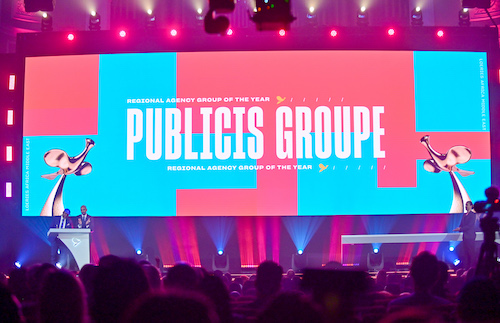
Publicis Groupe Wins Loeries Regional Agency Of The Year For The Second Consecutive Year

Publicis Groupe Wins Loeries Regional Agency of the Year for the Second Consecutive Year

Publicis Groupe Middle East and Africa has once again been named Regional Agency Group of the Year at the 2025 Loeries Awards, marking its second consecutive year at the top. The win reaffirms the Groupe’s creative excellence and integrated strength across markets, with standout performances from LePub, Machine, and MSL.

LePub’s work for Heineken earned multiple awards, including Gold, while Machine was recognised for its Spotify isiXhosa film campaign, and MSL earned honours in PR and Communications. Together, these wins reflect the breadth of capability across Publicis Groupe’s creative, media, and communications agencies operating under the Power of One model.

‘Winning Regional Agency of the Year for the second year running is a testament to the relentless creativity, collaboration and bravery of our teams across the MEA region,’ said Pete Little, Chief Creative Officer of Publicis Groupe Africa. ‘Our teams continue to produce work that not only wins awards but moves brands and people – proving the power of collaboration across borders and disciplines.’

Koo Govender, CEO of Publicis Groupe Africa, added: ‘This back-to-back win reflects the incredible depth of talent and capability within Publicis Groupe MEA – across creative, PR, media, and technology. It demonstrates the strength of our regional network, the collaboration between our African and Middle Eastern markets, and the consistency with which our teams deliver transformative work for clients. It’s a proud moment that highlights what’s possible when we operate as one connected Groupe.’

PUBLICIS GROUPE AFRICA
https://publicisgroupeafrica.com/

Open Chair And KFC Take Networking To New Heights

Open Chair’s ‘Friends in High Places’ soars to new heights with KFC partnership

Open Chair’s Friends in High Places transformed the iconic Cape Wheel into a moving boardroom in the sky, giving 60 young women in advertising and marketing the chance to connect with industry leaders all while taking in sweeping views of Cape Town at the V&A Waterfront during Loeries Creative Week 2025.

The event, hosted by Open Chair, a non-profit dedicated to inspiring the next generation of women leaders in the industry, flipped the script on mentorship by taking it 40 metres above the city. In a format as bold as it was innovative, mentees rotated through capsules on the Cape Wheel, with each ride transforming into a private space for one-on-one dialogue. For 90 minutes, the skyline became the backdrop for career conversations in pods that became safe spaces of trust, where career insights flowed freely, connections sparked naturally, and ambition felt amplified.

For the young women taking part, it was a rare chance to engage directly with multiple senior industry leaders, including three women mentors from event sponsor, KFC Africa, sparking real conversations that resonated with most women, from impostor syndrome, career moves, leadership, to the realities of the industry. They walked away with guidance that didn’t just build confidence but opened up new possibilities.

Staying true to its ethos of creating connections and community in the industry, Open Chair helped shape an environment rooted in integrity, where participants weren’t just included but genuinely seen, heard, and supported. It was a space built with pride and respect, proving that when seats are created for all, women’s purpose and impact reach far beyond the industry itself.

‘Friends in High Places reveals what happens when we bring women together who wouldn’t normally have the time or opportunity to meet and share their experiences’, said Suhana Gordhan, founder of Open Chair. ‘The Cape Wheel was the perfect setting for these conversations – as we ascended together, so too did the aspirations and confidence of every young woman who took part.’

‘We witnessed genuine moments of connection, hope, practical advice being shared, and most importantly the kind of relationships being formed that will support these women throughout their careers,’ said Melina McDonald, Board Member of Open Chair.

A Partnership Built On Purpose

This year’s event was in partnership with KFC Africa, whose leadership team showed up not just as sponsors, but as mentors. With women making up 60% of KFC’s workforce across 22 African countries, the brand’s commitment to elevating female talent goes beyond its own walls.

Three senior KFC leaders, Chief People, Culture and Purpose Officer Nolo Thobejane, HR Director Unathi Ncunyana and Head of Corporate Affairs, Andra Nel, shared their personal journeys, offering insights on how to confidently navigate the evolving dynamics of modern workplaces and build resilience.

‘At KFC, we believe in feeding people’s potential, with integrity and respect,’ said Nel. ‘Supporting Friends in High Places isn’t just about career guidance, it’s about helping people rise up, be visible, and lead with unapologetic ambition. Just as potential fuels purpose, people power purpose, and by championing growth, we’re building cultures where everyone can ignite.’

‘Like Open Chair’s other mentorship events, Friends in High Places set out to tackle this head-on. We believe we can help bridge a gap by connecting emerging talent with women leaders who’ve already navigated the path to the top,’ said Roanna Williams, Open Chair Board Member.

‘The advertising and marketing industry needs more brilliant women like the ones who made new ‘friends in high places,’ said Fran Luckin, Open Chair Board Member. ‘And it’s not enough to get them into the room, we need to make sure they stay, thrive, and ultimately lead the agenda.’

OPEN CHAIR
LinkedIn 

Black Friday 2025 Strategy Tips For South African E-Commerce Retailers

The Ultimate Black Friday 2025 Survival Guide for South African E-commerce Retailers

The Digital Media Collective (TDMC) says Black Friday 2024 shattered records with over R30 billion spent across just three major banks, while Nedbank processed more than R3 billion in settlements – a 12% increase from their previous high. The broader economic impact reached R88 billion boost to SA’s economy, with retail sales hitting R169 billion in December versus R114 billion monthly average (Source: Daily Maverick, Bureau of Market Research).

Crucially: online transactions comprised over half of all Black Friday sales, with mobile commerce representing 67% of transactions (Source: PayU South Africa).

Black Friday 2025 (28 November) represents massive opportunity: SA consumers spent over R30 billion across just three banks in 2024, with online transactions up 14% YoY. However, planning for just one day means missing 80% of the opportunity.

1. Think Beyond Black Friday: The Extended Calendar

‘We’ve seen too many brands focus exclusively on Black Friday weekend and miss the broader opportunity,’ said Caleb Shepard, Media Director at TDMC. ‘Consumer behaviour has evolved significantly, with shoppers using November as preparation for a month-long festive season.’

Your strategic calendar should span early November teaser campaigns through Cyber Week, followed by December Christmas campaigns and January New Year/Back-to-School promotions. This three-part strategy focuses on November for customer acquisition, December for maximising basket values, and January for clearing inventory whilst capturing resolution shoppers.

Action point: Map your promotional calendar across this extended timeline rather than concentrating on a single weekend.

2. Technical Infrastructure That Converts

Card payments declined from 93% in 2022 to 84% in 2024, signalling customer demand for payment diversity (Source: PayU South Africa). Your infrastructure must include BNPL integration (PayJustNow, Payflex, Mobicred), digital wallets (Zapper, SnapScan, PayFast), and PayShap, which processed over R3 billion in November 2024 (Source: Nedbank).

‘We’ve witnessed clients lose significant revenue simply because they didn’t offer the payment methods their customers preferred,’ noted Shepard. With mobile purchases representing 67% of transactions, prioritise sub-3 second load times, CDN activation, real-time inventory displays, and abandoned cart SMS sequences.

Action Point: Audit your payment options and site performance immediately. Gaps in mobile optimisation directly impact conversion rates.

3. Strategic Discounting Without Brand Damage

Black Friday 2024 saw South Africans prioritising essential purchases, with grocery shopping accounting for 27% of spending (Source: Standard Bank). ‘The temptation towards loss-leader pricing can destroy long-term brand value,’ warned Shepard. ‘Successful retailers implement minimum viable discounts of 20-30%, utilising tiered schedules that start lighter and deepen for peak days.’

Bundle strategies focusing on essential purchases proved particularly effective in 2024.

Action point: Develop subscriber-only early access deals to build first-party data whilst avoiding broad market devaluation.

4. Creative Assets And Media Strategy

‘Creative fatigue and messaging saturation is real during extended promotional periods,’ explained Shepard. ‘Effective campaigns require 5-8 different creative variations with audience-specific messaging.’

Increase media spend by 25-30% to account for higher competition whilst front-loading budget allocation for early November. Multi-platform approaches across Google Ads, Meta, and TikTok prove essential for reaching younger demographics through social commerce.

Action point: Begin creative development well in advance. Last-minute changes during peak periods result in suboptimal performance.

5. Customer Experience Optimisation

‘At TDMC, we’ve learned that brands who dominate Black Friday obsess over every touchpoint,’ said Shepard. Critical elements include enhanced search and filtering, social proof and urgency indicators, strategically implemented exit-intent popups, and clear value propositions.

Post-purchase excellence differentiates successful retailers through automated confirmation sequences, proactive shipping communication, and prepared customer service scripts.

Action point: Map your entire customer journey, identifying friction points before peak trading begins.

6. Alternative Brand Positioning

Premium brands can implement ‘Quality Over Quantity’ messaging, ‘Support Local’ campaigns, sustainability-focused ‘Green Friday’ messaging, or experience-based offerings instead of discounts.

‘We’ve helped premium brands successfully navigate Black Friday without compromising positioning,’ noted Shepard. ‘The key is developing alternative campaigns that maintain brand integrity whilst capitalising on increased consumer attention.’

Action point: If discounting conflicts with brand positioning, develop alternative campaigns that maintain integrity.

7. Post-Black Friday Opportunities

‘The biggest mistake brands make is treating Black Friday as a one-off transaction,’ observed Shepard. Transform bargain hunters into brand advocates through welcome sequences, win-back campaigns for abandoned carts, onboarding sequences for first-time buyers, and loyalty programme integration.

Action point: Prepare relationship building campaigns in advance rather than treating the event as transactional.

8. Performance Benchmarks

Black Friday 2024 generated R88 billion in additional economic value. Spending distribution: Electronics (40%), Travel and Tourism (30%), Fashion (14%), Beauty (125% higher activity than average Friday) (Source: PayU South Africa, Home of Direct Commerce).

Action point: Use these benchmarks to set realistic expectations and allocate resources across product categories.

9. Final Week Protocol

‘From years of managing campaigns, we cannot emphasise enough that proper preparation is crucial,’ said Shepard. Final week preparation includes testing automated sequences, confirming customer service scheduling, verifying discount codes, activating backup plans, configuring analytics dashboards, and preparing reporting templates.

Action point: Create detailed checklists and delegate specific responsibilities to prevent oversights during high-pressure periods.

10. Future-Proofing Strategy

Prepare for continued mobile commerce dominance (70%+ transactions), accelerated BNPL adoption, increased sustainability messaging importance, social commerce integration, and AI-powered personalisation expectations. The 30.4% online transaction surge represents the new reality (Source: Ecentric Payment Solutions).

The Strategic Imperative

‘Black Friday 2025 extends far beyond discounting – it’s about creating exceptional customer experiences that convert bargain hunters into loyal advocates, concluded Shepard. ‘Retailers who understand this will dominate not just November, but the entire festive season.’

Effective preparation ensures you’re executing a well-planned strategy that maximises both short-term sales and long-term relationships rather than scrambling at the last minute.

TDMC
https://tdmc.co.za/

Brands Need To Meet Africa On Its Own Terms

Africa: The Most Colourful Canvas in Global Marketing
Bonita Chirstie, Publicis Commerce.

According to Bonita Chirstie, Business Unit Director, Publicis Commerce, Africa is a growth market for the future of experiential commerce. The continent’s cultural vibrancy, youthful demographics and rapid digital adoption make it a unique environment where brands can create immersive, purpose-driven experiences that move seamlessly from the physical to the digital. 

The African market is young, urbanising and increasingly digital. By 2030, more than 40% of the population will live in cities and Africa will have the largest working-age population in the world. Mobile penetration has already leapfrogged traditional infrastructure, placing commerce literally in the hands of millions of consumers.

But Africa is not a monolith. Localisation is non-negotiable. Each market has its own rhythm, from the hustle of Lagos street traders and the creative energy of Johannesburg townships to the cosmopolitan blend of Nairobi and the leisurely pace of Dakar.

Brands that assume a one-size-fits-all approach risk missing the nuance that defines authentic connection. What works in Sandton may fall flat in Soweto; what excites consumers in Accra may not resonate in Mombasa. Our job as marketers is to decode these nuances and turn them into platforms for relevance.

Across Africa, marketing lives in community spaces. It thrives at the taxi rank, in the township shebeen, at the football stadium and on the beachfront. These are the heart of everyday life. Experiential activations that lean into these environments spark trust.

When people see themselves reflected in the work, not in a generic global template but in a way that respects local rituals, languages and aspirations, they respond with loyalty that lasts far beyond the campaign.

In Kenya, retail activations tied to boda-boda riders (motorbike taxis) can reach thousands daily, tapping into a trusted community network. In South Africa, township-based campaigns that integrate amapiano music and local fashion trends create cultural moments that are instantly shareable and relevant. These are strategic levers that connect brand purpose to lived experience.

The traditional line between ‘above the line’ branding and ‘below the line’ activations has blurred. Today, a live moment in a market stall can trigger a cascade of digital engagement, from social sharing to online purchasing.

In Africa, this convergence is accelerated by mobile commerce. WhatsApp, TikTok and Instagram are transaction hubs. A pop-up shop in Lagos amplified by digital storytelling can convert into e-commerce sales overnight. A stadium activation in Johannesburg, integrated with QR-based mobile promotions, can drive both brand affinity and direct product uptake.

The opportunity for brands is to design experiences that are omni-channel by default: built to resonate on the ground and designed to scale in digital ecosystems where African consumers are already active.

The core lesson for global CMOs is simple: success in Africa is about co-creation, listening and partnership. The African consumer is discerning. They will embrace brands that demonstrate respect, but they will quickly reject those that appear extractive or inauthentic.

Respect begins with insight. It requires understanding the role of language, music, and storytelling in building trust. It requires investing in grassroots creativity to collaborate with it. And it requires measurement, because purpose without performance is unsustainable.

There is also something here for the rest of the world. Too often, global marketing is overly polished, overly managed and disconnected from the grit of everyday life. Africa shows us a different way. Creativity is tested in the hustle of the street, not just brainstormed in the boardroom. Campaigns are validated in real time by communities, not months later by focus groups.

The result is a boldness that global marketers can learn from. African campaigns are not afraid of raw emotion, improvisation, or cultural specificity. In that sense, Africa is a glimpse of the future of experiential commerce. Brands that succeed here are those that combine culture with commerce and authenticity with measurable outcomes.

The future belongs to brands that can bridge cultures, connect communities and convert attention into action. Africa offers the most vibrant canvas imaginable. The question is whether brands are ready to meet Africa on its own terms.

PUBLICIS GROUPE AFRICA
https://publicisgroupeafrica.com/

Havas Confronts Mental Health Crisis In South Africa’s Marketing And Communications Sector

Your Mind Deserves a Blank Space Havas South Africa confronts the mental health crisis in marketing
Provit Chemmani, Havas Media Network.

During mental health awareness month, Havas South Africa is refusing to look away. With the launch of its ‘Your mind deserves a blank space’ campaign, the agency is not just raising awareness. It’s demanding accountability.

In an industry built on storytelling, we’ve failed to tell one of the most urgent stories of all: the mental health crisis unfolding behind the scenes of South Africa’s marketing and communications sector. We know how to sell purpose. We know how to craft campaigns that speak to social impact, inclusion, and wellness. But when it comes to our own people; the strategists, creatives, account leads, and agency heads, we’ve been complicit in a culture that rewards burnout and punishes vulnerability.

‘We’ve spent years perfecting briefs for brands,’ said Provit Chemmani, CEO Africa and Global MD of the Centre of Excellence at Havas Media Network. ‘Now it’s time to rewrite the brief for our people. Mental health must be central to how we build, lead, and sustain our agencies. If we don’t make space for it, we lose the very minds that make our work matter.’

The Industry’s Unspoken Crisis

South Africa’s national mental health statistics are alarming. Depression may affect more than a quarter of the population, and three out of four people who need care don’t receive it. Within the marketing sector, the crisis is compounded by a culture of overwork, emotional labour, and relentless performance pressure.

We’ve normalised stress. We’ve glamorised exhaustion. And we’ve built systems that are fundamentally unsustainable.

‘Living and leading with ADHD means I have to constantly adapt to how others work,’ said Nabiella De Beer, Head of PR at Havas Red.

‘But what’s often missing is the willingness for others to adapt to how I think and operate. ADHD isn’t a flaw; it’s a different rhythm. And when we make space for that rhythm, we unlock new ways of leading, creating, and connecting.’

Her experience is not unique. Neurodivergent professionals across the industry are navigating environments that lack the language, tools, and empathy to support them. And while diversity is often celebrated in external campaigns, internal inclusion, especially for mental health and neurodiversity, is still lagging behind.

Your Mind Deserves a Blank Space Havas South Africa confronts the mental health crisis in marketing
Nabiella De Beer, Havas Red.

The Brief Has Changed

This isn’t just a campaign. It’s a confrontation. Havas is turning the lens inward and asking the industry to do the same. ‘Your mind deserves a blank space’ isn’t just a clever line on a billboard. It’s a demand for introspection and a challenge to the systems we’ve built and continue to uphold.

For decades, agencies have measured success in hours billed, pitches won, and campaigns delivered, while ignoring the emotional toll on the people behind the work. We’ve built environments that reward burnout and punish vulnerability. We’ve expected leaders to be emotionally bulletproof yet offered no support when they crack. We’ve spoken about diversity in our brand strategies but failed to accommodate neurodiversity in our own teams.

These aren’t just oversights. They are systemic failures. And they are costing us talent, creativity, and culture. Havas is not just naming the problem, it’s actively rewriting the rules. The agency has existing neurodiversity training for managers embedding mental health support into its operational framework. These are not symbolic gestures. They are structural shifts designed to protect the minds that power the work.

Do The Ads Even Matter?

We spend our days crafting messages meant to move people, to inspire, to inform, to sell. But in the rush to be seen, we rarely ask: how does it feel to be on the receiving end? For many South Africans, especially younger audiences, the constant stream of advertising isn’t just background noise; it’s emotional clutter. According to eMarketer, only 15% of Gen Z rate their mental health as ‘excellent’, and more than half say they want brands to support mental health more than any other cause.

That’s not a trend, it’s a plea. Advertising still works. It shapes choices, builds brands, and drives culture. But if the work doesn’t offer value, if it doesn’t uplift, inform, or give people space to breathe, then maybe it doesn’t need to go out at all. In a world where attention is currency, empathy is the only real investment.

This campaign would not be possible without the support of partners who understand that visibility must come with responsibility. Alive Advertising and Relativ Media have generously provided billboard space across Johannesburg, helping Havas take this message beyond the agency walls and into the public eye. Their commitment to amplifying mental health awareness is not just appreciated, it’s essential.

This is not a soft issue. It’s a hard truth. And it’s time the industry stopped treating it as optional. Leadership development must evolve to include emotional resilience and neurodiversity literacy, not just strategic insight. Productivity must be redefined, because being busy is not a badge of honour, it’s often a warning sign. Mental health must be embedded into the business model, not relegated to the HR manual.

The question isn’t whether we care. It’s whether we’re willing to change. Are we creating environments where people can thrive, or just survive?

HAVAS
za.havas.com

This is Modern Marketing